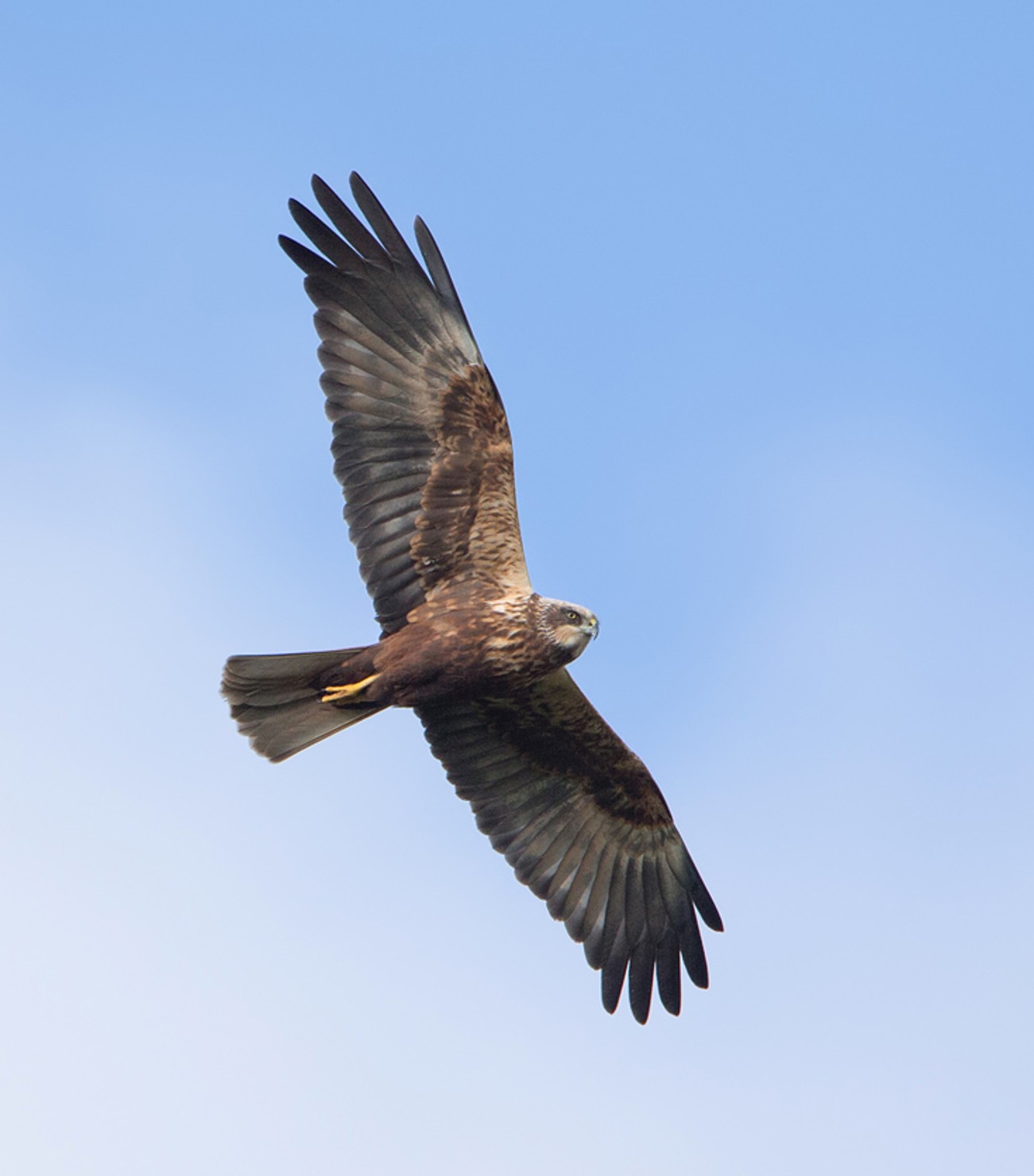
Derbyshire Constabulary has issued an appeal for information (27 September 2026) following the discovery of a shot Red Kite in the Peak District National Park on or before 7th July 2026.
RURAL CRIME APPEAL – RED KITE SHOT
We are appealing for information following the discovery of an injured Red Kite in the Buxton and Combs area.
WHEN: Before or on Tuesday 7th July
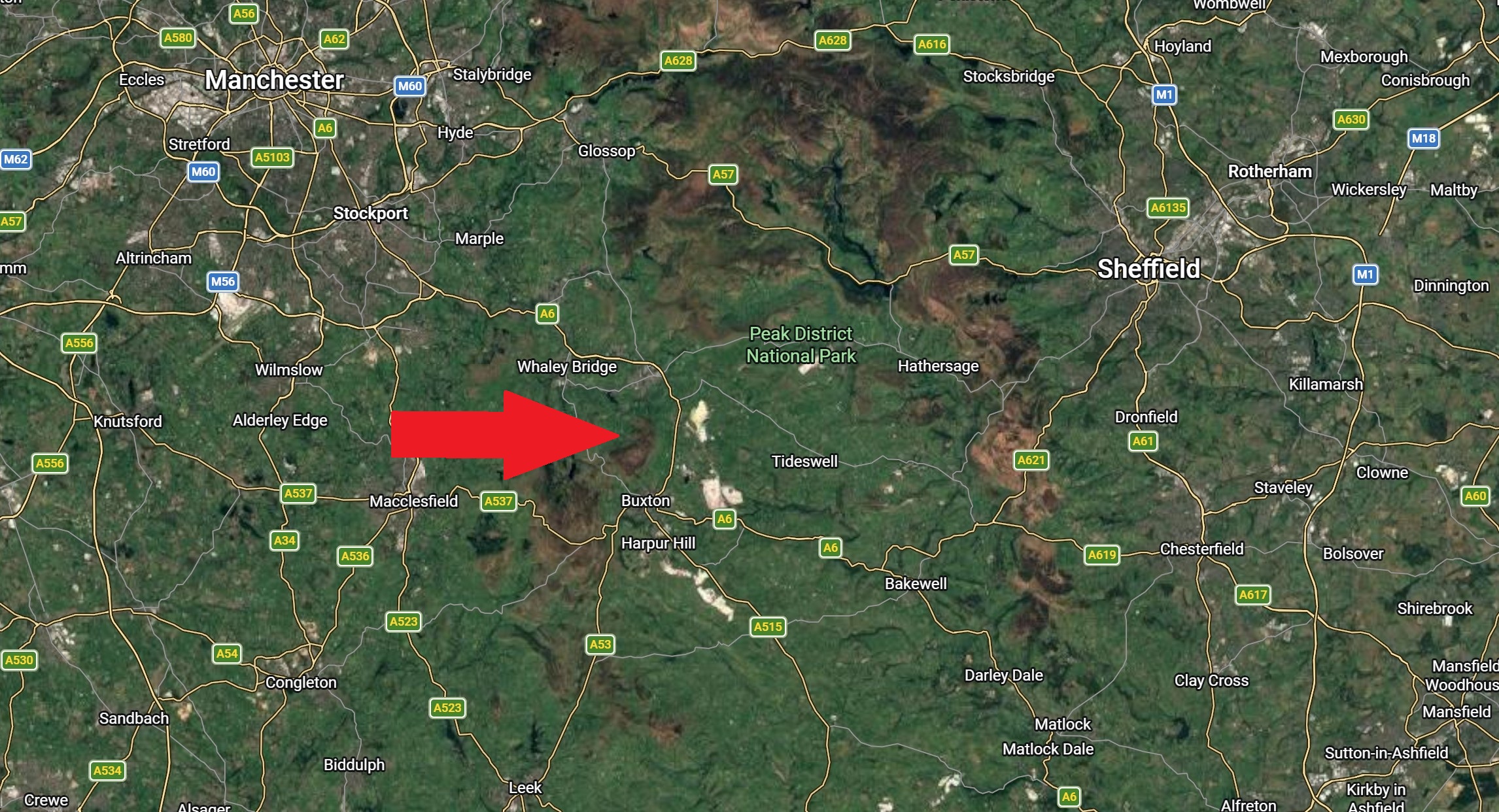
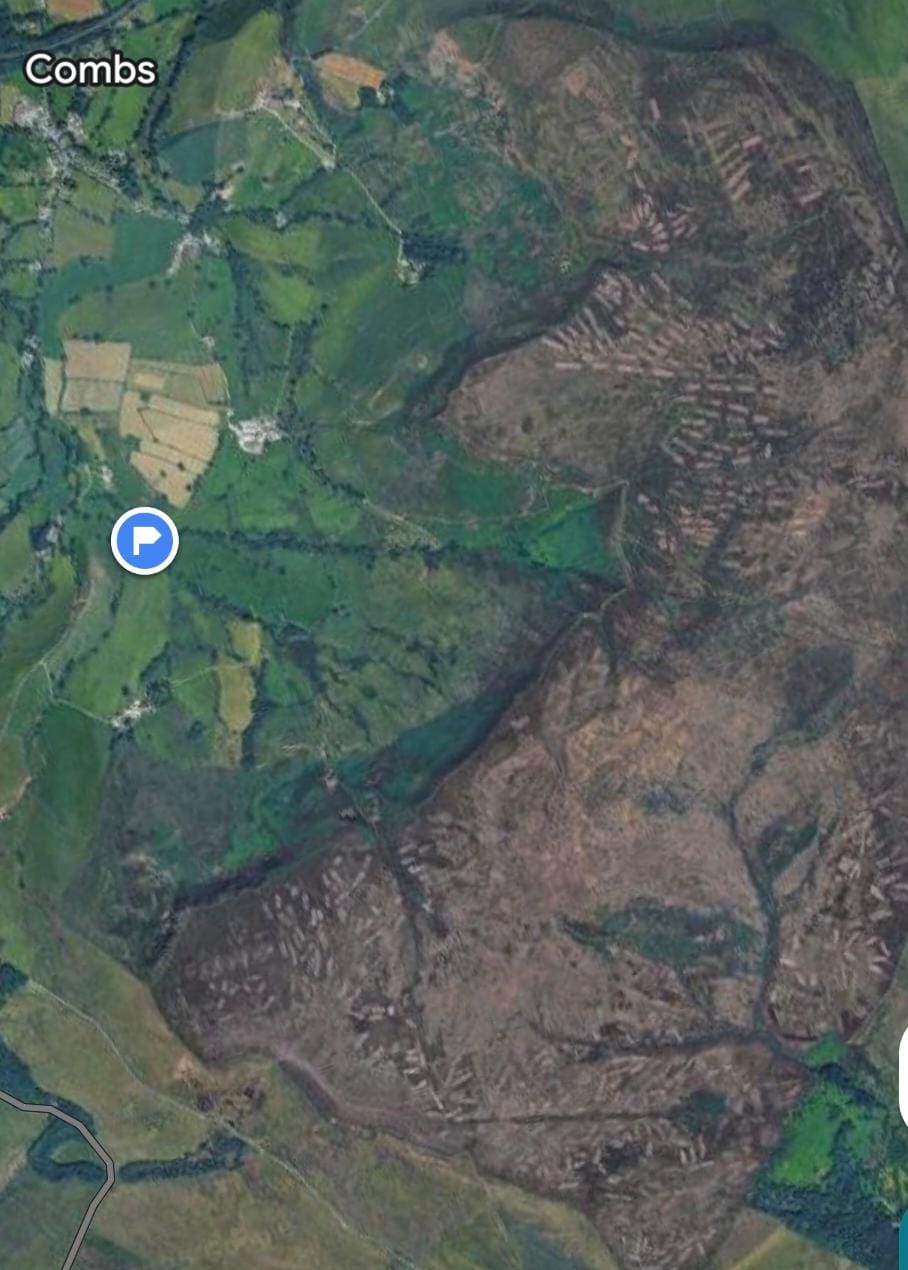
WHERE: Above Buxton and below Combs – mapping coordinates were 53.293834, -1.940895
Location of shot Red Kite in Peak District National Park (map annotated by RPUK)
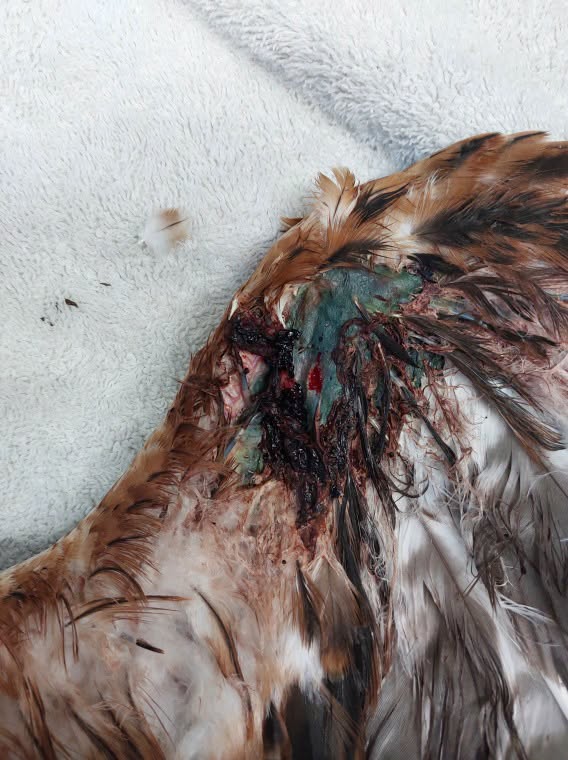
An injured Red Kite was brought to a local veterinary practice after being found by a member of the public. When initially assessed by vets, the kite was in shock and appeared to be playing dead. There was swelling and bleeding around the injured area of its wing.
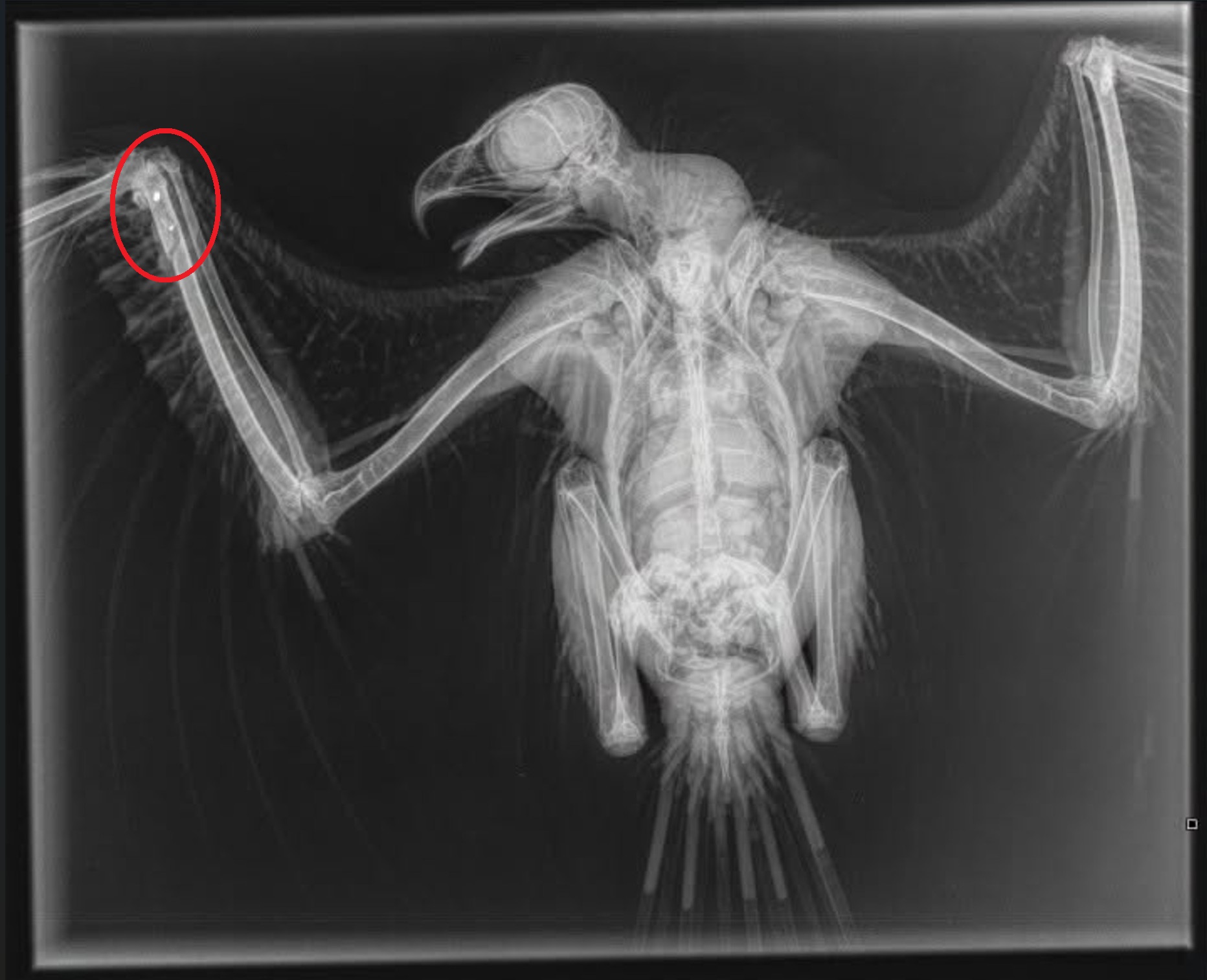
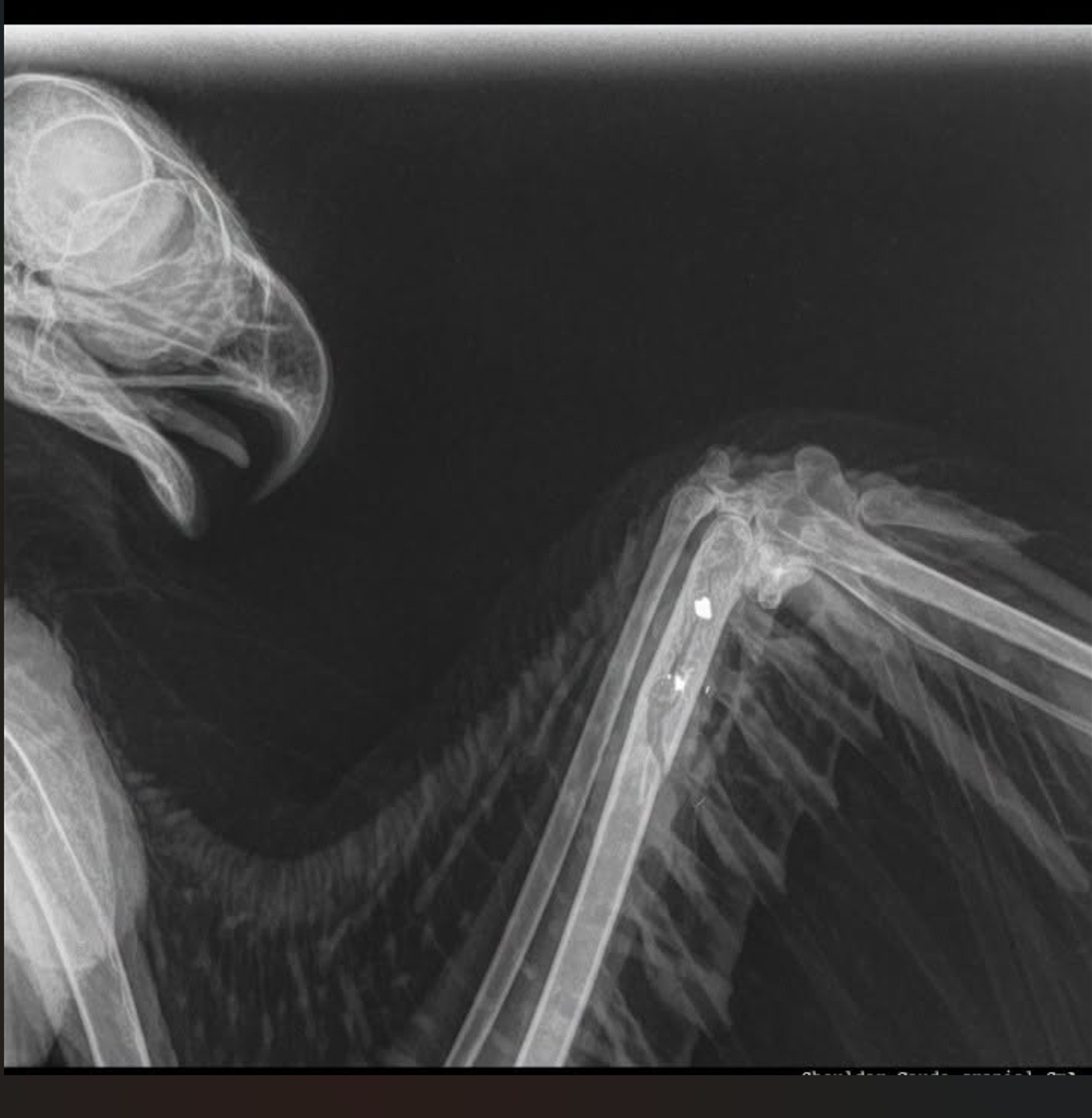
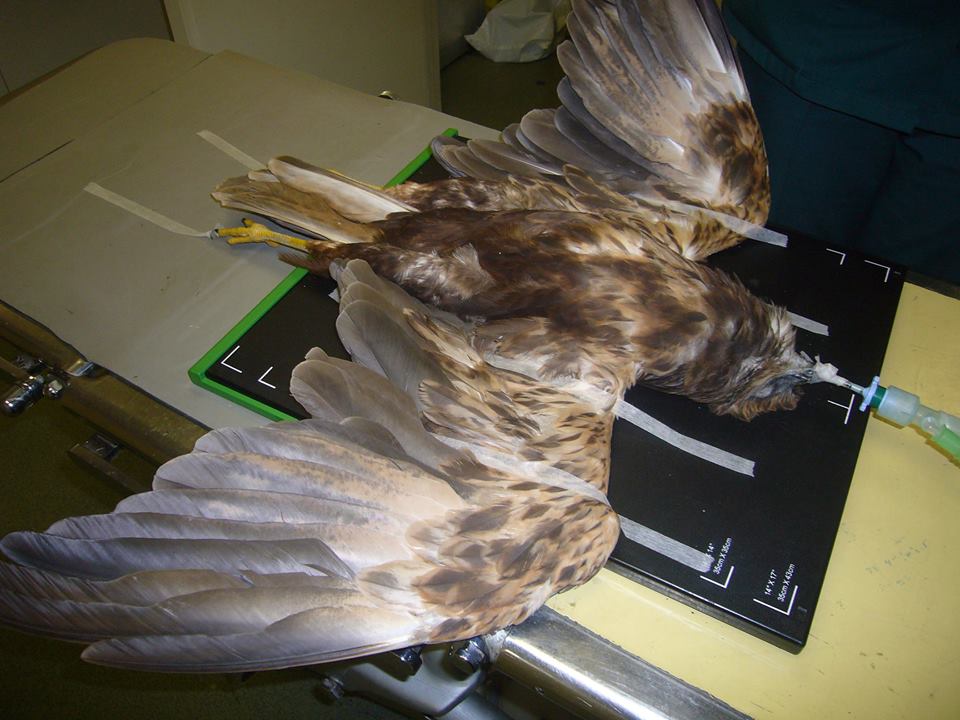
Following X-rays, it was sadly discovered that the kite had pellets embedded in its left wing, indicating that it had been shot. Despite receiving veterinary treatment, the kite sadly passed away.
X-Rays and wound photos via Derbyshire Constabulary:
WE ARE APPEALING FOR INFORMATION
We appreciate that the information available at this stage is limited, including the exact time the incident occurred. However, any information could be important.
Were you in the area around Buxton, Combs or the surrounding countryside around this time?
Did you see anything unusual or suspicious?
Did you see any vehicles or people in the area that may have been relevant?
Even if you are unsure whether the information you have is relevant, please get in touch. Something that may seem insignificant could assist with our enquiries.
If you have any information, please quote 26*431851 and report by calling 101.
ENDS
My commentary:
Given the extent of what looks like a traumatic fracture of the ulna, shown in the two X-rays, I’d say it would seem unlikely that this Red Kite would have been capable of flying a long distance from where it was shot.
Yet another raptor persecution victim, in an area where gamebird shooting is prominent and in a so-called National Park well known for crimes against birds of prey.
An important scientific paper published in the journal British Birds in 2018 demonstrated the association of land managed for driven grouse shooting in the Dark Peak with the persecution of birds of prey, notably Peregrines and Goshawks, between 1995 – 2015.
Apart from the conviction of a gamekeeper in 2011 (which was later upheld after an appeal in 2012), I can’t recall any subsequent convictions for raptor persecution crimes committed in the Peak District National Park over the subsequent 15 years.
Not only is police enforcement failing, but long-term attempts at so-called ‘partnership-working’ was also an abject failure, with the Peak District Bird of Prey Initiative collapsing after 12 years of consistently failing to meet its targets because raptor persecution was so rampant.
The only effective measure that I’ve seen was from the National Trust, who withdrew two grouse shoot tenancies on its moorlands in the National Park after seeing evidence of suspected (here) and confirmed (here) wildlife crime.
I’ll be making this point in my submission to Defra’s Call for Evidence on gamebird shooting.
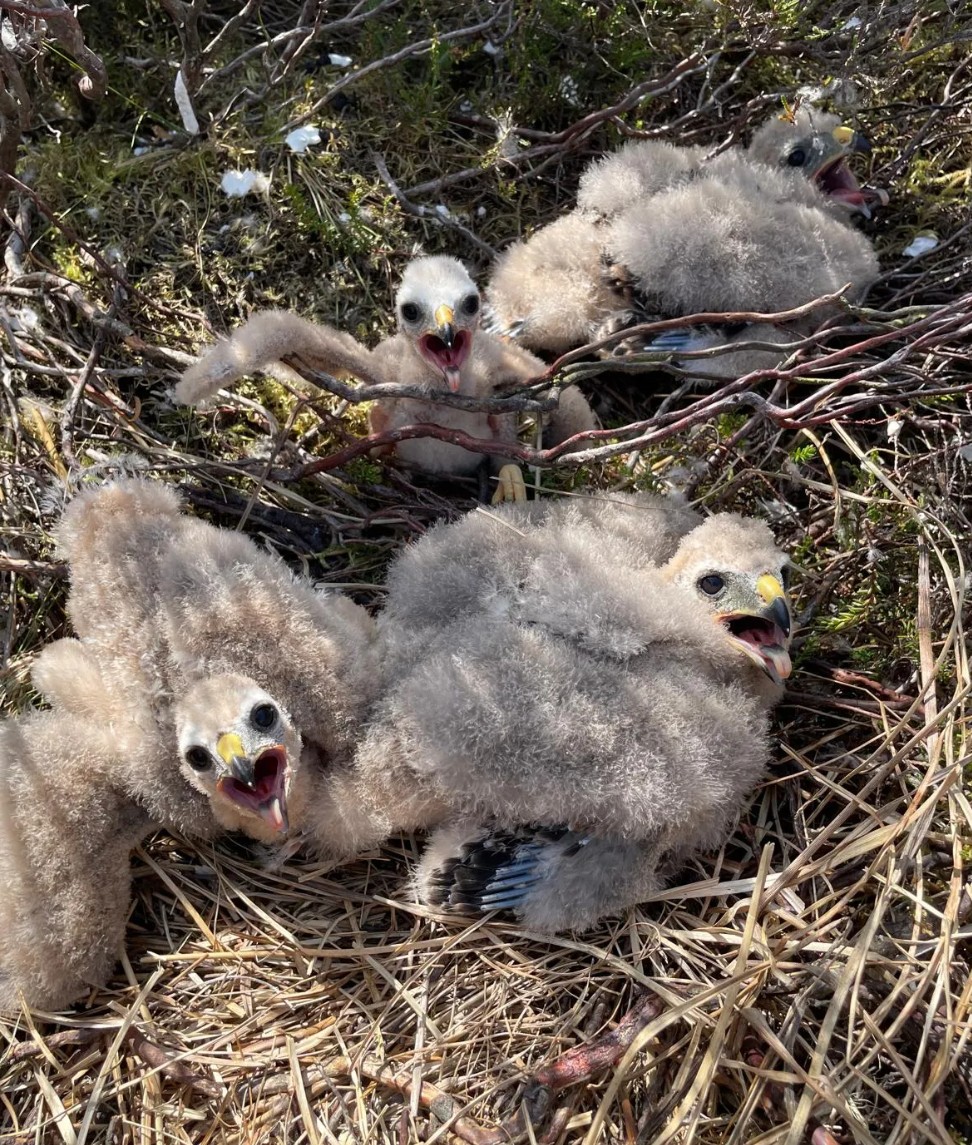
Further to reports of this year’s Hen Harrier breeding success on RSPB-managed moorland in Bowland, Lancashire (here) and on Geltsdale, Cumbria (here), there’s now confirmation of further success on RSPB reserves in Wales.
HEN HARRIERS CELEBRATE SUCCESSFUL BREEDING SEASON IN WALES
There’s encouraging news for one of Wales’ most threatened birds of prey, following a successful breeding season at RSPB Cymru nature reserves.
At RSPB Lake Vyrnwy, six Hen Harrier territories were established this spring, with five nests successfully fledging 17 young. A further four chicks fledged at nearby RSPB Tanrallt, bringing the total across the two sites to 21 young Hen Harriers.
Hen Harriers have specific habitat requirements, typically nesting on the ground among heather and other tall vegetation within open upland landscapes. Managing a mosaic of upland habitats can provide suitable places to nest alongside the feeding areas they need to successfully raise young.
The results at Lake Vyrnwy are particularly significant. Despite the reserve accounting for less than 1% of the potentially suitable Hen Harrier breeding habitat across Wales, more than 20% of the estimated Welsh population used the reserve during the breeding season.
There was more good news further south at RSPB Carngafallt, where three Hen Harrier chicks successfully fledged this summer. This brings the total to 19 fledged chicks at the reserve since 2022.
The breeding successes highlight just how important well-managed upland landscapes can be for Hen Harriers, providing the combination of nesting and feeding habitat these spectacular birds need.
ENDS
Natural England has not yet published the overall Hen Harrier breeding figures for England this year. Those numbers will be interesting, for a comparison between land managed for conservation and land managed for grouse shooting.
Results from the last two years have been illuminating, and simply don’t support the shooting industry’s repeated ludicrous claim that Hen Harriers do better on grouse moors than on RSPB-managed land.
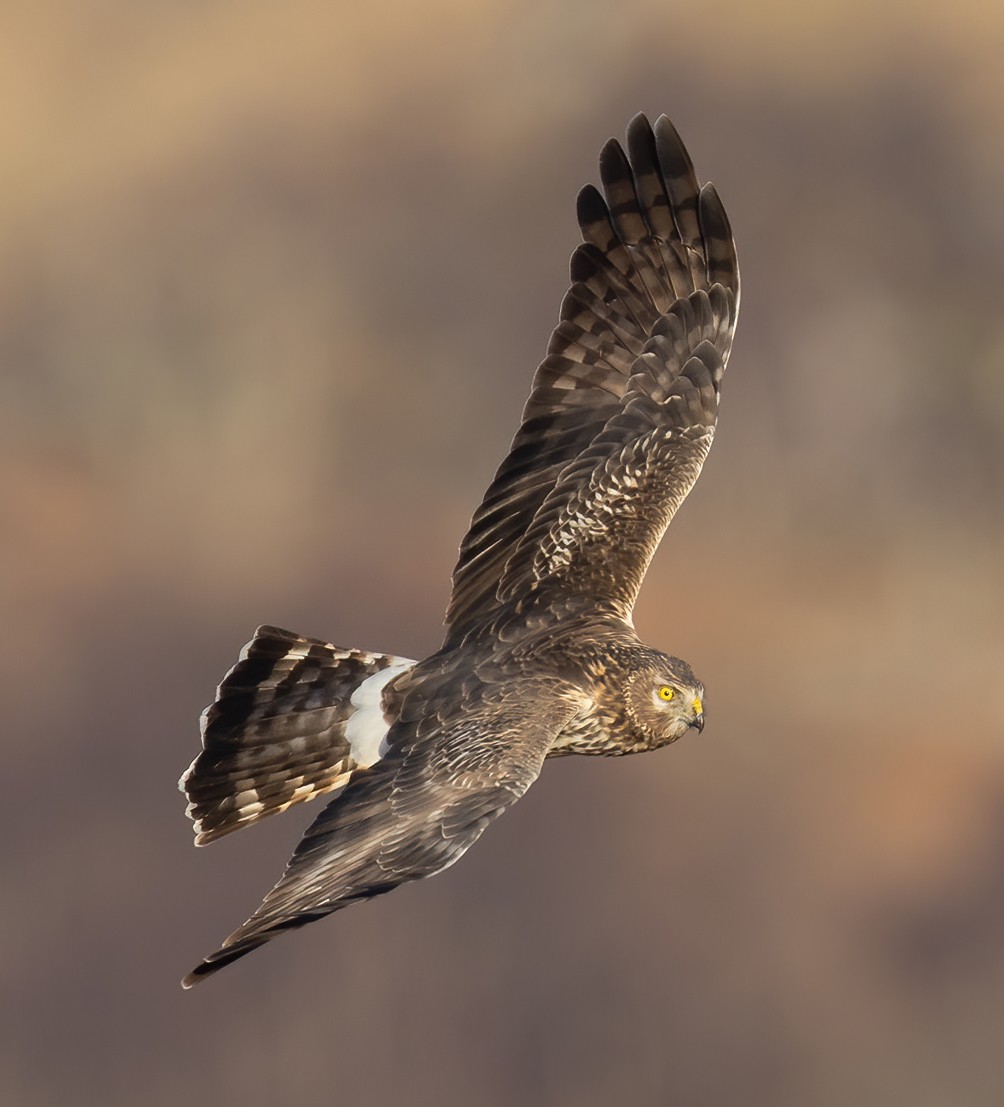
Following North Yorkshire Police’s appeal for information about the recent discovery of a Marsh Harrier with gunshot injuries found in the Westerdale area of the North York Moors National Park, the Yorkshire Wildlife Trust (YWT) has responded with an unusually robust statement.
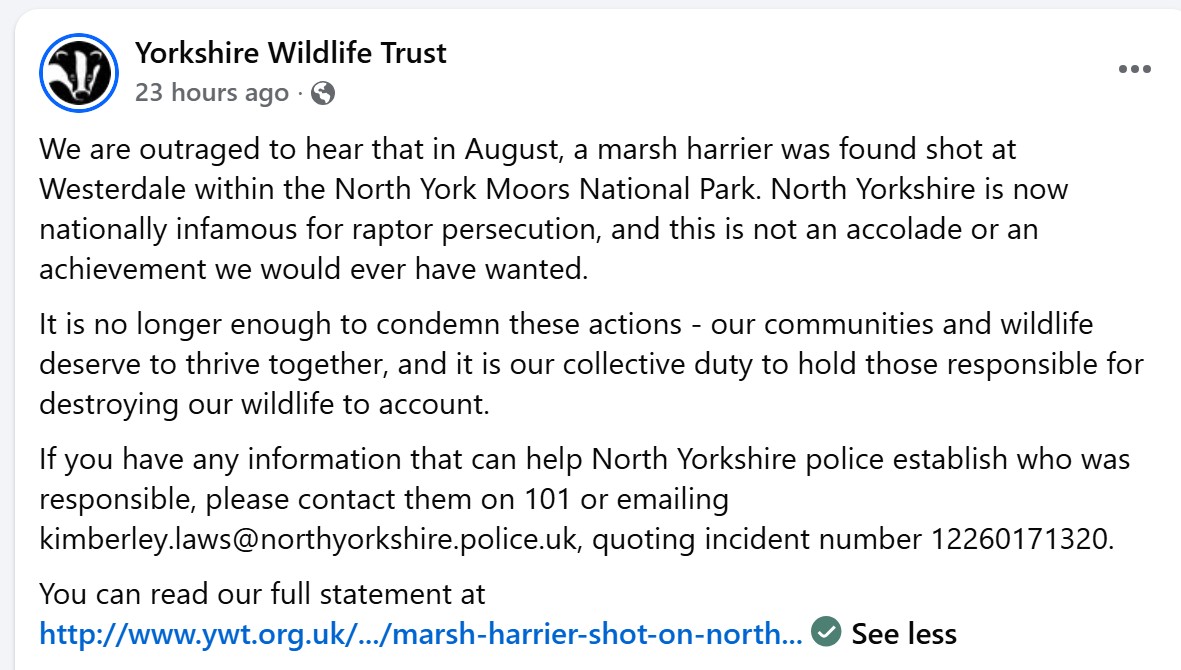
On its Facebook page yesterday, the Yorkshire Wildlife Trust said that “It is no longer enough to condemn these actions – our communities and wildlife deserve to thrive together, and it is our collective duty to hold those responsible for destroying our wildlife to account“.
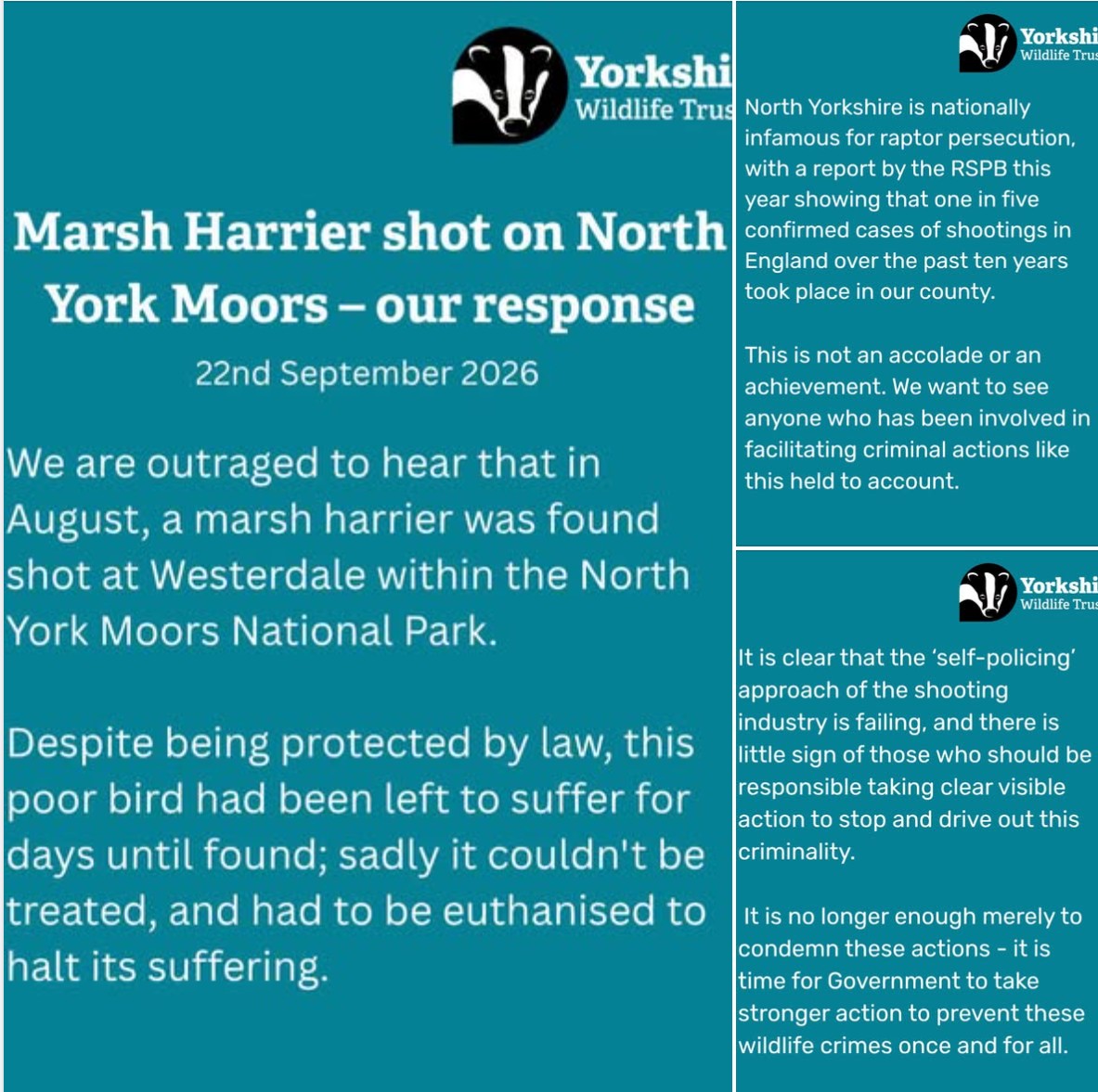
The social media post then linked to a full statement on the Yorkshire Wildlife Trust’s web site, reproduced here:
MARSH HARRIER SHOT ON NORTH YORK MOORS – OUR RESPONSE, 22 SEPTEMBER 2026
We are outraged to hear that in August, a marsh harrier was found shot at Westerdale within the North York Moors National Park.
Despite being protected by law, this poor bird had been left to suffer for days until found; sadly it couldn’t be treated and had to be euthanised to halt its suffering.
This latest case of cruelty and negligence, comes barely three months after a golden eagle was reported to have been shot 17 times in northern England and a tagged white-tailed eagle ‘went missing’ on the North York Moors, it is clear there are people in these landscapes who are careless and callous enough to harm these magnificent birds, and publicity does not stop their illegal behaviour.
North Yorkshire is nationally infamous for raptor persecution, with a report by the RSPB this year showing that one in five confirmed cases of shootings in England over the past ten years took place in our county. This is not an accolade or an achievement. We want to see anyone who has been involved in facilitating criminal actions like this to be held to account.
It is clear that the ‘self-policing’ approach of the shooting industry is failing and there is little sign of those who should be responsible taking clear visible action to stop and drive out this criminality. It is time for Government to take stronger action to prevent these wildlife crimes.
Defra is also currently seeking evidence on the impacts of gamebird rearing, release and shooting, including wildlife crime, and we encourage anyone with relevant evidence or experience to respond to the call for evidence by 11:59pm on 1 November 2026.
Birds of prey play an important role in our ecosystems, bringing awe and wonder to the majority of Yorkshire folk lucky enough to see them, their appearance in our skies are down to the work of conservation bodies, volunteers and local people. Persecution robs everyone the chance of seeing these special birds and destroys all those years of effort.
We urge anyone who has information that can help North Yorkshire Police establish who was involved in this case to contact them. It is no longer enough to condemn these actions – our communities and wildlife deserve to thrive together, and it is our collective duty to hold those responsible for destroying our wildlife to account.
With the exception of Derbyshire Wildlife Trust, it’s quite unusual to see any of the country’s Wildlife Trusts speaking out so clearly and forcefully on the issue of raptor persecution. It’s long been a bugbear of mine that organisations like the Wildlife Trusts, who are in a position of authority and influence, have shied away from prominent campaigning on this issue.
So I applaud Yorkshire Wildlife Trust for its unequivocal stance and hope that other Wildlife Trusts will follow its lead and not be too frightened by the inevitable backlash from the game-shooting industry, who are probably already composing threats to report the YWT to the Charities Commission, in the same way the Moorland Association did against the charity ‘Friends of the Dales’ for its Eyes to the Skies campaign earlier this year.
Press release from North Yorkshire Police (21 September 2026):
Marsh Harrier found shot in North York Moors
On 28 August 2026 a juvenile Marsh Harrier was found in the Westerdale area suffering from injuries that left it unable to fly.
Following examination, it was established that the bird had been shot and is believed to have been lying injured for several days prior to being found. Unfortunately, the injuries were so severe that there was no prospect of recovery, and on welfare grounds the bird had to be humanely euthanised.
The Marsh Harrier is a specially protected bird of prey under the Wildlife and Countryside Act 1981. It is an offence to intentionally kill, injure or disturb these birds, or to damage or destroy their nests or eggs.
North Yorkshire Police are appealing for information in connection with this incident. Anyone who may have witnessed suspicious activity in the area, or who has information that could assist the investigation, is asked to contact North Yorkshire Police on 101 or emailing kimberley.laws@northyorkshire.police.uk, quoting incident number 12260171320.
If you have concerns regarding the persecution of birds of prey or any other wildlife crime, please report the matter to the police. Information from the public can play a vital role in helping to protect wildlife and bring offenders to justice.
ENDS
Yet another raptor persecution victim, in a so-called National Park, in an area where gamebird shooting is prominent, and in an area well known as a wildlife crime hotspot (e.g. see here, here and here).
And not the first Marsh Harrier victim in Yorkshire either – for others see here, here and here.
This Marsh Harrier was found with shotgun injuries next to a Red-legged Partridge pen on a shooting estate in East Yorkshire in 2016. After expert veterinary attention and rehabilitation care she was released back to the wild (see here).
In 2017/2018 Amanda Anderson (then of the Moorland Association, the grouse moor owners’ lobby group in England) denied that her members were interested in obtaining licences permitting them to kill Marsh Harriers but several witnesses said otherwise.
Motive, means, opportunity. They’re all there, in spades, but the standard of evidence required to charge someone with the alleged shooting probably is not; without a direct witness in this remote landscape, there’s the (albeit slim) possibility that it wasn’t someone connected with gamebird shooting who shot this Marsh Harrier, and that’s enough reasonable doubt for this case to never get anywhere near a court of law.
Apart from the 2008 conviction of three gamekeepers on the Snilesworth Estate, I actually can’t remember anybody being charged and prosecuted for crimes against birds of prey in the North York Moors National Park in the following 18 years, despite a high volume of recorded crimes during this period*.
The closest the police have come was probably the Bransdale case during lockdown in 2020, where a witness reported seeing a number of armed men shooting at Buzzards on an estate in the North York Moors National Park, and five dead Buzzards were later found buried under rocks – four had definitely been shot and the fifth had probably been shot. Despite extensive investigative efforts by the police, there wasn’t sufficient evidence to charge anyone (see here).
Perhaps visitors and local residents of this National Park (and all the other National Parks where raptors are still targeted by criminals within the gamebird shooting industry) will consider making a submission to Defra’s current Call for Evidence on all aspects of gamebird shooting, to share their experience of finding injured and/or dead raptors in the National Park, or their disappointment at not being able to enjoy seeing the full suite of UK birds of prey that should naturally be breeding in these so-called protected landscapes.
You don’t even have to wade through the 100+ questions on the official submissions form to provide your evidence. You can simply write about your first-hand experience in an email, addressed to Gamebirds@defra.gov.uk (write ‘Call for Evidence’ in the subject line) and it’ll be accepted in to the review.
Closing date is 1 November 2026.
*Update: Thanks to the blog reader who reminded me about the 2013 conviction of gamekeeper Shaun Allanson for offences committed on the Blansby Estate, near Pickering, right on the edge of the North York Moors National Park.
Earlier this month, researcher, writer and campaigner Guy Shrubsole blogged about his latest examination of reported Pheasants numbers in England.
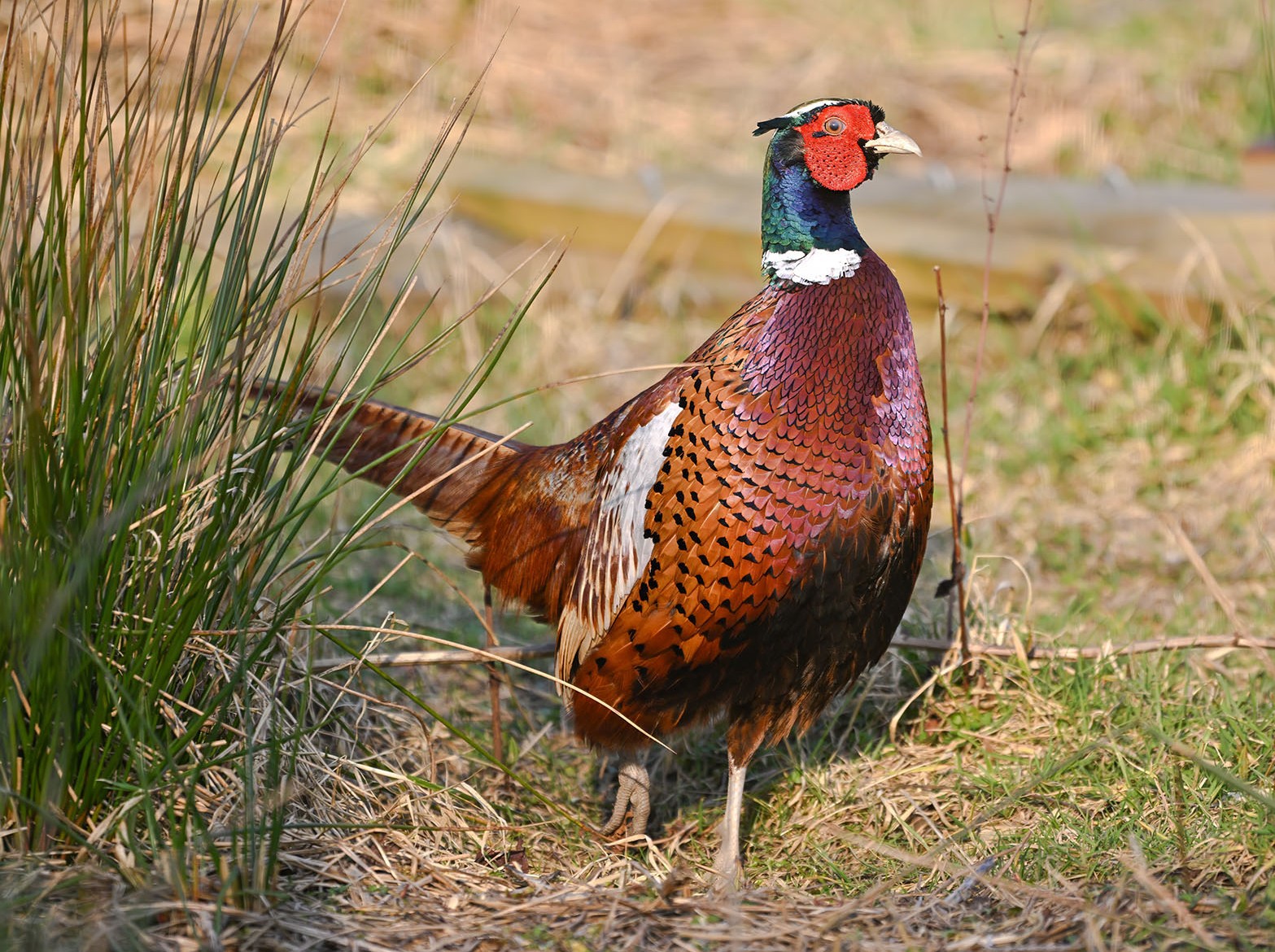
Pheasant (photo by Ronnie Gilbert)
As he’s done in previous years (e.g. see here), Guy submitted a Freedom of Information request to the Government’s Animal & Plant Health Agency (APHA) asking for the official figures on the number of Pheasants being bred, reared and released in England. It’s a legal requirement for keepers of captive birds, including gamebirds, to register.
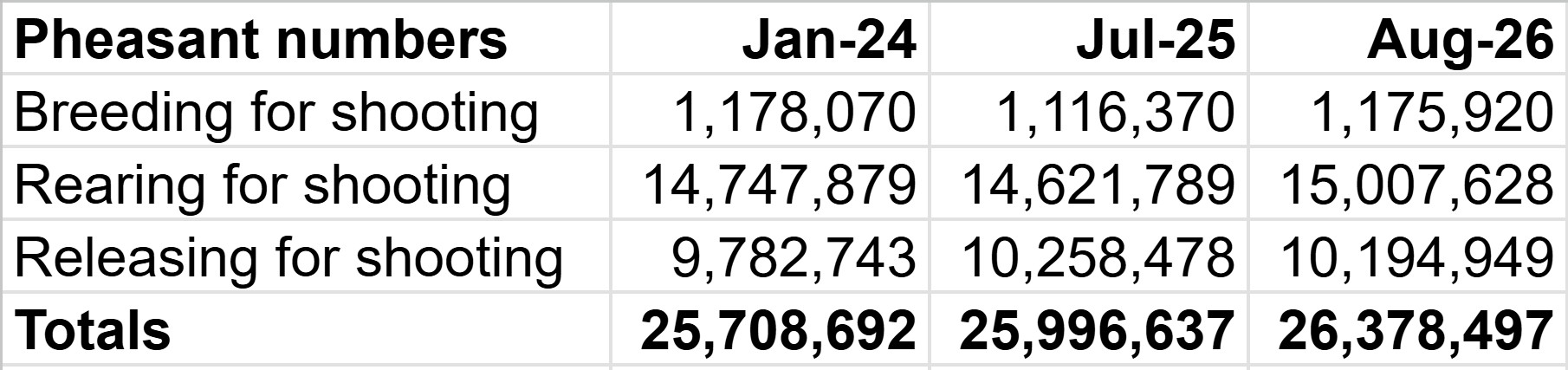
As of August 2026, according to the latest FoI response, 26.37 million Pheasants were reported as being bred, reared or released in England. This compares to 25.9 million Pheasants reported in July 2025, and 25.7 million Pheasants reported in January 2024.
Guy suggests two possible explanations for the ongoing increase in reported Pheasant numbers:
a) The industry is gradually getting better at reporting; or,
b) The figures simply reflect an ongoing expansion in the size of the industry.
Whatever the explanation, these figures are still well below the estimated 50 million Pheasants that are known to be released annually into the countryside; a figure provided by the gamebird shooting industry itself, even when the source is masquerading as ‘The UK’s Conservation Factchecking Resource‘, which is actually a website run by the Game & Wildlife Conservation Trust, (GWCT).
That’s an awful lot of Pheasants (approx 24 million) still unaccounted for in the ‘official’ records.
Guy’s blog helpfully includes a link to a spreadsheet with this year’s ‘official’ figures, broken down into categories of birds being bred, reared and released in England. He also includes a summary of the data for the last three years:
These figures are very revealing, because they show a large discrepancy between the number of Pheasants being bred and reared for shooting and the number of Pheasants being released for shooting.
They don’t add up!
What happened to the 5-6 million Pheasants that were reported as being bred and reared that weren’t subsequently released?
Has anyone at APHA noticed this discrepancy? If so, what action is being taken? Is there any monitoring? Are there any compliance checks?
Failure to register with APHA is an offence, but it’s been going on for years. In a Natural England and BASC-commissioned report published in 2020, registration compliance (for Pheasant keepers) was estimated to be less than 25%.
This low level of compliance on registering Pheasants will come as no surprise to anyone who pays attention to the behaviour of the UK gamebird shooting industry. It’s not an industry celebrated for adherence to the law on many issues, including the illegal killing of birds of prey, the illegal setting and use of traps, the illegal possession, storage and use of pesticides and poisons, the illegal burning of deep peat moorland, the illegal use of toxic lead ammunition to kill waterfowl, the illegal release of gamebirds in Special Protection Areas etc etc.
Submissions to Defra’s current Call for Evidence on all aspects of the gamebird shooting industry are going to be fascinating.
CAUTIOUS OPTIMISM AS RECORD YEAR FOR HEN HARRIER CHICKS AT RSPB GELTSDALE
Thirteen Hen Harrier chicks have successfully fledged at RSPB Geltsdale in Cumbria. The remarkable achievement marks the highest number of Hen Harrier chicks to fledge at the nature reserve in a single breeding season since records began more than a century ago. It reflects the dedication of reserve staff and volunteers, who worked tirelessly to protect nesting birds and support the adults as they raised their young.
Hen Harrier chicks at Geltsdale. Photo by Jim Harvey
The success offers hope for the species’ recovery, but illegal persecution remains a major threat for this spectacular bird of prey. Once hunted to extinction as a breeding bird in England by 1900, Hen Harriers returned to the north Pennines in the 1950s. However, the illegal killing of these amazing birds, that are celebrated for their sky dancing, has continued and to this day they still are only found at a handful of sites in England.
Despite this year’s success, illegal persecution continues to limit the recovery of Hen Harriers in England. This year at Geltsdale, staff set up Natural England-licensed diversionary feeding stations. This well-established technique is used to minimise the adults preying on grouse on neighbouring shooting estates when they are feeding their young. Staff also actively monitored the nesting sites day and night to minimise disturbance, working around the clock.
Celebrating the news, Ian Ryding, reserve manager at RSPB Geltsdale said:
“Hen Harriers are amazing birds, their sky dancing as the male passes food to the female is a spectacular sight everyone visiting the Cumbria should have the chance to see. But sadly, even as we celebrate this amazing success that should be giving us hope for the future of a Red-listed species, there is the spectre that these birds will soon be targeted by those who think nothing of killing our wildlife when it threatens their profits.
“By supporting both parents we have seen three nests thrive and 13 chicks fledge, the most for at least a century in this part of the world. We hope to see these chicks return in future years to raise their own families, but unfortunately we fear that for that to happen we will need to see more done to stop the illegal killing of these special birds“.
According to Government estimates, England’s uplands have the capacity to support at least 300 pairs of Hen Harriers. Yet the species remains on the UK Red List and far below its potential population size.
Evidence gathered over many years continues to show that illegal persecution is one of the principal barriers to recovery, with many birds disappearing in and around areas managed for grouse shooting. The RSPB is therefore calling for the introduction of licensing for gamebird shooting across the UK.
A licensing system, similar to that introduced for grouse moor management in Scotland in 2024, would be a proportionate and cost-effective measure aimed at deterring wildlife crime and helping to secure a future for Hen Harriers. Without further action, conservation successes such as this year’s record breeding season at RSPB Geltsdale risk remaining the exception rather than becoming the norm.
This year’s success at RSPB Geltsdale is an amazing and much needed success for Hen Harriers, and a credit to the hard work of the people involved in helping these birds get the best possible start to life. A number of the chicks have already been tagged so their progress can be tracked as they set out into the world.
Ian Ryding concluded: “For now, thirteen young Hen Harriers taking to the skies above Geltsdale is a reason to celebrate. The challenge is ensuring they survive long enough to return and raise families of their own“.
ENDS
Great news from the RSPB’s Geltsdale Reserve, and yet more evidence that Hen Harriers can do really well on RSPB-managed moorland (see this year’s success at Bowland this year, here), especially when they’re encouraged not to hunt on nearby grouse moors, where there’s a long history of hunting males ‘disappearing’ (e.g. at Geltsdale: 1 x hunting male in 2020, 2 x hunting males in 2021, 2 x hunting males in 2023, 2 x hunting males in 2025, see here, here, and here) or being found dead with gunshot injuries (e.g. 1 x hunting male in 2023, here).
Funnily enough, I’ve yet to see any evidence of record Hen Harrier breeding success on English grouse moors this year, despite the repeated claims by shooters on social media that ‘Hen Harriers do better on grouse moors than on RSPB-managed moors‘.
The evidence just doesn’t support that myth – e.g. see here for last year’s report from Natural England, where perhaps 3 of 39 Hen Harrier breeding attempts were on privately-owned grouse moors. Natural England has not yet published the figures for this year’s Hen Harrier breeding attempts.
I’m afraid I don’t agree with the RSPB’s call for gamebird licensing. It isn’t working in Scotland, where grouse shoot licensing was introduced in 2024 and yet the illegal killing of birds of prey continues without significant consequence, so there’s no reason to believe that licensing would work in England. Athough licensing would definitely be better than maintaining the status quo, I just don’t see it as a long-term solution.
Defra’s current Call for Evidence on all aspects of gamebird rearing, releasing and shooting in England, which will be used to inform future policy in this area, is very welcome. More on that next week.
Appeal for information issued by Police Scotland, 15 September 2026:
APPEAL AFTER RED KITE CAUGHT IN ILLEGAL TRAP – STRATHDON, ABERDEENSHIRE
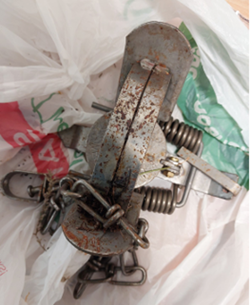
Officers are appealing for information after a bird of prey was caught in an illegally set ‘Duke’ coil spring trap in May, 2026 in the Strathdon area of Aberdeenshire.
The trap set is not approved for use in Scotland.
Photo from Police Scotland
Extensive enquiries have been carried out, and we are now appealing to the public for information.
Constable Ann Ashman said: “Red kites are protected under the Wildlife and Countryside Act, and it is illegal to take, injure or kill a protected species.
“Trapping a bird or animal is not only cruel, but it can also harm other wildlife and members of the public.
“Enquiries are ongoing and we are appealing to anyone with information on the incident, or the use of this particular Duke coil spring trap in the area, to contact us.”
Anyone with information is asked to contact Police Scotland on 101 quoting incident 1053 of 18 May, 2026. Alternatively, you can contact Crimestoppers on 0800 555 111 where information can be given anonymously.
ENDS
This appeal for information is pretty scant on details, although it’s helpful that Police Scotland provided a photo of the trap, which is a leg-hold trap with the same function as a gin trap, with which most readers will be familiar.
There’s no information about the circumstances of the discovery of the trapped Red Kite, nor of its fate. And it’s not clear why it’s taken four months for the appeal for information to be issued, although Police Scotland does say ‘extensive enquiries’ have been carried out.
The location is also quite vague – Strathdon sits on the edge of the north-east side of the Cairngorms National Park.
Blog readers will be familiar with the name – it has featured with regularity on this blog over many years, most recently after the collapse of a criminal trial against two local gamekeepers who had been accused of shooting Red Kites in the area.
The Strathdon area is a well-documented raptor persecution hotspot, where gamebird shooting (Red Grouse & Pheasants and Red-legged Partridges) is prominent. The continued persecution of birds of prey in this area is providing plenty of evidence to demonstrate that grouse shoot licensing is not effective as a deterrent.
THE KILLING MUST STOP! SENEDD ENVIRONMENT COMMITTEE ASKED TO RESTRICT EAGLE-KILLING POISONS
Following on from the public outcry when it was revealed that sea eagles in Britain were being poisoned by toxic rat poisons, the research group WPRUK has called on the Senedd’s Environment Committee to push for tighter restrictions on the use of these poisons.
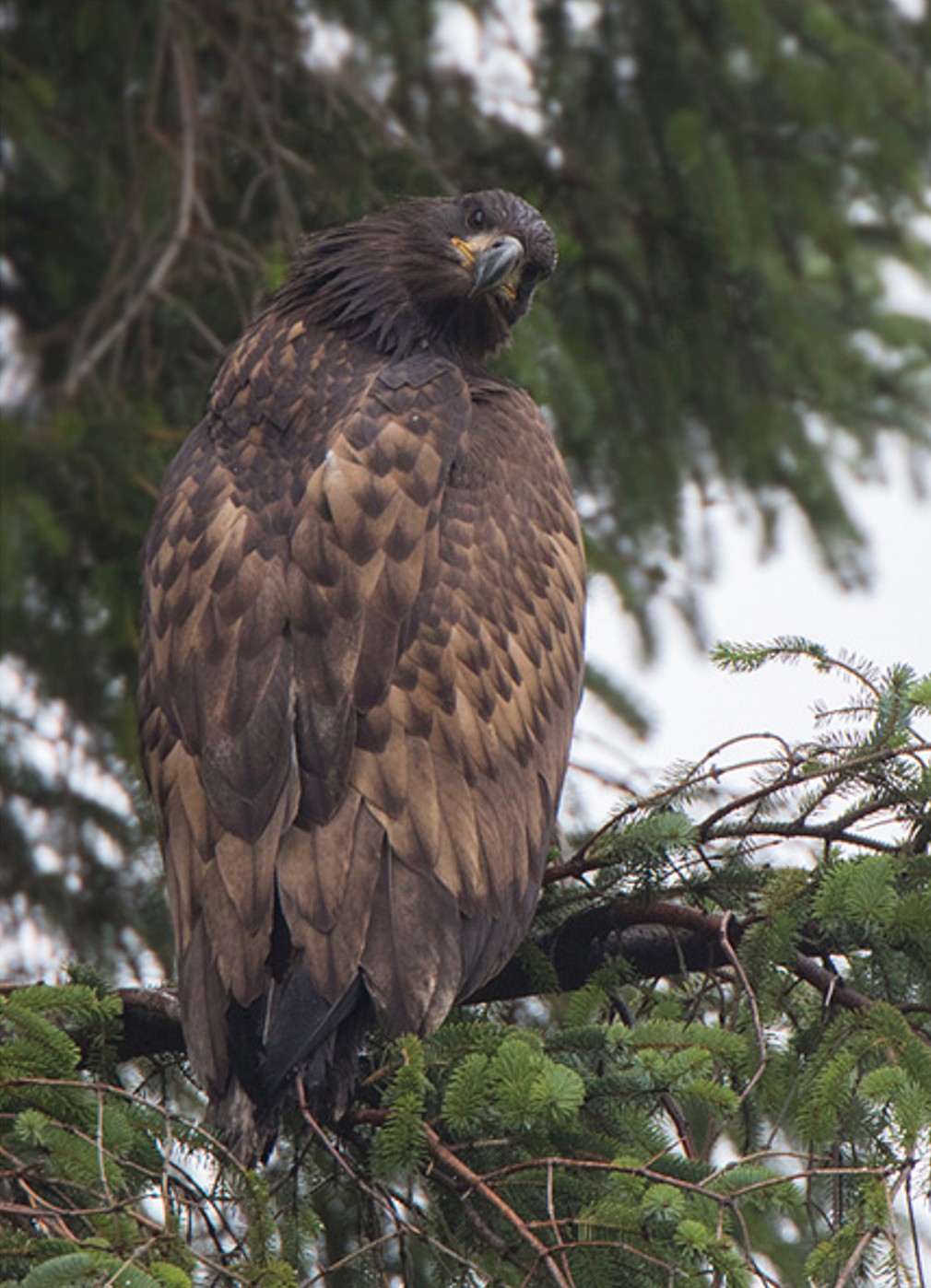
Juvenile White-tailed Eagle (Photo by Pete Walkden)
Currently anyone can go into a shop or use the internet to buy amateur use poisons with no questions asked, no training required and no need to follow any safety codes. There is also a complete lack of any meaningful investigation scheme when these poisons kill wildlife.
These toxins, known as Second Generation Anticoagulant Rodenticides or SGARs, enter the food chain when birds of prey and other predators eat poisoned rats, the victims dying from what is called ‘secondary poisoning’, the persistent chemicals being concentrated in rat livers.
A risk assessment in 2012 concluded that these SGAR toxins should not be used outdoors due to this secondary poisoning risk. However, the UK Government ignored this and allowed the chemical companies to keep selling the toxins to both professional users (farmers and pest controllers) and any householder wishing to get rid of unwanted rodents. Even more alarming, the Government relaxed the regulations on where the highest toxicity poisons could be used, allowing these to be used outdoors for the first time. The Welsh Government followed Westminster’s lead and allowed an environmental catastrophe to unfold.
The continued unrestrained use of these chemicals was permitted on the condition that the chemical industry improved the manner in which they were used. This was enshrined in what became known as the ‘Rodenticide Stewardship Scheme’ or RSS. This scheme was meant to achieve a ‘significant reduction’ in poison exposure in wildlife.
There have now been numerous scientific studies investigating poison levels in wildlife. Not one of these has found a reduction in poison exposure in any of the species studied. Clearly the chemical industry has totally failed to protect the environment. So far, the Welsh and Westminster Governments have taken no meaningful action to address this, while the chemical companies continue to make profits from selling the poisons.
Not only has the chemical industry failed to reduce toxins in the environment but there is now new evidence showing these levels are soaring up. WPRUK collects data on buzzards and other wildlife in Wales and England. In one of the biggest studies so far, it was found that during 2020 to 2024 over 60 % of buzzards tested had SGAR poison levels above the point at which the birds start to die. Over the last 20 years, the level of exposure to one the most toxic SGARs, Brodifacoum, has soared by 1,026 %.
WPRUK is now calling for tighter controls on how these poisons are used in Wales, submitting a detailed report to the Senedd’s Environment Committee. The group is calling for a ban on the sale of these poisons to the general public and for their use by professional users to be limited to indoor areas only, so that wildlife will not be exposed to the toxins by secondary poisoning.
In submitting the paper to the Committee, Dr Ed Blane from WPRUK said: “The killing of our threatened wildlife by these poisons has to stop and the Welsh Government now has the powers to achieve this. So far it appears that our leaders in Cardiff have just ignored this growing environmental disaster and are just complying with Westminster regulations despite the harm that this is doing to our wildlife in Wales.
“Politicians in London maintain that these deadly SGAR toxins are still available to anyone to buy as there are no other alternative products available to control rats. This is simply not true as there are now other products available which do not cause this secondary damage to wildlife. It appears that Government policy is more concerned about the profits of chemical companies than safeguarding wildlife.
“Wales has led the way in the UK with positive action to protect wildlife such as banning snares and glue traps. Now it is time for the Welsh Government to take action to control these indiscriminate poisons. Iconic species such as eagles must be protected from the threat of secondary poisoning, too many of these majestic birds have died already. WPRUK is calling on the Senedd’s Environment Committee to support this campaign to safeguard our wildlife“.
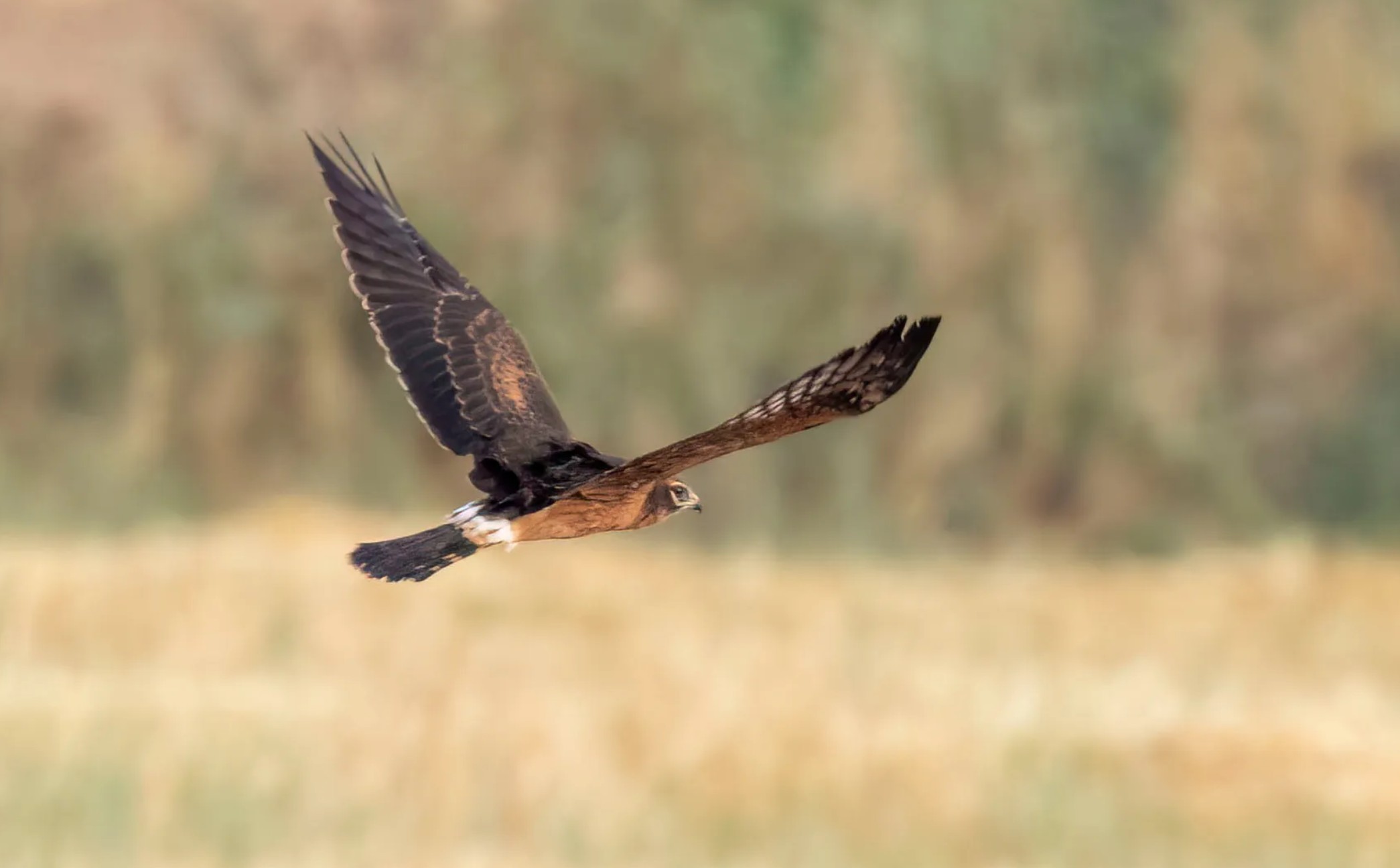
Last month the RSPB announced the successful fledging of six red-listed Montagu’s Harrier chicks from two nests at a secret location in England (see here).
The UK’s rarest breeding bird of prey, this year’s breeding success was down to excellent partnership working between farmers, birdwatchers and the RSPB.
Two of the six young harriers were fitted with state-of-the-art satellite tags to monitor their 7,000 mile migration journey to West Africa. These were two females named ‘HV’ and ‘FH’.
HV continues to make great progress and has now passed through Luxembourg and is just inside France! Will she continue south and avoid the Alps?
However, we also have some terrible news from FH. We were initially worried by a cold tag temperature, as this indicated that she was probably dead. But the data also suggested that she was rapidly moving between two locations around 30 miles part. Looking into it showed that these locations match those of a west to east railway line and, with the help of the staff, we have now located her body.
Sadly, FH had been struck by a train and carried along the route. The tag was still in perfect working order enabling us to locate and recover her body. This is a terrible shock for the team and just highlights the unpredictability of working with this species.
To follow HV’s journey, see the RSPB’s Monty’s web page, here.
Last month, NatureScot imposed a three-year General Licence restriction on part of Invermark Estate in the Angus Glens, in relation to the discovery of a shot Peregrine that was found on 3 September 2024. The Peregrine’s gunshot injuries were severe and it later had to be euthanised. Nobody has been charged or prosecuted in relation to this crime.
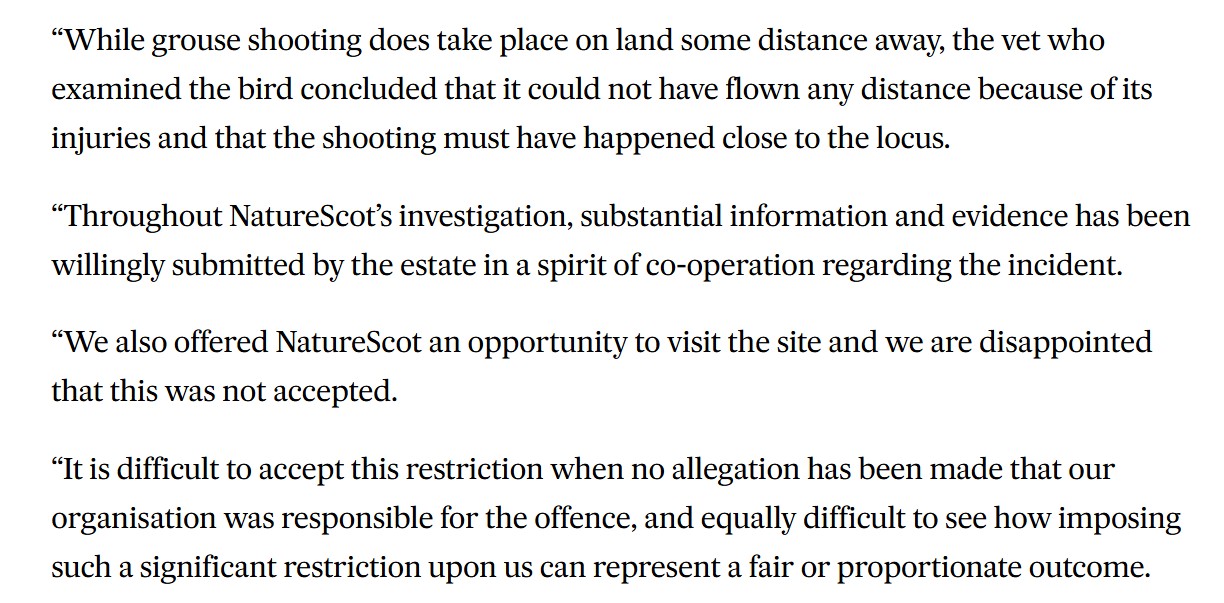
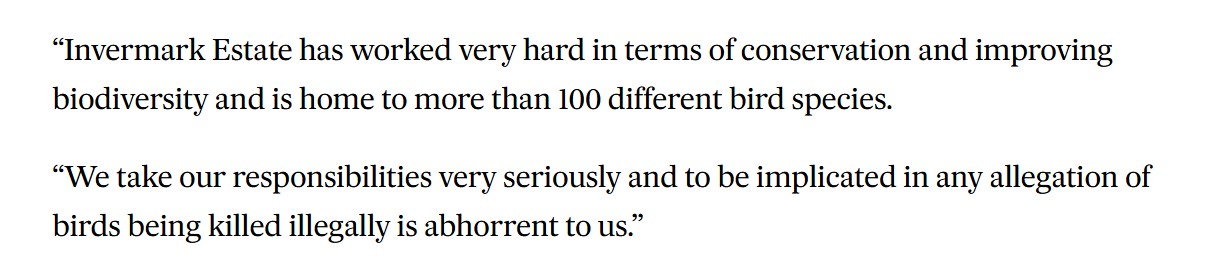
A statement attributed to Invermark Estate was published as part of an article in The Courier on 7 August 2026, the day the three-year General Licence restriction was announced. The statement read as follows:
The General Licence restriction was suspended two weeks after it was imposed as Invermark Estate had decided to make a formal appeal to NatureScot against the restriction. That appeal is currently ongoing.
When I wrote about that appeal, and published Invermark’s statement, I said it contained some interesting claims and that I intended to return to it in a future blog.
The first point of interest in Invermark Estate’s statement was the revelation that the shot Peregrine had been found “in the garden of a cottage“. This information was not previously available in the public domain.
The reason this information is of interest is because it allows us to pinpoint the location. It was already known that the General Licence restriction was imposed on tenanted land associated with Dalbrack Farm, as made clear in NatureScot’s restriction notice:
‘In the case of Invermark Estate, the restriction will apply to the Dalbrack Farm area of the estate. NatureScot received robust evidence from Police Scotland in relation to the shooting of a peregrine which was discovered in this area’.
An examination of several maps shows that there’s only one cottage in this immediate area – Dalbrack Cottage, which neighbours Dalbrack Farm. It’s my understanding that Dalbrack Farm is tenanted, and Dalbrack Cottage is sub-tenanted.
Photo by Andrew Curtis, May 2021, used under Creative Commons Licence and annotated by RPUK
You’ll notice that Invermark Estate’s statement included the following carefully chosen words:
“While Invermark Estate owns the land in question, it does not manage it and there is no sporting activity where the bird was found (in the garden of a cottage)“.
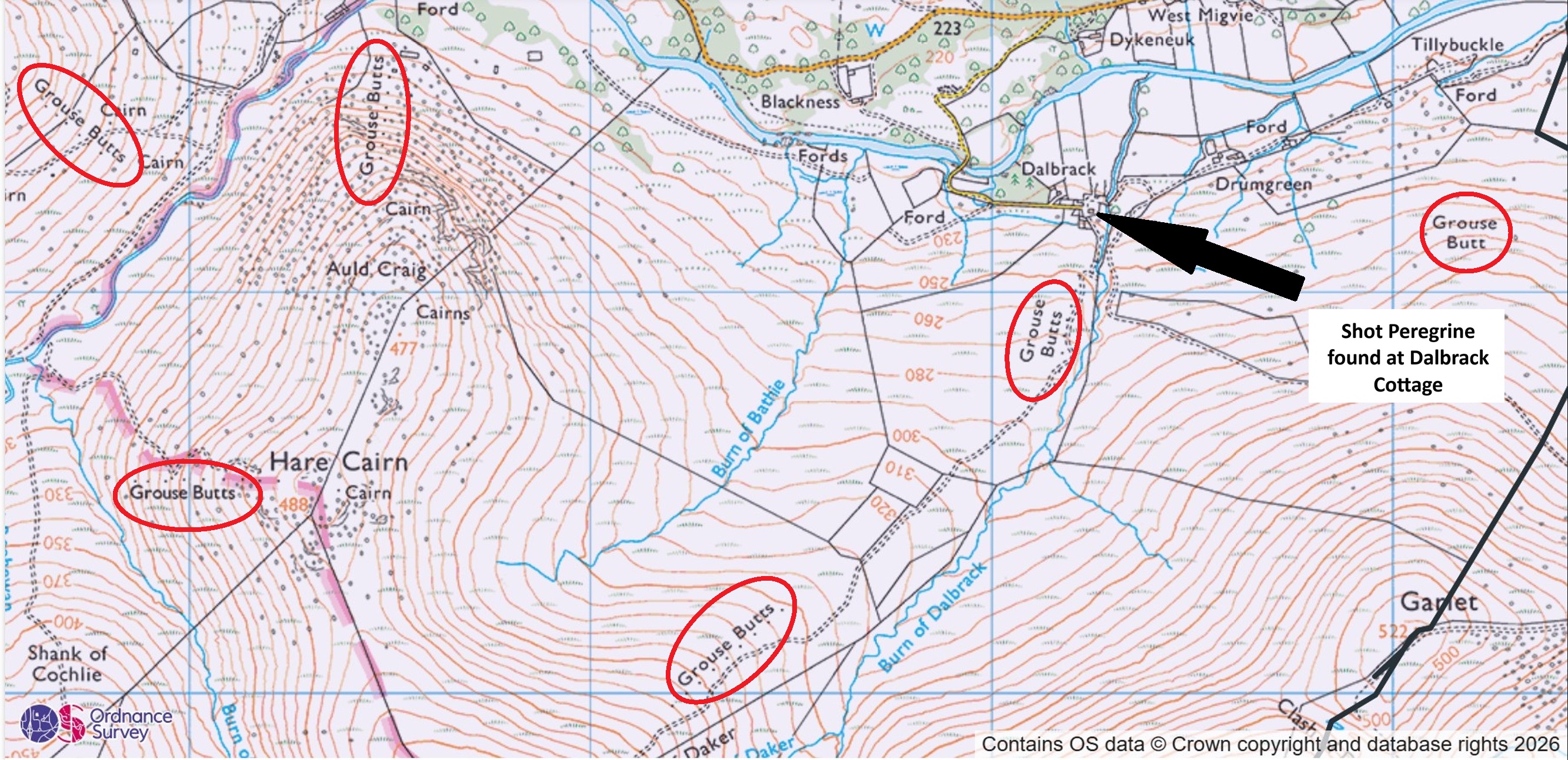
Whilst this statement may be accurate, I would argue that it’s tightly worded and fails to inform the reader that the cottage in question is situated right on the edge of a grouse moor (remember, the Courier readers didn’t have the benefit of seeing a map). It looks to me like a deliberate attempt by Invermark Estate to infer some considerable distance between the estate’s grouse shooting activities and the garden of the cottage, because it fails to mention the proximity of the grouse moor and some of the estate’s grouse butts, which according to maps, are just metres away:
And these are not the only grouse butts in the area, as you can see from this map showing the part of Invermark Estate close to Dalbrack:
Map sourced from Andy Wightman’s Who Owns Scotland website, annotated by RPUK
What this map doesn’t tell us, of course, is whether these grouse butts are still in use; they could have long been decommissioned and are now just historical cartographic relics. This brings me to the second point of interest in Invermark Estate’s statement:
“While grouse shooting does take place on land some distance away, the vet who examined the bird concluded that it could not have flown any distance because of its injuries and that the shooting must have happened close to the locus“.
Unlike Invermark Estate, the general public has not been afforded sight of the post mortem report so we’re having to reply upon Invermark Estate’s claim about what it says. Would it be feasible for the bird to have been shot further up the hill and then it glided down to the cottage garden where it crash landed at the bottom of the hill, without having had to flap its wings? Instead of having to rely upon Invermark Estate’s claim, I’d rather see the PM report for myself so I’ve requested a copy via FoI from NatureScot. If/when it’s released, I’ll post a copy here.
But what I can test is Invermark Estate’s claim that “grouse shooting does take place on land some distance away…“.
The phrase “some distance away” is quite subjective, isn’t it? What does it mean? A few metres, a few kilometres, a few glens away? The inference is that grouse shooting does not take place nearby [to where the Peregrine was found with shotgun injuries].
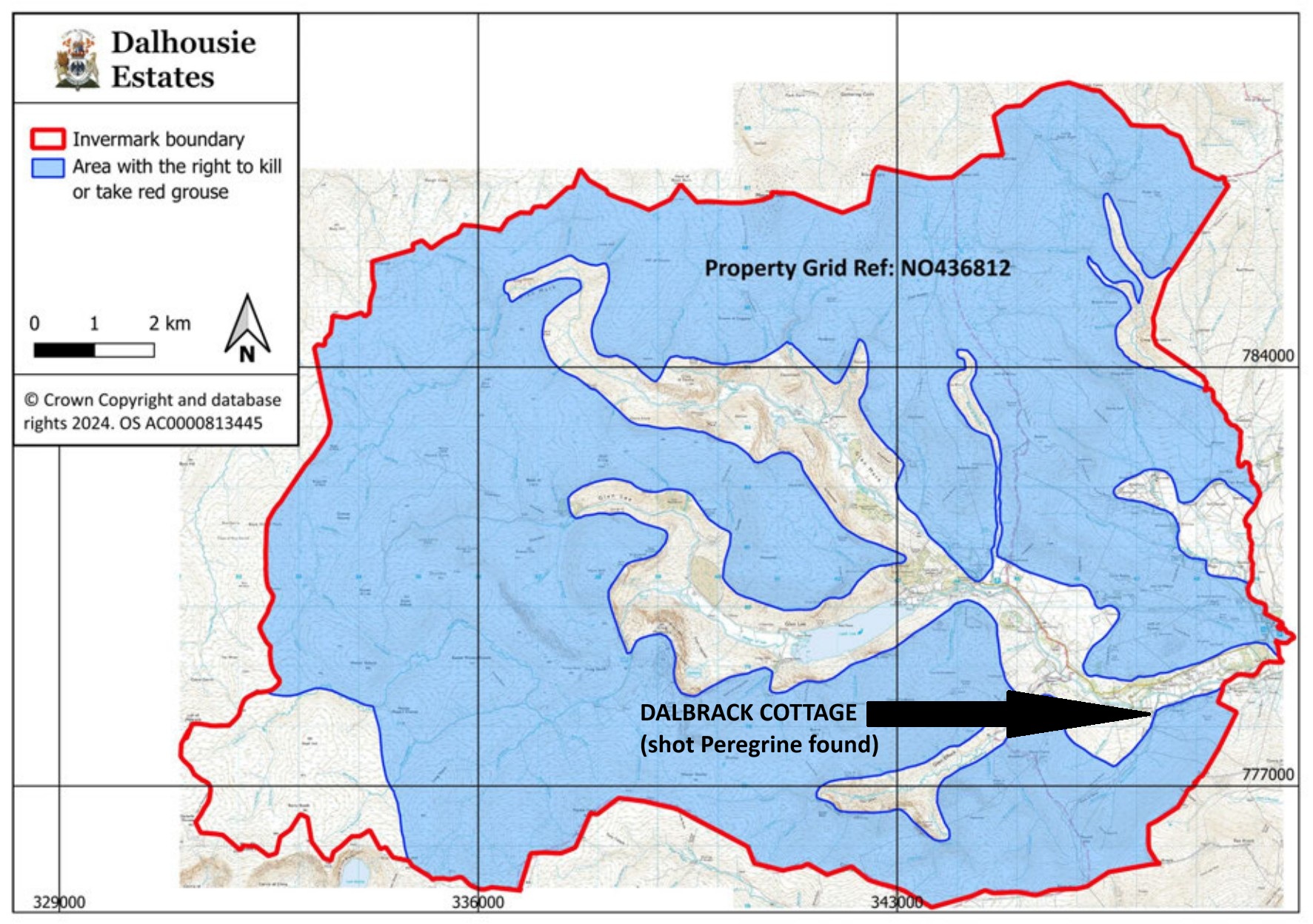
How interesting, then, to see the map that Dalhousie Estates (owner of Invermark Estate) submitted to NatureScot as part of its application for a grouse shooting licence. I sourced this map via an FoI and have annotated it to show the location where the injured Peregrine was found. It looks pretty clear to me that Invermark Estate’s estimation of “some distance away” is quite different to mine and probably that of most other people!
The third and final point of interest (for now) in Invermark Estate’s statement is this:
“It is difficult to accept this restriction when no allegation has been made that our organisation was responsible for the offence, and equally difficult to see how imposing such a significant restriction upon us can represent a fair or proportionate outcome“.
Invermark Estate has claimed that ‘it doesn’t manage the land in question’ and that “An agricultural tenant and sub-tenant have full control over the land, and that tenancy agreement has been in place for more than ten years“.
It isn’t clear to me whether Invermark Estate is claiming it doesn’t manage the land where the injured Peregrine was found or whether it’s claiming it doesn’t manage ‘the land in question’, which I take to mean the land covered by the General Licence restriction.
If it’s the latter, then why would Invermark Estate be so concerned about what it describes as “such a significant restriction upon us“? How could it be a restriction, significant or otherwise, if Invermark Estate has no involvement with the management of the land under restriction?
If it’s the former, then why didn’t Invermark Estate make it clear in its statement that it manages the land for grouse shooting in immediate proximity to where the injured Peregrine was found?
It’s worth looking again at the area of restriction imposed by NatureScot, and comparing it with Invermark Estate’s grouse shoot licence boundary map.
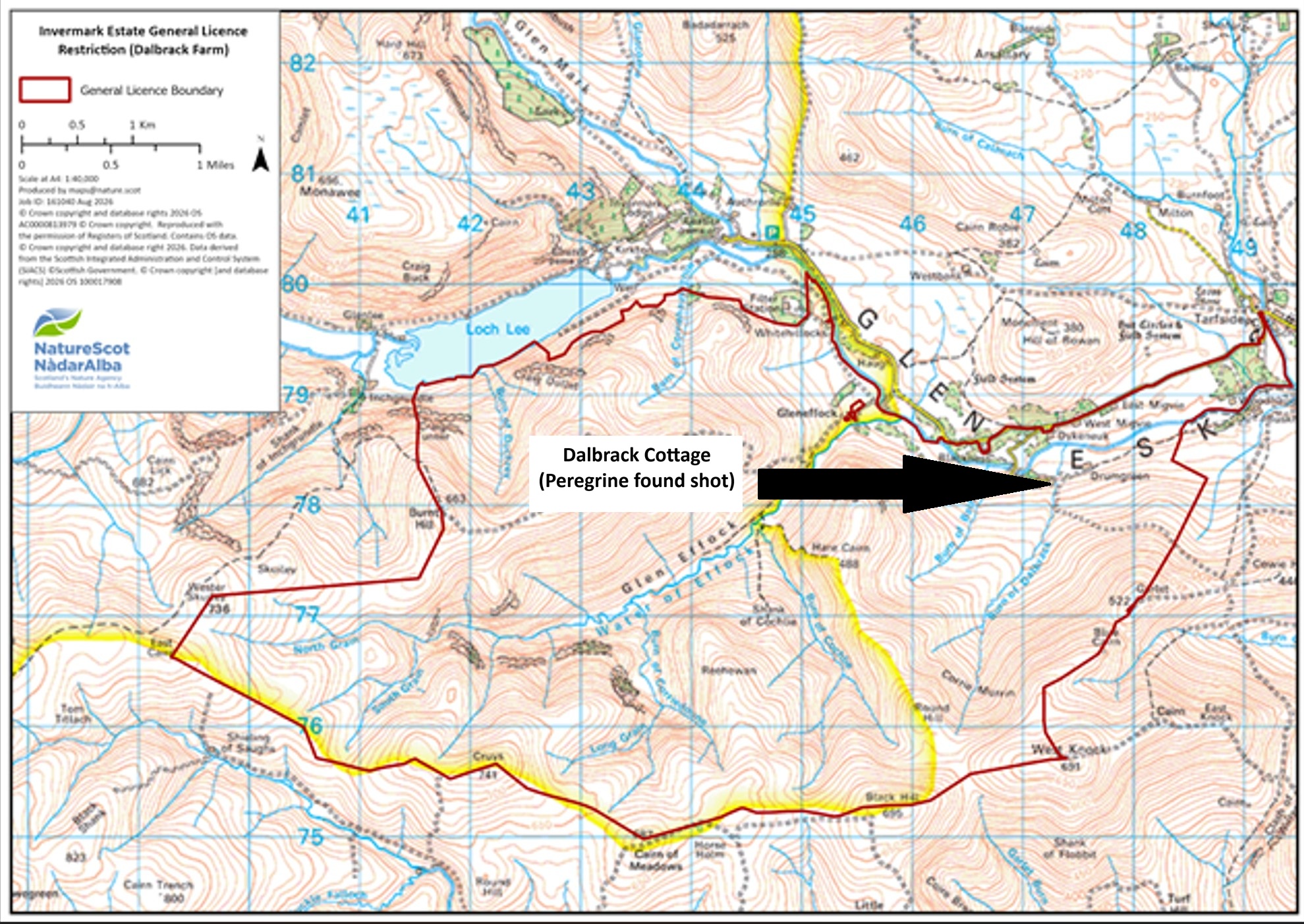
Here is NatureScot’s map showing the area of General Licence restriction (map annotated by me to show the location of the injured Peregrine):
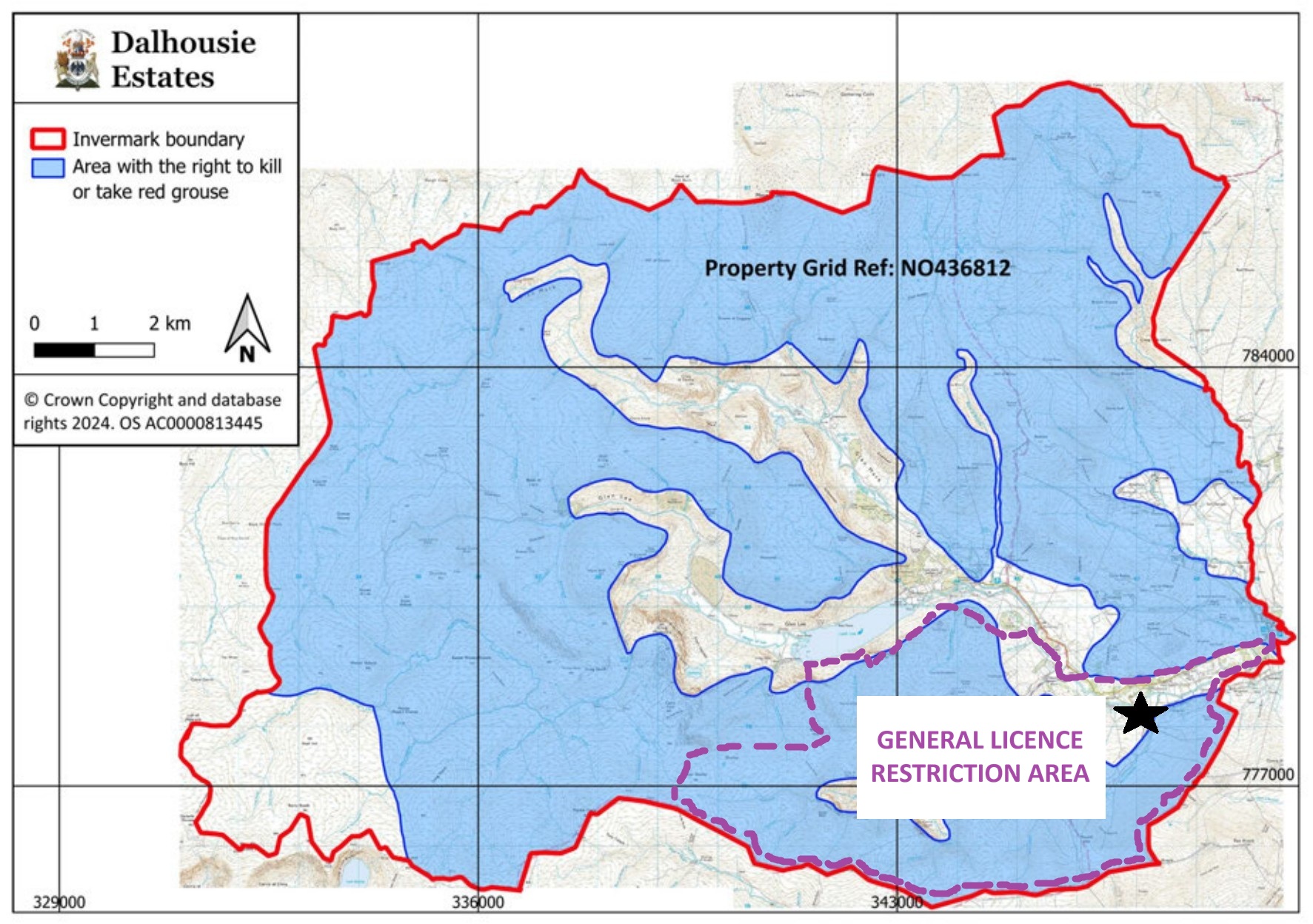
And here is the General Licence restriction area (purple dotted line – note, this is not precise) overlaid on to Invermark Estate’s grouse shoot licence boundary map, with a black star denoting the location where the injured Peregrine was found:
It’s clear then that the General Licence restriction area overlaps with a considerable chunk of moorland where Invermark Estate has the right to kill or take Red Grouse.
Are we to believe that Invermark Estate “does not manage” the land it owns and where the estate has a licence to shoot Red Grouse?
That would be extraordinary.
I await the outcome of Invermark Estate’s appeal against its General Licence restriction with interest.