
Natural England has finally published data for the 2026 Hen Harrier breeding season, showing yet again that Hen Harriers are not tolerated on most English grouse moors.
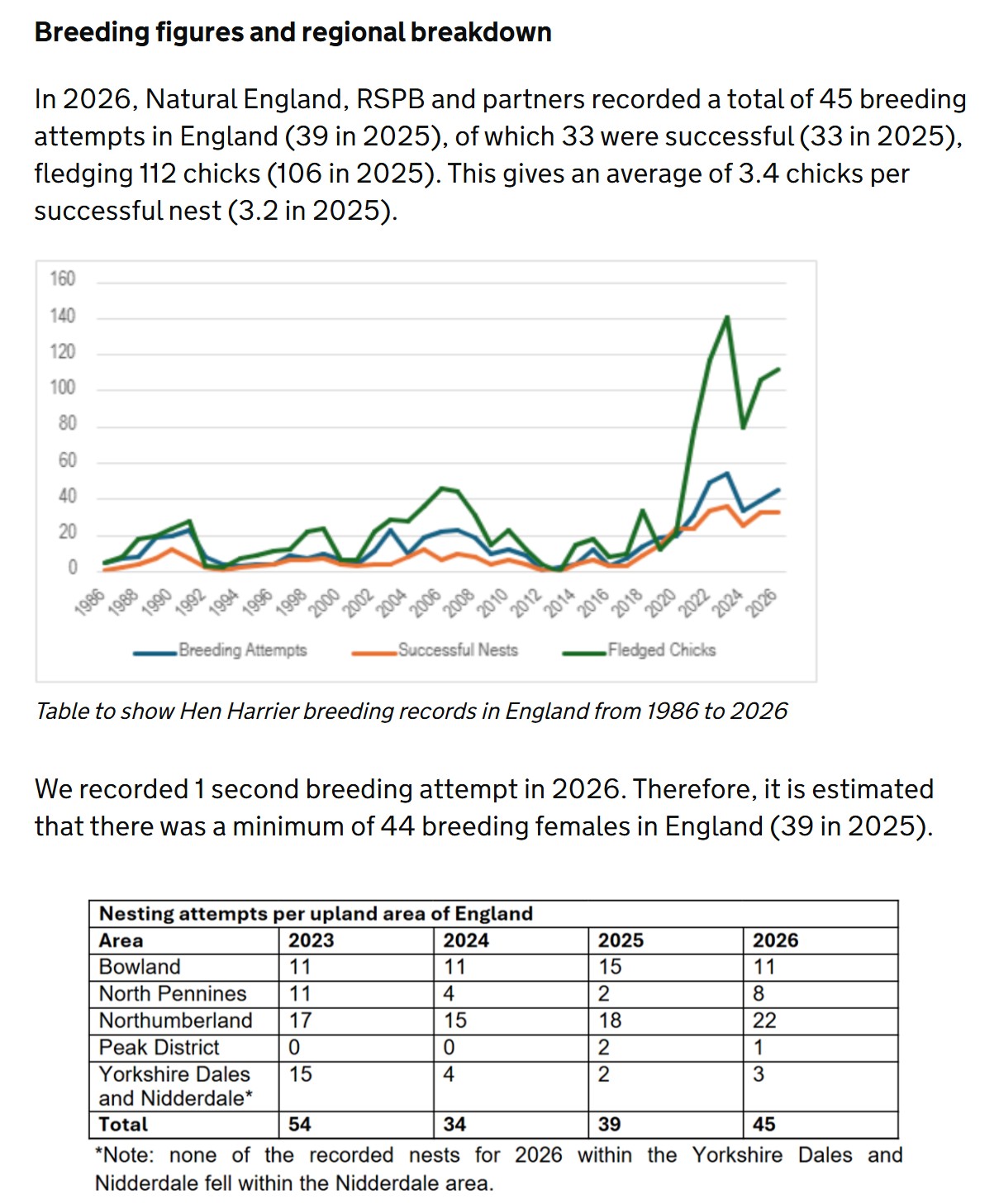
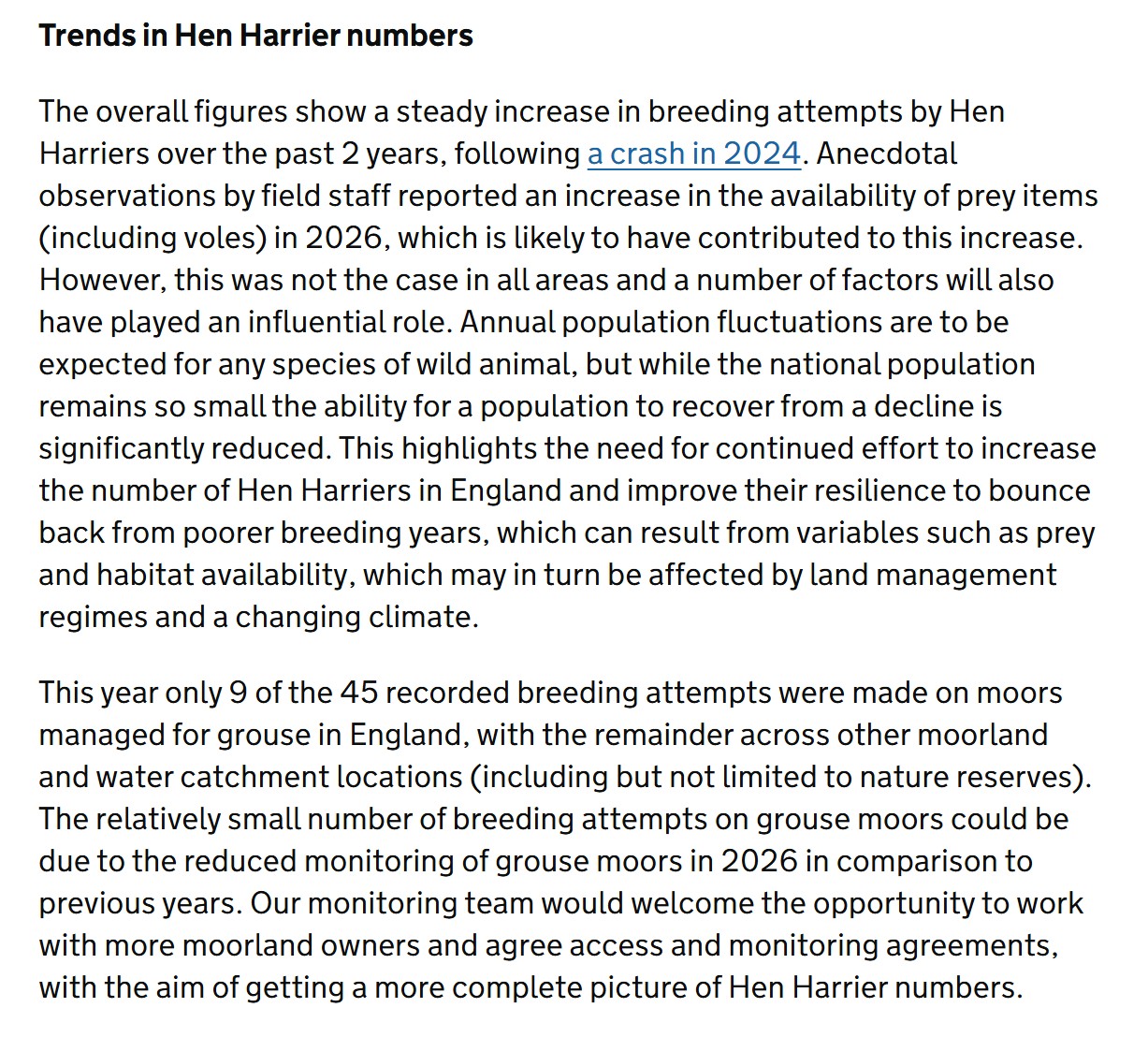
Of 45 recorded breeding attempts this year, only nine were on privately-owned grouse moors: the rest were on land managed for conservation.
And although the number of breeding attempts showed a slight increase this year (39 attempts were recorded in 2025), 33 of this year’s 45 attempts were successful, the same as last year.
When you consider that there are estimated to be between 150-190 grouse moors in England (there’s no official register for a precise number), with an estimated capacity for 330 pairs of breeding Hen Harriers, then only having nine breeding attempts (13.3% capacity) is really nothing to celebrate.
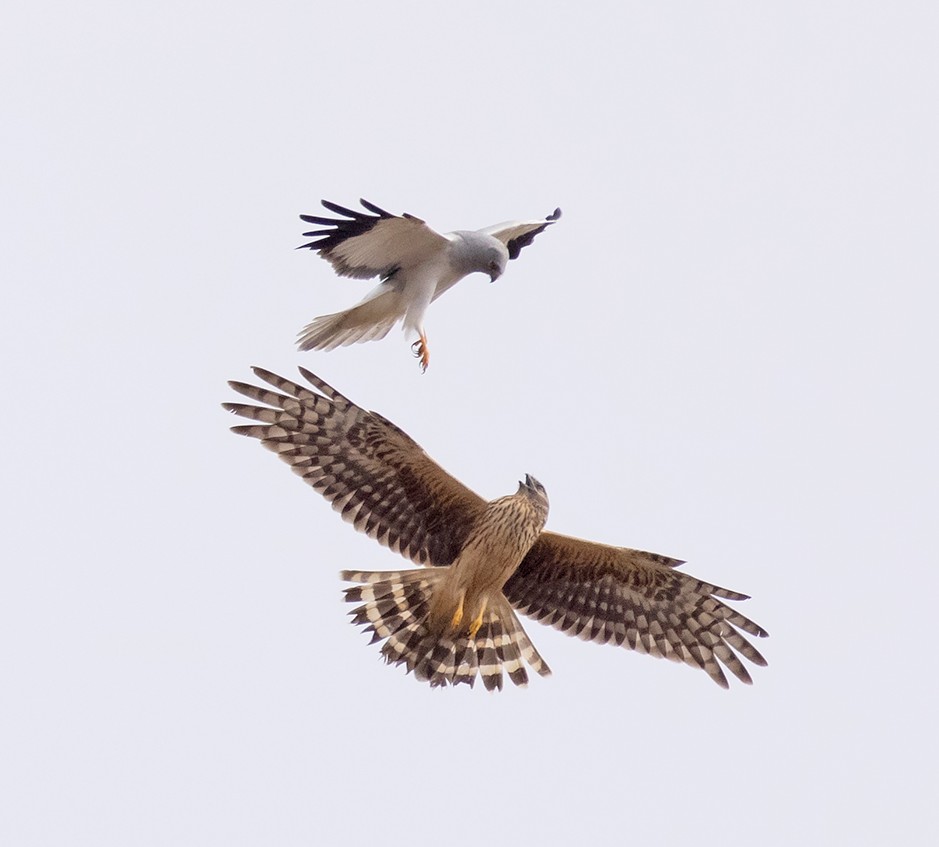
Natural England has published a blog about this year’s results, attributed to Matthew Heard, National Delivery Director, but just as last year, it’s either carelessly worded or deliberately designed to let the criminal grouse shooting industry off the hook.
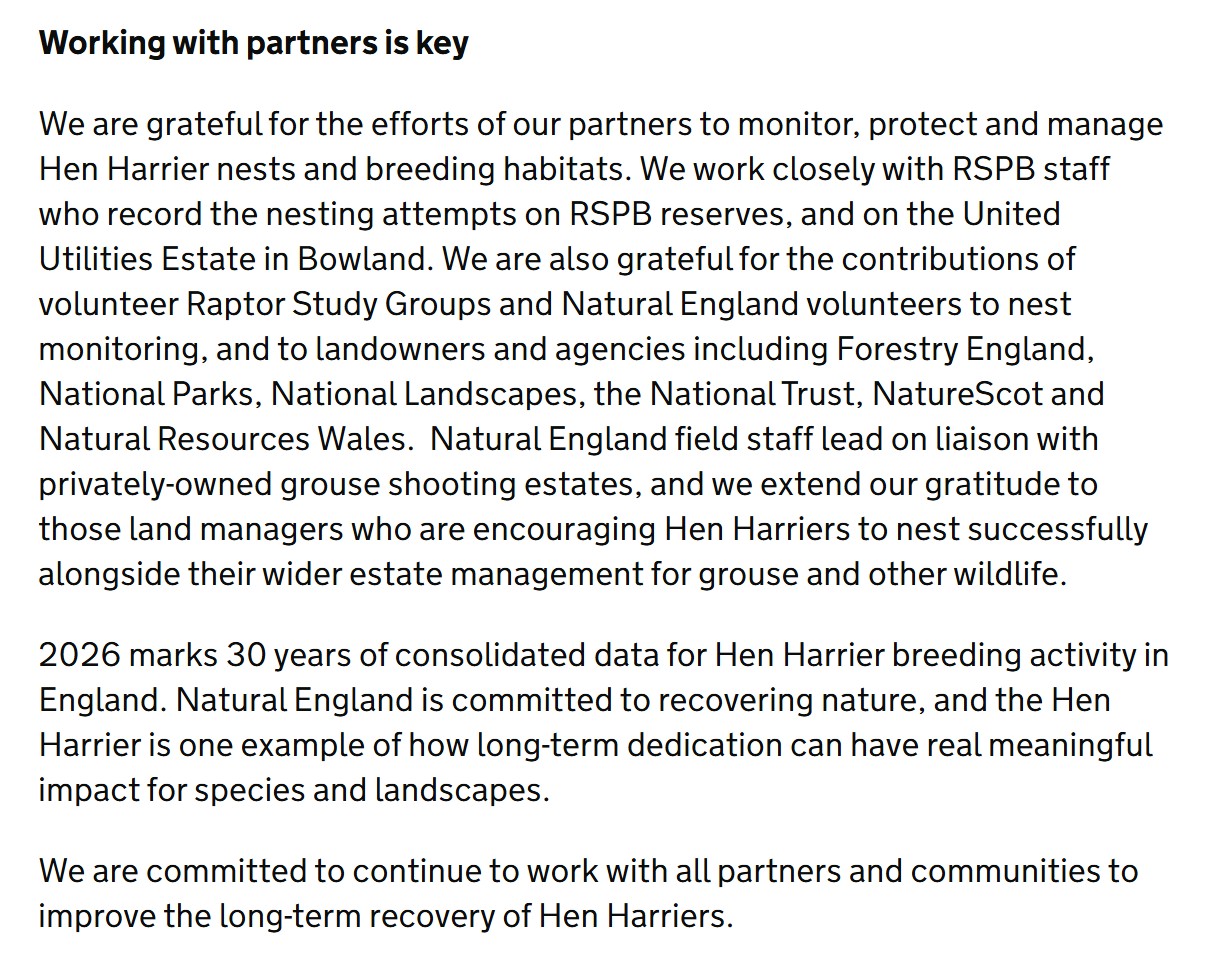
Here’s a copy of Natural England’s blog, with commentary from me below:
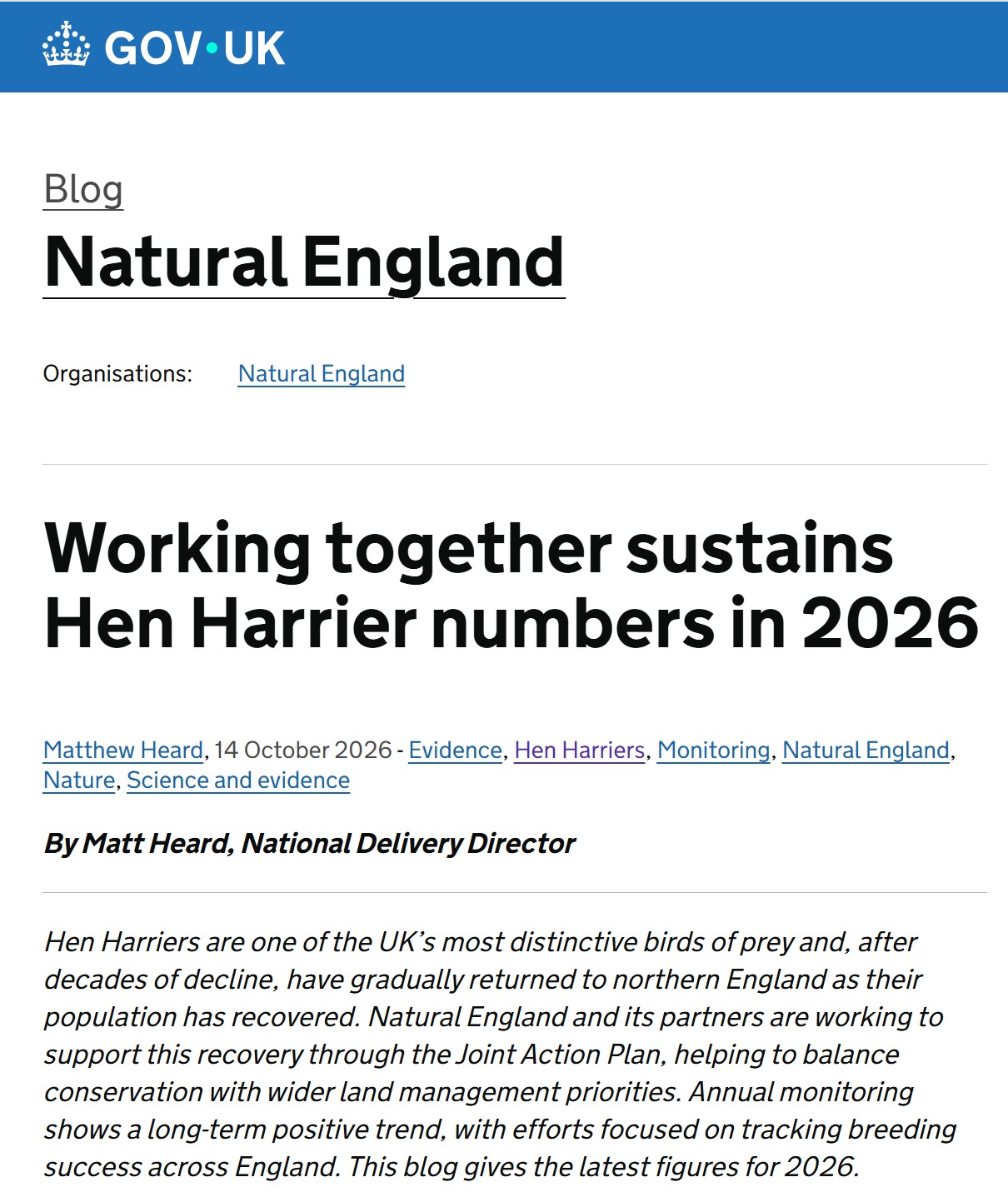
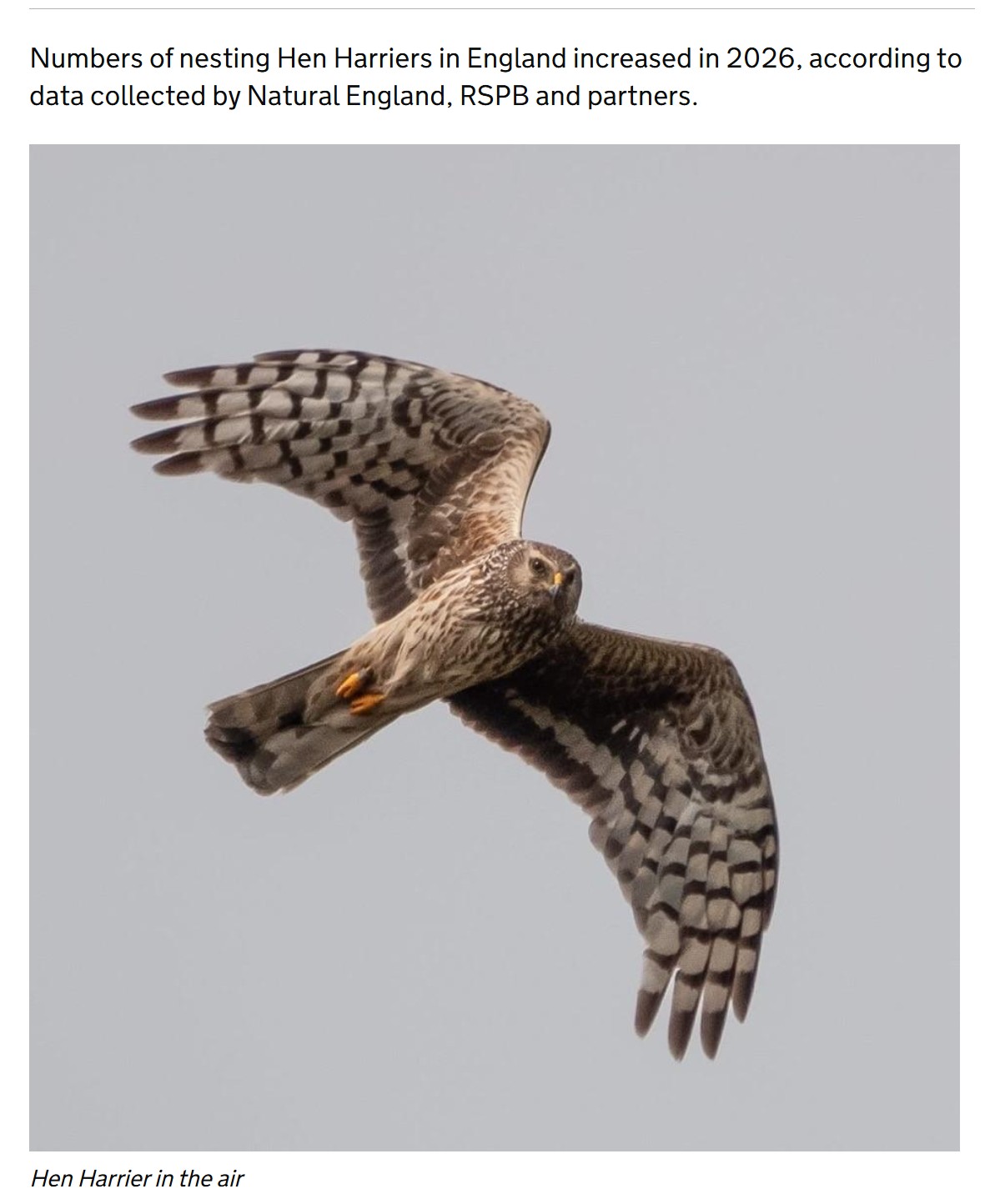
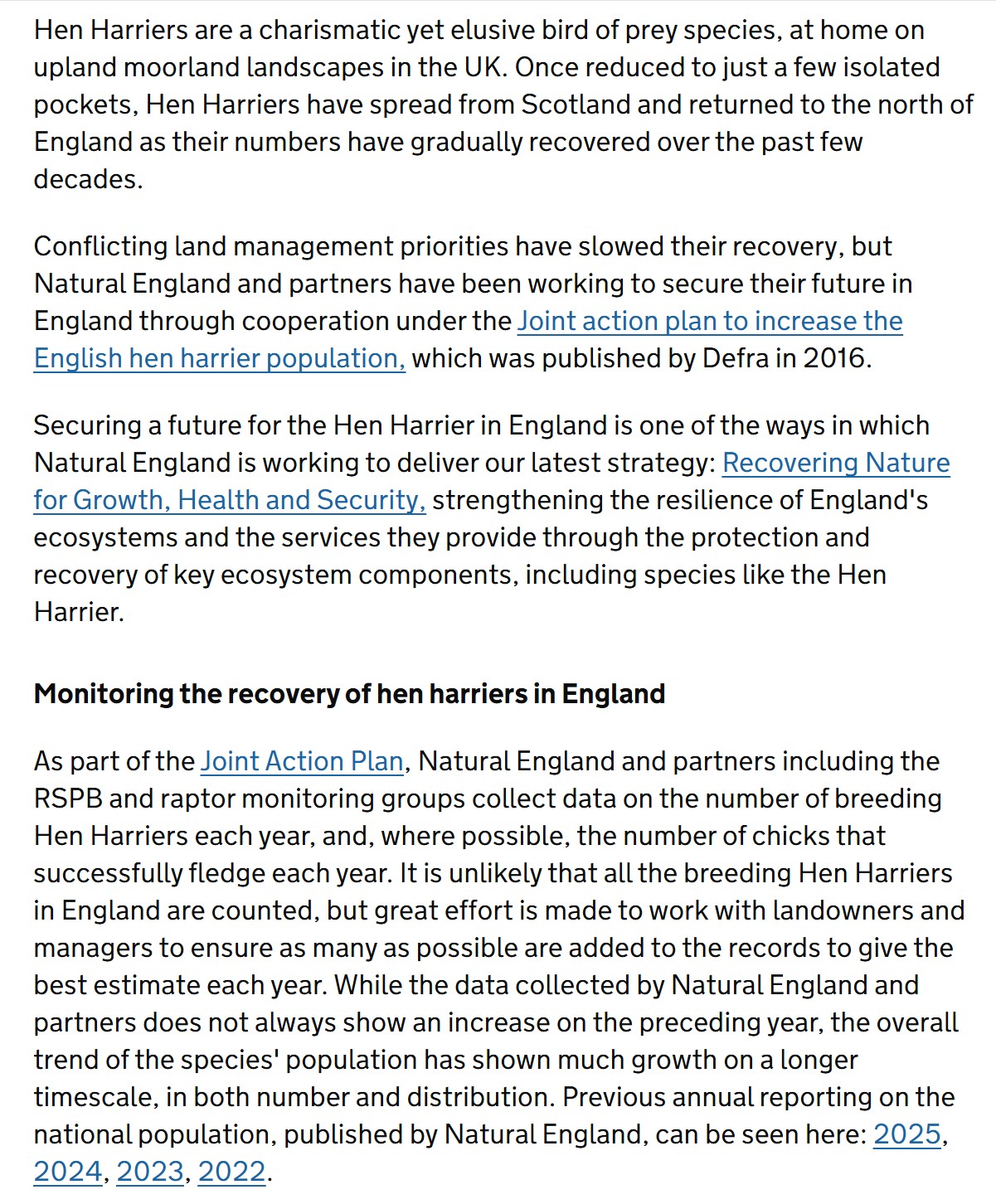
My commentary:
It’s telling, I think, that the words ‘persecution’ or ‘illegal killing’ do not feature anywhere in Natural England’s blog, despite illegal persecution, over many decades, being the sole cause of this species’ precarious conservation status.
Instead, Natural England describes the cause as “conflicting land management priorities“.
Natural England’s opening sentence says, “Hen Harriers… after decades of decline, have gradually returned to northern England as their population has recovered“. The population hasn’t recovered, it’s still recovering, and it’s only returned to parts of northern England – it’s still missing as a breeding species in vast areas of grouse moor in the North Pennines, North York Moors, Yorkshire Dales, Nidderdale, and the Peak District.
As last year, once again Natural England has listed a regional breakdown of HH breeding attempts, but has failed to distinguish between those attempts on privately-owned grouse moors and those on moorland managed for conservation.
So for example, the figures for Bowland this year are 11 breeding attempts. That looks quite good, until you realise that nine of those breeding attempts were on land managed by the RSPB for United Utilities. So how many breeding attempts were there on the nearby and much larger Abbeystead Estate, for example?
Figures for the North Pennines are 8 breeding attempts; we know that at least three of those were on the RSPB’s Geltsdale Reserve, where unusually this year the breeding males didn’t ‘disappear’ or weren’t found shot on neighbouring grouse moors, probably because the RSPB used diversionary feeding to try and keep the males on the reserve.
In Northumberland, there were 22 breeding attempts. I’d guess that, like last year, the vast majority of those were on land managed by Forestry England, not on privately-owned grouse moors.
In the Peak District there was a single breeding attempt (that subsequently failed), and once again this was on land owned by the National Trust. There was also another pair prospecting on NT land this year but they vanished in April before a breeding attempt got underway – again, a familiar pattern in this National Park.
In the whole of the Yorkshire Dales, there were only three breeding attempts, and not one in the whole of Nidderdale. I’d be interested to learn whether any of those breeding attempts in the Yorkshire Dales were successful.
Last year I provided a table to show the differences between HH breeding attempts on land managed for grouse moors and land managed for conservation:

This year I don’t yet have the data to be able to distinguish between the different types of land use but I’ve asked Natural England to provide it. I’ll blog when I receive it.
The funniest part of Natural England’s blog has to be this statement:
“The relatively small number of breeding attempts on grouse moors could be due to the reduced monitoring of grouse moors in 2026 in comparison to previous years“.
Yes, I suppose that might be plausible, if you’re six years old with no previous knowledge of this subject and willing to accept anything you’re told.
Does Natural England honestly think that grouse moor owners wouldn’t be shouting from the rooves of their stately homes if they were hosting breeding Hen Harriers on their grouse moors?!
Raptor persecution, and especially Hen Harrier persecution, is one of the biggest criticisms against the grouse shooting industry and these are crimes that they simply can’t justify, so industry leaders usually just deny it’s happening, even in the face of overwhelming evidence to the contrary.
If Hen Harriers were nesting on grouse moors all over northern England, the industry would make sure every single media outlet and every single Defra minister knew about it!
If you’re a raptor fieldworker, or a birdwatcher, and you’ve spent any time fruitlessly looking for breeding Hen Harriers on grouse moors, then this is the type of evidence/experience you could submit to Defra’s Call for Evidence on gamebird shooting. All the better if you can provide dates and locations. You don’t need to fill in the technical Call for Evidence submission form; you can simply write an email to Gamebirds@defra.gov.uk and write ‘Call for Evidence’ in the subject line. The Call for Evidence closes at midnight on 1st November 2026.

