
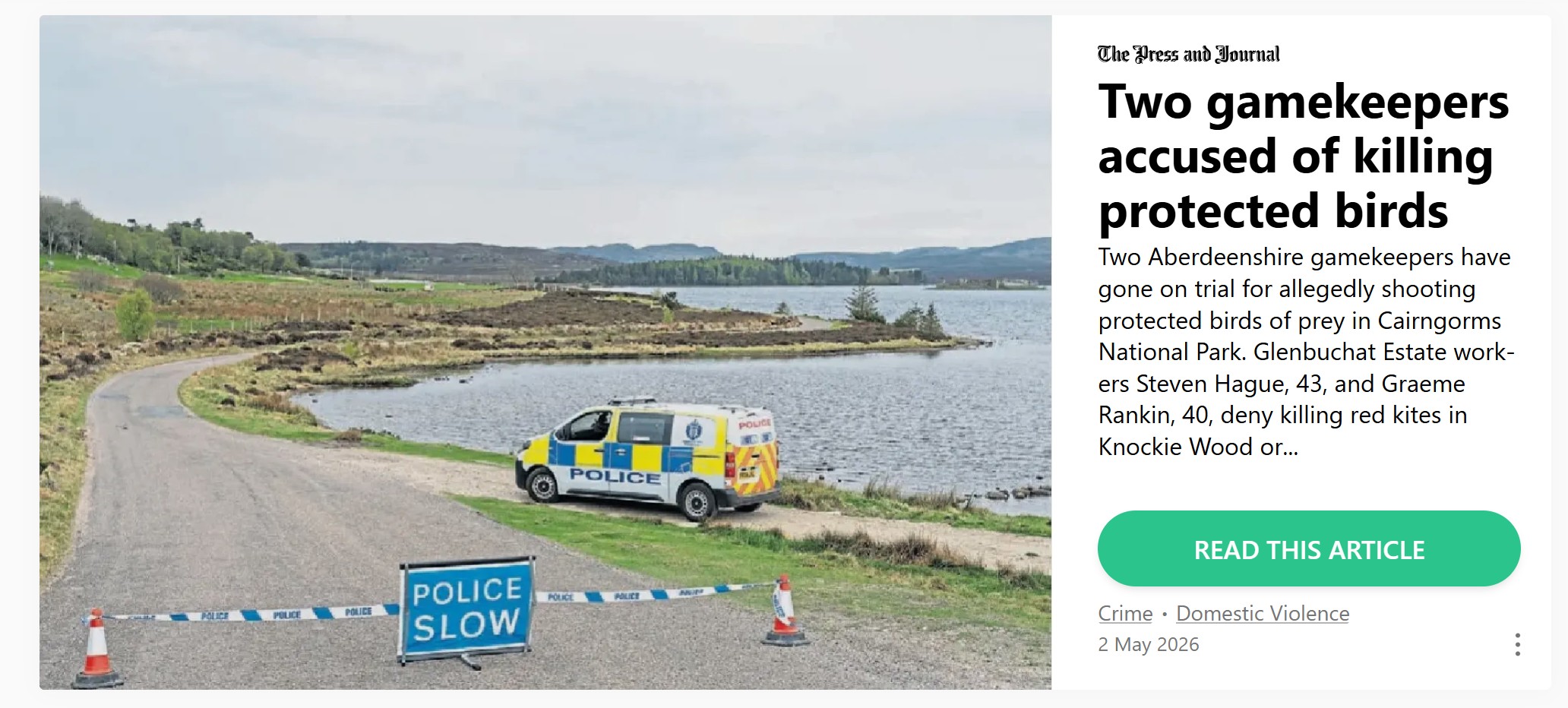
On Monday 20 July 2026, at Aberdeen Sheriff Court, all charges were dropped against two gamekeepers who had been on trial for the alleged shooting of Red Kites, as well as alleged firearms offences, in the Cairngorms National Park.

What follows is my understanding of the case, based on material published by the media, court documents, and conversations I’ve had with people who attended the trial. As far as I’m aware, the outcome of this case has not been reported formally, either by journalists, Police Scotland or the Crown Office & Procurator Fiscal Service. It’s pointless me asking for case details from the Crown Office or Police Scotland because they are protected by data protection regulations. For this reason, the following account should be treated with caution, i.e. it is not provided as a definitive account of the legal proceedings.
CASE BACKGROUND
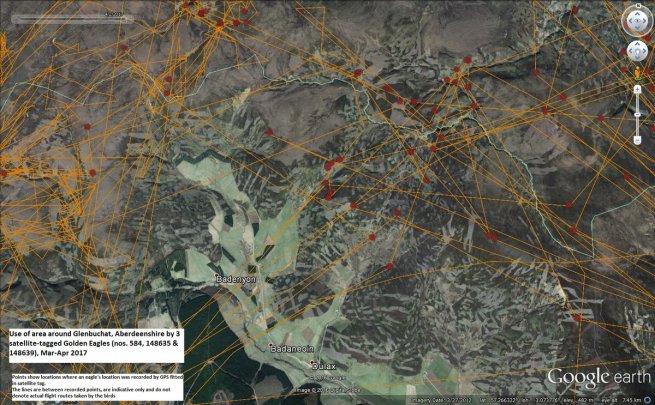
On 4 February 2025 a member of the public notified the RSPB that a dead Red Kite had been found on private property in the Glenbuchat area of Strathdon, in Aberdeenshire, and the finder said that he had concerns that it might have been poisoned. The RSPB’s Investigations team collected the kite carcass and submitted it to Scotland’s Rural College (SRUC) lab for examination, notifying Police Scotland of their action. A short time later a post mortem revealed the kite had been shot, which led Police Scotland to open a wildlife crime investigation.
As part of that investigation, an appeal for information was issued by Police Scotland on 28 February 2025. Shortly afterwards another member of the public, William Johnstone, came forward with footage that had been captured on a night vision trail camera that he and local landowner, Roderick McGilvary, had installed in Knockie Wood (owned by Mr McGilvary) to monitor wildlife. Although the footage was not properly date/time stamped, Mr Johnstone and Mr McGilvary both stated that the footage had been captured over the preceding three weeks.


Aug 2026
The footage showed two armed individuals, with night vision equipment, carrying the body of a(nother) Red Kite. Mr Johnstone and Mr McGilvary both said they recognised the two armed men and named them as Graeme Rankin and Steven Hague, the Head Gamekeeper and underkeeper from nearby Glenbuchat Estate.
Mr Johnstone said he recognised the two men from shooting events he’d attended and from living in the local area. Mr McGilvary said he’d previously given Mr Rankin permission to kill ‘vermin’ on his land.
The trail camera footage was passed to Police Scotland and after examination, several officers, including a Firearms Licensing Officer, also said they recognised the two armed men as gamekeepers Graeme Rankin and Steven Hague.
On 1 May 2025 the Police executed a search warrant at the addresses of the two suspects and firearms were seized.
Following police interviews, to which both suspects gave ‘no comment’ replies, they were reported to the Procurator Fiscal and subsequently charged as follows:
Charge 1 (Graeme Rankin & Steven Hague) – Between 1 – 26 Feb 2025 at Knockie Wood, Strathdon, intentionally or recklessly killed a wild bird (Red Kite) with a firearm, contrary to Section 1(1)(a) of the Wildlife & Countryside Act 1981;
Charge 2 (Graeme Rankin & Steven Hague) – Between 1 – 26 Feb 2025 at Knockie Wood, Strathdon, were in possession and control of a dead wild bird (Red Kite), contrary to Section 1(2)(a) of the Wildlife & Countryside Act 1981;
Charge 3 (Graeme Rankin & Steven Hague) – On 3 or 4 February 2025 at [REDACTED], Glenbuchat, Strathdon, intentionally or recklessly killed a wild bird (Red Kite) with a firearm, contrary to Section 1(1)(a) of the Wildlife & Countryside Act 1981;
Charge 4 (Steven Hague) – On 1 May 2025 at [REDACTED], Glenbuchat, Strathdon, failed to keep keys for gun cabinets in a secure place, failed to ensure the key safe lock was secure and worked properly, and failed to secure ammunition, contrary to Section 1(2) of the Firearms Act 1968.
THE TRIAL
Both defendants pleaded not guilty to all charges so a two-day trial was scheduled to begin in Aberdeen on 9 December 2025. The defendants were each represented by an advocate of Kings Counsel (KC) status. Brian McConnachie KC, one of Scotland’s leading criminal lawyers, represented Graeme Rankin, and Shelagh McCall KC, also highly experienced, represented Steven Hague. Karen Rollo, an experienced Procurator Fiscal from the Wildlife and Environmental Crime Unit at the Crown Office, appeared for the prosecution.
Before proceedings really got going, the Sheriff made a declaration of being a monthly subscriber to the RSPB, which resulted in the two defence KCs lodging a motion that the Sheriff should consider recusing himself because the ‘public might perceive some bias’.
After giving the motion some consideration, the Sheriff agreed to stand down because this case involved RSPB staff members as witnesses for the prosecution.
Unfortunately, no other Sheriff was available immediately to hear the case so it was adjourned and rescheduled as a four-day hearing in April 2026, this time in front of Sheriff Peter Hammond.
Due to the large number of witnesses called by the prosecution in the first four days, the trial was further extended to another two days on 15-16 June 2026.
Prosecution witnesses included the finder of the first dead Red Kite (that was later confirmed shot), RSPB Investigations staff who had collected the kite carcass, William Johnstone who had installed the trail camera at Knockie Wood (landowner Robert McGilvary had since passed away but had previously provided a statement to Police Scotland), the SRUC vet who had performed the post mortem examination of the first dead Red Kite, a ballistics expert who could comment on the weapons and ammunition seen on the footage compared to what was seized during the search warrant, and multiple police officers who had been involved in viewing the captured footage, identifying the individuals (and their equipment) in the footage, and those involved in the execution of the search warrant.
There were significant delays at the start of the trial due to technical challenges in getting the video evidence to be shown in court; this seemed to be due to formatting issues regarding the ‘stitch video’ (a single film of various clips knitted together to make it easier to view). These were eventually resolved, although prosecution witnesses noted that the quality of the video shown in court was poorer than the raw footage they had been able to view at the police station.
A number of witnesses told the court that they couldn’t identify the suspects based on the poor quality of the footage shown in court but reiterated that they’d been able to identify them from the original footage at the police station.
Police Firearms Officer Tomas Spracklen told the court he’d attended Steven Hague’s cottage on 1 May 2025, alongside other officers executing the search warrant. He said he found that a safe, which stored keys to a gun cabinet, was not secure as he was able to access it and remove the key without having to use a code. He said that the key to a second gun locker was hanging on a hook behind a table leg just yards away in the same room where shotguns were kept. He also told the court that other Police Officers had found an unsecured pouch of ammunition in the gun room.
The two defence KCs challenged the provenance of the video footage, focusing on the fact that it wasn’t properly time/date stamped. They also challenged whether there had been procedural errors by the Police Officers during the execution of the search warrant.
The defence then lodged a motion to the Sheriff that on all charges, there was no case to answer. With respect to the charges of the killing of the second kite, they contended that the prosecution had failed to demonstrate that their witnesses had identified the defendants on the basis of the(poor quality)footage played in court, and that the prosecution had also failed to demonstrate that the footage captured was consistent with the dates of the charges libelled. They suggested, therefore that all these witnesses’ evidence should subsequently be disregarded.
The defence further suggested that the prosecution’s reliance on the established Scots Law ‘Moorov principle’ that allows for the use of similar factual evidence to corroborate multiple charges, should also mean that despite apparent similar circumstances surrounding the killing of the first Red Kite, if the charges above were dismissed, then charge 3 should also be dismissed.
The defence also argued that the fourth charge, relating to unsecure ammunition, should also be dismissed as they suggested that there was no corroboration of the lack of security of the accused’s gun room (i.e. the key to the gun cabinet hidden behind a table leg, shown to one Police Officer by the accused).
On 20 July 2026, the Prosecution made a lengthy submission in response to the defence’s motion, countering all of the above points, including giving examples of case law to support its case. However, although the Sheriff agreed that the footage captured was within the dates of the charges libelled, he accepted all of the other points made by the defence and made a ruling that there was no case to answer on all four charges. The defendants were then told they were free to go.
MY COMMENTARY
What follows is my opinion. It does not infer any guilt on the two defendants, but rather focuses on the mechanics of the case.
To start, it’s worth mentioning Police Scotland’s early appeal for information after they’d received confirmation from a post mortem that the first Red Kite had been shot. It was a direct result of that appeal that two witnesses came forward with their trail camera footage showing two armed men carrying a(nother) dead Red Kite, in the same area, and around the same time as the discovery of the first dead Red Kite. Some police forces don’t bother putting out appeals for information when birds of prey have been persecuted – this case highlights the value of issuing timely appeals, so plaudits to Police Scotland for making the effort to do so, and quickly.
On to the case itself…
It’s really difficult to comment on the legal complexities because (a) I wasn’t in court to hear the evidence; (b) I’m unsighted on any written submissions made to the court by both the prosecution and defence; (c) I didn’t hear, and nor have I seen, the Sheriff’s detailed explanation for his decision-making; and (d) I’m not a lawyer.
Nevertheless, the information that is available about the case raises some obvious, and in my view, serious, questions about the course of justice.
My main concern centres on the Sheriff’s ruling that the prosecution had not been able to establish, in court, the identities of the two armed men. That failure to identify them seems to be based entirely on the poor quality of the footage shown in court, even though multiple witnesses, including Police Officers, had given testimony (in sworn witness statements and in person before the court) that they had been able to identify them from the raw footage viewed at the police station.
If the video evidence in court was of such obvious poor quality, why wasn’t the trial adjourned until such time that better quality footage, which was known to exist, could be shown in court? I don’t know if a request for an adjournment was made and the Sheriff refused it, or whether it just simply wasn’t raised. It seems an absurdity to me that a trial can stand or fall on a technical failure that could have been so easily resolved.
Related to this, I don’t understand why the Sheriff was willing to accept the testimony of Mr Johnstone and Mr McGilvary that although their trail camera footage wasn’t properly time/date stamped, the footage related to the time period they’d said it related to, but then he wasn’t willing to accept the testimonies of serving Police Officers who’d stated that they’d been able to identify the suspects from footage they’d viewed at the police station. That makes no sense to me.
Another question I have relates to the apparent lack of corroboration about the alleged lack of security in the gun room. I thought that all Police Officers wore body-worn cameras these days, and that that footage is considered acceptable as ‘real evidence’ in court. Was body-worn camera footage available in this case and if so, why wasn’t it accepted? If no body-worn footage was worn, then it sounds like a fundamental cock-up was made by the Police Officers executing the search warrant, making easy pickings for the defence KCs.
From what I understand, I think the Crown Office can appeal ‘no case to answer’ decisions if it chooses to, but has to lodge an appeal within a relatively short time scale following the judgement. It’ll be interesting to see whether that happens in this case.
What we’re left with is the knowledge that two Red Kites were illegally killed in the Glenbuchat area of Strathdon during February 2025, one confirmed shot and the other one more than likely to have been shot. This area in the north-east part of the Cairngorms National Park has long been recognised as a raptor persecution hotspot but once again, the raptor killers, whoever they are, are getting away with it.
NB: For anyone considering leaving a comment on this particular blog, please remember that all charges were dropped against the two defendants. Any libellous comments, either direct or inferred, won’t be published. Comments about the legal process are welcome.

 The Convenor of the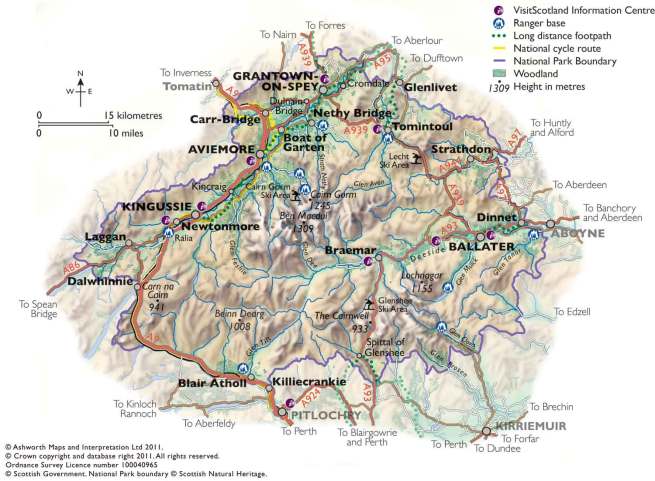
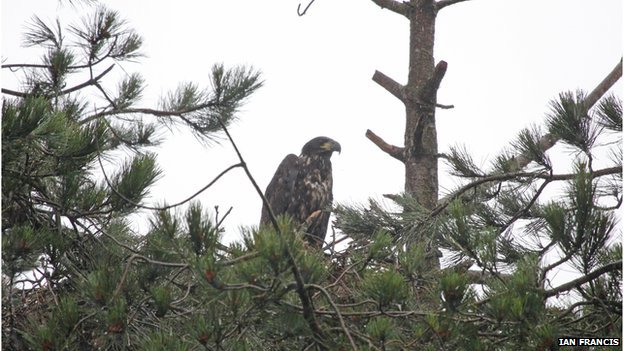
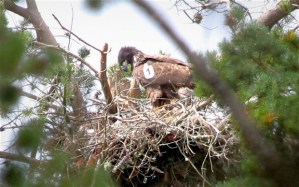 Last year we celebrated the news of the first sea eagle chick to fledge in East Scotland for over 200 years (see
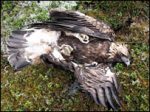 MAY 2006: A dead adult golden eagle was found on the Dinnet & Kinord Estate, near Ballater, Aberdeenshire. Tests revealed it had been poisoned by the illegal pesticide, Carbofuran. Grampian Police launched an investigation. Five years and 11 months later, nobody has been prosecuted.
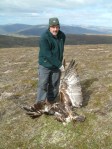 JUNE 2006: A dead golden eagle was found on Glen Feshie Estate in the Cairngorms. Tests revealed it had been poisoned by the illegal pesticide, Carbofuran. Northern Constabulary launched an investigation. Five years and ten months later, nobody has been prosecuted.
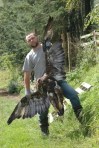 AUGUST 2007: A dead adult female golden eagle was found on an estate near Peebles in the Borders. She was half of the last known breeding pair of golden eagles in the region. Tests revealed she had been poisoned by the illegal pesticide, Carbofuran. Lothian & Borders Police launched an investigation. Four years and eight months later, nobody has been prosecuted.
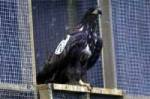 AUTUMN 2007: Tayside Police received a detailed tip-off that a young male white-tailed eagle (known as ‘Bird N’) had allegedly been shot on an estate in Angus. The timing and location included in the tip-off coincided with the timing and location of the last-known radio signal of this bird. Four and a half years later, the bird has not been seen again. With no body, an investigation isn’t possible.
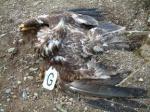 MAY 2008: A one year old male white-tailed eagle hatched on Mull in 2007 and known as ‘White G’ was found dead on the Glenquoich Estate, Angus. Tests revealed he had been poisoned by an unusual concoction of pesticides that included Carbofuran, Bendiocarb and Isofenphos. A police search in the area also revealed a poisoned buzzard, a baited mountain hare and 32 pieces of poisoned venison baits placed on top of fenceposts on the neighbouring Glenogil Estate. Laboratory tests revealed the baited mountain hare and the 32 poisoned venison baits contained the same unusual concoction of highly toxic chemicals that had killed the white-tailed eagle, ‘White G’. Three years and 11 months later, nobody has been prosecuted.
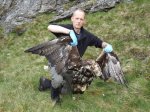 JUNE 2009: An adult golden eagle was found dead at Glen Orchy, Argyll, close to the West Highland Way. Tests revealed it had been poisoned by the illegal pesticide, Carbofuran. Strathclyde Police launched a multi-agency investigation. Two years and ten months later (April 2012), Tom McKellar pled guilty to possession of Carbofuran stored in premises at Auch Estate, Bridge of Orchy. Nobody has been prosecuted for poisoning the golden eagle.
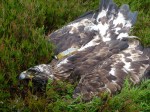 JULY 2009: A two year old female golden eagle known as ‘Alma’ was found dead on the Millden Estate, Angus. Tests revealed she had been poisoned by the illegal pesticide, Carbofuran. Alma was a well-known eagle – born on the Glen Feshie Estate in 2007, she was being satellite-tracked and her movements followed by the general public on the internet. Tayside Police launched an investigation. Two years and nine months later, nobody has been prosecuted.
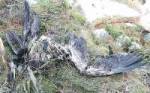 AUGUST 2009: A young white-tailed eagle was found dead on Glenogil Estate, Angus. Tests revealed it had been poisoned by the illegal pesticide, Carbofuran. Tayside Police were criticized in the national press for not releasing a press statement about this incident until January 2010. Two years and 8 months later, nobody has been prosecuted.
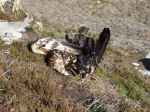 MAY 2010: Three dead golden eagles were found on or close to Skibo Estate, Sutherland. Tests revealed they had been poisoned; two with Carbofuran and one with Aldicarb. Northern Constabulary launched a multi-agency investigation. One year later (May 2011), Sporting Manager Dean Barr pled guilty to possession of 10.5 kg of Carbofuran stored in premises at Skibo Estate. One year and 11 months later, nobody has been prosecuted for poisoning the three golden eagles.
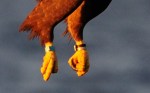 JUNE 2010: Leg rings with unique identification numbers that had previously been fitted to the legs of four young golden eagles in nests across Scotland were found in the possession of gamekeeper James Rolfe, during a multi-agency investigation into alleged raptor persecution at Moy Estate, near Inverness. It is not clear how he came to be in possession of the rings. The bodies of the eagles from which the rings had been removed were not found. No further action was taken in relation to the discovery.
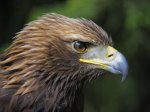 JUNE 2010: A golden eagle and a white-tailed eagle were found dead on an estate near Farr, Inverness-shire. Tests revealed they had been poisoned by the illegal pesticide, Carbofuran. Northern Constabulary apparently did not search the property until July 2011. One year and ten months later, nobody has been prosecuted.
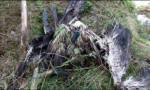 DECEMBER 2010: A decomposing carcass of a white-tailed eagle was found and photographed on Logie (Lochindorb) Estate, Morayshire. It was reported to Northern Constabulary. By the time the police arrived to collect it, the carcass had disappeared. The police said they couldn’t investigate further without the body.
 MARCH 2011: The body of a young golden eagle was discovered on North Glenbuchat Estate, Aberdeenshire. Tests revealed it had been poisoned by the illegal pesticide, Carbofuran. Grampian Police launched an investigation and raided the property in May 2011. One year and one month later, we are not aware of any pending prosecutions.
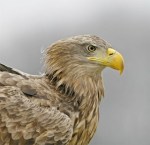 APRIL 2011: The body of a white-tailed eagle was found at the base of cliffs on Skye. The person who discovered it (a professional medic) considered it to have been freshly shot with a rifle, decapitated with a sharp implement and thrown from the cliff top. He took photographs and alerted Northern Constabulary and RSPB. There was a delay of two weeks before the now probably decomposed carcass was collected. A post-mortem was inconclusive. This incident was not made public until one year later after a tip off to this blog. We are not aware of any pending prosecutions.
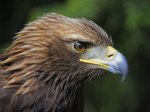 NOVEMBER 2011: The signal from a satellite-tracked young golden eagle (hatched in 2010) stopped functioning when she was at a location in the Monadhliaths, a well-known raptor persecution black spot in the Highlands. Her last known location was checked by researchers but there was no sign of the bird. Another ‘disappearance’ in suspicious circumstances or a technical malfunction of the satellite transmitter?
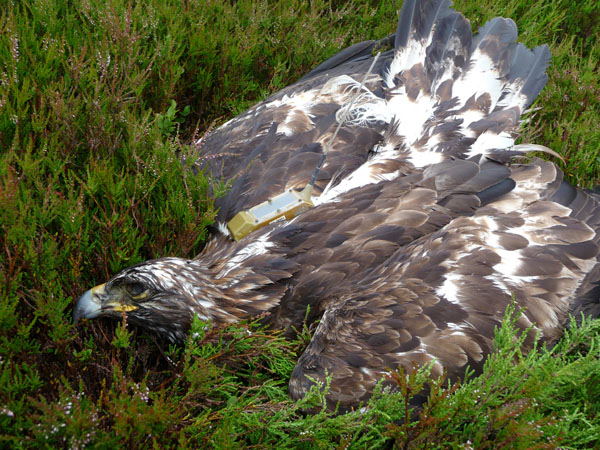 Two years ago in July 2009, Alma, a two-year golden eagle who had been satellite-tracked across Scotland from her birth place on the Glenfeshie Estate,
