UK legislation continues to fail birds of prey as widespread illegal killing continues – new report from RSPB

Press release from the RSPB (27 May 2026)

UK LEGISLATION CONTINUES TO FAIL BIRDS OF PREY AS WIDESPREAD ILLEGAL KILLING CONTINUES

  • 921 confirmed incidents of bird of prey persecution were recorded in the UK from 2015-2024, involving 18 protected species. Shockingly, these figures represent only a fraction of the true number of these crimes.
  • 55% of all confirmed incidents (2015-2024) were associated with land managed for gamebird shooting with two thirds of individuals convicted linked to the gamebird shooting industry.
  • These latest findings prompt renewed calls for tougher regulation of the gamebird industry through the introduction of licensing for all gamebird shooting in the UK.

Although all birds of prey have been protected under UK laws for over 60 years, a new RSPB report, Patterns of Persecution reveals that these protected species are being illegally targeted and killed across the UK. Between 2015 and 2024, 921 confirmed incidents were recorded across the UK. Of these, 48% were shooting related.

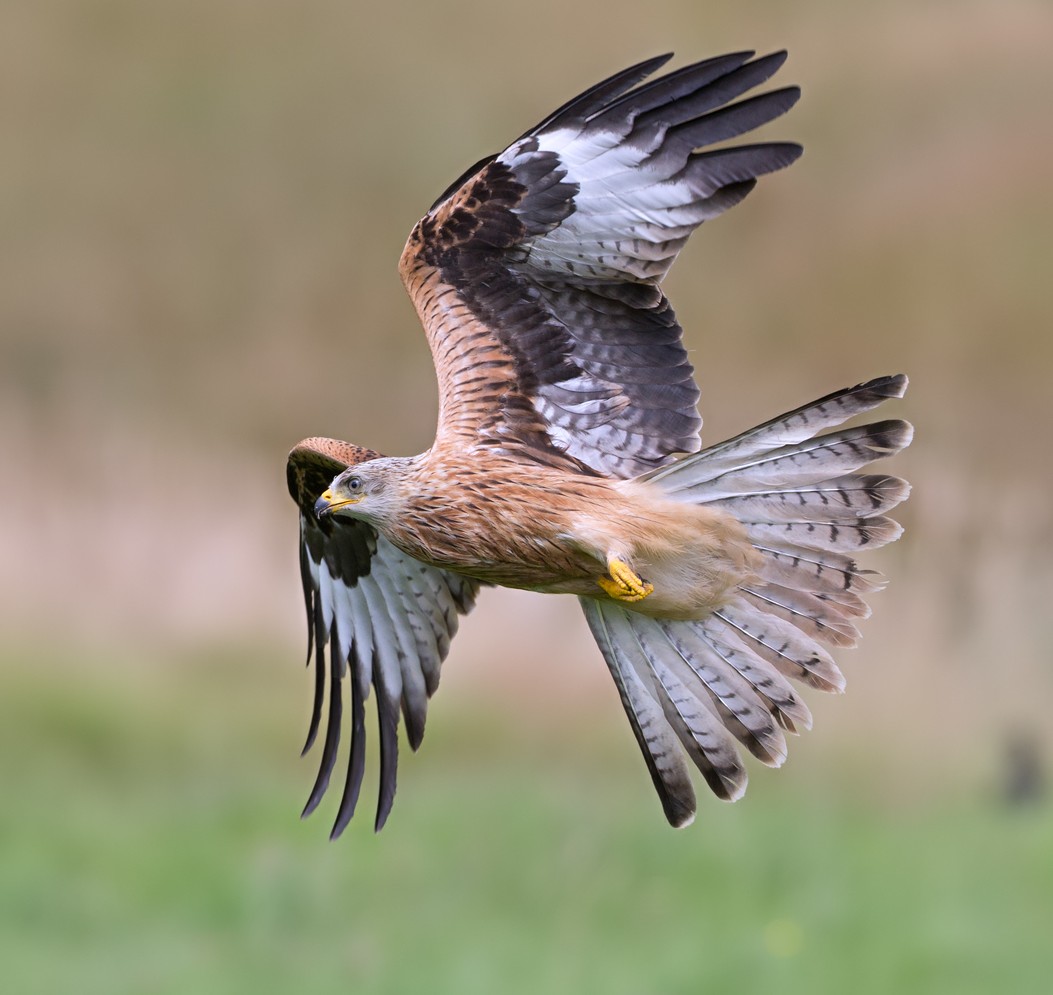
In this ten-year period 18 protected bird of prey species, including many reintroduced and recovering species of conservation concern, fell victim to these crimes. Buzzards were the hardest hit with 319 confirmed incidents recorded, followed by Red Kites (157 confirmed incidents) and Peregrines (97 confirmed incidents).

Concerningly, as these crimes take place predominantly in remote and often inaccessible areas of the countryside, not all are detected. These figures therefore represent only the tip of the iceberg.

Evidence, including police investigations, intelligence reports, eye-witness accounts and covert footage have shown that bird of prey persecution is significantly linked to the gamebird shooting industry. 55% of confirmed incidents (2015-2024) were linked to land managed for gamebird shooting (21% grouse shooting, 28% pheasant and/or partridge shooting, and 6% mixed gamebird shooting).

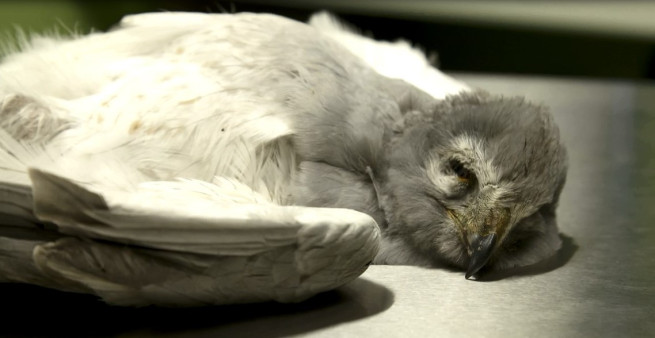
On some shooting estates birds of prey are being illegally shot, trapped or poisoned, nests and eggs destroyed, and chicks killed before they have fledged the nest.  These often-brutal crimes are committed in an attempt to prevent any perceived threat to gamebird stocks, in an effort to maximise the number of gamebirds available to be shot.

Despite hundreds of confirmed incidents of bird of prey persecution being recorded in recent years, if there is no substantive evidence which links a person to the crime these incidents go unchallenged and unpunished. Between 2015 and 2024, despite hundreds of incidents being recorded, only 24 individuals were convicted of bird of prey persecution-related offences. Two thirds were associated with the gamebird industry, and more than half were working as gamekeepers at the time.

This latest report shows that these crimes continue to detrimentally impact Hen Harrier recovery in England and Scotland. This iconic and threatened Red-listed species has been persecuted for decades, resulting in their population being suppressed to a fraction of their natural capacity. Between 2015 and 2024, 49 confirmed Hen Harrier persecution incidents were recorded in the UK. The majority of these incidents took place on or near land managed for grouse shooting. In the same ten-years 100 satellite tagged Hen Harriers disappeared in suspicious circumstances on or near grouse moors. They were suspected to have been illegally killed.

To provide a meaningful deterrent and effectively challenge the illegal killing of birds of prey, the RSPB is supporting the introduction of a licensing scheme for all gamebird shooting in the UK. Under a civil burden of proof, licences could be suspended or revoked where evidence indicates bird of prey persecution has occurred on licensed land. The system would promote best practice, penalising only those who break the law while respecting the rights of responsible estates. Under this legislation, birds of prey would have the effective protection they desperately need. 

In 2024, Scotland took significant steps, introducing mandatory licensing of grouse shooting under the Wildlife Management and Muirburn (Scotland) Act 2024. Now it is time for these protections to be extended across the UK, for all gamebirds shooting.

James Robinson, the RSPB’s chief operating officer: “As this report shows, existing UK laws continue to fail to protect our magnificent birds of prey. Without a meaningful deterrent, these crimes will continue. eagles will be poisoned, Hen Harriers shot and Buzzards beaten to death in traps. All of these crimes are unacceptable.

Frustratingly, under existing laws, those committing these crimes have been able to do so with little fear of retribution. This needs to change.

Regulation in the form of a licensing system is the most appropriate and fair way to achieve this, providing an effective and meaningful deterrent to those willing to commit these crimes and finally give these incredible species the protection they urgently need.”

If you notice a dead or injured bird of prey in suspicious circumstances, call the police on 101 and fill in the RSPB’s online reporting form: https://www.rspb.org.uk/birds-and-wildlife/advice/wild-bird-crime-report-form/

If you have information about anyone killing birds of prey which you wish to report anonymously, call the RSPB’s confidential Raptor Crime Hotline on 0300 999 0101.

ENDS

The new RSPB report and its appendices can be downloaded here:

UPDATE 29 May 2026: Shooting industry’s flawed analysis of RSPB raptor persecution data (here)

Bird of prey persecution in UK still widespread, says RSPB

In anticipation of a new RSPB report, due out tomorrow, documenting the ongoing illegal killing of birds of prey in the UK, the BBC News website has an article this morning, stating Britain’s protected birds of prey are still being shot, trapped and poisoned.

The BBC says the new report records 921 confirmed attacks on birds of prey between 2015 and 2024, with more than half, according to the RSPB, on or near land managed for game shooting.

Mark Thomas, head of the RSPB’s investigations unit, told the BBC the killings were “about money”, with birds of prey targeted to stop them taking young pheasants, partridges or grouse, leaving more birds to be shot by paying customers.

Shooting organisations strongly deny persecution is widespread across the industry. They say it is carried out by a small minority and condemn it outright.

Same old, same old.

The BBC has created an interactive map based on the RSPB’s data, showing confirmed incidents per 100 km sq, between 2015 and 2024. There’s a map showing all confirmed incidents (see below) but you can also click on various tabs to show the data for Buzzards, Red Kites, Peregrines, ‘Owls’, Goshawks and Hen Harriers.

The article highlights the convictions of three gamekeepers this year: Thomas Munday, convicted after brutally clubbing a trapped Buzzard to death on a Pheasant shoot at Hovingham, North Yorkshire (here); Racster Dingwall, convicted of conspiracy to kill a Hen Harrier on a grouse moor in the Yorkshire Dales National Park (here); and Russell Mason, convicted of brutally clubbing a trapped Goshawk to death on a Pheasant shoot in Perthshire (here).

The RSPB repeats its call for all gamebird shoots to be licensed. Dr Marnie Lovejoy from the British Association for Shooting & Conservation (BASC) is cited as saying BASC opposes licensing because it ‘would add another layer of regulation to activities already covered by law and would affect everyone involved in shooting’.

It’s a strange argument, often repeated by the game shooting industry. Licensing would protect those who aren’t committing crimes and penalise the ones who are. The industry has failed, spectacularly, to rid itself of the criminals so licensing should be the very least it should expect and if they’re all abiding by the law, the threat of a licence being withdrawn/revoked shouldn’t be of any concern.

The RSPB’s latest report will be published on Wednesday morning and I’ll post a copy of it on the blog, first thing.

‘Ghost sky dance’ – powerful new artwork documents the illegal killing of Hen Harriers on UK grouse moors

This is really special.

Yorkshire-based sculptor Mark Butler and writer Gregory Norminton have collaborated to create a powerful piece of art to highlight the illegal killing of Hen Harriers on UK grouse moors, paying particular attention to those killed in Yorkshire.

‘Ghost sky dance’ by Mark Butler

Gregory chose to write about eight ‘sightings’ of Hen Harriers and pays tribute to 57 named and satellite-tagged Hen Harriers of the 147 known to have ‘disappeared’ or to have been illegally killed, on or close to grouse moors, since 2018.

Mark then chose eight of those Hen Harriers (ones that had vanished / been killed close to his home in the Yorkshire Dales) and created a ‘ghost sky dance’ sequence, routing a silhouette and painting it gold on burnt pallet wood, each with its own memorial plaque detailing the fate of the named harrier.

Mark with his memorial plaque for Hen Harrier Asta, whose wings were ripped off by ‘someone’ in the North Pennines (photo by Ruth Tingay)

I’m not sure if I can persuade you with words alone of just how evocative this work is. I was really taken by both the idea and the photographs alone, but actually seeing and touching the wood, as well as smelling the acridity, made the piece come to life (ironically).

I’m also secretly pleased that Gregory and Mark both say they used this blog as inspiration for their creativity. There’s no better compliment.

The work sits within a wider project focusing on local species that are under threat, all chosen from the Yorkshire Dales National Park Authority’s Nature Recovery Plan. It’s still a work in progress but the entire exhibition will be going on tour around Yorkshire from February 2027. If you get a chance to visit it, it’ll be time well spent.

For more information about the creation of the ghost sky dance, visit Mark’s website here and Gregory’s website here.

‘Should I Marry a Murderer?’ New Netflix documentary provides sobering insight into brutal killing & burial of charity cyclist Tony Parsons by McKellar twins at Auch Estate, Glen Orchy

A new three-part documentary was released on Netflix last week as part of a new series called, ‘Should I Marry a Murderer?’

At first sight, this is perhaps not what you’d expect to read about on a blog about the illegal killing of birds of prey in the UK, but this programme was brought to my attention by a high number of visits, especially from the United States, over the last few days, and my blog stats were showing that visitors were looking at specific pages relating to the Auch Estate in Argyll.

Long-term blog readers will be familiar with the Auch Estate. It first featured here in relation to the illegal poisoning of a Golden Eagle, found by walkers on the estate in 2009. Auch Estate farm manager Tom McKellar was later convicted in 2012 for possession of the banned poison Carbofuran that had been found in three separate containers and in a syringe at his house (here). He also managed to swerve a mandatory five-year custodial sentence for illegal possession of two hand guns that were found in his loft during the police search for poisons; for unexplained reasons, he was instead given a 300 hour community service order (here).

Headline from The Guardian newspaper in 2009

Auch Estate was back in the news in 2023 after Tom McKellar’s twin sons, Alexander (Sandy) and Robert were convicted at the High Court in Glasgow for their roles in knocking down charity cyclist Tony Parsons and burying his body in a stink pit on the estate in 2017 (here).

A BBC documentary, aired two years later in August 2025, chartered the police investigation into the disappearance of Tony Parsons and followed the criminal trial of the McKellar twins (see here – still available to watch on iPlayer for another 3 months). The documentary provided a fascinating insight into the difficulties of investigating serious crime on a remote rural estate and the parallels with investigations into illegal raptor persecution in these glens will not have been lost on blog readers. The ease with which the McKellar twins could hide their appalling crimes for so long was sobering.

The latest documentary, ‘Should I Marry a Murderer’, currently available on Netflix, covers the case from the perspective of Dr Caroline Muirhead, who worked as a forensic pathologist in Glasgow and happened to be in a relationship with Sandy McKellar whom she’d met on a dating app. McKellar confessed his crime to Muirhead and it was her evidence, including surreptitiously leaving a can of Red Bull to mark the spot on the vast estate where Tony Parsons was buried, that secured the twins’ convictions.

Dr Caroline Muirhead with Alexander (Sandy) McKellar. Photo from Netflix

The documentary includes commentary from a former local police officer who knew the McKellar family well, and he speculates about how a life surrounded by guns and animal-killing may have desensitised the twins and influenced their callous attitude towards the death of Tony Parsons and the disposal of his body.

There’s also commentary and some police footage in relation to the search for illegal poisons at Tom McKellar’s estate house back in 2009. It reveals that not only did Tom McKellar have unlawful possession of deadly poisons and two hand guns, but that his other firearms and shotguns, which presumably were licensed, were left strewn around the house, including in the bedroom of one of the twins, instead of being locked away in a gun cabinet as the licence requires.

This Netflix documentary has already reached ten million views only a week after its release. It’s well worth watching.

Update on prosecution of 87-year-old William Brian Chorlton, accused of 11 offences relating to alleged raptor persecution in Lincolnshire

In April 2025, retired farmer William Brian Chorlton, aged 87, of Morkery Lane, Castle Bytham in Lincolnshire was summoned to court following reports that birds of prey were being poisoned in the Castle Bytham area.

He faced eleven charges relating to the unapproved or unlawful storage of the chemical Aldicarb, possession of a poisoners kit, and possession and use of four pole traps on his Pheasant shoot (see here).

Mr Chorlton appeared at Lincolnshire Magistrates’ Court in May 2025 and pleaded not guilty to all charges and the case was set to proceed to trial in October 2025.

Lincolnshire Magistrates’ Court (Creative Commons DSCF1330)

However, at a pre-trial hearing in September 2025, Mr Chorlton’s lawyer submitted three separate legal arguments calling for the case to be dismissed. The District Judge rejected all three legal arguments and the application to dismiss the case was not upheld.

In a further pre-trial hearing a week later, and in a highly unusual move, Mr Chorlton’s lawyer announced that he intended to apply for a judicial review of the District Judge’s decision (see here), which meant that the original trial date of October 2025 was postponed until the judicial review application was heard.

A further case management hearing scheduled for January 2026 was also postponed as the application for judicial review was still underway (see here).

Since then, earlier this month Mr Chorlton’s application for judicial review was rejected by the High Court.

The rejection of the application for judicial review led to another case management hearing for the criminal case, and that took place this morning at Lincoln Magistrates Court in front of the same District Judge as before.

Mr Chorlton’s lawyer told the judge that, “You were right and we were wrong“, in relation to the judge’s earlier ruling that there were no grounds for the case to be dismissed. This means that Mr Chorlton’s defence team is not intending to challenge the High Court decision to reject the application for judicial review so the criminal prosecution is now back on track.

The defence stated that it would now instruct an expert witness and a new trial date has been set for October 2026. A further case management hearing will take place in July 2026, to look at areas of agreement / disagreement between the expert witness reports.

The papers from the judicial review application (Mr Chorlton’s statement of facts of grounds and the Crown Prosecution Service’s grounds of resistance) make for a fascinating read but I won’t publish those until criminal proceedings have concluded at Lincoln Magistrates’ Court so as not to jeopardise the prosecution.

NB: As proceedings are still live, comments have been turned off.

£1 Million government funding to explore re-establishment of Golden Eagles in England

The UK Government has announced funding of £1 Million to explore the feasibility of re-establishing Golden Eagles in England.

Golden Eagle (photo by Pete Walkden)

Here is the Government’s press release (issued today), followed by my commentary.

ICONIC GOLDEN EAGLES TO MAKE COMEBACK IN ENGLAND

Environment Secretary approves additional £1m of government funding to explore the reintroduction of golden eagles, restoring hopes they will return to England

One of Britain’s most iconic birds, the golden eagle, is poised to make a return to England after more than 150 years after the Government paved the way for a recovery programme that could include reintroduction.  

Once widespread across England and mentioned more than 40 times by Shakespeare, golden eagles were virtually wiped out by persecution during the Victorian era. Only a handful of pairs have been seen in England since and the last eagle died in the Lake District in 2016. 

But a study published by Forestry England today confirms that England has the capacity to sustain golden eagle populations once more, with eight potential ‘recovery zones’, mostly in the north of England, identified as being the most suitable areas.

The Environment Secretary Emma Reynolds has welcomed the study’s findings and approved £1m of additional funding to explore a reintroduction programme with the potential for juveniles, six to eight weeks old, to be released as early as next year. 

Environment Secretary Emma Reynolds said:

This government is committed to protecting and restoring our most threatened native wildlife – and that includes bringing back iconic species like the golden eagle.

Backed by £1m of government funding – we will work alongside partners and communities to make the golden eagle a feature of English landscapes once again“.

In Southern Scotland, golden eagle populations have recovered to record numbers thanks to the restoration efforts of the groundbreaking South of Scotland Golden Eagle Project. Satellite tracking indicates that some of these translocated birds have already begun to fly across the border and explore northern England. The funding announced today will help accelerate this re-establishment and, where appropriate, further reinforce it with targeted reintroductions. Replicating their successful collaborative approach in the south of Scotland, charity Restoring Upland Nature (RUN) will lead the pioneering project in partnership with a group of core partners, including Forestry England.  

Aside from being Britain’s second largest bird of prey with an impressive 2-metre wingspan, the golden eagle is a keystone species that can play a vital role in nature recovery more widely. As an apex predator at the top of the food chain, golden eagles help to keep the whole ecosystem in balance.  

Mike Seddon, Forestry England Chief Executive said:

It is our ambition that the nation’s forests will become the most valuable places for wildlife to thrive and expand in England. And we know from our successful reintroduction projects that returning lost species is vital for nature recovery across landscapes.

The detailed findings of our feasibility study will guide us with our partners, Restoring Upland Nature, to take the next steps to explore the recovery of golden eagles in northern England. This Defra funding means we can build on the good work we have begun, taking the time to build support and engage with local communities, landowners and land managers and conservation organisations“.

Dr Cat Barlow, Restoring Upland Nature Chief Executive said:

This presents a truly exciting, and potentially game-changing moment for the return of golden eagles to Northern England. Our success to date is testament to the strength of collaborative working between conservationists, raptor study groups, gamekeepers and land managers, and to the incredible support of thousands of people across communities in southern Scotland.

With the backing of Defra and Forestry England, we now have the opportunity to replicate and build on this approach in Northern England. Our priority will be to listen, to work in partnership, and to ensure that golden eagle recovery supports both nature and the people who manage these landscapes, so that everyone can enjoy the thrill of seeing golden eagles flying high once again across the uplands of the UK“.

Forestry England’s research suggests that Scottish birds could be seen across northern England within 10 years, but it will take longer for breeding golden eagles to become established in England.  

With support from Forestry England, Restoring Upland Nature will now develop a programme of engagement with farming, game management, recreation, nature conservation, tourism and education interests in the region.   

The move to explore reintroducing golden eagles is the latest milestone as the government’s works to achieve the statutory targets set out in the Environmental Improvement Plan to halt the decline in species abundance by 2030 and to reduce species extinction risk by 2042 against 2022 levels.  

It follows the government’s landmark decision last year to allow the legal reintroduction of another keystone species, beavers, into the wild in England for the first time in hundreds of years, and a record £60m of funding announced last week to protect threatened native species.

ENDS

My commentary:

I’m pleased to see that the ecological research behind the proposal to restore Golden Eagles to England has been written by two of the leading scientific authorities on this species – Drs Phil Whitfield and Alan Fielding.

Their report showcases the depth and breadth of Golden Eagle research in the UK in recent decades, most of it led by them in collaboration with other species experts, and provides a detailed, evidence-based review of what is required for a successful reintroduction/reinforcement project.

The reports shows how eight Potential Recovery Zones (PRZs) were identified, with all but one of them located in northern England: Cheviots, North Pennines, Lakes, Yorkshire Dales, Bowland, South Pennines, North York Moors, South West.

The North York Moors and the South West PRZs were considered to be geographically isolated (in terms of eagle dispersal) whereas the other six PRZs were considered as a single spatial block and therefore more preferable.

These core areas were identified as having the potential to support an upper limit of 92 Golden Eagle home ranges, but was revised 45 when ‘subjectively considering potential risk factors’.

Those potential risk factors include constraints such as renewable energy infrastructure, weather (especially spring rainfall), unintentional disturbance, e.g. through recreation, and of course the big one, illegal persecution. The revised figure of 45 home ranges assumes ‘no intentional interference which prevents a home range from being established‘.

Looking at the map of the Potential Recovery Zones, regular blog readers will know immediately that illegal raptor persecution is systemic in those northern PRZs where driven grouse shooting remains a dominant land-use.

Given the population-level effects of illegal persecution in these areas on species such as the Hen Harrier and the Peregrine (e.g. see here and here), it’s not difficult to comprehend the challenge of keeping Golden Eagles alive for long enough to establish a home range on those driven grouse moors.

Whitfield and Fielding readily acknowledge this (of course they do – they’ve been instrumental in providing the evidence to show the extent of the illegal persecution of Golden Eagles on Scottish grouse moors – see here) and specifically identify illegal persecution as a constraint in the PRZs dominated by grouse moor management, writing, “Much of the PRZ is grouse moor so success here depends on having a good working relationship with the land owners“.

The Government’s press release, and to some extent the research report, points to the success of the South Scotland Golden Eagle Project, suggesting that the same collaborative approach between conservationists and land managers could also work in northern England.

I’d argue that there are a few caveats to that claim, including the wider extent of intensive grouse moor management in northern England in contrast to that in the Scottish Borders (an issue acknowledged by Whitfield and Fielding), and also the fact that there is now a grouse shoot licensing scheme in Scotland, where the threat of losing a licence for wildlife crime offences may be acting as a deterrent (although it’s still too early to measure that, and it certainly hasn’t stopped the persecution on some estates since licensing was introduced in autumn 2024).

There’s also the recent surge in eagle persecution in the Scottish Borders (six reported incidents), four of which happened since Whitfield and Fielding wrote their report in November 2024:

Golden Eagle ‘Fred’ disappeared in an area managed for gamebird shooting in the Pentland Hills in January 2018 (his satellite tag transmitted from the North Sea a few days later – here).

Golden Eagle ‘Merrick’ was shot and killed whilst she was sleeping in a tree next to a grouse moor in the Moorfoot Hills in October 2023 (see here).

Golden Eagles ‘Tarras’ and ‘Wren’ disappeared in an area managed for gamebird shooting near Langholm in August 2025 (see here).

A White-tailed Eagle ‘disappeared’ in the Moorfoot Hills area in November 2025 (here).

Golden Eagle ‘Hamlet’ was found with shotgun injuries next to a grouse moor in the Tweed Valley in February 2026 (here).

Golden Eagles from the South Scotland project are already exploring parts of northern England, as revealed by their satellite tracking data:

Some will argue that we should leave them to it and spend the money on species that need more help. Others will argue that until the persecution issue is addressed and resolved, a reinforcement/reintroduction project is an ethical misjudgment and may even contravene IUCN guidelines that require the cause of the species’ decline/extirpation to be addressed before reintroduction can take place. Others will argue that we should just get on with it and force the issue for the sake of urgently restoring biodiversity. Others will argue that the reintroduction of an apex predator will threaten livestock and thus livelihoods.

Many of these issues are considered in the report, in both the ecological and social science sections, and it is widely acknowledged that stakeholder participation in the process will be crucial.

From my personal perspective, I’d have been happier if the Government had also put up funding to establish a national, multi-agency response unit to investigate all offences that fall under the National Wildlife Crime Priorities, which includes raptor persecution.

Continuing to ignore the extent and impact of the issue, as successive Westminster governments have done, will inevitably lead to many of those England-based Golden Eagles being shot, poisoned, trapped, or bludgeoned to death, and nobody being held to account, and it needn’t be like that.

What’s happened to the police investigation in to the poisoned Hen Harrier found dead on the edge of a grouse moor in North Yorkshire?

In December 2025, I blogged about a Hen Harrier that had been found poisoned on a grouse moor somewhere in North Yorkshire, 11 months earlier in January 2025.

Hen Harrier (photo by Pete Walkden)

There hadn’t been any media coverage of this illegal killing at all – no press releases or appeals for information from North Yorkshire Police, no comment from the National Wildlife Crime Unit’s Hen Harrier Taskforce, nothing from anyone.

I found out about the poisoning by scrutinising a Health & Safety Executive database, which had the following spreadsheet entry:

HSE Ref number 107/913. Confirmed poisoning, North Yorkshire, January 2025. Chemicals Bendiocarb, Carbofuran, Isophenphos, Alphachloralose. Notes: ‘A dead Hen Harrier was found on a grouse moor. Residues of Bendiocarb, Carbofuran, Isophenphos and Alphachloralose were found in the samples analysed, which is an abuse of these compounds. Case closed as passed to the Police‘.

Given the toxic combination of poisons, often referred to as the ‘Nidderdale Cocktail’ due to its frequency of use in the area, I mused that this Hen Harrier was likely to have been poisoned in Nidderdale, although it wasn’t conclusive evidence as in more recent years the Nidderdale Cocktail has also been detected in other parts of the country, perhaps indicating a gamekeeper moving from this region to work in another.

News then emerged in an RSPB press release in January 2026 that this Hen Harrier was a young female named Ataksak (named after an Inuit Goddess, the ‘ruler of the sky’) and she was carrying a satellite tag, fitted by the RSPB in Bowland in 2024.

It turned out that Ataksak was the Hen Harrier that gamekeeper Racster Dingwall and his accomplices had discussed shooting and killing as it came in to a roost site on Grassington Moor in the Yorkshire Dales National Park one evening in October 2024, but they then chose instead to “fleg it” (scare it off with warning shots) because they deduced it was wearing “a box” (a satellite tag) and killing it would draw unwanted attention from the authorities to their grouse moor.

The RSPB’s press release included details of the area where Ataksak had been found poisoned but still didn’t name a location:

The area where Ataksak’s body was found is recognised as a bird of prey persecution hotspot. In the last ten years 25 confirmed bird of prey persecution incidents have been recorded in this area, including Ataksak. These included four Hen Harriers, 13 Red Kites and five Buzzards. A satellite tagged Hen Harrier also disappeared in this area in 2024‘.

When I first wrote about this poisoned Hen Harrier in December 2025, I said I’d submitted a number of Freedom of Information requests about the Police investigation, some 11 months after she’d been found poisoned.

First, here’s a redacted post mortem report on Ataksak from FERA (Food and Environment Research Agency). It’s pretty conclusive:

The PM report gives the location as ‘Fountains Earth’ in North Yorkshire, and a four-figure grid reference SE1371. This places Ataksak’s death in Nidderdale, a well known raptor-poisoning hot spot:

The parish of Fountains Earth, Nidderdale (google maps)

Given the high toxicity of the chemicals used to poison her, I’d think it quite likely that Ataksak was poisoned very close to the spot her corpse was found.

The PM report is dated 28 April 2025, some three months after Ataksak was poisoned.

So what progress had North Yorkshire Police made with its investigation in to this crime?

Well, apparently very little.

According to my sources, as of January 2026, a full year after Ataksak’s body had been found, and nine months after the conclusive post mortem report, North Yorkshire Police hadn’t even bothered to conduct a search, despite being encouraged to do so by the National Wildlife Crime Unit and Natural England.

And therein lies the problem. The responsibility for investigatory decision-making lies entirely with the local police force. Experienced officers from the National Wildlife Crime Unit (including specialists involved with the Hen Harrier Taskforce) and specialist poisoning experts from Natural England can only offer their assistance; if the local police force chooses not to accept those offers of help, for whatever reason, there’s nothing they can do about it.

How bonkers is that? Hen Harrier persecution is a national wildlife crime priority, there’s a national Taskforce that’s being funded (with tax payers’ money) to deal with it, but it doesn’t have the authority to investigate these crimes unless the local police force agrees to it.

This isn’t a problem in some areas, where local police forces are only too happy to accept specialist help and support, but it is definitely a problem in North Yorkshire (e.g. see here), and in several other counties in northern England where raptor persecution is known to take place, particularly on driven grouse moors.

I submitted Freedom of Information requests to the NWCU and to Natural England about the status of the investigation into the poisoning of Ataksak but surprise, surprise, both refused to release any information, stating the information has been withheld by exception, citing regulation 12(5)(b)(g) — Course of justice, inquiries & fair trial.

There is no ‘course of justice’ in this case, because North Yorkshire Police has been sitting on its hands for over a year. Rather than holding them to account, these agencies are simply providing them with cover.

Some commentary on the murder conviction of ex-Head Gamekeeper David Campbell

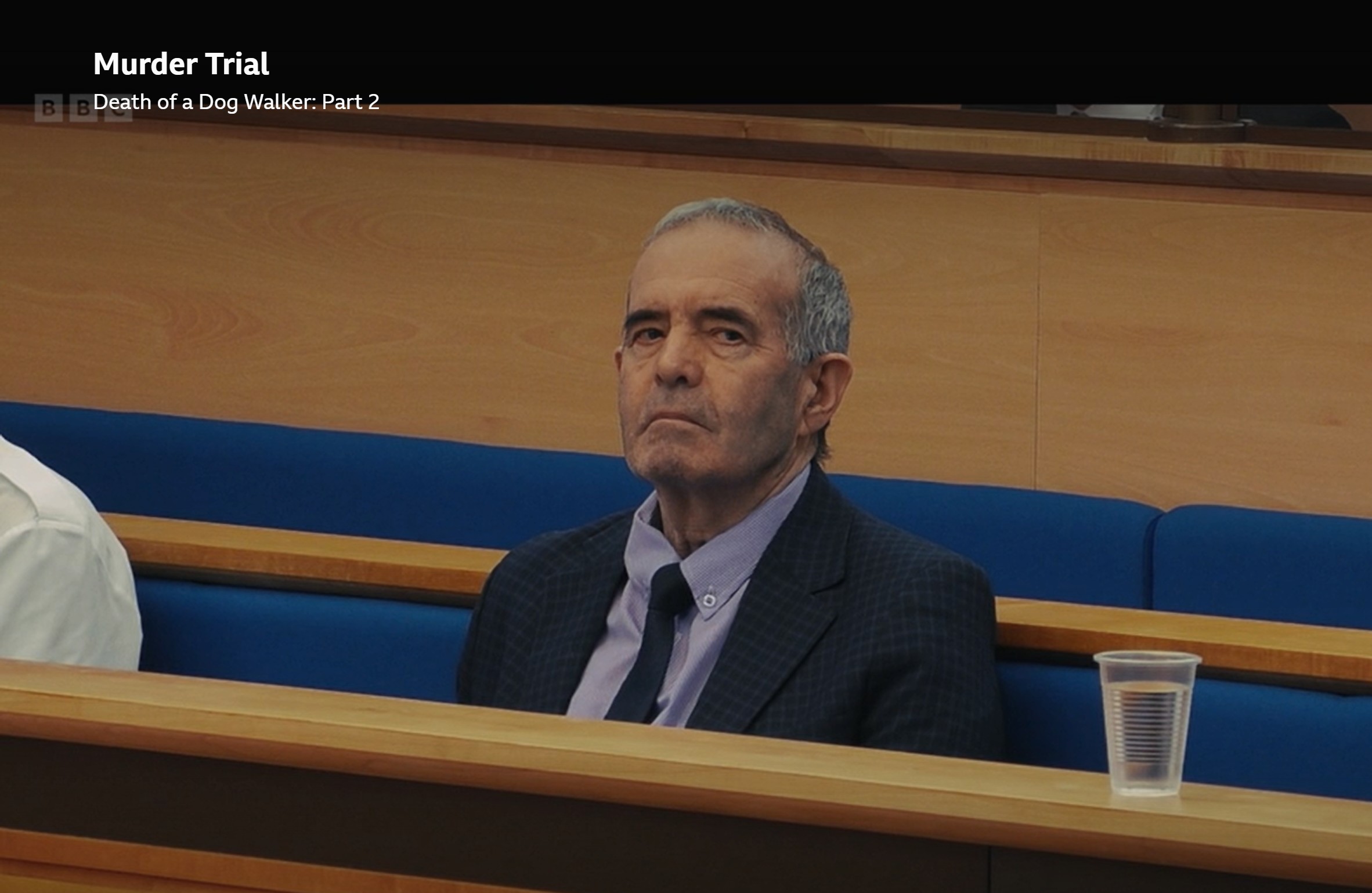
Two days ago, a jury at the High Court in Glasgow returned a guilty verdict in the trial of former Head Gamekeeper David Campbell, 77, who had been accused of murdering his ex-colleague from Edradynate Estate, Brian Low, after ambushing him and shooting him in the chest and neck with a shotgun on a remote woodland track near Aberfeldy on 16 February 2024.

Former Head Gamekeeper and now convicted murderer David Campbell. (Photo by Police Scotland)

The circumstances of this horrific murder were shocking and understandably Campbell’s conviction made the headlines in widespread news coverage yesterday. For example:

But for many living in the rural area around Edradynate Estate, near Aberfeldy, Perthshire, and those who have been investigating wildlife crime on Edradynate Estate for decades, Campbell’s conviction came as no surprise whatsoever.

During his 33-years of employment as Head Gamekeeper on Edradynate Estate (1984-2017), Campbell was at the centre of at least 22 police investigations into the alleged poisoning, shooting and trapping of birds of prey, as well as firearms offences. I say alleged – what I mean is that there is no question whatsoever that raptors were illegally killed on that estate, over a period of three decades, but nobody was ever convicted for any of it and David Campbell had always denied any involvement.

Here’s a blog I wrote in 2017, after the Crown Office had dropped another prosecution against an Edradynate Estate gamekeeper relating to the alleged poisoning of Buzzards in 2015, despite a plea from Police Scotland to pursue a prosecution:

Edradynate Estate has been at the centre of investigations for alleged wildlife crime for a very, very long time. In 2002, the estate’s Head gamekeeper and underkeeper were arrested and charged with nine offences relating to the use of poisoned baits and also bird cruelty, including the use of spring traps. However, on 22 July 2004, two years after the original arrests and 13 court hearings later, the Crown Office dropped the case (sound familiar?). A COPFS spokeswoman later admitted that the time taken to prepare the case had been a major factor in the decision to scrap it (see here).

In July 2010, a poisoned red kite was discovered. An un-named gamekeeper from the estate (who said he was a member of the Scottish Gamekeepers’ Association) claimed the bird had been ‘planted’. It also emerged that in addition to the poisoned red kite, over the previous 15 years, 9 buzzards, 2 sparrowhawks, 2 crows, 1 gull, 1 tawny owl, 1 pole cat, and 1 domestic cat, had all been found poisoned in the area. Twelve poisoned baits (Carbofuran, Mevinphos and Alphachloralose) had also been discovered (see here). Nobody was prosecuted for any of this.

In March 2011, two poisoned buzzards, two poisoned crows, and two Carbofuran-laced pheasant baits were discovered. A gamekeeper was taken for questioning but he was later released without charge (here).

In February 2012 an Edradynate Estate gamekeeper was charged with a number of alleged firearms and explosives offences (see here). However, in September 2012 the Crown deserted the case without providing an explanation (see here). Gosh, this is becoming quite a habit, isn’t it?

Writing about the Crown Office’s decision in 2017 to drop the case against Campbell for the alleged poisoning of Buzzards on Edradynate in 2015, former Police Wildlife Crime Officer Alan Stewart wrote on his blog,

This has been the fourth case in relation to the poisoning of raptors submitted to the fiscal against the same accused. I submitted the first Edradynate case in 1994 but it was always going to be short of evidence of identification. The fiscal sat on it in case anything further was discovered that would help the case but had to drop it at the end of the time bar, which at that time was 6 months

and

I was involved in a further search, which I think was in the month of March. Two or three dead (poisoned) buzzards were found and there were a couple of pheasant baits recovered as well. No pesticides were found but we took samples from the accused’s vehicle and from various items of his clothing. Traces of pesticide were found in the vehicle and on several items of clothing, including from an item he was wearing when he was detained. It was a reasonable circumstantial case, which I thought would be clinched with the pesticide traces on the clothing worn by the accused. I suspect that identification, which is always crucial, was again considered to be the stumbling block. This case was eventually dropped as well

and

Between 1993 and 2011 I am aware of 14 poisoned baits involving the banned pesticides carbofuran, mevinphos and alpha-chloralose being found on Edradynate estate. There have also been 31 poisoned victims including 17 buzzards, 4 carrion crows, 2 sparrowhawks, 2 tawny owls, a domestic cat, a common gull, a red kite and a polecat found either on the estate or very close to its boundary. I doubt if anyone would disagree that this number of baits and victims were the very tip of the iceberg. I doubt also if anyone would think that someone was ‘coming in off the street’ and dumping all these dead creatures on the estate to cause trouble‘.

In 2018, Police Scotland issued an appeal for information after three dogs and two Buzzards were ‘deliberately poisoned’ between October 2017 and April 2018 around the Edradynate and Pitnacree Estates area (see here). Campbell was no longer working on the estate by this time (see discussion below) and there was local speculation that someone was trying to set up the new Head Gamekeeper but as far as I’m aware, nobody was prosecuted. I’m not aware of any further raptor persecution incidents at Edradynate since the new gamekeeping team was employed.

Alongside the reports of rampant raptor persecution at Edradynate over many, many years, there were stories relating to Campbell’s alleged threatening behaviour towards locals. The court heard some of that testimony during Campbell’s murder trial, although those charges were dropped on the last day of his trial. Further evidence of Campbell’s alleged behaviour was reported by Alan Stewart in one of his books – see here, and this is really worth a read.

It is apparent that many locals were terrified of Campbell, too scared to speak out for fear of retaliation of what he might do to them, or their beloved pets. One individual I’ve spoken to, who wishes to remain anonymous, tells a story of dogs being poisoned and shot and a claim about how Campbell was allegedly seen drowning a dog in a peat hag after it didn’t do as it was told.

Some speak of Campbell’s alleged ‘reign of terror’ in this small rural community and if their testimonies are true, it paints a picture of violence being normalised and being beyond the reach of the law.

The only time Edradynate Estate was held to account was when SNH (now NatureScot) imposed a three-year General Licence restriction in 2017 (see here), assumed to be in relation to the alleged poisoning of Buzzards in 2015 – the case that the Crown Office refused to prosecute.

One of the poisoned Buzzards found in 2015 (photo RPUK)

Despite the widely publicised and appalling catalogue of wildlife crime on Edradynate Estate, reported over several decades, the game shooting industry apparently turned a blind eye.

The Scottish Gamekeepers Association accepted at least two donations from the estate owner, Michael Campbell (no relation to gamekeeper David Campbell and recently deceased); one in 2014 and one in 2015. Surely the SGA was aware of the long history of allegations made about this estate? Perhaps they didn’t care. As there hadn’t been a single conviction they could conveniently ignore the allegations and continue to accept the donations and continue to sit around the table at so-called ‘partnership’ meetings claiming to be doing all they could to eradicate raptor persecution.

Edradynate Estate was featured in the Fieldsports magazine in 2014, where one of the named guns was Robbie Douglas-Miller – surely not this one?

In 2020 Edradynate Estate was endorsed by the British Game Alliance, the game shooting industry’s own ‘assurance’ scheme (at the time), membership of which is supposed to indicate ‘rigorous and ethical standards’.

Screen grab from Edradynate Estate website 2020

And in 2023, the Game & Wildlife Conservation Trust (GWCT) accepted an auction donation from Edradynate Estate owner Michael Campbell with an estimated value of £2,500.

By February 2017, David Campbell’s employment as Head Gamekeeper at Edradynate Estate had ended, reportedly after his relationship with owner Michael Campbell had deteriorated and he was ‘removed from his job‘. Later that year David Campbell was charged with maliciously poisoning game cover crops on the estate as an ‘act of revenge’, a charge he denied, and of which he was ultimately cleared after the court ruled the case against him had not been proven beyond reasonable doubt (here).

In the sentencing remarks after gamekeeper Campbell’s recent conviction for murder, Judge Lord Scott said this:

You have no previous convictions. This appalling and senseless act of extreme wickedness casts a shadow over what seems to have been a long life spent by you in gainful employment and some benefit to the community“.

I do wonder on what background information Lord Scott based this statement. Whilst it’s true that Campbell had no previous convictions, it is indisputable that he was a suspect in multiple crime investigations spanning several decades, and that many in the local community lived in fear of him. And at some point his firearms and shotgun licences had been revoked, presumably on evidence that his suitability was questioned and/or he was considered a risk to public safety.

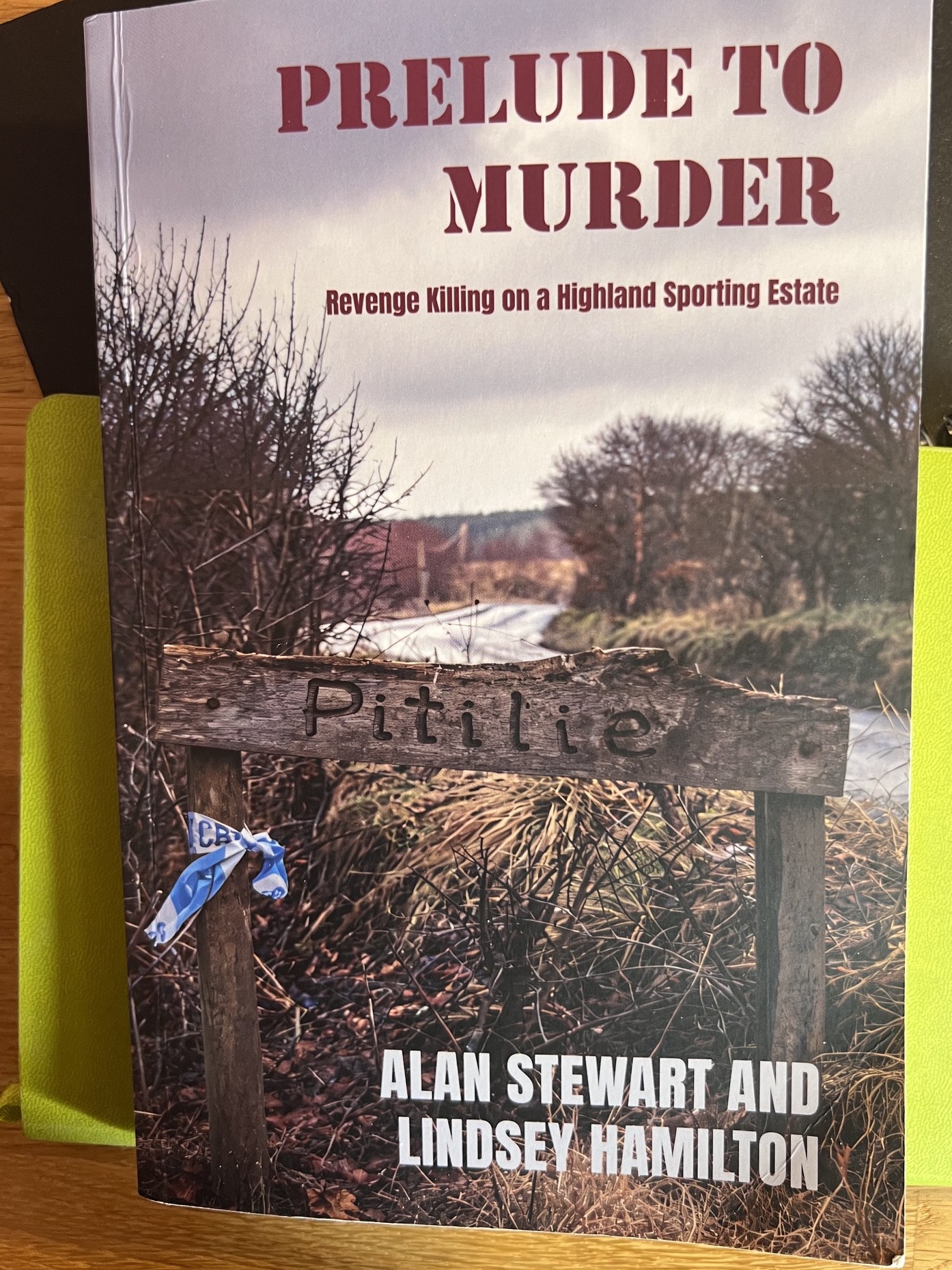
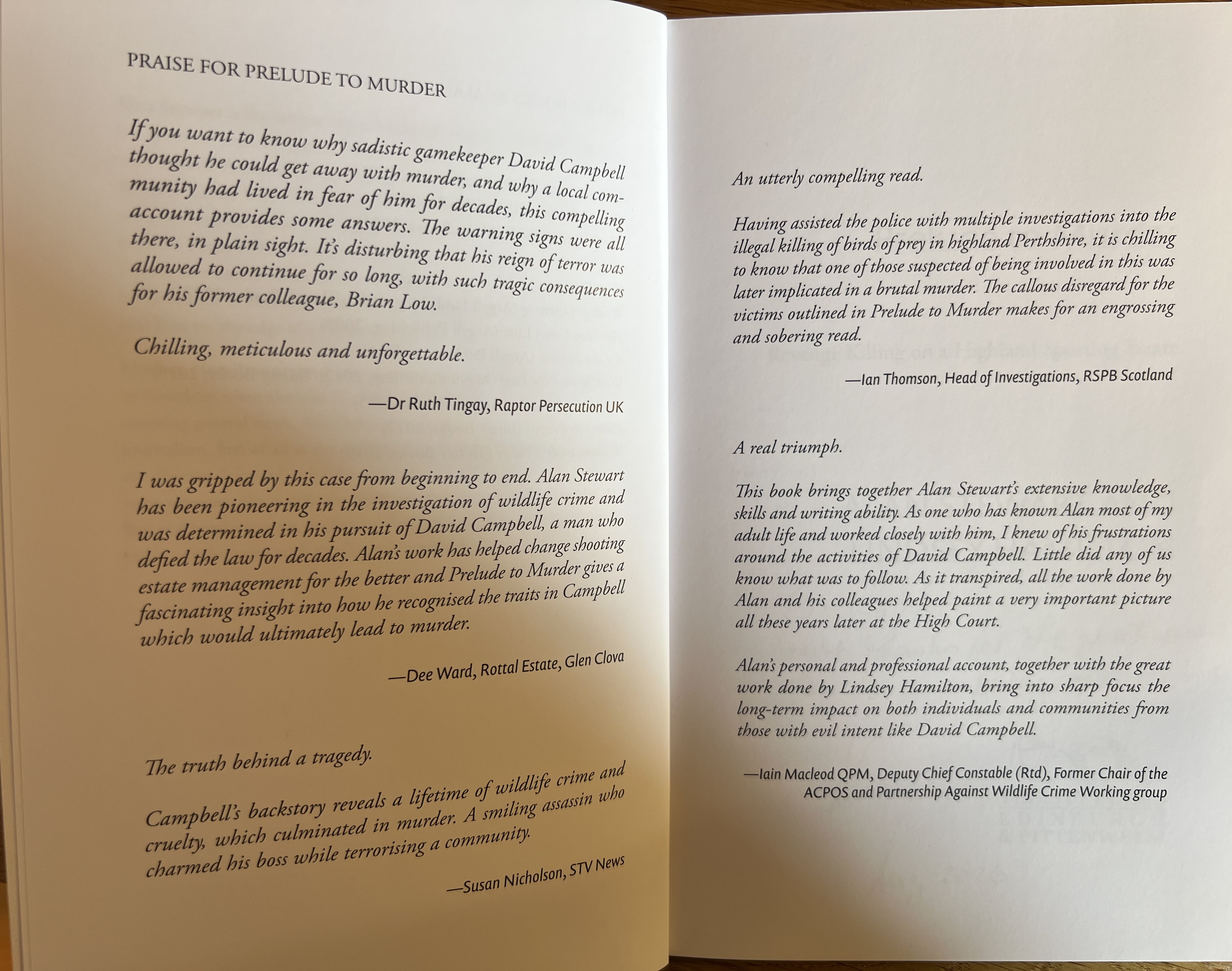
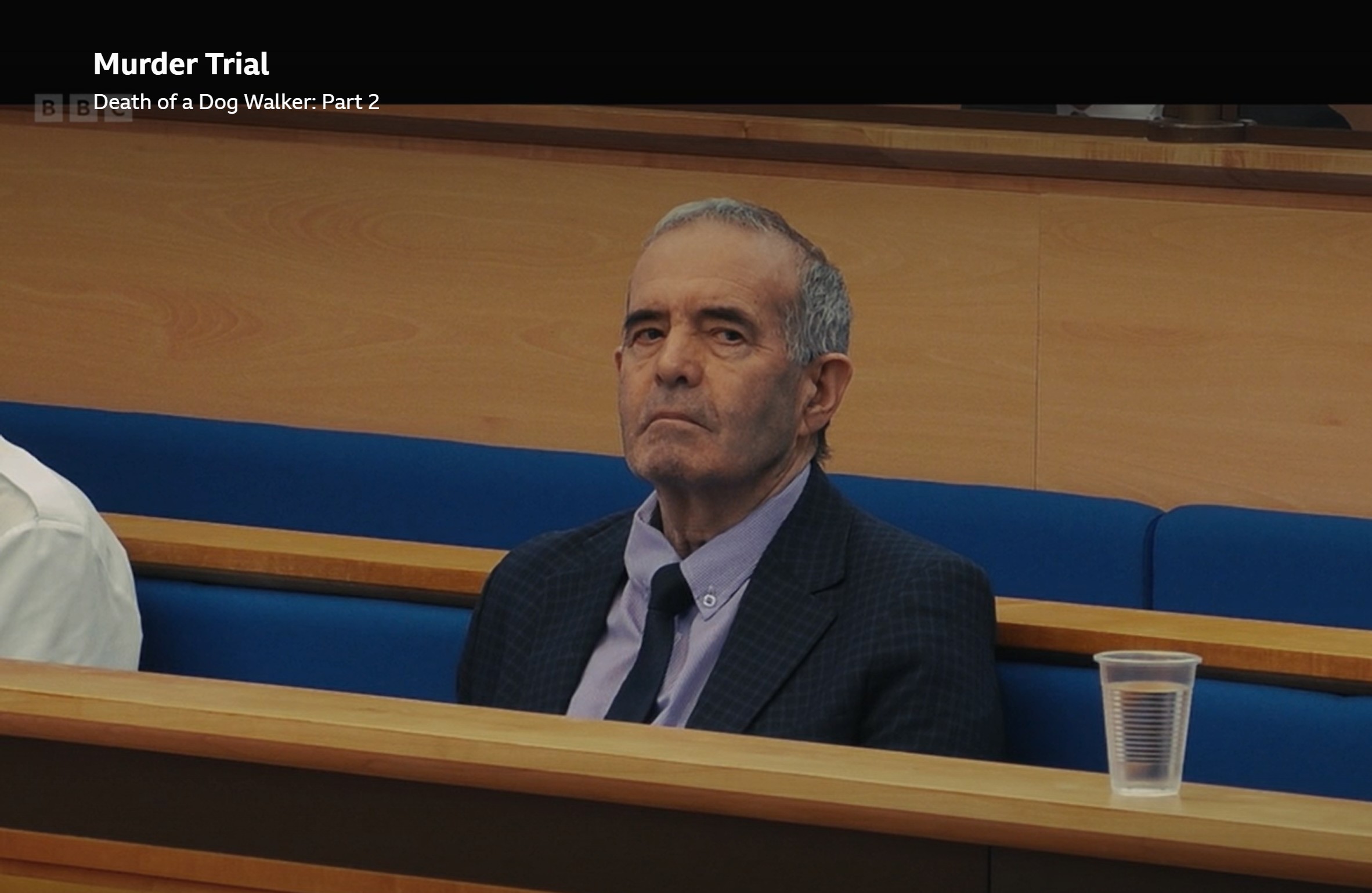
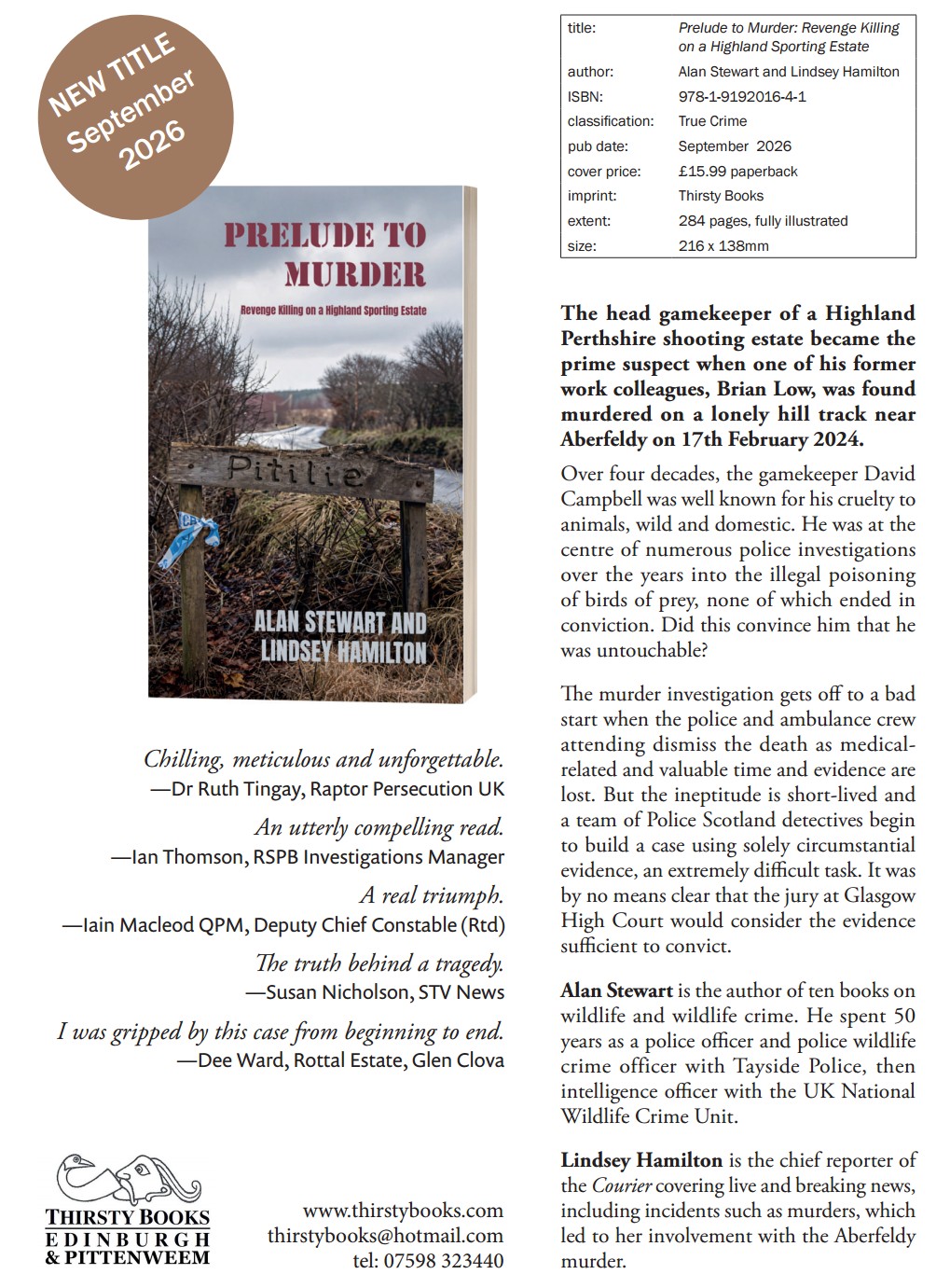
I understand that following Campbell’s murder conviction, Alan Stewart is preparing a new book. I also understand that a TV production company was granted permission to film during the trial inside Glasgow’s High Court for a documentary about this case.

According to an exclusive article in The Courier yesterday, David Campbell is expected to mount an appeal against his murder conviction and it is anticipated that he will lodge formal paperwork with the Court of Appeal in the coming days.

Stepping away from the tragic murder of Brian Low, there are wider, more general implications to consider.

It is extensively evidenced that there’s a strong link between violence towards animals and violence towards humans. I think ‘violence towards animals’ in this context often refers to issues of illegal animal cruelty (e.g. Badger baiting, putting pets inside microwaves etc) but personally I would also define the routine duties of a gamekeeper as qualifying as ‘violence towards animals’, even though much of this activity is still considered legal in the UK.

I fully accept that some people will disagree with this opinion, and may argue that those who have been granted firearms/shotgun licences, as most (all?) gamekeepers have, are subject to rigorous police checks of their character and suitability. However, you’ve only got to look at the number of wildlife crimes that include the use of a firearm/shotgun, let alone the murder of innocent people by firearm certificate holders, to know that the system isn’t fit for purpose.

I recently read an analysis produced by the National Wildlife Crime Unit (NWCU) about polycriminality in wildlife crime offenders in the UK, which suggested that a significant proportion (59% of offenders) are also linked to violent offending against humans, ranging from low level common assaults to attempted murder, murder and kidnap. (Unfortunately I don’t think this report is available in the public domain).

Wildlife & Countryside LINK is using this analysis to push for a series of recommendations for the government to improve policing resources for tackling wildlife crime, which in turn should increase public safety as well as the safety of wildlife and the environment.

Satellite-tagged Hen Harrier that gamekeeper Racster Dingwall chose not to shoot (to avoid unwanted attention), found poisoned three months later near another Yorkshire grouse moor

The news yesterday was all about the conviction and sentencing of Head Gamekeeper Racster Dingwall for his part in a conspiracy to kill Hen Harriers at a roost on the Conistone & Grassington Estate in the Yorkshire Dales National Park.

Hen Harrier. Photo by Pete Walkden

But there’s another story in amongst the details of that case, and it’s about the satellite-tagged Hen Harrier that Dingwall and his accomplices discussed shooting and killing as it came in to the roost site, but then chose instead to “fleg it” (scare it off with warning shots) because they deduced it was wearing “a box” (a satellite tag) and killing it would draw unwanted attention from the authorities to their grouse moor.

In the RSPB press release issued yesterday in response to Dingwall’s conviction and sentencing (here), the RSPB say that this satellite-tagged bird was actually one of theirs (presumably they could tell from the tracking data that this bird was on Grassington Moor at the same time that Dingwall was out committing crime with his shotgun). She was called Ataksak and had fledged from a nest in the Forest of Bowland just three months previously.

It seems that Ataksak’s satellite tag saved her from being shot on Grassington Moor on that early October evening in 2024. But it didn’t save her from being illegally poisoned near another Yorkshire grouse moor, just three months later in January 2025.

The RSPB press release says:

‘Toxicological analysis revealed that she had died after ingesting a highly toxic mixture of pesticides known by experts as the Nidderdale cocktail, which has been associated with numerous bird of prey persecution incidents in recent years. This incident is yet another crime against a Hen Harrier and is also under investigation by North Yorkshire Police. There is no known connection between the two incidents‘.

Some of you may recall this is a persecution incident I blogged about on 1st December 2025 (here), after discovering the poisoning incident listed in a toxicology database compiled by the Health & Safety Executive as follows:

HSE Ref number 107/913. Confirmed poisoning, North Yorkshire, January 2025. Chemicals Bendiocarb, Carbofuran, Isophenphos, Alphachloralose. Notes: ‘A dead Hen Harrier was found on a grouse moor. Residues of Bendiocarb, Carbofuran, Isophenphos and Alphachloralose were found in the samples analysed, which is an abuse of these compounds. Case closed as passed to the Police‘.

I didn’t know at the time that this was the same Hen Harrier that had been “flegged” on Grassington Moor. She was almost the bird that got away.

The RSPB had also mentioned this poisoning incident in a press release about a number of Hen Harriers either ‘missing’ or poisoned in 2025, published on 20 January 2026 (here). They noted that:

The area where Ataksak’s body was found is recognised as a bird of prey persecution hotspot. In the last ten years 25 confirmed bird of prey persecution incidents have been recorded in this area, including Ataksak. These included four Hen Harriers, 13 Red Kites and five Buzzards. A satellite tagged Hen Harrier also disappeared in this area in 2024‘.

Given it’s been a year since Ataksak was found poisoned, and I haven’t seen any media or appeals for information from North Yorkshire Police, in November 2025 I submitted a series of FoI requests to various authorities to ask about the progress of any investigation into this crime.

I’ve had some responses back, and I’ll write about those in a separate blog, probably next week.

Meanwhile, the RSPB has now published an extended ten minute version of the covert footage it captured of Dingwall and his accomplices on the Conistone and Grassington Estate, including the period they were discussing whether to kill or scare away Ataksak when she was trying to come in to her evening roost site on the moor. You can watch it here:

UPDATE 10 March 2026: What’s happened to the police investigation in to the poisoned Hen Harrier found dead on the edge of a grouse moor in North Yorkshire? (here)

More delays for trial of 87-year old accused of 11 offences relating to alleged raptor persecution in Lincolnshire

A pre-trial case management hearing due to take place at Lincoln Magistrates’ Court on 29 January 2026 has been delayed.

Brian Chorlton, 87, of Morkery Lane, Castle Bytham, Lincolnshire, was summoned to court in April 2025 following reports that birds of prey were being poisoned in the Castle Bytham area.

Photo by Ruth Tingay

In May 2025, Chorlton appeared at Lincoln Magistrates’ Court and pleaded not guilty to 11 charges relating to the unapproved or unlawful storage of the chemical Aldicarb, possession of a poisoner’s kit, and possession and use of four pole traps. The trial was set to take place in October 2025.

However, on 18 September 2025 a pre-trial case management hearing took place at Lincoln Magistrates’ Court where the defence submitted three separate legal arguments calling for the case to be dismissed.

The District Judge rejected all three legal arguments and the application to dismiss the case was rejected.

The District Judge said he intended for the trial to proceed in October but offered a further case management hearing, due to take place one week later, to allow the defence time to consider the ruling.

That second case management trial took place on 25 September 2025 and the defence announced its intention to apply to the High Court for Judicial Review of the judge’s earlier ruling.

This meant the October 2025 trial date was vacated and the judge ordered a further case management hearing for 29 January 2026 where the defence was expected to provide an update on its application for judicial review.

That case management hearing has now also been vacated as the defence is still waiting for a decision from the High Court on whether its application for judicial review can progress to a full hearing.

This could take some time.

NB: As criminal proceedings are still live, comments have been switched off.

UPDATE 23 April 2026: Update on prosecution of 87-year-old William Brian Chorlton, accused of 11 offences relating to alleged raptor persecution in Lincolnshire (here)