This is a guest blog written by conservation campaigner and author Bob Berzins who has written previously on this bloghere,here,here,here,here,here, here, here and here.
Introduction
In 2026 a dry, hot summer with drought conditions declared in many areas led to a huge number of wildfires. It was no surprise to read a constant diatribe from the shooting industry calling for increased prescribed burning with restrictions removed.
Arguments against grouse moor burning have centred around damage to peatlands, particularly damage to blanket bog which tends to be defined by peat depth with figures of 50cm, 40cm and most recently 30cm defined in the Heather and Grass Burning Management Code 2025 Section 4 – The Law. So generally any burning in England where peat depth is greater than 30cm is illegal.
Greenwashing from the shooting industry tries to tell us they only ever conduct “Cool Burns” with no smoke and moss layers under the heather undamaged and somehow only burning the top leafy part of heather plants. They’ve fooled Natural England because most Management Plans, in place to protect conservation sites, tell us they won’t allow “Hot burns” which incinerate the vegetation and the underlying peat. But there’s no enforcement and we the public are left to cope with huge clouds of smoke and incinerated, damaged moorlands which increase flood risk.
This deceit has been going on for decades and it took catastrophic levels of air pollution in Sheffield three years ago to make everybody listen. The burning occurred on the Duke of Rutland’s Moscar Estate.
After the 2025 burning consultation and new legislation what’s happening now?
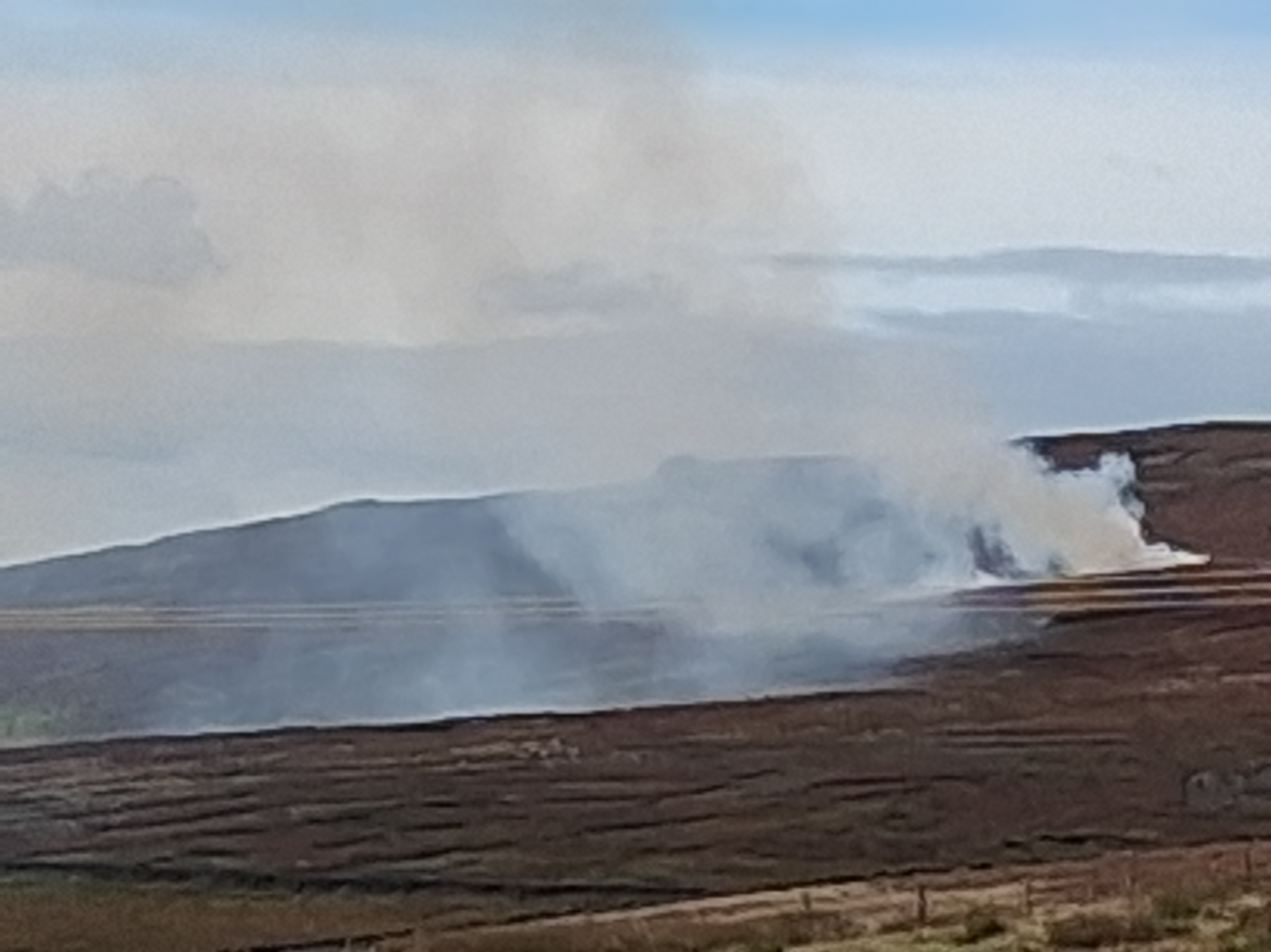
Burning on Moscar Estate, October 2026
Sheffield University produced a detailed analysis of how the smoke from October 2023 burning spread across the city with citizen science and government air monitors all recording huge spikes in dangerous air pollution.
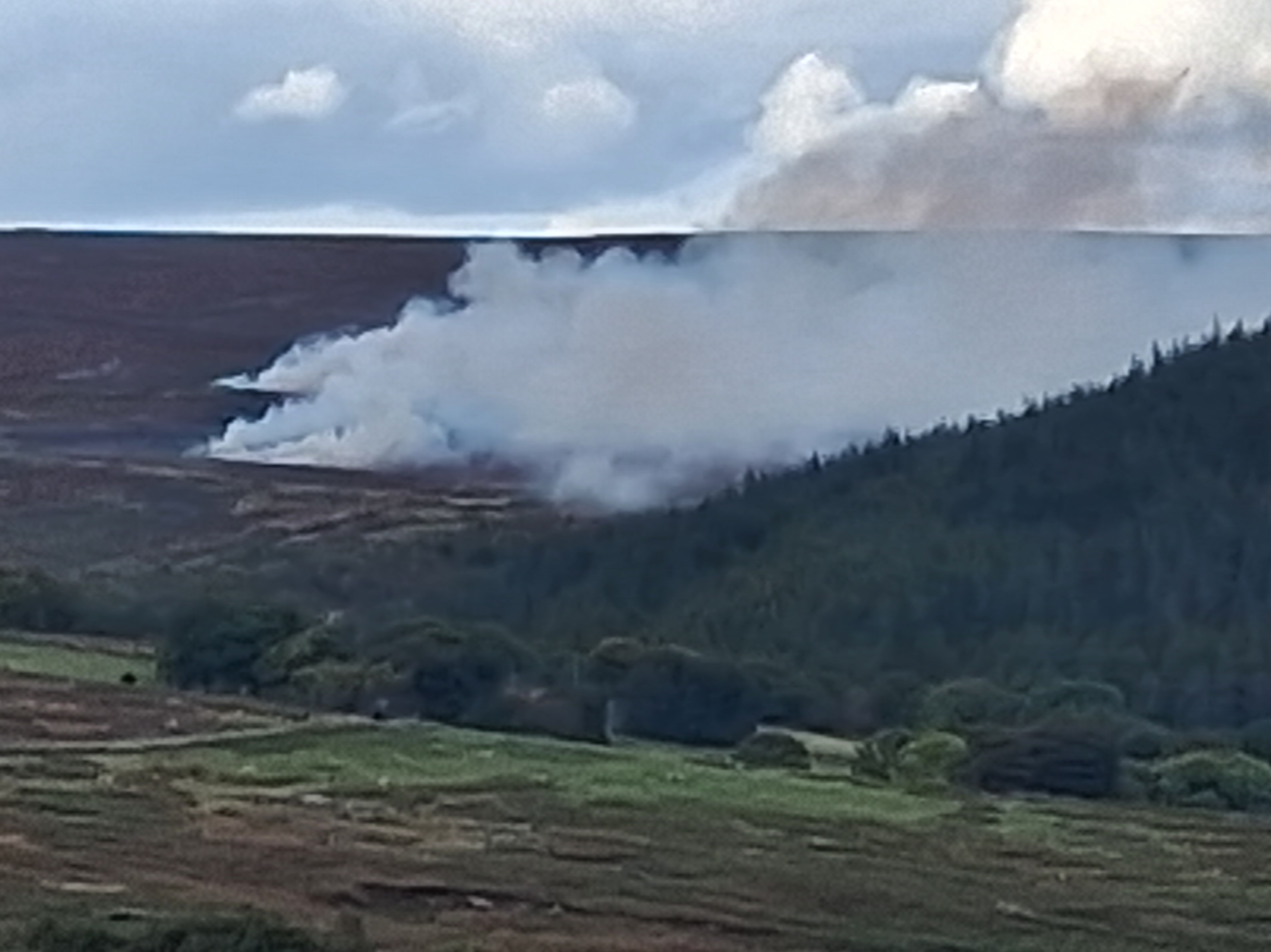
Travel any distance in the Pennines on a fine winter day and you’ll see multiple fires on the moors. Last week a mile from the Moscar burning we had this on the adjacent Fitzwilliam Estate:
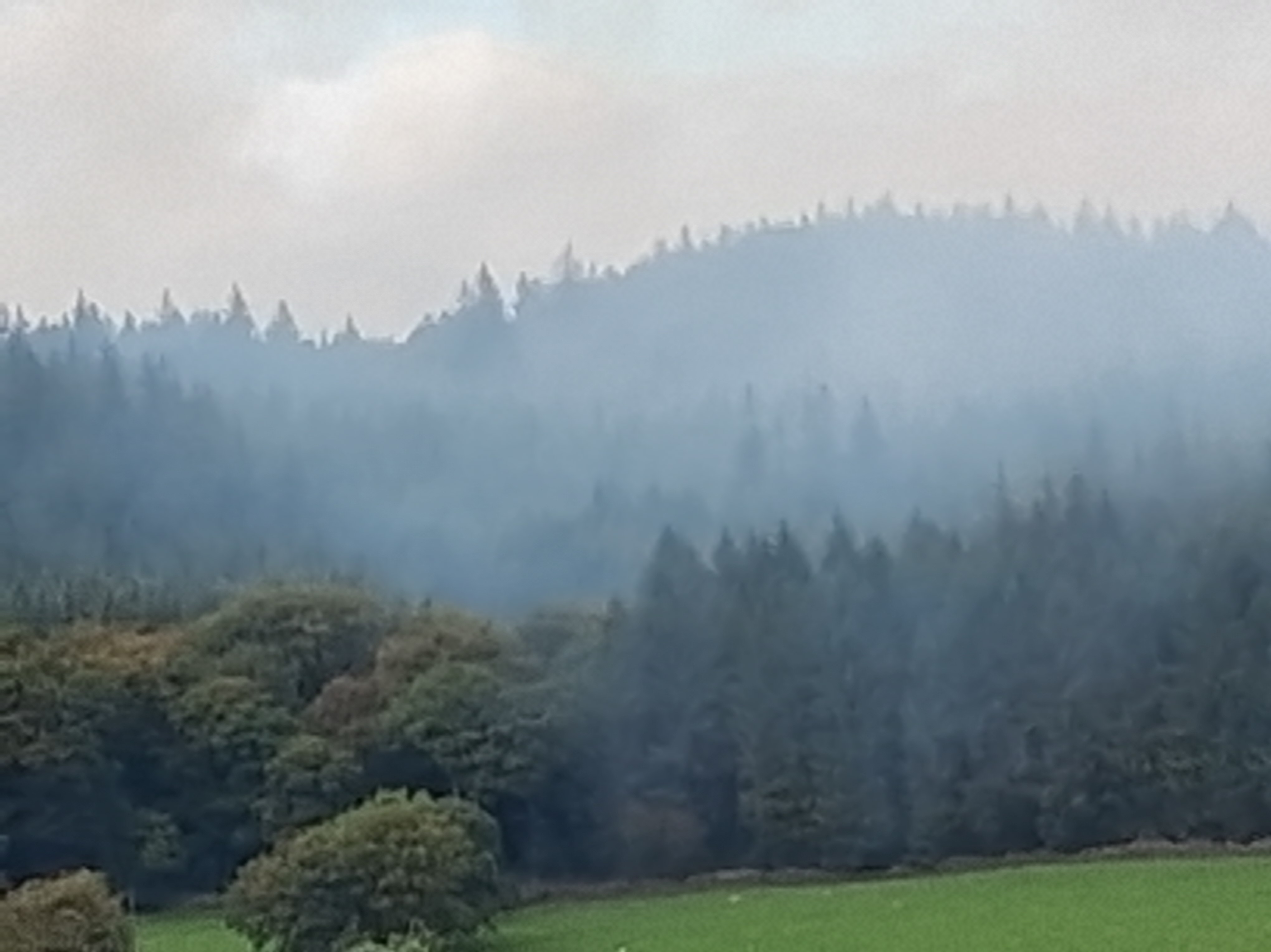
Spilling smoke over the plantation and down to Bradfield village and Sheffield beyond:
Leeds University recently published this paper that shows peak fire events affecting up to 2.3 million people in Yorkshire, North East England, East Scotland and North Scotland. And between 2017/18 and 2021/22 moorland burning generated 1300 tonnes of PM2.5 particulates per year which is equivalent to a third of UK annual transport emissions. Pollution from prescribed or rotational burning is a huge problem yet the shooting industry wants to burn more.
Is smoke from Moorland Burning dangerous?
According to the Breath of Fresh Air Report by the Royal College of Physicians, air pollution affects all age groups leading to slow development of lung function in the young and accelerated decline of lung function in the old as well as COPD (Chronic Obstructive Pulmonary Disease), lung cancer, diabetes, dementia, heart attack and stroke – every part of the body is affected.
And DEFRA’s Public Health Overview tells us poor air quality is a significant public health issue with air pollution estimated to cause 29,000 to 43,000 deaths a year in the UK – that is 5% to 7% of all deaths.
In England, the total cost due to PM2.5 to the NHS and social care is estimated to be £1.5billion in 2025.
What’s the mechanism for particulates affecting our health?
PM2.5 is tiny and this allows it to bypass upper airway filters, deposit deep into the lung alveoli, and cross into the bloodstream reaching the heart, brain, and other major organs where it causes chronic inflammation. The particles are not just harmless dust but often contain toxins such as carcinogens and heavy metals raising the risk of heart attacks, strokes, irregular heartbeats, and high blood pressure. Along with triggering or worsening asthma, chronic obstructive pulmonary disease (COPD), bronchitis, and reducing overall lung function.
What is a safe level of air pollution?
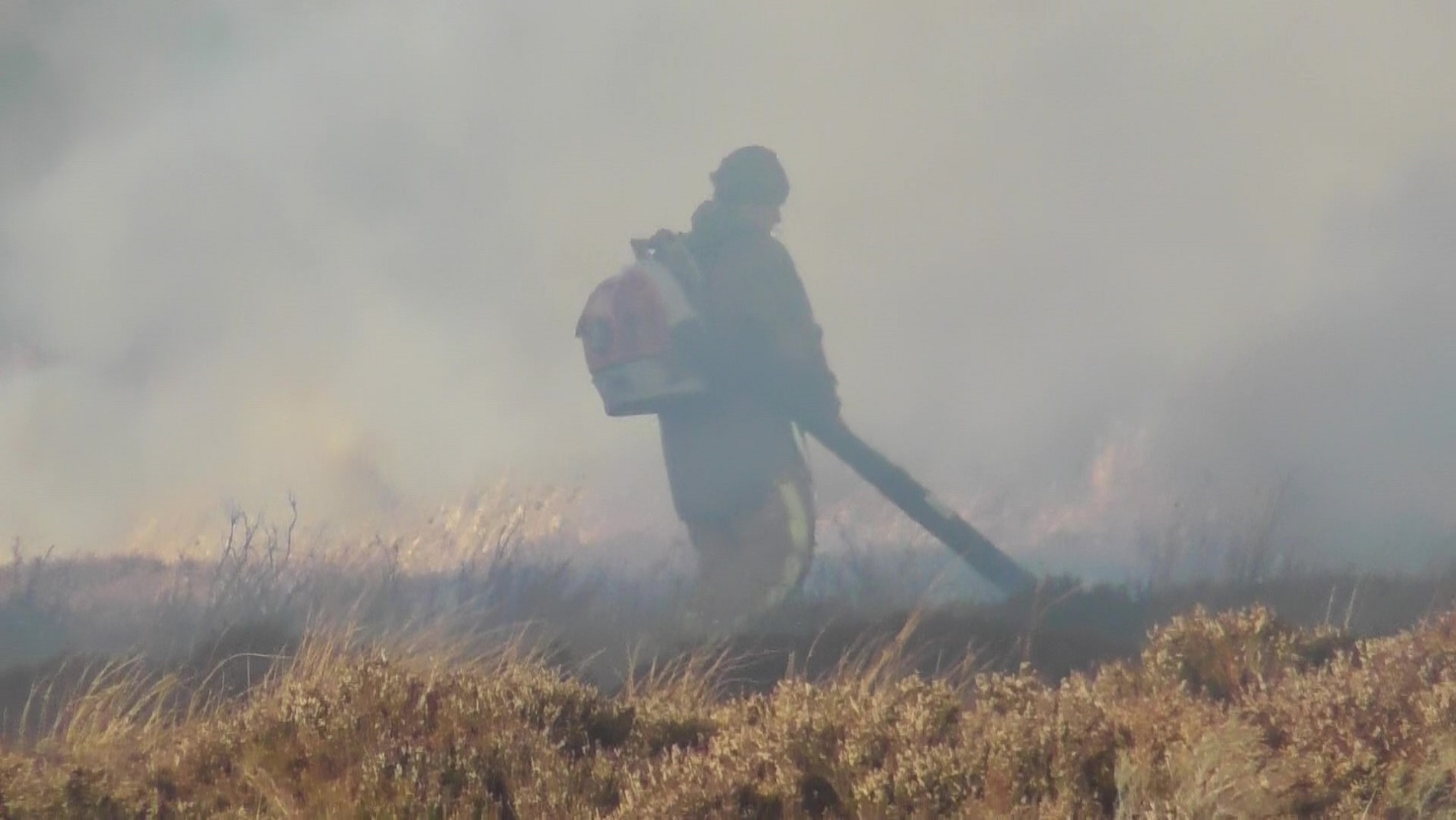
At a recent conference organized by Public Health Sheffield we heard there is no safe level of air pollution so we must strive to reduce it as close to zero as possible. Shooting is a hobby for rich people not a necessity. Moors are burnt to produce more grouse and landowners must have convinced their gamekeepers that a dose of particulates is good for the health:
Any safety equipment would be an admission of the damage to health
Alternatives
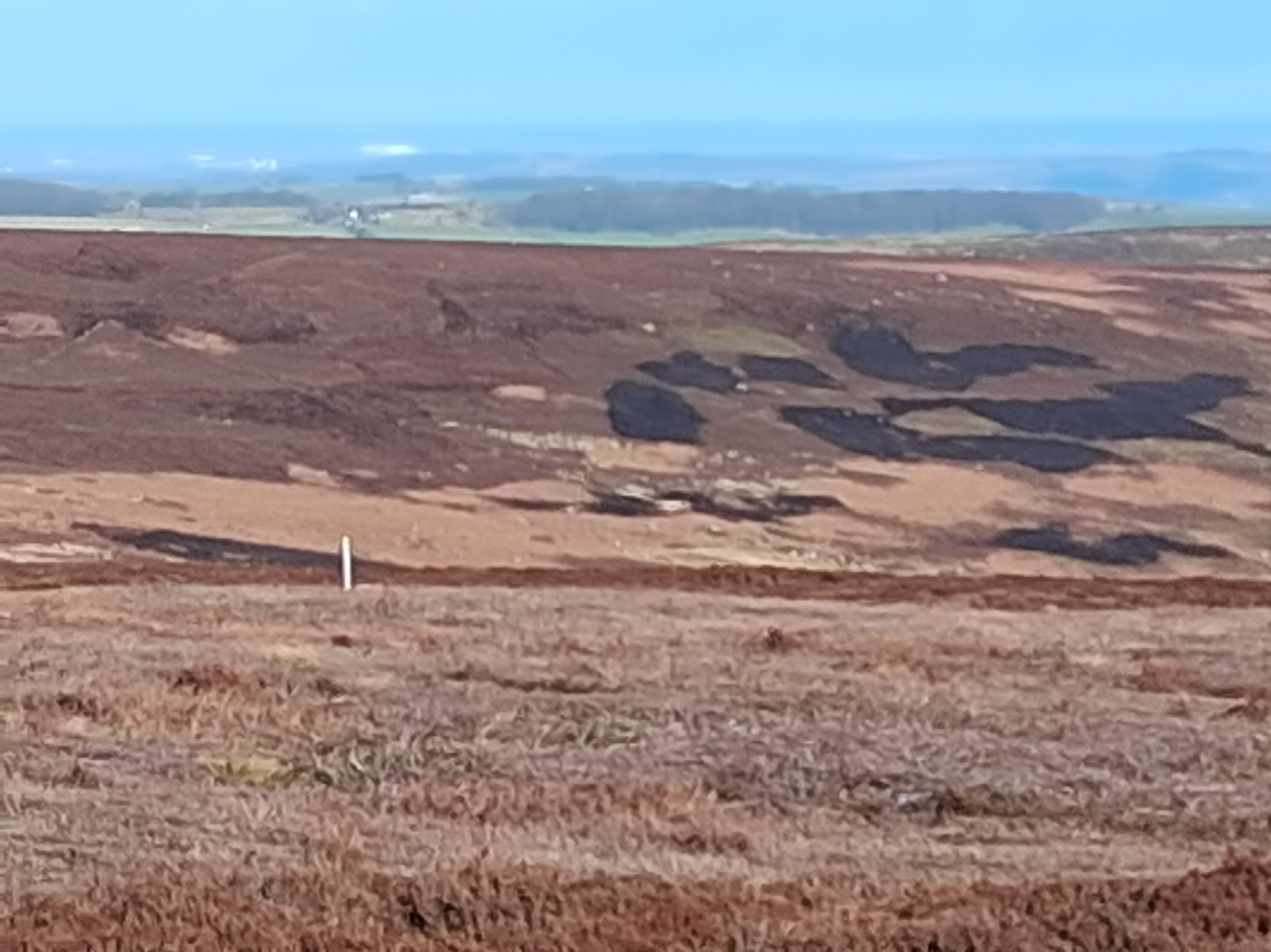
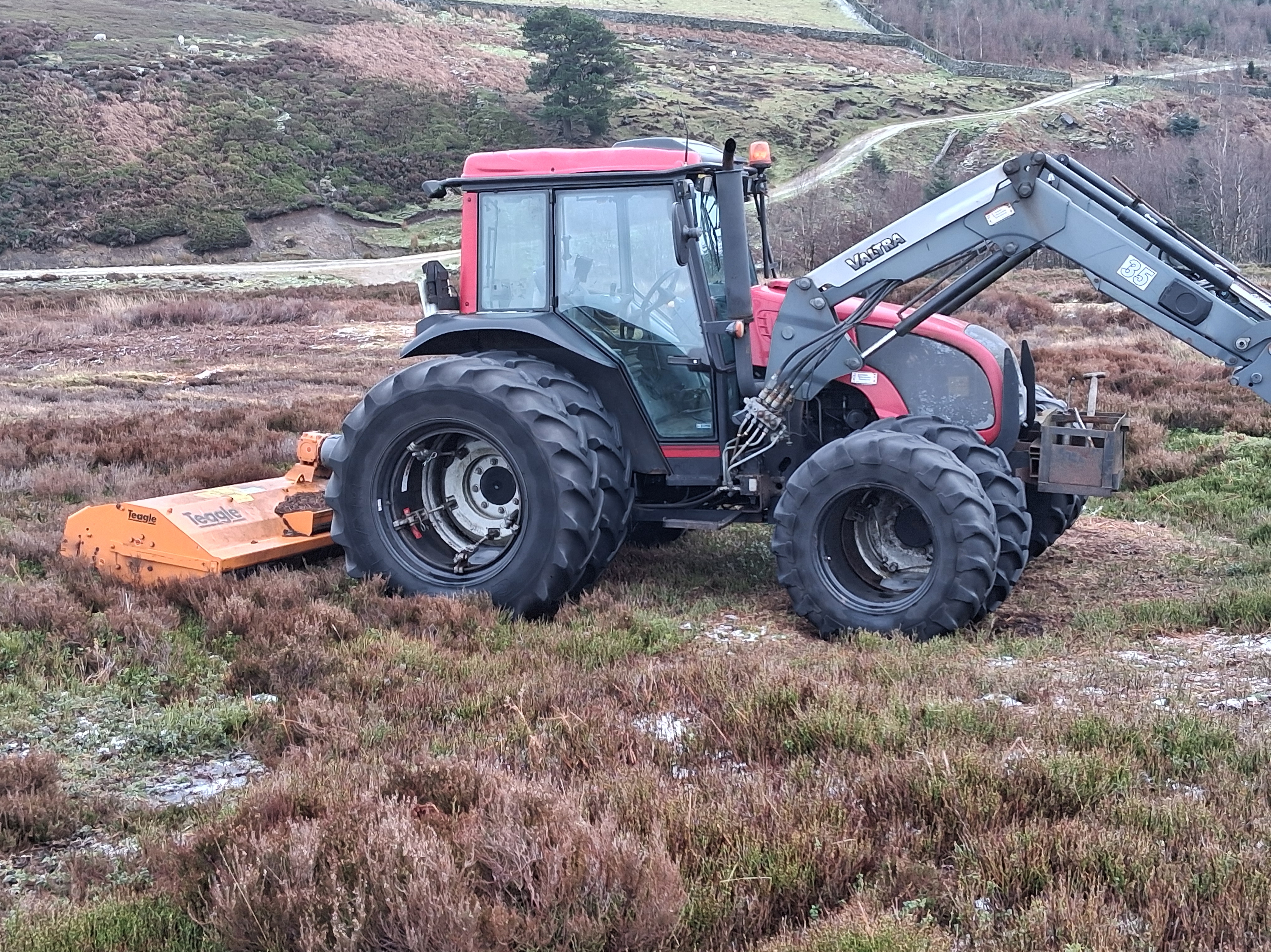
There is of course mowing, which is now common on Peak District moors and very obviously reduces “fuel load” with many mowers cutting then shredding the brash. We don’t hear anything about this from the Greenwashers. So we continue to see mown and burnt patches side by side:
Ewden Valley – Mown area in foreground and burnt patches behind
Tractor – all estates seem to have these now
Conclusion
Air pollution kills us and there is absolutely no justification for the grouse shooting industry producing thousands of tonnes of harmful particulates just so there’s a few more grouse to shoot.
Earlier this summer I submitted a Freedom of Information request to Natural England, asking for information on the causes of death, including post mortem reports, of all Hen Harrier nestlings (i.e. pre-fledging) in nests monitored by Natural England between 2018 and 2026.
That requested information has just been released and I have to say I’m pretty shocked by it, on a number of levels, which I’ll explain below.
I probably shouldn’t be shocked at all. We’ve all seen how depraved some gamekeepers can be. Whether they’ve been caught setting pole traps and leaving a trapped Tawny Owl, Buzzard or Red Kite to suffer a prolonged and painful death, hanging upside down with catastrophic leg injuries; or catching Red Kites by the legs in moss-covered spring traps placed next to a bait and then beating them to death with a shinty stick; or trapping a Peregrine in a spring trap set on a nest ledge and leaving it there to suffer for hours before retrieving it under cover of darkness; or casually using a wooden stick to beat to death trapped Goshawks and Buzzards inside crow cage traps.
And then there are the seriously depraved, who like to leave the evidence of their brutality in full view, knowing how distressing that’s going to be for the person finding it. For example, killing an entire brood of Hen Harrier chicks by stamping on them in their nest; or twisting and pulling off the head and leg of an adult Hen Harrier whilst he was still alive, leaving his mutilated corpse on a hillside knowing that his satellite tag would lead researchers to his discovery.
What I’m about to describe falls well within this second category of being seriously depraved. If you’re likely to be upset by reading the details, I suggest you stop reading now.
The response to my Freedom of Information request contained details of a number of gruesome cases. Today, I’m just writing about one of them. I need to do a bit more background research before I write about the others.
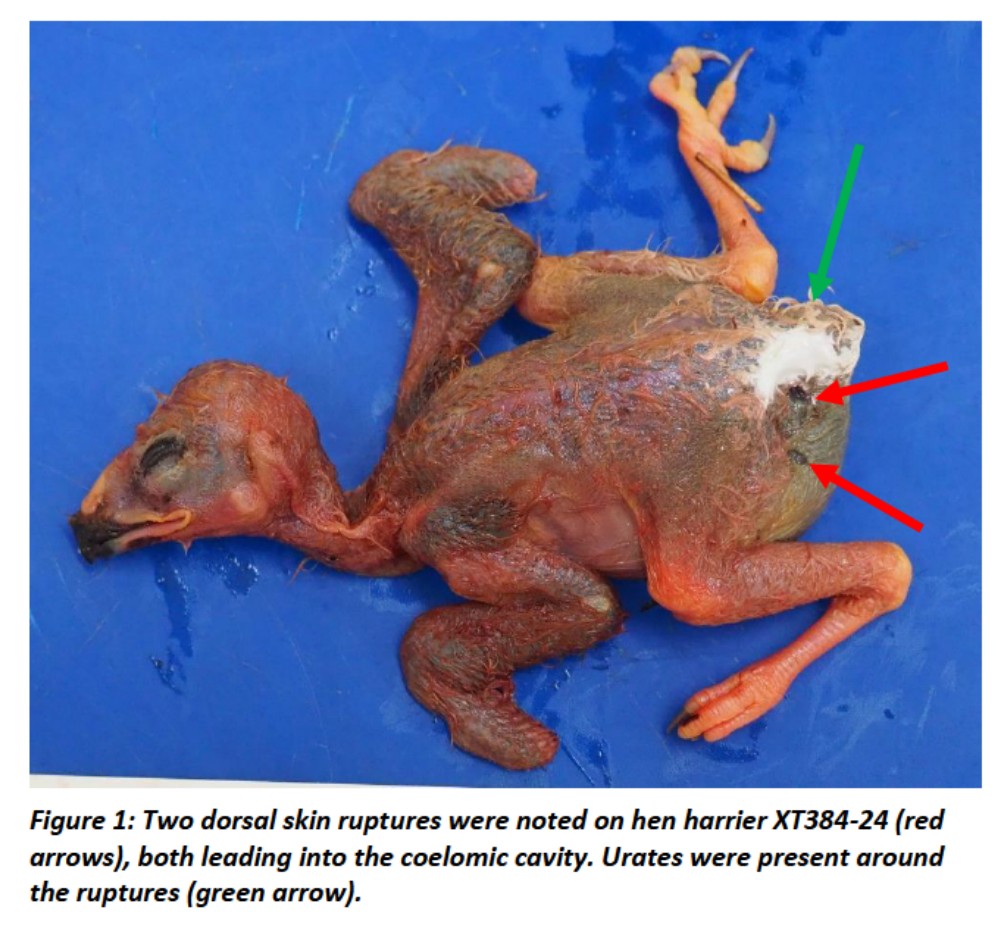
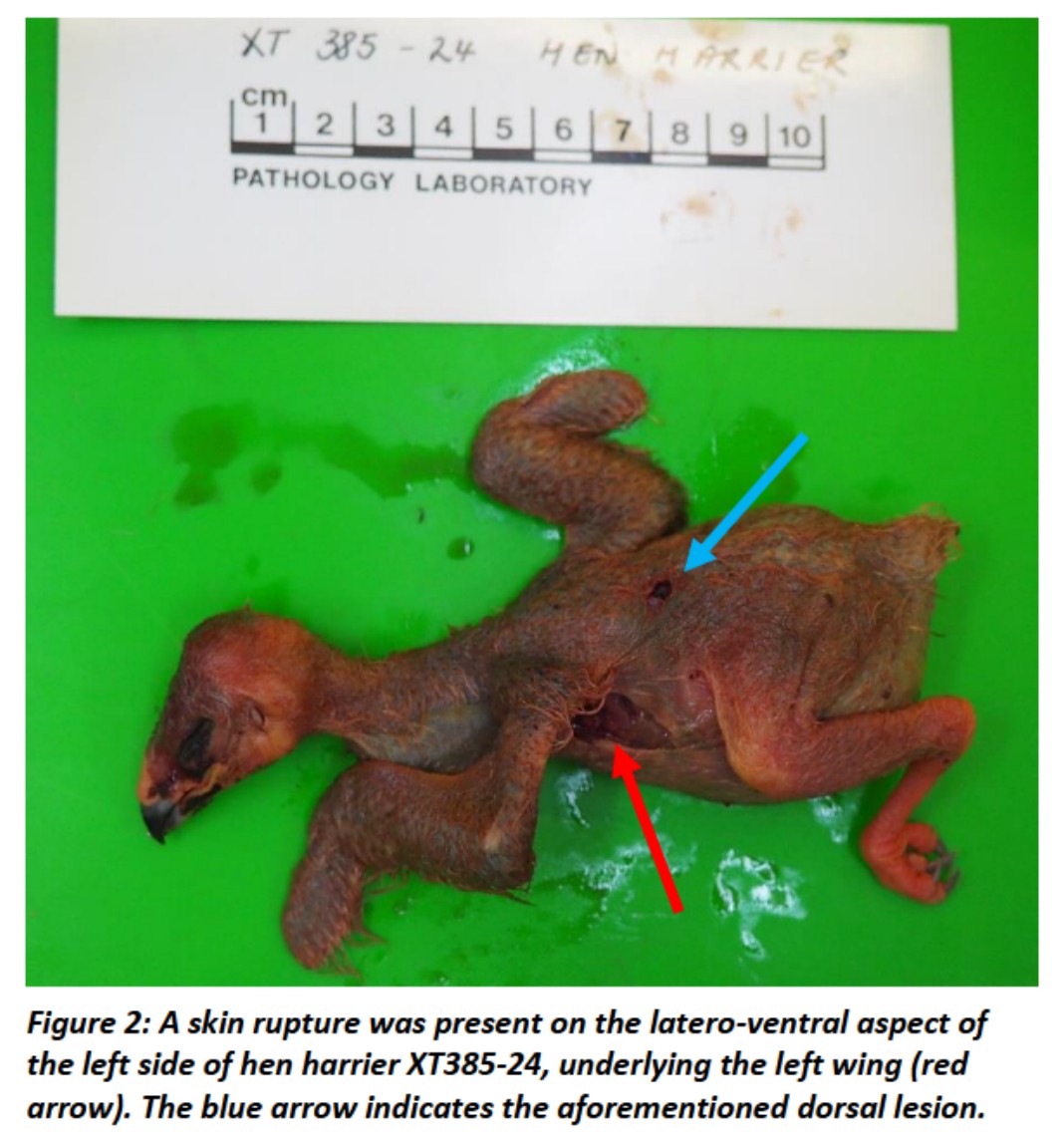
This case is about the deaths of five recently-hatched Hen Harriers, found dead in their nest on a grouse moor in County Durham in June 2024.
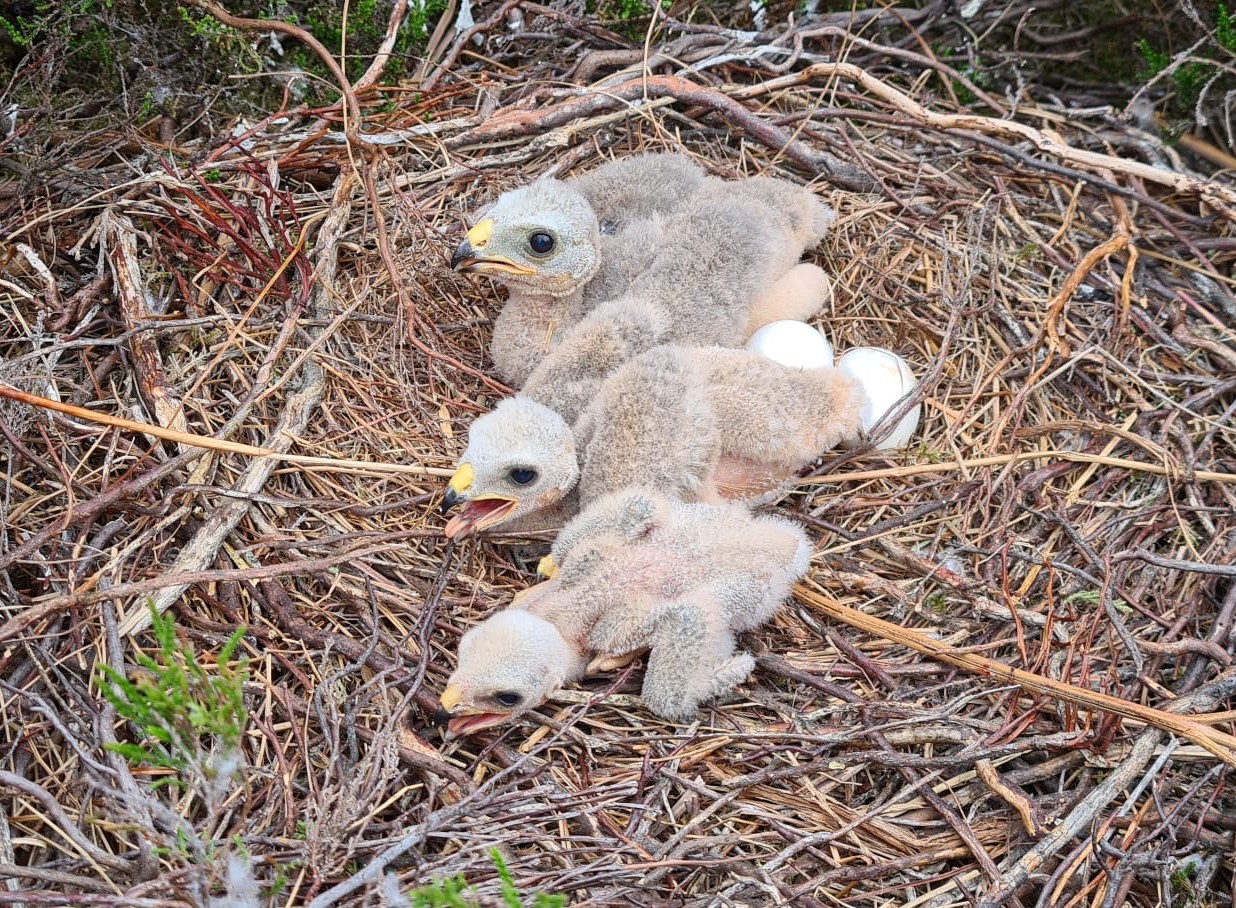
Recently hatched Hen Harriers in a nest. Photo by Peak District Raptor Monitoring Group. NB: This image is for illustrative purposes only – these Hen Harriers were not stabbed to death.
As far as I’m aware, this is the first public report of this incident in the almost two-and-a-half years since it was discovered. I think I’d remember if I’d read about Hen Harrier chicks being stabbed to death. Natural England has remained silent about it, Durham Constabulary has remained silent about it, and the National Wildlife Crime Unit’s Hen Harrier Task Force has remained silent about it.
Both Natural England and the NWCU’s HH Task Force will both say it’s the local police force’s decision about when to publicise a suspected crime. Some of them might claim, ridiculously, that the case is still under active investigation so they can’t talk about it. I’d like to hear an explanation from all three agencies about why it’s taken a Freedom of Information request, almost two-and-a-half years later, for the details to emerge. Had an FoI not been submitted, would we ever have been told about it?
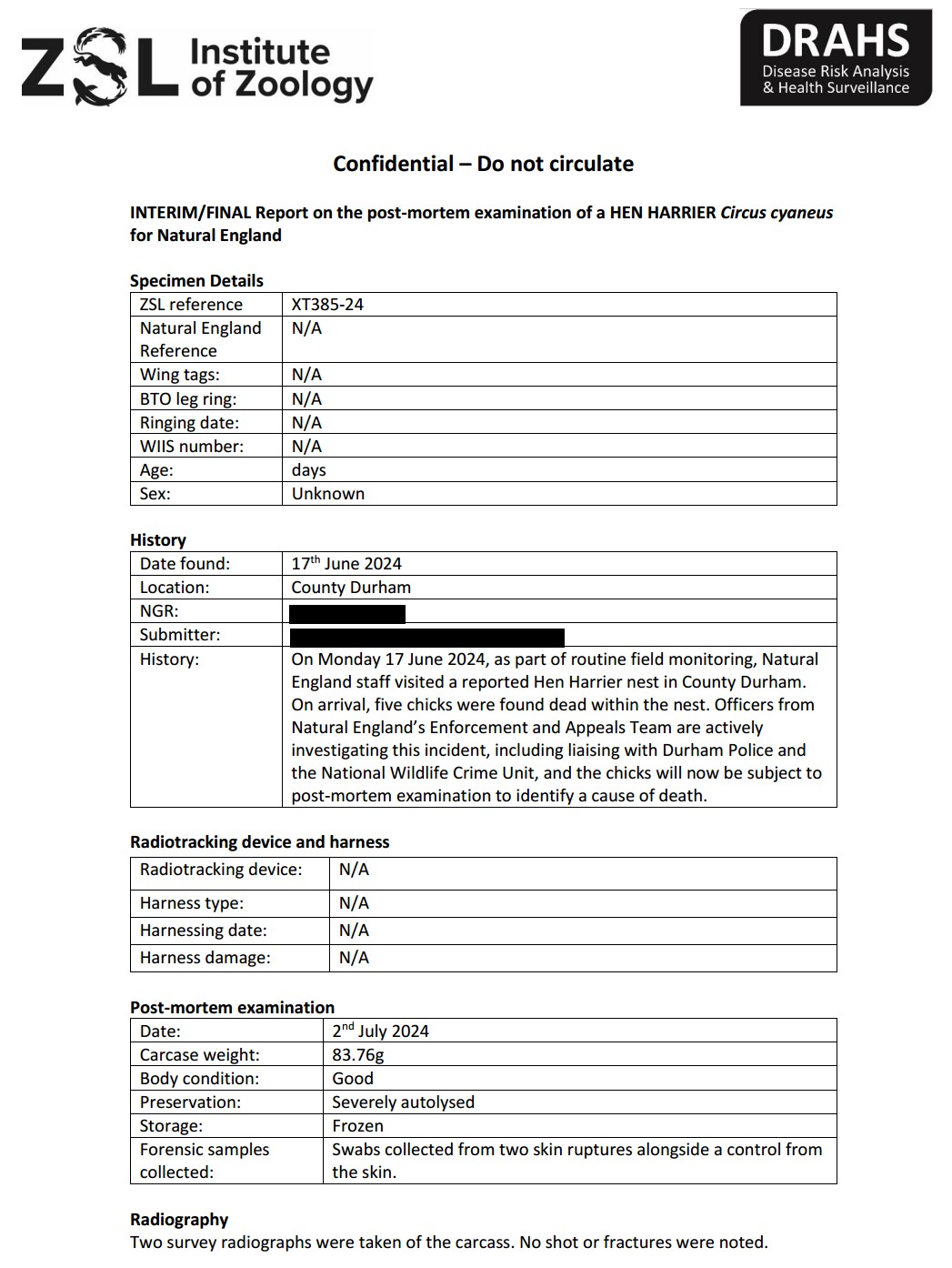
The discovery of the five dead Hen Harrier nestlings was considered to be sufficiently suspicious to warrant submitting the chicks for post mortems. These were undertaken by pathologists at ZSL, the Institute of Zoology in London, who are highly experienced having been examining dead Hen Harriers for a very long time (e.g. see here and here).
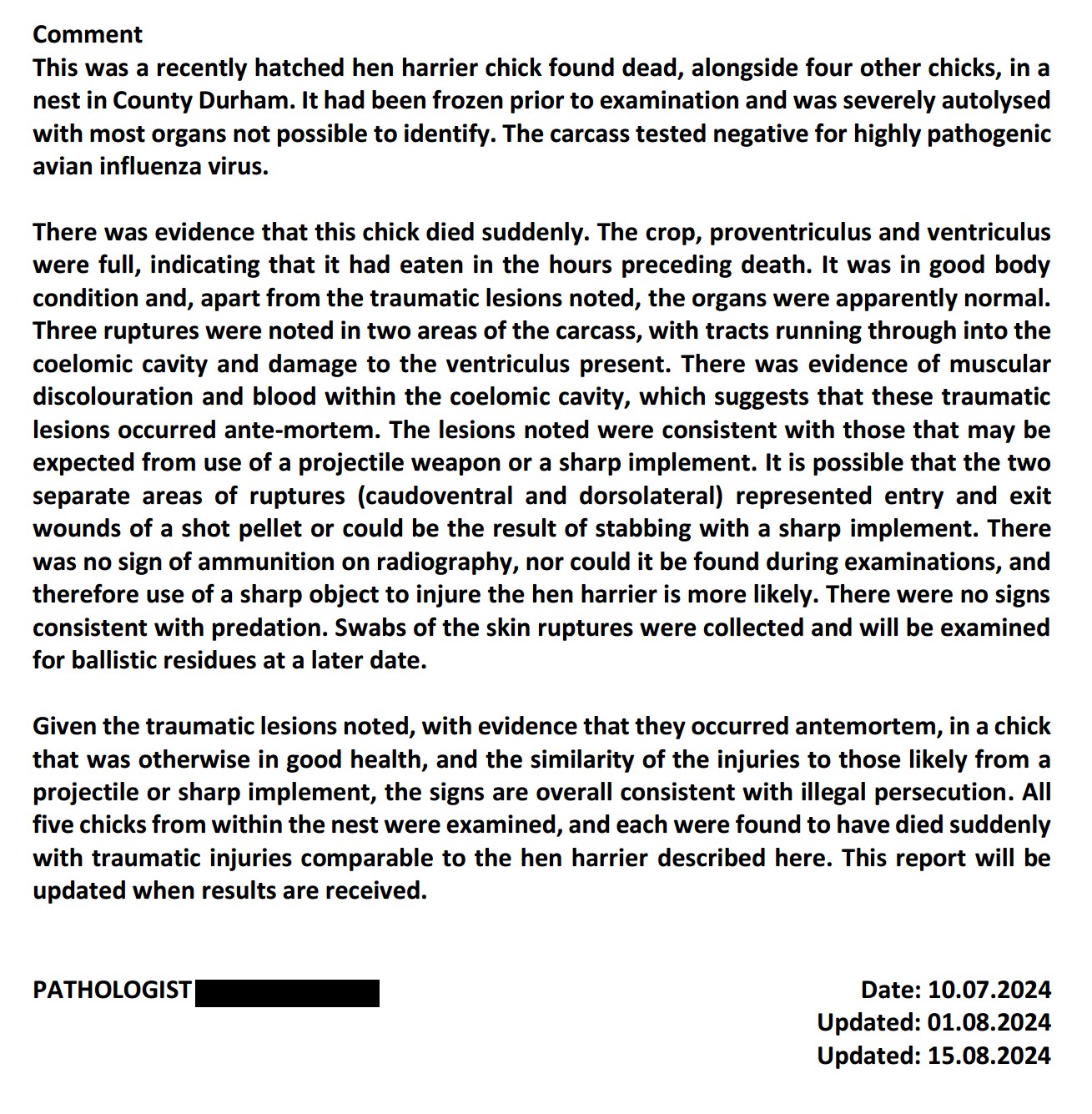
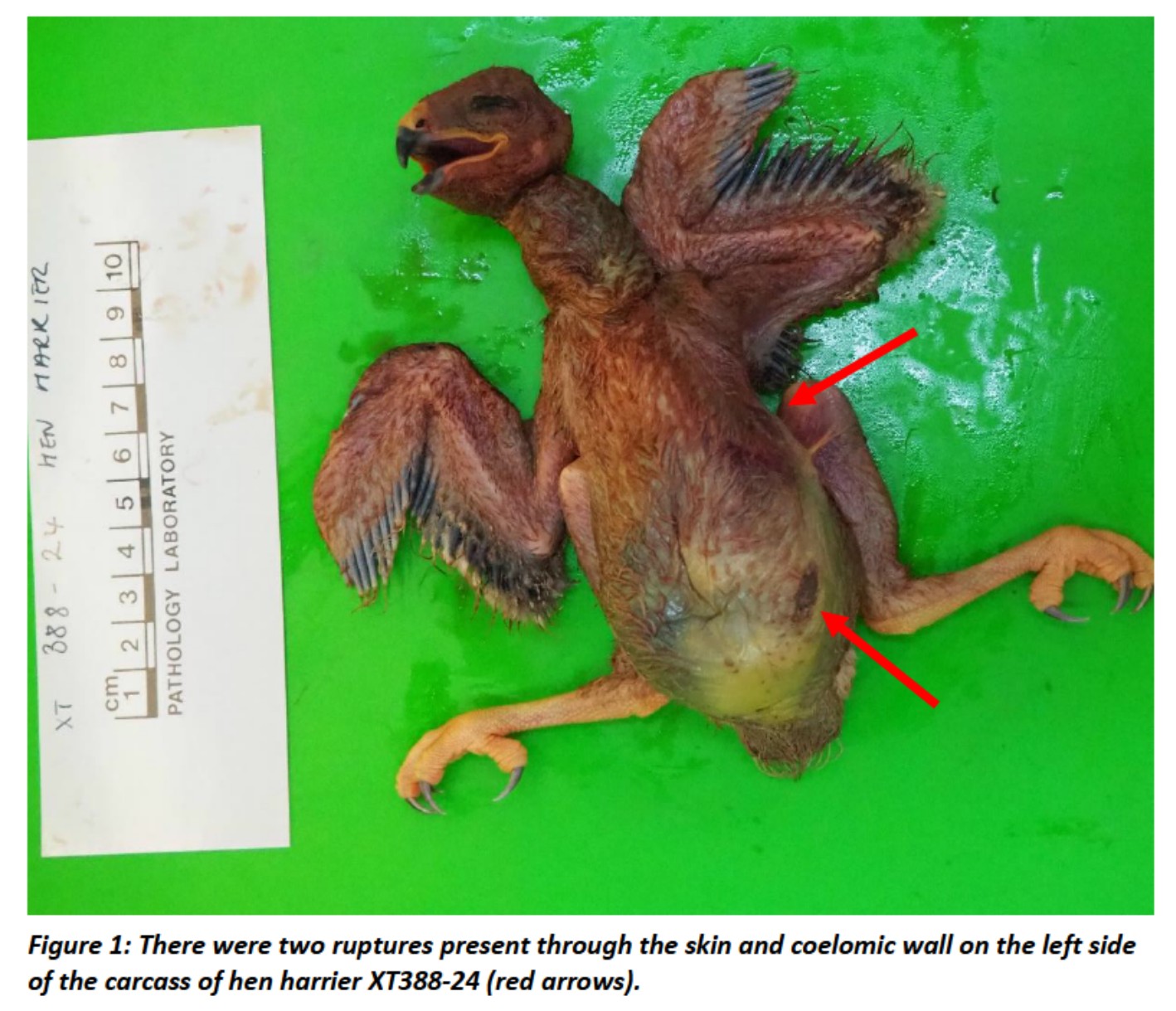
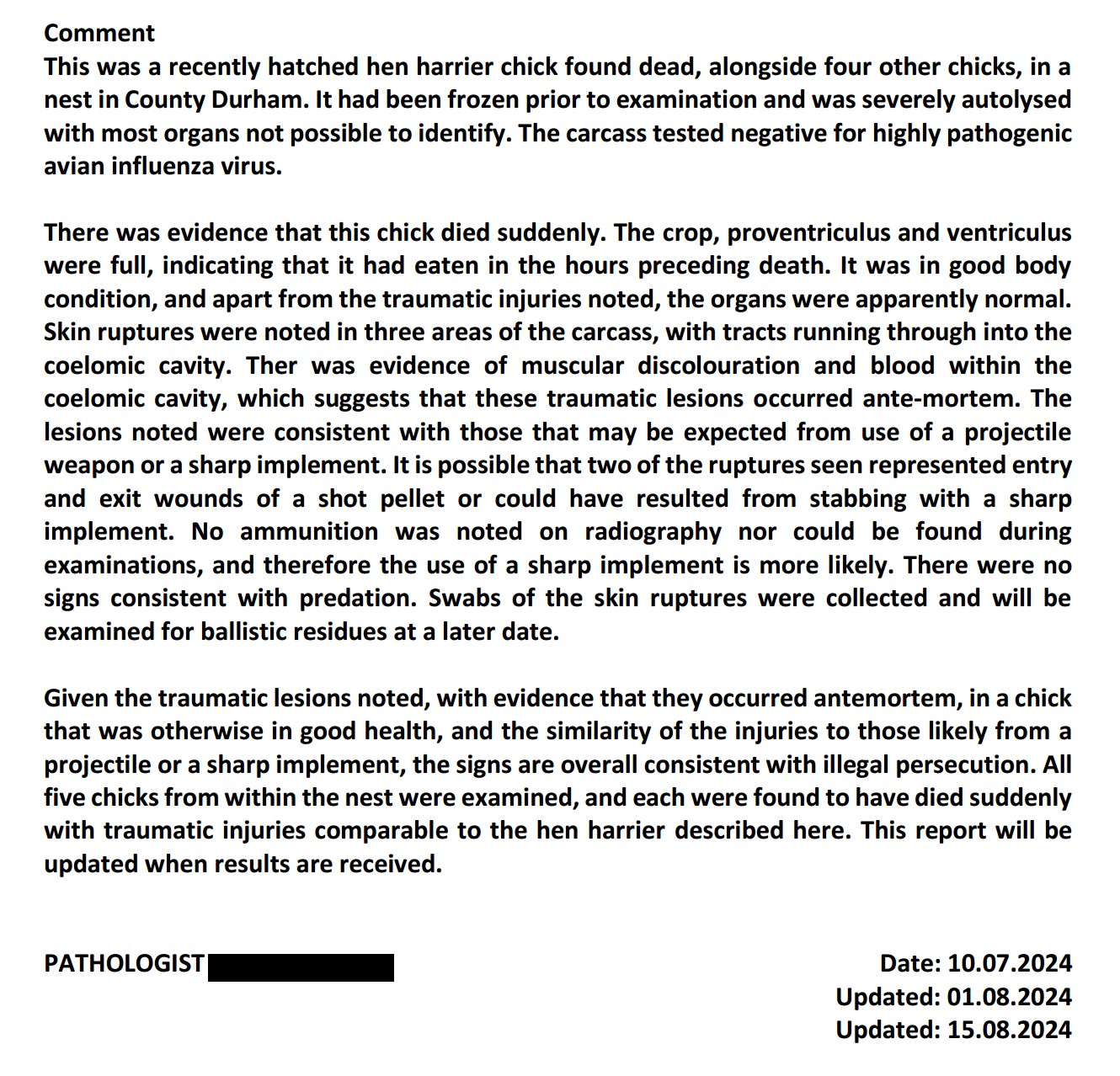
Here are the findings:
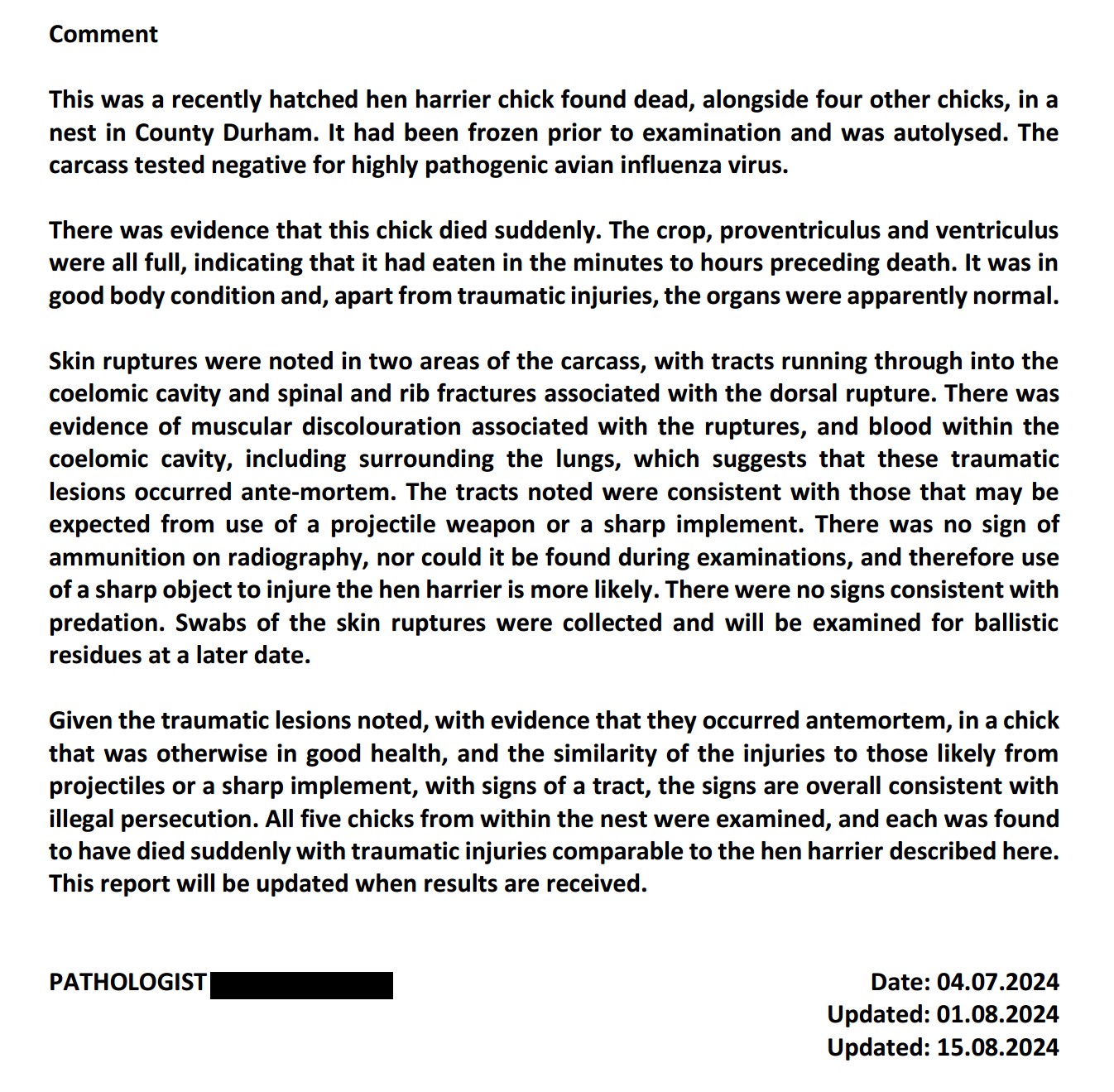
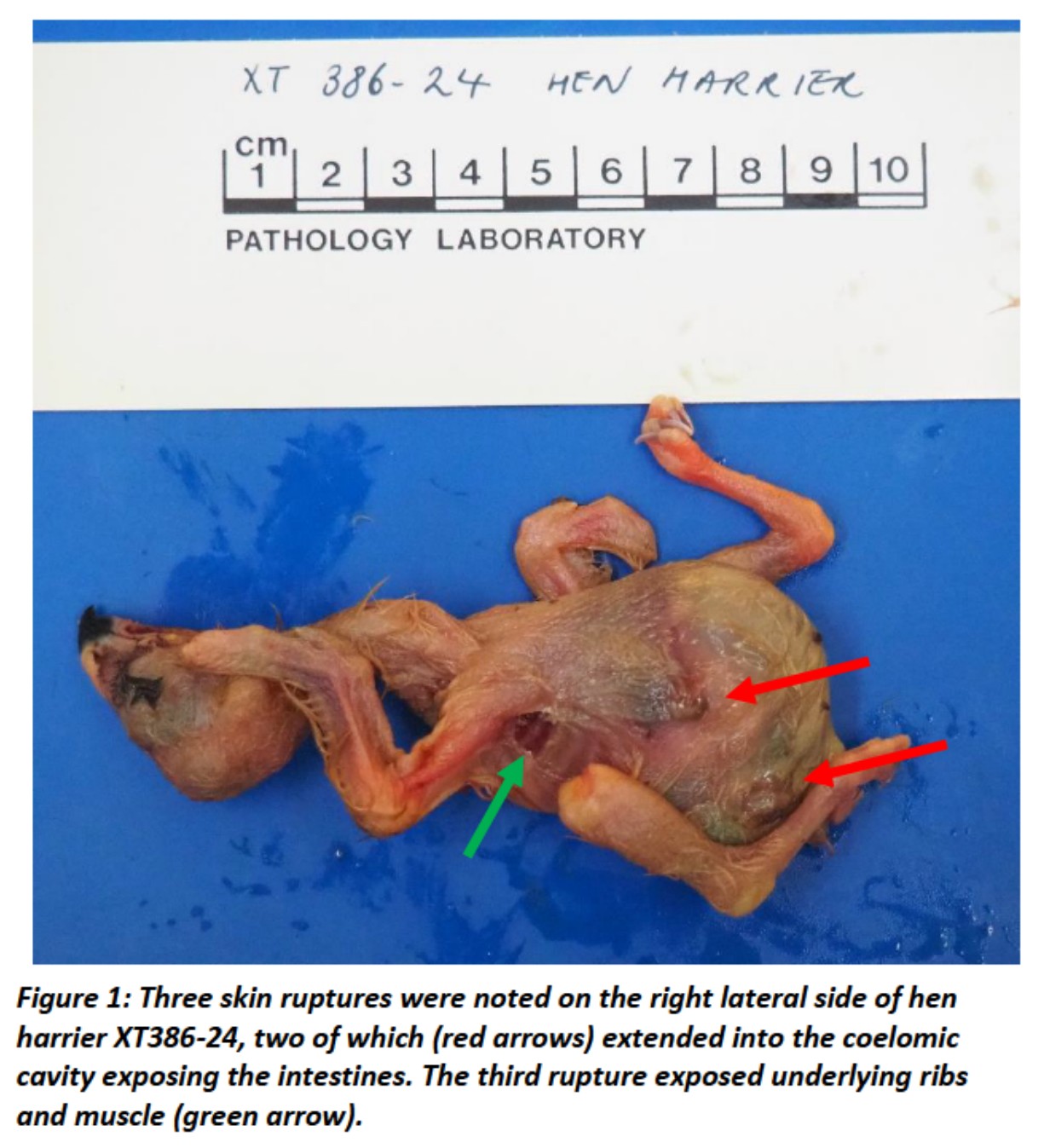
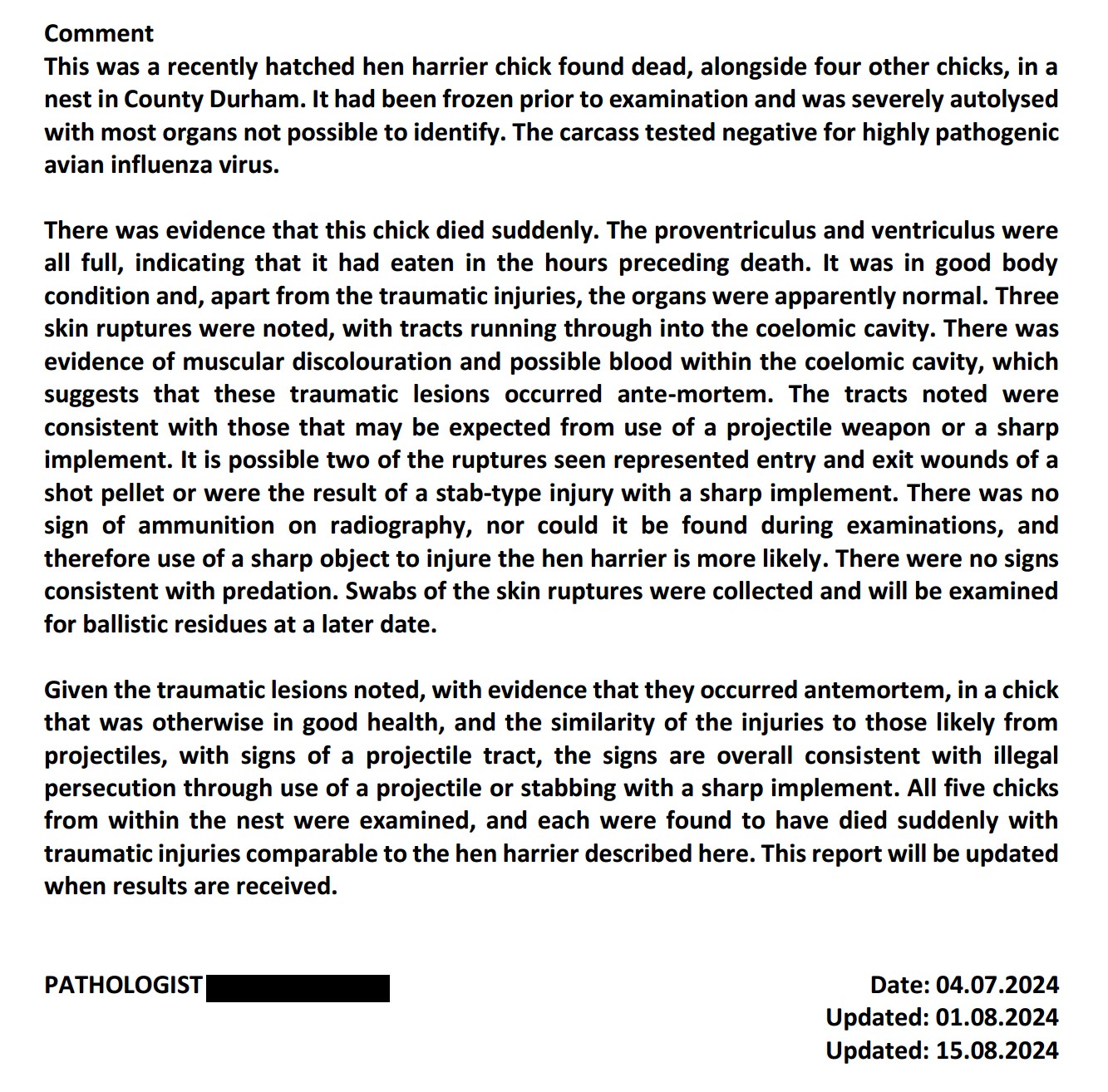
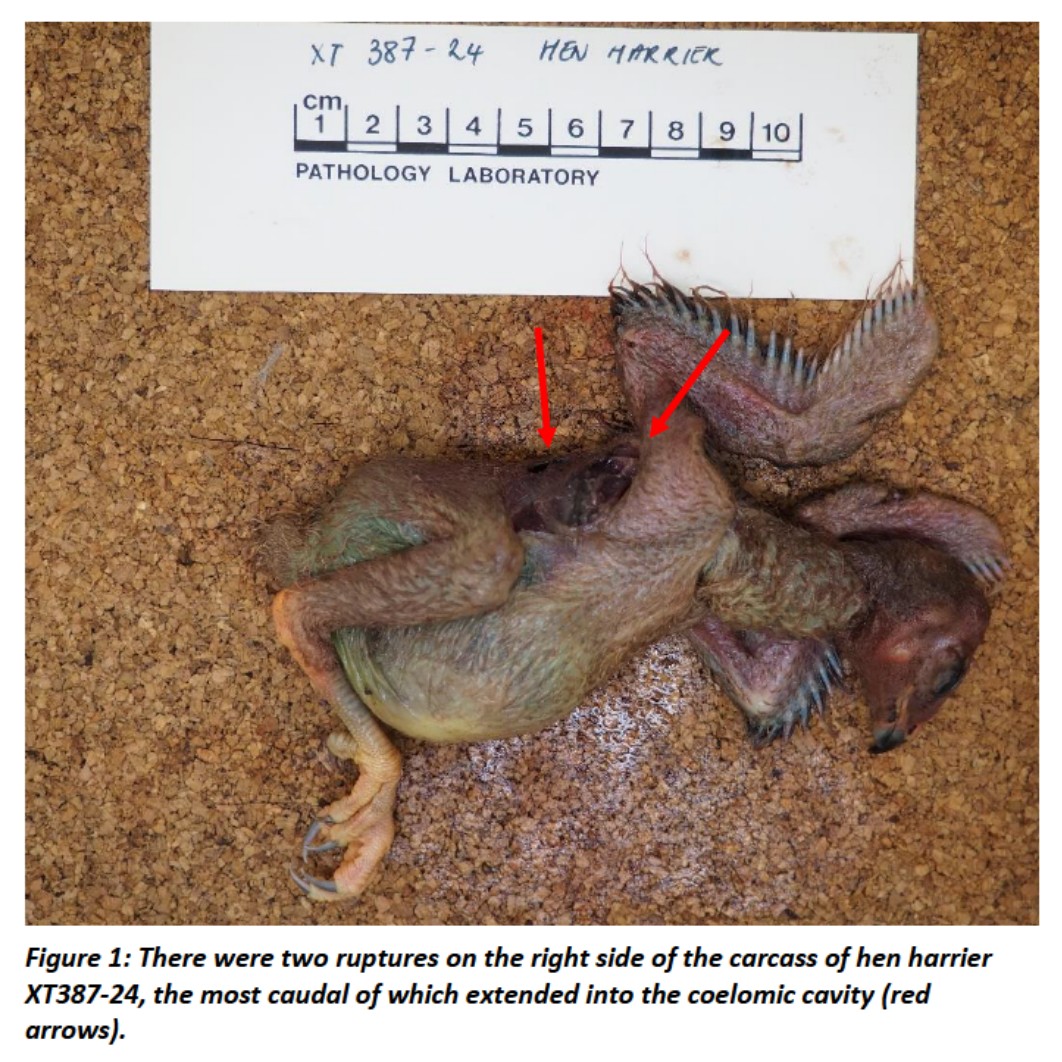
This is the cover form at the front of each of the five post mortem reports. They are all identical except for the reference number and the biological data of each individual carcass. Two x-rays were taken of each carcass, with no shot or fractured bones detected in any of them.
HEN HARRIER CHICK 1
HEN HARRIER CHICK 2
HEN HARRIER CHICK 3
HEN HARRIER CHICK 4
HEN HARRIER CHICK 5
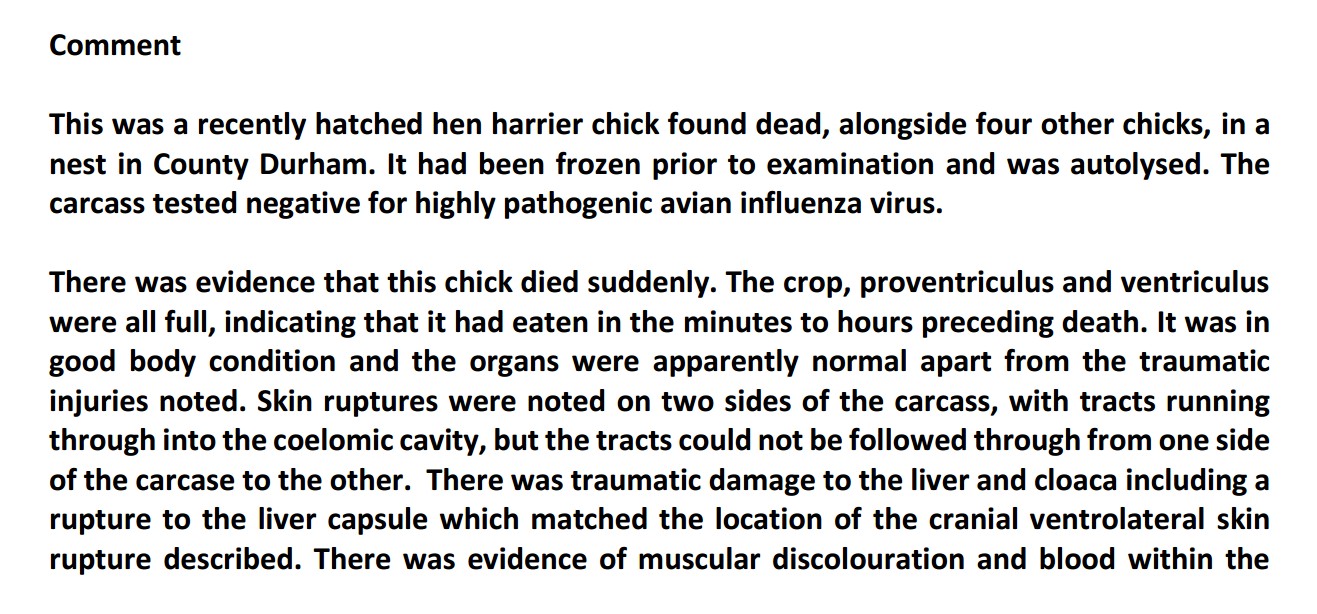
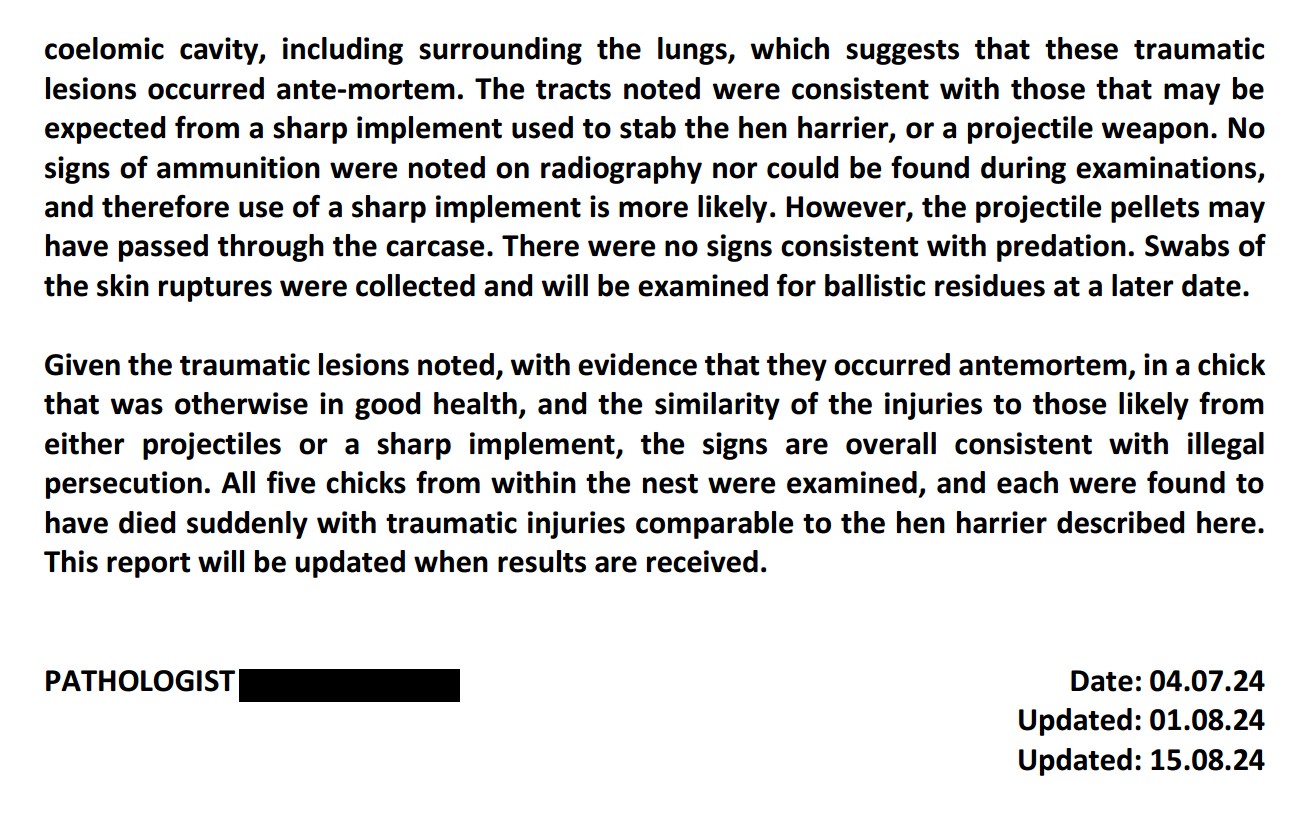
I expect, now you’ve had a chance to read the pathologist’s necessarily cautious conclusions, that you’re as shocked as I am. It is difficult for sane, humane individuals to even begin to conceive stabbing a live animal, let alone five tiny, helpless nestlings.
I’ve spoken with a few people about this case, including a retired veterinarian (thank you!), to double check my reading and interpretation of these post mortems. Our thought processes followed a similar thread:
First thought: No, surely someone didn’t stab them, did they?
Second thought: Well, every other plausible explanation seems to have been ruled out – no fractured or broken bones, no evidence of shotgun pellets, no sign of disease, no evidence of predation, negative for Avian Influenza.
Third thought: They all appeared to be healthy, they all died at the same time in the same nest, something has clearly happened, but stabbed? Really? And when they were alive?
Fourth thought: If you look at the size and shape of some of the traumatic lesions (stab wounds), they appear to be quite rounded and not what you’d expect from a knife (especially on chicks 1 and 2). So what might have been used to stab the chicks?
Fifth thought: A screwdriver?
Sixth thought: No, surely not. What type of sadistic psychopath do you have to be to do that?
Seventh thought: The type of sadistic psychopath who chose not to remove the evidence of the crime, but instead chose to leave the stabbed corpses in the nest to be found.
Eighth thought: I can’t think of any other explanation other than they’ve been stabbed, and the pathologist wrote on every report that,
“The injuries were consistent with those that may be expected from a sharp implement used to stab the hen harrier, or a projectile weapon. No signs of ammunition were noted on radiography nor could be found during examinations, and therefore use of a sharp implement is more likely“.
Ninth thought: WTF?
If any of these thoughts resonate with you, then you’re also quite likely to be incensed by this point.
Incensed that whoever stabbed those chicks, in that nest, on that grouse moor, will not be held to account. They’ve got away with it, and will know that they could probably do it again and get away with it, again. And again. And again. Who’s stopping them?
And also incensed that the news of this case has been kept secret for all this time by a number of different agencies. Why? In whose interest is it to keep this under wraps?
And does this level of secrecy extend to Defra Ministers? Do the people who are in a position to bring about change, and indeed who have indicated that a change may be on the cards, do they know about this?
I think this horrific case provides us all with a beautifully serendipitous opportunity to channel our anger.
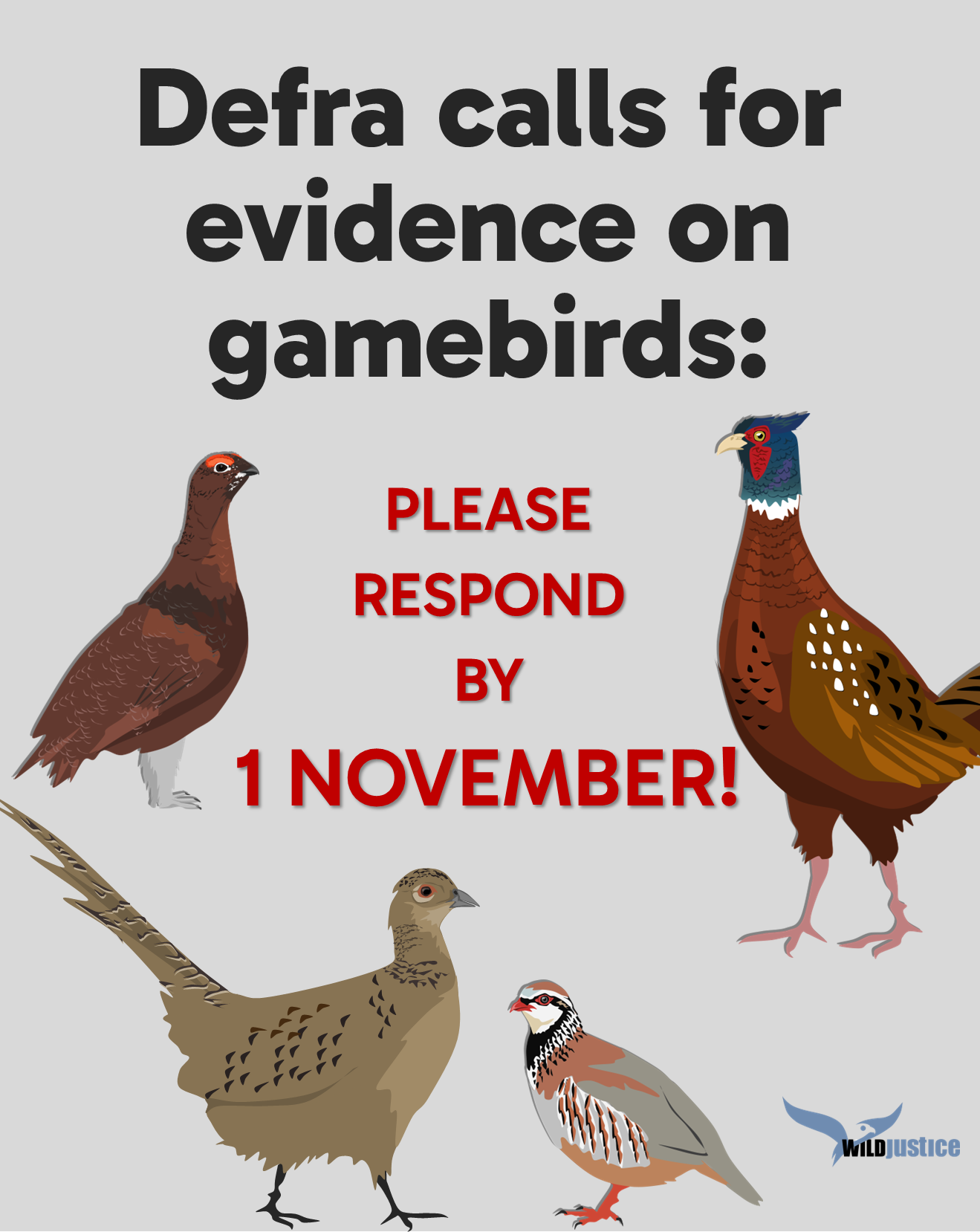
Defra’s Call for Evidence on the impact of gamebird shooting is open until 1st November 2026. Defra is asking anyone who has experiential evidence about the impact, whether positive or negative, to submit that evidence to the review. Experiential evidence is ‘lived experience’; what you’ve learned from the real world, rather than a theoretical concept.
I would argue that learning about what happened to those five Hen Harrier chicks is having an impact, it’s a lived experience, and therefore qualifies as experiential evidence and Defra needs to hear about it.
One of my colleagues described it to me as a sort of victim impact statement – the kind of declaration that’s presented in court from family and friends when someone has been murdered and they want the judge to consider the wider impact of the crime when deciding on a sentence.
If Defra Ministers are the judges, then it’s up to us to let them know what sort of impact these relentless crimes are having on us. Whether you’re disturbed by it, angered, upset, frustrated that raptor persecution is still happening and most of the time the perpetrators are still getting away it, then tell Defra, in your own words, about how this affects you, as a decent, reasonable, law-abiding member of society.
You don’t need to fill in the technical Call for Evidence submission form; you can simply write an email to Gamebirds@defra.gov.uk and write ‘Call for Evidence’ in the subject line.
As a way of directing your anger and getting justice for those five stabbed Hen Harrier chicks, it’s remarkably satisfying.
The Call for Evidence closes at midnight on 1st November 2026.
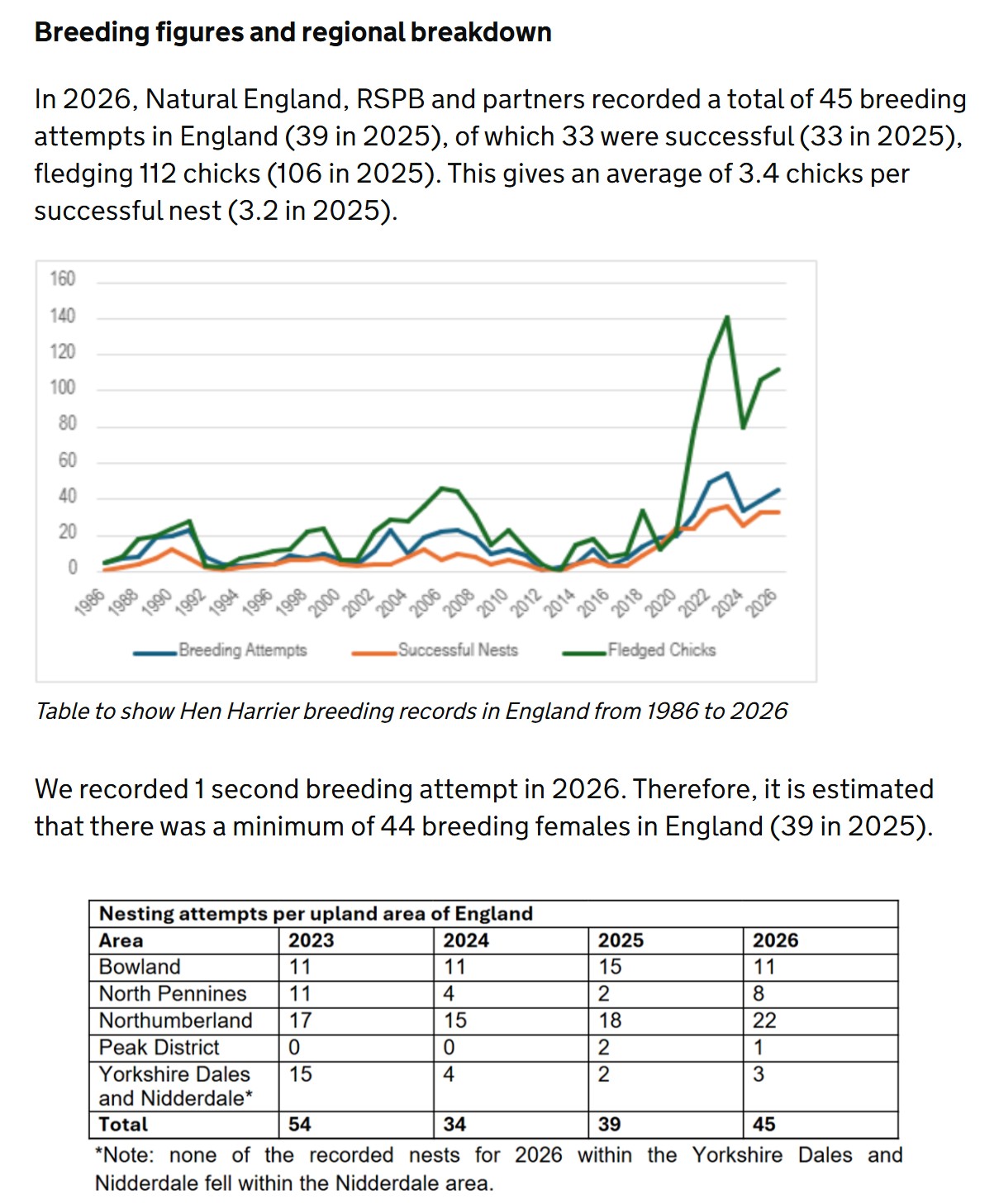
Natural England has finally published data for the 2026 Hen Harrier breeding season, showing yet again that Hen Harriers are not tolerated on most English grouse moors.
Of 45 recorded breeding attempts this year, only nine were on privately-owned grouse moors: the rest were on land managed for conservation.
And although the number of breeding attempts showed a slight increase this year (39 attempts were recorded in 2025), 33 of this year’s 45 attempts were successful, the same as last year.
When you consider that there are estimated to be between 150-190 grouse moors in England (there’s no official register for a precise number), with an estimated capacity for 330 pairs of breeding Hen Harriers, then only having nine breeding attempts (2.7% capacity) is really nothing to celebrate.
Although to be fair, that capacity for 330 breeding pairs doesn’t just include grouse moors – there are other types of moorland available. But even when that’s all included, then current breeding numbers still only amount to 13.3% of that capacity – so still nothing to be proud of.
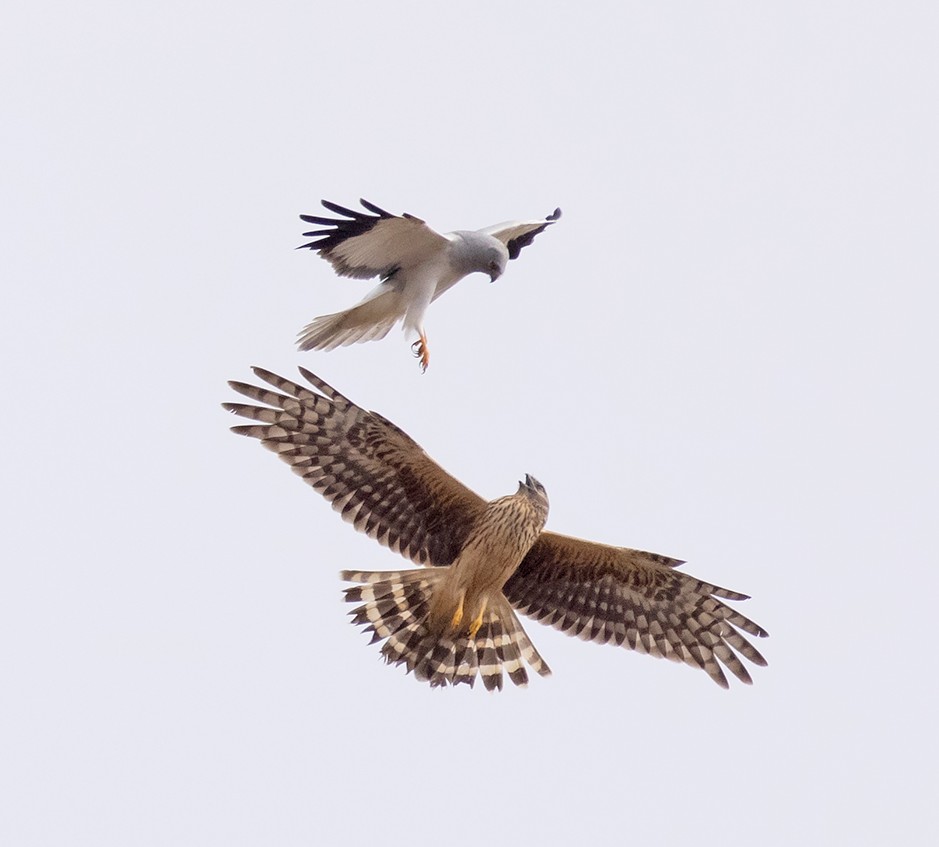
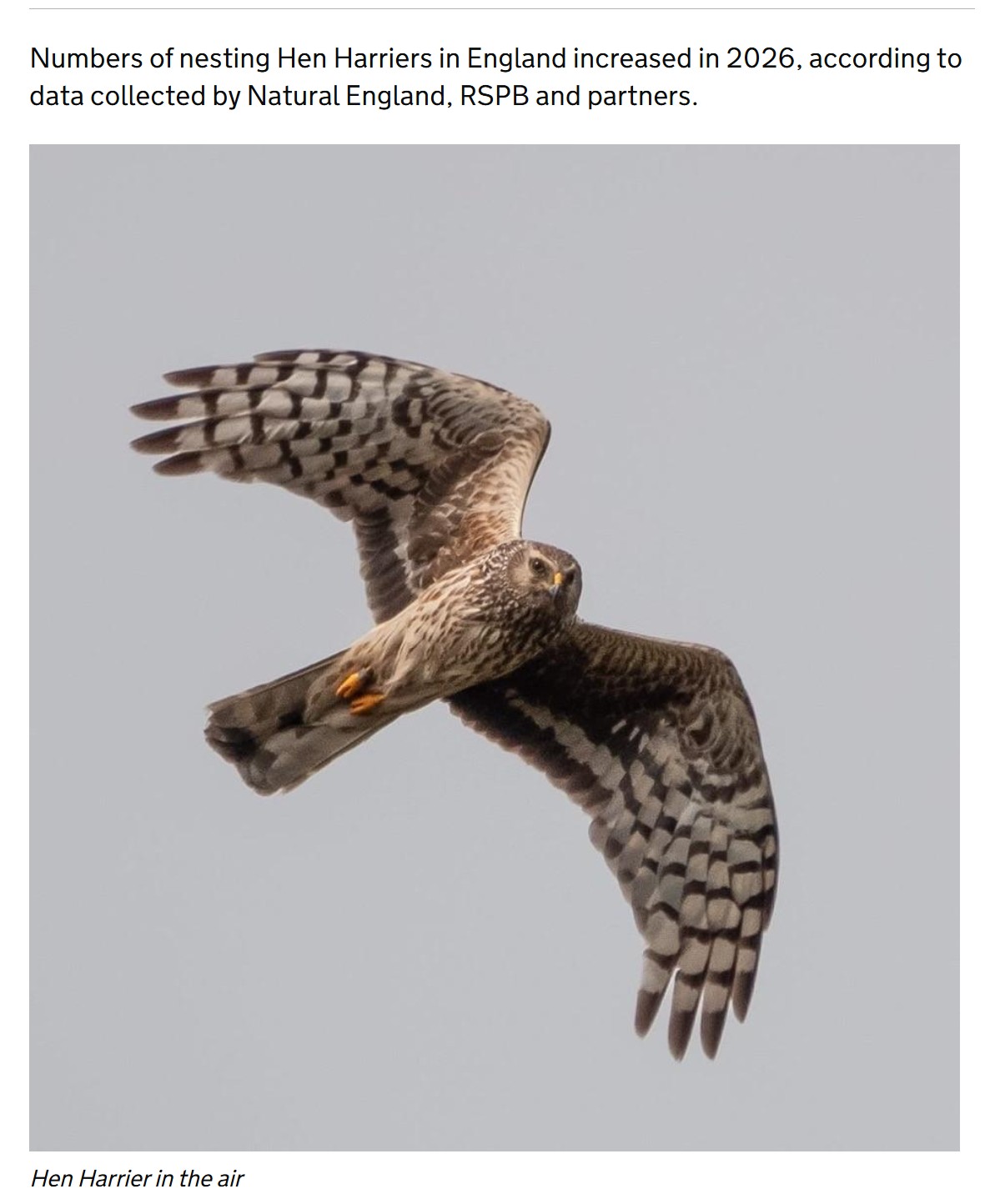
Skydancing Hen Harriers – a rare sight on most English grouse moors. Photo: Pete Walkden
Natural England has published a blog about this year’s results, attributed to Matthew Heard, National Delivery Director, but just as last year, it’s either carelessly worded or deliberately designed to let the criminal grouse shooting industry off the hook.
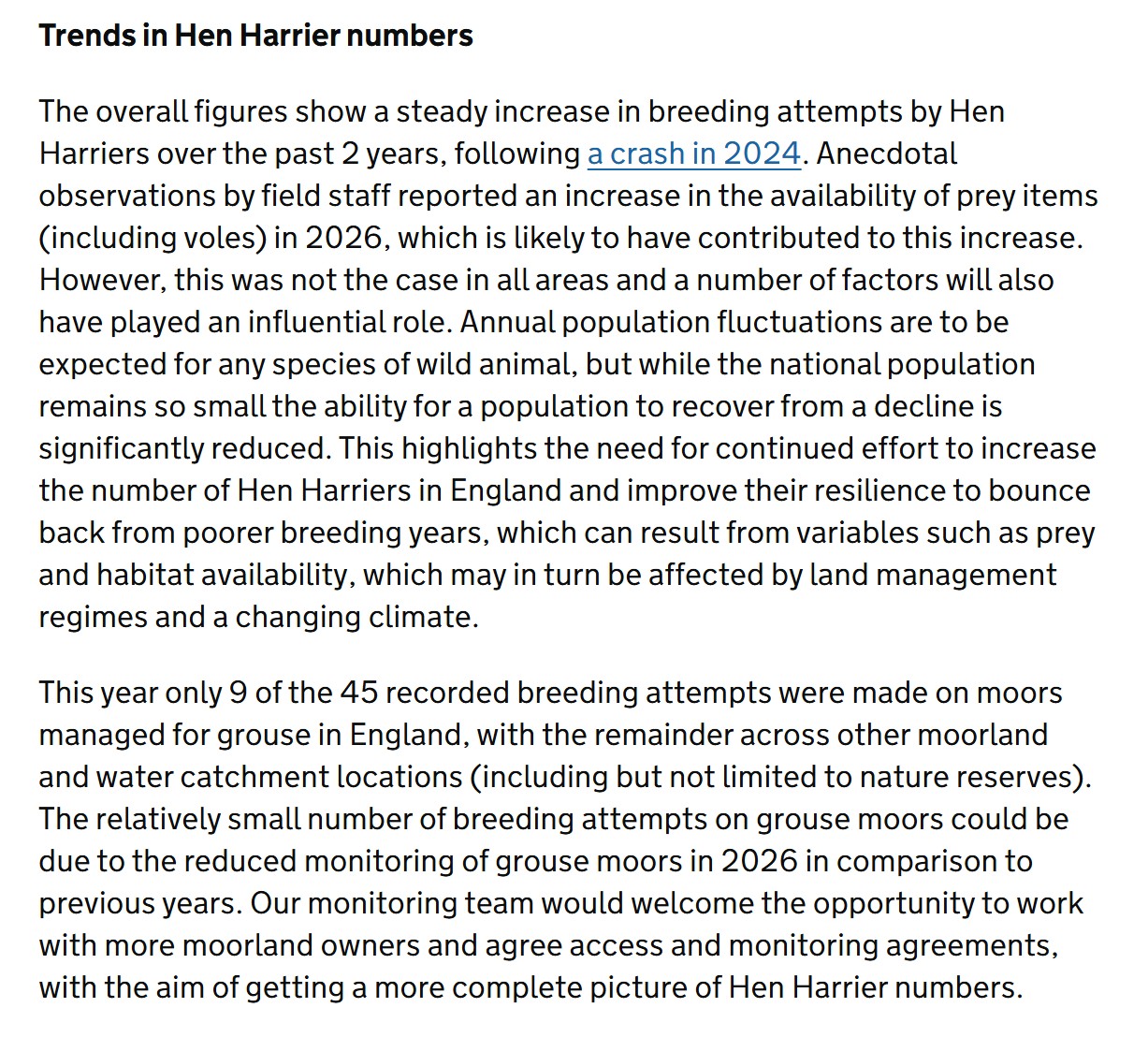
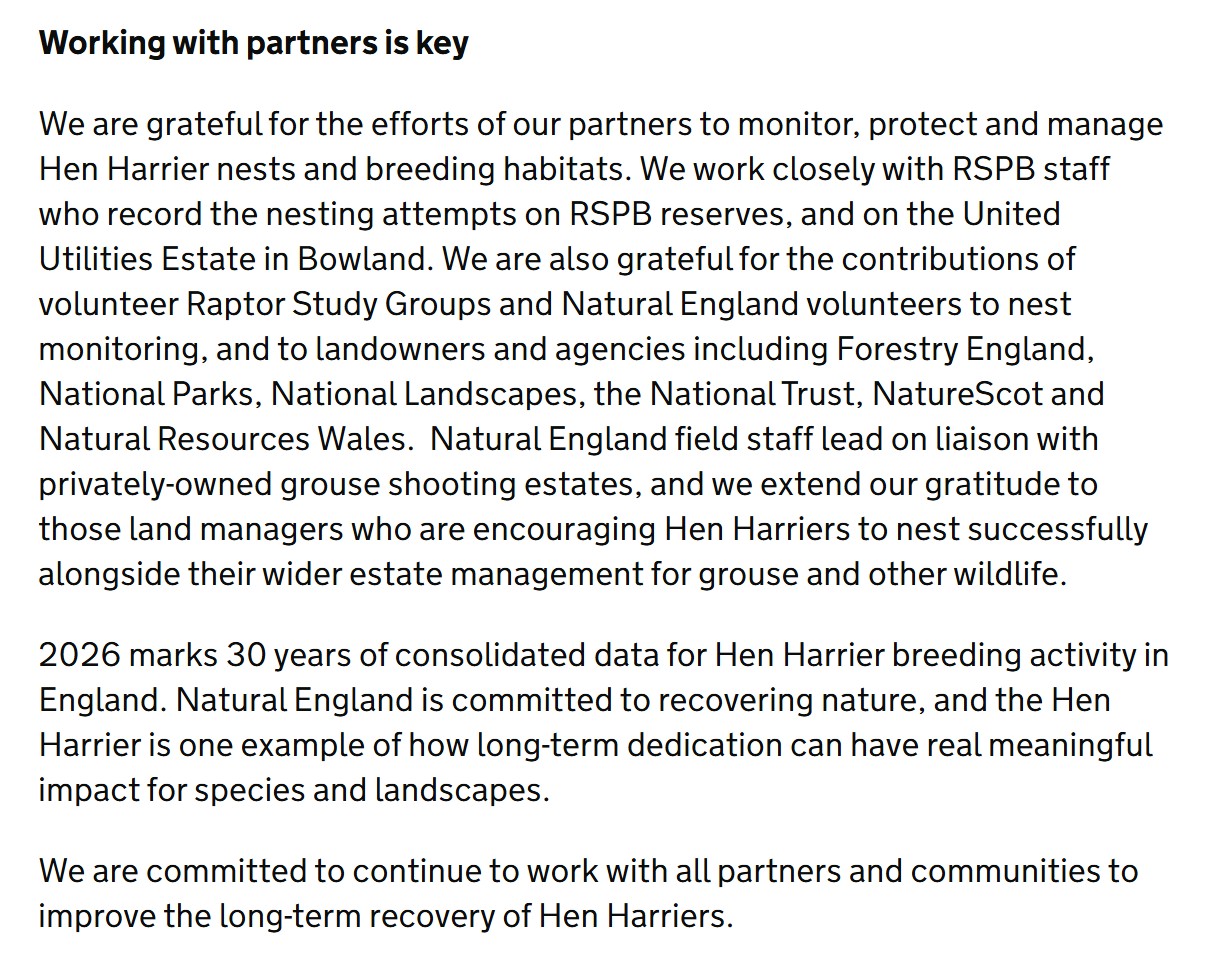
Here’s a copy of Natural England’s blog, with commentary from me below:
My commentary:
It’s telling, I think, that the words ‘persecution’ or ‘illegal killing’ do not feature anywhere in Natural England’s blog, despite illegal persecution, over many decades, being the sole cause of this species’ precarious conservation status.
Instead, Natural England describes the cause as “conflicting land management priorities“.
Nope, it’s crime, committed by criminals, on grouse moors.
Natural England’s opening sentence says, “Hen Harriers… after decades of decline, have gradually returned to northern England as their population has recovered“. The population hasn’t recovered, it’s still recovering, and it’s only returned to parts of northern England – it’s still missing as a breeding species in vast areas of grouse moor in the North Pennines, North York Moors, Yorkshire Dales, Nidderdale, and the Peak District.
As last year, once again Natural England has listed a regional breakdown of HH breeding attempts, but has failed to distinguish between those attempts on privately-owned grouse moors and those on moorland managed for conservation.
So for example, the figures for Bowland this year are 11 breeding attempts. That looks quite good, until you realise that nine of those breeding attempts were on land managed by the RSPB for United Utilities. So how many breeding attempts were there on the nearby and much larger Abbeystead Estate, for example?
Figures for the North Pennines are 8 breeding attempts; we know that at least three of those were on the RSPB’s Geltsdale Reserve, where unusually this year the breeding males didn’t ‘disappear’ or weren’t found shot on neighbouring grouse moors, probably because the RSPB used diversionary feeding to try and keep the males on the reserve.
In Northumberland, there were 22 breeding attempts. I’d guess that, like last year, the vast majority of those were on land managed by Forestry England, not on privately-owned grouse moors.
In the Peak District there was a single breeding attempt (that subsequently failed), and once again this was on land owned by the National Trust. There was also another pair prospecting on NT land this year but they vanished in April before a breeding attempt got underway – again, a familiar pattern in this National Park.
In the whole of the Yorkshire Dales, there were only three breeding attempts, and not one in the whole of Nidderdale. I’d be interested to learn whether any of those breeding attempts in the Yorkshire Dales were successful.
Last year I provided a table to show the differences between HH breeding attempts on land managed for grouse moors and land managed for conservation:
This year I don’t yet have the data to be able to distinguish between the different types of land use but I’ve asked Natural England to provide it. I’ll blog when I receive it.
The funniest part of Natural England’s blog has to be this statement:
“The relatively small number of breeding attempts on grouse moors could be due to the reduced monitoring of grouse moors in 2026 in comparison to previous years“.
Yes, I suppose that might be plausible, if you’re six years old with no previous knowledge of this subject and willing to accept anything you’re told.
Does Natural England honestly think that grouse moor owners wouldn’t be shouting from the rooves of their stately homes if they were hosting breeding Hen Harriers on their grouse moors?!
Raptor persecution, and especially Hen Harrier persecution, is one of the biggest criticisms against the grouse shooting industry and these are crimes that they simply can’t justify, so industry leaders usually just deny it’s happening, even in the face of overwhelming evidence to the contrary.
If Hen Harriers were nesting on grouse moors all over northern England, the industry would make sure every single media outlet and every single Defra minister knew about it!
If you’re a raptor fieldworker, or a birdwatcher, and you’ve spent any time fruitlessly looking for breeding Hen Harriers on grouse moors, then this is the type of evidence/experience you could submit to Defra’s Call for Evidence on gamebird shooting. All the better if you can provide dates and locations. You don’t need to fill in the technical Call for Evidence submission form; you can simply write an email to Gamebirds@defra.gov.uk and write ‘Call for Evidence’ in the subject line. The Call for Evidence closes at midnight on 1st November 2026.
As I hope you’re all aware, last month Defra launched a Call for Evidence on all aspects of gamebird rearing, releasing and shooting in England, with a view to using this evidence to inform potential policy changes, which may include the introduction of a licensing scheme for shooting Red Grouse, Pheasants, Red-legged Partridges and Mallards.
We can have a long argument about the pitfalls and merits of a licensing scheme as opposed to introducing a ban, but that’s for another day. The most important thing right now is to get the evidence in to Defra, because without that, there won’t be any policy change at all.
The gamebird shooting industry has been rallying its troops to submit evidence – although its definition of ‘evidence’ is not quite what Defra has asked for. For example, I watched a short video on social media the other day by someone called Tarquin Millington-Drake, who likes shooting grouse. Tarquin was urging his followers to respond to Defra’s Call for Evidence, as follows:
“So I’ve done the Defra thing, and it’s a bit scary because it goes, ‘What evidence is there?’. All the questions are, ‘What evidence is there?’ So you’ve just got to ignore that, and just say what you think. And I haven’t answered the questions on game-rearing because I’m not a game-rearing expert, but, erm, you’ve got to ignore, you’ve got to translate in your mind what evidence is there, to what’s your opinion, basically“.
Whilst Defra has said the Call for Evidence is open to everyone to respond, and every submission will be read, I’m pretty sure it won’t place much value on people’s opinions – it’s called a ‘Call for Evidence’ for a reason; it’s not called a ‘Call for Opinions’ – that will come later in Defra’s public consultation on any policy changes it proposes after reviewing the evidence submitted in the current ‘Call for Evidence’.
Defra has stated: ‘We welcome a range of evidence types, including peer‑reviewed research, grey literature (e.g. research reports, working papers, NGO reports), official statistics, evaluation studies, monitoring data, and well-documented operational or experiential evidence. While all submissions to this call for evidence will be considered, greater weight will be given to evidence that demonstrates a transparent and verifiable evidence trail, provides relevant context for the evidence submitted, and includes clear rationales for any conclusions or observations, with links to the evidence provided where possible. Where possible, respondents should provide sources, methodologies, and any limitations of the evidence submitted. Submissions should provide sufficient detail on methods, context (including timeframes) and limitations to enable appropriate assessment’.
It’s clear that the gamebird shooting organisations are terrified at the prospect of the Call for Evidence. And so they should be. There is plenty of peer-reviewed scientific evidence out there to demonstrate the damage caused by gamebird shooting, not least its direct link to illegal raptor persecution, but there are plenty of other issues, too, all exposed in the scientific literature.
This time, the shooting industry can’t rely on its mates in Parliament to stand up in Westminster Hall and claim that ‘Gamekeepers are not the enemy of the Hen Harrier; they are its strongest allyin the uplands‘, as Greg Smith MP (Conservatives) laughingly stated in the most recent debate about banning driven grouse shooting. That level of idiocy went unchallenged in the debate, but it shouldn’t wash as part of a formal evidence review.
We can see just how terrified the shooting industry is about the Call for Evidence by a couple of recent blogs published by two prominent shooting organisations.
Yesterday, BASC revealed that its lawyers had written to Defra in September, requesting a six-week extension to the Call for Evidence deadline. BASC had argued that two months was not sufficient time for its members to submit their evidence. Defra rejected the request and told BASC that it thought the current two-month window was “reasonable and proportionate” (see here).
Not to be outdone, a consortium of shooting organisations, mostly from Scotland but also including the Moorland Association and the Country Land & Business Association (CLA) in England, have also written to Defra, asking for the deadline to be extended until 30 April 2027, almost eight months after the Call for Evidence was launched! Given Defra’s response to BASC, Defra’s response should be predictable.
The long-running prosecution of Lincolnshire farmer William Brian Chorlton, now 88-years-old, continued at Lincoln Magistrates’ Court last week.
Photo by Ruth Tingay
In April 2025, Mr Chorlton, then aged 87, of Morkery Lane, Castle Bytham in Lincolnshire was summoned to court following reports that birds of prey were being poisoned in the Castle Bytham area.
He faced eleven charges relating to the unapproved or unlawful storage of the chemical Aldicarb, possession of a poisoners kit, and possession and use of four pole traps on his Pheasant shoot (see here).
Mr Chorlton appeared at Lincolnshire Magistrates’ Court in May 2025 and pleaded not guilty to all charges and the case was set to proceed to trial in October 2025.
However, at a pre-trial hearing in September 2025, Mr Chorlton’s lawyer announced that he intended to apply for a judicial review of the District Judge’s decision not to dismiss the case (see here), which meant that the original trial date of October 2025 was postponed until the judicial review application was heard.
A further case management hearing scheduled for January 2026 was also postponed as the application for judicial review was still underway (see here).
In April 2026 Mr Chorlton’s application for judicial review was rejected by the High Court.
Another case management hearing (for the criminal prosecution case) took place in April 2026 and a new trial date was set for 8th and 9th October 2026.
The trial began last week and evidence was heard from prosecution witnesses, including evidence about the discovery of Tawny Owl DNA on a number of pole traps that Mr Chorlton claims were being used to trap squirrels.
The trial was further adjourned and will continue at Lincoln Magistrates’ Court in February 2027.
NB: As proceedings are still live, comments have been turned off.
WHAT HAPPENED TO THE 58 HEN HARRIERS? THE UNANSWERED QUESTIONS BEHIND NATURAL ENGLAND’S BROOD-MANAGEMENT EXPERIMENT
I have followed the fortunes of Hen Harriers for many years. My concern is straightforward. I wanted my children to be able to see these magnificent birds flying over the northern uplands as a normal part of our wildlife, not as a rare and precarious privilege.
That is why I have taken a particular interest in Natural England’s Hen Harrier Brood Management Trial.
Hen Harrier (photo by Laurie Campbell)
The trial has now finished. The licence period ran from 2018 to 2024, with brood management actually taking place between 2019 and 2023. Natural England published its final evaluation in July 2026.
But there remains one rather obvious question.
What happened to the birds?
58 birds were released
During the trial, 59 chicks were taken into captivity and 58 were eventually released.
Of those 58 released birds:
39 were fitted with satellite tags
19 were released without satellite tags
The satellite tags were intended to provide a means of monitoring survival and, where a bird died or disappeared, potentially investigating what had happened.
Indeed, Natural England explained the theory behind the trial quite clearly. If brood management reduced conflict with grouse shooting interests, this should lead to reduced persecution, improved survival and ultimately more Hen Harriers breeding in the wild.
So the fate of those released birds is rather important.
What happened to the 39 tagged birds?
The final evaluation contains the status of the satellite-tagged brood-managed birds at the end of the trial.
At the December 2024 endpoint, three were still alive and actively being tracked.
For the other 36 tagged birds, there was no current evidence of survival from the satellite tracking data.
That statement needs some careful qualification.
According to RPUK two of those 36 birds had in fact already been found dead and have been included in their running tally of 149 missing/killed Hen Harriers.
They were:
R2-F2-20, brood-managed in 2020
R3-F1-22, brood-managed in 2022
Both birds had spent the winter of 2022 at the same North Pennines roost.
This distinction matters because the deaths were not discovered after the trial. What happened after the trial was that Natural England finally published the details, on 18 December 2024, after the relevant police investigations had concluded.
Two birds found with shotgun pellets
The post-mortem examinations found three suspected lead shotgun pellets in R2-F2-20 and two suspected lead shotgun pellets in R3-F1-22.
Natural England nevertheless said that their presence suggested ongoing illegal persecution of Hen Harriers in northern England.
And what about the other 34 tagged birds?
This is where the numbers need to be handled carefully.
The 39 tagged birds comprise:
3 alive and actively tracked at the end of the trial
Plus
36 for which the tracking record provided no current evidence of survival at the December 2024 endpoint.
Two of those 36 had subsequently been recovered dead, with shotgun pellets in their bodies.
That leaves 34 tagged birds for which there is no documented evidence of subsequent survival.
Then in addition, there are also the 19 birds which were released without satellite tags.
Natural England has told me that it believes all the brood-managed birds were ringed and that the ringing records were shared with the British Trust for Ornithology.
But Natural England’s Hen Harrier Team has told me that it holds no record of the fates of the brood-managed birds that were not fitted with satellite tags. That leaves an important information gap.
A summary of the 58 birds released:
3 were alive and actively satellite-tagged at the end of the trial
2 were subsequently confirmed dead, both with shotgun pellets in their bodies
34 tagged birds have no documented evidence of subsequent survival
19 untagged birds have no fate record held by Natural England
In other words, 53 of the 58 released birds currently have no documented evidence of subsequent survival. That does not mean that 53 birds are known to have died. It does mean that, on the information currently available, there is no documented evidence establishing that they survived.
That is an important distinction.
Did brood management actually increase the Hen Harrier population?
This is perhaps the most interesting part of Natural England’s final evaluation.
The answer is not simply that 58 captive-reared birds caused the subsequent increase in Hen Harrier numbers.
Natural England itself says the number of brood-managed chicks was far too small to explain the substantial increase in nesting pairs.
The population modelling commissioned from the British Trust for Ornithology indicated that the increase was more consistent with higher survival and greater settlement and breeding by wild birds.
Natural England nevertheless concluded that the availability of brood management probably contributed to population growth, particularly through increased breeding on some grouse moors.
But there is an important qualification.
Natural England acknowledges that the effects of brood management could not be completely separated from the satellite tagging, monitoring and surveillance programme that accompanied it.
That makes the question of what actually drove the recovery more complicated than simply saying that brood management worked.
And what about persecution?
Natural England’s own conclusion is also quite clear on this point.
Illegal killing continued throughout the trial.
The final evaluation says that illegal killing remains a significant constraint on Hen Harrier recovery and that the trial did not demonstrate a widespread reduction in illegal killing.
That is particularly relevant when considering the fate of the brood-managed birds.
What did the experiment actually cost?
This is another area where the full picture is not yet available.
It said that Hen Harrier monitoring and recovery work overall had been estimated at hundreds of thousands of pounds annually, involving several directorates, but that it did not hold a detailed breakdown of their work.
Following an Environmental Information Regulations request, Natural England disclosed £83,613.50 of identifiable external expenditure associated with the work I asked about.
That included:
£3,291.50 for satellite-tag data extraction in 2022
£49,999 for the 2024 National Centre for Social Research study
£30,323 for the British Trust for Ornithology population modelling
Natural England also said that two of the reports were produced internally and therefore did not have separately identifiable external costs.
However, Natural England did not provide a complete internal staff-cost figure for the trial.
There are also questions about the satellite tags themselves. Six reconditioned tags were supplied in 2023 but no costs were shown* against the remaining 33 tags or for the cost of their transmissions and associated data services.
So £83,613.50 cannot be presented as the total cost of their brood-management experiment. It is just the identifiable external expenditure Natural England has so far disclosed. I have therefore asked Natural England for further clarification.
What did Natural England actually learn from this financially costly experiment that displaced these birds, raised them in captivity and released them back into a predatory environment, where the majority of them were likely to be never seen again?
The unanswered question
Natural England has now concluded that the brood-management trial contributed to an increase in Hen Harrier nesting on some grouse moors.
It also accepts that the numbers of captive-reared birds were too small to explain the overall increase in wild bird survival and that the effects of brood management cannot be completely separated from the intensive tagging and monitoring programme, and that illegal killing continued throughout the trial.
Against that background, I keep coming back to the birds themselves.
58 were released.
39 were satellite tagged.
3 were still alive and actively tracked at the end of the trial.
Two others had already been found dead, both with shotgun pellets in their bodies.
34 tagged birds have no documented evidence of subsequent survival.
19 released without satellite tags for which Natural England says it holds no fate records.
That is a remarkable amount of uncertainty surrounding the fate of birds that were deliberately taken from the wild, raised in captivity and released as part of a scientific experiment.
The obvious next step is surely to find out what can still be established.
Were any of the 19 untagged birds subsequently seen?
Were any identified through their rings?
Does the BTO hold records that Natural England does not?
And, more broadly, what happened to the birds once the experiment stopped?
I have therefore approached the relevant organisations for any additional records they may hold.
Because ultimately, whatever one’s view of brood management, these were not numbers on a spreadsheet. They were 58 individual Hen Harriers and we should be able to account for what happened to them. They represent a significant cohort of Hen Harriers in England.
Natural England itself says that illegal killing continued during the trial and remains a significant constraint on Hen Harrier recovery.
So if persecution remains a problem, should conservation policy concentrate on finding ways of making Hen Harriers more acceptable to grouse shooting interests?
Or should it concentrate much more heavily on ensuring that a protected bird is actually protected?
That is not an argument against every grouse moor manager. There are undoubtedly estates and individuals who genuinely support Hen Harrier conservation.
But the continuing disappearance of protected birds means that the question cannot simply be ignored. I started campaigning because I wanted to see Hen Harriers flying over the northern uplands as a normal part of our wildlife not as a rare and precarious privilege.
ENDS
*Ed: it’s my understanding that the Moorland Association paid for the costs of the satellite tags used during the trial. It’s also my understanding that the Moorland Association paid the brood meddling licence holder, Jemima Parry Jones of the International Centre for Birds of Prey, for the costs of the removal of HH chicks from the moors, the costs of holding them and rearing in captivity, and the costs of their subsequent release.
I hope by now that blog readers are aware of Defra’s Call for Evidence on gamebird rearing, releasing and shooting.
The Call for Evidence was launched in September 2026, and closes on 1st November 2026. Its purpose is to collect evidence (rather than opinions) on the impacts of the gamebird shooting industry, to help inform future Government policy.
It covers the rearing, release and shooting of ~60 million Pheasants, Red-legged Partridges and Mallards, as well as the ‘management’ associated with Red Grouse shooting, and anyone can respond.
Lots of conservation organisations will be making formal submissions, based on scientific evidence, but it’s equally important that individuals respond with their personal experiences too.
Wild Justice has published a blog that explains what the Call for Evidence is about, what sort of evidence might be useful, and why it’s important to respond.
The Pheasant-shooting season opened yesterday, a month after the Red-legged Partridge shooting season opened on 1st September and seven weeks after the Red Grouse shooting season opened on 12 August.
So this weekend, whilst the shooters are out casually and mindlessly killing and wounding thousands of sentient birds for no reason other than their own entertainment, it’d be great if you could find some time to sit down and write to Defra about your own experience, evidence or information (see the Wild Justice blog for ideas of the types of experience that will be useful).
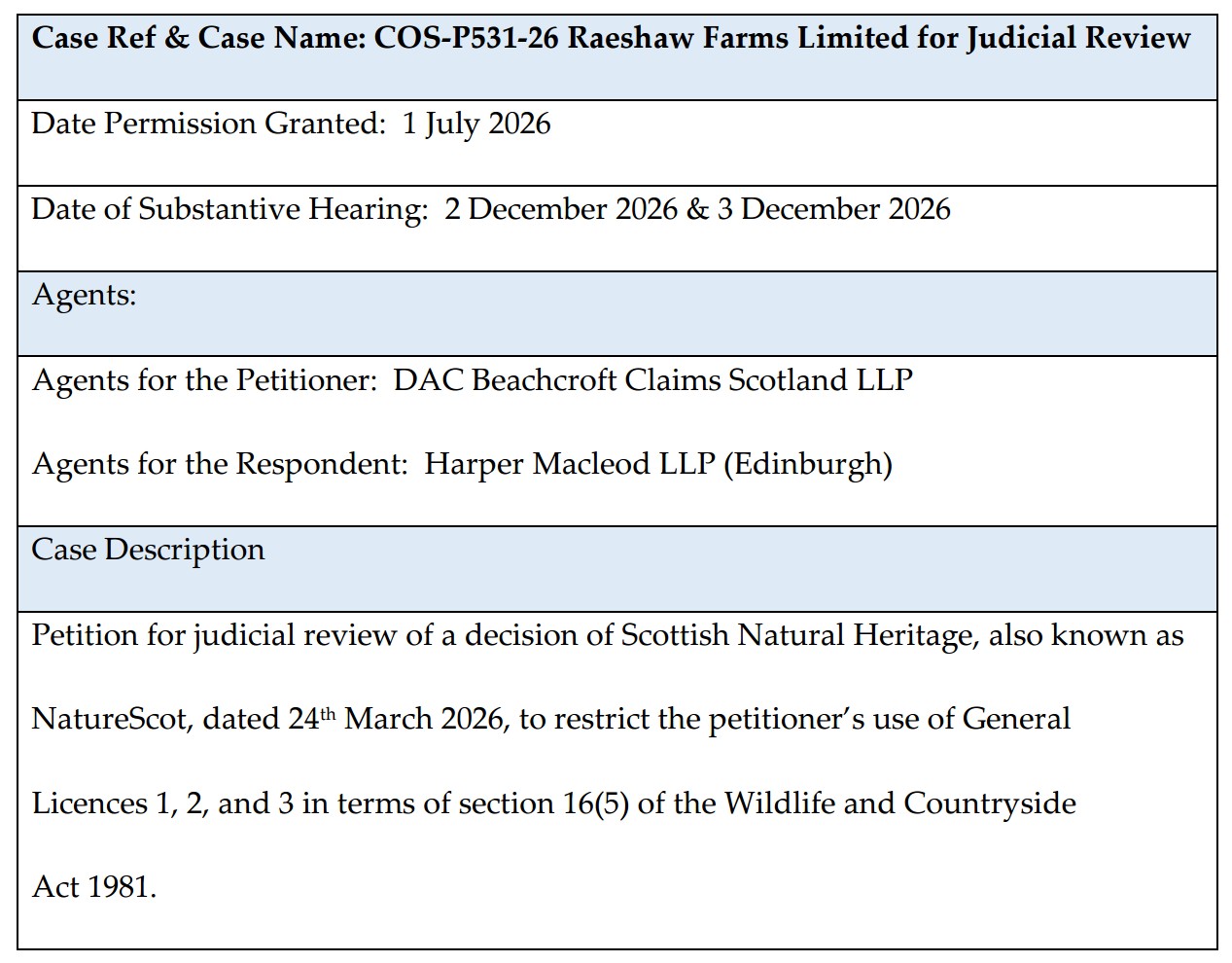
A new court date has been set for Raeshaw Estate’s judicial review of its latest General Licence restriction.
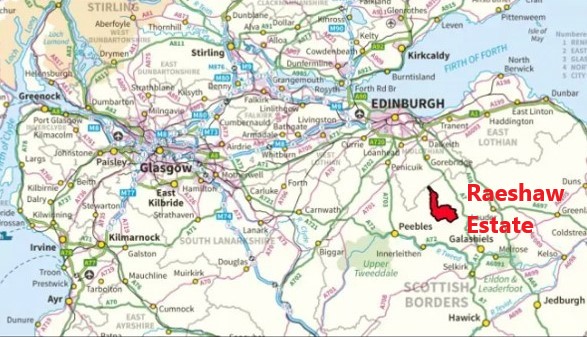
In February this year, NatureScot imposed a three-year General Licence restriction on Raeshaw Estate, a grouse-shooting estate in the Scottish Borders believed to be under the management of ‘grouse guru’ sporting agent Mark Osborne.
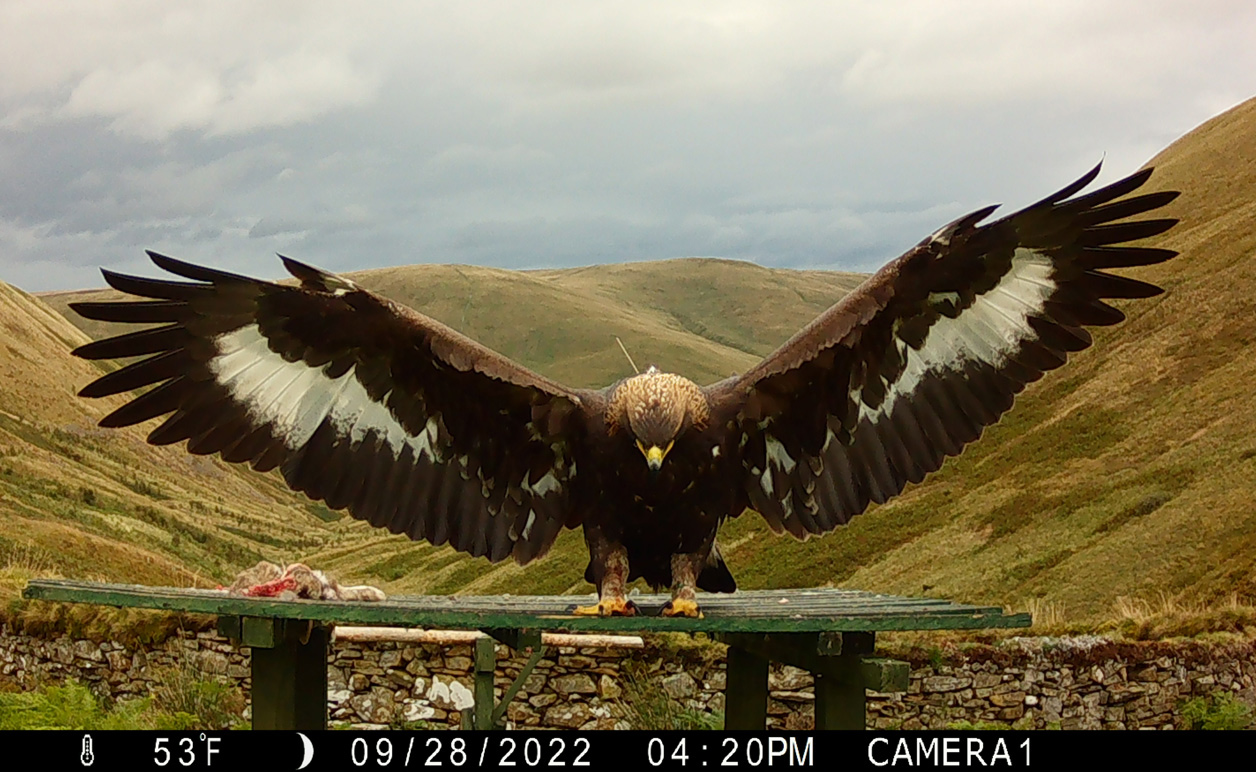
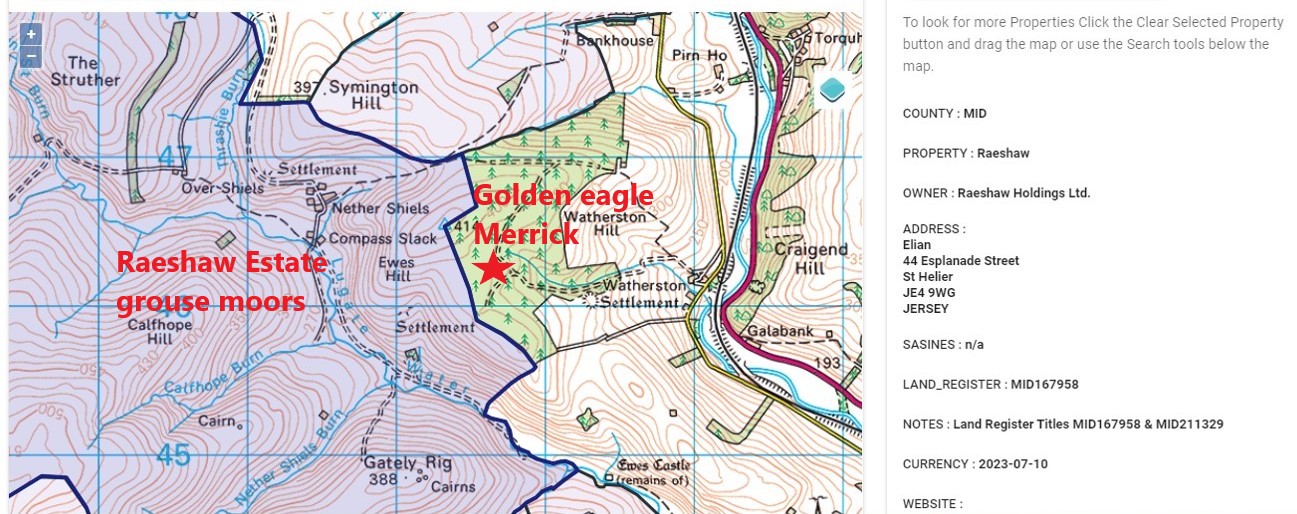
The General Licence restriction related to the disappearance of a satellite-tagged Golden Eagle called ‘Merrick’, who Police Scotland believe was ‘shot & killed‘ as she slept in a tree on neighbouring land close to Raeshaw Estate’s boundary, in October 2023.
Raeshaw Estate boundary, from data provided by Andy Wightman’s Who Owns Scotlandwebsite
Screen grab from Who Owns Scotland website, annotated by RPUK, showing the proximity of Merrick’s last known location and the Raeshaw Estate (shaded in blue)
Raeshaw subsequently appealed the General Licence restriction decision to NatureScot but in April 2026 that appeal was lost.
Raeshaw then applied to the Court of Session in Edinburgh for a judicial review of NatureScot’s decision-making process, and permission to proceed was granted, which indicates that the court thinks that Raeshaw has an arguable case, although the details are not yet public.
A substantive hearing was set for 29 September 2026 but that has now been changed to a two-day hearing on 2nd and 3rd December 2026.
This isn’t the first time Raeshaw Estate has been subject to a General Licence restriction in relation to wildlife crime and nor is it the first time it has tried to overturn it via judicial review.
This is an unprecedented second General Licence restriction for Raeshaw Estate. It was one of the first estates to receive a General Licence restriction in 2015, based on clear police evidence that wildlife crimes had been committed although, just as with the latest General Licence restriction, there was insufficient evidence to prosecute any individual (see here).
Representatives of Raeshaw Estate applied for a judicial review of NatureScot’s 2015 decision but the Court of Session upheld NatureScot’s procedures and ruled the process was lawful (here).
Whilst under that first General Licence restriction, Raeshaw Estate applied for, and was granted, a number of ‘individual licences’ so the gamekeepers could continue to kill certain species as part of the estate’s grouse moor management plan (quite a lot of birds were lawfully killed – see here).
However, in 2017 the individual licence was revoked by NatureScot due to non-compliance issues and more suspected wildlife crime offences (see here).
As far as I’m aware, nobody has ever been prosecuted for any of the substantial number of confirmed and suspected wildlife crimes that have been reported in this area over the last 25 years (see here for a list compiled in 2017).
In relation to the current General Licence restriction imposed after the disappearance of Golden Eagle Merrick, Raeshaw Estate has stated that it considers the restriction is “wholly unjustified” and claims “The estate has zero tolerance for raptor persecution and remains fully committed to respecting wildlife, nature and the environment”.
The judicial review will not establish guilt or innocence in the relation to the disappearance and alleged shooting and killing of Golden Eagle Merrick. The purpose of the judicial review is to establish whether NatureScot followed lawful procedure in its decision-making process when imposing the latest General Licence restriction on Raeshaw Estate.