
In February this year, NatureScot imposed a three-year General Licence restriction on Raeshaw Estate, a grouse-shooting estate in the Scottish Borders believed to be under the management of ‘grouse guru’ sporting agent Mark Osborne.
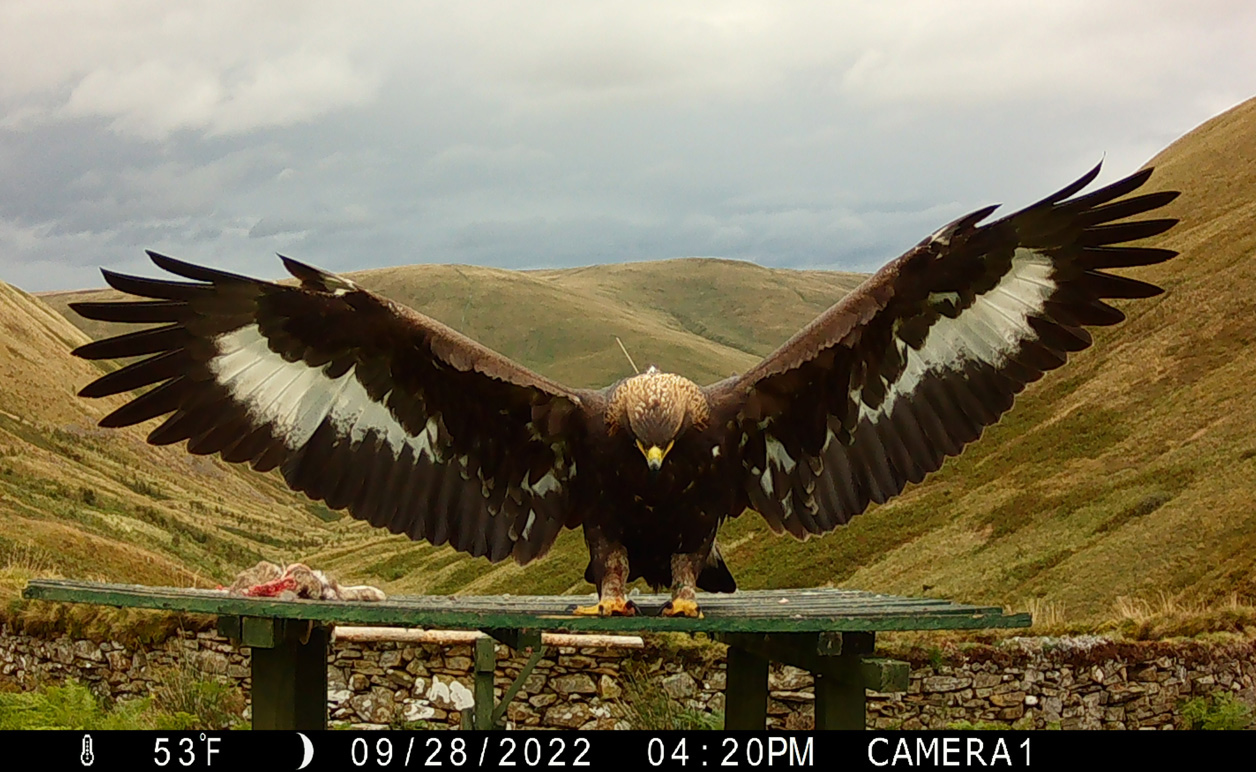
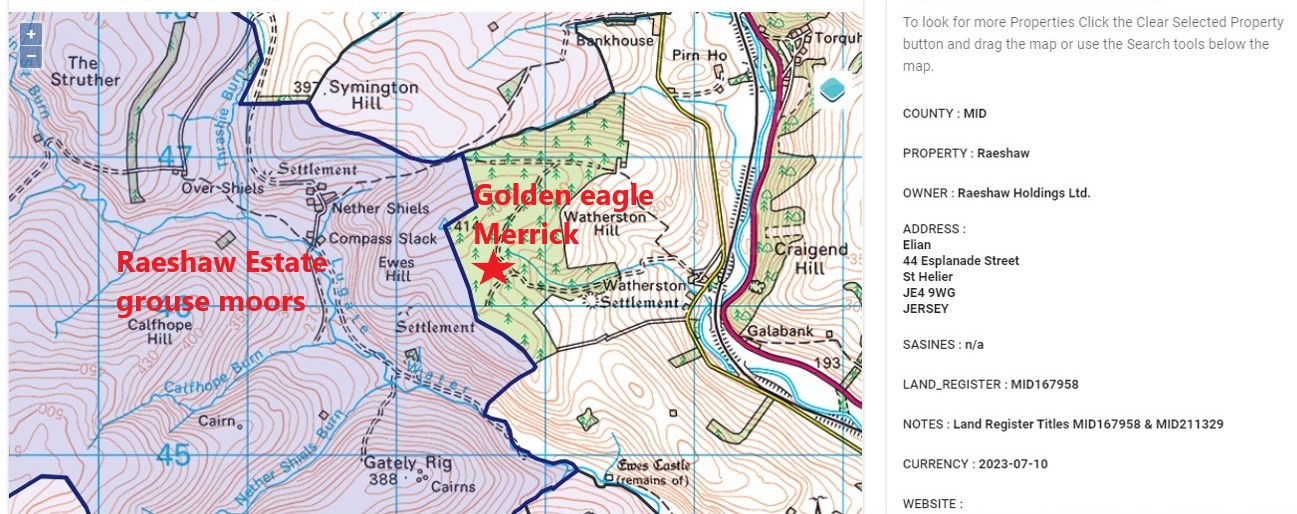
The General Licence restriction related to the disappearance of a satellite-tagged Golden Eagle called ‘Merrick’, who Police Scotland believe was ‘shot & killed‘ as she slept in a tree on neighbouring land close to Raeshaw Estate’s boundary, in October 2023.
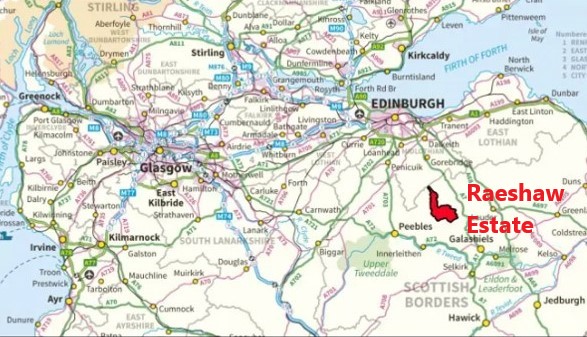
Who Owns Scotland website
In response, Raeshaw Estate issued what I would describe as a bombastic statement, arguing that the General Licence restriction was “wholly unjustified” and that the estate would “challenge [the restriction] vigorously through an appeal“.
Raeshaw subsequently appealed the decision to NatureScot but in April that appeal was lost.
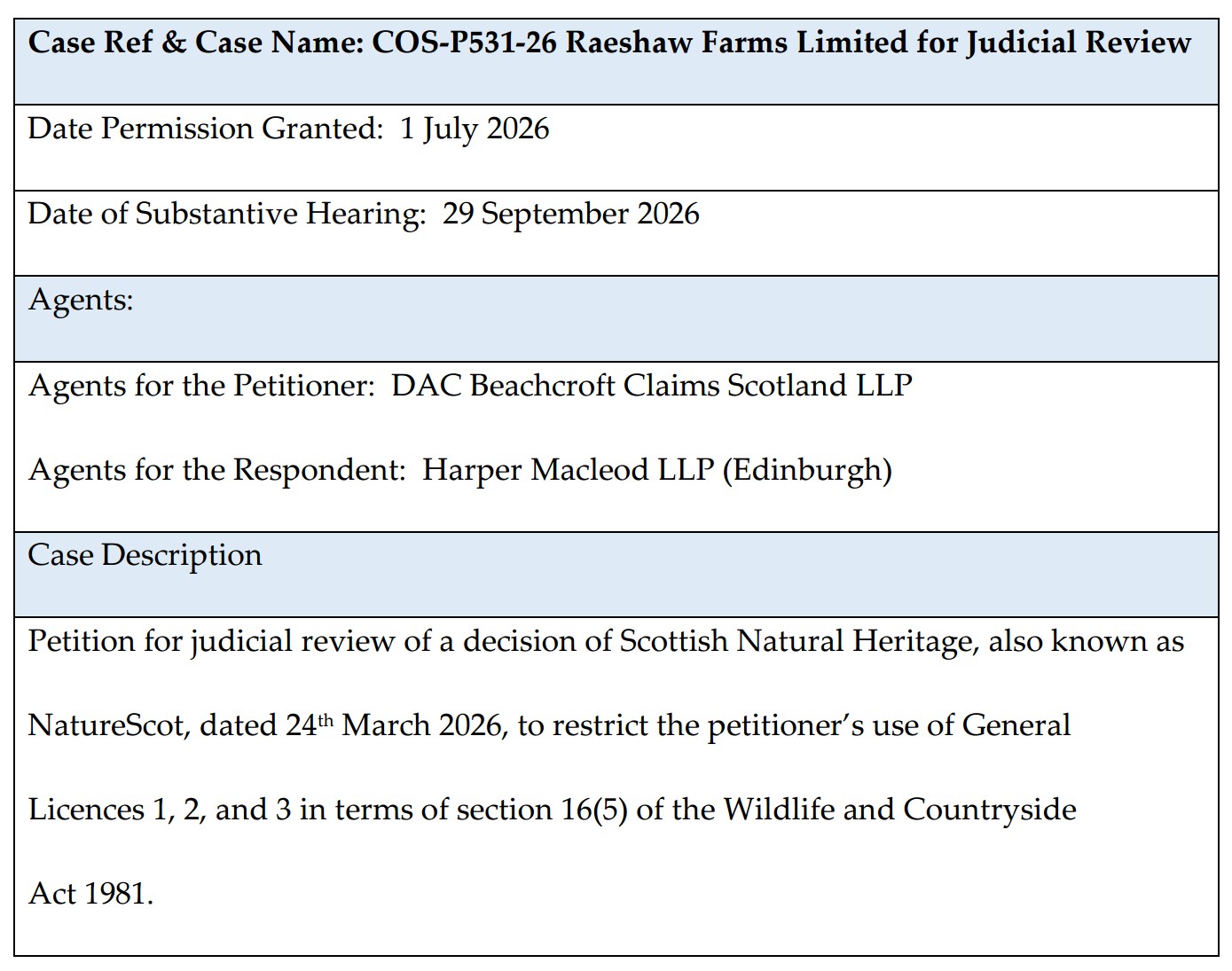
Raeshaw Estate has now applied for a judicial review of NatureScot’s decision-making process and permission has been granted for a substantive hearing in September 2026. This permission to proceed indicates that the court thinks that Raeshaw Estate has an arguable case, although the grounds for that case are not yet public.
This isn’t the first time Raeshaw Estate has been subject to a General Licence restriction in relation to wildlife crime and nor is it the first time it has tried to overturn it via judicial review.
This is an unprecedented second General Licence restriction for Raeshaw Estate. It was one of the first estates to receive a General Licence restriction in 2015, based on clear police evidence that wildlife crimes had been committed although, just as with the latest General Licence restriction, there was insufficient evidence to prosecute any individual (see here).
Representatives of Raeshaw Estate applied for a judicial review of NatureScot’s 2015 decision but the Court of Session upheld NatureScot’s procedures and ruled the process was lawful (here).
Whilst under that first General Licence restriction, Raeshaw Estate applied for, and was granted, a number of ‘individual licences’ so the gamekeepers could continue to kill certain species as part of the estate’s grouse moor management plan (quite a lot of birds were lawfully killed – see here).
However, in 2017 the individual licence was revoked by NatureScot due to non-compliance issues and more suspected wildlife crime offences (see here).
I note that NatureScot has not suspended the latest General Licence restriction on Raeshaw Estate and at the time of writing, it is still in place.


Some people just can’t help themselves, [Ed: sorry SusanH, the rest of this comment borders on libel]
the estate is apparently owned by Louis Bacon an American billionaire a Tory donor. It’s surprising how often when you look up estates featuring on raptor persecution there are foreign owners – and this case clearly an owner who isn’t worried about the legal bills. Simply abolishing driven grouse shooting would solve so many problems and in 10 years it would be seen as the anachronism it already is
I agree wholeheartedly, it is really beyond time we got rid of all driven shooting in favour of walked up with its lower bags and for the gun more value per bird rather than a living “clay”. Not only is it often a foreign or absentee owner but the same agencies and agent names crop up in these cases time and time again. xxxxx xxxxx xxxxx xxxxx xxxxx xxxxx xxxxx xxxxx xxxxx xxxxx xxxxx xxxxx xxxxx xxxxx xxxxx xxxxx xxxxx xxxxx.
It is very difficult to comment on this article without being libellous. Clearly the judicial review is without merit and unless the judiciary who review the matter are shooters themselves it is unlikely to have a positive reaction.
You might have misunderstood, Alex. Raeshaw applied for permission for a judicial review and the court has granted permission, which means that whoever reviewed the grounds of the case thought that Raeshaw had an arguable case on a point of law.