
Press release from North Yorkshire Police (21 September 2026):
Marsh Harrier found shot in North York Moors
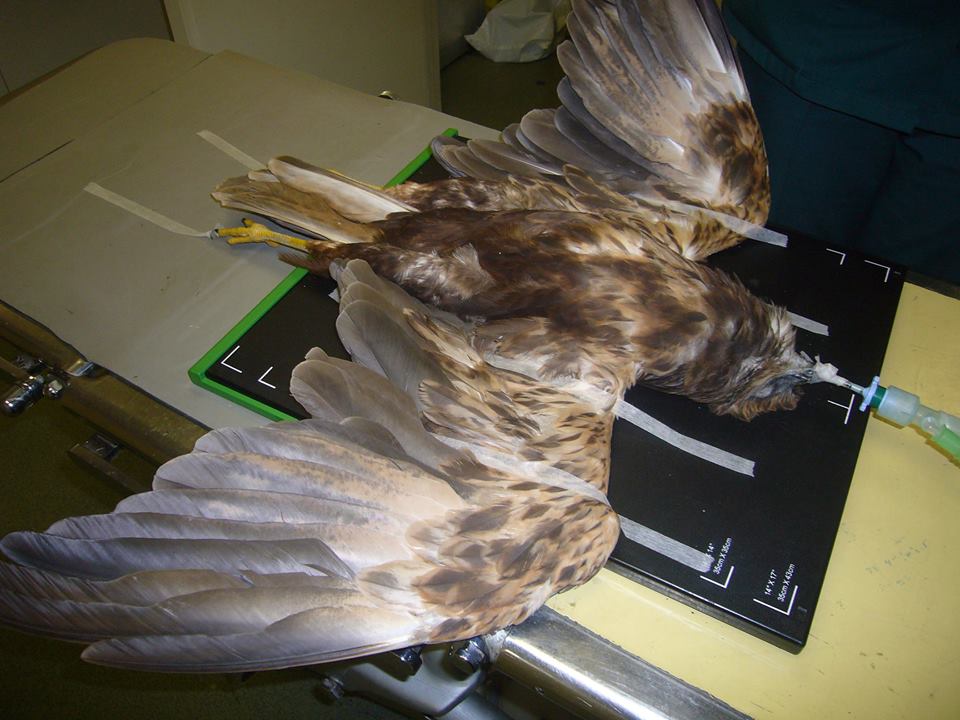
On 28 August 2026 a juvenile Marsh Harrier was found in the Westerdale area suffering from injuries that left it unable to fly.
Following examination, it was established that the bird had been shot and is believed to have been lying injured for several days prior to being found. Unfortunately, the injuries were so severe that there was no prospect of recovery, and on welfare grounds the bird had to be humanely euthanised.
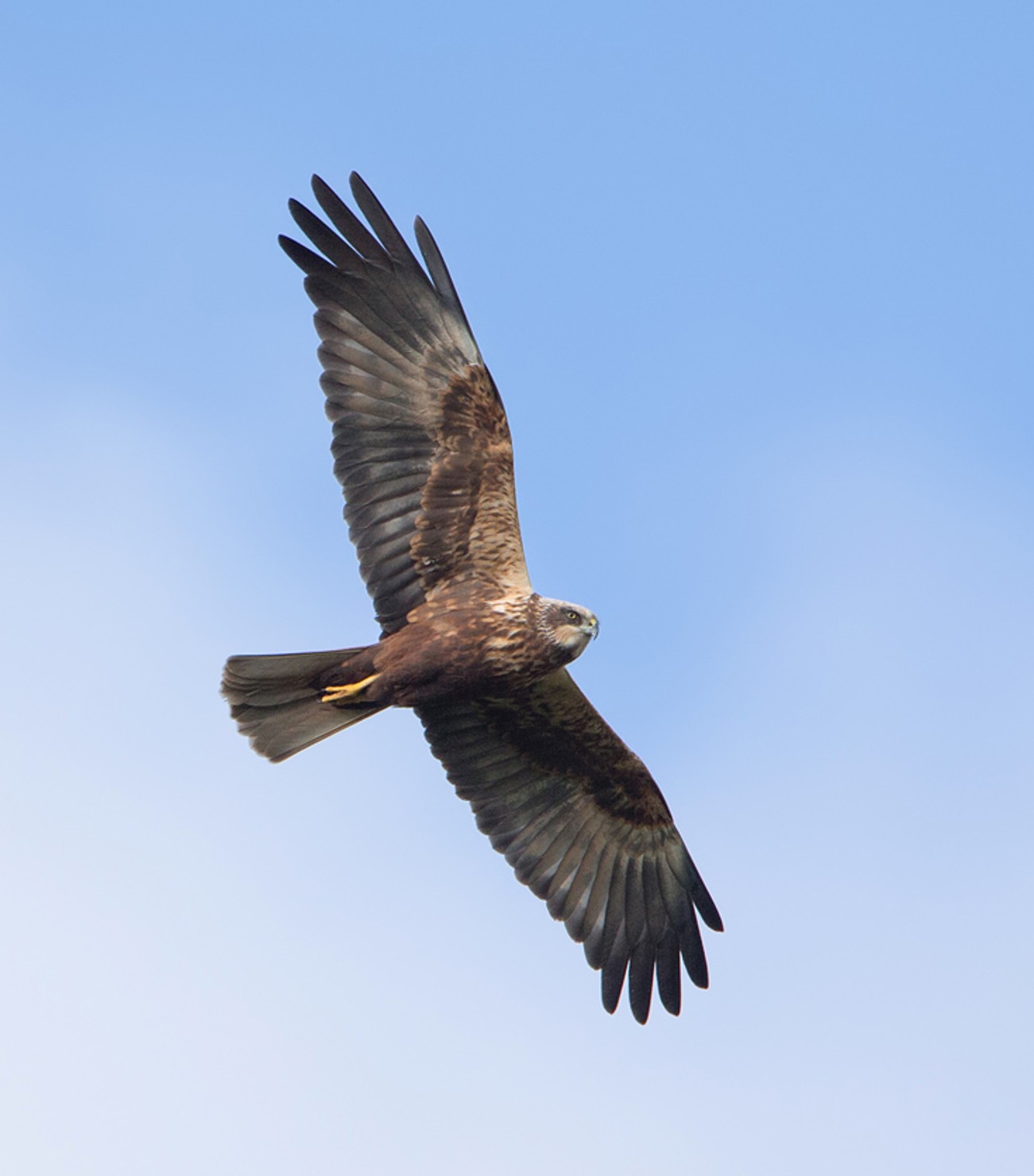
The Marsh Harrier is a specially protected bird of prey under the Wildlife and Countryside Act 1981. It is an offence to intentionally kill, injure or disturb these birds, or to damage or destroy their nests or eggs.
North Yorkshire Police are appealing for information in connection with this incident. Anyone who may have witnessed suspicious activity in the area, or who has information that could assist the investigation, is asked to contact North Yorkshire Police on 101 or emailing kimberley.laws@northyorkshire.police.uk, quoting incident number 12260171320.
If you have concerns regarding the persecution of birds of prey or any other wildlife crime, please report the matter to the police. Information from the public can play a vital role in helping to protect wildlife and bring offenders to justice.
ENDS
Yet another raptor persecution victim, in a so-called National Park, in an area where gamebird shooting is prominent, and in an area well known as a wildlife crime hotspot (e.g. see here, here and here).
And not the first Marsh Harrier victim in Yorkshire either – for others see here, here and here.
In 2017/2018 Amanda Anderson (then of the Moorland Association, the grouse moor owners’ lobby group in England) denied that her members were interested in obtaining licences permitting them to kill Marsh Harriers but several witnesses said otherwise.
Motive, means, opportunity. They’re all there, in spades, but the standard of evidence required to charge someone with the alleged shooting probably is not; without a direct witness in this remote landscape, there’s the (albeit slim) possibility that it wasn’t someone connected with gamebird shooting who shot this Marsh Harrier, and that’s enough reasonable doubt for this case to never get anywhere near a court of law.
Apart from the 2008 conviction of three gamekeepers on the Snilesworth Estate, I actually can’t remember anybody being charged and prosecuted for crimes against birds of prey in the North York Moors National Park in the following 18 years, despite a high volume of recorded crimes during this period*.
The closest the police have come was probably the Bransdale case during lockdown in 2020, where a witness reported seeing a number of armed men shooting at Buzzards on an estate in the North York Moors National Park, and five dead Buzzards were later found buried under rocks – four had definitely been shot and the fifth had probably been shot. Despite extensive investigative efforts by the police, there wasn’t sufficient evidence to charge anyone (see here).
Perhaps visitors and local residents of this National Park (and all the other National Parks where raptors are still targeted by criminals within the gamebird shooting industry) will consider making a submission to Defra’s current Call for Evidence on all aspects of gamebird shooting, to share their experience of finding injured and/or dead raptors in the National Park, or their disappointment at not being able to enjoy seeing the full suite of UK birds of prey that should naturally be breeding in these so-called protected landscapes.
You don’t even have to wade through the 100+ questions on the official submissions form to provide your evidence. You can simply write about your first-hand experience in an email, addressed to Gamebirds@defra.gov.uk (write ‘Call for Evidence’ in the subject line) and it’ll be accepted in to the review.
Closing date is 1 November 2026.
*Update: Thanks to the blog reader who reminded me about the 2013 conviction of gamekeeper Shaun Allanson for offences committed on the Blansby Estate, near Pickering, right on the edge of the North York Moors National Park.


Do we know if the NWCU are also investigating this case on the ground? I hope so – if not, then why not? It really frustrates me that the Police give responsibility for these cases to the local PCSO. The NWCU should take all of these cases, lead on them and IMHO search the wider area where this was found with the sniffer dog(s) that they now have available. I would say over half of raptor persecution occurs in relatively narrow hotspots located within wider hotspots. There are tried and tested “good spots” for shooting raptors, just like there are proven “good spots” for watching them, or traditional “good spots” for fishing for salmon, etc, etc. Rolling moors are far from just blank canvasses in the eyes of the experts on the good and bad side, and I would bet an expert investigators eye could learn something useful (for the future, if not for this case) from a good search around. Leaving it to the non-specialist PCSO’s is not good enough and sends the wrong message.
And my other perennial objection to these cases being given to the local PCSO or rural taskforce beat officers – they are probably already working in tandem with many of the people that IMHO are worthy of investigating – in the form of initiatives about rural thefts, fly tipping/vandalism, coursing/poaching, etc.
“Do we know if the NWCU are also investigating this case on the ground? I hope so – if not, then why not?”
The NWCU comprises five Police Officers and 13 civilian staff, based in Stirling (cf the NRCU which comprises just two Police Officers and 6 civilian staff, working mostly from home)
“The main role of the UK National Wildlife Crime Unit (NWCU) is to assist in the prevention and detection of wildlife crime. We do this by obtaining and disseminating information from a wide range of organisations and by assisting police forces in wildlife crime investigation. We produce analysis which highlights local or national threats.”
https://www.nwcu.police.uk/about/
You probably know the point I am making Keith. PCSO Kimberley Laws (a rural community support officer) is the Police point of contact asking for information about this dead marsh harrier. I will bet my house that she gets nowhere.
But why is she in charge of this case anyway? When there is a NWCU – the Police’s subject matter experts, who know the systematic and organised nature of thee crimes – with trained dogs, drones, metal detectors and so on. These assets (lacking a useful compliment of surveillance cameras – but that’s another story) are apparently obliged to sit out these interesting cases – cases that may well be the key to unpicking wider patterns of wildlife crime in a given locality – if the County force don’t choose to invite them in.
Why would a County force not want the experts brought in and instead prefer to let it be handled by a PCSO who is probably overworked and covering everything from excess dog shit on the village green to thefts of heating oil?
“But why is she in charge of this case anyway? When there is a NWCU – the Police’s subject matter experts, who know the systematic and organised nature of thee crimes – with trained dogs, drones, metal detectors and so on.”
Perhaps because she is local and knows the area, whereas the NWCU are very small and based in Stirling. I expect this would be standard Police procedure…
“These assets (lacking a useful compliment of surveillance cameras – but that’s another story) are apparently obliged to sit out these interesting cases… if the County force don’t choose to invite them in.”
But you don’t know that they haven’t been invited in… or consulted…
“Why would a County force not want the experts brought in and instead prefer to let it be handled by a PCSO…”
Perhaps the experts have been consulted and the local force are following their advice?
If you/we want more police resources allocated to wildlife crime in England you/we need to start lobbying either your/our local Police and Crime Commissioner(s) or Regional Mayor(s).
We will have to agree to disagree. I say the reason is simply that some County forces* – including NY – don’t want the likes of NWCU poking about – potentially doing something useful and thus upsetting the status quo.
*often depending on who is in charge and who their political chums are – the Dorset eagle poisoning case and the lets “get out ducks in a row” email being an example of what I mean.
NWCU don’t lack money – but they lack a free hand and as a consequence they lack much of a real cutting edge in the field. In terms of “bang for your buck” they are little more than just a puff of dust.
The baddies are wary of the RSPB Investigators sniffing about and setting up their cameras. And hate them as they are forced to adjust their tactics accordingly to play cat and mouse. I don’t think the Police have that effect or anything like it.
I do genuinely look forward to eating humble pie one day and apologising for being so critical of the Police, and will happily do it when they finally start getting a few raptor killers up in Court on their own accord (without RSPB).
“We will have to agree to disagree. I say the reason is simply that some County forces* – including NY – don’t want the likes of NWCU poking about – potentially doing something useful and thus upsetting the status quo.”
Actually, I don’t disagree… with that point. I was trying to explain ‘general procedure’ as I understand it, in answer to your questions.
It is entirely possible that the Police Force involved in this case are deliberately keeping the NWCU at arm’s length. I don’t know, I have seen no evidence, but I am definitely not saying that isn’t possible.
shooting animals for fun has no place in most peoples’ lives.Target shooting inc archery should be permitted with no other form of shooting alllowed.Ammunition could be club marked maybe.Just ban shooting to kill.Estates can do what the rest to B&B and wildlife preservation,glamping etc.
“Ammunition could be club marked maybe.”
Not feasible, I’m afraid, for many reasons.
From the Lancs Police Rural Crime Team Facebook page -“Last week was National #RuralCrimeActionWeek and from chatting with visitors at the Lancashire Game Fair to field-hopping after bike thieves and poachers, it’s been a busy few weeks for the Lancaster, Morecambe & Wyre Rural Task Force! “
Also: –
“Lancaster, Morecambe, and Wyre Rural Task Force all set up and ready to welcome schools to this year’s Let’s Learn Moor event in the Bowland Fells.”
The eight ‘Let’s learn Moor’ events are run by BASC across northern England to so call teach schoolchildren about how shooting estates (mis)manage the moors.
Also don’t forget Duncan Thomas (now BASC) previous employment.
In our area, local shoots supply schools with free pheasants for cookery classes. On querying the head of one school about lead contamination, her excuse was that it saved them having to buy chickens for the lessons!
I wonder how unbiased our rural crime teams really are?
“I wonder how unbiased our rural crime teams really are?”
Note that the NWCU and NRCU are two different Police ‘units’ which investigate different types of crime.
“local shoots supply schools with free pheasants for cookery classes. On querying the head of one school about lead contamination, her excuse was that it saved them having to buy chickens for the lessons!”
“Consuming lead is harmful, health experts advise to minimise lead consumption as much as possible. Anyone who eats lead-shot game should be aware of the risks posed by consuming large amounts of lead, especially children and pregnant women.”
https://www.gov.uk/government/publications/lead-shot-game
But as far as I can see, lead contamination is not specifically banned in the Requirements for School Food Regulations 2014 and, as we know, the issue is officially fudged by the Food Standards Agency:-(
The UK HSA say “Children are particularly sensitive to the effects of lead on the nervous system as their brains are still developing. Children exposed to lead during the first few years of life may have a lower IQ, behavioural problems, or nerve damage.”
https://www.gov.uk/government/publications/lead-properties-incident-management-and-toxicology/lead-general-information
If I were a parent, I would be very seriously concerned, no matter how old the child.
Section 7 of the Food Safety Act 1990 makes it a criminal offence for “Any person who renders any food injurious to health by means of any of the following operations, namely— adding any article or substance to the food” lead shot pellet, say “with intent that it shall be sold for human consumption”. Yet lead-shot game meat has been ‘legally’ sold for decades…
Dont forget the 3 red kites shot in the same area 2023.
well known spot for persecution to us locals sadly.
https://www.northyorkshire.police.uk/news/north-yorkshire/news/appeals/2023/07-july/north-york-moors-appeal-for-information-about-the-shooting-of-a-red-kite/
That’s a good link! I’d not read that before for some reason. Shows the extent of Police naivety – or maybe worse. Those marked and unmarked rural taskforce force patrols will really have the “rotten apples” losing their beauty sleep – well maybe a little bit actually, in the sense that for a while they will just put more work in during the night with their thermal drones and night vision gear instead!