
Further to this morning’s blog about Scotland being declared an Avian Influenza Prevention Zone, England has now also been declared, and an additional mandatory Housing Order will begin this Friday (13 November 2026).
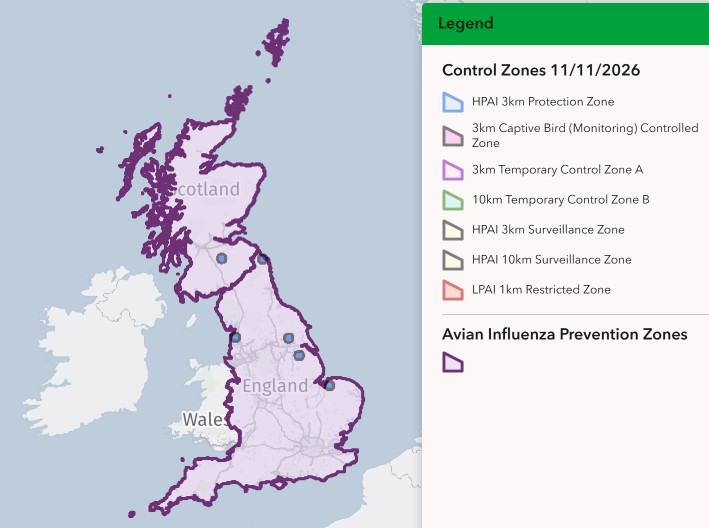
Press release from Defra, 11 November 2026:
NATIONAL HOUSING ORDER DECLARED TO PROTECT BIRDS FROM AVIAN INFLUENZA
The UK Chief Veterinary Officer has ordered a mandatory poultry housing order to cover the whole of England from 00:01 on Friday 13th November 2026, following the increased risk and escalating number of confirmations of highly pathogenic avian influenza (HPAI or bird flu) in kept birds and findings in wild birds.
The new measures mean bird keepers across the whole of England must house all poultry and captive birds if they keep 50 or more birds (except in specific circumstances e.g. some zoo birds) or if they sell or give eggs, poultry products and live birds away.
An England-wide Avian Influenza Prevention Zone (AIPZ) with mandatory biosecurity measures has also been declared, coming into force immediately. This requires all keepers whether they have pet birds, commercial flocks or just a few birds in a backyard flock to undertake enhanced biosecurity measures to mitigate the risk of further outbreaks of the disease. These enhanced biosecurity measures include reporting of changes in egg production, mandatory record keeping, disinfecting footwear, and cleansing & disinfecting housing and concrete walkways regularly.
All bird keepers in England whether they have pet birds, commercial flocks or just a few birds in a backyard flock must:
- cleanse and disinfect clothing, footwear, equipment and vehicles before and after contact with poultry and captive birds– if practical, use disposable protective clothing
- reduce the movement of people, vehicles or equipment to and from areas where poultry and captive birds are kept, to minimise contamination from manure, slurry and other products
- carry out effective vermin control in any areas where poultry and captive birds are kept
- regularly thoroughly cleanse and disinfect housing
- keep fresh disinfectant at the right concentration at all farm and poultry housing entry and exit points
- minimise direct and indirect contact between poultry and captive birds and wild birds, including making sure all feed and water is not accessible to wild birds
- prevent access by poultry to ponds and watercourses and ensure that birds are kept in fenced or enclosed areas
UK Chief Veterinary Officer Christine Middlemiss said:
“Bird keepers are urged to comply with the housing measures and to exercise robust biosecurity, remaining alert for any signs of disease and reporting suspected disease immediately to the Animal and Plant Health Agency.
“Having avian influenza confirmed in your flock can be devastating, I understand the impact this disease can have on the poultry sector and am extremely grateful for the continued cooperation of the industry“.
Keepers are urged to be vigilant for signs of disease, report it and take action to prevent bird flu spreading.
Details of the zone and the biosecurity measures that bird keepers must comply with can be found in full on GOV.UK
Every year the UK produces around 8 million turkeys. We do not currently anticipate any impact overall on the availability of Christmas turkeys or other seasonal poultry for consumers.
The current risk to human health from avian influenza remains very low. The FSA says properly cooked poultry and poultry products, including eggs, are safe to eat. The UK Health Security Agency continues to monitor the situation closely and remains vigilant for any evidence of changes in the level of risk.
ENDS
Some of the mandatory biosecurity regulations included in the England AIPZ DO apply to gamebirds that have been released, particularly the placement of feeding stations and the cleaning of feeding and water stations, as described in Schedule 3, below:
If any blog readers happen to come across dirty feed and water stations whilst you’re out and about, please report your findings to APHA, who should then report the alleged non-compliance to the local Trading Standards department for them to investigate.
I’d be very happy to receive copies of any reports made. Ideally, you should take a photo, note the grid reference (or use What3Words) and the date.

