
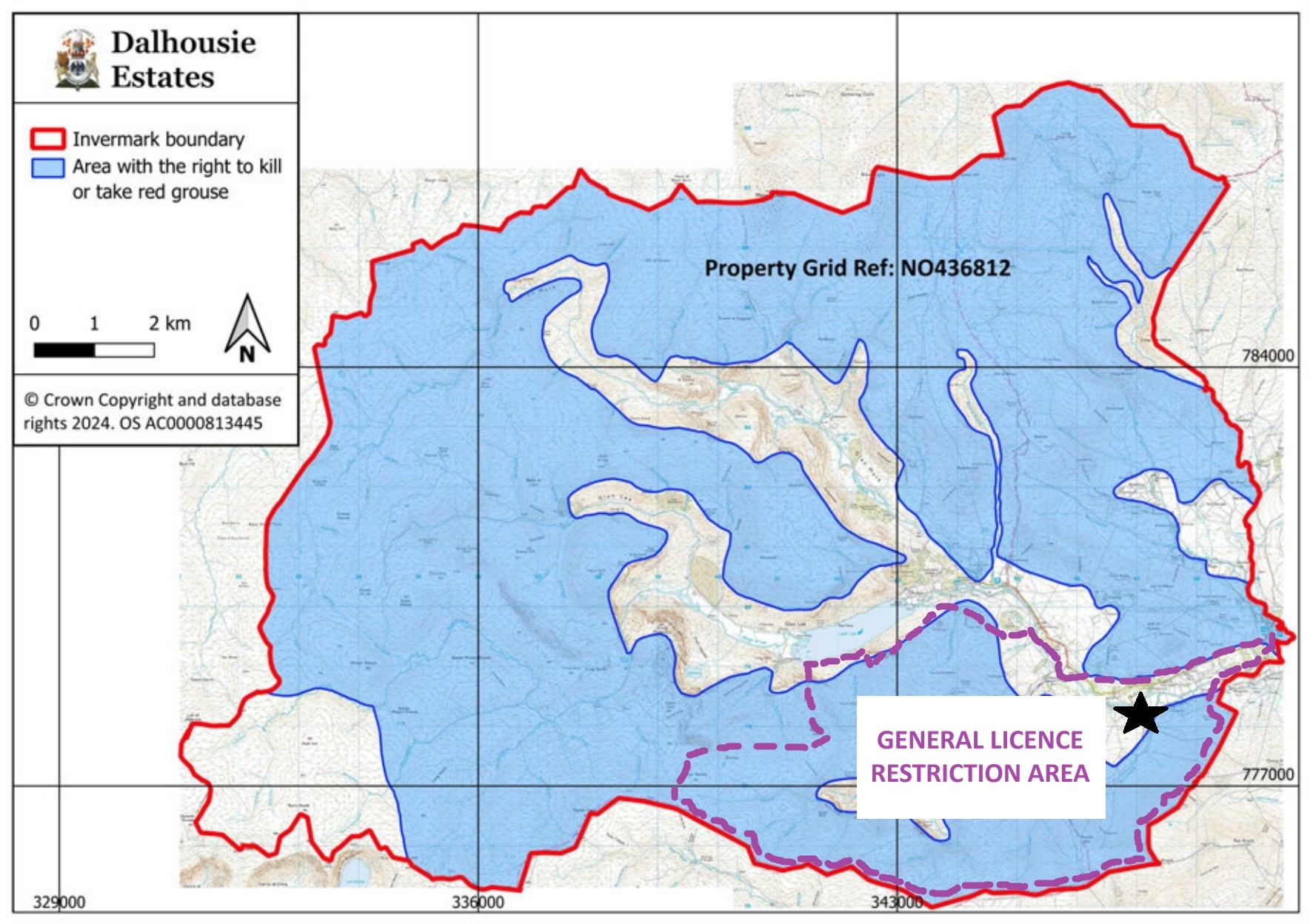
Invermark Estate, a grouse and Pheasant shooting estate in the Angus Glens of eastern Scotland, has lost its appeal against a three-year General Licence restriction that was imposed on 7 August 2026.
The General Licence restriction related to the discovery of a Peregrine with shotgun injuries that was found on the estate on 3 September 2024, close to grouse butts in the Glen Esk area of the notorious Angus Glens. The Peregrine was later euthanised due to the extent of its injuries.
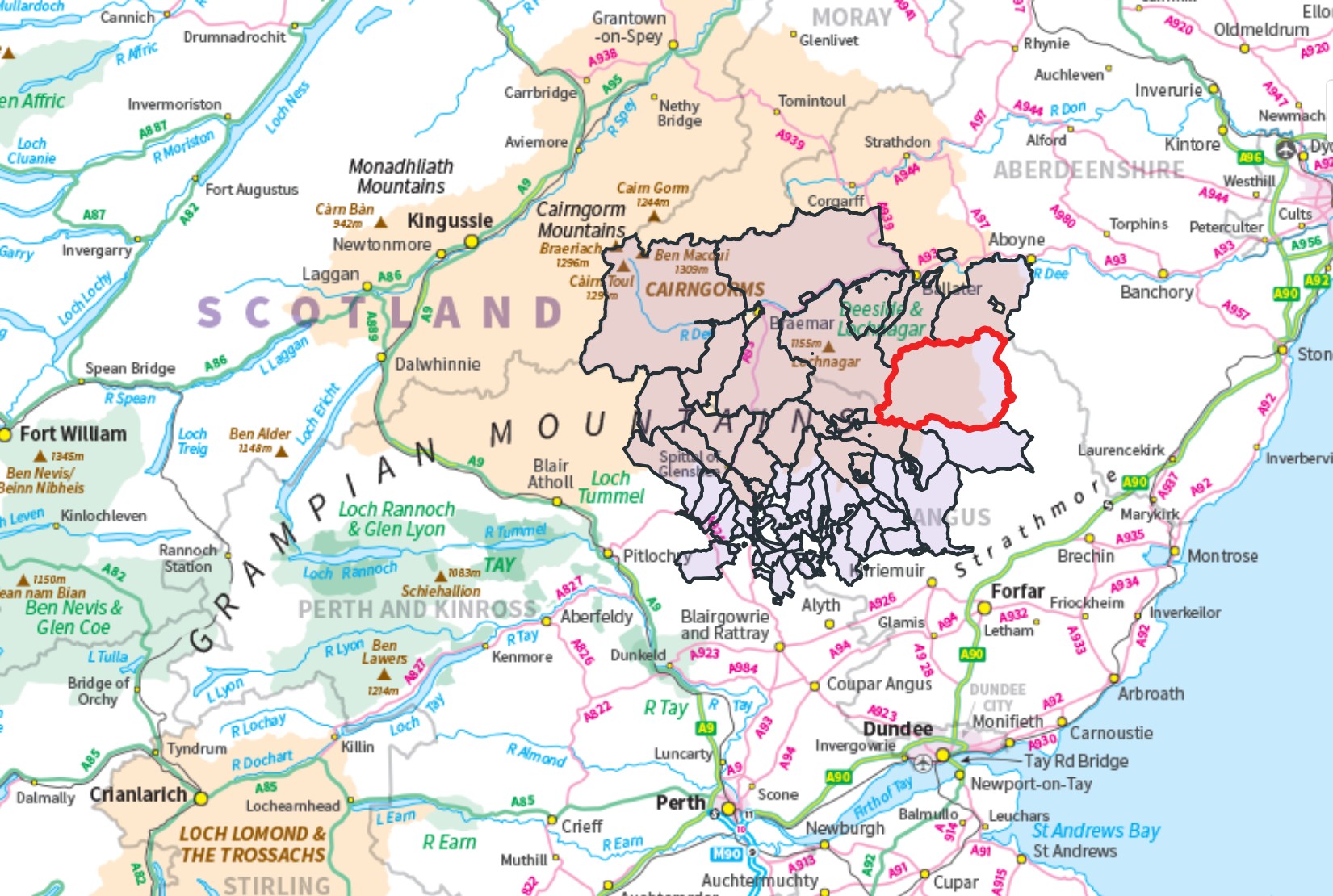
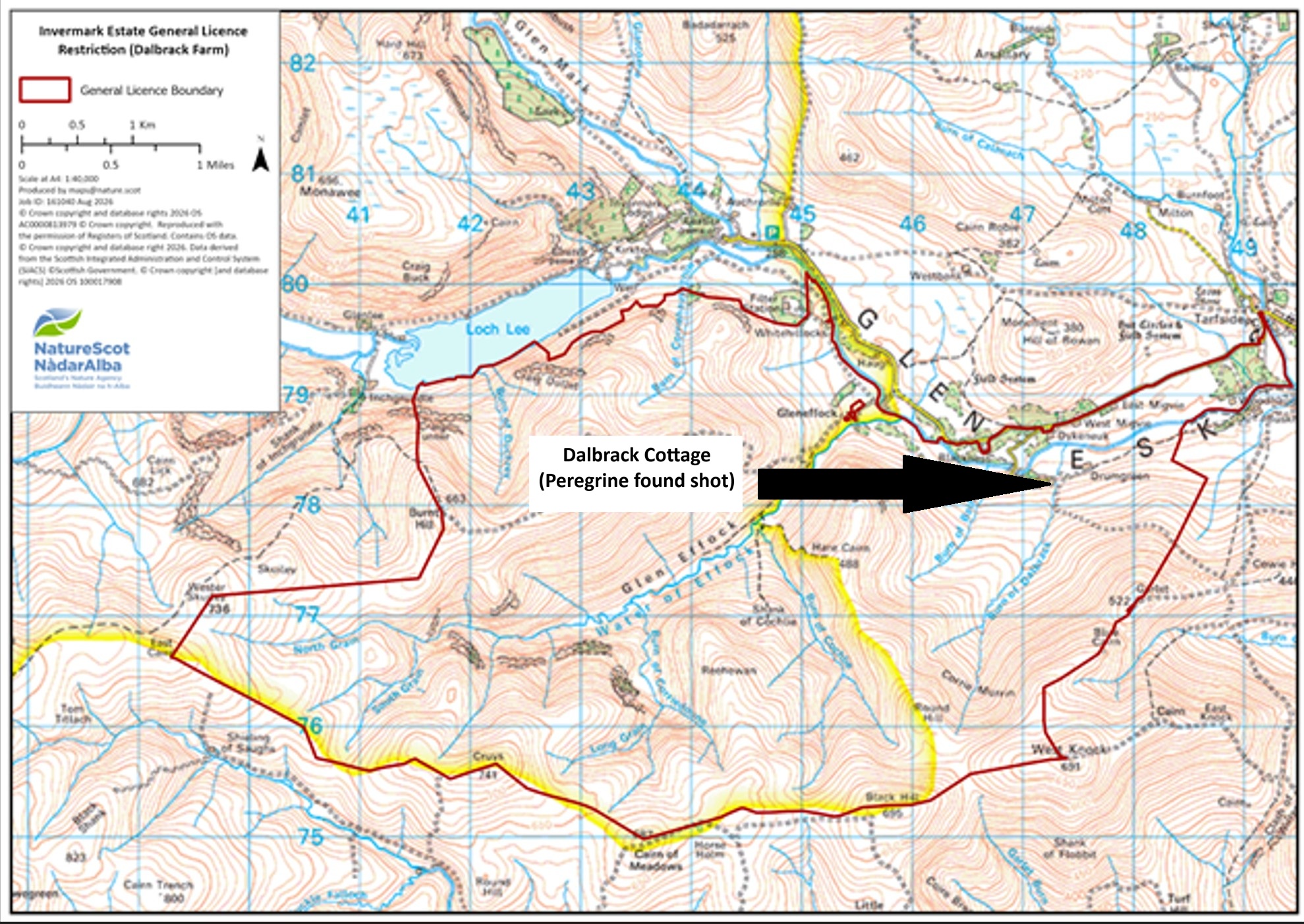
For new readers, General Licence restrictions are based on the civil burden of proof and are issued when NatureScot receives information from Police Scotland about wildlife crimes but where there is insufficient evidence to identify an individual offender for prosecution. They can also be imposed after a gamekeeper has been convicted for committing a wildlife crime on a particular estate.
General Licence restrictions do not prevent an estate from game-shooting, nor do they prevent an estate from carrying out [lawful] predator control – this can still be undertaken if the estate applies for an ‘individual licence’ which may restrict the amount of predator control, the estate may be subject to compliance spot checks, and the licence holder must provide NatureScot with licence returns (i.e. indicate how many birds were killed, where, and when etc.).
General Licence restrictions are not perfect as an effective sanction – they are nowhere near, as I’ve written about many times before (e.g. see here and links within). They do, however, work as a ‘reputational driver’, although in some cases reputation is apparently not an issue of concern to certain estates.
General Licence restrictions are not the same thing as the revocation of a grouse-shooting licence. They are entirely separate. We have yet to see the revocation of a grouse-shooting licence since they were introduced in Scotland under the Wildlife Management & Muirburn Act 2024, even though raptor persecution crimes have been reported on grouse moors since the new legislation was enacted.
In accordance with NatureScot’s Framework for implementing General Licence restrictions, Invermark Estate was entitled to appeal the restriction decision within 14 days of its implementation, and this is what it did in August 2026 (see here), thereby effectively suspending the General Licence restriction, temporarily, until such time as NatureScot had considered the estate’s appeal.
Yesterday (12 November 2026), the General Licence restriction notice for Invermark Estate re-appeared on NatureScot’s website, indicating that Invermark Estate has lost the appeal it lodged in August 2026.
Good. Some of you may recall that in September I blogged about some inconsistencies in Invermark Estate’s attempts to distance itself from the shot Peregrine incident (see here). I’ll be writing more about that in due course when more FoI responses come in.
Invermark Estate joins all the other estates that have lost their appeals against General Licence restrictions:
Raeshaw Estate’s and Corsehope Farm’s failed appeals in 2016 (here, and a further failed judicial review in 2017, here), Burnfoot Estate and Wester Cringate Estate’s failed appeal in 2016 (here), Leadhills Estate’s failed appeal in 2020 (here, and for hilarious details of that failed appeal see here), Leadhills Estate’s (again) failed appeal in 2021 (here), Lochan Estate’s failed appeal in 2022 (here), Invercauld Estate’s failed appeal in 2022 (here), Moy Estate’s failed appeal in 2022 (here), and Raeshaw Estate’s (again) failed appeal in 2026 (here); Raeshaw has now lodged a judicial review against this latest decision (here).
Edradynate Estate said it would appeal its General Licence restriction in 2017 but I’m not aware that it ever did. Millden Estate said it would appeal its General Licence restriction in 2023 although I’m not sure whether it ever did. If it did appeal and I missed it, the appeal must have failed because the restriction was still in place in March 2026 when it was due to formally end. Lochindorb Estate is currently serving a General Licence restriction but I’m not sure it ever appealed, and if it did, the appeal must have failed because the restriction is still active today. The Milton of Drimmie Estate is currently serving a General Licence restriction and hasn’t made an appeal because the restriction is still in place and the appeal deadline has now passed.
Of the 16 General Licence restrictions imposed since they became available as a sanction in 2014, I’m not aware of a single one that has been challenged successfully. I think that speaks to the quality of the evidence provided to NatureScot by Police Scotland, and the quality of NatureScot’s assessment of that evidence.
Although that hasn’t always been the case. There have been a number of cases where General Licence restrictions should have been imposed, based on the available evidence, but weren’t (e.g. see here), and there are more recent cases where GL restrictions haven’t yet been imposed, but perhaps they are currently under review. We know that the process of evaluation and decision-making is excruciatingly slow, as evidenced by the current Invermark Estate case that has taken over two years to reach a conclusion.

