
Press release from Wildlife Poisoning Research UK (WRPUK), 29 October 2026
DEATH OF YET ANOTHER SEA EAGLE LINKED TO RAT POISON
The wildlife group Wildlife Poisoning Research UK (WPRUK) has established that another white tailed sea eagle, from the small population of these majestic birds in southern England, has been poisoned by the deadly toxin Brodifacoum.
This poison, which is approved by the Health and Safety Executive (HSE), is widely used by gamekeepers, farmers and pest controllers to kill rats on farms and shooting estates. However, dead and dying rats become easy meals for predators like eagles and other birds of prey and the toxin moves up the food chain – killing as it goes.
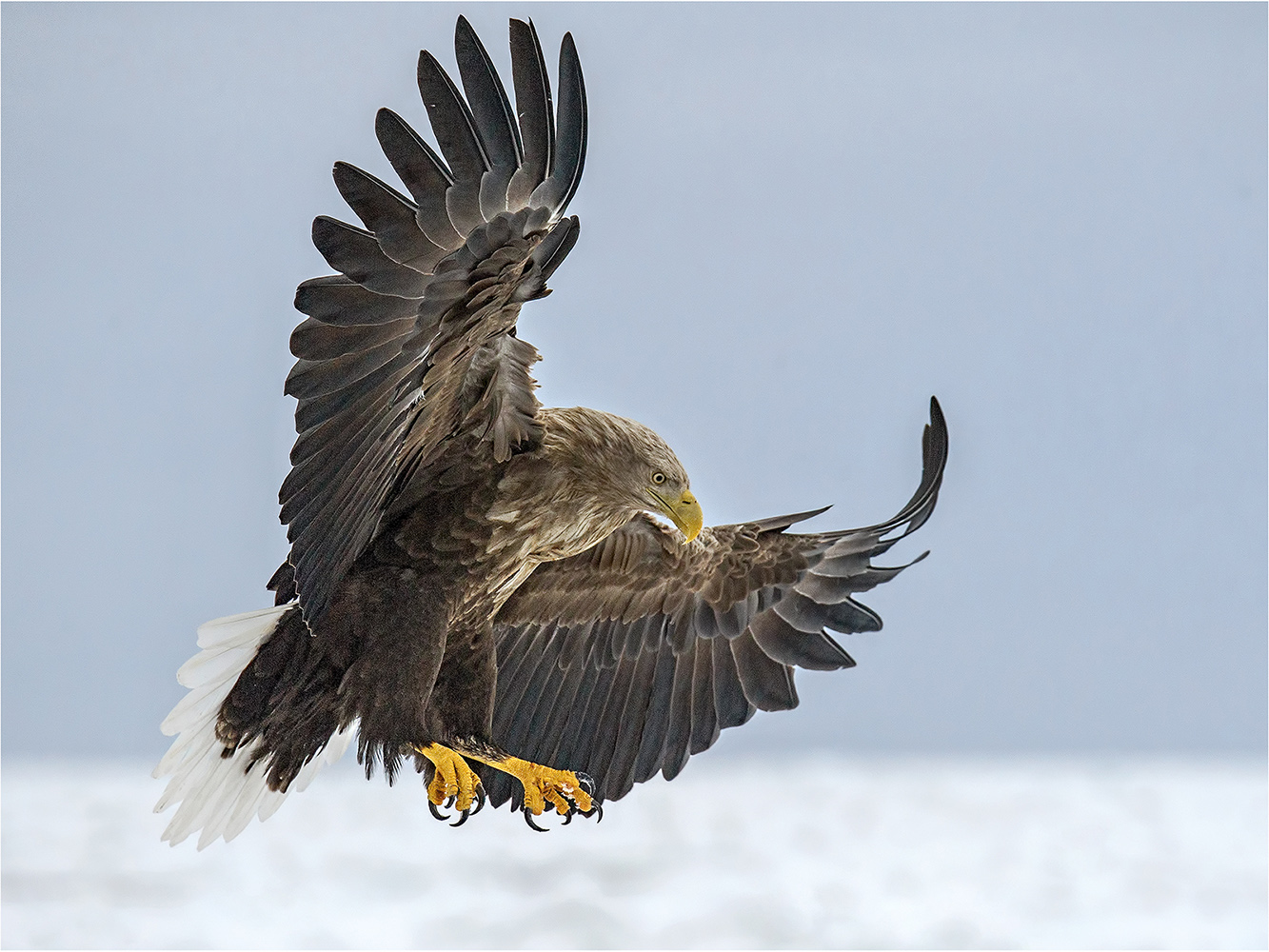
News of a string of previous eagle poisonings in Dorset earlier this year caused a major public outcry. All these birds had been exposed to Brodifacoum and now it appears that this poison is still killing wildlife. Rising levels of this toxin in the environment may undermine Government-supported plans to release more of these iconic birds in England.
Examining Government records on the internet, WPRUK has identified that the latest eagle killed was in Hampshire in June this year. The summary on the internet states that: ‘A white tailed eagle was found dead in a woodland. Analysis has confirmed brodifacoum in the liver which is likely to be the cause of death’.
WPRUK has now sent a Freedom of Information Act request to the Government for more information about the killing of this bird.
Dr Ed Blane from WPRUK said:
“The ongoing killing of these eagles and other wildlife by this poison shows, once again, that the Government’s efforts to safeguard wildlife simply aren’t working. They seem to have forgotten the damage done to wildlife by the disaster of DDT 50 years ago.
“We have the totally barking situation of one part of Government encouraging the re-introduction of sea eagles to the English countryside, while we have another Governmental body, the HSE, approving the use of poisons like Brodifacoum which are then killing the birds once they are released“.
ENDS


Unless the government pays farmers for loss of animals then on it will go for these birds
In Scotland as I understand it, farmers can claim higher band rural payments towards extra shepherding and indoor lambing as preventative measures. I have not read anywhere (but might have missed it) that WTE have killed livestock in the south of England. I have a gut feeling that I have not changed during following these stories (as best I can), that the poisonings of these eagles are not in a frustrated “taking the law into their own hands” type response to livestock losses but are a combination of general brodifacaum misuse – some maybe reckless but genuinely unintended, and also of brodifacaum misuse that is deliberately and slyly intended to “take out” any and all “vermin” in the area. This product seemingly comes with the inbuilt get out of jail card defence of saying “oh dear, we are sorry, we didn’t intend that, did we use it in the wrong place? We must have misread the label, we promise it won’t happen again” , etc. Meanwhile there’s a load of buzzards, kites and a couple of eagles dropping off their perches into the long grass.
Then watch the roads get busy with 4x4s carrying valuable dead lambs to Dorset and IoW.
Maybe I’m naive but if this poison is permitted by HSE, then I would think there’s a good chance this death is caused by secondary poisoning; I live on a shooting estate here in Scotland and at just about every pheasant feeder, there is a network of rat holes, another reason why we shouldn’t have about 60 million let loose in the countryside every year
[Ed: Thanks, SusanH, yes, I saw that, might blog about it if I get time, you’re right to be sceptical!]
very interesting if the presence of pheasants, and food for them, is encouraging rats. So then the wretched shooting estate owners put down poison, and the rest of the wildlife suffers.
Presumably farmers all over the country want to use rat poison, for crops in the fields being eaten, and for food in barns etc to feed housed animals.
Such a tragedy. Sarah
Before I retired I worked for a water company in the sewage treatment section. Rats were fairly common on site and the company employed people to lay down the approved poisons. I never saw a dead rat out in the open, they always went into cover once they became ill and died. I wonder how easy it is to put a dead rat out in the open so a bird of prey can see it?
Well the comparable example that comes to my mind, is that those birders who focus very narrowly or exclusively on a regular patch all of the time soon get to know exactly which branch on which tree or which fencepost or on which telegraph pole or which specific rock on the rocky ledge a buzzard (for example) habitually perches on for extended periods throughout the day – i.e. it watches from there, dozes there, hunts from there, and returns to there all of the time. Places from which they could not fail in time to notice dead things laid about under their gaze. I don’t know much about Eagles, but I think they do pretty much the same “habitual perching” stuff as Buzzards in this regard.
It doesn’t have to be a rat. Brodifacoum could be applied to any bait, probably something bigger than a rat to attract attention. It would be interesting to know whether these eagles tested positive for any other rodenticides and, if so, at what levels compared with the Brodifacoum. If they didn’t it would support a theory that Brodifacoum is being used as a primary poison bait, or at the very least that it is in wholesale widespread use as the preferred rat poison. Begs the question as to how much sales talk from the pesticide industry affects the choice of poisons.
There’s a lot more scope for plausible deniability with poison compared to a bird peppered with pellets.
Why are people so ignorant and cruel? It beggars belief in this day and age. Disgraceful!