
Press release from Wildlife Poisoning Research UK (WPRUK), 22 July 2026:
CONFIRMATION OF FURTHER EAGLE POISONINGS IN DORSET
The white tailed sea eagle is one of England’s rarest and most impressive birds of prey, with a wing span often over 2 meters. A small group of these birds has been established by conservationists by re-introducing them onto the Isle of Wight from where they have spread out across England. However, this fragile population is under threat from a range of dangers, including poisoning from eating contaminated food such as poisoned rats. Nature lovers were outraged when one of the eagles was killed by poison in Dorset in 2022.
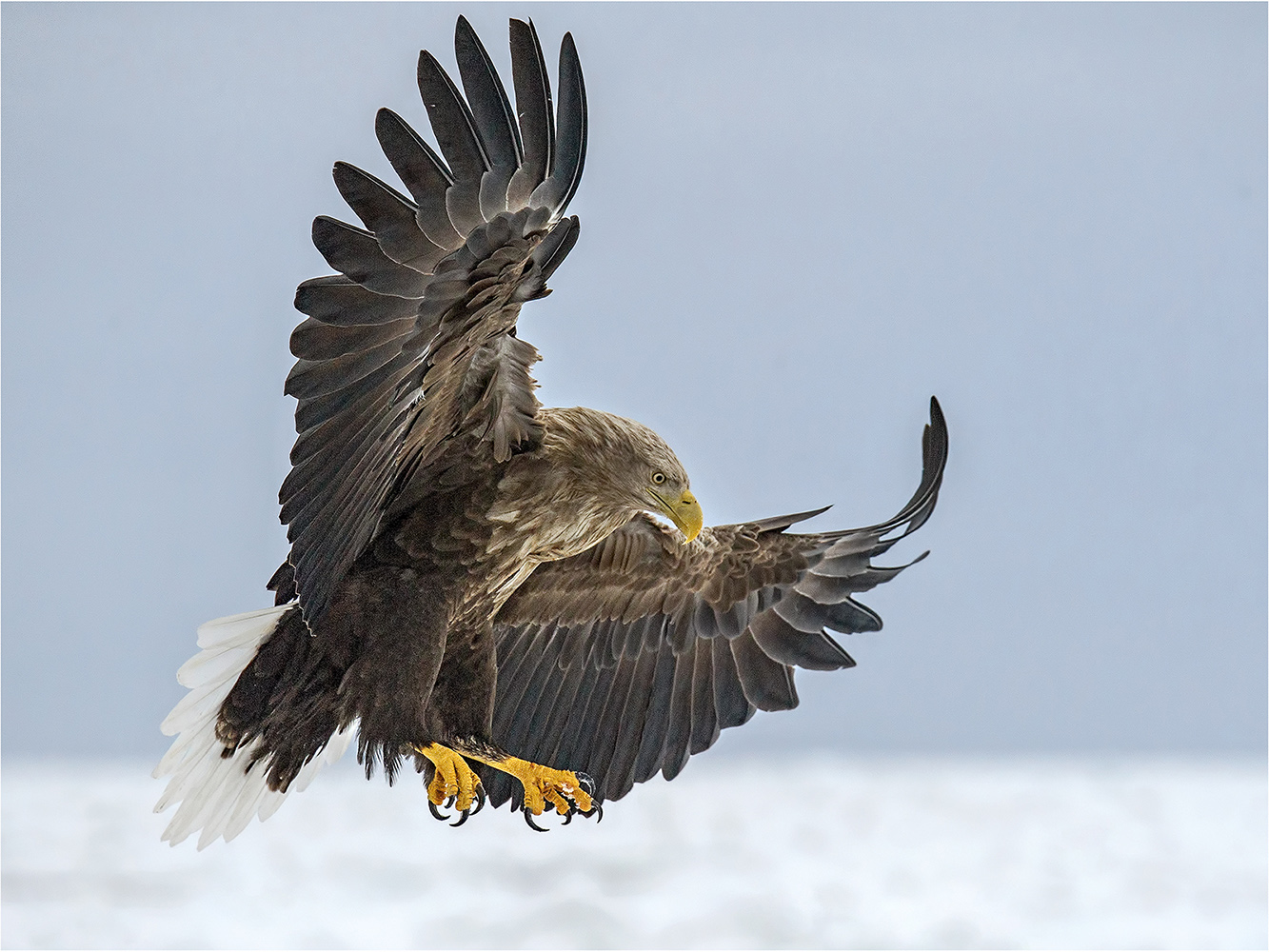
An investigation by the wildlife group WPRUK has now shown that at least two further sea eagles were poisoned in Dorset in 2024, although many details of these incidents have been kept secret by the Government. The toxins involved are called Second Generation Anticoagulant Rodenticides (SGARs) – frequently used to kill rats by farmers, gamekeepers, pest controllers and householders. These were the same poisons that killed the eagle in 2022.
One eagle was originally recorded by the Health and Safety Executive (HSE) as having died by electrocution in November 2024. However, from WPRUK’s attempts to establish the truth using Freedom of Information requests, it was confirmed by the Government agency, Natural England, that: ‘the high concentrations of second generation anti-coagulants reported in this eagle were of sufficient concern to justify further investigation.’ However, the HSE initially claimed that only background levels of these poisons were found in the liver.
Large residues of SGARs were found in the liver of a second sea eagle found dead in May 2024, which are believed to have been partly responsible for the bird’s death.
SGAR toxins start to have a lethal impact on sea eagles when levels reach above 0.1 mg/kg of the poison in the liver. WPRUK have established that the poison levels in the two 2024 eagles were far higher. The bird found in November had a toxin level of 0.194 mg/kg, while the one discovered in May had a staggering 0.43 mg/kg. Despite these incidents happening many months ago, Government agencies are still withholding the full details of the bird deaths. What are they so scared of? Two further eagles have now died in Dorset, one in March 2025 and one in March 2026. The full report for the bird that died in 2025 is also being withheld, although WPRUK has established that this too was exposed to SGAR poisons.
Is Government policy to blame for these eagle poisonings?
The dangers of these toxins have been known for many years and an environmental risk assessment in 2012 recommended that they should not be used outdoors due to the secondary poisoning risk – this is when the poisons move up the food chain. Poisons put out for mice and rats end up killing the top predators such as eagles. However, this risk assessment was ignored by the Government which permitted their continued use and even relaxed the regulations controlling where the higher toxicity poisons such as Brodifacoum could be used. This allowed the use of this poison outdoors for the first time, much to the alarm of wildlife experts.
The continued outdoor use of SGARs was on the condition that the chemical industry, by introducing better working practices by users, achieved a ‘significant reduction’ in the level of SGAR exposure in wildlife. This was part of the Government’s approved Rodenticide Stewardship Scheme.
WPRUK has been collecting data on SGAR exposure in buzzards in England and Wales to see if this ‘significant reduction’ has actually occurred.
So, what has happened?
The chemical industry’s attempts to reduce toxin exposure has been a complete failure. If two time periods, 2005 to 2013 and 2020 to 2024 are compared, it is found that:
- The proportion of buzzards exposed to potentially lethal amounts of SGAR toxin (above 0.1 mg/kg in the liver) had increased from 15.1 % to 42.3 %.
- The mean level of SGAR in the liver had increased 230 %.
- It is clear that this increase in SGAR exposure in buzzards was due to a substantial rise in exposure of the birds to the highly toxic Brodifacoum, likely to be the result of the Government’s decision to permit the outdoor use of this highly toxic poison. Exposure to this high toxicity poison has increased by 1,026 %!
Commenting on the poison levels found in these eagles, Dr Ed Blane from WPRUK said:
“The death of these majestic birds in Dorset, and the high amounts of poison found in their livers, should cause alarm bells to start ringing across the country. What we see now is the total failure of Government approved policy meant to protect the environment, information being withheld and our wildlife paying the price. At the same time chemical companies are making profits from selling these poisons. We have Channel 4’s ‘Dirty Business’ meeting Rachel Carson’s ‘Silent Spring’!
“What is of particular concern are the plans to introduce eagles to other areas of England and Wales without addressing this growing poisoning issue. How many of these birds will suffer a similar fate as the Dorset eagles?“.
ENDS
UPDATE 18 August 2026: White-tailed Eagle poisonings feature in Private Eye (here)
 Raptor Persecution UK
Don’t be silly, the Government don’t give a toss for the environment, evidenced by Rachel Reeves saying that she wanted developers to stop letting bats and newts block infrastructure
Outdoor use of SGARs has been banned since 1 January 2025.
Government and the industry are responding to the issues.
Hi James,
The Government and industry response has been ineffective, for various reasons, as detailed in this report from Wild Justice in Nov 2024:
https://raptorpersecutionuk.org/wp-content/uploads/2024/11/collateral_damage_wild_justice-report-nov2024.pdf
I suspect that these poisons are being widely and deliberatly mis-used by the usual suspects…
Why the secrecy? What have the governments agencies got to hide by failing to provide information on the deaths of these birds? It is all very sinister and shows we cannot trust those in power. This needs to be exposed.
It is not correct that outdoor use of SGARs have been banned since 01/01/2025. Unfortunately, there has been a lot of spin, no doubt originating from the chemical companies, that this has happened.
The true situation is as follows. On the 01/04/2016 new regulations about SGAR use came in. There are three main SGAR poisons: Bromadiolone and Difenacoum (both can be considered moderate toxicity) and Brodifacoum (much higher toxicity). Bromadiolone and Difenacoum were approved for use in all areas, including in fields. Brodifacoum, which originally had approval for use only indoors on rodents which were living mainly indoors (ie. mice in food factories), was then approved for outdoor use around buildings. Anyone who visits farms on a regular basis will know that the areas around farm buildings are often the hotspots for rat activity, and also where rat eating birds (red kites, buzzards and barn owls) and mammals (foxes and badgers) will frequently visit. Farm buildings are also the main locations where SGARs are used.
Becoming aware of the total failure of the Rodenticide Stewardship Scheme and the ever soaring levels of SGARs in wildlife, the chemical companies introduced new restrictions on SGAR use, starting from 01/01/2025. These restrictions banned the use of Bromadiolone and Difenacoum in open fields, restricting their outdoor use to around buildings. So, in terms of where they can used, Bromadiolone, Difenacoum and Brodifacoum are now similar. They are not similar in their impact on wildlife!
We can compare the levels of these three poisons in buzzards, a species which there is considerable data from the WIIS scheme. In England and Wales, between the two time periods 2005 to 2013 and 2020 to 2024, the levels of Bromadiolone in the livers of buzzards increased by 20 % and the levels of Difenacoum actually fell by 40 %. With Brodifacoum, the level increased by a staggering 1,026 %. It is Brodifacoum, which is restricted in its use to around buildings, that is the major problem.
What the chemical companies have done is to bring in changes which will have no significant impact on the levels of poison exposure in wildlife, while allowing them to claim that they are taking measures to address the problem. It also appears that the regulator, the ever gullible HSE, has been totally fooled by this voluntarily initiative by the chemical industry and therefore seem happy for the companies to continue to regulate themselves. Just another ratty ‘Dirty Business’ – wildlife paying the price, chemical companies making lots of money and a regulator not coming back onto the pitch after the hydration break!
“Despite these incidents happening many months ago, Government agencies are still withholding the full details of the bird deaths. What are they so scared of?”
The translocation of White Tailed Eagles are subject to IUCN Guidelines:
https://portals.iucn.org/library/efiles/documents/2013-009.pdf
From the Executive Summary: “Any proposed translocation should have a comprehensive risk assessment with a level of effort appropriate to the situation. Where risk is high and/or uncertainty remains about risks and their impacts, a translocation should not proceed.”
I believe the donor nation for White Tailed Eagles – both for the Isle of Wight and Exmoor National Park reintroduction programmes – is Scotland. I also believe that the proposed donor nation for the proposed Cumbrian White Tailed Eagle project is Norway, while the donor nation for the proposed Golden Eagle reintroduction programme for Cumbria will also be Scotland.
Perhaps the Westminster Government Agencies, being the legal authority responsible for such reintroductions, are trying to keep the regular poisonings of reintroduced Eagles secret from both the Scottish and Norwegian authorities and their general publics?
Would you be happy to give up some of your precious stock of White Tailed / Golden Eagles to a foreign Government which was clearly not doing enough to stop the regular wildlife poisonings from rodenticides?