
Last week, the independent group Wildlife Poisoning Research UK (WPRUK) issued a press release confirming the poisoning of more White-tailed Eagles in Dorset, following the high profile poisoning of an eagle in 2022 and Dorset Police’s appalling botched investigation.
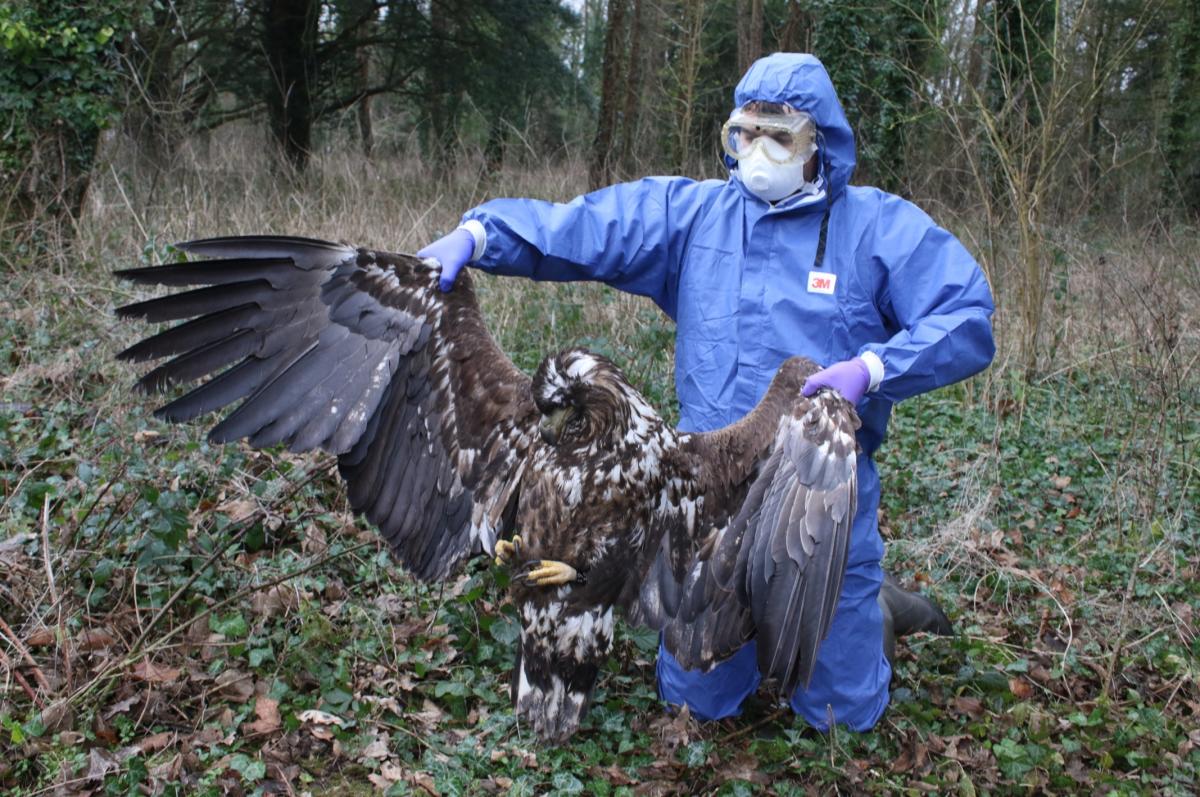
WPRUK’s findings about further White-tailed Eagle poisonings only came to light as a result of extensive Freedom of Information requests. Dr Ed Blane, the scientist behind WPRUK and an expert in the exposure of wildlife to Second Generation Anticoagulant Rodenticides (SGARs), stated that many of the case details were still being kept secret by the Government.
He said:
“The death of these majestic birds in Dorset, and the high amounts of poison found in their livers, should cause alarm bells to start ringing across the country. What we see now is the total failure of Government approved policy meant to protect the environment, information being withheld and our wildlife paying the price. At the same time chemical companies are making profits from selling these poisons. We have Channel 4’s ‘Dirty Business’ meeting Rachel Carson’s ‘Silent Spring’!
“What is of particular concern are the plans to introduce eagles to other areas of England and Wales without addressing this growing poisoning issue. How many of these birds will suffer a similar fate as the Dorset eagles?“.
Since last week’s press release from WPRUK, a journalist from the Dorset Echo, Richard McLaughlin, has followed up on the story and he’s forced Natural England to admit the scale of the problem. His article, published yesterday, was headlined,
‘Every white-tailed eagle death in Dorset linked to rat poison‘
The full article can be read here, and it’s reproduced below to safeguard from future broken links.
‘Every white‑tailed sea eagle found dead in Dorset since the start of England’s reintroduction programme has carried residues of a powerful rat poison, Natural England has confirmed.
The poisonings have raised fresh questions over rodenticide use in the countryside.
Since 2019, Natural England has investigated 10 suspected white-tailed eagle poisonings in England, including nine deaths and one non-fatal illness; six cases were in Dorset: five deaths and one illness.
Natural England told the Echo toxicology tests found brodifacoum in all five dead Dorset eagles “at levels considered close to significant”.
Brodifacoum is a powerful rat poison that stops blood clotting and causes severe internal bleeding, and even small amounts can kill rodents, pets, farm animals and wild birds and poison predators that eat contaminated prey.
Experts said rodenticide toxicity probably contributed by leaving the birds more vulnerable to injury, starvation or other factors, although levels were “not high enough to be identified as the primary cause of death”.
Natural England’s list records Dorset eagles found in January 2022 (cause “unspecified”), May 2024 (starvation), March 2025 (trauma) and March 2026 (electrocution), plus a non-fatal illness in February 2022.
A fifth eagle died by electrocution in November 2024; Natural England said brodifacoum was found in all five at levels “above those expected from normal background exposure”, requiring further investigation into its use.
The results “suggest brodifacoum may not have been used in accordance with legal requirements designed to protect wildlife and prevent exposure of non-target species,” Natural England said.
The birds were reintroduced to southern England from the Isle of Wight under a Natural England-licensed project.
Investigations into the Dorset cases continue, with detailed evidence reports withheld until they end.
The Health and Safety Executive will publish the final outcomes and leads pesticide enforcement and the Government’s rodenticide stewardship scheme.
Wildlife Poisoning Research UK, which obtained much of the detail through freedom of information requests, says the Dorset cases show the stewardship scheme is failing and wants tighter controls on SGARs.
Conservationists say the findings raise questions over poison controls in areas used by reintroduced species and other protected birds of prey.
In a 2022 case, Dorset Police said tests were inconclusive and could not confirm deliberate intent or identify an offender despite detecting high brodifacoum levels’.
ENDS
Natural England’s admission was also picked up by the BBC News website, here.
Both articles include statements from Natural England about the rodenticide Brodifacoum being found in all five dead WTEs in Dorset at levels “above those expected from normal background exposure”, requiring further investigation into its use.
Natural England also said the results had ‘warranted a further investigation into the source, which suggested Brodifacoum might not have been used in accordance with legal requirements designed to protect wildlife and prevent exposure of non-target species’.
Gosh, do you think so?
The BBC’s article includes the following quote from an unnamed Natural England spokesperson:
“Natural England is firmly committed to the protection and recovery of white-tailed sea eagles and remains confident that reintroduction projects in Dorset are contributing to this national conservation goal.
“The findings from Dorset and elsewhere highlight the importance of responsible pesticide use and continued vigilance to reduce risks to wildlife and safeguard the long-term recovery of white-tailed sea eagles.”
These amount to nothing more than empty platitudes.
The total failure of the Government’s Rodenticide Stewardship Scheme, designed to prevent the widespread poisoning of wildlife by rodenticides, has been well documented (e.g. see this 2024 report from Wild Justice, here).
Birds of prey are particularly affected, and there is widespread evidence that rodenticides are being misused, sometimes deliberately, at shocking levels.
The Government could take some relatively easy steps to put a stop to all this, especially with stronger regulation of Brodifacoum, but so far, nothing.
But watch this space…
UPDATE 18 August 2026: White-tailed Eagle poisonings feature in Private Eye (here)


Darned stuff should be banned…there’re far too many stupid people about.
agreed, as well as no shortage of sly b*****ds who know exactly what they’re doing.
Sad to see that the Roy Dennis Organisation appear to have expunged their contemporaneous reports of the death of the White Tailed Eagle featured in the above photograph:-(
https://roydennis.org/isle-of-wight-see-eagle-reintroduction/
Yesterday, BBC South Today late programme featured the ‘rat poison’ story and showed the image (above) while the presenter emphasised that while the concentrations weren’t high enough to be identified as the primary cause of death, experts said it was likely to have contributed.
3 mins 47 seconds in… https://www.bbc.co.uk/iplayer/episode/m002zm7h/south-today-late-news-31072026
Expires tonight 10.38pm
Misleading image and report…
Just coincidence…Nothing to see here…Move right on…Of course this is completely accidental…
Cue a certain ex-cricketing shooting industry apologist assuring us that this is actually improving local biodiversity…
And all the usual self-exculpatory blether from the usual shooting estate owning apologists…