
Natural England has finally, after many months of delay, published its formal review of the Hen Harrier Brood Management (Meddling) trial that ran from 2018-2024.
For new blog readers, the Hen Harrier Brood Meddling trial was a conservation sham sanctioned by DEFRA as part of its ludicrous ‘Hen Harrier Action Plan‘ and carried out by Natural England between 2018 – 2024, in cahoots with the very industry responsible for the species’ catastrophic decline in England. In general terms, the plan involved the removal of Hen Harrier chicks from grouse moors, they were reared in captivity, then released back into the uplands just in time for the start of the grouse-shooting season where many were illegally killed. It was plainly bonkers. For more background see here and here.
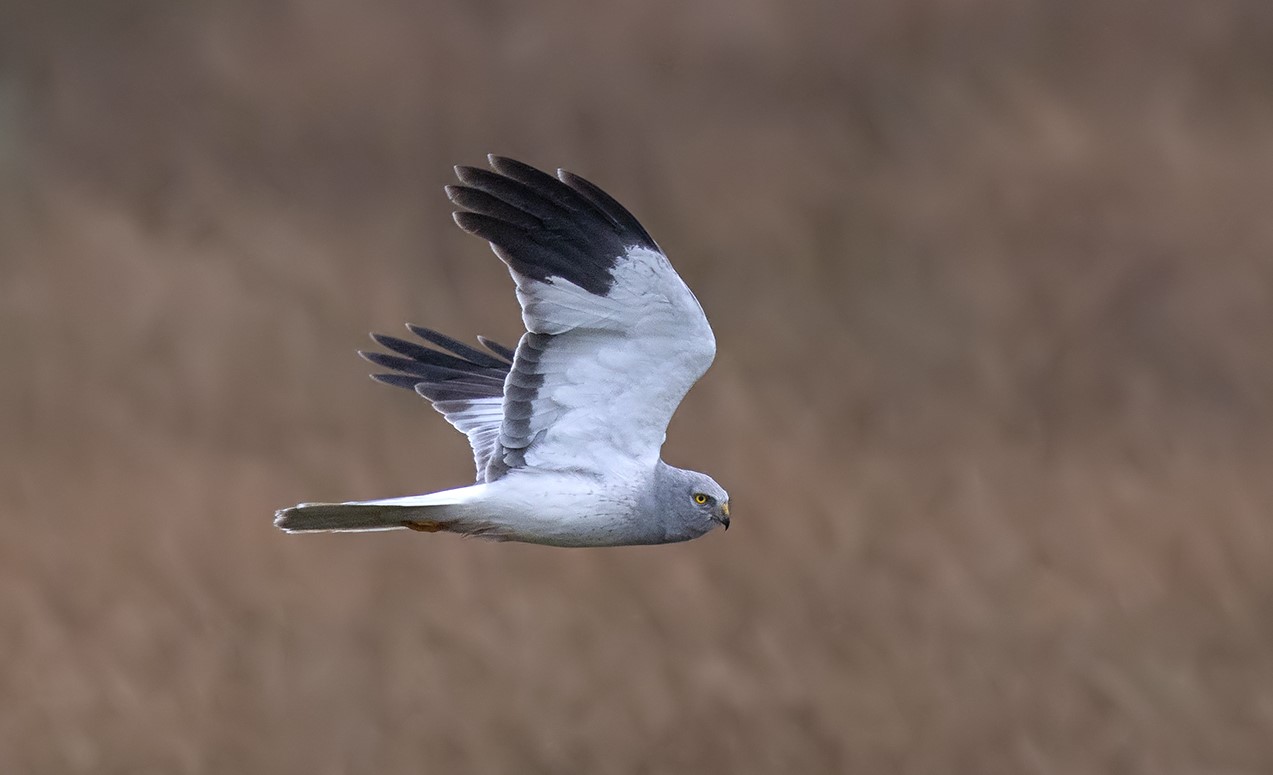
In March 2025, Natural England announced the end of the Hen Harrier brood meddling sham and noted that the so-called ‘partnership’ had now closed, although NE also said that no decision had yet been made about the potential annual roll-out of brood meddling (here).
In April 2025, Natural England announced that it had turned down a licence application from the Moorland Association for a brood meddling licence for 2025, mainly because the Moorland Association wanted to remove the licensing requirement that all brood meddled Hen Harriers must be satellite tagged (hmm, can’t think why), and also because the MA wanted a single release site for brood meddled Hen Harriers, presumably to get around the problem of there not being sufficient receptor sites/estates willing to take the young brood meddled birds on their release (see here).
This afternoon, Natural England has published three final reports as part of its review of the brood meddling trial. These are:
Hen Harrier Brood Management Trial Evaluation: The effectiveness of brood management as a mechanism for supporting Hen Harrier recovery.
Hen Harrier Brood Management Trial: Interim social science evaluation.
Hen Harrier Brood Management Trial: Findings from the social science survey of moorland managers Authors: National Centre for Social Research.
The three reports are available for download at the end of this blog. I haven’t read them yet – and probably won’t have time to do that until next week at the earliest, so will comment further once I’ve read them, if I find anything of interest.
Natural England has published a blog today, to accompany the publication of the three reports. Here’s the most relevant part:
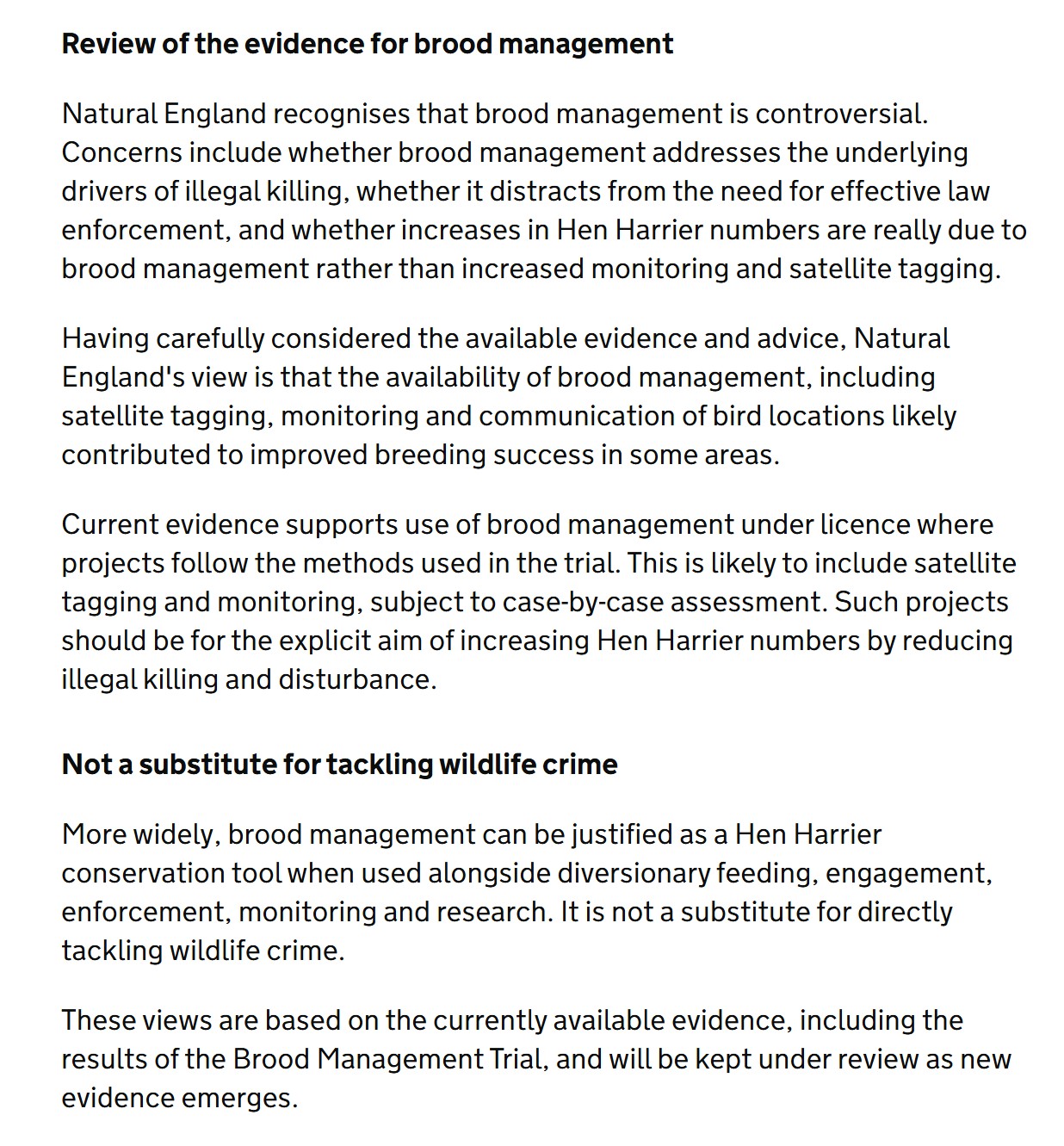
This suggests that NE will consider brood meddling in the future, on the basis the same licence conditions used during the trial are in place (i.e. sat tagging, release site must be within the SPA from where the Hen Harriers are brood meddled etc).
Two of these paragraphs don’t make sense to me, as one contradicts the other. NE says that, “Such projects [i.e. brood meddling] should be for the explicit aim of increasing Hen Harrier numbers by reducing illegal killing and disturbance” but then in the next paragraph, it says, “It [brood meddling] is not a substitute for tackling wildlife crime“.
Eh?
The final sentence of NE’s blog is also relevant – “These views….will be kept under review as new evidence emerges“.
I don’t know if Natural England is aware, but significant new evidence on the extent of Hen Harrier persecution on UK grouse moors is on its way shortly, and if that doesn’t put an end to any idea about continuing the ludicrous brood meddling sham, I don’t know what will.
Meanwhile, here are NE’s three final reports on the Hen Harrier brood meddling trial:


Somewhere in a parallel universe…
…the money that was blown on this circus was spent on surveillance and enforcement of the law. Many gamekeepers were prosecuted and some went to prison. Many others saw this now very real risk on their doorstep and stopped killing raptors. Some of these were bullied out of their jobs by managers and agents, as a result of their grouse numbers dropping below what they wanted, but the gamekeeper grassroots organisations stood firm and supported them and won cases of unfair dismissal against their employers and they were made to pay compensation. Season bag averages reduced significantly, but just had to be accepted. The intensity and industrial scale of the management effort was much reduced (yes, many keepers were laid off) as it was no longer economically viable at that scale on those reduced bags. Grouse shooting continued, but on a much reduced scale, simply as just one of many upland management practices. Guns just had to be happy with paying more money for less grouse, acknowledging it was better than none at all.
Buy as I say, this is in a parallel universe – not the UK in recent and present times.
Did brood meddling management produce a cohort of birds that survived and returned to enhance the breeding population . No they didn’t. This is why the raw Annex 3 figures are so striking:
Even allowing for uncertainty over some individual cases, this is a very poor survival signal. Tags are very reliable and the birds are also ringed. Birds do not reappear once labelled “missing fate unknow for one obvious reason – they are dead.