
The following is a guest blog by someone who wishes to remain anonymous, although I know their identity.
Previous guest blogs on this subject here, here and here.
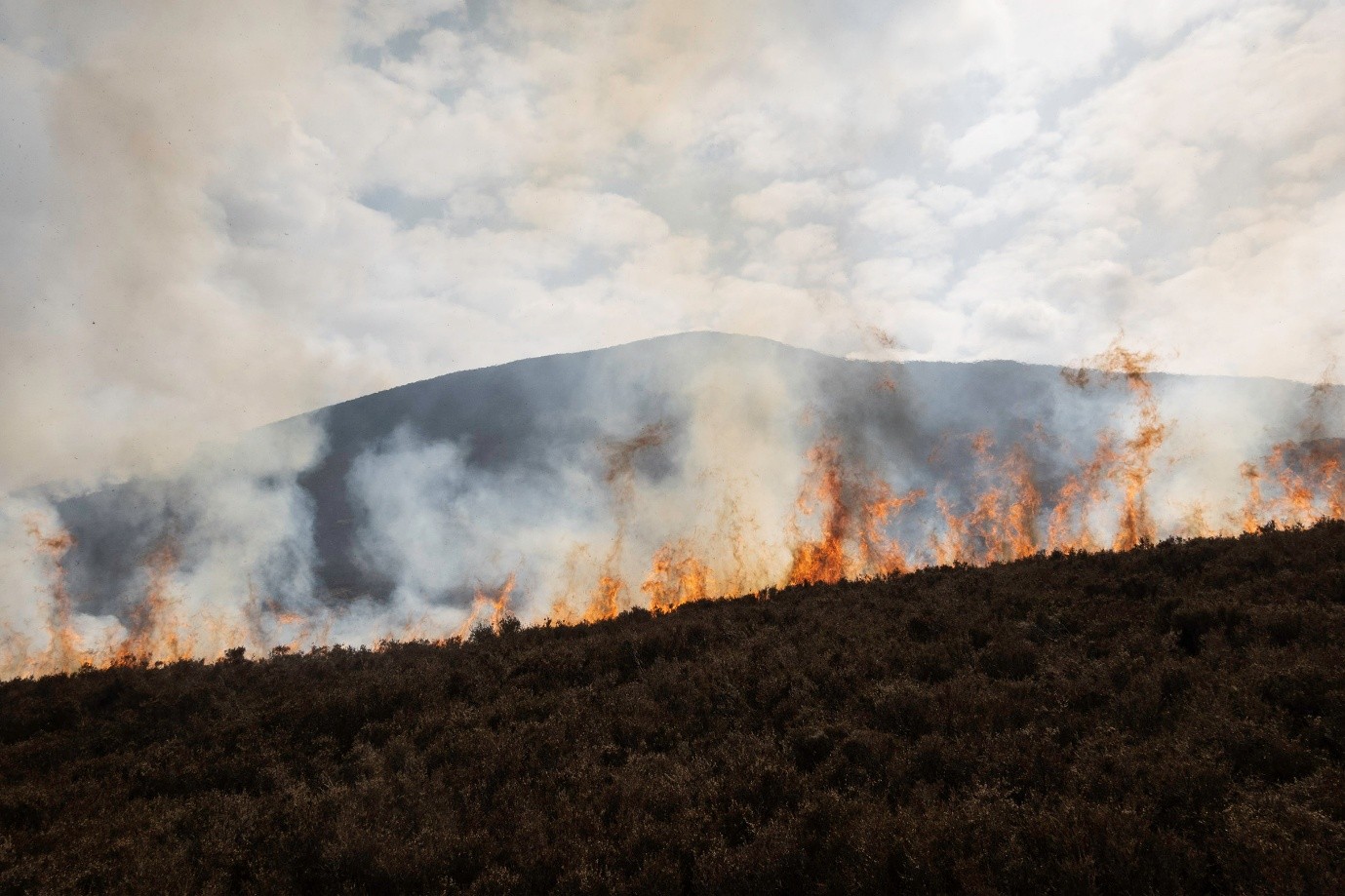
(Simon Butterworth Photography)
On 18 January 2024, government body Scottish Forestry approved a giant Sitka spruce plantation at Stobo Hope in the Scottish Borders, without an Environmental Impact Assessment (EIA), claiming this scheme would not cause a significant negative effect on the environment.
As many readers may be aware, a petition for judicial review was lodged to challenge the decision by Scottish Forestry to not require an EIA due to objections to the nature of the proposed scheme by NatureScot. A crowdfunding campaign with support from Raptor Persecution UK readers and Wild Justice helped raised the funds for a final court hearing, scheduled for autumn 2024.
Scottish Forestry were provided with photographs in August 2024 showing vast areas of heather moorland had been sprayed with herbicide, and told the Court of Session they did not know about this herbicide damage. Scottish Forestry submitted to judgement on the basis that the ‘screening decision’ (that determined no EIA was required) was unlawful; the court quashed the screening decision, forestry contract and £2 million taxpayer funded grant. This meant Scottish Forestry avoided facing reputational damage if they had lost in court on landscape grounds.
However, the Scottish Information Commissioner in May 2025 (see here) forced Scottish Forestry to disclose documents showing various senior Scottish Forestry staff were aware of the herbicide spraying long before when they claimed they did (see here), giving rise to suggestions that Scottish Forestry had misled the Court of Session (see here).
Stobo Hope is owned by the Guernsey registered Forestry Carbon Sequestration Fund, managed by True North Real Asset Partners Ltd, with forestry agents Euroforest Silviculture. The forestry managers selected environmental consultants Stantec UK Ltd to conduct an EIA. At the time of writing, an EIA report is still due to be published.
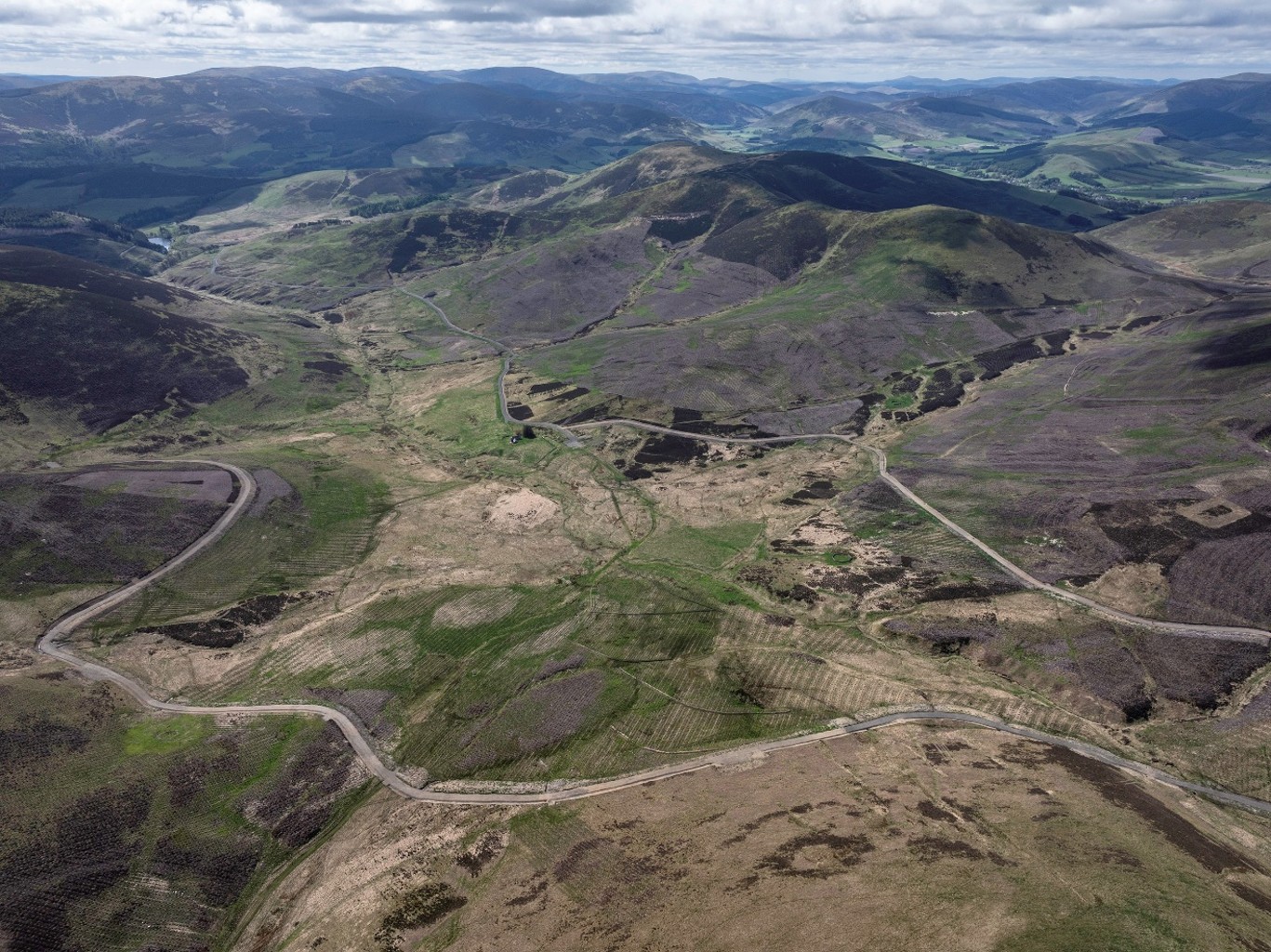
How Scottish Forestry promote the destruction of grouse moors
Many areas of upland Scotland are threatened by commercial conifer plantations, despite these areas being semi-natural habitats and having significant ecological importance. Agricultural regulations typically have some presumption against the ‘improvement’ (herbicide spraying, ploughing, reseeding) of these semi-natural habitats, helping to reduce their loss.
In contrast, Scottish Forestry’s application of forestry regulations appears to be promoting the landscape-scale destruction of types of habitats that would not be permitted in other parts of the UK, such as moorlands in the Lake District, Yorkshire Moors, Peak District, Dartmoor or Exmoor. This destruction is also being accelerated through carbon credits and taxpayer grants under the dubious premise that such schemes help avert climate change (see here).
Despite the well documented, destructive nature of commercial coniferous forestry on such upland habitats, Scottish Forestry almost always approve new conifer plantations.
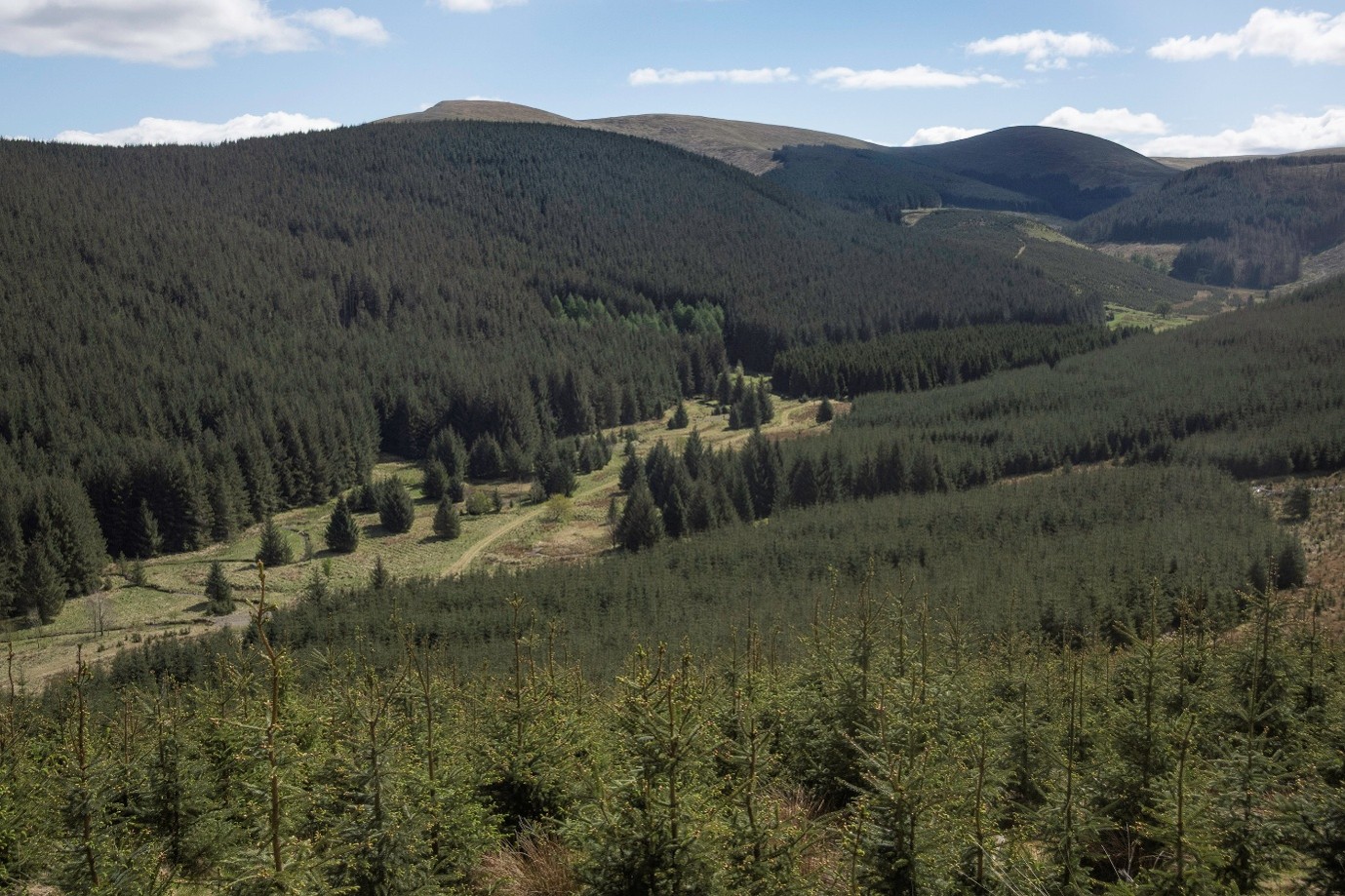
Implausible claims of ‘mitigating’ adverse environmental impacts by Scottish Forestry
Many forestry schemes approved by Scottish Forestry have had a devasting effect upon local communities (see here). Areas with potential for wildlife tourism, native woodland and diversification of farming enterprises are now covered in Sitka spruce, resulting in abandoned farms, and loss of communities, sometimes described as the ‘carbon clearances’ (see here).
Scottish Forestry undertake a ‘screening decision’ of proposed forestry schemes and almost always state ‘no significant environmental negative impacts’ in order to ‘screen out’ the need for an EIA prior to approving each proposed forestry scheme. Scottish Forestry always claim that various moorland animals and birds will not be significantly adversely impacted, despite near complete loss of their required habitat, bizarrely claiming to have ‘mitigated’ against these environmental impacts. Scottish Forestry frequently claim that mobile species move to suitable habitat elsewhere, but ignore the fact such habitats may already be occupied, pushing species into sub-optimal habitats where breeding success is reduced.
The UK Forestry Standard
When a new forestry scheme is proposed, the landowner’s agents supposedly ‘consult’ the local community. If the proposals are for large conifer plantations there are typically many objections by the local community and wider public.
Excerpts from a presentation by Scottish Forestry provides an insight into their mindset, citing examples of ‘complaints’, such as by communities’ ‘quite (sic) enjoyment of the countryside’; ‘from environmentalist (sic) who are worried about nature’; ‘from ornithologists and campaign groups worried about bird species’; ‘from MP’s (sic), MSP’s (sic)’, and ‘worries from sawmillers’.
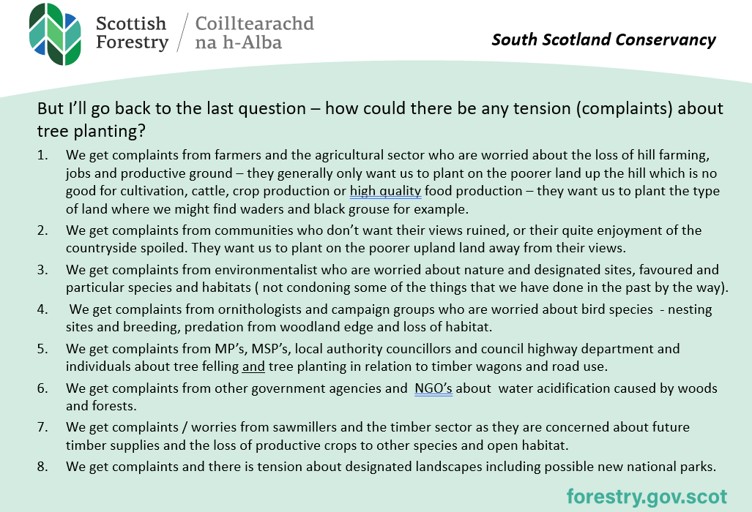
Scottish Forestry then referred to ‘key documents’ that can supposedly ‘capture and mitigate the views and concerns from stakeholders and consultees’.
Reference was made to the UK Forestry Standard (UKFS), published by Forest Research, used to regulate forestry activities such as cultivation techniques, herbicide use, forest road specifications, planting buffer zones, and composition of tree species. The UKFS’s latest, fifth edition now supposedly limits 65% ‘of the area’ to a single species, with a minimum of 5% native broadleaves, 10% of other tree species, and 10% open ground.
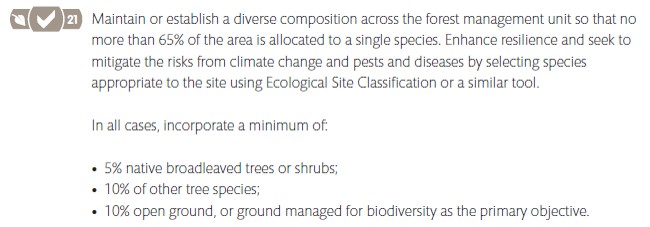
The UKFS promotes semi-natural habitat destruction, littering with plastic tree guards, industrial roads, drainage of wetlands, planting of peat up to 50cm in depth, unsightly deer fences that kill animals, and predominantly Sitka spruce monocultures. There is no limit on the size of the plantation or the size of additional, adjoining plantations in the future. Excluding the 10% ‘open ground’ (as referred to in the UKFS), as a percentage of the area actually planted, Sitka can reach 72%, as is the case at Stobo, where 82% of the planted area comprises commercial conifers:
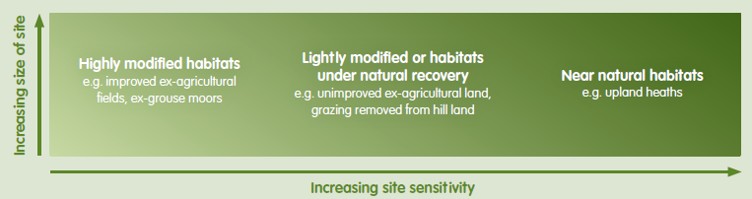
Other documents included ‘guidance’ for woodland creation applications, which included an illustration bizarrely equating ex-grouse moors with ‘improved ex-agricultural fields’, by having lower site sensitivity than unimproved land. This appears to be an attempt to downgrade the importance of grouse moors, which are actually largely upland heaths, but with much higher ecological sensitivity.
How Scottish Forestry ignore losses of bird species
Scottish Forestry claimed in its screening decision for Stobo (to rule out an EIA) that for each ‘issue’ assessed, and ‘with the mitigation outlined this project is not likely to cause a significant negative environmental effect’, such as for black grouse.

The RSPB predicted black grouse would become extinct at Stobo as a result of the proposed forestry scheme and a GWCT report for Stobo failed to say if black grouse would remain on site (see here). NatureScot later rejected a licence application by Stobo Hope’s forestry agents Euroforest Silviculture for a licence to hunt foxes with nineteen dogs (see here). NatureScot explained that approving the application, purportedly to reduce black grouse predation, would not have any environmental benefit as the black grouse would disappear as the new plantation became established.
The Stobo Hope screening decision failed to assess the impact on any species of invertebrate, reptile or mammal, the only animals being ‘assessed’ were three bird species.
A bird survey conducted for Stobo Hope in 2021 included records of black grouse, red grouse, lapwing, curlew, snipe, woodcock, stonechat, whinchat willow warbler, wheatear, mistle thrush, woodcock, skylark, meadow pipit and cuckoo. Raptors recorded include buzzard, kestrel, peregrine, red kite, osprey, hen harrier and golden eagle. Others have sighted merlin and short-eared owl at Stobo. There are also records in the immediate area of barn owl, long-eared owl, common sandpiper, and redshank.
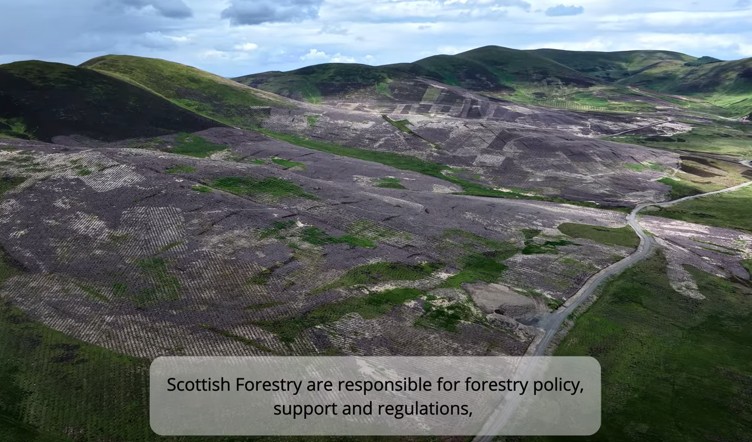
(Ted Leeming Photography)
Stobo appears to have a good assemblage of species, typical of open moorlands. There is significant potential for attracting additional species through modest amounts of native woodland planting and appropriate grazing, as successfully implemented elsewhere, such as at RSPB Geltsdale (see here).
Scottish Forestry appear to think that forestry projects do not have significant negative impacts on bird species if those bird species exist nearby. A document titled ‘Woodland Creation and Curlew’, published by Scottish Forestry, claims ‘woodland creation proposals should be designed to protect and enhance important nesting sites through appropriate mitigation’.

Scottish Forestry claim ‘in some situations it may not be appropriate to plant’, such as ‘where proposals would displace 7 or more breeding pairs’ (or ‘5 or more pairs’ where some areas have had significant declines).
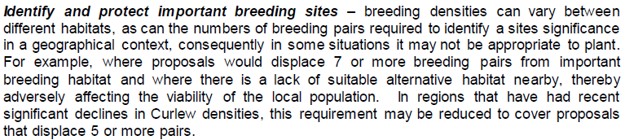
It appears that by the logic of Scottish Forestry, full afforestation can occur if there are fewer than seven pairs of curlew, claiming the birds will ‘displace’ themselves elsewhere. The problem with this claim is that (as well as losing habitat) land is constrained by the carrying capacity to support ‘displaced birds’ and neighbouring sites may themselves be planted with Sitka spruce in the future.
How Scottish Forestry ignore losses of valuable habitats
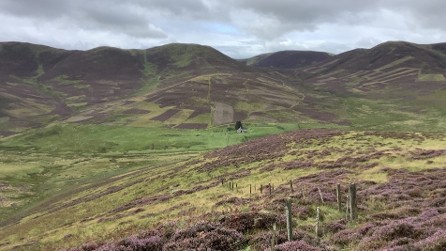
Scottish Forestry dismissed the importance of Stobo Hope’s wetlands and ‘priority habitats’, such as dry dwarf shrub heath (or heather moorland), as this was found elsewhere in Scotland, claiming losing 280 hectares (71%) of this habitat at Stobo would be ‘mitigated’ by leaving 110 hectares (29%) unplanted, ignoring the fact unplanted areas will be under-grazed and colonised by self-seeded Sitka spruce.

It seems odd to claim there is no significant negative environmental effect due to losing 71% of its heather moorland at Stobo Hope because heather moorland still exists elsewhere in Scotland (estimated to be 1.7-2.5 million hectares). By this logic, Scottish Forestry could repeat this argument indefinitely for years to come on other sites elsewhere, resulting in an unlimited, aggregate loss of vast tracts of moorland mosaics of heather moorland, acidic grasslands and associated semi-natural habitats.
How Scottish Forestry ignore cumulative impacts
Scottish Forestry implausibly claimed that the cumulative impacts of Stobo and three neighbouring spruce plantations, either approved or proposed, afforesting over nine square kilometres out of thirteen square kilometres, would be sufficiently ‘mitigated’ so no significant impacts on the environment would occur. Another problem with this assertion is Scottish Forestry do not appear to have any threshold as to how large (and therefore destructive) a proposed plantation (or group of plantations) can be before a ‘significant’ negative impact occurs (so consent would not be granted for the scheme).
Furthermore, Scottish Forestry exclude plantations more than five years old from their cumulative impact ‘assessments’, only comparing proposed projects to ‘recently’ completed projects. Scottish Forestry also bizarrely claim that the impact of a new project won’t result in a significant impact on a sensitivity which has been appropriately ‘mitigated out’ in previous, recent projects.
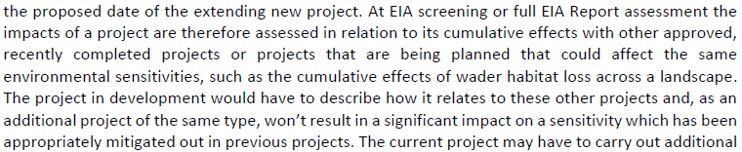
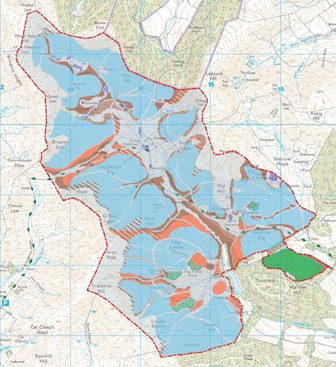
Scottish Forestry claim that no significant negative impact occurs from cumulative impacts (even if obviously scientifically untrue) to try and approve forestry schemes under the Forestry (EIA) (Scotland) Regulations 2017. This failure by Scottish Forestry to consider actual cumulative impacts (by ignoring science) will result in an indefinite spread of Sitka spruce across the uplands (apart from a few exempt areas), especially in the South of Scotland. Stobo Hope is an example of this as shown in the map below.
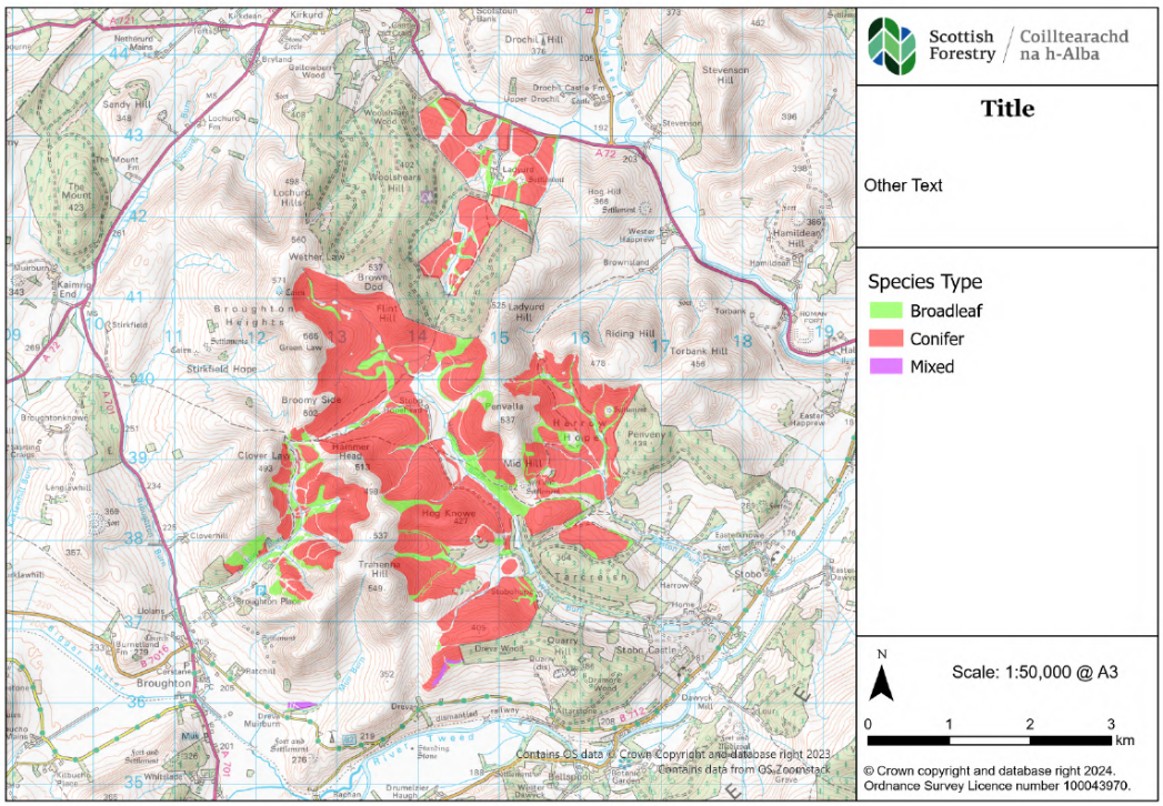
Established woodland (in this case over five years old) is shown as green on the Ordnance Survey map. Superimposed on this map (conifer in red and broadleaves in light green) are recent (approved in the last five years) or proposed plantations, with Stobo in the middle. As there is no presumption against further forestry developments on adjoining land, further afforestation can occur across this area. When Scottish Forestry approved the Stobo scheme, they argued that the cumulative impact of this and neighbouring schemes only comprised a small percentage of the designated National Scenic Area, so would make little difference in environmental impacts. Scottish Forestry attempted a similar approach to the Todrig woodland creation scheme (using the percentage of an area affected) but this was ruled unlawful by the Court of Session.
How Scottish Forestry broke the law in approving the Todrig woodland creation scheme
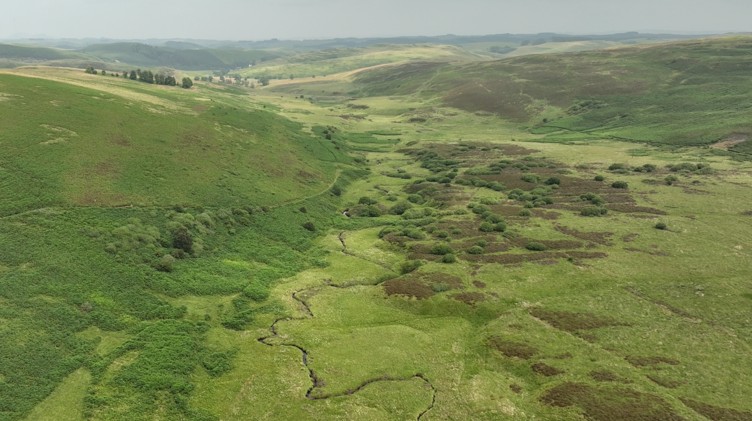
In March 2026, the Court of Session in Edinburgh determined that Scottish Forestry broke the law in how it reached the decision to determine no EIA was required for Todrig, another proposed Sitka spruce plantation in the Scottish Borders (see here). If approved, the taxpayer grant funding for this scheme would have been £1.33 million. A blog by Restore Nature (see here) explains how Scottish Forestry failed to properly consider the potential impact of the scheme on the character of the landscape and the northern brown argus butterfly. Restore Nature, who are helping the Liliesleaf, Ashkirk and Midlem Community Council oppose the Todrig scheme, are most grateful for the donations it received from Wild Justice and Raptor Persecution readers towards this (so far) successful campaign (see here). The decision that no EIA was required was cancelled by the court and it is not yet known if an EIA will now be required for Todrig.
(Ted Leeming Photography)
The proposed Sitka spruce plantation at Todrig is also controversial because the farm was acquired by Gresham House Forest Growth and Sustainability LP (see here), who raised £300 million to acquire land either for new, or with existing Sitka spruce plantations. The Scottish National Investment Bank provided one-sixth of this investment, with £50 million of taxpayer funds (see here).
Further controversies emerged when Andy Wightman, the land reform campaigner, revealed in a blog (see here) that Gresham House Forest Growth and Sustainability LP had acquired several of its properties for unexplained prices that were far in excess of market value. For example, 579-hectare Todrig farm was acquired for £12.2 million in 2022, despite being valued at £1.9 million in 2019, raising concerns by Community Land Scotland (see here) and leading to wider calls for the Scottish National Investment Bank to withdraw its investment (see here).
As with many other prospective commercial conifer forestry sites, Todrig farm is predominantly made up of semi-natural habitats, such as species-rich riparian grasslands and heather moorland. As for the Stobo Hope scheme, Scottish Forestry had made various unscientific claims in asserting no significant environmental effects would occur for the Todrig scheme.
Are Scottish Forestry bringing the Scottish Government into disrepute?
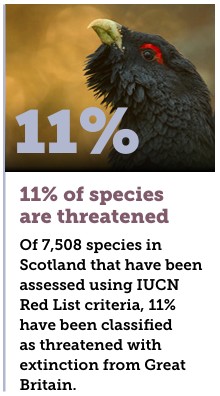
A State of Nature report published in 2023 and available on NatureScot’s website (see here) states that ‘historic nature loss means that it is one of the most nature depleted countries in the world’, and the report showed ‘Scotland’s wildlife continues to decline’. Scotland’s biodiversity decline was attributed to factors including intensive use of land for forestry and non-native invasive species. There was an average 15% decline in species abundance since 1994 and 11% of 7,508 species in Scotland using IUCN Red List criteria are threatened with extinction.
Around 17% of Scotland’s land is supposedly protected under the Bird and Habitats Directives, with 408 protected European sites (see here). However, Scotland’s lax environmental standards (especially outside these protected areas) and the failure by Scottish Forestry to recognise the major adverse impacts of commercial conifer plantations on semi-natural habitats indicates there will be continued landscape-scale losses of biodiversity in Scotland.
NatureScot states that there are restoration projects ‘now getting underway’ (see here), suggesting these projects can be ‘scaled-up to work across Scottish landscapes’. NatureScot also suggest these projects need sufficient funding and support.
NatureScot stated Scotland ‘ranked 28th from bottom out of more than 240 countries/territories in terms of the biodiversity it has remaining’ (see here). If the Scottish Government has a strategy to reverse biodiversity losses, ceasing forestry grants for commercial conifer plantations as recommended by the Royal Society of Edinburgh (see here) and excluding semi-natural habitats from new commercial conifer plantations would help reduce continued biodiversity losses. Taxpayer funds previously for commercial conifer plantations could be repurposed towards habitat restoration schemes that deliver biodiversity gains and social benefits.
ENDS


There are failures on the part of Scottish Forestry. But equally there are failures on the part of conservation, well illustrated by the one sided commentary here and the lack of any real debate about where more trees might go. In particular, conservation always seems to be rolled over by aggressive farming interests – the best place for more trees is almost certainly on the top end of improved land. the assumption that trees go on moorland goes back to the flawed DAFS policies that led to the Flow Country which have never been recognised by either agriculture or conservation. There are big issues here – should we aim for a policy of concentration (George Peterken came out strongly in favour of it) where some areas have a high level of forestry and others are completely free of forestry ? Or scatter resulting from a laizes faire approach ? Dismissing forestry as a negative whilst supporting the very dubious claims of -not very – ‘productive’ agriculture doesn’t help.
On design and wildlife, there are no more pure SS plantations despite the sneering reference to UKFS and there hasn’t been a pure conifer plantation since the broadleaves policy in 1985. I was particularly interested in the (common) reference to Black Grouse as a moorland species. I commissioned research with RSPB in 1985 in Wales precisely because they are not – and that research confirmed Black Grouse’s complex habitat requirements – a combination of shelter, open ground and in particular things like birch and cotton grass as key parts of their diet – a recipe for a rich mix of forest both conifer and broadleaved and open ground, and particularly wetlands.