
Press release from RSPB (24 August 2026)
THE UK’S RAREST BREEDING BIRD RAISES CHICKS AT SECRET LOCATION FOR THE SECOND YEAR RUNNING
The UK’s rarest breeding bird of prey, the Montagu’s Harrier, has nested for the second year running this summer at a secret location in England, successfully raising six youngsters from two nests.
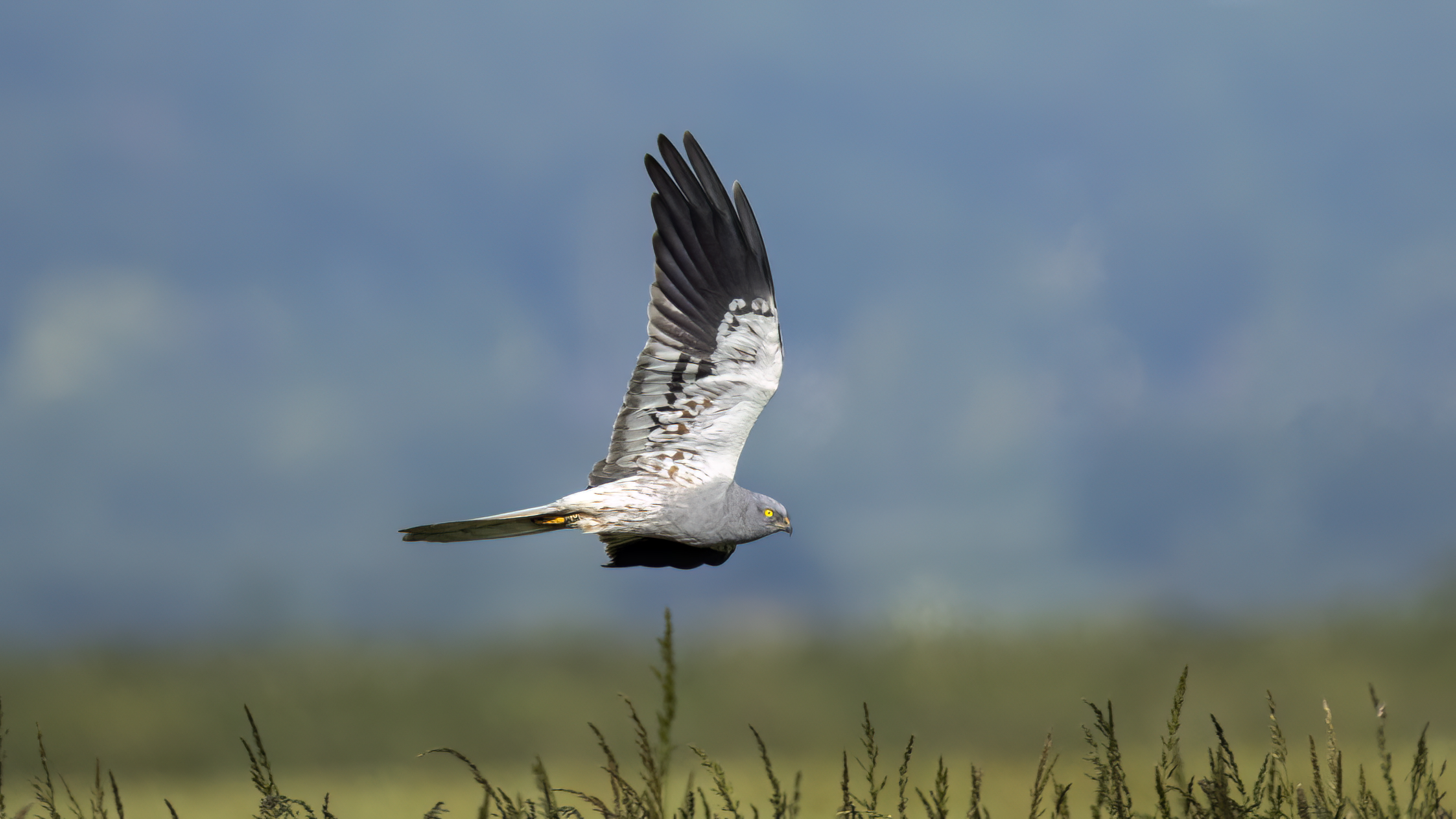
Last year a pair of adults raised four chicks at the same secret farmland location. It was the first time the species had successfully bred in the UK since 2019. This year, the same adult male nested with two new females, with the nests just a short distance apart. The ten-year-old male, named ‘AU’ from his leg ring, remarkably went on to feed three youngsters in each nest. AU was himself ringed as a chick in a protected nest in Wiltshire in 2016.
While never common, the population of Montagu’s Harriers declined after a high of nine successful nests in 2011. There was no successful breeding between 2020 and 2024, and the species was officially placed on the Red List in 2021.
Careful monitoring by the RSPB in partnership with the farmers meant this year’s nests were protected by fences to exclude ground predators and the chicks were all uniquely ringed in mid-July.
In what is a UK first, two of the juvenile females have been fitted with satellite tags. These £3,000 state-of-the-art lightweight tags will allow the RSPB to follow the birds daily on their 7,000-mile return journey to West Africa.
The RSPB is urging birders to look out for the other youngsters as they leave the country and to report any sightings by emailing the Montagu’s hotline: montys@rspb.org.uk
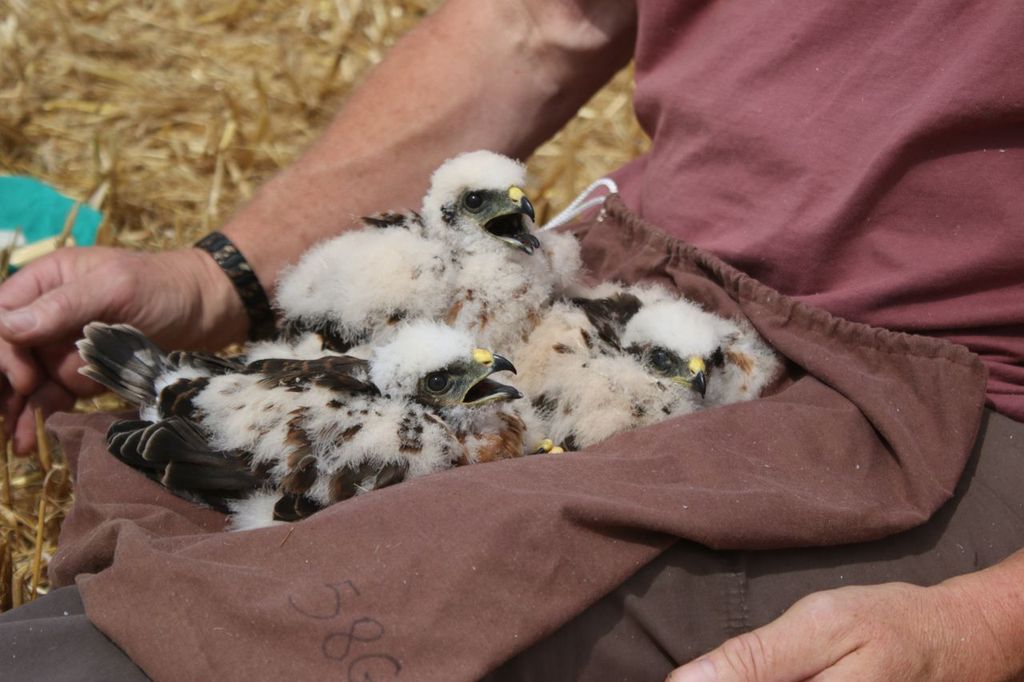
Mark Thomas, Montagu’s Harrier species lead at RSPB, said: “We are doing our absolute utmost to save this iconic species in the UK and are delighted with six flying juveniles this year. The satellite-tagging of juveniles for the first ever time should give us a direct insight into their migration, survival and when and where they return to the UK. This has been a true team effort and we would like to thank the farmers, conservationists and our sponsors Mark and Mo Constantine.
Paying tribute to the male bird AU, Mark added: “AU is truly awesome, he is single handedly propping up this species in the UK with his amazing display flights in May being rewarded by attracting two new breeding females, seemingly out of thin air.”
Montagu’s Harriers winter in Africa before returning to Europe to breed. They nest on the ground in agricultural fields, with their youngsters often still too young to fly at harvest time. As a result, nests are prone to unintentional destruction across their European range. Interventions by conservationists and partnerships with farmers are essential, particularly with even earlier harvests fuelled by climate change.
In a further twist, three of last year’s youngsters ‘JJ, JP and JO’ have all been seen in the UK this summer, so conservationists hope if they return next year they all may well also attempt to breed.
ENDS
Brilliant news! Well done to the farmers and the RSPB for protecting these nests. Let’s hope the adults and six juveniles manage to get out of England alive, unlike some of their predecessors (e.g. see here and here).


Just watched the BBC news report this morning. The inclusion of a Red Kite in the accompanying image was particularly intriguing.
Radio 4 reported the site was being kept totally secret because maybe hundreds of birdwatchers would turn up and disturb the birds.
I think we can imagine other dangers as well – as you implied, Ruth.
Nice to have positive good news and protection for them and so it proves it can be done if the will and determination is there. Well done though RSPB and farmers.
Brilliant news, well done to all those involved and of course the harriers themselves. Seventy years ago therew were 40-50 pairs in the UK, here’s to getting there again.
Well done to the farmers, the RSPB and Mark and Mo Constantine – whoever you are! A species being squeezed out by our ever-increasing human population and its incumbent intensification of agriculture.
I know which I prefer:-)
Mark Constantine is the owner of LUSH, the cosmetics company and the Sound Approach publishing company.
A thoroughly good egg.
superb news used to enjoy visiting sites on the wash in lincs in july to see families on Montys in early 2000s best raptor in the world for me’just need to be careful of prince harry and his mates !!