Crowdfunder to support Andy Wightman’s election campaign

Last month Andy Wightman announced he was standing as an Independent candidate for the Highlands & Islands in the May elections (see here).

To be elected he says he will need around 15,000 votes.

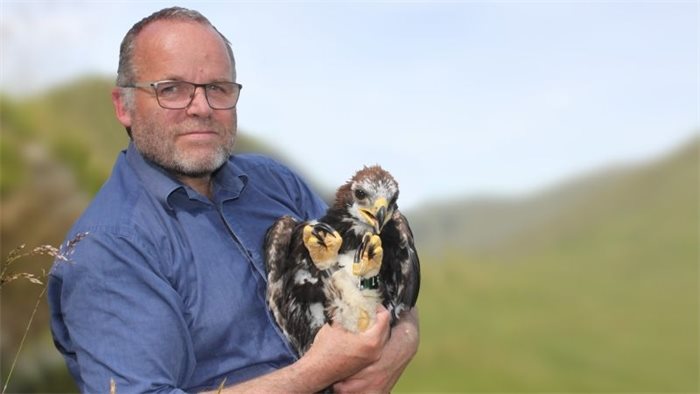
[Andy (Scottish Parliament’s Golden Eagle Champion) with golden eagle ‘Adam’, who later disappeared in suspicious circumstances on a grouse moor in Strathbraan (here). Photo by Ruth Tingay]

Andy has now launched a crowdfunder to raise £10,000 to help support his election campaign to include the development of a digital campaigning platform, newsletters and media and communications support.

For more detail about his campaign please read his latest blog here

To contribute to his crowdfunder please click here

Gamekeeper filmed shooting 2 buzzards on grouse moor in Yorkshire Dales National Park

The RSPB Investigations Team has published a blog this morning, detailing their undercover work filming a gamekeeper on a grouse moor in the Yorkshire Dales National Park, who used a tethered eagle owl to draw in two buzzards close enough for them to be shot.

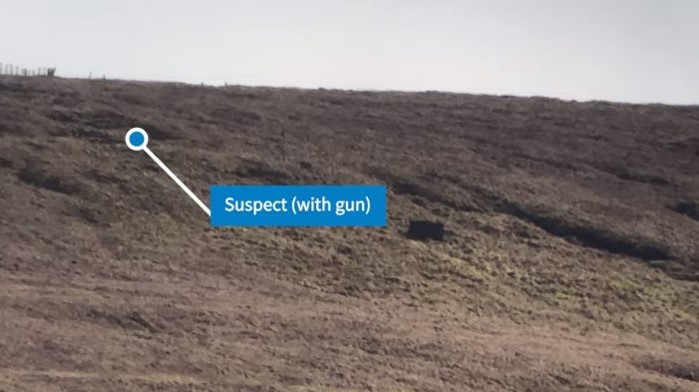
The blog, authored by RSPB Investigations Officer Howard Jones, describes the circumstances of the crimes, which include the obvious ones of shooting two protected buzzards but also the use of a tethered decoy (in this case, the eagle owl). Howard and his colleague Jack were filming through a telescope from approx 5km away and witnessed a gamekeeper drive across the grouse moor with the eagle owl, tether the owl to a post close to a grouse butt while he lay in wait close by with his gun.

[Screen grabs from the RSPB’s video]

Unfortunately, once again, despite a police investigation this case will not result in a prosecution because the identity of the gamekeeper committing the crimes could not be verified. However, importantly, Inspector Matt Hagen of North Yorkshire Police is quoted as follows:

“We conducted a search warrant and interviewed an individual in relation to this incident. Ultimately, however, the identity of the suspect on the film could not be proved, and it was not possible to bring about a prosecution. However this does not mean the event didn’t happen. We know that a gamekeeper on a grouse moor has been shooting buzzards, using a live eagle owl decoy to bring those buzzards into a position where they could be shot. We urge the public to report incidents like this to the police, and to come forward if they have information about this or any other incident involving the illegal killing of birds of prey“.

You can read the blog here

You can watch the RSPB’s video here:

The Yorkshire Dales National Park has been a known raptor persecution hotspot for many, many years, with wildlife crimes disproportionately taking place on the Park’s driven grouse moors. These crimes have been raised as a concern by both residents and visitors alike (see here).

The National Park Authority has its hands tied behind its back to some extent because these crimes are taking place on privately-owned grouse moors, but the Authority can’t be accused of ignoring the issue, e.g. see here for some of the work it’s been doing.

So how about the grouse shooting industry? What are they doing, exactly, to tackle these ongoing crimes?

The name of the estate in this latest case hasn’t been published, presumably to protect the identity of any other gamekeeper not directly involved, but the estate manager and owner will be well aware of this police investigation. Will they sack this gamekeeper?

What about the Moorland Association? As members of the Raptor Persecution Priority Delivery Group (RPPDG), I’d expect the MA to be informed and for them to take action against the estate if it turns out to be one of their members.

Other RPPDG members include BASC and the National Gamekeepers Organisation – what action will they take if this gamekeeper is one of their members?

And the Yorkshire Dales Moorland Group, representing estates and gamekeepers in the region – what action will they take?

Where’s the evidence of the so-called ‘zero tolerance’ to raptor persecution, so loudly paraded in January 2020?

There is no evidence of there being zero tolerance because it’s a total sham. Some gamekeepers continue to break the law, in broad daylight, because they know the chances of getting caught are minimal and even when they are caught the industry in which they work will close ranks, call ‘foul’ on the RSPB and carry on as normal.

I haven’t seen any evidence, since the industry’s purported ‘zero tolerance’ announcement, that serious efforts are being made to oust the criminals within. Which is why these crimes continue, week after week after week.

Well done to the RSPB and North Yorkshire Police for their work on this case.

UPDATE 12th March 2021: ‘Zero tolerance’ for raptor persecution? They’re fooling no-one (here)

Embittered speech by Alex Hogg, Chair of the Scottish Gamekeepers Association

The Scottish Gamekeepers Association (SGA) held its AGM online last Friday (4th March 2021).

The majority of the two and a half hours was taken up with a political hustings – more on that event later.

To kick off proceedings, SGA Chairman Alex Hogg delivered an opening speech, read deadpan from his laptop. It’s an interesting insight in to what, exactly, it is that the SGA is intending to protest about later this month, as so far it hasn’t been clear to many of us, including the Scottish Government (see here).

It turns out, judging from Alex’s embittered speech, that it’ll be a protest against progress and modernisation. From the restrictions imposed by drink driving limits, to no longer being allowed to slaughter mountain hares in their thousands with zero accountability, the resentment about being dragged in to the 21st century is clear. Personally I don’t think the SGA can legitimately argue that it doesn’t get a fair hearing – it gets just as much opportunity to be heard as everyone else and some of its members and supporters are anything but the so-called ‘quiet people’ described in the speech (e.g. see here and here). Sorry, Alex, it ‘ain’t the 1950s anymore, the world’s moved on massively and so must the SGA if it’s to survive.

Here is the transcript:

“Welcome everybody to our 2021 SGA AGM in our bothy. It’s fantastic to see everyone, albeit through the lens of a video camera.

Can I take a moment to thank the girls in the office, Carol and Sue, and the Committee for all the hard work and diligence which has gone on in this difficult Covid year.

On behalf of our protected wildlife, can I say a huge thanks to our keepers who carried on working throughout Covid saving countless numbers of endangered waders and other keystone species. As well as trying to make the most of an interrupted and difficult season. Even as we speak low ground keepers are still feeding out game and all the other declining wee birds. Whether they manage to get any shooting or not.

Members are also helping to control foxes and crows during the lambing time. This is a huge benefit for the farmers and crofters as well as ground-nesting birds. Many crops would never have gotten away if they’d not gained the protection by the keepers and shooters, keeping crows and pigeons at bay. Public land managers and RSPB on other hand were largely on furlough. Orkney being a case in point with stoat traps lying unattended for months. What an embarrassment given the millions of public cash doled out. Our work during lockdown was carried out with no public money. People were out, seven days a week, getting their hands dirty for Scotland.

The keepers’ skills when it comes to fire fighting are recognised as being up there with the best. The fire service has recognised these important facts and we hope to work with them on things like training days in the future. Again, all of this will be offered at no cost to the public purse.

We have managed more than a million deer in the last decade with reference to best practice and almost all going back in to the food chain. Again, at no cost to the public purse. Sustainable natural protein, low food miles, respect for management. Do we have to down tools and stop providing these services for free before people actually sit up and actually realise what they are getting and acknowledge the great work you, our members, do.

How many ghillies will run mink traps and keep the river banks free of invasive species? Or plant trees just for beavers just to chew them down. It shouldn’t have to be the case that you have to take something away before people realise why they get from gamekeepers, ghillies and deer managers but sadly decision makers in Edinburgh would rather listen to campaigners and then get out in the countryside and see the work first hand.

When the SGA invited MSPs out to see a local foot pack in operation to control foxes, only one MSP turned up willing to see how things actually work. Then a foxhunting bill was rushed through by Scottish Government. No wonder people want to take action. I will come on to how you can do that later.

Where is the old fashioned idea that you make a decision after seeing the situation for yourself, first hand? What about mountain hares? There is absolutely no doubt in my mind that mountain hares will be extinct in the not-too-distant future. Protectionism will actually kill them. Their habitat will get wiped out for the ever-increasing tree planting targets, they will die of disease on our moors cos their numbers can’t be thinned out to preserve a healthy population.

The new law is a disaster and translocations from grouse moors, SGA’s idea, is probably the only chance for them now. The politicians who made the decision are about to find out the bitter and inconvenient truth about how few there actually are away from grouse moors. They didn’t listen but their decision will come back to haunt them.

Government interference generally in rural life has not helped sustain community. The drink driving limits. It’s great in the city, trains, buses and taxis everywhere. Try finding a bus or taxi in the rural areas where most of us live and work. This policy has seriously affected social cohesion in the countryside, along with rural pubs having to close.

Access without responsibility. How the hell were we ever actually going to work in the countryside. People and dogs popping up all over the place. I’m very sure that the police in this day and age wouldn’t allow this to happen near their firing range yet we’re expected to carry out our work with high velocity rifles, it is an accident waiting to happen.

When Holyrood first opened, I was a great supporter. This was a chance to influence decisions at a local level. It was a fantastic voice for the people in rural Scotland, but as has happened with the police force, everything, all the power has become centralised. Remember getting your firearms certificates from the police locally? The Scottish Government has removed power from the local rural communities faster than snow melting from a dyke. Holyrood is not too different from Westminster now in that it operates from the centre in Edinburgh.

We must continue to do what we do for the countryside. To manage best practice and to deliver economic and biodiversity benefits. Even if we have to do it despite the capital law makers putting barriers in the way. Perhaps with the economy shaken people may begin to wake up and realise which people are getting their hands dirty for Scotland and those who will barely get out of bed without a tick on a public grant application form.

I was reminded recently that there are some out there in the world who do appreciate our work and it was heart-warming to hear”.

[Ed: Alex spent the next 7 minutes slowly reading out a letter from a health professional called Ewan (or Euan) with links to an estate in Angus, who was basically blowing smoke up the SGA’s arse, questioning what governance is in place to ensure the RSPB meets its stated objectives, and asking why so much parliamentary time was given to the issue of grouse moor licensing. It’s someone else’s opinion so it’s excluded here to save time].

Back to Alex:

“Ewan’s words and his questions are relevant and they’re similar to what I hear amongst the members and others who work in traditional rural industries today. Our quiet people are finding their voice, we must speak often and clearer than ever.

On the subject of questions for MSPs we asked members to send us some questions that we could ask election candidates in our political hustings which we recorded last week. You can now watch the event here and I hope you enjoy it.

Following that we will move on to our annual accounts so members please stick around for the next part of the 2021 AGM and thanks very much everybody for your time today”.

ENDS

UPDATE 12th March 2021: Political hustings: who’s promising what to the Scottish Gamekeepers Association (here)

“It’s essential that we carry on with muirburn”, says Scottish Government’s Rural Cabinet Secretary Fergus Ewing

Climate emergency? What climate emergency?

Fergus Ewing, the Scottish Government’s Cabinet Secretary for Rural Economy and Tourism, was speaking at the Scottish Gamekeepers Association’s political hustings last Friday (and more on that soon!), and this is a direct quote from his two-minute position statement on what the SNP can do for gamekeepers:

“It’s essential that we carry on with muirburn. We might come to that later. It’s absolutely essential to protect peatland. I’ve seen the Mars Bar film. I get it“.

Good grief. Let’s hope Fergus, if re-elected, isn’t part of the delegation attending the 26th UN Climate Change Conference of the Parties (COP26) in Glasgow on 1 – 12 November 2021; a summit to bring together parties to accelerate action towards the goals of the Paris Agreement and the UN Framework Convention on Climate Change.

Meanwhile, as we wait to find out what the proposed muirburn licensing scheme will look like, post-Werritty, the grouse moors are once again being set alight up and down the country.

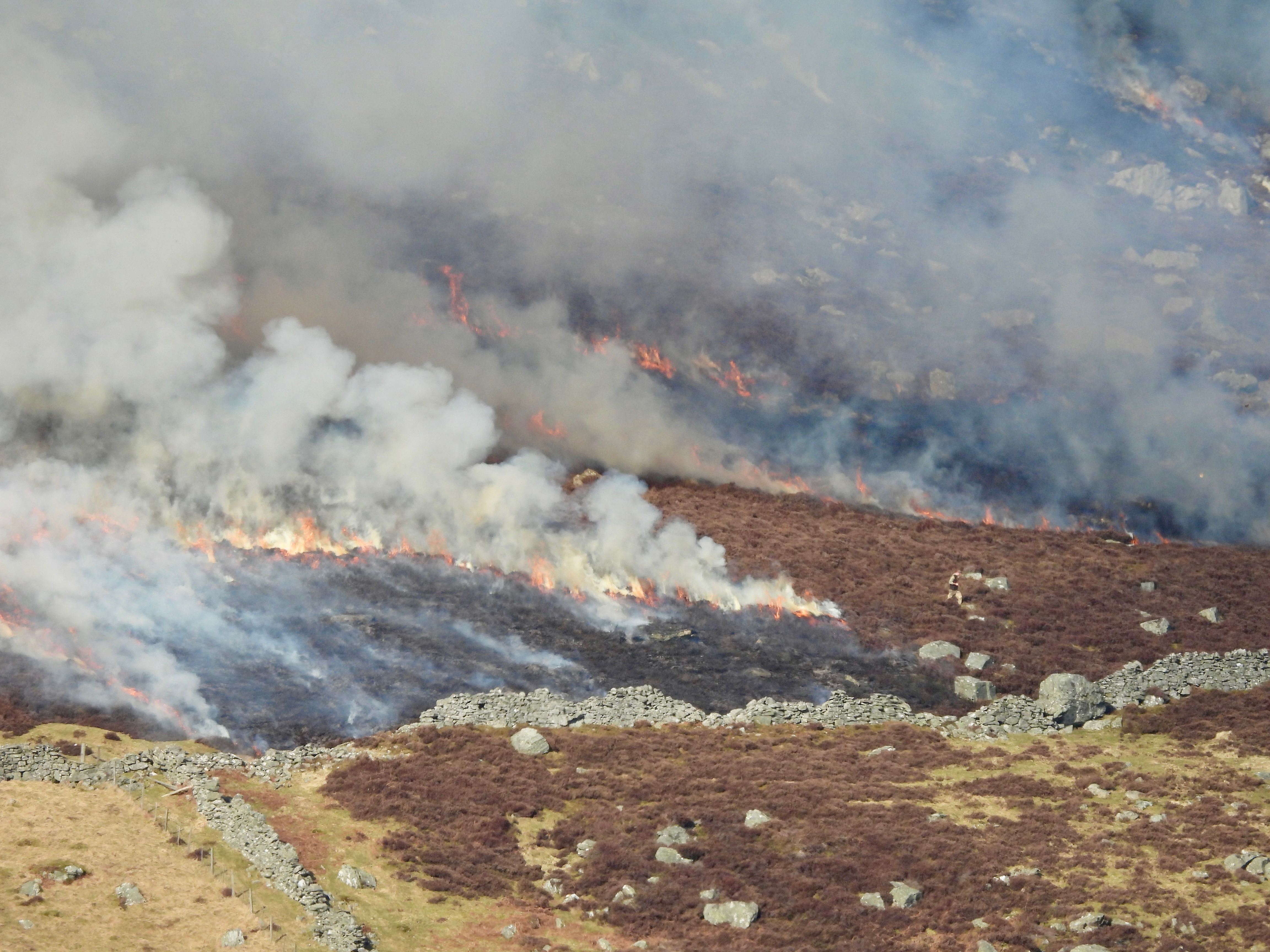
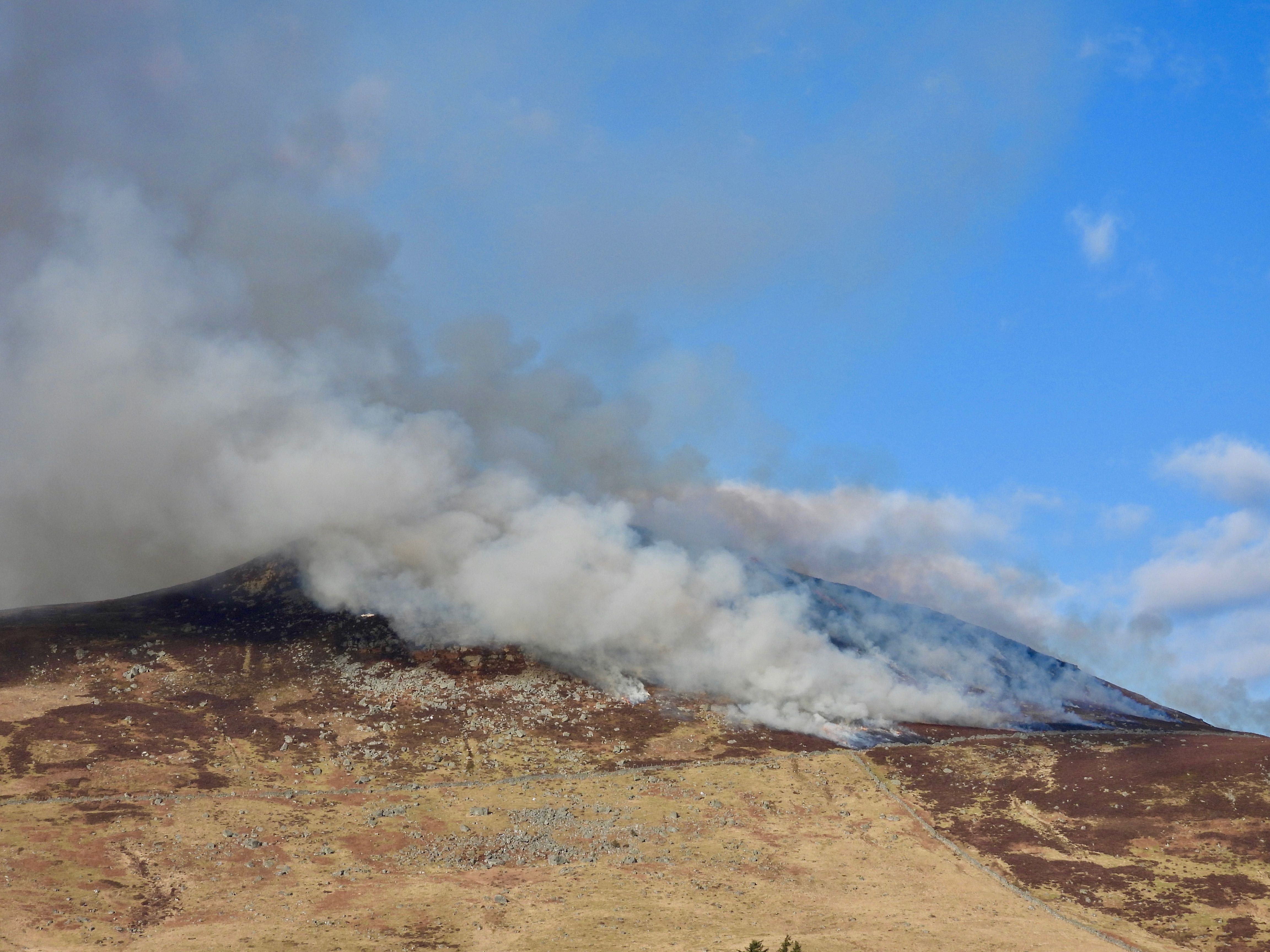
Here are some photographs of the moors on Lochan Estate in Strathbraan this week, sent in by a blog reader:

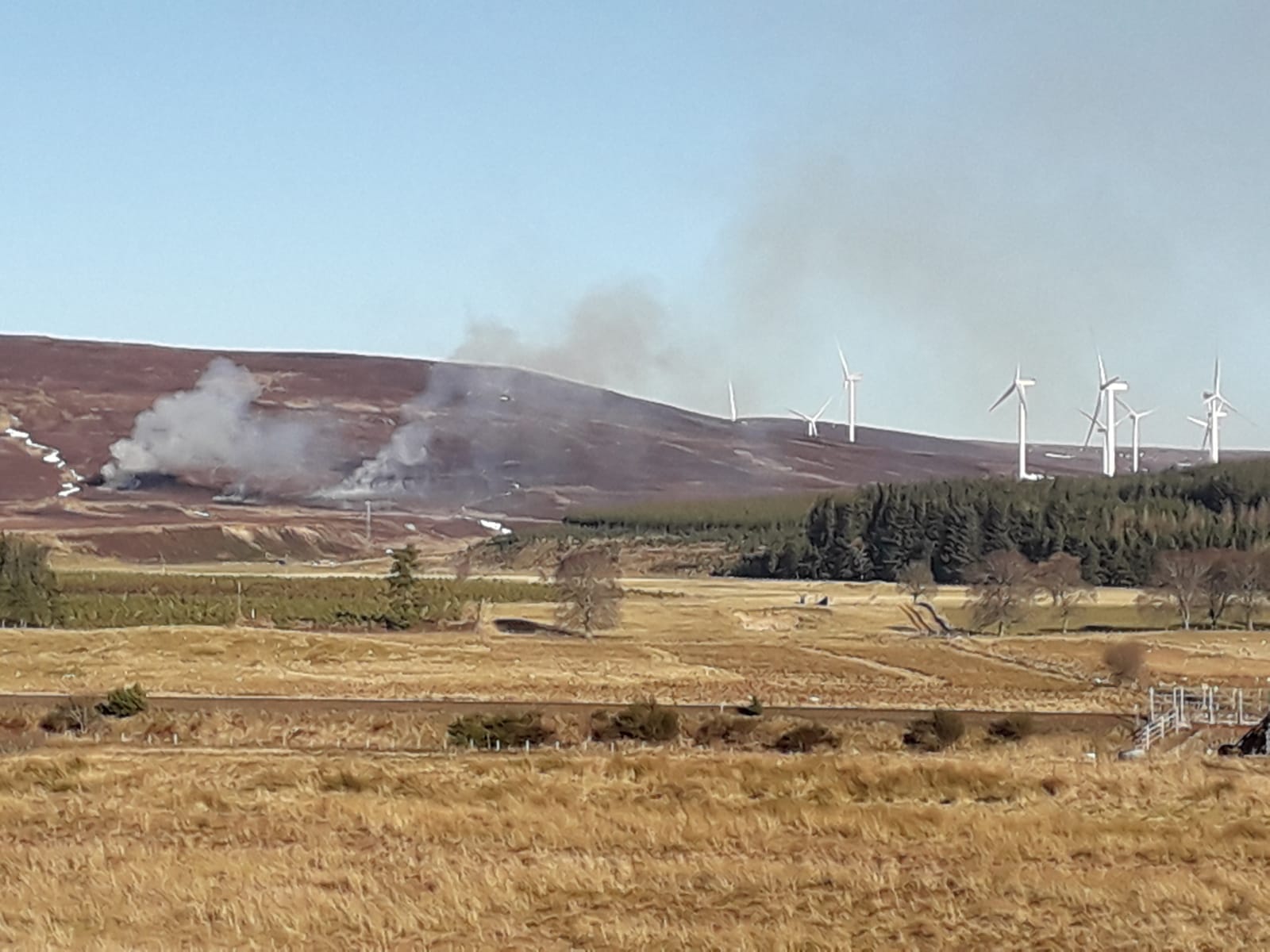
And not for the first time (see here, here and here), here is the grouse moor on Moy Estate in the Monadhliaths, set alight last week, perversely next to the wind turbines installed to to create renewable energy and thus reduce the carbon emissions that would otherwise be created from burning fossil fuels:

The ParkswatchScotland blog has also reported on grouse moors being set alight inside the Cairngorms National Park this week (see here).

But not to worry – we’re only in a climate emergency and these fires are just like having your hair cut. And besides, the Cabinet Secretary has watched an amateur video made by some gamekeepers to convince himself that muirburning “is essential“. Who needs scientific research, eh?

If you’re in England, where DEFRA has announced a pathetic proposal to ban burning on moorland that isn’t anywhere near as strong as it should be (see here), the RSPB has launched a burning reporting system where members of the public can report any upland burning that they see. Please report your sightings here.

Raptor intolerance, writ large!

I don’t really know what to say about this.

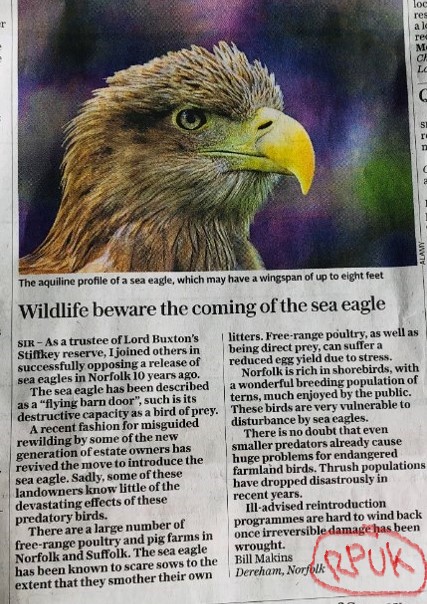
The letter was published in The Telegraph today (thanks to the blog reader who sent it to me).

If ever you’ve wondered why birds of prey are killed so frequently in the UK, here’s your answer.

Bill Makins is 89 years old. I wouldn’t be surprised to find he was a fully signed-up member of Songbird Survival.

For those who want a more up-to-date perspective on the reintroduction of white-tailed eagles to England, based on scientific evidence and hard-earned experience instead of wild hysteria and 200-year-old rural myths, you might be interested in this presentation by Dr Tim Mackrill, who is one of the conservationists behind the reintroduction of white-tailed eagles to the Isle of Wight (here) and is advising on the proposed reintroduction to Norfolk (see here), where fortunately there are a fair few more enlightened landowners these days.

Tim delivered this presentation three days ago to the Leicestershire and Rutland Wildlife Trust and they’ve made it available for everyone. Let’s hope someone shows it to Bill Makins.

Animal protection charity reveals worst snaring incidents in UK in 2020

Press release from OneKind (5th March 2021)

New report from animal protection charity reveals some of the worst snaring incidents in the UK in 2020

Scotland’s leading animal campaigns charity, OneKind, has released a new report, SnareWatch Annual Report 2020: Case studies of snare use in the UK, which highlights some of the worst snaring, or suspected snaring, incidents in the UK during 2020.  

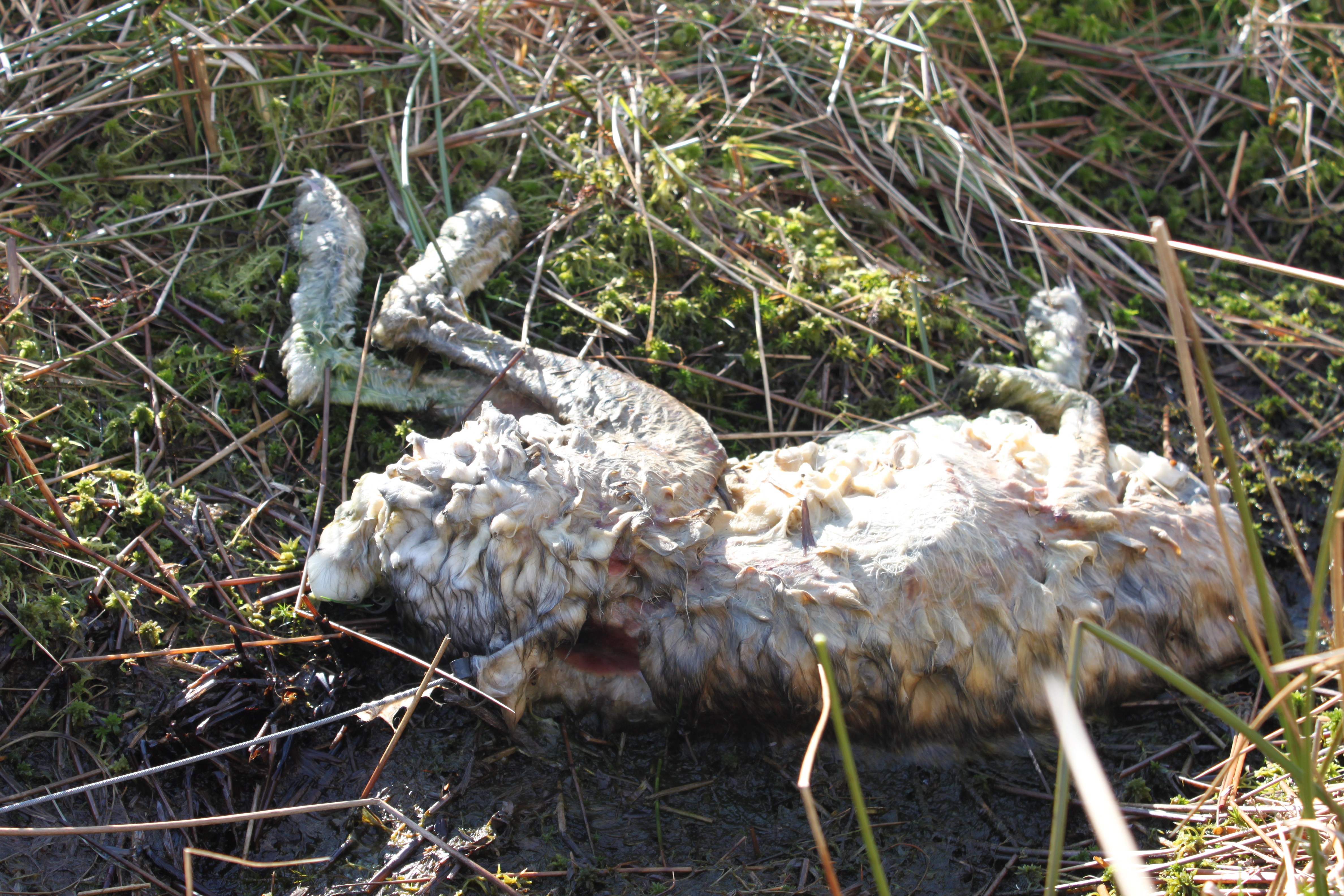
A snare is a thin loop of wire, anchored and positioned to catch an animal around the neck. Snares are, quite literally, Stone Age technology and have been used globally for centuries to catch a variety of species. In Scotland today they are mainly used to target foxes on or near grouse moors, due to the species’ perceived threat to the grouse. They may also be used to target rabbits and hares. They are required by law to be ‘free-running’ so that the wire relaxes when the animal stops struggling.  

[A snared mountain hare on a Scottish grouse moor, killed and left to rot. Photo by Ruth Tingay from a few years ago]

The report encompasses snaring incidents involving target species, such as foxes, and also non-target species including dogs, cats and farmed animals. Most of the animals that were found alive, but injured, required veterinary attention.  

OneKind Campaigner, Eve Massie, said: 

“Our new report, SnareWatch Annual Report 2020: Case studies of snare use in the UK, raises awareness of the suffering that wire snares inflict upon animals. Snares can cause the animals trapped in them considerable stress and pain, yet astonishingly, are still legal in the UK.  Our report highlights several cases of animals that were found alive in the snares and required veterinary attention. This includes a fox that had to be treated for the fly eggs and parasites on his body after he was trapped in a snare, suggesting he may have been there for an extended time.  

Wire snares are not only cruel but are also indiscriminate as to the species caught in them. Indeed, up to 70% of all animals caught in snares are non-target species. As evidenced in our report, dogs, cats, foxes, badgers and even lambs are caught in snares across the UK. In one particularly upsetting incident, a dog required 25 stitches for a hole in his chest that exposed muscle. The vet who treated him suspected that his injuries were consistent with being entangled in a snare. 

By highlighting snaring incidents in this new report, we aim to show how widespread snaring can be in the UK and just how much suffering these archaic traps can inflict upon animals“.

On OneKind’s snare reporting website, SnareWatch.org, Eve said: 

“Since 2011 we have been appealing for reports about snares found by members of the public through our snare reporting tool website, SnareWatch.org. So long as snares are legal in the UK, we believe it is imperative to gather information about the nature and extent of snaring“.  

On calling for a ban on snares, Eve continues: 

“OneKind has long-campaigned for a complete ban on the sale, use and manufacture of snares in Scotland. Our Parliamentary petition to assess the welfare risks of wildlife ‘control’ in Scotland, including the use of snares, was closed by the Scottish Parliament. This was, in part, because the Scottish Government is due to review snaring this year. We hope this report will encourage the Scottish Government to reconsider the use of snares in Scotland. In 2017, NatureScot stopped issuing licenses for the snaring of mountain hares. Its time  snares are banned for all species of animal. Suffering is suffering, no matter what species of animal it is inflicted upon“

ENDS

Raptor Persecution UK blog is 11 years old

Yesterday this blog passed its 11-year anniversary.

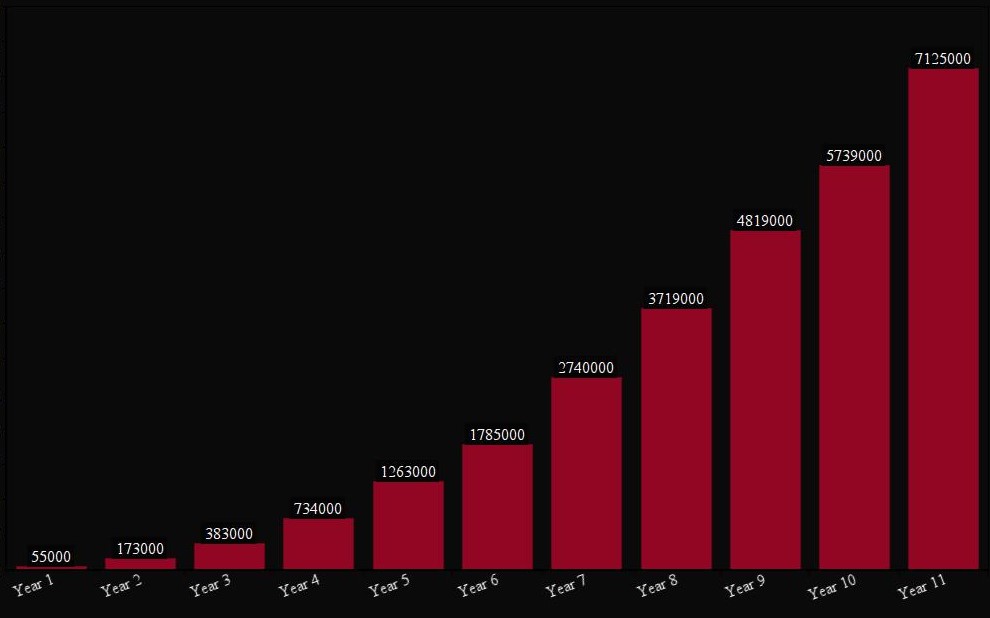
Is it still attracting readers? Yep, it seems to be, looking at these blog viewing stats.

As ever, huge thanks to those who help fund my time, those who work with me behind the scenes (you know who you are), to those who send me information, to those who take the time to comment here, and especially to those who share blog posts on social media channels – raising awareness of the illegal killing of birds of prey was the main driver behind setting up this blog and it continues to be one of its main objectives.

Thanks for your support.

UK wildlife crime legislation & enforcement to be assessed (again)

Press release from DEFRA (2nd March 2021)

Assessment launches to appraise UK wildlife and forest crime legislation and enforcement

New toolkit launched to assess the way we tackle wildlife crime in the UK

A UN backed assessment of UK wildlife and forest crime legislation and enforcement has launched today, using the United Nations Office on Drugs and Crime (UNODC) International Consortium on Combating Wildlife Crime (ICCWC) toolkit.

The toolkit will review wildlife crime policing structures, including the National Wildlife Crime Unit (NWCU) and UK Border Force and efficacy of prosecutions. The toolkit consists of five parts: legislation; enforcement; judiciary and prosecution; drivers and prevention. To date, the toolkit has been implemented in 15 countries. The UK will be the first G20 country to have invited this assessment.

This assessment will comprise a comprehensive analysis of the strengths and weaknesses of our preventive and criminal justice responses, which are crucial to curtailing wildlife and forest crime nationally and internationally.

[51 hen harriers have been confirmed illegally killed or have disappeared in suspicious circumstances, mostly on or close to driven grouse moors, since 2018. There hasn’t been a single prosecution for any of them]

Originally developed in 2012, the Wildlife and Forest Crime Analytic Toolkit was created by the UNODC, in partnership with the UK and other members of ICCWC. The assessments in the UK will run until August this year.

Speaking at the launch today, Environment Minister, Minister Pow, said:

“We have made tremendous progress tackling wildlife crime in this country, but we know there is more to do.

We requested this assessment to help build on our progress and will look closely at the recommendations, working with key stakeholder groups to inform a cross-government response.

Together we can reduce these horrific crimes for the benefit of our biodiversity, our precious habitats and our rural communities for generations to come“.

Chief Inspector Kevin Kelly, Head of the UK National Wildlife Crime Unit, said:

“I have been immersed in Policing wildlife crime for the entirety of my Police service and I am delighted to see the ICCWC Tool kit coming to Policing UK. This will shine a much needed spotlight on Wildlife Crime and raise the importance of it in the wider Policing picture, as Wildlife Crime often feeds into more serious and organised crime types.

It will be a pleasure for the NWCU to work with colleagues to ensure the success of the tool kit. It’s vitally important that we continue to celebrate our success and highlight the importance of fighting Wildlife Crime. But I welcome the opportunity to reflect on our practices and look to become better and more efficient“.

Since 2016, Defra and the Home Office have jointly committed £300,000 a year to funding the UK National Wildlife Crime Unit (NWCU). The unit plays a valuable role in detecting and preventing wildlife crime by monitoring and gathering intelligence on illegal activities, undertaking analysis and directly assisting law enforcers with their investigations.

The past few years have seen successful launches of police operations such as Operation Galileo, an anti-hare coursing campaign led by Lincolnshire police force and Operation Owl, led by North Yorkshire Police, which aims to raise awareness of raptor persecution amongst the wider public and police officers.

The NWCU is one part of the UK’s network fighting wildlife crime, Police customs officers and other enforcers carry also out vital work on the ground.

In addition, the UK Border Force continues to make successful seizures and work with international partners to ensure illegal wildlife trade products do not enter the market.

Last year, as part of operation Thunder 2020, UK Border Force worked with fellow enforcement agencies across 105 countries to tackle the global illegal wildlife trade. With other targeted operations also taking place throughout the year including checks on exports to South East Asia for movements of illegal ivory, Border Force made 490 seizures of illegally trafficked live specimens or derivative products at numerous UK Border control areas from Grangemouth in Scotland to Southampton port.

There are now over 770 wildlife crime officers in England and Wales and 133 covering Scotland. These officers are specially trained to conduct and support investigations into wildlife crimes.

The UK’s participation in this will help inform recommendations on improving the prevention and enforcement of domestic and international wildlife crime in the UK and will reaffirm our global leadership role in tackling wildlife crime.

ENDS

So Environment Minister Rebecca Pow thinks, ‘We have made tremendous progress tackling wildlife crime in this country….’? Not on tackling raptor persecution, we haven’t. It’s still rampant and the criminals are still escaping justice. What’s tremendous and progressive about that?

Some might argue that this is a good reason for a review of legislation and enforcement, and to some extent that’s fair comment. However, reviews on this topic have been undertaken before, conclusions are drawn, everyone agrees we must improve but then nothing happens and we end up having another review several years later to make everyone think the Government cares about tackling wildlife crime.

Perhaps this review will be different. It’s using a novel approach (a United Nations toolkit). But do we really need it? I’d argue no. We already know full well who is committing the majority of raptor persecution crimes, we know where they’re committing those crimes and we know why they’re committing those crimes.

We don’t need another review, we just need effective enforcement instead of the regulatory authority accepting money with gagging orders attached, from the very industry responsible for these crimes.

Mass poisoning of raptors in south Scotland – this case is still live

On Saturday I blogged about a press announcement from Police Scotland that had indicated there had been a successful conviction in a case involving the illegal mass poisoning of birds of prey in Dumfries & Galloway (see here).

This police statement didn’t ring true because surely, if there had been a successful prosecution in such a high profile case, the police and all the partner agencies who had also been involved in the investigation would have been shouting it from the rooftops.

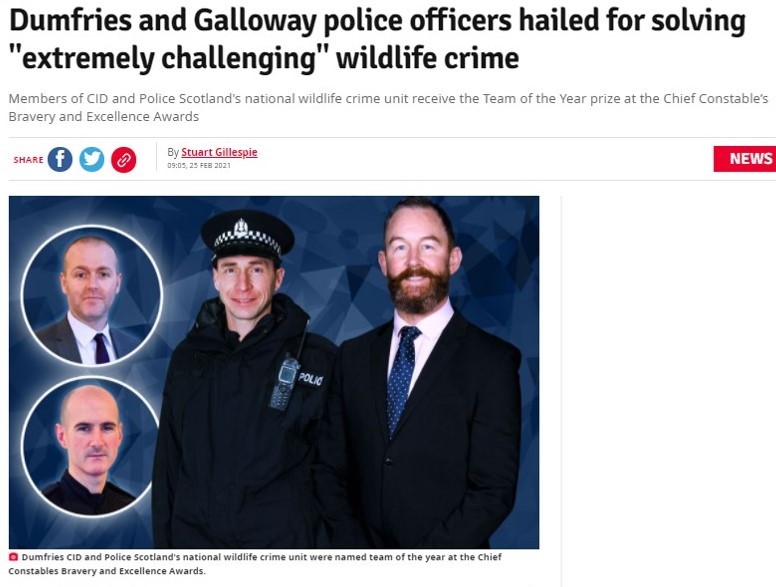
The claim had been made in relation to the police officers winning Team of the Year at the Chief Constable’s Bravery and Excellence Awards on 19th February 2021 and the accompanying statement said, ‘This investigation led to an individual being convicted of wildlife crime offences‘ (see here).

I contacted Police Scotland to ask them for clarification about this case and they got in touch this morning to explain that the case is still live (i.e. there hasn’t been a conviction), the next court hearing is this month, and the inaccurate police statement was a result of a misunderstanding in the police comms team.

As this case is still live comments won’t be accepted until legal proceedings have finished, thanks.

Peregrine found poisoned on grouse moor in Peak District National Park

Press release from RSPB (2nd March 2021)

Peregrine poisoned in Peak District National Park

A peregrine falcon, which was found dead on a driven grouse moor in the Upper Derwent Valley, has just been confirmed as illegally poisoned following official toxicology analysis – adding to the growing list of protected birds of prey illegally killed during 2020’s spring lockdown – many of which were in the Peak District National Park.

The adult male bird was found dead, on top of the remains of a wood pigeon, on 31 May 2020 by a fell runner on National Trust land. This was close to a known nest site which, like several other sites in the Dark Peak, has a long history of poor breeding success.

[The poisoned peregrine, photo by the Peak District Raptor Monitoring Group]

It was reported to Derbyshire Police, who recovered the carcass assisted by raptor workers, and the body was submitted for government toxicology testing. The results have just been published and confirm that the peregrine was illegally poisoned with the toxic insecticide bendiocarb: a substance we know is illegally used to kill birds of prey.

Mark Thomas, Head of RSPB Investigations, said: “This latest incident adds to an appallingly long and growing list of crimes against birds of prey which took place during the first national Covid lockdown in 2020. At the time, the RSPB was working flat-out with police to investigate a high volume of incidents, the details of which are now beginning to emerge.

It is clear that certain criminals took lockdown as an excuse to ramp up their efforts to kill birds of prey, wilfully ignoring lockdown and the laws which protect these birds.

Time and again, we are seeing birds of prey shot, trapped or poisoned on grouse moors. The link between illegal killing of peregrines and other raptor species and driven grouse shooting has never been clearer, and we urge the UK government to implement a licensing system for grouse moors in England, as is proposed in Scotland. Law-abiding estates would have nothing to fear from this, and it would act as a greater deterrent, keeping birds safe, in the sky, for all to enjoy.”

Peer reviewed studies, crime data and court convictions show that raptor persecution is more concentrated on and near driven grouse moors, where birds of prey are seen by some as a threat to commercially managed red grouse stocks. In fact, a recent paper statistically linked crimes against birds of prey in the Peak District National Park with land managed for Driven Grouse Shooting.

It is believed that the wood pigeon was a poison bait, laid deliberately with the intention of killing any bird of prey or raven which fed on it.

Steve Downing, Chair of the Northern England Raptor Forum, said: “Incidents like this are sadly not uncommon in the Dark Peak, where peregrine populations have crashed in recent years. What’s more, a poison bait like this, on open-access land, could easily be picked up by someone’s dog with disastrous consequences.”

Jon Stewart, National Trust General Manager, said: “We protect and care for places so nature and people can thrive. In a year when three pairs of peregrine successfully raised young on Trust land in the Dark Peak, half of all successful pairs on the Peak District moors, we were very upset to hear of this incident.

We continue to work closely with the RSPB, police and statutory agencies to take action to combat wildlife crime. We urge anyone with relevant information about this incident to contact the police and help end the illegal persecution of birds of prey.’’

All birds of prey are protected by the Wildlife and Countryside Act 1981. To intentionally kill or injure one is a criminal offence and could result in an unlimited fine or up to six months in jail.

If you have any information relating to this incident, call Derbyshire Police on 101.

If you find a wild bird of prey which you suspect has been illegally killed, contact RSPB Investigations on crime@rspb.org.uk or fill in the online form: www.rspb.org.uk/birds-and-wildlife/advice/wild-bird-crime-report-form/

If you know of someone killing birds of prey, please don’t stay silent: call the confidential Raptor Crime Hotline on 0300 999 0101.

ENDS

This latest crime should come as no surprise whatsoever to anyone even vaguely familiar with the Dark Peak area of the Peak District National Park. Dominated by driven grouse moors, this Park is notorious for raptor persecution and has been for decades, particularly impacting on goshawk and peregrine populations (e.g. see here), despite all the years of so-called ‘partnership’ efforts that have led to…..well, nothing but more of the same.

What is disappointing is that the poisoned bait and the dead peregrine were found on National Trust land – the NT has worked hard in the Park to restore raptor populations, even booting off a prominent sporting tenant three years ago (see here).

The press release is interesting, though. Once again, Derbyshire Police are conspicuously absent, the RSPB has had to lead on the publicity, and once again there has been a ridiculously long time lag between the commission of the crime and the publicising of it. There was a similar case in Derbyshire not so very long ago (see here) when this police force said that the circumstances of a poisoned buzzard being found dead next to a poisoned bait were ‘inconclusive’!

The 10-month time delay in publicising this latest poisoning case is very poor. The peregrine was found poisoned in May 2020 and the public isn’t made aware until March 2021? Now, we all know that Covid has had an impact on laboratory work and that’s unavoidable but I don’t believe for one second that it has taken the WIIS lab this long to produce the results. I think there’s more to it than that and I just wonder whether Derbyshire Police have played a role in the delay.

Something isn’t right and it needs sorting out, pronto.

UPDATE 11.30hrs: Mark Thomas, Head of RSPB Investigations has just tweeted:

‘The falcon was found on top of a plucked Wood Pigeon on National Trust land. Despite the investigation being closed, Derbyshire Police declined the opportunity to put this release out, we feel it is critical that the public are made aware due to the risk to them and their dogs‘.

I’ve asked Derbyshire Police’s Rural Crime Team, and the Chief Constable, why they refused to publicise this crime. Not only are there obvious public safety concerns but wildlife crime is supposed to be national wildlife crime priority.

Responses awaited.