52 hen harriers confirmed illegally killed or ‘missing’ since 2018

For anyone who still wants to pretend that the grouse shooting industry isn’t responsible for the systematic extermination of hen harriers on grouse moors across the UK, here’s the latest catalogue of crime that suggests otherwise.

[This male hen harrier died in 2019 after his leg was almost severed in an illegally set trap that had been placed next to his nest on a Scottish grouse moor (see here). Photo by Ruth Tingay]

In January 2021, this list totalled 51 hen harriers, all either confirmed to have been illegally killed or to have ‘disappeared’, most of them on or next to driven grouse moors.

“They disappear in the same way political dissidents in authoritarian dictatorships have disappeared” (Stephen Barlow, 22 January 2021).

Today the list has been updated to include the latest victim, Tarras, hatched in 2020, gone by 24th February 2021 (see here).

This disgraceful catalogue will continue to grow – I know of at least one more on-going police investigation which has yet to be publicised and I suspect there’s one other, although I’m still waiting for clarification on that one.

I’ve been compiling this list only since 2018 because that is the year that the grouse shooting industry ‘leaders’ would have us believe that the criminal persecution of hen harriers had stopped and that these birds were being welcomed back on to the UK’s grouse moors (see here).

This assertion was made shortly before the publication of a devastating new scientific paper that demonstrated that 72% of satellite-tagged hen harriers were confirmed or considered likely to have been illegally killed, and this was ten times more likely to occur over areas of land managed for grouse shooting relative to other land uses (see here).

2018 was also the year that Natural England issued itself with a licence to begin a hen harrier brood meddling trial on grouse moors in northern England. For new blog readers, hen harrier brood meddling is a conservation sham sanctioned by DEFRA as part of its ludicrous ‘Hen Harrier Action Plan‘ and carried out by Natural England (NE), in cahoots with the very industry responsible for the species’ catastrophic decline in England. For more background see here.

Brood meddling has been described as a sort of ‘gentleman’s agreement’ by commentator Stephen Welch:

“I don’t get it, I thought the idea of that scheme was some kind of trade off – a gentleman’s agreement that the birds would be left in peace if they were moved from grouse moors at a certain density. It seems that one party is not keeping their side of the bargain“.

With 52 hen harriers gone since 2018, I think it’s fair to say that the grouse shooting industry is simply taking the piss. Meanwhile, Natural England pretends that ‘partnership working’ is the way to go.

‘Partnership working’ appears to include authorising the removal of hen harrier chicks from a grouse moor already under investigation by the police for suspected raptor persecution (here) and accepting a £10K bung from representatives of the grouse shooting industry that prevents Natural England from criticising them (see here).

[Cartoon by Gill Lewis]
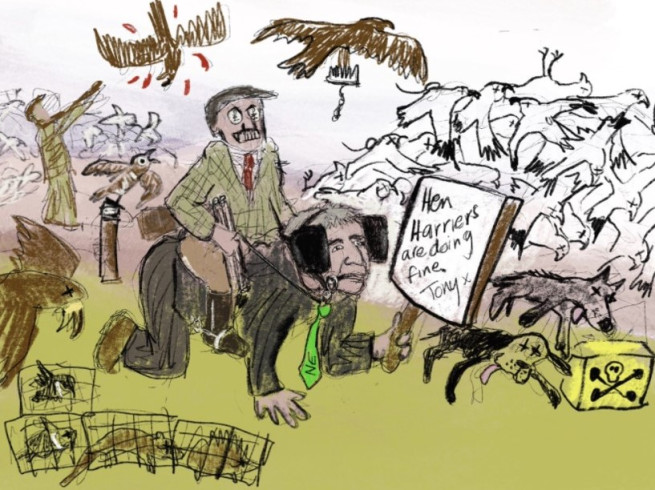
So here’s the latest gruesome list:

February 2018: Hen harrier Saorsa ‘disappeared’ in the Angus Glens in Scotland (here). The Scottish Gamekeepers Association later published wholly inaccurate information claiming the bird had been re-sighted. The RSPB dismissed this as “completely false” (here).

5 February 2018: Hen harrier Marc ‘disappeared’ on a grouse moor in Durham (here)

9 February 2018: Hen harrier Aalin ‘disappeared’ on a grouse moor in Wales (here)

March 2018: Hen harrier Blue ‘disappeared’ in the Lake District National Park (here)

March 2018: Hen harrier Finn ‘disappeared’ near Moffat in Scotland (here)

18 April 2018: Hen harrier Lia ‘disappeared’ in Wales and her corpse was retrieved in a field in May 2018. Cause of death was unconfirmed but police treating death as suspicious (here)

8 August 2018: Hen harrier Hilma ‘disappeared’ on a grouse moor in Northumberland (here).

16 August 2018: Hen harrier Athena ‘disappeared’ on a grouse moor in Scotland (here)

26 August 2018: Hen Harrier Octavia ‘disappeared’ on a grouse moor in the Peak District National Park (here)

29 August 2018: Hen harrier Margot ‘disappeared’ on a grouse moor in Scotland (here)

29 August 2018: Hen Harrier Heulwen ‘disappeared’ on a grouse moor in Wales (here)

3 September 2018: Hen harrier Stelmaria ‘disappeared’ on a grouse moor in Scotland (here)

24 September 2018: Hen harrier Heather ‘disappeared’ on a grouse moor in Scotland (here)

2 October 2018: Hen harrier Mabel ‘disappeared’ on a grouse moor on the edge of the Yorkshire Dales National Park (here)

3 October 2018: Hen Harrier Thor ‘disappeared’ next to a grouse moor in Bowland, Lanacashire (here)

23 October 2018: Hen harrier Tom ‘disappeared’ in South Wales (here)

26 October 2018: Hen harrier Arthur ‘disappeared’ on a grouse moor in the North York Moors National Park (here)

1 November 2018: Hen harrier Barney ‘disappeared’ on Bodmin Moor (here)

10 November 2018: Hen harrier Rannoch ‘disappeared’ on a grouse moor in Scotland (here). Her corpse was found nearby in May 2019 – she’d been killed in an illegally-set spring trap (here).

14 November 2018: Hen harrier River ‘disappeared’ on a grouse moor in the Nidderdale AONB (here). Her corpse was found nearby in April 2019 – she’d been illegally shot (here).

16 January 2019: Hen harrier Vulcan ‘disappeared’ in Wiltshire close to Natural England’s proposed reintroduction site (here)

7 February 2019: Hen harrier Skylar ‘disappeared’ next to a grouse moor in South Lanarkshire (here)

22 April 2019: Hen harrier Marci ‘disappeared’ on a grouse moor in the Cairngorms National Park (here)

26 April 2019: Hen harrier Rain ‘disappeared’ on a grouse moor in Nairnshire (here)

11 May 2019: An untagged male hen harrier was caught in an illegally-set trap next to his nest on a grouse moor in South Lanarkshire. He didn’t survive (here)

7 June 2019: An untagged hen harrier was found dead on a grouse moor in Scotland. A post mortem stated the bird had died as a result of ‘penetrating trauma’ injuries and that this bird had previously been shot (here)

5 September 2019: Wildland Hen Harrier 1 ‘disappeared’ on a grouse moor nr Dalnaspidal on the edge of the Cairngorms National Park (here)

11 September 2019: Hen harrier Romario ‘disappeared’ on a grouse moor in the Cairngorms National Park (here)

14 September 2019: Hen harrier (Brood meddled in 2019, #183704) ‘disappeared’ in North Pennines (here)

23 September 2019: Hen harrier (Brood meddled in 2019, #55149) ‘disappeared’ in North Pennines (here)

24 September 2019: Wildland Hen Harrier 2 ‘disappeared’ on a grouse moor at Invercauld in the Cairngorms National Park (here)

24 September 2019: Hen harrier Bronwyn ‘disappeared’ near a grouse moor in North Wales (here)

10 October 2019: Hen harrier Ada ‘disappeared’ on a grouse moor in the North Pennines AONB (here)

12 October 2019: Hen harrier Thistle ‘disappeared’ on a grouse moor in Sutherland (here)

18 October 2019: Member of the public reports the witnessed shooting of an untagged male hen harrier on White Syke Hill in North Yorkshire (here)

November 2019: Hen harrier Mary found illegally poisoned on a pheasant shoot in Ireland (here)

January 2020: Members of the public report the witnessed shooting of a male hen harrier on Threshfield Moor in the Yorkshire Dales National Park (here)

23 March 2020: Hen harrier Rosie ‘disappeared’ at an undisclosed roost site in Northumberland (here)

1 April 2020: Hen harrier (Brood meddled in 2019, #183703) ‘disappeared’ in unnamed location, tag intermittent (here)

5 April 2020: Hen harrier Hoolie ‘disappeared’ on a grouse moor in the Cairngorms National Park (here)

8 April 2020: Hen harrier Marlin ‘disappeared’ on a grouse moor in the Cairngorms National Park (here)

19 May 2020: Hen harrier Fingal ‘disappeared’ on a grouse moor in the Lowther Hills, Scotland (here)

21 May 2020: Hen harrier (Brood meddled in 2019, #183701) ‘disappeared’ on a grouse moor in Cumbria shortly after returning from wintering in France (here)

27 May 2020: Hen harrier Silver ‘disappeared’ on a grouse moor on Leadhills Estate, Scotland (here)

9 July 2020: Unnamed female hen harrier (#201118) ‘disappeared’ from an undisclosed site in Northumberland (here).

25 July 2020: Hen harrier Harriet ‘disappeared’ on a grouse moor in the Yorkshire Dales National Park (here)

14 August 2020: Hen harrier Solo ‘disappeared’ in confidential nest area in Lancashire (here)

7 September 2020: Hen harrier Dryad ‘disappeared’ on a grouse moor in the Yorkshire Dales National Park (here)

16 September 2020: Hen harrier Fortune ‘disappeared’ from an undisclosed roost site in Northumberland (here)

19 September 2020: Hen harrier Harold ‘disappeared’ on a grouse moor in the Yorkshire Dales National Park (here)

20 September 2020: Hen harrier (Brood meddled in 2020, #55152) ‘disappeared’ next to a grouse moor in North Yorkshire (here)

24 February 2021: Hen harrier Tarras ‘disappeared’ next to a grouse moor in Northumberland (here)

To be continued……..
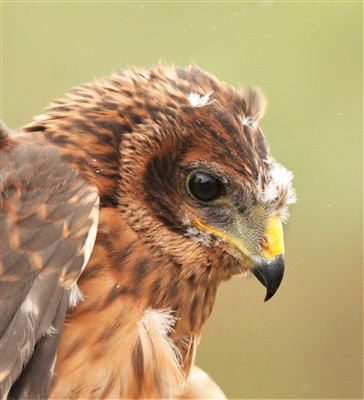
Hen harrier Tarras ‘disappears’ next to grouse moor in Northumberland

Further to yesterday’s blog about a pathetically vague ‘appeal’ for information from Northumberland Police (here), the RSPB has now confirmed that yet another satellite-tagged hen harrier has disappeared in suspicious circumstances, next to a grouse moor.

According to the RSPB blog (here), this bird was called ‘Tarras’ and was tagged on Langholm Moor in 2020 (not be confused with a previously tagged hen harrier also called Tarras, also tagged on Langholm Moor but in 2016, and who vanished in the Peak District National Park the same year here). So much for hen harriers not being able to breed on Langholm once the gamekeepers had left, eh? Another rural myth busted.

Tarras had explored the North Pennines AONB before settling in south Northumberland in the late autumn.

[Hen harrier Tarras. Photo by RSPB]

From the RSPB blog:

For the 90 days prior to disappearing, we could see that Tarras had settled into a routine of hunting on grouse moor and roosting either on it or just off of it. However, after getting regular transmissions each day, since 24 February 2021 we have had nothing at all. The tag’s last fix showed that Tarras was roosting with other birds just off a grouse moor near Haltwhistle, just outside the North Pennines AONB boundary.

RSPB Investigations Officers searched the area but found no sign of tag or body. The matter was passed on to Northumbria Police, who have recently issued an appeal for information.

So, here we are, careering towards yet another year of insane hen harrier brood meddling where we’ll be told by the grouse-shooting industry that they love hen harriers to bits (there’ll be no mention of the harriers being shot to bits once the industry has pushed its propaganda around the newsrooms) and the country’s statutory conservation agency will clap its hands, pat the grouse moor owners on the back for their ‘conservation’ efforts and try to convince the rest of us, with prominent press coverage, that this is the way forward for the UK’s declining population of hen harriers.

Will the same media prominence be given to the ongoing never-bloody-ending illegal killing? I’ve discussed this before (here) but judging by Northumberland Police’s crap PR yesterday about this latest missing harrier, it looks like we’re set for another year of the same.

Well done to the RSPB for getting detailed information out.

New report from Revive Coalition – how grouse moor reform could lead to tens of thousands of jobs

The Revive Coalition for grouse moor reform has published its latest report, this time produced by coalition member Common Weal – a ‘think and do tank’ campaigning for social and economic equality in Scotland.

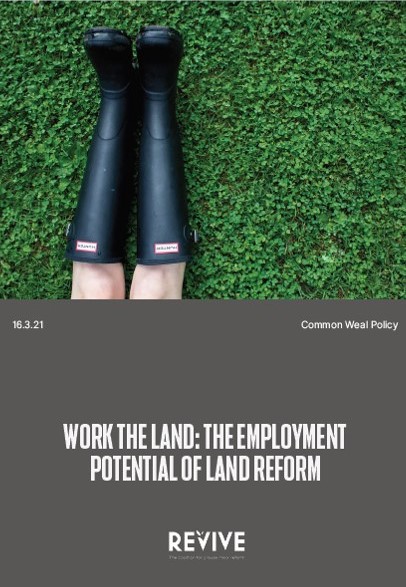
The new report, ‘Work the Land: The employment potential of land reform’ examines how alternative uses of Scotland’s rural land compares in job-creation potential with its current uses. It concludes that tens of thousands of jobs could be created if land was used for the public good and if communities and individuals looking to start land-based businesses could get access to land.

So when we’re told that without grouse moors, the fragile rural economy would collapse…….

From Common Weal:

This new report looks at ten possible new or expanded rural industries – land management, wildlife management, commercial forestry, wood processing, deer stalking/venison production, horticulture, crofting, energy engineering, housebuilding and ecotourism. For each it estimates the maximum amount of employment which could be created and typical incomes for those jobs and it compares this to current use. All but crofting (which is best considered a supplementary income) create higher rural incomes than current use as shooting estates and hill farming. And while it is not possible to sum up the jobs potential to get a single total (as some represent alternative possible uses of the same land), it comes to tens of thousands of potential jobs.

And that’s only the direct jobs. It doesn’t include the large number of indirect and secondary jobs which would also be created in supply chains, services, retail and leisure, public services and as a result of growing communities. Nor does it include the potential for existing business expansion, home-working relocation and job start-up entirely unrelated to these ten job types which would be made possible as a result of significantly expanded housing availability. And of course it doesn’t include the sheer difference growing, thriving rural communities would make to the people who live there.

This is the first of three major reports on land reform in Scotland by Common Weal. The next report (on exactly how Scotland can achieve real land reform quickly) will be launched tomorrow.

Download the new report here:

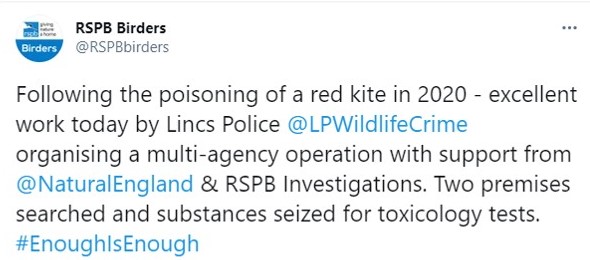
Suspected poisons seized during multi-agency raid following illegal poisoning of red kite

Breaking news from the RSPB’s Investigations Team…..

Looking forward to hearing more detail about this one.

UPDATE 20th April 2021: Lincolnshire Police provide update on investigation into poisoned red kite (here)

UPDATE 15th April 2023: Lincolnshire Police charge man after investigation into poisoned red kite (here)

Vague appeal for info from Northumberland Police as another hen harrier vanishes

Northumberland Police have issued a vague ‘appeal’ for information following a report from the RSPB that another satellite-tagged hen harrier has ‘disappeared’, last heard from on 24th February 2021 ‘south of Haltwhistle’.

This is what the police put out on Twitter on Friday:

I couldn’t find any press release on the Northumberland Police website, nor on the North Pennines AONB website, which is probably the area in which it has vanished.

Hopefully the RSPB will be publishing a detailed statement shortly……

UPDATE 16 March 2021: Hen harrier Tarras ‘disappears’ next to grouse moor in Northumberland (here)

Chris Packham did not forge death threat, say Police

Further to yesterday’s blog where I revealed that the Scottish Gamekeepers Association (SGA) had told Police they had ‘evidence’ to believe Chris Packham had probably faked his own death threat (see here), today the story has hit a national newspaper but not in the way in which the SGA had hoped.

They’d probably hoped to embarrass Chris, undermine his credibility, cast him as a villain and turn public support against him. What they’ve done is the complete opposite and shown themselves as the blithering, nasty idiots they are.

Here’s what appeared in the Sunday Times today:

A complaint made by the Scottish Gamekeepers Association against the TV naturalist, who wants grouse shooting banned, has been refuted.

His support for a ban on grouse shooting has ruffled feathers. Now tension between Chris Packham and Scottish gamekeepers has boiled over after police were asked to investigate an extraordinary suggestion that he may have written himself a death threat to smear the shooting lobby.

The Scottish Gamekeepers Association (SGA) lodged a complaint with Hampshire Constabulary last month that questioned the authenticity of a letter sent in 2019 to the television naturalist, who lives in the New Forest. The complaint included reports from two graphologists commissioned by the rural body, which has 5,300 members, to compare the letter with examples of Packham’s handwriting found online.

Hampshire Police said on Friday evening that the complaint had been reviewed and no action would be taken. Packham, 59, one of Britain’s best-loved naturalists with more than 450,000 followers on Twitter, has come out with guns blazing.

“I’m pretty obviously not the sort of bloke who writes death threats to himself”, he said this weekend. “I’ve got plenty of better things to do. Like campaigning about the relentless illegal persecution of birds of prey on Scottish grouse moors. And this action by the SGA is transparent – they are playing the man because they can’t win the game”.

Gamekeepers have accused campaigners such as Packham of escalating tensions between the pro-and anti-shooting lobbies. Many feel their profession is unfairly maligned. A recent Scottish government survey suggested that 64% of Scottish gamekeepers experienced threatening behaviour or abuse from the public at least once every year.

Packham, however, said the killing of golden eagles and hen harriers on grouse moors was a “national embarrassment for Scotland”.

He added: “Due to their criminal fraternity, [the SGA] are losing – licensing of shooting estates is coming, mountain hare culling has been banned and muirburn is constantly under the spotlight, due to its negative impacts on our climate. Frankly, they’re desperate to the point of embarrassing themselves”.

Packham went public about the death threat in April 2019. He reported it to the police and later released it on social media. Written in block capitals with a ruler to disguise the handwriting, it stated that Packham’s address was known and warned him to be “very, very careful…we want you dead”, with references to a car crash and poison.

It is understood that one graphologist commissioned by the SGA believed there were strong similarities between Packham’s handwriting and the writing in the letter. Another, from London, found “moderate” similarities. When this newspaper became aware of doubts being raised over the letter’s authenticity, analysis was sought from a forensic document examiner who concluded that Packham was not the author.

Packham said the letter was forensically examined by police. His fingerprints were not on the letter, he said, and no matches for several other prints were found against a national database.

Last week, the SGA insisted that the reports it commissioned “were worthy of police investigation” and would be “retained for our members”.

“We believe we undertook our duty to our members who felt that handwriting similarities they they alleged to have seen, ought to be investigated further. We did so, by taking external expert advice. In similar circumstances, we would take exactly the same course of action again”.

He added: “We understand that Chris Packham is a television celebrity…contracted by the BBC to provide content on wildlife programmes. We understand and respect that he would want to provide his view”.

In April 2019, Packham found two dead crows hanging outside his thatched cottage, an act he described as “ghastly”, after a decision by Natural England to revoke a general licence for birds to be shot after a campaign by Packham’s pressure group, Wild Justice. It upset farmers who were prevented from killing pest birds such as crows that can kill lambs.

ENDS

To be honest, I’m surprised that it was the Sunday Times who took this piece on. It’s more tabloid fodder than broadsheet. However, the Times has produced a fair article that includes context (i.e. Chris’s campaigning work to ban driven grouse shooting) and includes the full quote from Chris, not an edited version cut to support a particular narrative.

I did laugh, though, at the inclusion of the line that ‘64% of Scottish gamekeepers experienced threatening behaviour or abuse from the public at least once every year’, as if this justifies the SGA’s appalling behaviour. In any case, that is a mis-reported interpretation of the Scottish Government’s report, which actually showed that between 10-13% of Scottish gamekeepers had reported abuse from the public at least once every year (see here). And not to diminish that stat in any way, the Times should have provided balance by reporting the abuse that some of us, including Chris, receive on a daily basis, not just once a year but every single day, week in week out, from members, supporters, a former Director and even current Committee members of the SGA (see here).

All in all though, this latest malicious attack on Chris Packham by the SGA has backfired spectacularly, with Twitter in meltdown last night with support for Chris, including from a number of MSPs. If I was an SGA member I’d be pretty upset with the idiocy of the so-called leaders, for once again bringing the organisation in to disrepute.

The Scottish Gamekeepers Association’s latest malicious attack on Chris Packham

Just when you thought the Scottish Gamekeepers Association (SGA) couldn’t get any more desperate, their latest stunt will blow your mind.

This is such batshit bonkers desperation that I don’t really know where to start.

How about with a definition? From the Cambridge English Dictionary:

Desperation – the feeling of being in such a bad situation you will take any risk to change it

In this situation, the SGA blames Chris Packham and a number of other campaigners for asking for the law to be upheld (i.e. for gamekeepers and others to stop killing birds of prey) and for game-shooting to be regulated and the associated land management to be sustainable. These challenges to the industry are finally leading to legislative change, e.g the introduction of a licensing scheme for grouse moors in Scotland due to ongoing raptor persecution (here) and the banning of the mass killing of mountain hares on grouse moors because self-regulation has failed (here).

Chris Packham is the obvious target of hate because he’s so high profile and this has led to him being the victim of a long-running dirty tricks campaign by the shooting industry (see here), as well as on the receiving end of some disgraceful online personal abuse, some penned by senior SGA Committee members, see here and here. He’s also had dead animals hung from his gate outside his house (here and here) and in 2019 he received a chilling death threat (here).

It is this death threat that the SGA has decided to focus on, two years later.

For some reason best known to themselves, although I would guess it’s yet another attempt to smear and undermine Chris’s credibility because his campaigning skills are having such an impact, I understand that the Scottish Gamekeepers Association has employed the services of a ‘handwriting expert’ who has apparently concluded that Chris probably wrote the death letter and posted it to himself for a bit of publicity.

Armed with this ‘intelligence’, I’m also told that the SGA has made a formal complaint to Hampshire Police, questioning the ‘authenticity’ of the death threat letter.

I’m also told they’ve taken this outrageous claim to one of the Scottish Sunday papers who apparently will be publishing this nonsense tomorrow!

Now, I haven’t been told the identity of the ‘handwriting expert’ – it may have been one of the SGA’s ‘office girls‘, or perhaps the SGA is expanding its services from killing stuff to a bit of mystical witchcraft. I did notice this DIY consultation booth in the corner of Alex Hogg’s bothy the other day, which perhaps gives us a clue:

Whoever did the analysis, whether it was a DIY psychic from the SGA office, Mystic Mags from Montrose after a consultation with her crystal ball, or crystal meths, same result, or Mystic Smeg the Fortune-telling fridge, the SGA has wasted its time and money. I’m told Hampshire Police have dismissed the complaint and have reiterated their position to the newspaper that Chris has been the victim of persistent crime, that they will continue to offer him protection, and that they will investigate any further attacks on him with a view to prosecute wherever possible.

This latest display of desperation from the SGA reminds me of their failed attempt to undermine the scientific robustness of the Golden Eagle Satellite Tag Review, two years after it was published, by paying a high-ranking QC to ‘critique’ it even though he had no scientific expertise or knowledge of the subject and judging by his comments, hadn’t even read it properly anyway! That little SGA stunt was also roundly dismissed, that time by the Scottish Government (see here).

It’s the latest in a long, long line of distraction techniques…..from accusing raptor conservationists of poisoning eagles and then of ‘planting’ the corpse on a grouse moor to ‘set up’ an innocent estate, to falsely accusing conservationists of withholding evidence from the police, to now suggesting that Chris Packham might be faking his own death threats. You couldn’t make it up, but the SGA has.

Meanwhile, as the SGA stands with its pants around its ankles once again, the campaign to bring about fundamental change to the unregulated, unsustainable, and frequently criminal practices associated with gamebird management continues apace, with Chris Packham leading from the front.

UPDATE 14th March 2021: Chris Packham did not forge death threat, says Police (here)

DEFRA’s gamebird consultation – here’s how to have your say

DEFRA is currently running a consultation about the harmful impacts of releasing gamebirds (pheasants and partridges) for recreational shooting on and near to protected sites of nature conservation value.

DEFRA is running this consultation as part of a review it committed to take after Wild Justice took it to court last year (a legal challenge to which many of you contributed and supported, thank you).

The exact number of gamebirds that are released in the UK for shooting every year is not known because, incredibly and unlike virtually every other European country, the game bird shooting industry in the UK is under-regulated. Nobody even knows how many game bird shoots there are because the people involved do not have to register anywhere, nor report on the number of birds released / shot each year. It’s been a great old wheeze for decades.

The most recent figures, still considered to be a conservative estimate, were for the year 2018 and included 49.5million pheasants and 11.7 million red-legged partridges, making a total of 61.2 million non-native gamebirds released into our countryside. These figures emerged as a result of Wild Justice’s recent successful legal challenge on gamebird releases (see Mark Avery’s blog here for more details).

DEFRA’s consultation closes on Monday (15th March 2021) so if you want to have your say, you only have this weekend to do it.

For those who would like advice and guidance about how to respond to the consultation questions, please visit the Wild Justice blog here, where you’ll find an easy step-by-step guide.

It’s important that as many people as possible respond to this consultation so that DEFRA understands this is an issue of concern. If the majority of responses that DEFRA receives are responses from the game-shooting industry, demanding the status quo and zero changes, then that’s what DEFRA will do.

Responding to the consultation is not as daunting as you might think. Hundreds of supporters have already done it and have told Wild Justice how straightforward it was (e.g. read some of their comments here, here and here).

Here’s the link again on how to respond if you’d like to participate – click here

Thank you.

‘Zero tolerance’ for raptor persecution? They’re fooling no-one.

In January 2020, five pro-shooting organisations issued a statement that professed ‘zero tolerance’ for raptor persecution. Coming 66 years after it became illegal to kill birds of prey in the UK, this was progress indeed.

I said at the time it was a sham (here). I haven’t seen anything since that has convinced me of their collective sincerity.

Take the most recent, high-profile raptor persecution crime reported earlier this week – a gamekeeper on a grouse moor in the Yorkshire Dales National Park filmed using a tethered live eagle owl decoy to draw in two buzzards which he shot on sight (see here). North Yorkshire Police Inspector Matt Hagen said of these offences:

“We conducted a search warrant and interviewed an individual in relation to this incident. Ultimately, however, the identity of the suspect on the film could not be proved, and it was not possible to bring about a prosecution. However this does not mean the event didn’t happen. We know that a gamekeeper on a grouse moor has been shooting buzzards, using a live eagle owl decoy to bring those buzzards into a position where they could be shot”.

Details of this offence emerged on the morning of Tuesday 9th March 2021.

There was silence from the major shooting organisations. And for most of them, at the time of writing this at six pm on Friday evening, that deafening silence has continued.

The three main ones that should have been at the forefront of vocal condemnations and a commitment to boot out the estate and the gamekeeper from any memberships they may hold within the industry, have said absolutely nothing on their respective websites:

The Moorland Association (the grouse moor owners’ lobby group in England) – silence

The National Gamekeepers Organisation – silence

British Association for Shooting and Conservation – silence

The Country Landowners Association (CLA) was also one of the original five signatories to ‘zero tolerance’ but they’ve said nothing either.

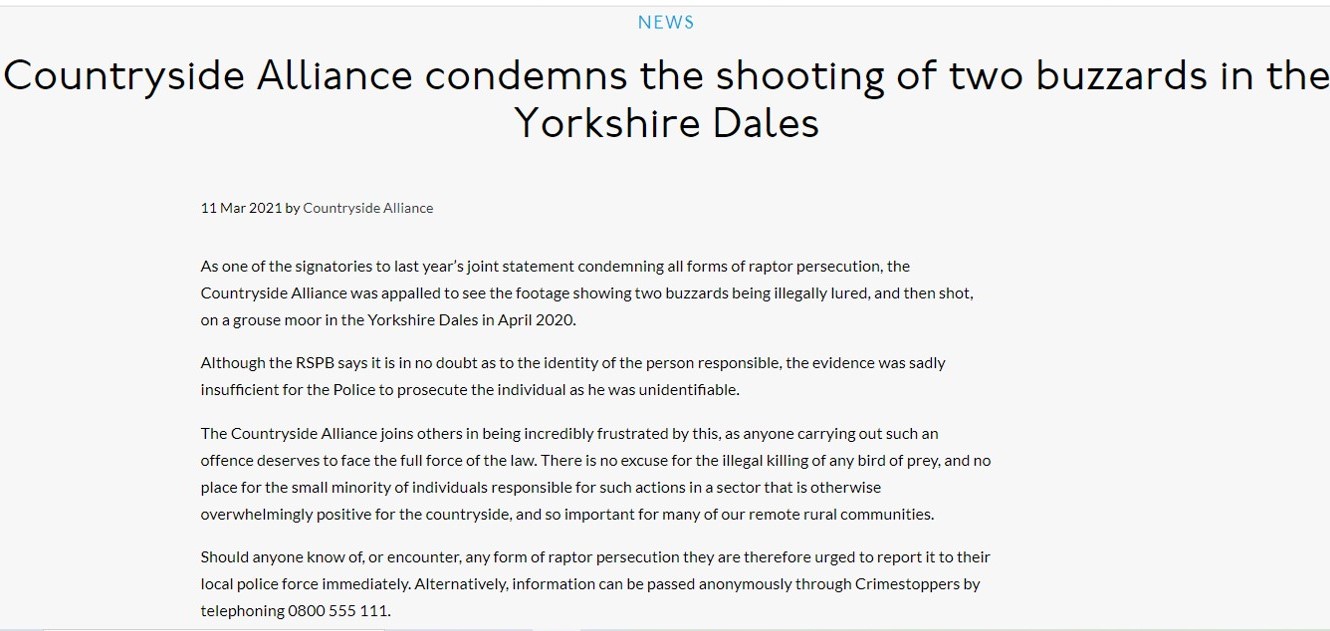
The only one of the five groups who in January 2020 professed a ‘zero tolerance’ policy for raptor persecution and said anything about this latest disgraceful display of criminality was the Countryside Alliance. They published this statement two days after the story hit the headlines:

Whether you believe the sincerity of this statement or not is another matter but at least the CA published something.

Of course, the three main groups that have remained silent are all members of the Raptor Persecution Priority Delivery Group (RPPDG), whose objectives include prevention of, and awareness-raising of, illegal raptor persecution. Anyone seen them doing any of that? No. Once again it looks like they’re just using their membership of the RPPDG as a convenient cover to pretend they care. When are they going to be expelled?

Other members of the RPPDG, notably those who don’t have a vested interest in closing ranks and saying nothing, have issued statements on the crimes.

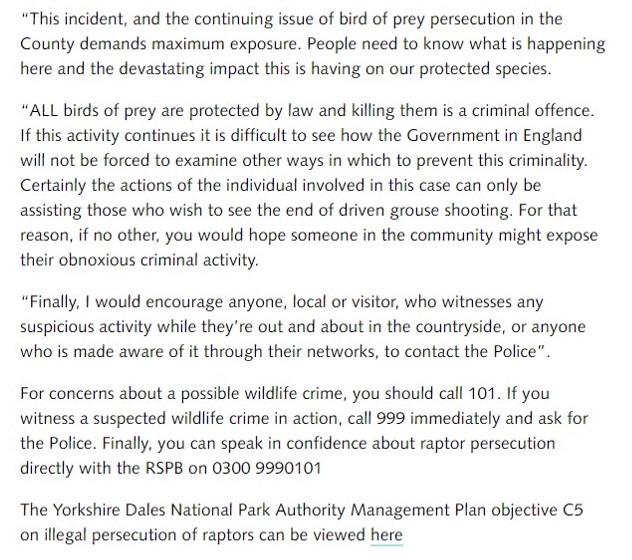
The Northern England Raptor Forum has published a characteristically damning statement (here) and the Yorkshire Dales National Park Authority has done pretty well with this:

So, the illegal killing continues, the majority of the shooting industry organisations say nothing, and public anger grows.

Thanks, Moorland Assoc, National Gamekeepers and BASC – this is only heading in one direction and you’re all helping it reach the end game so much more quickly than we could get it there on our own. Cheers.

Political hustings: who’s promising what to the Scottish Gamekeeepers Association

The Scottish Gamekeepers Association (SGA) held its AGM last Friday (5th March 2021) – here are two earlier blogs about that event (here and here).

The vast majority of the 2.5 hour event was taken up by a political hustings. Candidates from five different parties were invited to introduce themselves and tell the SGA members ‘what they would do for gamekeepers’ if elected in May, and then there was a tortuous period of questions for the candidates that had been submitted by SGA members.

The participants of the hustings were (from top left): Peter Fraser (Vice Chair, SGA), Carol (one of the ‘girls‘ from the SGA office who’s actually a woman, who was in charge of time-keeping and recording – unseen in this screengrab), Jamie Blackett (All For Unity [George Galloway’s new party, say no more] and author of spectacularly crap articles in Shooting Times), Alex Hogg (Chair, SGA), Edward Mountain MSP (Scottish Conservatives and the un-fiercest critic of raptor persecution), Catriona Bhatia (Scottish Lib Dems), Ian Davidson (Scottish Labour) and Fergus Ewing (Cab Sec for Rural Economy & Tourism, SNP).

You’ll notice the Scottish Greens weren’t represented and at one point Catriona Bhatia asked why they weren’t there. Alex Hogg admitted they hadn’t been invited because before Xmas the SGA had asked for a meeting with Andy Wightman and apparently he hadn’t responded. Er, ok. He does realise Andy left the Greens in December, doesn’t he? Still, the Greens’ absence didn’t stop some of the panellists slagging them off, even though they weren’t there to defend themselves.

I’m not going to post about the entire tedious session because I fear I’d lose the will to live but as an overview of what each of these candidates had to say about what they’d deliver for gamekeepers, I think it’s useful to blog about their introductory speeches.

Jamie Blackett (All for Unity): I’m Jamie Blackett, I’m the leader of All for Unity, we’re a new party founded by my good friend George Galloway, with the intention of unifying the pro-UK anti-nationalist vote to feed[?] the SNP green government and install a government of national unity in May.

Some of you will know me, I write a column each month in the Shooting Times, I’ve written a book, Red Rag to a Bull, about the countryside, I’m a passionate campaigner for the countryside and I hope that if we achieve what we want to achieve in May we will all have a much stronger voice for the countryside and get the government off all our backs so we are no longer looking over our shoulders as we look after the countryside and conserve its wildlife. Thank you.

Alex Hogg: What would you do for gamekeepers if you got elected, Jamie?

Jamie Blackett: Well, we’re running a full slate of candidates across all regions. We’re still looking for some candidates and we hope very much that there may be some people in the SGA who will join us. As I say, I have a strong stake in the countryside, I actually run my own shoot here. George Galloway, as you all know, is not a countryman but he has moved to the countryside and believe it or not I’m teaching him to shoot, er, or I will do when Covid conditions allow.

And we feel very strongly that the justice system needs reforming so that gamekeepers are no longer presumed guilty before they’ve even started in court, we must sort out the burden of proof, corroboration of evidence and all these things so that we in the countryside no longer have this threat hanging over us.

We also want to, er, completely obliterate the Greens in George Galloway’s terminology, the SNP gardening section, who we believe are grinos, greens in name only, they know absolutely nothing about the environment and care even less. We will act rather as the Greens do on the list. The Greens mop up all the spare separatist votes. We will do the same with on the unionists side of the argument and return more pro-UK MSPs to the Parliament. And, er, as I say, we want to get rid of the Green party, diminish the voice of the RSPB and others, and hear more of the voices of people like your members who are the true experts who care about the environment because they spend every waking moment looking after it.

Edward Mountain MSP (Scottish Conservatives): I’m Edward Mountain, I’m a Conservative member of the Parliament on the regional list at the moment, and I’m standing in Inverness and Nairn at the next election. If I can say, at the outset, Alex, that I’m really sad that we’re not all meeting in person. I’ve had some really happy memories of past AGMs. I’ve been a proud member of your Association as you know, almost since its inception, and for 40 years I’ve shared your passions and your experiences.

And I stood for election because I felt that the Scottish Parliament was letting the countryside down. It was clear to me that many politicians relied on briefings by pressure groups such as Revive, RSPB and the League Against Cruel Sports and not from those people who work the lands, people like your membership. And in the Parliament I haven’t been surprised, we’ve had debates on deer management, led by the Green party who’d be happy to see all deer shot all year round. And when I questioned them about it their retort to me is that it was clear that I know nothing about deer management. Well, I wonder. I wonder what 40 years of experience gives you. Perhaps I would suggest to you and your members, as they know, it gives you more than you can read in a book.

And when it comes to hare control the decision to set culls should be done locally, that’s something that I believe, not by a national ban, something that Fergus Ewing, despite his warm words outside the Parliament, meekly followed his party line on and voted for.

And when it came to wildlife crime which I’ve always called out, Claudia Beamish called me out when I suggested that accidental damage of a badger sett should be viewed differently to malicious damage to a badger sett. Her suggestion was that all farmers should walk through the field before harvest to ensure they were free from badgers and setts. Well Claudia, what I say to you is lead the way. I’m happy to follow you through every field in Scotland.

So in summary in the last five years I’ve stood up for you and your industry based on my knowledge and belief. I’ve had your group leaders, Alex and his team, in to the Parliament on numerous occasions to brief me and my members. I’ve never promised to do one thing when I talk to you and do another in the Parliament. And I’ve ensured that my party fully considers your views at all times. And in the next five years if our party is in a strong position and I’m re-elected I will ensure that you get not just warm words of platitudes but actions and results, which is what I think we’ve delivered in the last five years. Thank you.

Fergus Ewing (Cab Sec Rural Economy & Tourism, SNP): Good morning everybody and thank you very much indeed for this invitation. May name is Fergus Ewing. I have spent around 20 years working as a solicitor with my own legal practice and the last 21 years as the MSP for Inverness and Nairn, 13 years as a Scottish Government Minister and for the last five years the Rural Secretary in the Scottish Government.

I have been a supporter of country sports. I am and always will be a supporter of the good work, the excellent work, Alex, that your members do. And I made it my business as somebody who didn’t have that background to learn about it by visiting estates, speaking to you, by learning from the late great Ronnie Rose, from Peter, from many others, and I think it’s essential going forward that we continue to listen to what you have got to say in formulating all policy.

Over the past couple of decades in public life I have done a few things which I hope have helped and I think action speaks louder than words. In the Watson Bill I worked cross-party with others to secure the future of legitimate, necessary and valuable control of foxes by more than one dog flushing the foxes to be despatched. I learnt why that was necessary and we delivered that result.

Over the years I’ve launched the good guidance on snaring at Moy, I voted against the ban on tail docking, I thought that caused cruelty to hunting dogs because their elongated tails became wounded by gorse and bracken and the nerves in the tail mean it was difficult to heal. So it was actually a cruel measure and I really campaigned very hard with you and others to restore that and the tail shortening can now be carried out and I’m pleased about that.

It’s essential that we carry on with muirburn. We might come to that later. It’s absolutely essential to protect peatland. I’ve seen the Mars Bar film – I get it.

Lastly, on positive things, over the past year in Covid, last year I made sure that country sports qualified for support as a branch of hospitality and tourism. This year and very recently working with you and BASC and others, who understand the countryside very well, we’ve set up a million pound support for compensation, particularly for businesses that have really lost all their custom, guides, agents, who bring in valuable business to Scotland. Country sports are worth £155 million a year to the Scottish economy, there’s four million participants, and contrary to what some may believe, they’re not all titled or landowners. They’re ordinary people, up and down the UK, who enjoy taking part in lawful country sports.

In conclusion, I know that there are serious criticisms of your members of my Government but I hope I can say and I genuinely believe that I am a friend in Government and my objective is to continue to be your friend, in Government, acting on the basis of the evidence and making sure that we can continue to see country sports form a hugely important part of the life of Scotland’s rural societies. Thank you very much.

Catriona Bhatia (Scottish Lib Dems): I’m Catriona Bhatia and I’m the lead candidate for the Lib Teams in the south of Scotland and I’m also their spokesperson for the rural economy and tourism. Formerly I was a councillor in the Scottish Borders for about 14 years and Deputy Leader of the council there.

In terms of what I can do for gamekeepers, ghillies and other land managers, well I grew up in the Scottish Borders, my family are keen shooters, keen anglers and my daughters like to partake in the odd hunting when they get the opportunity on hunting land so I 100% get the contribution that country sports make to the rural economy and not just the rural economy but the wider economy in Scotland. I don’t think we should look at ourselves as just distinct. If you look at the 11,000 jobs that are within the industry that’s equivalent to say a shipyard on the Clyde, there’s no politician who would say we’re gonna just close that overnight because we don’t like what they do and I think we should avoid doing the same sort of attrition that we’re trying, that some members of Parliament and political parties are trying to do to the country sports sector.

So I think in terms of what I would like to see, I think we need to lower the temperature, we need to work together because it’s in everybody’s interest to address some of the issues which, you know, there are in any profession, and as politicians we have problems in our profession the same way that you all have within the country sports sector so we need to lower the temperature, we need to work together to look at the issues around raptors, around licensing on grouse moors, but what we don’t need to do is to say that we’re just not gonna have grouse shooting, we’re not going to have deer-stalking, we’re going to ban all these things because people don’t understand them, it’s not just a question they don’t like them, they don’t understand them.

These 11,000 jobs are not just jobs, it’s a way of life. And I think the other key thing which I’d really like to see is more promotion and education, as Fergus was saying it’s not just the titled landlords, there’s many people working in here who probably need better housing, who may need better wages, here are people who partake in the sports who are just ordinary mean and women in the countryside who just like a day out and I think we need to educate the wider public on that and I think we also need to provide better routes in to the country sports industry from schools and from colleges and that again is across Scotland, there’s no reason why a young girl growing up in Glasgow shouldn’t become a ghillie in the Highlands and yet they probably don’t even know there is such a thing so I think we need to look at how we can get more in to schools and that way get more understanding so that’s what I would like to see, I would like to see a lot more dialogue, a lot more positive engagement with yourselves but also with the wider public within Scotland and stop us being quite so distinct from the urban areas but get them to see that we’re part of the wider Scottish economy not just the rural economy.

Ian Davidson (Scottish Labour): Ian Davidson, I was born and brought up in the Borders, I may be the only candidate here that’s prepared to admit having been chased off land by some of your members at various points when I was a youngster but like so many in the Borders and in rural areas I had to leave and go abroad and into the city to get employment, I then became a Labour MP for 20 years representing part of Glasgow and I retired by public demand in 2015, and now I’m a candidate in Ettrick, Roxburgh and Berwick for the Labour party.

Boris Johnstone [sic] said, not somebody I am often quoting, said that allegedly that devolution was a disaster. I don’t disagree that devolution has been a disaster but I do think it has been a disappointment. I think it has grossly under-delivered, particularly for rural issues and for rural areas. And particularly, for the south of Scotland and the rural areas there, that’s the neglected part of a neglected area.

And I think that your members are more than just simply their jobs, they’re also sons and daughters or spouses or parents, they’re concerned about where they live as well as just simply how they’re employed and that’s why I think that for your members, the fact that Scottish education has deteriorated considerably over the years of devolution, that health over the last decade has consistently failed to meet the targets for waiting times, is relevant.

I think the fact that rural transport is a disgrace affects your members and their families. The idea that it’s free for the elderly is a great thing. The idea that it’s gonna be extended to be free for young people is excellent as well and we would support it. But there’s no point in having free travel if there’s no buses.

And I think that the way in which all of these services have been allowed to deteriorate, partly by the under-funding of local Government in Scotland has been a disgrace and it has impacted considerably on the life opportunities of your members and their children and the quality of life that’s experienced by people in the countryside and that’s not to mention the question of care of the elderly in the countryside which is a particular issue even pre-Covid.

And I don’t think that all of these difficulties are the fault of the English, or somebody else, I think that these questions could have, and should have, been addressed under devolution.

Turning to your jobs, I think that there’s growing interest in nature, in rural and in land issues. Change is coming and I think that your organisation has got to take some strategic decisions about whether or not you’re going to be campaigning basically for a better yesterday or whether or not you’re going to be dragged resisting into the future, or you’re going to try and mould the future in the interests of your members.

And can I just say as an aside, when I was just preparing for this I got one of your staff to send me some information about salaries, I’m surprised how badly paid many of your members are considering the experience and ability that they’ve got. In a way I shouldn’t be surprised because the feudalism, the class divisions that are so prevalent in rural areas in Scotland…..

[Carol (SGA) interrupts to say he’s got five seconds left]

Ian Davidson: Vote for me

ENDS