Swinton Estate owner (& Chair of Moorland Association) challenged by BBC about raptor persecution on his estate

This is worth a watch.

A BBC documentary series called Amazing Hotels: Life Beyond the Lobby featured the Swinton Estate in Nidderdale, North Yorkshire a couple of weeks ago.

The owner of the estate, Mark Cunliffe-Lister (also known as Lord Masham) also happens to be the Chair of the Moorland Association, the lobby group for grouse moor owners in England.

As part of the programme, presenter Giles Coren visited Swinton’s grouse moors with Cunliffe-Lister and Coren asked him straight out about confirmed raptor persecution crimes on Swinton. The change in Cunliffe-Lister’s body language was quite noticeable – he went from confident, open, welcoming hotel owner to cagey, uncomfortable grouse moor owner.
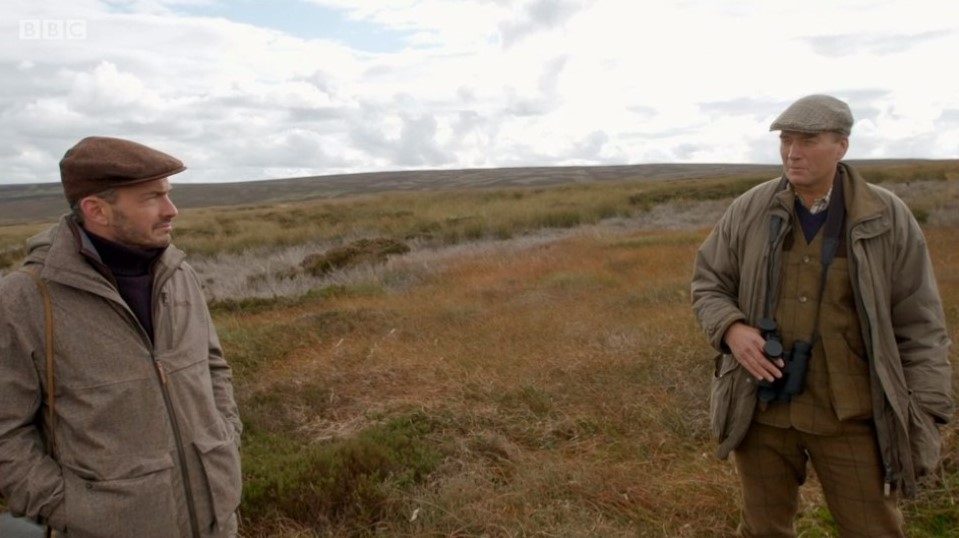
Giles Coren: “Have there been instances around here of raptors being killed?“

Mark Cunliffe-Lister: “Yes, there have been, there was one that was found on Swinton itself, it was found to have some lead in it so, er, clearly had been shot at some stage. There’s nothing that we’re culpable of but clearly there are still instances of it taking place“.

Just the one, Mark? What a forgetful silly billy (and not for the first time).

Kudos to Giles Coren and to whoever was the BBC executive producer of this edition. Good stuff.

The programme is available to watch on BBC iPlayer for a year (the grouse moor stuff starts at 39 mins 15 sec) HERE

National mountain hare day!

Press release from OneKind (1st March 2021)

Protections for mountain hares have come into force from today, in what campaigners are calling National Mountain Hare Day.

The new regulations mean that it is illegal to intentionally kill, injure or take mountain hares without a licence. They were passed after pressure from Scottish Green MSP Alison Johnstone to accept the licensing as part of the new wildlife legislation.

Johnstone said: “Today is an important moment for all those who campaigned for years to end the indiscriminate mass slaughter of mountain hares on Scotland’s grouse moors. These new protections come as a direct result of my amendment to wildlife laws last year, which forced the Government to act after years of delay.

Overwhelming public support for action ensured that Parliament supported this change, and I would like to express my gratitude in particular to the tens of thousands of campaigners who backed my amendment and helped push it over the line.

Now that mountain hares are a protected species, the Scottish Government has a responsibility to protect them. We will be keeping a close eye on them and will challenge any move that suggests they are not fulfilling this duty.

Scotland is in a nature emergency, with one in nine species at threat. The progress we are seeing today is important but we need to do so much more. The Scottish Greens are committed to fighting for Scotland’s nature, ending the persecution of our wildlife and restoring Scotland’s unique and beautiful natural environment.”

Leading animal welfare charity, OneKind, has welcomed the introduction of legal protection.

Director Bob Elliot said: “We are delighted that the day has come when mountain hares have become a protected species and where the mass scale killings of this beautiful animal are put to an end.

We have campaigned for four years for an end to these culls and so today really does feel like a huge triumph. A triumph not just for ourselves, but also for our passionate supporters and all those who campaigned tirelessly for mountain hares.

There has been a great deal of support for making mountain hares a protected species and efforts from animal welfare organisations, such as OneKind, conservation organisations and passionate individuals made this happen.

In particular, Alison Johnstone MSP deserves special recognition for her commitment to her role as the Scottish Parliament’s hare champion.

We are very grateful that she lodged the amendment that is responsible for mountain hares’ new status as a protected species.”

ENDS

Your help needed – new petition calling for Westminster to make nature recovery a binding legal commitment

NEW CAMPAIGN from Wildlife and Countryside Link (1st March 2021)

The Prime Minister has called on world leaders to turn round nature’s decline by 2030. But there’s no commitment in law to do the same here at home. The Environment Bill is the last chance to set this right. 

By writing the recovery of nature into law, the Environment Bill could start to address the nature and climate crisis. But the current wording fails to reflect the ambition or urgency we need. 
 
We’re calling for a change to the Bill to strengthen the law. It would require the UK Government to set a legally binding target to reverse the loss of nature in England by 2030. 
 
This is serious. The most recent ‘State of Nature Report’ showed – once again – the need for urgent action. Almost half of UK wildlife is in long term decline and 15% of species are at risk of extinction.
 
Over 50 nature conservation groups have joined together to urge the Prime Minister to make sure this crucial change gets through. Will you join us?
 
Sign the petition to call on the Prime Minister to write the recovery of nature into the Environment Bill. We must act now! 

Please add your voice to this campaign – SIGN HERE

Gamekeepers angry as 8-year-old schoolchildren effectively engage in democratic process

I was told recently that public engagement with the Scottish Government on the issue of ongoing raptor persecution has never been bigger. For example, Ministerial aides say that now, whenever there’s a new case of an illegally-killed bird of prey, they can expect to receive about 4,000 letters/emails of protest/complaint and requests for the Government to get a grip of this issue.

There are lots of reasons why this level of public response has grown so high, but not least because of social media and the ability for campaigners to disseminate information quickly and widely and encourage new supporters to get involved.

Amongst those new supporters include the inspirational pupils of Sunnyside Primary School in Glasgow. I’ve written about these schoolkids a few times, e.g. see here for a previous blog on their response to the suspicious disappearance of golden eagle Fred in 2018 and last month I wrote about how they’d congratulated the Scottish Government on its decision to issue a grouse moor licensing scheme (see here).

[Pupils from Sunnyside Primary School and their letters to Scottish Ministers congratulating them for the introduction of a grouse moor management licensing scheme]

That last blog elicited some remarkably aggressive online responses from some within the grouse shooting industry who accused Sunnyside teachers of ‘indoctrinating‘ their ‘vulnerable and easily led pupils‘, of this being ‘a disgusting failure by the school‘, of it being an example of ‘desperate virtue signalling‘, of the school ‘overstepping the mark massively‘, of it being ‘a disgusting brainwashing project‘, that teachers should be ‘struck off for misinformation‘ and that ‘this will not be allowed to go unchallenged‘.

Yep, way to go, grouse shooting industry, how to win hearts and minds.

Why do you think they feel so threatened by a bunch of bright 8-year-olds engaging with the democratic process?

Meanwhile, back in the real world the Scottish Government’s Environment Cabinet Secretary asked her aide to write to Sunnyside Primary pupils to thank them for their efforts. Here’s the letter:

If I was a member of the grouse shooting industry I’d be very concerned about the image it was presenting to the outside world.

I’ve blogged very recently about the vile harassment campaigns by gamekeepers directed against those of us who dare to ask for the law to be upheld and the environment protected (see here and here). If 8-year-old schoolchildren and their teachers are the next targets I can see that public tolerance of the grouse shooting industry will fall even lower.

Mind you, a skilled advocate told me recently, ‘Never interrupt your enemy when they’re making a mistake’. In which case, crack on, gamekeepers.

Andy Wightman to stand as an Independent candidate for Highlands & Islands

Just before Christmas, MSP Andy Wightman resigned from the Scottish Greens and has since been operating as an Independent MSP (see here).

[Andy (Scottish Parliament’s Golden Eagle Champion) with golden eagle ‘Adam’, who later disappeared in suspicious circumstances on a grouse moor in Strathbraan (here). Photo by Ruth Tingay]

Andy has just announced he will be standing again in the forthcoming May election as an Independent candidate for the Highlands and Islands region.

Here is his statement, posted on his blog yesterday:

Andy Wightman for Highlands and Islands MSP

I will be putting my name forward as an Independent candidate in the 2021 Scottish Parliament election for the Highlands and Islands Region. From the end of March, my home will be in Lochaber.

Holyrood needs more independent voices. Over the past 5 years, I have campaigned successfully on a range of issues.

As an MSP (2016-21), I led the successful legal challenge in the European Court of Justice that ruled that Article 50 could be unilaterally revoked.

I launched the Homes First campaign to better regulate short-term lets and led opposition to the latest regulations that affect Bed and Breakfast businesses.

I introduced a Bill to incorporate the European Charter of Local Self-Government to strengthen local democracy. It will be voted on at its final stage in Parliament within the next few weeks.

I have championed tenants’ rights and the need for more affordable housing.

As a long-standing land campaigner (author of Who Owns Scotland 1996 & The Poor Had No Lawyers 2010), a focus of my election campaign will be a Land for the People Bill to reform Scotland’s antiquated land laws and democratise the ownership and use of land and property.

In the coming days I will launch a crowdfunder and later in March I will formally launch my campaign.

It is very hard to be elected as an Independent candidate. I will need 12-15,000 votes across the Highlands and Islands.

I will be relying on a grassroots campaign of supporters who are able to mobilise voters by word of mouth and social media.

If you support my candidacy, please tell your friends and family. Very soon I will be offering you ways to get involved in the campaign.

Meanwhile, thank you for your support.

ENDS

Mass poisoning of raptors in south Scotland – has there been a conviction?

From 2018 to 2020 there was a large, multi-agency investigation in south Scotland relating to the deaths of ‘upwards of 20 birds of prey’, including red kites and buzzards, around the Castle Douglas area – see here and here for previous blogs.

In April 2020 Police Scotland announced that a 64-year-old man had been charged in relation to the illegal poisoning of birds in the Stewartry area (which is close to Castle Douglas) and that a report had been submitted to the Procurator Fiscal (see here).

As far as I was aware, this case was ongoing, no pleas had been entered and the case was due back in court in March.

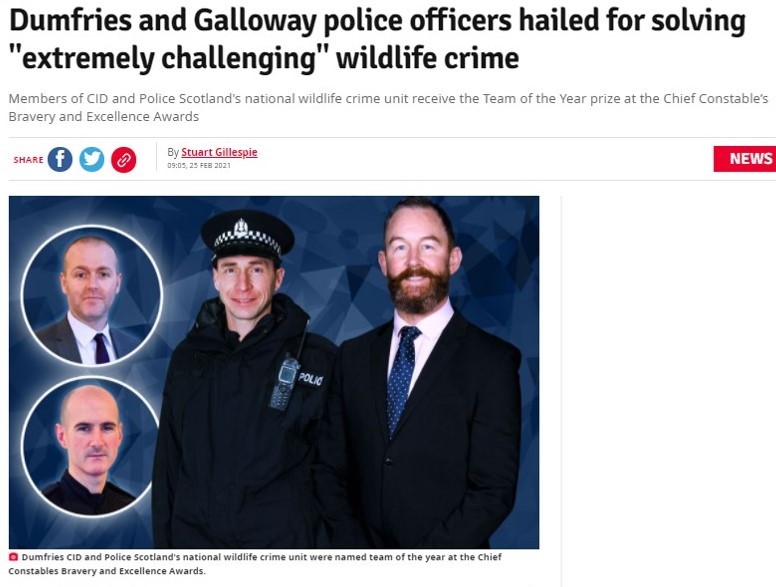
However, on Thursday the Daily Record ran a story about how some Police Scotland officers had been recognised for their efforts in ‘solving’ the poisoning crimes (see here).

Prior to the Daily Record’s article, Police Scotland had issued a press release about the officers winning Team of the Year at the Chief Constable’s Bravery and Excellence Awards on 19th February 2021 and the statement said, ‘This investigation led to an individual being convicted of wildlife crime offences‘ (see here).

First of all, many congratulations to the award-winning officers – as regular blog readers will know, raptor persecution crimes are rarely easy to get to the prosecution stage, let alone secure a conviction. The police officers deserve recognition, as do all the partner agencies who worked on this investigation.

But what about the conviction? Where was the publicity about it? This was a high profile case where a large number of protected birds of prey had been poisoned with a banned substance over a number of years. NB: It was not thought to be linked to the game-shooting industry, for a change.

What, exactly, was he convicted of and what was the sentence?

It seems slightly bizarre that the apparent successful prosecution of a raptor poisoner has not made the headlines, doesn’t it? What’s going on?

Come on, Police Scotland, it’s rare to get a win, let’s hear about it when it happens!

I’ll be chasing this up with the police next week.

UPDATE 2nd March 2021: Mass poisoning of raptors in south Scotland: this case is still live (here)

Will the mass slaughter of mountain hares on grouse moors end on Monday?

It has been legal to kill mountain hares in Scotland for decades, although in more recent years concerns about the species’ conservation status led to the introduction of a closed hunting season as part of the Wildlife and Natural Environment (Scotland) Act 2011, which became enacted on 1st March 2012 (see here).

Nine years later and after a long, hard-fought campaign by a number of organisations and individuals, backed by Scottish Greens MSP Alison Johnstone, as of this Monday (1st March 2021) mountain hares in Scotland will have increased protection, meaning it will be illegal to intentionally kill, injure or take mountain hares at any time unless a licence is obtained.

[Shot mountain hares strung up in a chilling larder, screen-grabbed from a controversial feature on Countryfile (2018) showing mountain hares being shot on a Scottish grouse moor]

Mountain hares have been killed for a variety of reasons, including to protect forestry interests and for recreational ‘sport shooting’, but overwhelmingly they’ve been killed on driven grouse moors in a vain attempt to control the viral disease ‘Louping-ill’ in red grouse – I say vain attempt because scientists have concluded ‘there is no compelling evidence base to suggest culling mountain hares might increase red grouse densities’ (see here).

The scale of the mass slaughter on some driven grouse moors in recent years has been eye-watering (nearly 38,000 killed in one season – see here) and this was despite widespread calls for voluntary restraint from within the shooting industry itself (e.g. see here). The killing is believed to have increased as part of the intensification of driven grouse moor management in some regions (see here).

Hopefully, from Monday, we won’t ever see a return to that level of obscenity but the new protection does not mean that mountain hares can’t still be killed – it means the hare killers will need to have a licence and thus presumably evidential support to justify the licence being issued, which should mean that slaughtering thousands of hares to protect grouse stocks will not be permissible.

We don’t yet know the terms of the new licensing scheme but NatureScot (the licensing authority) has begun to consult and there’ll be a lot of organisations watching with close interest to scrutinise the final details. NatureScot can also expect a series of FoIs to scrutinise licence applications vs licences issued.

RSPB Scotland’s Senior Species and Habitats Officer James Silvey has written an excellent blog laying out what the RSPB expects to see in the new licensing regime – see here.

Public perceptions of red kites using UK gardens – student’s survey needs your help

Georgia Locock, a final-year undergraduate at Hull University is investigating the public’s perceptions of red kites and is interested in finding out why and how people feed red kites in their gardens.

If you’re UK-based and lucky enough to live near a red kite population and you’re up for completing a short online survey to help Georgia’s research, please click here for the survey form.

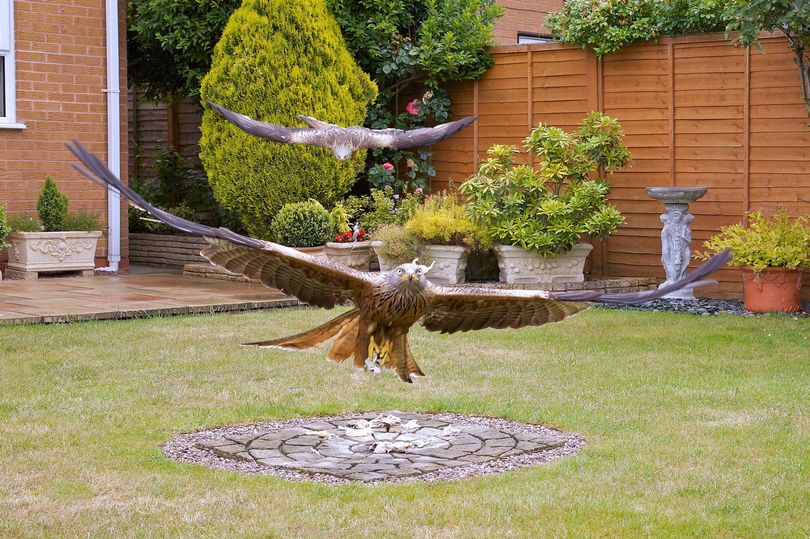
[Red kites picking up meat scraps in a Reading garden. Photo by Stuart Gay]

Convicted egg thief pleads guilty, again

According to the YorkshireLive website, a 63-year-old Huddersfield man has admitted stealing almost 200 wild bird eggs, including those belonging to endangered species (see here).

Terence Potter, from Huddersfield, appeared at Sheffield Magistrates’ Court on 17th February 2021 charged with two counts of possessing an article capable of being used to take birds eggs, three counts of possession of a wild bird’s eggs and three counts of taking wild bird eggs.

The charges brought against Mr Potter, of Cumberworth Lane, Upper Cumberworth, date back to April 2020 with allegations that he took 179 black headed gull eggs, four golden plover eggs and three curlew eggs.

In Holmfirth, in April 2020, Potter was found to be in possession of a number of items that helped in his removal of those eggs including syringes, binoculars, egg blowing equipment, thermal imaging binoculars and an incubator as well as handwritten data cards.

The curlew, the largest European wading bird, is listed as being under threat by the RSPB website stating its UK conservation status is red.

Potter will be sentenced at Sheffield Magistrates’ Court on April 23.

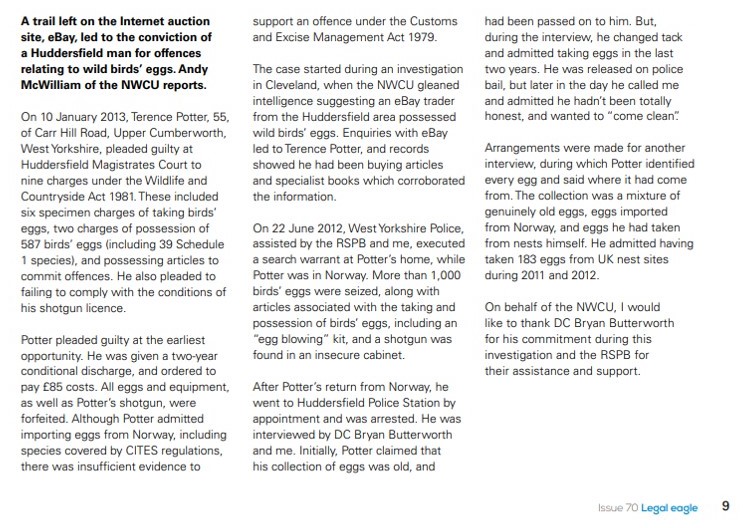
Potter is not new to this area of criminality. Eight years ago he pleaded guilty to nine related offences including six charges of taking birds’ eggs, two charges of possession of 587 eggs (including a number of Schedule 1 raptor eggs), and possessing articles to commit offences. He also had his shotgun removed for insecure storage. He was given a two-year conditional discharge and had to pay £85 costs.

Clearly an insufficient deterrent. It’ll be interesting to see what his sentence is this time.

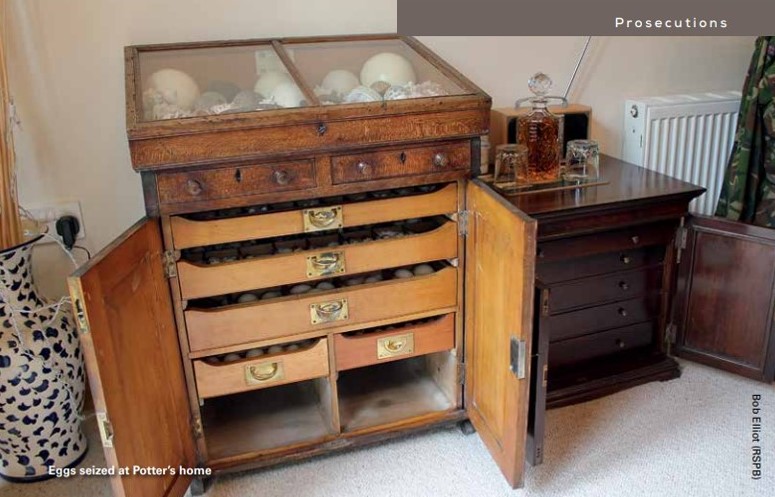
[Potter’s illegal egg collection in 2012, photograph by Bob Elliot, from RSPB’s Legal Eagle Newsletter #70]

World Osprey Week 2021: 22nd – 26th March

Press release from charity Birds of Poole Harbour (23rd February 2021)

World Osprey Week celebrates Ospreys as they make their spring migrations to their nesting grounds.

Founded by the Leicestershire and Rutland Wildlife Trust, who are celebrating the 25th anniversary of their Osprey reintroduction project this year, the week-long event aims to enthuse and educate people, in particular children, about this brilliant bird of prey. From tracking treacherous migrations, to understanding their repopulation of Scotland, the week provides an opportunity to weave the excitement of Ospreys into learning about geography, history and science.

Each weekday, from the 22nd to the 26th March, we’ll be sharing a video and content pack about a different topic, featuring activities and competitions. For some extra fun, the competition winners will be announced by Chris Packham and Megan McCubbin in The Reintroduction and Rewilding Summit on Saturday 10th of April. More information on this topic will be announced soon…

Who’s involved?

We’ve connected with 5 other Osprey groups this year to form an Osprey Network – Leicestershire and Rutland Wildlife Trust, Cumbria Wildlife Trust, Glaslyn Wildlife, Osprey Leadership Foundation and Scottish Wildlife Trust… and hopefully some familiar Ospreys!

How can you participate?

All of the involved sites will be putting out WOW content through their websites and social media each day of the week from 22nd of March. All sites in the network will be putting out the same content, with a few personal touches, so we recommend keeping an eye on the page of the site closest to you!

Each group is also reaching out to local schools, who we hope will be able to use the content as part of their school day. If you know of a school that would be interested in participating in World Osprey Week, please get in touch with us at bophhq@birdsofpooleharbour and amustard@lrwt.org.uk Please note that most of the WOW content will be aimed at children of a primary school age, though anyone is welcome to get involved.

Don’t worry about missing out on the fun if a particular school isn’t participating – all the activities will be able to done from home. We hope you can get involved!

ENDS