The ‘secrets of the Angus Glens’ that Countryfile forgot to mention

On Sunday evening, Countryfile included a piece about the grouse moors of Invermark Estate in the Angus Glens and how it was “a haven for wildlife”.

It can be viewed on iPlayer here for the next 28 days (starts at 22 mins in).

Inane, vacuous and unquestioning, this piece was heralded in previews as ‘uncovering the secrets of the glen’.

Invermark is only one of several grouse moor estates in the Angus Glens. Here are some secrets of the wider Angus Glens that weren’t mentioned on Countryfile:

2004 May, near Edzell: long-eared owl and two short-eared owls starved to death in crow cage trap.  No prosecution.

2004 May, Invermark Estate: peregrine nest destroyed. No prosecution.

2006 March, Glenogil Estate: poisoned rabbit bait (Carbofuran). No prosecution.

2006 April, Easter Ogil: poisoned buzzard (Alphachloralose). No prosecution.

2006 April, Easter Ogil: poisoned tawny owl (Alphachloralose). No prosecution.

2006 May, Glenogil Estate: poisoned rabbit bait (Carbofuran). No prosecution.

2006 June, Glenogil Estate: poisoned woodpigeon bait (Carbofuran). No prosecution.

2006 June, Glenogil Estate: Traces of Carbofuran found in estate vehicles & on equipment during police search. No prosecution. Estate owner had £107k withdrawn from his farm subsidy payments. This was being appealed, but it is not known how this was resolved.

2006 July, Millden Estate; poisoned sheepdog (Lindane). No prosecution.

2007 November, Glenogil Estate: Disappearance of radio-tagged white-tailed eagle ‘Bird N’ coincides with tip off to police that bird allegedly been shot. No further transmissions or sightings of the bird.

2008 May, ‘Nr Noranside’: poisoned white-tailed eagle ‘White G’ (Carbofuran, Isophenfos, Bendiocarb). No prosecution.

2008 May, ‘Nr Noranside’: poisoned buzzard (Bendiocarb). No prosecution.

2008 May, ‘Nr Noranside’: poisoned mountain hare bait (Carbofuran, Isophenfos, Bendiocarb). No prosecution.

2008 May, Glenogil Estate: 32 x poisoned meat baits on fenceposts (Carbofuran, Isophenfos, Bendiocarb). No prosecution.

2008 October, ‘Glenogil Estate: poisoned meat bait on fencepost (Carbofuran). No prosecution.

2009 March, Glenogil Estate: poisoned buzzard (Carbofuran). No prosecution.

2009 March, Glenogil Estate: poisoned buzzard (Carbofuran). No prosecution.

2009 April, Millden Estate: poisoned buzzard (Alphachloralose). No prosecution.

2009 July, Millden Estate: poisoned golden eagle ‘Alma’ (Carbofuran). No prosecution.

2009 August, Glenogil Estate: poisoned white-tailed eagle “89” (Carbofuran). No prosecution.

2010 May, ‘Nr Noranside’: poisoned red kite (Carbofuran). No prosecution.

2010 September, Glenogil Estate: poisoned buzzard (Chloralose). No prosecution.

2010 October, Glenogil Estate: poisoned buzzard (Carbofuran). No prosecution.

2010 October, Glenogil Estate: poisoned pigeon bait (Carbofuran). No prosecution.

2010 October, Glenogil Estate: poisoned pigeon bait (Carbofuran). No prosecution.

2011 February, Airlie Estate: buzzard caught in illegal crow trap. (see below)

2011 March, Airlie Estate: 3 x buzzard caught in illegal crow trap. Prosecution (!) but dropped after statement from suspect given to SSPCA deemed inadmissible.

2011 April, Millden Estate: shot buzzard. No prosecution.

2012 April, ‘Nr Noranside’: Remains of buzzard found beside pheasant pen. Suspicious death.

2011 June, Rottal & Tarabuckle Estate: dead kestrel inside crow cage trap. No prosecution.

2012 February, ‘Nr Edzell’: spring-trapped buzzard. No prosecution.

2012 February, ‘Nr Bridgend’: remains of buzzard found under a rock. Suspicious death.

2012 May, Millden Estate: satellite-tagged golden eagle seemingly caught in spring trap, then apparently uplifted overnight and dumped on Deeside with two broken legs & left to die. No prosecution.

2012 May, Glen Esk: disappearance of sat-tagged red kite. No further transmissions or sightings of bird.

2013 January, Invermark Estate: white-tailed eagle nest tree felled. No prosecution.

2013 June, Glen Ogil: shot buzzard. No prosecution.

2013 July, Glen Moy: illegal hawk trap. No prosecution.

2013 September, nr Edzell: unset spring trap next to bait. No prosecution.

2013 November, Glen Lethnot: poisoned golden eagle ‘Fearnan’. No prosecution.

2014 August & September, Glenogil Estate: alleged snare offences. Prosecution of gamekeeper underway (currently ongoing).

2014 October, Nathro: shot buzzard. Prosecution? Unknown.

And some more secrets of the Angus Glens that weren’t mentioned:

No breeding hen harriers on the grouse moors of the Angus Glens since 2006 (see here).

Mountain hare massacre on the grouse moors of the Angus Glens (see here).

Angus Glens gamekeeper facing trial for alleged pole-trapping offences (see here).

Mark Avery has written an alternative and more accurate Countryfile script (see here) than the one that was aired on Sunday evening.

Plenty of people on social media have been asking when Countryfile will do a piece on illegal raptor persecution. To be fair, they did one in 2014 (we blogged about it here) and it was fairly well balanced, but this then begs the question why Countryfile researchers hadn’t done their homework for this latest episode.

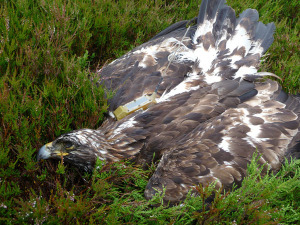
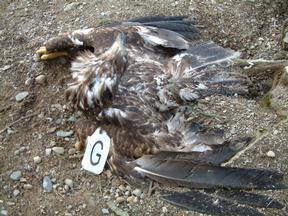
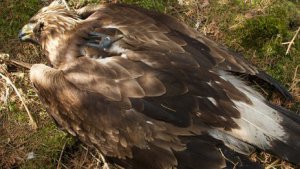
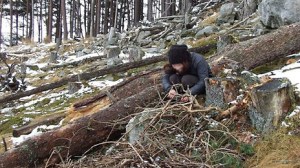
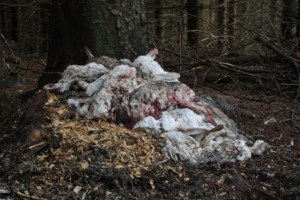
Had they done so, here are some of the images they would have found from those ‘wildlife haven’ grouse moors of the Angus Glens. From the top down, an illegally poisoned golden eagle, another illegally poisoned golden eagle, an illegally poisoned white-tailed eagle, an illegally trapped golden eagle that was then dumped in a layby with two broken legs and left to die, the nest tree of a white-tailed eagle that was illegally chainsawed to the ground, and a pile of rotting shot mountain hares. The grouse moors of the Angus Glens a wildlife haven? Hardly. They’re notorious wildlife crime scenes.

Petition to ban driven grouse shooting here
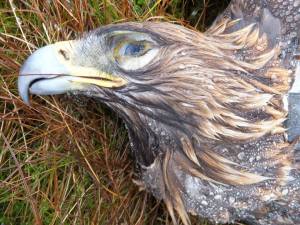
Fearnan

alma

whiteg

deeside eagle

wtenesttree

mountain-hare-cull-angus-glens-large-copy

Statement from Cairngorms National Park Authority re: shot goshawk

mon-15-june-copyGrant Moir, Chief Executive of the Cairngorms National Park Authority, has today issued a statement about the recent shooting of a goshawk (here) on land within the National Park:

“We are incredibly frustrated to again be putting out a statement condemning the shooting of a raptor in the National Park. We must ensure such crimes become a thing of the past. We will be working with the new Minister for Environment to consider what else we can do in the National Park, building on public support for our wildlife and finding ways of getting more eyes and ears on the ground. We encourage anyone with information relating to this incident to contact the police by calling 101”.

The condemnation is good and is the least we should expect. However, the bit about “We will be working with the new Minister for Environment to consider what else we can do….” shows good intent, but in reality amounts to little more than a PR soundbite.

Remember the Cairngorms Nature action plan, aimed at restoring raptor populations & managing mountain hares for the benefit of golden eagles within the Cairngorms National Park (CNP), launched with great fanfare in May 2013 (see here)?

A resounding failure, as evidenced in May 2013 by the mysterious ‘disappearance’ of a young sat-tagged golden eagle on a CNP grouse moor (here); in May 2013 by the alleged ‘coordinated hunting’ and subsequent shooting of a hen harrier on a CNP grouse moor (here); in April 2014 by the mysterious ‘disappearance’ on a CNP grouse moor of East Scotland’s first fledged white-tailed eagle in ~200 years (here); in May 2014 by this video of masked armed gunmen attacking a goshawk nest within the CNP (here); in October 2015 by the publication of a scientific study documenting the long term decline of breeding peregrines on grouse moors in the eastern portion of the CNP (see here); in February 2016 by the publication of a scientific study documenting the catastrophic decline of breeding hen harriers in the eastern portion of the CNP (here); in March 2016 by the discovery of a dead hen harrier ‘Lad’, suspected shot, found on a grouse moor within the CNP (here); in March 2016 by the news that mountain hares were being massacred on grouse moors within the CNP (here); and again in March 2016 by news that further mountain hare massacres were taking place on grouse moors within the CNP (here); and now in May 2016 by the news that a goshawk was shot on an estate within the CNP (here).

And also remember, the CNPA has already met with the (now former) Environment Minister in January 2015 to discuss the issue of raptor persecution and moorland management within the NP – we blogged about that meeting here. The Environment Minister said afterwards that she ‘welcomed the positive collaboration shown between the CNPA and landowners and looked forward to seeing a real difference on the ground‘.

What is the point of the CNPA having further discussions with another naive Environment Minister? It’s utterly pointless. The grouse moor managers within the Cairngorms National Park are running rings around the Park Authority, and have been doing so for years: Golden eagles poisoned, golden eagles ‘disappearing’, white-tailed eagles ‘disappearing’, hen harriers being shot, breeding hen harriers in catastrophic decline, goshawks being shot, goshawk nests being attacked, breeding peregrines in long-term decline, mountain hares massacred. All within the Cairngorms National Park, the so-called ‘jewel’ of Scottish wildlife. It’s scandalous.

What we need, urgently, from the CNPA is action, not more hand-wringing and platitudes. For a start, the CNPA could be looking at the Sandford Principle (see here and here). There’s an excellent blog called Parks Watch Scotland that has also suggested some courses of action the CNPA could take: see here and here.

The CNPA CEO said today he was ‘incredibly frustrated’. We all are, but the difference is the CNPA has the power to do something about it.

Actually, we do have some power, albeit more indirect than the powers of the CNPA. We have the power to blog about the rampant and persistent persecution of wildlife within the National Park and by doing so, raise awareness amongst an unsuspecting general public of just what is happening to THEIR wildlife within the boundary of THEIR National Park. We’re pretty sure that as more people get to hear about it, the vast majority will be outraged and will join the call for further action to be taken against those grouse moor estates.

Please sign the petition and join 35,000+ calling for a parliamentary debate on the banning of driven grouse shooting: HERE

Crown Office drops prosecution against Glenogil Estate gamekeeper

Snared fox dead alt, Glenogil Estate, Credit OneKindRegular blog readers will know we’ve been following the case of Scottish gamekeeper William Curr, who had been charged last year with alleged snaring offences on Glenogil Estate in the Angus Glens, said to have occurred in September 2014 (see here, here, here and here).

The charges related to allegations that several snares had not been checked (as they are required to be) within a 24-hour period of being set, after a field officer from the charity OneKind had discovered a dead snared deer, a dead snared fox and another snared fox that was still alive but had to be euthanised at the scene due to the extent of its horrific injuries (see OneKind photo).

For a harrowing description of what was found on Glenogil Estate, including a confrontation with the Head Gamekeeper, read this blog on the OneKind website.

Curr’s trial was due to start on 9th May but last week (10 March) the Crown Office informed the court that it was not going to proceed. OneKind has not yet been able to ascertain the reason for this decision, and in fact may never find out because the Crown Office is under no obligation to explain.

Accountability and transparency, anybody?

To quote from the OneKind blog:

“OneKind is mystified by the dropping of this case, given the eye witness evidence, the horrific video footage and the detailed follow-up investigation carried out by the Scottish SPCA. This was a shocking incident where at least six people, including gamekeepers, witnessed the terror and pain of a live fox as the wire noose of a snare sliced into its abdomen. Had our research officer not been on the estate on that particular day, who knows how much longer the fox would have continued to suffer?

To put this dreadful story in the wider context: snares are still legal in Scotland and the rest of the UK. It is simply intolerable that the suffering this fox endured should be considered legally acceptable. The video footage is utterly harrowing and illustrates an animal which is clearly distressed, both physically and mentally. OneKind has long called for an outright ban on all snares and sadly we feel these calls have been justified by this case.

OneKind will seek an explanation for the failure of the Scottish justice system to bring this animal welfare case to court“.

The reason we’ve been so interested in this case is because the alleged offences occurred on the Glenogil Estate, one of several grouse shooting estates in the Angus Glens where wildlife crime incidents keep cropping up but have never resulted in a successful prosecution. For example, here are some incidents reported from in and around Glenogil over the last ten years:

2006 March: poisoned rabbit bait (Carbofuran). Listed as ‘Glenogil’ in RSPB annual report. No prosecution.

2006 April: poisoned buzzard (Alphachloralose). Listed as ‘Glenogil’ in RSPB annual report. No prosecution.

2006 April: poisoned tawny owl (Alphachloralose). Listed as ‘Glenogil’ in RSPB annual report. No prosecution.

2006 May: poisoned rabbit bait (Carbofuran). Listed as ‘Glenogil’ in RSPB annual report. No prosecution.

2006 June: poisoned woodpigeon bait (Carbofuran). Listed as ‘Glenogil’ in RSPB annual report. No prosecution.

2006 June: Traces of Carbofuran found in estate vehicles & on equipment during police search. Not listed in 2006 RSPB annual report but reported here. (Now former) estate owner John Dodd had £107k withdrawn from his farm subsidy payments as a result. This was being appealed but it is not known how this was resolved. Also a write up in RSPB 2007 annual report. No prosecution.

2007 November, Glenogil Estate: Disappearance of radio-tagged white-tailed eagle ‘Bird N’ coincides with tip off to police that bird been shot. No further transmissions or sightings of the bird. Not listed in RSPB annual report but reported here. No prosecution.

2008 May: poisoned white-tailed eagle ‘White G’ (Carbofuran, Isophenfos, Bendiocarb). Listed as ‘Nr Noranside’ in RSPB annual report. No prosecution.

2008 May: poisoned buzzard (Bendiocarb). Listed as ‘Nr Noranside’ in RSPB annual report. No prosecution.

2008 May: poisoned mountain hare bait (Carbofuran, Isophenfos, Bendiocarb). Listed as ‘Nr Noranside’ in RSPB annual report. No prosecution.

2008 May: 32 x poisoned meat baits on fenceposts (Carbofuran, Isophenfos, Bendiocarb). Listed as ‘Nr Noranside’ in RSPB annual report. No prosecution.

2008 October: poisoned meat bait on fencepost (Carbofuran). Listed as ‘Nr Noranside’ in RSPB annual report. No prosecution.

2009 March: poisoned buzzard (Carbofuran). Listed as ‘Glenogil’ in RSPB annual report. No prosecution.

2009 March: poisoned buzzard (Carbofuran). Listed as ‘Glenogil’ in RSPB annual report. No prosecution.

2009 August: poisoned white-tailed eagle “89” (Carbofuran). Listed as ‘Glenogil’ in RSPB annual report. No prosecution.

2010 May: poisoned red kite (Carbofuran). Listed as ‘Nr Noranside’ in RSPB annual report. No prosecution.

2010 September: poisoned buzzard (Chloralose). Listed as ‘Glenogil’ in RSPB annual report. No prosecution.

2010 October: poisoned buzzard (Carbofuran). Listed as ‘Glenogil’ in RSPB annual report. No prosecution.

2010 October: poisoned pigeon bait (Carbofuran). Listed as ‘Glenogil’ in RSPB annual report. No prosecution.

2010 October: poisoned pigeon bait (Carbofuran). Listed as ‘Glenogil’ in RSPB annual report. No prosecution.

2012 April: Remains of buzzard found beside pheasant pen. Listed as ‘Nr Noranside’ in RSPB annual report. No prosecution.

2014 June: shot buzzard. Listed as ‘Glenogil’ in RSPB annual report. No prosecution.

New report reveals hundreds of raptors illegally killed on game-shooting estates in Scotland

RSPB persecution review 1994 2014Yesterday the RSPB published its latest figures on illegal raptor persecution in Scotland.
Rather than their usual annual review, this time they’ve produced a 20-year review covering the period 1994-2014. This is a really useful exercise as it puts the scale of (known) persecution in to perspective. It’s a sobering read.

A total of 779 birds of prey were confirmed to have been illegally killed during this period, either by poisoning, shooting or trapping. The known victims included 104 red kites, 37 golden eagles, 30 hen harriers, 16 goshawks, 10 white-tailed eagles and 458 buzzards.

In addition to these confirmed victims, a further 171 incidents are documented where poisoned baits and/or non-birds of prey victims were found, including 14 pet cats and 14 pet dogs, and then a further 134 incidents where no victim had been found but clear attempts to target raptors had been uncovered (e.g. illegally-set traps).

The report includes a map showing the landholdings of all known persecution incidents during this period. As ever, it’s pretty revealing, with a handful on the west coast but the vast majority in the uplands of central, eastern and southern Scotland – areas dominated by driven grouse shooting.

RSPB persecution review 1994 2014 map

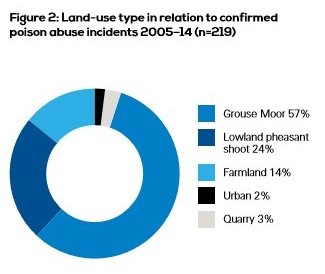
Drilling down in to the detail, there’s a useful analysis of land-use type of confirmed poisoning incidents between 2005-2014 (219 incidents). A shocking (or not) 81% of confirmed poisoning incidents during this nine-year period were on land used for game-shooting: 57% on grouse moors and 24% on land managed for lowland pheasant shoots. This tells us a great deal about who is responsible for the vast majority of illegal raptor poisoning. Despite their continued denials and protestations, and their increasingly-desperate attempts to minimise the scale of these crimes (“it’s just a few rogues”, “it’s just a small minority”), this graphic exposes the criminality at the heart of the game-shooting industry:

RSPB persecution review 1994 2014 land use

Further damning evidence, which isn’t needed by most of us but for the benefit of those who are still in denial of the bleedin’ obvious, is this graph showing the occupations of those convicted of raptor persecution between 1994-2014. Surprise, surprise, 86% of them were gamekeepers:

RSPB persecution review 1994 2014 occupation

RSPB Scotland is to be commended for publishing this exceptionally detailed and meticulously-researched report. There are a number of things in it that are of particular interest to us and we’ll come back to those in due course. For now though, particular recognition should go to the Investigations team – they may be small in number but their contribution to exposing the disgraceful continuation of illegal raptor persecution in Scotland is enormous. They, and their colleagues south of the border, are worthy of high acclaim. If anybody reading this is in a position to recognise excellence in the field of raptor conservation, e.g. a nomination for an award, this team should be at the top of your list.

So, how has the Environment Minister, Dr Aileen McLeod, responded to such an embarrassing report? She said: “There is no doubt that the figures in this report make for uncomfortable reading, but we have made progress in recent years with the new vicarious liability provisions, the publication of the report from the Wildlife Crime Penalties Review Group, new measures implementing restrictions on the use of General Licences and earlier this year the Scottish Government funded pesticide disposal scheme that removed over 700kg of illegally held poisons in Scotland“.

“We have made progress…” Hmm. Let’s have a look:

Vicarious liability – introduced almost 4 years ago and only two successful convictions to date. A slow (but good) start, but we need to see many more convictions.

Wildlife Crime Penalties Review – Commissioned over two years ago, published last month. An excellent report calling for tougher sanctions but we’re waiting to hear whether the Environment Minister will act on the recommendations. Can only be defined as ‘progress’ if she agrees to act.

General Licence restrictions – available to be used against landholdings where raptor crimes committed/suspected from 1st January 2014. So far, only two restrictions have been implemented and those only lasted for six days each before they were suspended as legal arguments continue. A slow start, and the legal challenges were to be expected, but can’t be defined as ‘progress’ unless the restrictions are fully implemented. There should also be a lot more of them.

Pesticide disposal scheme –  implemented this year and resulted in the removal of some illegally-held poisons. That is progress, although it is tinged with frustration that the game-shooting industry was given yet another chance to avoid justice as this scheme (the second of its kind) comes 14 years after the pesticides were originally banned. It’s also interesting to note in the RSPB’s report (page 18) that evidence suggests a number of individuals have retained their illegal stocks. This is supported by more poisoning incidents that have taken place this year, after the disposal scheme ended.

So some progress has been made (and almost entirely due to the efforts of Dr McLeod’s predecessor, Paul Wheelhouse) but it is glacially slow and, so far, has not stemmed the occurrence of illegal persecution, as the damning figures in this report show all too clearly. Much, much more can and needs to be done before we’ll be convinced that Dr McLeod is having any sort of impact. She has, though, announced that tenders have just been invited for a review of game licensing practices in other countries (to inform a possible decision of introducing licensing to game-shooting estates in Scotland), and that’s a good thing, but again, the research needs to be done and then a decision made, which probably won’t happen for a number of years if past performance is anything to go by. She’d find herself with a lot more support if she got on with announcing increased investigatory powers for the SSPCA – the public consultation closed 1 year and 3 months ago – and still we await her decision as the criminals continue their rampage. It’s not impressive at all.

And what of the response of the game-shooting industry itself? Some didn’t bother to publish a statement (Scottish Gamekeepers’ Association), which ironically tells us quite a lot, although they are quoted in an article by STV (see media coverage below) where they revert to type and simply deny the evidence and slag off the RSPB instead. And remember, the SGA is a fully-paid up member of the Partnership for Action Against Wildlife Crime (cough).

Scottish Land and Estates (SLE), another PAW partner, did manage to issue a statement, via their Scottish Moorland Group (see media coverage below). Again, it’s the usual lamentable denial, characterised beautifully by this statement from Director Tim (Kim) Baynes:

“Bird of prey deaths……have fallen dramatically over the last five years in particular“.

Er, here are some persecution figures that Kim might want to re-punch in to his calculator:

2012 – 18 confirmed deaths

2013 – 28 confirmed deaths

2014 – 37 confirmed deaths

There’s also this statement:

“Our condemnation of wildlife crime is unquivocal...” All very touching but how is that “condemnation” manifested in the real world? It’s been brought to our attention that the current head gamekeeper on a Scottish grouse shooting estate has a (spent) conviction for shooting dead a raptor when he worked on another Scottish grouse moor. How does a criminal with a conviction like that (spent or not) remain employed in the game-shooting industry, let alone get a senior position on another Scottish grouse moor? Was he one of the posse of moorland gamekeepers recently invited to Holyrood to mingle with, and be applauded by, a number of MSPs, as part of the Gift of Grouse propaganda campaign? Surely not…

Download the RSPB report here

Media coverage

RSPB press release here

Statement from Environment Minister Dr Aileen McLeod here

Scottish Moorland Group statement here

BBC news here

STV article here

BBC Radio Scotland (Newsdrive) interview with Ian Thomson, Head of Investigations RSPB Scotland here (starts at 21.50, available for 29 days)

Guardian article here (a mis-leading headline but nevertheless good to see coverage in this paper)

What grisly fate awaits these two satellite-tagged hen harriers?

Bowland HH Jude LaneAs part of the RSPB’s Hen Harrier Life+ Project, the movements of two satellite-tagged hen harriers can now be followed online – see here.

The two birds are called ‘Holly’ and ‘Chance’.

Holly had her satellite tag fitted in June this year by members of the Scottish Raptor Study Group, assisted by the MOD Police and was one of three chicks from a nest located on high security MOD land at Coulport. She was named after a member of the production crew from BBC Scotland’s Landward programme after appearing in a special feature about hen harriers and the threats these birds face from illegal killing (see here). Holly fledged in August and has since left her natal area, moving in to the uplands of central Scotland.

Chance had her sat tag fitted in June last year by members of the Scottish Raptor Study Group and was named by RSPB Scotland staff. She travelled south from her nest in SW Scotland to the RSPB Wallasea Reserve in Essex at the end of October (2014), before crossing the Channel to spend the winter months in western France. Chance came back to the UK in spring this year but has since returned to France via Wales.

The RSPB’s explanation for sat tagging these two hen harriers (and others) is: ‘To better understand the threats they face and identify the places they are most at risk‘.

To be frank, there is already a very good understanding of the threats they face and of the places they are most at risk; it’s been known for at least 20 years that these birds are illegally killed by gamekeepers on driven grouse moors. It’s no mystery and it’s no secret.

However, that’s not to say that continued satellite-tagging is without purpose. There’s a very important reason for continuing to do it, and that is to raise public awareness by getting people ‘involved’ with these individual birds (hence, giving them names) and showing people the birds’ movements (via online maps) so that when they are eventually shot, trapped, poisoned, or they simply ‘disappear’ in grouse moor areas (it’s inevitable), the public outcry will be considerable and the subsequent pressure on the authorities to actually do something about it will be greater. That is, assuming the police decide to publish the information, but it’ll be harder for them to keep quiet if we all know the birds have stopped moving.

There are already plenty of examples of satellite-tagged hen harriers either ‘disappearing’ or being found shot, so nobody should expect anything different for Holly and Chance. Here are some of the well-known individuals from the last few years:

Hen Harrier Annie – found shot dead on a Scottish grouse moor in April 2015 (here).

Hen Harrier Heather – found shot dead at a winter roost site in Ireland in January 2015 (here).

Hen Harrier Sky – ‘disappeared’ on a grouse moor in Lancashire in September 2014 (here).

Hen Harrier Hope – ‘disappeared’ on a grouse moor in Lancashire in September 2014 (here).

Hen Harrier Sid – ‘disappeared’ on a grouse moor in North Yorkshire in September 2014 (here).

Hen Harrier Blue – ‘disappeared’ somewhere (location not revealed) in October 2013 (here).

Hen Harrier Bowland Betty – found shot on a grouse moor in North Yorkshire in July 2012 (here).

Hen Harrier Tanar – ‘disappeared’ on a grouse moor in Aberdeenshire in June 2011 (here).

Hen Harrier (unnamed) – ‘disappeared’ on a grouse moor in southern Scotland in October 2011 (here).

And then there were the 47 hen harriers that Natural England sat-tagged between 2007-2014. Last year we were told that four were still known to be alive, six had been found dead, and a staggering 37 birds (78.7%) were ‘missing’ ‘somewhere’ (see here). Natural England has been persistently coy about telling us us where those 37 birds went missing, even though the satellite tagging project has been funded by us taxpayers.

Bowland Betty

And of course it’s not just hen harriers that we’ve watched meet a premature death. Other species have also been sat-tagged in recent years including Montagu’s harrier ‘Mo’, who ‘disappeared’ on the Queen’s Sandringham Estate in Norfolk last year (here) as well as at least eleven golden and white-tailed eagles (listed here), including some very high profile cases such as golden eagle Fearnan (found poisoned on a Scottish grouse moor here), golden eagle Alma (found poisoned on a Scottish grouse moor here) an unnamed golden eagle that had been illegally trapped on a Scottish grouse moor before being dumped in a lay by (here) and the first fledged white-tailed eagle in East Scotland for over 200 years who ‘disappeared’ on a Scottish grouse moor (here).

So, contrary to the belief of the Hawk & Owl Trust who earlier this year told us that fitting satellite tags to hen harriers “would prevent any gamekeepers from shooting them in the sky” (see here), gamekeepers don’t give a toss whether the bird in their gun sight is carrying a transmitter or not because they know full well that they are highly unlikely to get caught, let alone prosecuted. Not one of the above cases has resulted in a prosecution. So, no, the purpose of tagging isn’t to directly save the bird, but indirectly it just might, if enough of us follow the online movements of Holly and Chance and all the other tagged harriers that will be part of the RSPB’s Hen Harrier Life+ Project and then shout from the rooftops when each bird is illegally killed. It’s going to happen, and we are going to shout.

Top photo: Bowland Betty alive (photo Jude Lane).

Bottom photo: Bowland Betty dead (photo RSPB).

Sea eagles bringing in £millions to local economies

Re-introduced white-tailed eagles (also known as sea eagles) are bringing in £millions of pounds to local rural economies in Scotland.

40 years after the start of the sea eagle reintroduction project in Scotland, a significant milestone has been reached with the 100th breeding pair (see here).

Sea eagle tourism on the Isle of Mull brings in an additional £5 million each year (see here). Now a new RSPB report shows that the sea eagles on the Isle of Skye are generating an additional £2.4 million (see here).

Over in the Irish Republic (where the sea eagle reintroduction project only started in 2007), the small but growing eagle population is also attracting thousands of tourists (see here).

It’s heartening to see that despite the efforts of some (e.g. see here, here, here, here), these eagles are fighting back and, in a world where nature seems to be judged on its monetary value, they’re giving back, too.

Photo by Mike Watson

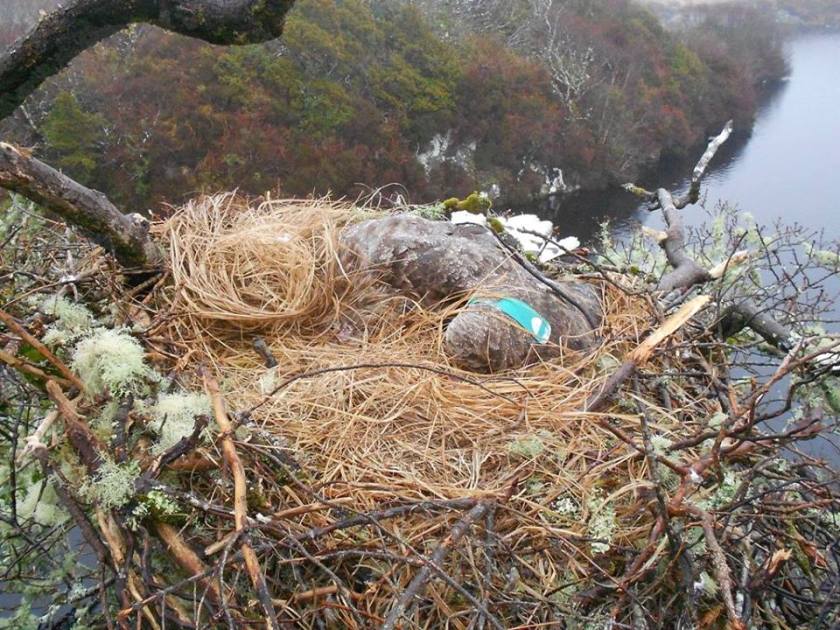
White-tailed eagle found poisoned on nest

WTEpoisoned Connemara April 2015

Press release from Golden Eagle Trust:

A White-tailed Eagle has been found dead in its nest at Connemara in south-west Ireland. The six year old female eagle was discovered on 1st April by Conservation Ranger Dermot Breen and recovered by a team from the National Parks & Wildlife Service on 2nd April. Subsequent post-mortem at the Regional Veterinary Laboratory in Athlone and toxicology analysis at the State Laboratory, Celbridge revealed the bird had been poisoned.

The female White-tailed Eagle was released in Killarney National Park in 2009 as part of a reintroduction programme for the species managed by the Golden Eagle Trust in partnership with the National Parks & Wildlife Service. The female eagle settled in the Roundstone area of Connemara in 2012 where she paired up with a male. In 2014 the pair laid eggs at a nest in a remote site but the eggs failed to hatch chicks successfully. Both birds were on the point of nesting again this year at the same nest when tragedy struck. Indeed the post-mortem found the female to contain two developing eggs, so this female was within a few days of laying eggs.

The loss of this breeding female comes as a serious blow to the reintroduction project. White-tailed Eagles reach maturity and begin breeding at about 5 years of age. Seven pairs laid eggs in nests in the wild in 2014, with one nest near Mountshannon, Co. Clare, successfully fledging chicks in 2013 and 2014. It was hoped that the Connemara pair would be one of a number of successful nests in Ireland in 2015. The loss of a breeding adult has been found to lead to the desertion of breeding sites with potentially serious implications for the long-term viability of the reintroduced population.

This is the 13th confirmed poisoning of a White-tailed Eagle in Ireland since the reintroduction project began in 2007. The use of poisons to control foxes and crows has been banned since 2010 but the illegal use of such substances remains a huge threat to wildlife including birds of prey which consume carrion. Over the five years of the release phase of the project 100 young eagles were collected from nests in Norway and released in Killarney National Park, Co. Kerry. Thirty one of the released eagles have since been recovered dead with illegal poisoning by far and away the greatest threat to the recovery of this once native eagle to Ireland. Despite these losses the number of pairs in the wild rose to 14 in 2014 with most birds now mature enough to breed.

“This is a very disheartening incident as the killing of this breeding female has effectively put an end to any breeding attempt of this incredible species in West Galway for at least another five years” said NPWS Conservation ranger Dermot Breen. “To see the female lying dead on her nest was a very sad and sickening sight especially with the knowledge that she would have been due to lay two eggs. Historically up to 14 pairs were known to have bred in the Connemara region up 1838. Connemara lost its White-tailed Eagles shortly after this with the introduction of poison. It’s deeply frustrating to see history repeating itself. I’ve encountered no negative feedback from any local farmers with regard to the presence of the eagles over the last three years. Many landowners would ask how the eagles were doing and would tell me if they had been lucky enough to see them in the locality. The loss of this female is also a great loss to tourism in the area. Connemara is world renowned for being an area of unspoilt beauty. Unfortunately this illegal and irresponsible action is likely to tarnish Connemara’s green image, an area that relies heavily on tourism”.

“Although all losses impact the project, the loss of this female is very difficult to take”, said Dr Allan Mee, Project Manager with the Golden Eagle Trust. “She and her mate had been resident in Connemara for the last four years and it was only a matter of time before they produced chicks. It is likely the nest site they chose had been used by White-tailed Eagles in historical times, so losing this pair is devastating. Although the male may remain on his territory for some time, to date we have found that the loss of a breeding adult results in birds deserting the area and remaining some years before they find a mate again. The female’s mate is one of our satellite tagged eagles (male Star) who has travelled the length and breadth of Ireland several times before settling in Connemara. It’s tragic to see him lose his mate just on the point of nesting”.

“Over the years we have endured too many losses to illegal and indiscriminate poisoning. We have tried to address this by raising awareness both of the law and the threat posed by poisons to wildlife and farm dogs. While we believe our awareness efforts have been productive it is clear that some individuals are still resorting to using poisons on meat baits such as dead livestock. While their target may be foxes and crows we know to our cost the devastation this causes to our rare and protected birds of prey. We have to continue to get the word out there that this practice is no longer acceptable. We hope that all farmers and farming organisations will rightly condemn this practice which has no place in today’s supposedly more enlightened environment”.

IMAGE COPYRIGHT: DERMOT BREEN, NPWS

Number of poisoned raptors in Scotland more than quadrupled in 2014

Persecution map 2010 to 2014 - CopyThe Scottish Government has today released the annual poisoning and persecution maps relating to crimes against raptors in 2014.

The accompanying press release is a careful study in damage limitation. We can’t blame them – it must be a constant source of embarrassment for them that raptor persecution continues with virtual impunity so of course they’re going to put out a statement that showcases the positives (there aren’t that many) and plays down the negatives (there are many).

The basic premise of their press release is that reported raptor crimes (incidents) have dropped from 23 in 2013 to 19 in 2014. Sounds like progress, eh? But wait – what if you look at the actual number of persecuted raptors – that tells a completely different story!

Let’s ignore the different types of persecution crimes (e.g. shooting, trapping, disturbance) for a minute and just start with poisoning. Here are the Government’s official number of reported poisoning incidents for the last three years:

2014: 6

2013: 6

2012: 3

So on the face of it, no change from last year and still double the number of reported incidents in 2012. But now let’s look at the number of reported individual raptors that were poisoned over those three years:

2014: 27 (17 x red kite; 7 x buzzard; 1 x peregrine; 2 x unknown because Police Scotland hasn’t released the data)

2013: 6 (1 x red kite; 4 x buzzard; 1 x golden eagle – data from Scot Gov annual report on wildlife crime)

2012: 3 (2 x buzzard; 1 x golden eagle – data from Scot Gov annual report on wildlife crime)

That’s quite an increase, isn’t it? Three reported in 2012, 6 in 2013 and a whopping 27 reported in 2014. Does that sound like raptor poisoning in Scotland is in decline? Nope, it shows that the number of poisoned raptors actually quadrupled in 2014.

However, the Government doesn’t agree that 27 raptors were poisoned in 2014. According to their data, only 16 raptors were poisoned in the Ross-shire Massacre (12 red kites + 4 buzzards). They seem to have conveniently forgotten that 22 dead birds were found, not 16. Even Environment Minister Aileen McLeod ignores the ‘missing six’ and just refers to the poisoned 16 in today’s press release! Sure, there may only be toxicology reports for 16 of those victims – we don’t know the cause of death for the remaining six victims because Police Scotland hasn’t bothered to tell us. But surely they and the Scottish Government aren’t trying to convince us that the remaining six victims (four red kites + two buzzards) weren’t poisoned at all, but that they all just happened to die of natural causes at the same time and in the same fields as the other 16 poisoned birds? Come on. Why try and diminish the extent of such an appalling crime?

And, once again, the poisoning maps exclude other crimes where bait was discovered but with no apparent raptor victim. We know of at least one of these incidents that occurred in 2014 – a poisoned rook found in January close to a poisoned rabbit bait and a poisoned hare bait (Carbofuran & Chloralose) (here). Why doesn’t this count?

Now let’s have a look at the other types of raptor persecution crimes reported in 2014. These include shooting, trapping and disturbance. According to the Government’s data released today, there were 8 reported shootings, 2 reported trapping offences, 1 reported disturbance incident and 2 listed as ‘other’.

Interestingly, they’ve excluded incidents where satellite-tagged raptors have (un)mysteriously disappeared in known persecution hotspot areas, such as the young white-tailed eagle (see here) and several others that Police Scotland has so far chosen to keep under wraps.

They’ve also excluded incidents where illegally-set traps have been found but without an apparent raptor victim. Again, the police have chosen to keep these under wraps. Why don’t those count?

So let’s now look at the Government’s ‘official’ three-year figures for all types of raptor persecution incidents in Scotland (including poisoning, shooting, trapping, disturbance, and ‘other’):

2014: 19

2013: 23

2012: 13

As we said at the beginning, on a superficial level it appears that reported raptor persecution incidents have declined since 2013, although we now know that the Government has excluded several known incidents, and we also know that these are only the reported crimes – many more will have occurred but weren’t detected. But let’s have a look at the number of known raptor victims during that three-year period:

2014: 40

2013: 23

2012: 13

That’s pretty clear then. Illegal raptor persecution continued in 2014 and the number of (known) victims rose considerably from the previous year and the year before that.

What an utter disgrace.

Scottish Government press release here

Scottish Government’s persecution maps and background data can be downloaded here:

Scottish Gov background raptor persecution data (released 31 Mar 2015)

RSPB responds to sea eagle diet nonsense

Last week we blogged about the ridiculous article written by Auslan Cramb that was published in the Telegraph, claiming that sea eagles eat more lamb than fish (see here).

Now Richard Evans, Senior Conservation Policy Officer for RSPB Scotland, has written a brilliantly scathing response to the article. You can read it here.

Sea eagles demonised, again

It seems barely a month goes by without someone trying to demonise white-tailed eagles in Scotland.

This time it’s the handiwork of Telegraph ‘journalist’ Auslan Cramb, with an article headlined:

Sea eagles eat more lamb than fish, despite their name, according to research.

We really shouldn’t be surprised that this scaremongering drivel has been churned out by Cramb. He’s the same ‘journalist’ who in October falsely claimed that ‘Wind turbines have killed more birds of prey than persecution this year‘ – a claim we demonstrated was false here.

His latest claim is based on the results of a series of photographs that were taken at a white-tailed eagle’s nest in Argyll between January and July this year. Yes, that’s right, footage from a single nest, filmed during a single period. Hardly representative, is it?

According to SNH, this eagle pair brought in 117 prey items to the nest. 67 of these (57%) were unidentifiable. Of the items that were identifiable, 21 items were mammals, 14 were birds, 7 were fish and ‘8 or 9’ were lambs.

So this camera at this particular eagle’s nest, during this particular period, filmed one or two more lambs than fish. Does that justify the scaremongering headline that sea eagles eat more lamb than fish? Hardly. But then a headline such as ‘Pair of sea eagles enjoy a varied, generalist diet’ isn’t really what the raptor killers want the public to believe, is it?

The article also fails to explain that these ‘8 or 9’ lambs could well have been taken as carrion (i.e. the lambs were already dead and the eagles simply scavenged the carcasses).

To try and pass these results off as a conclusive scientific study is pure desperation. It’s what’s known as ‘utter bollocks’ in scientific terms. Trying to determine raptor diet using a single method (such as nest camera footage) is a well-known problem that is beset with bias. There are numerous methods of obtaining such data (e.g. analysis of regurgitated pellets, analysis of prey remains, camera footage) and considerable research has shown that a combination of methods should be used, rather than a single one. The additional issue of using a sample size of one (nest) is just laughable. It is also well known that the diet of individual eagle pairs can vary across years in western Scotland, as reported by sea eagle experts Mike Madders and Mick Marquiss in 2003.

The most recent, properly conducted, scientific study on white-tailed eagle diet in western Scotland was published in 2013. That study included the analysis of pellet and prey remains from 16 sea eagle nests on Skye, Mull, Lewis and Harris, over an eight year period. The study found that 49.6% of the eagles’ diet comprised seabirds, 19.2% sheep, 13.4% lagomorphs and 6.1% fish. However, the authors acknowledged that the estimation of fish in the eagles’ diet was probably under-estimated due to the methods of dietary analysis that they used.

The purpose of installing the camera at the Argyll eagle pair’s nest was part of an on-going effort to understand the conflict between sea eagles and farming/crofting interests in western Scotland. This is a long-standing and controversial issue that we’ve blogged about a lot (here is an example). It would appear that if farmers/crofters want to deter sea eagles there’s a simple solution – attach a small black plastic box to the lamb’s neck (about the size of a matchbox). Why? Because a load of lambs were radio tagged during an earlier study into alleged lamb-killing eagles and the results showed that not one single lamb was killed by an eagle. The crofters claimed the eagles had been ‘put off’ because of the radio collars/tags. (They also claimed that the eagles had been given supplementary food during the study period, and that some eagles had been ‘bird-napped’ to remove them from the study area!).

UPDATE 22nd December 2014: RSPB Scotland responds to this idiotic Telegraph article here

It’s also reproduced here:

22 Dec 2014

Senior Conservation Policy Officer, Richard Evans, has this response to a recent article on sea eagles in the Daily Telegraph.

Bad science (or never let the truth get in the way of a “good” story)

Last month, we blogged [1] about a piece in the Daily Telegraph[2] that suggested that more birds of prey were killed by wind turbines than by gamekeepers.  We pointed out that the paper had fallen into the trap of selection bias[3], because birds killed by turbines were far more likely to be reported than birds killed by gamekeepers.

Well, the Telegraph is at it again, this time beavering away at the hoary (but seasonal) old chestnut of white-tailed (sea) eagle diet[4].  According to the press release[5] from SNH and partners (Forest Enterprise Scotland, National Farmers Union of Scotland and RSPB Scotland), a camera placed by FCS at a sea eagle nest on their land to record prey brought in by the adults showed:

“The sea eagles brought a total of 117 prey items to the nest between January and July. Analysis confirmed that 67 items were unidentifiable, 21 were mammals, 14 were birds, 7 were fish, and either 8 or 9 were lambs.”

The Telegraph headlined their story: “Sea eagles eat more lamb than fish, despite their name, according to research.”  “Eight or nine” is more than seven, so the Telegraph is right this time, surely?

Ummm, not when the data are subject (just like the wind turbine and illegal persecution data) to selection bias.  Let’s look at those figures a little more closely.  Firstly, well over half the items recorded carried to the nest by cameras were “unidentifiable”.  This is not particularly surprising.  In the experience of most RSPB staff with sea eagle nest watching experience, including the use of cameras, it can be very difficult to identify some prey items, particularly if they are small and nondescript in colour.  A bit like most inshore fish and many bird species known to be taken by sea eagles.  And not in the least like lambs, which (as many RSPB staff with sea eagle nest watching experience can confirm) tend to appear very obviously large and white, and on camera also woolly.

But eight (or nine) is still more than seven, right?  Actually, almost certainly wrong when the fractionally smaller category (7 items) is much more difficult to identify than the marginally larger one (8 or 9 items); and when (as here) most items were unidentified, and likely to include many from the difficult-to-identify category (here fish; and previously, illegally-killed birds of prey).

But it gets worse.  This time the Telegraph is guilty of a special type of selection bias commonly known as hasty generalisation[6].  As any fool knows, you can’t (or at any rate shouldn’t) generalise from a sample of one.  But that is precisely what the Telegraph article does, by applying the (incorrectly interpreted) results using a single technique, from a single year and a single site, to all sea eagles everywhere.

We have known for a long time[7] that some sea eagles take some lambs, some of which are taken alive (but at least some of which in turn are in poor condition).  We also know that there’s great variation between the diets of different pairs. So while the latest camera deployment tells us something about the diet of this pair in 2014 (mainly that we don’t actually know most of what they ate), it doesn’t allow the wild extrapolation indulged in by the Telegraph in this article.

Which all goes to show that you can take a horse to water, but you can’t make him think. Or something like that.