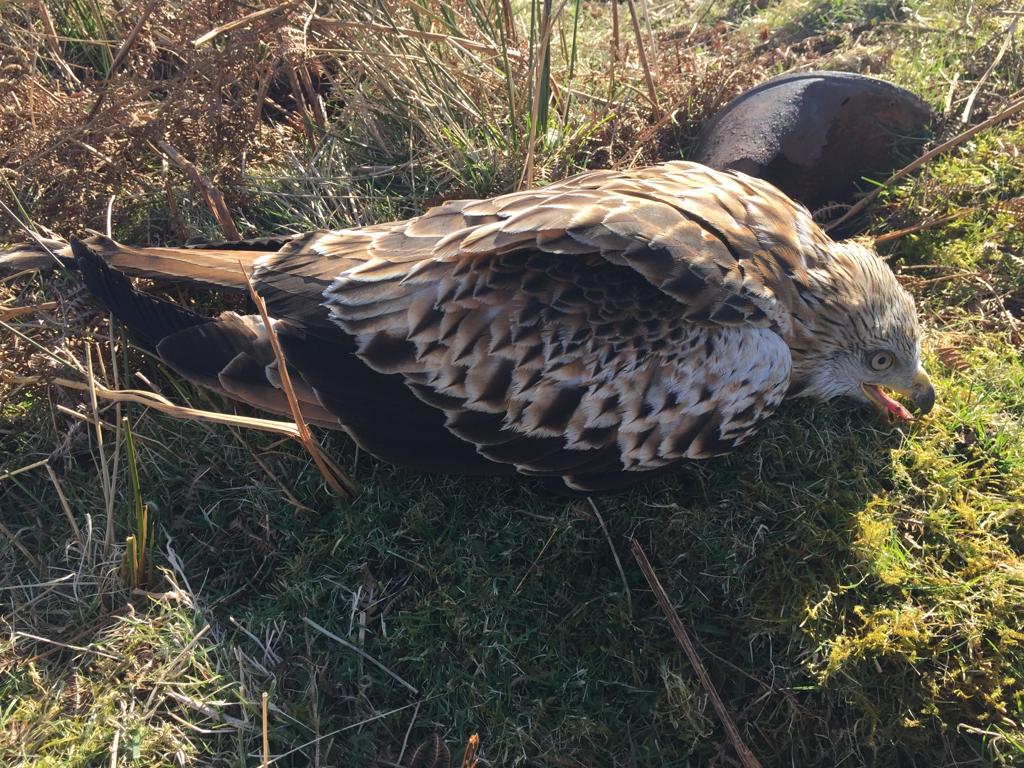
Last month, Police Scotland and the Scottish SPCA issued an appeal for information in relation to the discovery of a critically-injured red kite near Closeburn in Dumfries & Galloway on 5th June 2023 (see here).
The kite’s injuries were so severe it had to be euthanised, and the Police/SSPCA were keen to trace the man who had handed in the kite.
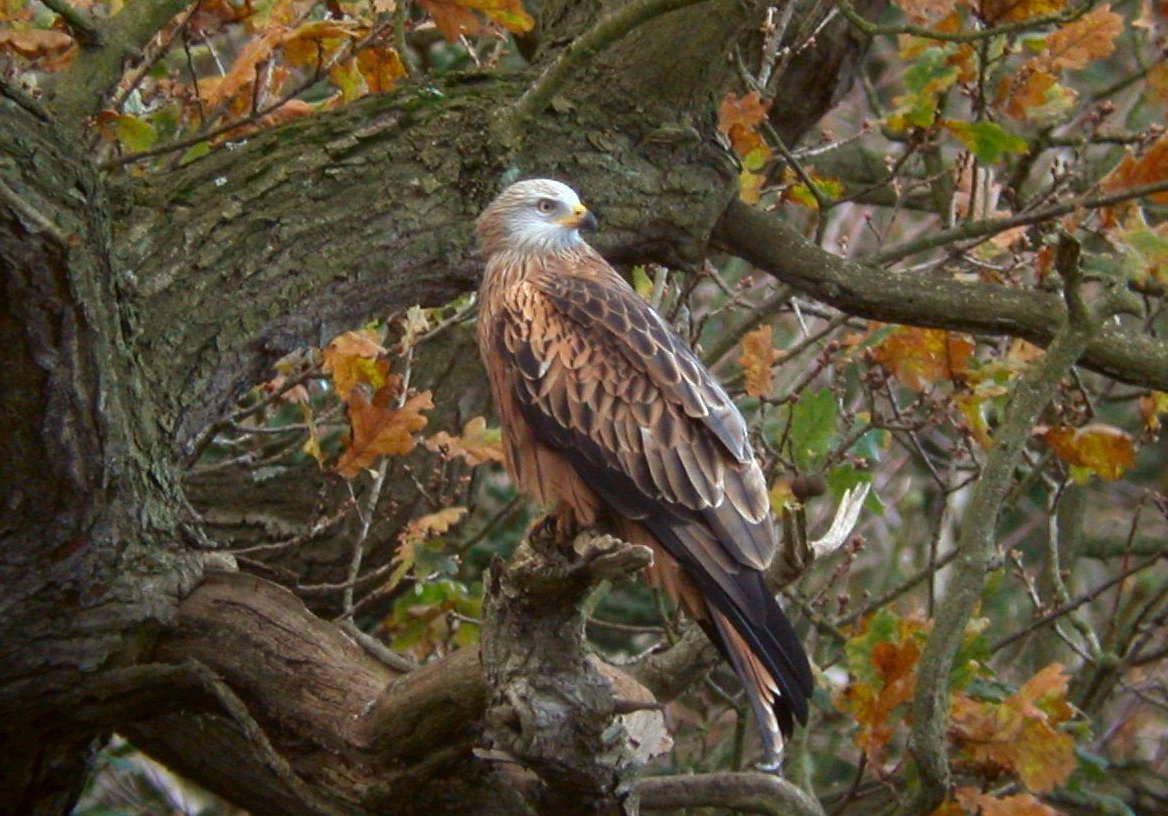
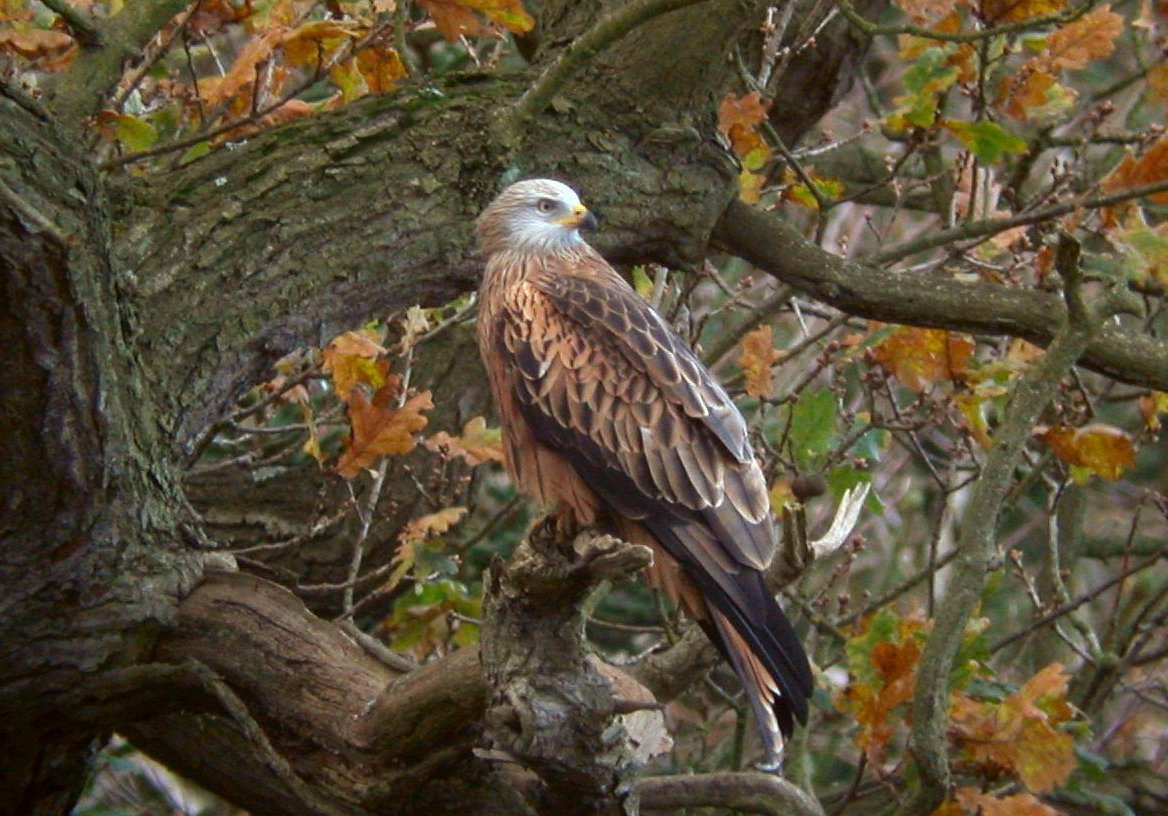
Red kite. Photo by Doug Simpson
In an update published on the BBC News website (here) it is reported that this kite had suffered gunshot injuries.
It’s also reported that the person who handed in the injured kite has now been traced and inquiries are ongoing.
RED KITE SHOT AND POISONED IN DURHAM RAPTOR CRIME SPOT
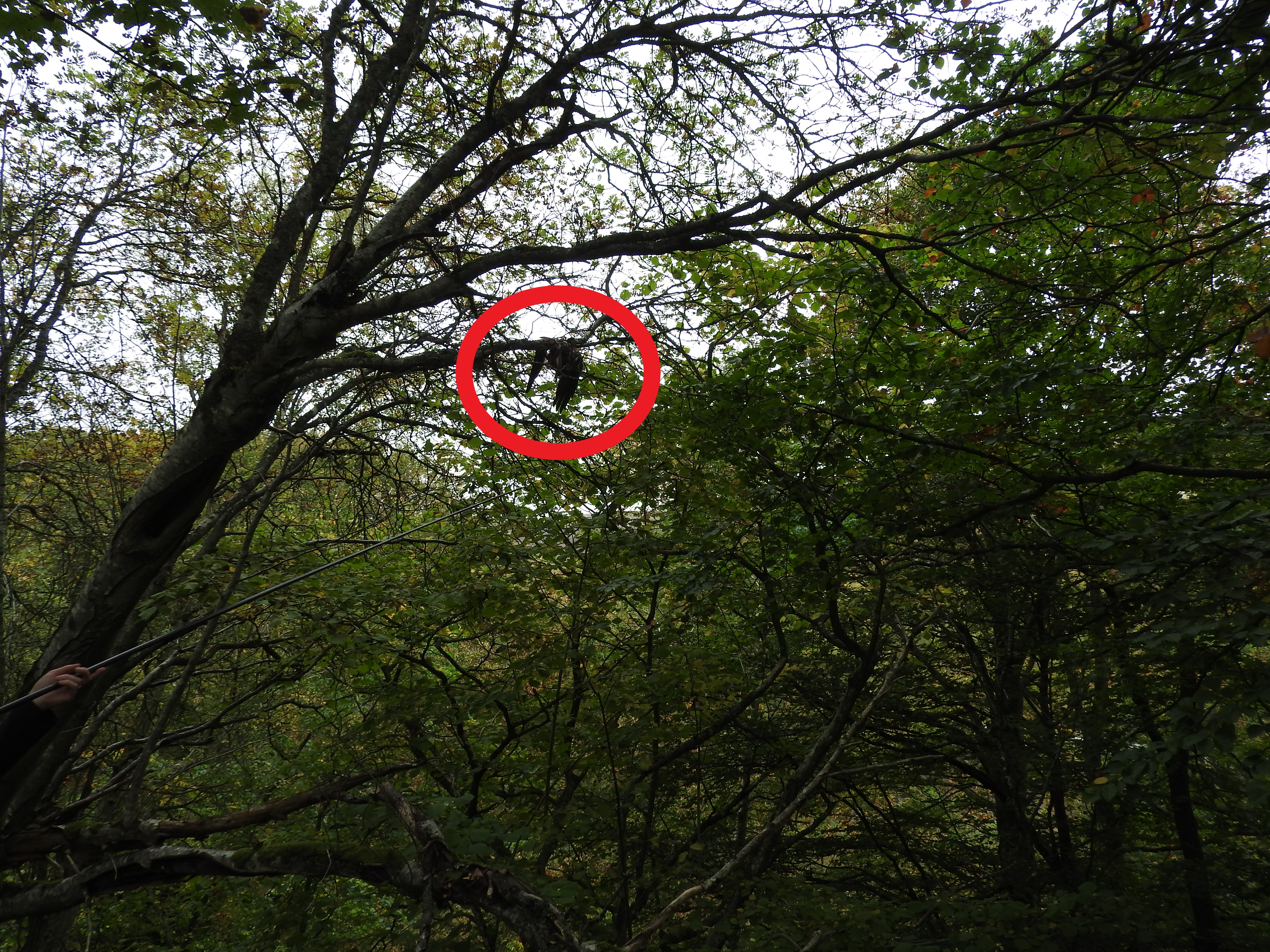
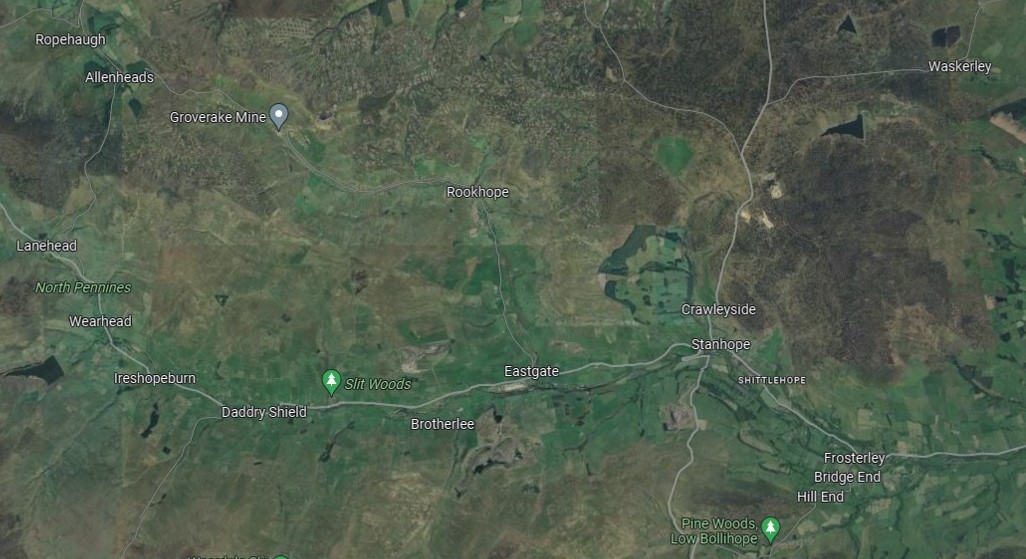
The protected bird of prey was found dead, hanging in a tree near Stanhope Burn, in the North Pennines Area of Outstanding Natural Beauty
The Weardale area has become a hotspot for raptor persecution
Police and partners want members of the public to report dead birds of prey and generate more information on raptor persecution in the area
A Red Kite found dead in Stanhope has been confirmed as having been both shot and poisoned, once again highlighting the area’s serious problem with bird of prey persecution.
The protected bird of prey was discovered hanging in a tree by a member of the public in October 2022. The bird’s body was x-rayed and found to contain pieces of shot revealing that the bird had been shot at some point in its life. But when the bird was sent for official toxicology examination, the body was found to contain the highly toxic pesticides carbofuran and bendiocarb – which were confirmed by testing to be the cause of death. Both these substances are frequently seen in bird of prey poisoning cases despite being banned for legal use in the UK for many years.
Illegally shot & poisoned red kite hanging in a tree near Stanhope in the North Pennines AONB, October 2022. Photo: RSPB
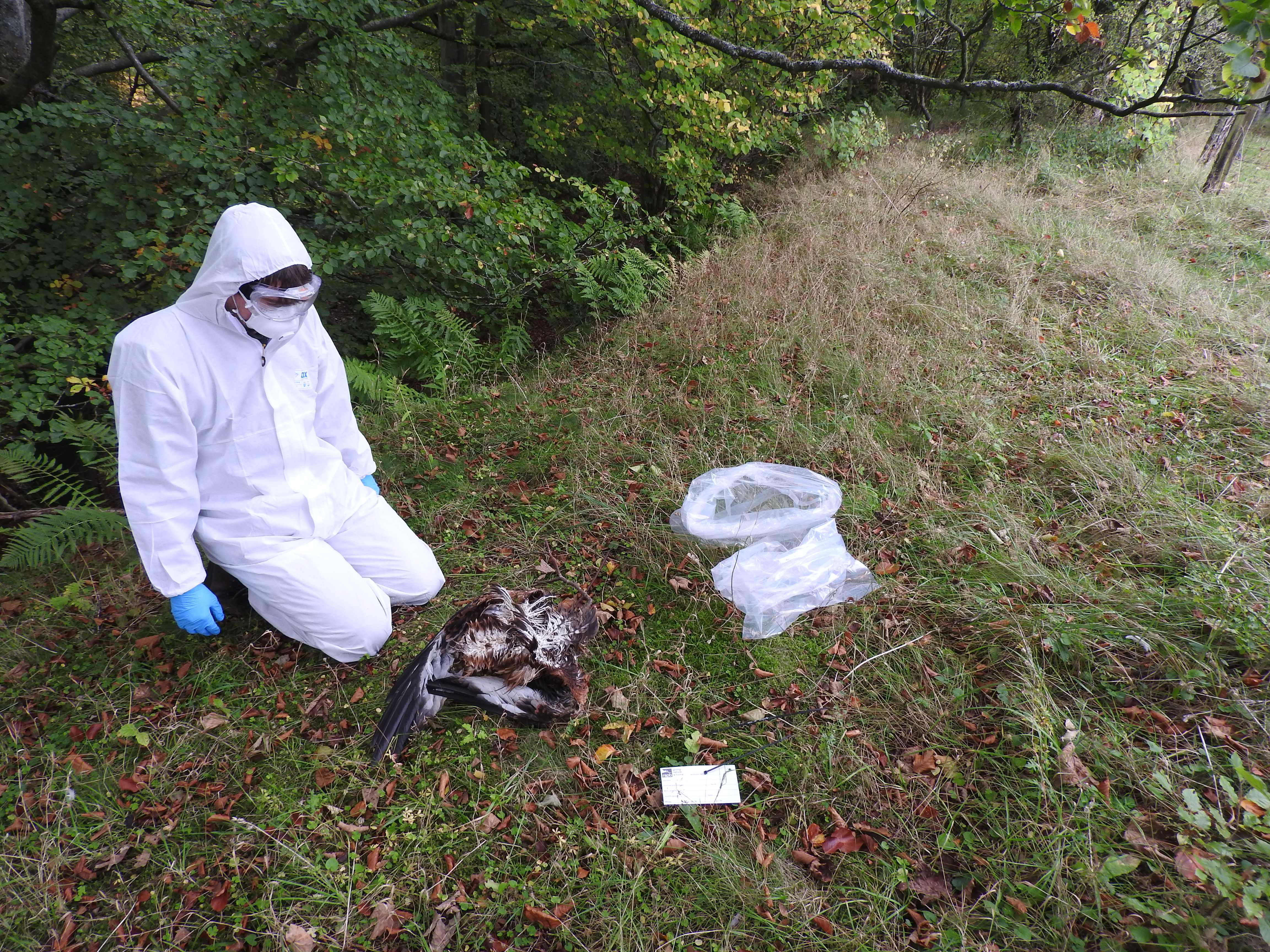
Investigator collecting the shot & poisoned red kite near Stanhope, Oct 2022. Photo: RSPB
Red Kites are graceful birds with long wings and a distinctive forked tail. Forty years ago their numbers were limited to a small population in Wales due to illegal persecution, until successful reintroduction programmes in the 1980s and 90s brought them back from the brink. However persecution remains a threat, even today. Like all birds of prey, they are legally protected in the UK, punishable by jail and/or an unlimited fine.
Last month (May 23), police and partners carried out searches of land and buildings the area, in connection with the incident.
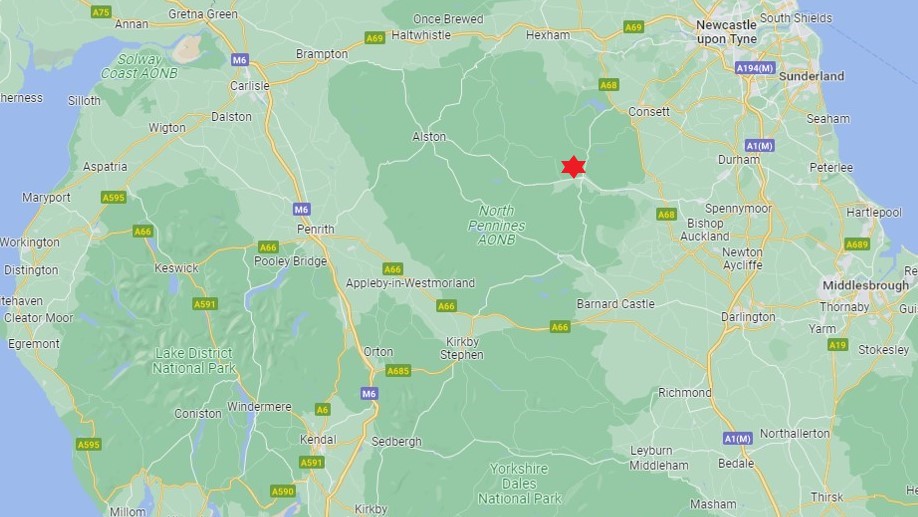
Red star indicates approximate location of latest crime in the North Pennines AONB
Stanhope Burn, to the NW of Stanhope, is next to moorland managed for driven grouse shooting
This is the latest of a series of crimes involving birds of prey being illegally killed in this part of the North Pennines Area of Outstanding Natural Beauty (AONB).
In 2020, two GPS satellite-tagged Red Kites disappeared in the Edmundbyers area in suspicious circumstances [Ed: see here]. Both tags – fitted as part of a species monitoring scheme by Friends of Red Kites, who monitor the red kite population in North-east England – had been transmitting as expected until they suddenly stopped. Neither bird, nor their usually very reliable tags, have been seen since.
In 2021, a Red Kite was found poisoned by carbofuran and bendiocarb, also in the Edmundbyers area.
The following year, police together with partner agencies conducted a raid on nearby grouse moor estates in Durham and Northumberland, following previous incidents and intelligence related to bird of prey killing in the area [Ed: see here].
And in March 2023, a Red Kite was found shot, but still alive, on a grouse moor in Edmundbyers [Ed: see here]. Luckily, after care by local vets and a specialist rehabilitator, the bird recovered and was released back into the wild [Ed: see here].
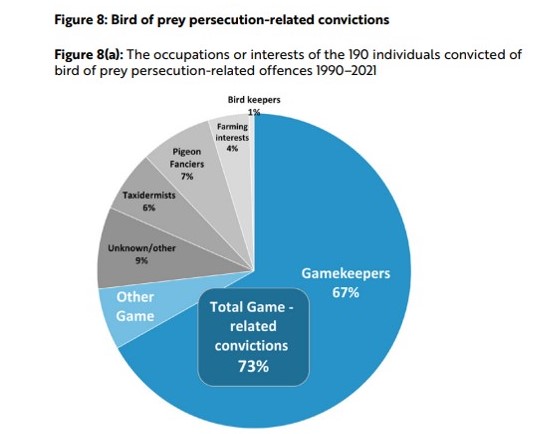
The RSPB’s Birdcrime report, published last autumn, revealed that over two-thirds (71%) of all confirmed raptor persecution incidents in 2021 related to land managed for gamebird shooting. And since 1990, 67% of those convicted of these crimes have been gamekeepers.
Data from RSPB’s Birdcrime Report (2021)
Mark Thomas, RSPB Head of Investigations, said: “We are concerned about a spate of concentrated raptor crimes which is rendering the Weardale grouse moors a hotspot for the illegal killing of birds of prey. As such, we are concentrating our efforts of detection on this area, in the hope of catching anyone targeting protected birds such as Red Kites, which should be breeding successfully in this area. But we critically need the public to be our eyes and ears and report potential crimes to ourselves and the police.
“The fact that bird of prey persecution continues against the public interest makes it clear that additional regulation for grouse moors is necessary. We believe all grouse moors and their owners or sporting tenants must be licensed, as is happening in Scotland, to provide a meaningful deterrent to the illegal killing birds of prey. Ultimately this could mean the loss the licence to shoot grouse, if the Police are satisfied that wildlife crimes against raptors are occurring on a particular landholding. Law-abiding estates should have nothing to fear from this approach”.
PC David Williamson of Durham Constabulary said: “The illegal killing of birds of prey unfortunately is continuing in our rural areas. It is unacceptable that anyone should think they can ignore the law and kill these birds by poisoning, shooting, trapping or nest destruction and disturbance. I am sure that people in our community will know who is committing these offences and I would urge anyone with any information to report this. Durham Constabulary will continue to work with our partners to tackle this criminal activity, investigate any reports and prosecute offenders”.
If you notice a dead or injured bird of prey in suspicious circumstances, call the police on 101 and fill in the RSPB’s online reporting form HERE.
If you have information about anyone killing birds of prey which you wish to report anonymously, call the RSPB’s confidential Raptor Crime Hotline on 0300 999 0101.
North Yorkshire Police has issued the following press statement:
APPEAL FOR INFORMATION ABOUT THE SHOOTING OF A RED KITE
North Yorkshire Police’s Rural Task Force is appealing for witnesses and information about the shooting of a Red Kite which happened near Westerdale, on the North York Moors.
The Red Kite, which was suffering from gunshot wounds, was found by a member of the public on Tuesday 13 June. Despite being immediately taken to the vets it needed to be put to sleep due to the extent of its injuries. The wounds were fresh suggesting it had been shot recently.
It is against the law to intentionally kill, injure or take wild birds.
North Yorkshire Police is requesting the public’s assistance to help establish the full circumstances surrounding this incident. In particular anyone who witnessed shooting in the Westerdale area on either Monday 12 or Tuesday 13 June 2023.
Anyone with information that could assist with this investigation should email Jack.donaldson@northyorkshire.police.uk or call North Yorkshire Police on 101, select option 2, and ask to speak to Jack Donaldson.
If you wish to remain anonymous, you can pass information to Crimestoppers on 0800 555 111.
Please quote the North Yorkshire Police reference number 12230107850 when passing on information.
North Yorkshire has the highest incidence of raptor (birds of prey) persecution of any English county. The dedicated Rural Taskforce and specially-trained wildlife officers are committed to stopping these crimes and bringing offenders to justice.
Operation Owl is a joint initiative by North Yorkshire Police, RSPB, RSPCA and the North York Moors and Yorkshire Dales National Parks.
People can help by being their eyes and ears out on the moors and dales. If you spot a dead or injured bird, poisoned bait or a pole trap, please note the location, take a photo and call North Yorkshire Police on 101 to report it.
ENDS
I’m assuming this is the same red kite that was reported in the papers yesterday morning (here), although those reports had identified the location as ‘the Whitby area’, which is nowhere near Westerdale, but the time and date are the same.
Yesterday’s reports also stated the red kite had been found ‘in suspicious circumstances’. I don’t know who wrote that earlier report but it wasn’t at all helpful, accurate or informative.
The later press release from North Yorkshire Police, as reproduced above, is much better, especially the speed with which it’s been published. It’s also good to see the police provide some context to this crime, discussing Operation Owl, the extent of these crimes in this grouse shooting hell hole (supposedly a National Park), the types of evidence people may see, and what to do about it if they do see it.
It’s unlikely to lead to anyone coming forward though. There’ll be the usual wall of silence from the grouse-shooting community, who persistently refuse to provide any assistance in wildlife crime investigations, and it would be unusual if a member of the public had witnessed anything in such a remote landscape and been able to identify the person pulling the trigger.
Meanwhile, however, the pressure, and evidence, continues to mount on DEFRA Ministers to recognise that raptor persecution is a widespread issue and people are getting more and more pissed off that the shooting industry is allowed to get away with such blatant criminality, time and time and time again.
UPDATE 4th July 2023: 2nd red kite found shot nr Westerdale in North York Moors National Park in recent weeks, with suspicions of a third one (here)
UPDATE 9th October 2023: Buzzard shot & critically injured in North York Moors National Park (here)
North Yorkshire Police is appealing for witnesses after the discovery of an injured red kite found ‘in suspicious circumstances’ in the Whitby area on Tuesday morning (13 June 2023).
The kite was later euthanised by vets due to the severity of its injuries.
Unfortunately no other details are available.
If you have any information in relation to this incident please contact PC 774 Jack Donaldson: jack.donaldson@northyorkshire.police.uk
UPDATE 17th June 2023: Red kite found shot in North York Moors National Park: police appeal for information (here).
Police Scotland and the Scottish SPCA have appealed for information in relation to the discovery of a critically-injured red kite in Dumfries & Galloway.
A red kite. Photo: Doug Simpson
According to the BBC News website (here), the authorities are keen to trace the man who found the injured kite near Closeburn at around midday on 5th June 2023. It’s reported that the kite’s injuries were so severe the bird had to be euthanised.
The man is described white, 50 to 60 years old, about 5ft 10in tall, of medium build with short white hair.
The Police and SSPCA want to speak to him and have appealed for witnesses.
No further details are available at the moment.
UPDATE 4th July 2023: Red kite found injured in Dumfries & Galloway had gunshot wounds (see here)
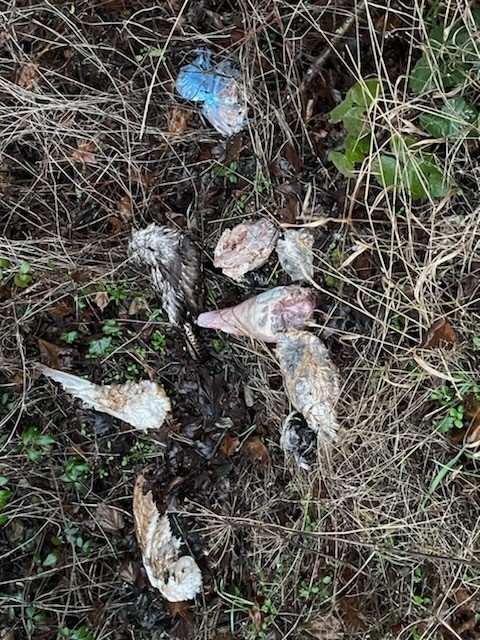
In January 2023, Detective Constable Aaron Flint from Lincolnshire Police’s Wildlife Crime Unit appealed for information after the discovery of various body parts from three barn owls, one tawny owl and one red kite were found dumped in a ditch near Sleaford (see here and here).
Photo by Lincolnshire Police
Today, DC Flint has provided an update on the investigation:
The UK’s oldest known red kite has died in Oxfordshire.
Aragon, named after the region in Spain from where he was donated, was one of the red kites released in the Chilterns in 1994 as part of a UK reintroduction scheme.
Schoolchildren in Brize Norton recently found him injured outside their school and he was collected by Chrissie Gaines who runs a local owl sanctuary and was taken for veterinary attention. She believed he’d been attacked by other birds.
Aragon the red kite. Photo: Chrissie Gaines
Unfortunately but unsurprisingly, he didn’t survive his injuries and died aged 29 years.
In April 2023, Barry Nicolle, 67, a wildfowl collector from Dumfries & Galloway, pleaded guilty to 14 charges relating to the poisoning of red kites with banned pesticides, which included the placing of poisonous baits out in the countryside (see here and here).
This morning he was sentenced at Dumfries Sheriff Court and was given a monumentally inadequate community service order – to complete 216 hours of unpaid work within 12 months.
The RSPB has issued the following press release:
DUMFRIES-SHIRE MAN GIVEN COMMUNITY PAYBACK ORDER FOR ‘SERIOUS’ BIRD POISONING OFFENCES
A Dumfries and Galloway wildfowl collector was today (19 May 2023) sentenced to 216 hours of community payback at Dumfries Sheriff Court, after being convicted of multiple charges relating to the use of illegal poisons to target protected wildlife.
At a previous hearing, Barry Nicolle (67) plead guilty to 14 charges, including the illegal poisoning of five Red Kites and 10 Rooks, the placing of poison baits out in open countryside and the possession of banned pesticides.
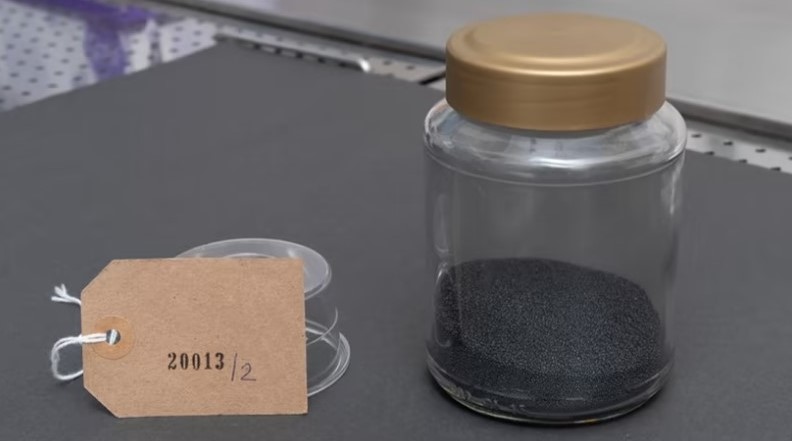
A container of the banned poison Aldicarb, found at Nicolle’s house. Photo: Crown Office
Speaking in court today, the Sherriff said the crimes were serious enough to cross the threshold for prison to be considered, however given that the individual had no previous convictions, in light of his age, and due to sentencing guidelines regarding custodial penalties of less than 12 months, a community order was served.
The case dates back to spring 2019, when several dead Red Kites were found by members of the public in the Springholm area, between Dumfries and Castle Douglas. Toxicology tests by the Science and Advice for Scottish Agriculture government laboratory revealed that all had died after consuming meat laced with poison. More victims were identified over the following months, including a number of Rooks found poisoned in the playground of the local primary school. One kite found killed was lying adjacent to the body of a Mandarin Duck used as a bait and found to have been laced with the same banned pesticide that killed the kite.
Mandarin Ducks are not a native species in Scotland, and the use of this exotic species as a bait drew Police Scotland’s attention to Nicolle who kept a large collection of exotic ducks and geese in an enclosure next to his house. During the execution of a search warrant at his premises in February 2020, police officers found quantities of aldicarb and bendiocarb, both illegal poisons, and both of which had been detected in the victims. Officers also found a Larsen trap being used illegally adjacent to Nicolle’s duck ponds. Nicolle was subsequently arrested and charged.
Ian Thomson, RSPB Scotland’s Head of Investigations, said: “We welcome today’s conviction of a Mr Nicolle for multiple offences linked to the illegal poisoning of Red Kites and Rooks around the village of Springholm. The placing of poison baits out in the open is illegal, dangerous and indiscriminate. It is exceedingly fortunate that Mr Nicolle’s repeated actions did not result in serious injury to a young child.
“The investigation of this case was an excellent example of partnership working. We would particularly like to thank Police Scotland, notably wildlife crime officer PC John Cowan, for their dogged determination to identify the perpetrator of these offences and to see them face justice, and to Procurators Fiscal from the Crown Office’s Wildlife and Environmental Crime Unit, for their diligent work in securing a conviction in such a complex case.”
Red Kites became extinct in Scotland in the 19th century due to persecution, but have been reintroduced in four areas, including Galloway. The reintroduction project here ran from 2001-04. Now, of an established Scottish population of around 450 pairs, Dumfries & Galloway contains about a third of these, making it the most important area of the country for these birds and their future conservation. In addition, the Galloway Red Kite Trail is a significant local tourist route, with over 100,000 visitors coming to the area to see the kites and contributing £8.2 million to the local economy between 2003-2015.
Red kite. Photo: Dick Forsman
Detective Inspector Dean Little, Senior Investigating Officer at Police Scotland, said: “Wildlife crime can be complex to investigate and difficult to prove in court. In this case local officers on the ground were able to promptly gather evidence and work with a number of partners who utilised specialist forensic methods to build a case against Nicolle.
“Scotland’s wildlife is one of its greatest attractions, which is especially true in our local area. Nicolle’s reckless use of illegal poison was not only selfish and damaging to the birds it killed, but also posed a risk to the environment and members of the public who came across them.
“I would like to thank the numerous partners who assisted in this case and members of the public who provided information and assisted police enquiries. Crimes against nature are not unpunishable and we welcome the sentencing today of Nicolle which shows our continued commitment to investigate wildlife crime and bring perpetrators to court.”
ENDS
Given the extent and seriousness of Nicolle’s crimes, I just can’t believe how lenient the Sheriff has been, although obviously he is constrained by sentencing guidelines.
It’s a complete replication of what happened when gamekeeper Alan Wilson was sentenced for his multiple offences at Longformacus in the Scottish Borders in 2019 (see here). Wilson also avoided jail, also avoided a fine and was just given a community payback order of 225 hours. It’s as though the Sheriffs in these cases are considering the offences as individual offences instead of looking at them as a cumulative pattern, which would easily then pass the custody threshold and exceed the 12 months limit.
Unfortunately, Nicolle committed his crimes prior to the enactment of the new Animals & Wildlife (Penalties, Protections & Powers) (Scotland) Act 2020; legislation that was introduced to increase the penalties available for certain wildlife crimes, including those under Section 1(1)(a) of the Wildlife & Countryside Act – ‘Intentionally, or recklessly, killing, injuring, or taking a wild bird‘.
Although, as we saw in a recent test case of this new legislation (the sentencing of a gamekeeper on Moy Estate for raptor-killing), it won’t necessarily lead to a significant punishment (see here).
I feel incredibly sorry for the multi-agency investigators in the latest case, who have clearly worked hard to bring a successful prosecution against Nicolle. In my opinion this pathetic sentence doesn’t reflect their efforts, doesn’t act as a deterrent for others, and certainly doesn’t reflect the seriousness of Nicolle’s crimes, which he knowingly committed, repeatedly, over a period of months.
Despite his conviction, this is a bad day for wildlife crime fighters.
UPDATE: The Crown Office has published the following statement, which provides a few more details:
MAN SENTENCED FOR POISONING WILD BIRDS
A 67-year-old waterfowl enthusiast has been sentenced for killing multiple birds of prey and other birds.
Barry Nicolle, who runs an exotic wildfowl breeding farm in Dumfries and Galloway, has been given a Community Payback Order and ordered to carry out 216 hours of unpaid work after pleading guilty at Dumfries Sheriff Court to the indiscriminate use of banned poisons, which killed five red kites and ten rooks.
This believed to be the first Scottish conviction in which multiple birds of prey have been killed with poison.
He also pled guilty to possession of several highly toxic pesticides, using a crow trap illegally and an air weapon licensing offence.
Between May 2019 and February 2020 Nicolle laced bait including mandarin duckling and a mallard duck with banned pesticides. He also placed poisoned bread on fence posts around his land which is about 150m (164 yards) from Springholm Primary School.
All of this was done to attract and kill scavengers in a bid to protect his own collection of exotic and ornamental waterfowl from a perceived threat.
Speaking after the sentencing, Fiona Caldwell, who leads on wildlife and environmental crime for the Crown Office and Procurator Fiscal Service (COPFS) said:
“Barry Nicolle’s actions led to the illegal killing of multiple Red Kite’s and Rooks.
“The laying of bait laced with poisons was shockingly irresponsible and Nicolle has shown an utter disregard for the wildlife laws which serve to protect these species.
“I would like to thank Police Scotland, RSPB Scotland, the Scottish SPCA, the SRUC Veterinary Investigation Centre and SASA for their part in investigating and gathering evidence of these repugnant offences.
“The law protects wild birds and those who seek to poison them or possess stocks of illegal poison can be assured that the Procurator Fiscal will continue to prosecute such cases and ensure that offenders face the consequences of their actions.”
The court heard that numerous reports of suspicious deaths of red kites in the Kirkpatrick Durham and Springholm areas were made to Police Scotland, RSPB and the Scottish SPCA Inspectors by members of the public.
Springholm is at the heart of the breeding red kite population’s range in South West Scotland making it a key area of the country for these birds and their future conservation.
Several red kite were found lying motionless on the ground in a distressed state and had to be euthanised. The ten poisoned rooks were found on the grounds of Springholm Primary School.
Subsequent post-mortem examinations by Scotland’s Rural College (SRUC) Veterinary Investigation Centre and toxicology analysis by the Science and Advice for Scottish Agriculture (SASA) Chemistry Branch established a pattern and cause of death linked to a banned Carbofuran based pesticide called Aldicarb.
All the deaths centred around Nicolle’s property and as a result of these enquiries police applied for and were granted a warrant to search Wickerty Snook.
On the morning of 4 February 2020 police wildlife officers, along with an RSPB investigator, a SASA scientist and others executed the warrant.
During the search of Nicolle’s home, the poisons Aldicarb, Bendiocarb and Phostoxin, which contains aluminium phosphide, were found.
Poisoned bait and traps, including an untagged and therefore illegal Larsen trap, were found on his land.
A poisoned red kite found in Lincolnshire in 2020 led to a multi-agency raid of two properties in March 2021 where suspected poisons were seized and sent for analysis (see here and here).
Last month, Lincolnshire Police issued the following statement in relation to this investigation:
‘A man has been charged with possession of an item for the purpose of killing a wild bird.
Jamie Harrison, aged 53, of Paulette Court, Spalding, has received a postal charge for possession of a poisonous substance for the purpose of killing a wild bird.
Harrison was interviewed after a warrant was executed in Spalding, in March 2021.
He is due to appear at Boston Magistrates’ Court, later this month.
Our Rural Crime Action Team was formed as part of Chief Constable Chris Haward’s pledge to provide a focus on targeting offences that affect our rural communities’.
No further details are available but I understand the next court hearing will be in June.
Well done to Lincolnshire Police’s Rural Crime Action Team and all the agencies involved in this investigation (NWCU, Natural England, RSPB).
As criminal proceedings are now underway, comments won’t be posted until the case concludes. Thanks for your understanding.
At the end of March the RSPB issued a press statement about a shot red kite that had been found on a Durham grouse moor (see here).
An x-ray revealed multiple shotgun pellets in the kite’s body, resulting in a fractured wing. The kite was described as ‘fighting for its life’.
After several weeks of expert care and attention by the brilliant Jean Thorpe (Ryedale Wildlife Rescue) and her equally as brilliant colleagues at Battle Flatts Veterinary Clinic, today the red kite was successfully released back to the wild.
The RSPB has released this short video on Twitter:
Fantastic news! As of today a Red Kite found shot on a grouse moor in County Durham is flying free once more. Thanks to the member of the public who found it, and @jeanthorpeRR for her expert care – without which this bird wouldn't have had a chance. One of the lucky ones. pic.twitter.com/ON2d5egocC
Durham Constabulary is still appealing for information about the shooting of this kite.
If you have any information, contact Durham Constabulary’s Wildlife Crime Officer, PC Dave Williamson, by emailing david.williamson@durham.police.uk or calling in to Barnard Castle Police Station.
Alternatively, to share sensitive information in confidence, call the RSPB’s Raptor Crime Hotline on 0300 999 0101.