
Well, well, well.
The Game & Wildlife Conservation Trust (GWCT), “the leading UK charity conducting conservation science to enhance the British countryside for public benefit” (their words, not ours), have been promoting ‘best practice guidelines’ that are actually illegal.
In an illuminating blog on Mark Avery’s website today (see here), Natural England has clarified the legal position of when, and how, wild red grouse may be caught and treated with anti-parasitic wormer drugs. This stemmed from questions that were raised in a previous blog on Mark’s site (see here) and also from questions we raised a few days ago (see here).
Natural England has confirmed that red grouse may only be caught (in England) for direct dosing during the shooting season, and they may not be caught at night by using spotlights to dazzle (stun) the birds, nor may nets be used. NE categorically states that red grouse are not to be caught in the closed season (Dec 11 – August 11) for the purpose of medication.
Compare this with the GWCT’s ‘best practice guidelines’ for the direct dosing of red grouse: strongylosis-control-in-red-grouse_GCT 2004 which advises on the techniques that can be used for catching red grouse at night (spotlights and nets) and the timing of such captures, “through the winter months and into the early spring“.
Ooops.
The GWCT may argue that these ‘best practice guidelines’ were published way back in 2004, prior to NE publishing their official advice on this issue in 2012 (see here). That would be true, but their ‘best practice guidelines’ were still illegal practices in 2004 (didn’t they research the legalities before publishing their guidelines?) and these ‘best practice guidelines’ are still available on the GWCT website today (see here).
‘Best practice’ guidelines imply that the topic has been thoroughly researched and the subsequent advice is considered the most appropriate, and importantly, that it complies with the legislation. In this case, it doesn’t.
And that’s not all. The GWCT’s ‘best practice guidelines’ for the direct dosing of red grouse encourage grouse moor managers (gamekeepers) to mark the birds that have been treated. That makes sense, because gamekeepers will need to know whether a bird they’ve just caught has already received the drugs. However, the GWCT suggests that birds be marked with a ‘numbered wing tag or a numbered leg ring’. But anybody wanting to fit a leg ring to a wild bird in the UK must first be a qualified ringer with a permit from the BTO, which takes years of specialist training (see here). To fit a wing tag, the person must also have an endorsement on their ringer’s permit allowing them to attach ‘unconventional markers’ to a bird. How many gamekeepers do you think hold a BTO ringer’s permit AND a special endorsement for fitting wing tags? It would be easy to find out – all BTO licensed ringers are required to submit annual returns detailing the birds that have been ringed and if they don’t, their permits are not renewed. We could ask the BTO how many returns they’ve had for red grouse ringing and marking. And while we’re on the subject of permits, what sort of training/qualification is required for somebody to administer a controlled veterinary drug to a wild animal? Surely five years of vet school, no?
The more you look at the grouse shooting industry, the more you realise what they’ve been able to get away with without anybody scrutinising their activities. This industry uses the guise of ‘best practice’ guidelines to imply that they’re all working within the law, constantly re-appraising their methods to ensure that they’re meeting the high-standard regulations. It turns out that’s utter tosh, and the GWCT is at the forefront of it.
Ban driven grouse shooting – please sign here
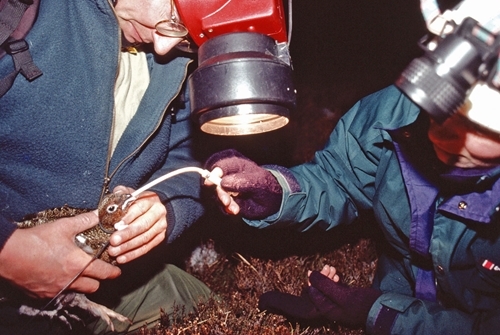
The photograph (from the GWCT’s best practice guidelines document) shows a red grouse caught at night having an anti-parasitic wormer drug forced down its throat.

 This is good news, after the disappointment of the recent failure to prosecute another vicarious liability case on the Kildrummy Estate (see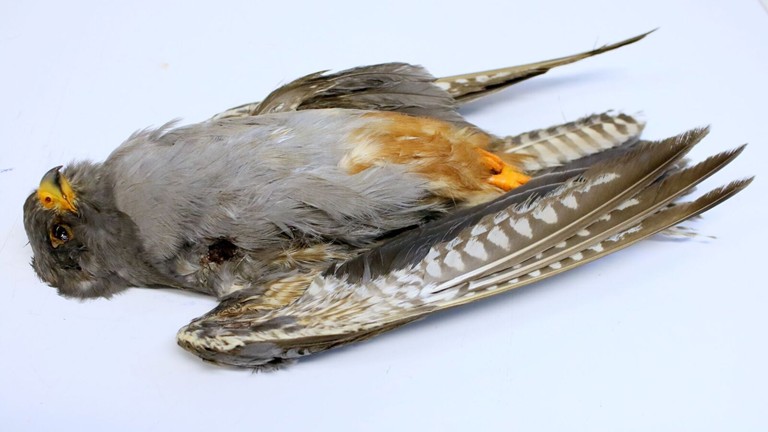
 It’s ironic that the latest scientific report detailing the harmful effects of toxic lead ammunition on both humans and wildlife has been published today, right in the middle of
  The RSPB has today published its latest annual Birdcrime report (2014), documenting the confirmed, probable and unconfirmed incidents of crimes against wild birds in the UK, including crimes against birds of prey.
 In 2011, a five-year ‘Bird of Prey Initiative’ was launched which aimed to restore declining populations of some raptor species in the Dark Peak region of the Peak District National Park.
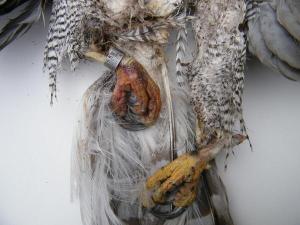 Interestingly, the group failed to set any targets to improve the breeding populations of local goshawks and hen harriers; there was just an ‘expectation’ that these species would be encouraged to breed. Sure, neither are an SPA-qualifying species in this area but nevertheless the area used to hold historically important populations which have since been reduced, through illegal persecution, to an occasional successful pair, so why exclude them?
