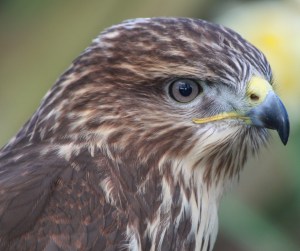
 The High Court has this morning ruled that Natural England acted unlawfully when it refused to issue licences to kill buzzards.
In 2013, Natural England issued licences to Northumberland gamekeeper Ricky McMorn, allowing him the right to destroy buzzard eggs and nests ‘to protect’ his pheasant shoots.
Later the same year, McMorn applied for further licences, this time to shoot 16 buzzards and 3 sparrowhawks. Natural England refused his application.
In 2014, McMorn submitted more applications, wanting to shoot ten buzzards ‘to prevent serious damage’ to his pheasant poults. Natural England refused his application again.
McMorn, financially supported by the National Gamekeepers’ Organisation, brought a judicial review against Natural England and claimed NE had acted unfairly and inconsistently when considering his licence applications.
The High Court judge, Mr Justice Ouseley, has agreed with McMorn’s case. He held:
(1) Natural England had unlawfully operated an undisclosed policy about how buzzard applications were to be treated. Natural England’s undisclosed policy had been to require more factors to be proved and proved by far higher quality evidence than for other species, to require individual birds to be identified as predators with proof that only those would be controlled, and to require any suggestions it made to be carried out punctiliously on pain of refusal;
(2) Natural England unlawfully took into account public opinion by applying a different and more demanding approach to the grant of a licence to kill buzzards than other species because public opinion is in part hostile to the grant of such licences;
(3) Natural England unlawfully applied published policy inconsistently as between buzzards and other species. The substantial reason for the difference in approach was some hostile public opinion;
(4) Natural England’s decision was unreasonable because it operated the derogation under the Birds Directive so as to render it excessively difficult to obtain a licence;
(5) Natural England acted unfairly in failing to raise with the claimant its own technical assessor’s suggestion of a live capture licence instead of a licence to kill.
The full decision can be read here: Judicial review buzzard licence verdict Nov 2015
So what does this all mean? For sure, this ruling will encourage more gamekeepers to submit more applications to kill buzzards ‘to protect’ their pheasants. It doesn’t mean that all licence applications will be successful, as each case will still have to be assessed on its individual circumstances and all tests will still have to be met (e.g. has the gamekeeper done everything else in his/her power to solve the perceived problem?). Nevertheless, Natural England will no doubt be wary of appearing ‘unreasonable’ when assessing future applications. This is where things will get really interesting because there is still no scientific evidence to demonstrate that buzzards have a significant impact on pheasants. Indeed, even the game-shooting industry’s own science has shown the impact to be virtually negligible, with an average of only 1-2% of pheasant poults taken by birds of prey. There are also numerous alternative measures for reducing alleged predation that should be tried and tested before the ‘kill’ option is chosen, including diversionary feeding.
If, however, buzzard-killing licences are issued, this will pave the way for what is effectively a criminal’s charter. The game-keeping industry is rife with criminals who are not averse to breaking the law; we see it time and time again, particularly in relation to the illegal killing of raptors. Let’s say a gamekeeper successfully applies for a licence to shoot ten buzzards. What’s to stop him from shooting 50? Who will know whether he’s shot his permitted ten, or whether he’s shot 50? Who is going to supervise his buzzard-killing activities to ensure that he sticks to his allotted number? Nobody! If a member of the public sees him shooting a buzzard (a highly unlikely scenario anyway but let’s just go with it for now), and reports him to the police, the gamekeeper will simply wave his buzzard-killing licence at the investigating police officer and say, “Look Guv, I’m allowed to kill ten and this is only the third one I’ve shot this year”. The police officer will have no option but to withdraw and let him get on with killing as many buzzards as he likes because it’ll be virtually impossible to prove that the gamekeeper has acted illegally, unless of course the keeper is stupid enough to leave the shot buzzards lying around as evidence, but even then it’ll be impossible to show that that individual gamekeeper had shot all the dead birds – he’ll simply claim someone else did it and dumped them on his ground.
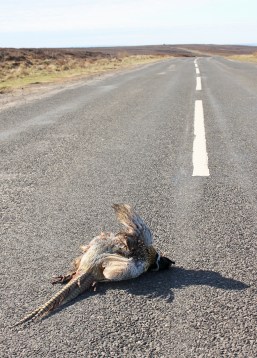 As absurd as it is, the bottom line is that DEFRA (and thus Natural England, acting on DEFRA’s behalf), permits gamekeepers (even those with criminal convictions) to apply for licences to kill protected native species like the buzzard, to allow the wholesale slaughter of millions of non-native gamebirds like pheasants, just for fun. There’s something fundamentally askew with that logic, even if you’re a die-hard supporter of game-bird shooting. A recent analysis of the GWCT’s National Gamebag Census revealed that by 2011, approx 42 million pheasants and almost 9 million red-legged partridges were released annually into the British countryside, for ‘sport’ shooting. The impact on biodiversity of releasing 50 million non-native gamebirds hasn’t been formally assessed. The game-shooting industry should accept that if they’re releasing birds in such magnitude, they should expect losses. How many are killed on the roads? An educated guess would suggest it’s a far higher number than the known 1-2% lost to raptors. If the game-shooting industry can’t operate without accepting such losses (as they claim they can’t), then it’s pretty clear evidence that this industry is unsustainable and as such, has no future.
The National Gamekeepers’ Organisation response to today’s ruling can be read here
We’ll update this blog later today as more responses are published.
Photographs copyright RPS
UPDATE: 15th November 2015: There’s a fascinating blog on the legal issues of this case, written by a legal academic at a London barristers’ chambers – see here.
UPDATE: 19th November 2015: A response to the judgement from the Northern England Raptor Forum – see here.
Previous blogs on this issue:
12 Nov 2015: https://raptorpersecutionscotland.wordpress.com/2015/11/12/licences-to-kill-buzzards-judicial-review-decision-expected-tomorrow/
12 June 2015: https://raptorpersecutionscotland.wordpress.com/2015/06/12/judicial-review-underway-for-gamekeeper-who-wants-to-kill-buzzards/
25 Nov 2014: https://raptorpersecutionscotland.wordpress.com/2014/11/25/buzzard-licence-applicant-gets-high-court-approval-for-judicial-review/
1 Oct 2013: https://raptorpersecutionscotland.wordpress.com/2013/10/01/why-we-dont-trust-the-national-gamekeepers-organisation/
26 Sept 2013: https://raptorpersecutionscotland.wordpress.com/2013/09/26/buzzard-licence-applicant-tries-for-four-more-licences/
13 Aug 2013: https://raptorpersecutionscotland.wordpress.com/2013/08/13/natural-england-claims-release-of-buzzard-licence-info-not-in-public-interest/
20 June 2013: https://raptorpersecutionscotland.wordpress.com/2013/06/20/hand-in-of-buzzard-petition-today-at-holyrood/
5 June 2013: https://raptorpersecutionscotland.wordpress.com/2014/06/05/natural-england-says-no-to-buzzard-killing-licence/
5 June 2013: https://raptorpersecutionscotland.wordpress.com/2013/06/05/surely-the-buzzard-licence-applicant-doesnt-have-prior-convictions-for-poison-offences/
3 June 2013: https://raptorpersecutionscotland.wordpress.com/2013/06/03/buzzard-licensing-turning-up-the-heat/
30 May 2013: https://raptorpersecutionscotland.wordpress.com/2013/05/30/two-important-questions-to-ask-about-the-buzzard-licence-applicant/
25 May 2013: https://raptorpersecutionscotland.wordpress.com/2013/05/25/new-petition-snh-do-not-licence-buzzard-culling-in-scotland/
23 May 2013: https://raptorpersecutionscotland.wordpress.com/2013/05/23/natural-england-issues-licence-to-destroy-buzzard-eggs-nests-to-protect-pheasants/
10 Jan 2013: https://raptorpersecutionscotland.wordpress.com/2013/01/10/the-buzzard-blame-game/
13 June 2012: https://raptorpersecutionscotland.wordpress.com/2012/06/13/buzzardgate-aftermath/
30 May 2012: https://raptorpersecutionscotland.wordpress.com/2012/05/30/defra-backs-down-on-buzzard-management-trial/
24 May 2012: https://raptorpersecutionscotland.wordpress.com/2012/05/24/defra-responds-to-public-outcry-over-buzzard-management-trial/
23 May 2012: https://raptorpersecutionscotland.wordpress.com/2012/05/23/rspb-response-to-defras-proposed-illegal-buzzard-trial/
21 May 2012: https://raptorpersecutionscotland.wordpress.com/2012/05/21/buzzard-management-trial-gets-govt-approval-and-375k-funding/

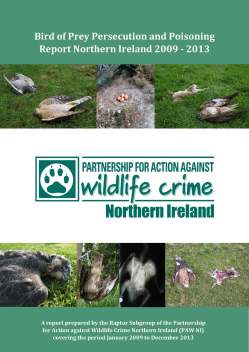 The first ever ‘official’ report on raptor persecution in Northern Ireland has been published.


 The Scottish Government has today published the long awaited report from the Wildlife Crime Penalties Review Group – and it is very good news.
 Last month we blogged about the failure of the Crown Office to initiate a vicarious liability prosecution in the Kildrummy case (see
  Regular blog readers will know that in October 2014, gamekeeper Allen Lambert was convicted of a series of wildlife crime offences on the Stody Estate, Norfolk, including the mass poisoning of birds of prey (10 buzzards and one sparrowhawk) which had been found dead on the estate in April 2013. He was also convicted of storing banned pesticides and other items capable of preparing poisoned baits (a ‘poisoner’s kit’) and a firearms offence (see

