Blog

Don’t laugh, but here’s the new Moorland Association chairman, Lord Masham

The Moorland Association, a lobby group for England’s grouse moor owners, has elected a new Chairman and its choice speaks volumes.

Mark Cunliffe-Lister (Lord Masham in some circles) owns the Swinton Estate in Nidderdale. This estate may sound familiar to some readers, and that’s because we’ve had reason to blog about it several times over the years.

The grouse moor on Swinton Estate is where satellite-tagged hen harrier Bowland Betty’s shot corpse was found in 2012 (see here) although there was no evidence to suggest her killing had anything to do with anyone on the estate, it was just rotten luck that she died there. The grouse shooting industry then pretended that she hadn’t been shot at all, even after forensic evidenceĀ confirmed she had indeed, been shot (see here). It was just rotten luck that people preferred the opinion of expert forensic scientists from the University College London Institute of Orthopaedics and Musculoskeletal Science instead of the non-expert opinion of some non-expert, non-scientists at the Countryside Alliance.

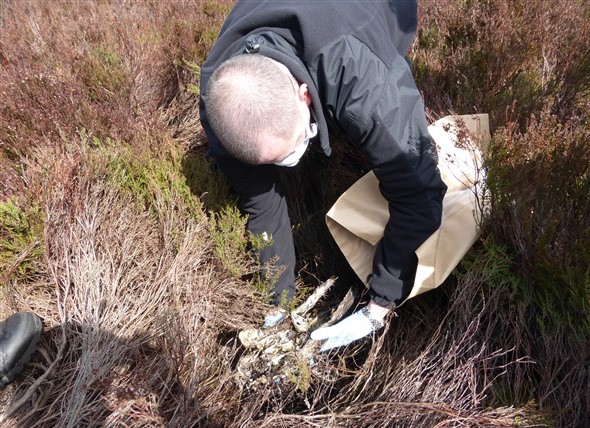
In another example of rotten luck another shot hen harrier’s corpse was found on a grouse moor at Swinton Estate in 2019 (see here); this time it was a satellite-tagged bird called River who had disappeared on the estate in November 2018. The day after she vanished, at dusk an unidentified gunman had been seen with two dogs walking through a known hen harrier roost site on the estate (see here). Again, there was no evidence to suggest River’s killing had anything to do with anyone on the estate, it was just rotten luck (again) that she died there.

[Hen harrier River’s corpse being retrieved from a grouse moor on Swinton Estate in April 2019. Photo by RSPB]

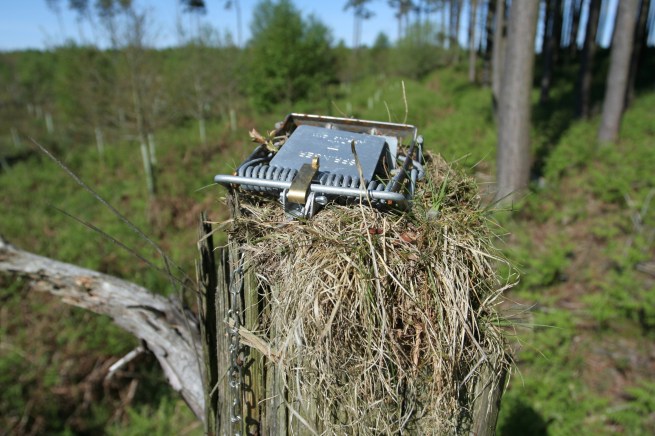
In another case of rotten luck (there’s a lot of it about in Nidderdale), a Swinton Estate gamekeeper was convicted in 2014 for setting an illegal pole trap on the estate (see here).

[Photo of the illegal pole trap set by a gamekeeper on Swinton Estate, photo by RSPB]

Now, some might argue that the Swinton Estate should have been expelled from the Moorland Association after this gamekeeper’s conviction. However, that would have been most unfair – pole traps had only been banned in the UK for 110 years at that point, it’s not as though the poor fellow had had sufficient time to adjust to the new rules. So what better way for the Moorland Association to show its support than to elect the estate owner to become Chair? Bravo!

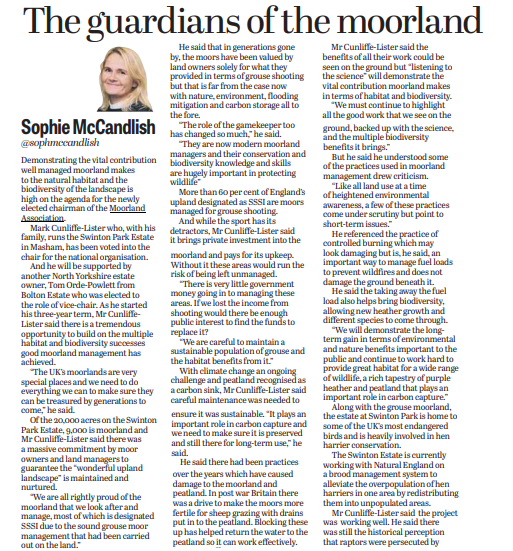
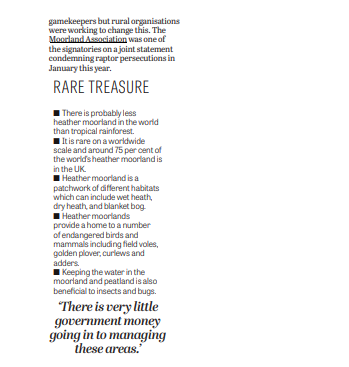
Swinton Estate was back in the news last year as it reportedly hosted successfully breeding hen harriers for the first time in many, many years. Swinton was so enamoured with them that it donated the chicks to Natural England’s brood meddling scheme which, according to this article in last weekend’s Yorkshire Post Country Week (see pressing below), is a ‘hen harrier conservation’ project which ‘alleviates the overpopulation of hen harriers in one area by redistributing them into unpopulated areas‘!!!!!!!!! Wow! Let’s just take a moment to admire the breathtaking distortion on display there.

Meanwhile, according to Lord Masham, ‘the project was working well‘….er, really? What a forgetful silly billy Lord Masham is – he ‘forgot’ to mention the difficulty in finding another land owner willing to host the brood meddled hen harrier chicks on release (see here), he ‘forgot’ to mention the suspicious disappearance of several of those brood meddled chicks after release (see here), he ‘forgot’ to mention the decision to use a new type of untested satellite tag on some of those brood meddled chicks (see here), he ‘forgot’ to mention the 31 (at least)Ā hen harriers believed to have been illegally killed since 2018, the year when grouse shooting industry repsĀ would have us believe that hen harriers were welcomed back on the grouse moors, he ‘forgot’ to mention last year’s scientific paper that demonstrated 72% of satellite tagged hen harriers were believed to have been illegally killed on or near grouse moors (see here), he ‘forgot’ to mention that far from being ‘overpopulated’, thanks to illegal persecution on grouse moors England has single-figure hen harrier nests where there should be 330+ (see here), he ‘forgot’ to mention the ongoing police investigations in to the alleged witnessed shooting of two hen harriers on grouse moors this year (see here) and he ‘forgot’ to mention the ongoing legal challenge against brood meddling by actual conservationists (see here) who can see it for exactly what it is – a Government-sponsored sham (see here).

Most of the article’s content is a re-hash of the Moorland Association’s press statement on Lord Masham’s appointment (see here – well worth a read for a good laugh) but there’s one statement in particular that appears in the article but not in the MA’s press release:

According to the Yorkshire Post article, Lord Masham said ‘there was still the historical perception that raptors were persecuted by gamekeepers….’

And there it is. That one single sentence tells us everything we need to know. An ‘historical perception‘? Yep, it’s clear to see why Lord Masham was elected; he’s going to fit right in. Moorland Association Director Amanda Anderson may well have some competition for the title of Top Contortionist in the coming weeks as we await details of the recent police investigations of alleged raptor persecution on a number of grouse moors….

Scottish Government denies ‘negotiating’ with gamekeepers on new offences for trap damage

In early May we blogged about a claim made by the Scottish Gamekeepers Association (SGA) that it was ‘negotiating with Government for a new offence to be created for damage to legal predator control tools‘, i.e. traps and snares (see here).

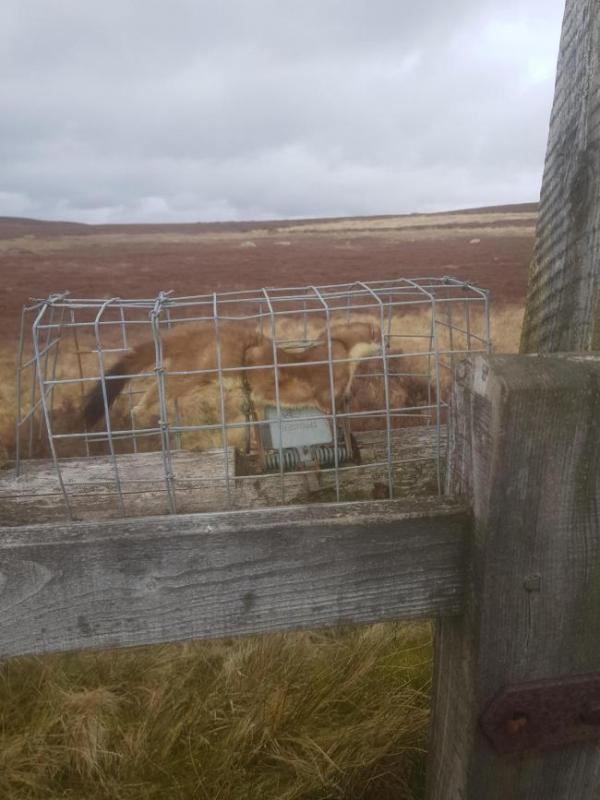
[A spring (Fenn) trap set on a log, designed to catch and kill any animal that stands on the trigger plate. Gamekeepers argue that traps like these, and others, are routinely damaged by members of the public. Photo from the Untold SufferingĀ report published by the Revive Coalition last year.Ā NB:Ā It is no longer legal to use Fenn traps for killing stoats in the UK as they have been ruled inhumane – new trap designs have recently been approved (seeĀ here)]

This claim led to Scottish Greens MSP Mark Ruskell posing two Parliamentary questions earlier this week, asking the Government for details of these alleged ‘negotiations’ (see here).

Environment Cabinet Secretary Roseanna Cunningham has now responded and her answers are hilarious:

Mark Ruskell MSPTo ask the Scottish Government what discussions it has had with the Scottish Gamekeepers Association regarding creating offences and sanctions in relation to animal trap damage, broken down by (a) date and (b) location of discussion. (S5W-28828).

Roseanna CunninghamThe Scottish Government has not had any recent discussions with the Scottish Gamekeepers Association about creating offences and sanctions in relation to animal trap damage.

Mark Ruskell MSPTo ask the Scottish Government how it plans to change the law in relation to the wilful damage of animal traps. (S5W-28829).

Roseanna CunninghamUnder existing legislation and common law a person interfering with a legally set snare or trap may be committing one of a number of possible offences.

The Independent Review of Grouse Moor Management report which was published in December recommended changes to legislation on the use of animal traps. The Scottish Government is currently considering all of the recommendations in the report and will publish a response in due course.

So, in essence then, no, the Scottish Government is not involved in ‘negotiations’ with the SGA as the SGA has claimed, and no, the Scottish Government does not appear to be considering new legislation for the provision of a new offence for alleged trap damage.

Roseanna Cunningham mentions the Government’s ongoing consideration of the recommendations made in the Werritty Review but that review did not include a recommendation for the provision of a new offence for alleged trap damage. What it did recommend, however, was new legislation for trap operators to have to undertake mandatory training before being allowed to set traps!

This begs the question then, why did the SGA claim to be ‘negotiating with Government’ when apparently it is doing no such thing?!

If the SGA could put aside its delusional posturing for a second it’d do well to be spending some time reminding its members of the current legislation on trap use.Ā According to the RSPB this week, ‘the police are following up several raptor persecution cases and multiple reports of illegal trap use on grouse moors‘ (see here). Let’s hope that none of those traps alleged to be being used illegally, belong to an SGA member.

Police warn public as suspected poisoned bait found in Co Tyrone

From the Ulster Herald two days ago:

Suspected poison left on bait near Rousky (County Tyrone)

THE Police Service Northern Ireland (PSNI) in Omagh are appealing for information following a report of suspected poison being left on bait in the Crockanboy Road area of Rousky.

It is understood that they were notified of the discovery of suspected poisoned bait on Monday morning, May 11.

ā€œFollowing liaison with the Northern Ireland Raptor Study Group and our own Wildlife Officers, we believe there may be various species of protected wildlife in the area,ā€ said Constable Collum.

ā€œIt’s our responsibility to investigate cases of suspected wildlife crime and my appeal is two-fold.

We are keen to identify those responsible and are appealing to anyone with information, or who noticed any suspicious activity in the area, to contact us on 101 quoting reference 466 of 11/05/20.

Also, I would take this opportunity to stress, to those responsible, the broad ranging consequences of such actions.  Not only are you committing a crime and potentially killing precious species of wildlife. You are also presenting a risk to domestic pets and indeed children or anyone coming into contact with the poison or poisoned animal.ā€

Information can also be provided to the independent charity Crimestoppers on 0800 555 111, which is anonymous and gives people the power to speak up and stop crime.

ENDS

The illegal poisoning of birds of prey is still very much an issue in Northern Ireland, as described in a recent ten year review published by the Partnership for Action against Wildlife Crime Northern Ireland last winter (see here). Carbofuran, a highly toxic banned pesticide, remains the poison of choice.

North Yorkshire Police leads awareness-raising day as raptor persecution crimes soar during lockdown

Further to today’s news that reported raptor persecution crimes have surged during lockdown (see here), North Yorkshire Police has issued the following press release:

North Yorkshire Police leads online day of action to raise awareness of raptor persecution

Worrying signs that incidents of birds of prey being killed or injured could be on the rise

North Yorkshire Police is joining with other police forces across the country today (15 May) in a virtual ā€˜Operation Owl’ day of action to highlight bird of prey persecution as numbers of reported incidents show no signs of slowing down.

[A shot buzzard, photo via North Yorkshire Police]

Launched in February 2018,Ā Operation OwlĀ is a joint initiative by North Yorkshire Police, the Royal Society for the Protection of Birds (RSPB) and the Royal Society for the Protection of Animals (RSPCA), together with the North York Moors and Yorkshire Dales National Parks and the Nidderdale AONB. The initiative set out to raise awareness of raptor persecution, encouraging the public to be vigilant for signs of this criminal activity, and to report suspicious activity to the police.

In June last year, Operation Owl was rolled out nationally and the first awareness weekend was held in September 2019 with 26 police forces taking part across the whole of the UK. A second national weekend of action was planned for April 2020 with 36 police forces asking to be involved. But that sadly had to be cancelled due to the Covid-19 pandemic.

Superintendent Nick Lyall, Chair of the England and Wales Raptor Persecution Priority Delivery Group (RPPDG) said:

ā€œWe’ve heard from various police forces across the country that they have seen no let-up in incidents of raptor persecution being reported and some areas have seen a significant rise in the past few weeks which is very worrying.

Whilst it is not possible to hold a weekend of action at this time, we wanted to use social media and online channels to raise awareness of bird of prey persecution and to take a stand against this unacceptable crime.

The three vital pieces of information we want to make everyone aware of are ā€˜Recognise, Record and Report’ – how to recognise bird of prey persecution, how to record it and how to report it. If you notice anything suspicious, like a dead or injured bird of prey, or a suspicious trap, call the police on 101. Take pictures on your phone, and remember please do not interfere with what could be a crime scene or a lawfully placed trap.

Please share our messages with your networks online and please be vigilant for signs of raptor persecution when you are out and about taking your daily exercise. Everyone has a part to play in helping put an end to this relentless persecution.ā€

ENDS

Police search grouse moors as raptor persecution crimes surge during lockdown

RSPB press release (15 May 2020)

Bird of prey persecution crimewave during lockdown

  • TheĀ RSPB has received a surge in reports of birds of prey being illegallyĀ killedĀ since lockdown beganĀ 
  • The majority ofĀ incidents have been on or close to sporting estatesĀ managed for game bird shootingĀ 
  • The public are being asked to stay vigilant and report crimes against birds of preyĀ 

The RSPB’s Investigations Unit has been ā€˜overrun’ with reports of birds of prey being illegally killed in recent weeks.

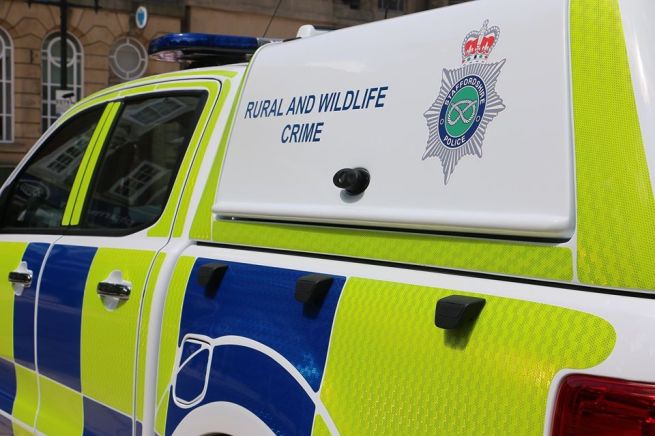
Police have been called out to investigateĀ multipleĀ cases involvingĀ the shooting, trapping and suspected poisoning of birds of preyĀ following reports by the public.

The RSPBĀ isĀ currentlyĀ aware ofĀ manyĀ confirmedĀ incidents involving theĀ targeting of birds of prey involving hen harriers, peregrines, buzzards, red kites, goshawks and a barn owlĀ in the last six weeks.Ā Amongst the cases being dealt with byĀ the policeĀ areĀ aĀ number ofĀ significantĀ ongoingĀ investigationsĀ on land managed for grouse shooting.

[A bleak, ecologically devastated landscape of intensively managed driven grouse moors, photo by Ruth Tingay]

OnĀ 29 March aĀ buzzard was found shot at Shipton, near York.Ā Its wing was fractured in two places and an x-ray revealedĀ several pieces of shotĀ within the bird’s body. Thanks to the care ofĀ a localĀ wildlife expert the buzzard recovered and was released.

Over the Easter Weekend, aĀ red kite was found shot dead near Leeds.Ā It had 12 shotgun pellets lodged in its body.

The following weekend, wildlife presenter Iolo Williams recovered aĀ dead red kite in Powys, which had been shot. Reports also came in of a further two shot red kites in the area, which is managed for pheasant shooting.

And in Scotland,Ā the police are following up several raptorĀ persecutionĀ cases and multiple reports of illegal trap use on grouse moors.

AllĀ birds of prey areĀ protected by the Wildlife andĀ Countryside Act 1981. ToĀ intentionallyĀ kill or injure one is a criminal offenceĀ and could result in an unlimited fine or up to six months in jail.

Mark Thomas, RSPB Head of Investigations UK, said:Ā Ā ā€œSince lockdown began,Ā the RSPBĀ hasĀ been overrun with reportsĀ of birds of prey being targeted.Ā It isĀ clear thatĀ criminalsĀ on some sporting estatesĀ both in the uplands and lowlands,Ā have usedĀ theĀ wider closure ofĀ the countrysideĀ as an opportunity toĀ ramp upĀ their efforts to kill birds of prey.Ā 

Spring is the time when birds of prey are most visible and therefore vulnerable, as they put on courtship displays, build nests and find food ready to breed. It is clear the criminal actions are targeted and malicious in nature, taking out birds before they have the opportunity to breed, often in areas where they have previously faced persecution.Ā 

We welcome the fact that the public is remaining vigilant and encourage any suspicious incidents to be reported. But please observe government guidelines at all times.ā€

[An illegally poisoned buzzard. Photo by RSPB]

Superintendent Nick Lyall, head of theĀ Raptor Persecution Priority Delivery Group, said:Ā Ā ā€œOver recent weeks, I have been sickened by the number of raptor persecution cases that have come to my attention as chair of the RaptorĀ PersecutionĀ DeliveryĀ Group. I know that there are officers currently investigatingĀ a number ofĀ crimes against wild birds of prey which have occurred since lockdown began.Ā 

It is clear that lockdown has been seen as a green light by those involved in raptor persecution offences to continue committing crimes, presumably in the belief that there are fewer people around to catch them doing so.Ā Ā 

I remain grateful to everyone involved in investigating these crimes, and thankfully in the vast majority of the cases I am aware of, it looks like some really good lines of enquiry are taking place which should lead to arrests and interviews.ā€

If you have any information about birds of prey being killed in your area, call the police on 101 or the RSPB’s confidential Raptor Crime Hotline: 0300 999 0101.

ENDS

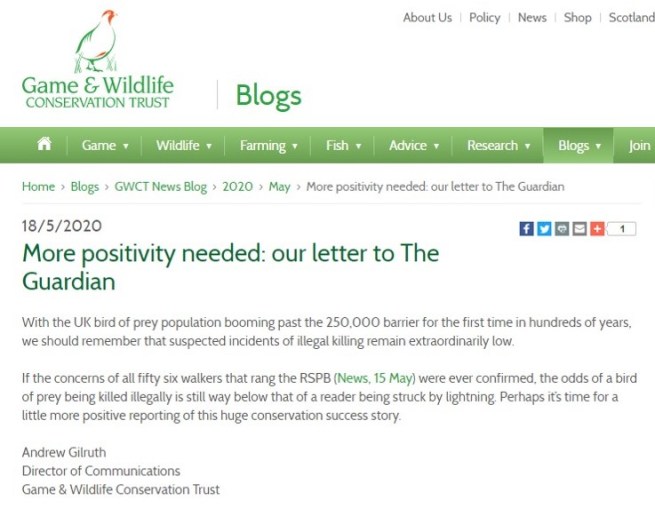
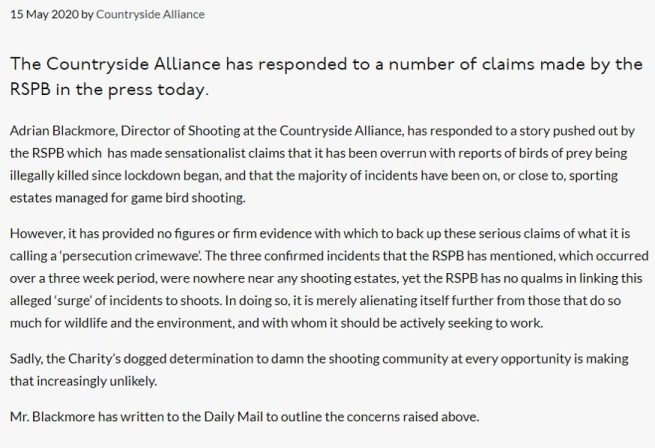
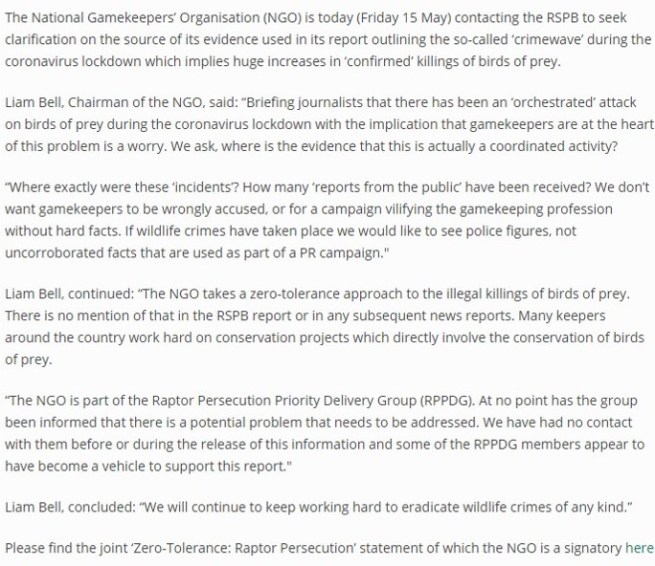
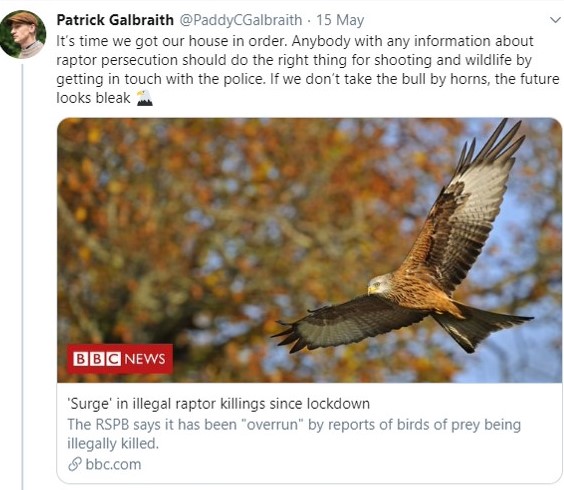
The game-shooting industry’s supposed stance of ‘zero tolerance’ for raptor persecution is going well, then.

There’ll be more news about the lockdown raptor persecution surge later today.

MEDIA COVERAGE UPDATES

BBC News website is running a piece with a quote from Amanda Anderson (Moorland Association) who essentially ignores the surge in reported crime and bleats the mantra that grouse moors are great for raptors (see here)

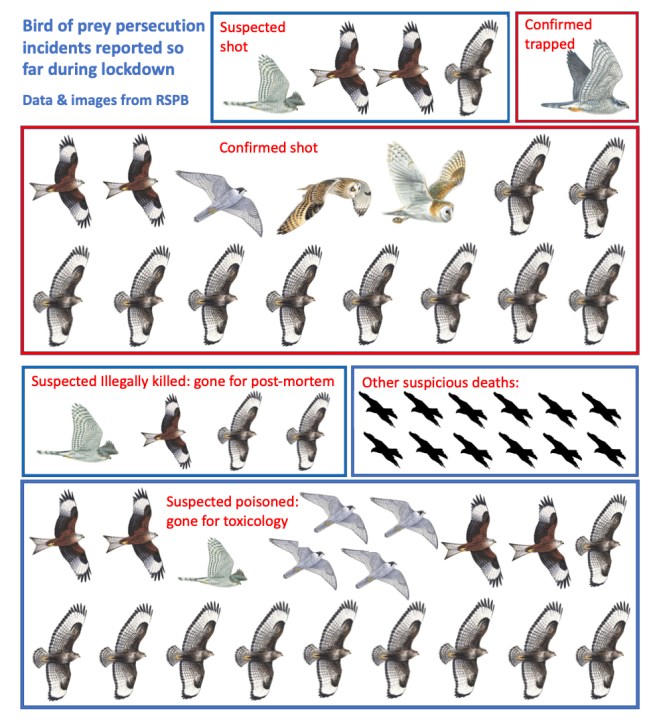
The Guardian has an article that includes more detail on the reported crimes, including 15 confirmed shot birds and 24 others submitted for further postmortem analysis after suspected illegal killing (see here)

The RSPB’s Investigations Team has published the press release (here) along with this illuminating table:

UPDATE 20 May 2020: Game-shooting industry displays zero credibility in fight against raptor persecution (here)

UPDATE 29 May 2020: RSPB provides update on raptor persecution surge during Coronavirus lockdown (here)

New Raptor Forensics Fund boosted by Tayside & Fife Raptor Study Group contribution

Last month Wild Justice launched a new fund to help support the police investigate suspected cases of wildlife crime in the UK (see here).

More specifically, the fund is being made available to support forensic analyses in cases relating to the illegal persecution of birds of prey, and especially to cover the costs of early evidence-gathering such as post mortems, x-rays etc.

Wild Justice committed £5K as a start-up and asked other organisations to contribute. This was swiftly followed by a £1K donation from the Northern England Raptor Forum (here) and another donation from a private individual who wishes to remain anonymous.

The Raptor Forensic Fund has now received another boost as the Tayside & Fife Raptor Study Group has contributed £750. Kelvin Thomson, Chair of the Tayside & Fife branch of the Scottish Raptor Study Group is quoted as follows:

ā€œWe are delighted to help fund the fight against the illegal persecution of birds of prey no matter where it occurs.Ā  Over many years, we have ourselves experienced several incidents of persecution involving birds of prey across the Tayside & Fife area. It’s a great frustration to us all that this insidious crime still persists across the UK and in making this donation we are helping law enforcement agencies to more swiftly collect and forensically analyse evidence to help bring those responsible to accountā€.

Wild Justice anticipates that guidelines for police officers on how to apply for funding support from the Raptor Forensics Fund will be published shortly.

If anyone else would like to contribute to this new fund, please get in touch: admin@wildjustice.org.uk and enter ā€˜Raptor Forensic Fund’ as the subject header.

In other Wild Justice news, the group’s third crowdfunder is now fully funded – see here for details.

SSPCA appeals for information after crow caught in illegal pole trap

Press release from the Scottish SPCA (12 May 2020)

Scottish SPCA appeals for information after crow caught in illegal trap

The Scottish SPCA has appealed for information after a crow was found caught in an illegal trap in Easthouses Park in Midlothian on 25 April 2020.

Scotland’s animal welfare charity was alerted to the incident by a local resident who managed to free the bird by removing the trap from around its leg.

Scottish SPCA special investigations unit chief inspector, who cannot be named due to undercover operations, said:

ā€œThe crow flew off but undoubtedly would have sustained serious injury and is likely to have suffered a slow and painful death.

The pole trap is usually designed to catch birds of prey and is illegal to use and possess for use in the UK.

They are primitive, barbaric traps that have no place in modern society. These devices were manufactured at a time when attitudes towards animal welfare were very different.

We are appealing to the local community to pass on any information relating to a person, or persons, illegally killing birds, particularly birds of prey.

These traps are unlawful and indiscriminate and will cause unnecessary suffering to any bird or animal caught in them.

If anyone knows who this device might belong to then we would urge them to phone our animal helpline immediately on 03000 999 999. All calls can be treated confidentially.

Equally, if anyone spots an illegal trap such as this, or a trap or snare they suspect is illegal, please don’t hesitate to contact us.ā€

ENDS

Parliamentary questions on proposed new offences for trap damage

At the beginning of May we blogged about the Scottish Gamekeepers Association’s claims that it was currently ā€˜negotiating with Government’ for the creation of a new offence relating to trap damage (see here).

[A spring (Fenn) trap set on a log, designed to catch and kill any animal that stands on the trigger plate. Gamekeepers argue that traps like these, and others, are routinely damaged by members of the public. Photo from the Untold Suffering report published by the Revive Coalition last year. NB: It is no longer legal to use Fenn traps for killing stoats in the UK as they have been ruled inhumane – new trap designs have recently been approved (see here)]

This claim of apparent ‘negotiation’ with the Government is of particular interest, given the Scottish Government’s longstanding and ongoing failure to bring in legislation to licence grouse moor management, despite endless reviews and mountains of evidence, collected over many years, that demonstrate a clear and unequivocal link between grouse moor management and illegal raptor persecution.

It looks like we’re not the only ones with an interest in these claimed ‘negotiations’. Scottish Greens MSP Mark Ruskell has lodged the following Parliamentary questions:

S5W-28828: To ask the Scottish Government what discussions it has had with the Scottish Gamekeepers Association regarding creating offences and sanctions in relation to animal trap damage, broken down by (a) date and (b) location of discussion.

S5W-28829: To ask the Scottish Government how it plans to change the law in relation to the wilful damage of animal traps.

Answers to these questions are due by 19 May 2020.

UPDATE 16 May 2020: Scottish Government denies ‘negotiating’ with gamekeepers on new offences for trap damage (here)

North Yorkshire police warn public of potential poisonous baits at Pateley Bridge

North Yorkshire Police are warning the public of potential poisonous baits at Pateley Bridge in Nidderdale following the suspected poisoning of two dogs in April. [August 2020: See update at foot of blog]

The following message was emailed to members of the local community last week:

This suspected poisoning incident was referred to by the Police in a recent Yorkshire Post article about raptor persecution in the area:

Nidderdale residents will be used to receiving these warnings; there have been several in recent years (e.g. see here, here, here, here, here, here, here) as illegal poisonous baits have been used routinely to kill off red kites inside this AONB and the surrounding area (e.g. see here).

Dog walkers are urged to keep their pets under close control and report anything suspicious to the police. DO NOT HANDLE A SUSPECTED POISONOUS BAIT – some of the chemicals used as poison are so dangerously toxic they have been banned from use in the UK.

UPDATE 1 August 2020: Dog poisoning confirmed in Nidderdale raptor persecution hotspot (here)

Local politician seeks ‘full investigation’ in to mass poisoning of buzzards

Further to yesterday’s blog about the reported illegal poisoning of 23 buzzards in County Cork and the apparent subsequent silence of the investigating authorities (see here), today there’s some encouraging news.

Local politician Christopher O’Sullivan TD (Teachta Dala, the equivalent of an MP) in whose constituency the poisoned buzzards were found, has just tweeted the following:

According to our sources, this is a very significant move. As discussed in yesterday’s blog, there have long been concerns about the lack of enforcement measures against raptor persecution in some parts of Ireland and particularly in the south where this latest crime was recorded.

Yesterday’s statement from BirdWatch Ireland highlighted these concerns and they’ve been re-emphasised in a statement from the Golden Eagle Trust (GET), the wildlife charity behind the reintroduction of golden eagles, white-tailed eagles and other important conservation projects across the Irish Republic. Here’s what GET had to say about this on Friday:

An attack on nature protection in Cork

Carbofuran is a banned root crop pesticide that continues to be used to deliberately kill birds of prey across Ireland. Some months ago, a landowner discovered dead Buzzards on his property, near Timoleague, County Cork and contacted the National Parks and Wildlife Service (NPWS). 23 dead Common Buzzards were found during subsequent searches of the adjacent land. Toxicology tests, carried out by the State Laboratory, showed that the Buzzards had consumed Carbofuran, we believe. The landowner was completely unaware that a third party was leaving out poison nearby. This is the biggest illegal act against birds of prey in Ireland, over the last two decades.

The continued wilful persecution of birds of prey is decreasing the population of Peregrines, Hen Harriers, Buzzards and the reintroduced native populations of Eagles and Kites, in some parts of Ireland. It can be very difficult to find the evidence that could link an individual with an act of poisoning and thereby present sufficient evidence before a judge in order to secure a successful prosecution.

Therefore, the Golden Eagle Trust is calling on Government Departments to draft and enact a defined piece of legislation which makes it illegal for anybody to be in possession of Carbofuran and several other lethal substances, whose former agricultural uses have been banned and phased out. We are also calling on the Department of Culture, Heritage and the Gaeltacht to revisit their discussion on whether it would be helpful to establish a small (one or two person) Wildlife Crime Unit within NPWS, in order to provide specialized advice and expertise in responding to reported wildlife crime incidents and presenting a strong legal case to the State Solicitors and to be put before the Courts; whenever the evidence allows a case to be initiated.

It is difficult to assess the effectiveness and enforcement of National and European wildlife legislation in Ireland and the degree of deterrent it might offer, arising from successful Irish wildlife court cases; as court cases or successful wildlife crime prosecution figures are not readily available. However, a crude review of available internet media sources, might suggest that there has not been any successful wildlife crime court case, over the last 4 or 5 years, in Counties Cork or Kerry, for example. The general public have a very important role in reporting dead birds of prey to NPWS and they in turn, need appropriate laws, staff resources and appropriate management facilitation in implementing the law, where the evidence allows it, in some of these ongoing poisoning incidents.

Whilst there may be several legitimate administrative reasons for the lack of clarity surrounding Ireland’s biggest raptor persecution case, arising from the current Coronavirus crisis; there is also a competing responsibility to keep communities informed of nearby risks related to illegal poisoning activity. The wider context reveals an unfortunate pattern of Peregrines being killed at the same nests annually and Common Buzzards and Red Kites being poisoned, in localized areas, on a regular basis. It can be extremely difficult to identify the perpetrators of these crimes against nature and therefore the legislation needs to keep abreast of the collated RAPTOR Protocol dataset and counter, the primary threats that the accruing results suggest.

[The corpses of several buzzards found poisoned by Carbofuran in Co Cork in 2018. See here for details. Photo by NPWS]

In July 2010, the Grant Thornton, ā€˜Organisational Review of the National Parks and Wildlife Service (NPWS), suggested in Section 4.5.1 (Page 55) that:

ā€œEnforcement and prosecution activity is represented as being low with only some 30 cases per annum being prosecuted. Progress in this area seems to vary depending on Division.ā€

The Golden Eagle Trust wonder if the level of nature protection enforcement activity might have fallen even further since 2010? We are concerned that a lack of Ministerial, Departmental or Party-Political support, for some aspects of the Law, may have weakened NPWS managerial resolve, in some areas, over the last decade. In a small number of places, recreational family groups, dog walkers and landowners may need to be especially vigilant as regards the possibility that poisoned meat baits have been left out in the open. This incident revives the independent expert opinion and concern (as set out in the Grant Thornton Organisational Review) whether some NPWS managers need more support and resources in progressing illegal wildlife activity cases? The unpalatable alternative, is that the Department of Culture, Heritage and Gaeltacht transparently seek to repeal defined aspects of Irish or European Wildlife Legislation, which they may no longer endorse.

Regardless of the context; we are shocked by the number of dead Buzzards found in Cork and the 23 associated positive toxicology results – it is a wake-up call to us all.

ENDS

Full credit to Christopher O’Sullivan TD – let’s hope his calls for an investigation lead to significant change, with improvements in investigation and enforcement responses. Judging by the reaction to the news that 23 buzzards were poisoned, he’ll have a great deal of public support.