
Press release from Roy Dennis Wildlife Foundation, Forestry England & Exmoor National Park Authority (4 August 2026)
THE FIRST WHITE-TAILED EAGLES RELEASED IN EXMOOR NATIONAL PARK
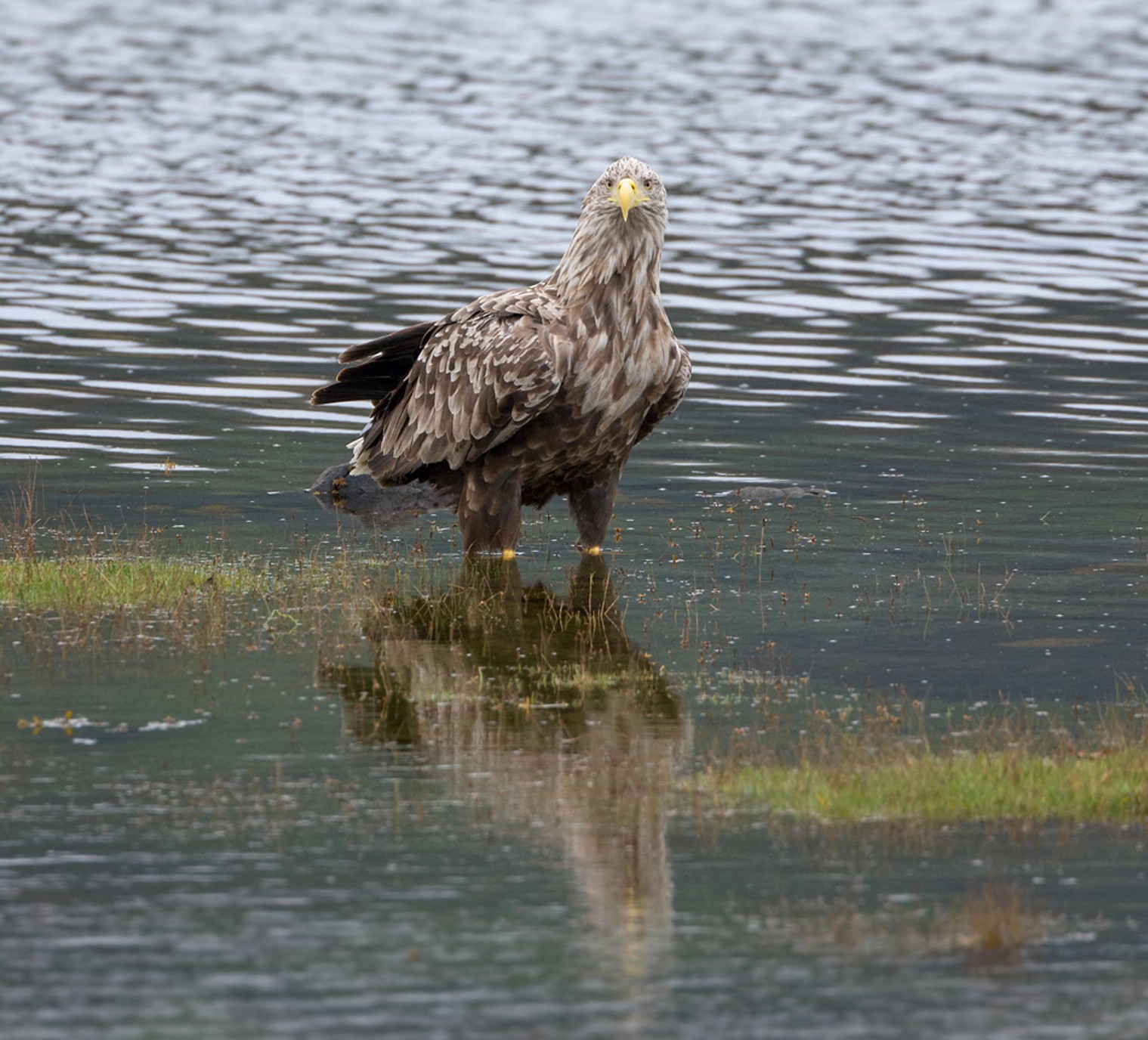
The return of white-tailed eagles to England has taken another step forward with the release of six young birds in Exmoor National Park, the first to be reintroduced here after they disappeared due to persecution over two hundred years ago.

in Exmoor National Park
The releases are part of a project started in 2019 by The Roy Dennis Wildlife Foundation and Forestry England to restore this lost species, and the key role it plays in supporting biodiversity, to England. Since then, 45 white-tailed eagles have been released from the Isle of Wight. Several are now breeding and in 2023 the project celebrated the first white tailed eagle chick to be born in the wild in southern England since 1780.
The team are now working with Exmoor National Park Authority to release further White-tailed Eagles in a bid to boost the population and expand their breeding range into south west England. Up to 20 additional young birds will be released from this location over the next three years. The project will also continue to carry out releases from its base on the Isle of Wight.
Exmoor was chosen as an additional location after tracking data from the released birds showed the area had been frequently visited by several of them and provides suitable habitat. It is known that the species formerly bred along the Exmoor coastline, which continues to provide ideal foraging, including an abundance of fish, and breeding habitat for the birds.
Earlier this year, the six young birds were collected under a NatureScot licence from the wild in Scotland and brought to Exmoor. Here they have been cared for by a team of experts whilst becoming familiar with their new surroundings.
Before being released the birds were fitted with satellite trackers so their progress can be closely monitored by the project team. It is expected that the young eagles will travel widely across the UK and potentially into Europe before returning to the area to breed when they are four or five years old.
Zoe Smith from the Roy Dennis Wildlife Foundation said: “White-tailed eagles would have once been common natural sight across the south west of England. After so many years absent from this landscape it is a special moment to be returning them on Exmoor. We will closely monitor their progress as they explore and, in time, begin to settle across this region. Thank you to everyone in the local community who is working with us to support the return of these magnificent birds“.
Angela Eagle, Environment Secretary for Defra said: “Majestic white‑tailed eagles – a particular favourite of mine – are once again soaring above Exmoor and the Isle of Wight, reflecting this government’s commitment to reversing the decline of nature and protecting it for generations to come.
“We are investing £90 million into species recovery, marking the largest ever government investment to directly support threatened wildlife“.
Stephen Egerton-Read, Project Officer for Forestry England said: “It is incredible to be returning this once lost species back to England. Seven years into the project we can see just how well the eagles are settling along the south coast of England and the really positive reaction the public have to seeing them back.
“These additional releases on Exmoor will help to boost the population and expand their geographic range into the south west ensuring many more people can see these amazing birds and are inspired by seeing nature return in this way“.
Ali Hawkins, Senior Ecologist with Exmoor National Park Authority, said: “This is such an exciting moment for Exmoor and a real boost to biodiversity in the National Park, as white-tailed eagles play a crucial role in both marine and land-based ecosystems. We‘d like to thank all representatives taking part in the steering group and we will continue to work closely with the local community as the project progresses“.
A comprehensive feasibility study and public surveys were conducted before reintroducing the birds and a steering group made up of local organisations and members of the community has met and is helping to guide the project.
The reintroduction of Britain’s largest bird of prey is being conducted under licence from Natural England, the Government’s wildlife licensing authority.
ENDS
Previous blogs about the release of White-tailed Eagles on Exmoor:
2 January 2025: Public views wanted on plans to release White-tailed Eagles in Cumbria, Wales, Severn Estuary and Exmoor (here).
6 January 2025: Predictable backlash from NFU to proposed releases of White-tailed Eagles (here)
14 May 2026: White-tailed Eagles to be released in Exmoor National Park this year (here)
14 May 2026: Statement from Natural England on decision to licence release of White-tailed Eagles in Exmoor National Park, with additional commentary from me (here)


Angela Eagle….!
Fantastic! I live 50 miles from the park and am always there in my motorhome and I witnessed the return of the Sea Eagles to Rhum in the early 80s and have watched them breeding on Canna for the last 30 years. To see these birds in my local area where I spend all my free time will be incredible especially if I am paragliding off Countisbury Cliffs. I hope and prey they survive there early wanderings and return to the Park unlike some of the Isle of White youngsters.
Brilliant news. Well done all, especially the Roy Dennis Foundation. Am reading Roy’s book and obstacles over reintroductions he’s overcome over the past 60-odd years are phenomenal. Let’s just hope they don’t find the poisoned animals which will be littered across the countryside from over-eager pest controllers which have spelled disaster for some of the Wight birds!
As long as they stay away from the Yorkshire moors………
And the Peak District
It is likely that the feasibility study took place before the recent disclosure by NE that several of the previous releases had died after having been significantly affected by the rodenticide Brodifacoum, a substance which has been implicated in the deaths of many raptors of several species. In the absence of evidence of deliberate foul play or misuse, we have to assume that the source of the Brodifacoum was dead or dying rats which had succumbed to the effects of the legitimate use of the poison. As previously recorded, the rules and conditions for the use of this particular rodenticide need drastic urgent revision and it is hoped that Angela Eagle will get a comprehensive review underway sooner rather than later.
In the meantime. I wish these latest releases well and hope that they steer well clear of Dorset and North Yorkshire.
The return of white-tailed eagles is an encouraging conservation success. Seeing these magnificent birds breeding in the wild again after more than two centuries shows how long-term restoration efforts can help rebuild biodiversity and repair ecosystems.
Local TV news ( BBC points west) was very upbeat and excited about this, even though they interviewed someone who farmed sheep who was concerned about her lambs. The style was very much a “isn’t this wonderful” story rather than “this is what is being imposed on us”.
It’s a testament to the success of the initial reintroduction in Scotland that the breeding population is now large enough that it can act as a source of chicks for other reintroductions