Grouse moor licensing Bill: Stage 1 debate scheduled for Thurs 30 November 2023

The Scottish Parliament’s Stage 1 debate of the Wildlife Management and Muirburn (Scotland) Bill will take place in the Chamber this Thursday, 30 November 2023, from 2.30pm.

This debate provides all MSPs with the opportunity to discuss the general principles of the Bill and vote to either throw it out or allow it to proceed to Stage 2, which is when the finer details would be debated and amended.

The Stage 1 debate follows the publication last week of the Stage 1 scrutiny report written by the Rural Affairs & Islands Committee which has been taking evidence for the last six months.

Lobbying of MSPs continues apace, from both conservationists and from the grouse-shooting industry. I read the other day a quote from BASC Scotland Director Peter Clark, who wrote that BASC was urging MSPs, “…to work with us to make the enormous yet vital changes to the Bill to avert the decimation of the rural economy, biodiversity and conservation“.

Quite how a licensing scheme designed to regulate a supposedly lawful industry will ‘decimate the rural economy, biodiversity and conservation’ is anyone’s guess. It’s almost as if Peter thinks the industry is so reliant on criminality that it can’t possibly function under a licensing framework and will thus collapse.

This level of hysterical fearmongering is nothing new. Here’s an excerpt from a blog I wrote three years ago when a similar outcry was heard from the grouse-shooting sector in response to the announcement that the Scottish Government intended to introduce a grouse shooting licence scheme:

This hysterical scaremongering about so-called threats to the rural economy from the introduction of a grouse moor licensing scheme is nothing new from this lot (e.g. see here, here, here and here for previous histrionics).

Nor is it the first time we’ve heard the claim that any sort of enforced regulation will ‘threaten’ or ‘damage’ the rural economy.

When the Land Reform Bill was being debated [in 2003] the Scottish Landowners Federation (which later re-branded to call itself the Scottish Rural Property & Business Association (SRPBA) and then re-branded again to its current name of Scottish Land & Estates) warned that the legislation would do irreversible damage to rural economies and they threatened to block the legislation at the European Court of Human Rights (see here).

Scottish Land & Estates also bleated about further land reform measures [in 2015] when the Scottish Government proposed removing the two-decades-old exemption from business rates enjoyed by shooting estates. SLE claimed that, “We believe that there would be a negative impact on rural jobs, tourism and land management” (see here).

And then there was more bleating when the Scottish Government brought in vicarious liability to tackle the continued illegal persecution of birds of prey. David Johnstone, the then Chair of Scottish Land & Estates claimed this would introduce another layer of bureaucracy “When the Government should be doing what it can to help landowners and the rural economy” (see here).

Has the rural economy fallen flat on its arse as a result of these measures? Not according to the grouse shooting industry, which is still declaring itself indispensable to the Scottish economy (a claim strongly contested by others, e.g. see here).

As has been said before on this blog, the grouse shooting industry should be thanking its lucky stars that a licensing scheme is all it’s getting. The case for a ban on driven grouse shooting has been made many times over.

There are those of us who don’t believe for one second that a licensing scheme will be effectively enforced, although we’ll do our bloody level best to ensure it is enforced when breaches have been detected and are fully evidenced. And if/when the licensing scheme is shown to be failing, there’s only one place left to go.

It seems to me that the grouse shooting industry should be welcoming a licensing scheme, which should protect those who are complying with the law and remove those who are not. Gosh, a world where there are consequences for criminality. Imagine that! Is that really what this backlash is all about?

Meanwhile, lobbyists from the conservation sector will this week be reminding MSPs that even in the midst of all this political scrutiny and threat, there are still some in the grouse-shooting industry that simply refuse to stop killing birds of prey, as evidenced in last week’s RSPB Birdcrime report where we learned that as recently as July this year yet another satellite-tagged golden eagle ‘vanished’ in suspicious circumstances on a grouse moor in the Monadhliaths and as recently as September this year yet another satellite-tagged hen harrier ‘vanished’ on a grouse moor in the Angus Glens.

These are in addition to the suspicious disappearances of a further 35 satellite-tagged birds of prey on Scotland’s grouse moors between 2017-2022, including including 8 golden eagles, 21 hen harriers and 5 white-tailed eagles (here).

The time for pretending that this is all ‘historical’ and no longer an issue is well and truly over and I hope that the Scottish Parliament finally makes a stand on Thursday.

Proceedings in the main Chamber can be watched live on Scottish Parliament TV from 2.30pm on Thursday, here.
Channel 4 News reports two thirds of raptor persecution crimes in 2022 linked to shooting estates

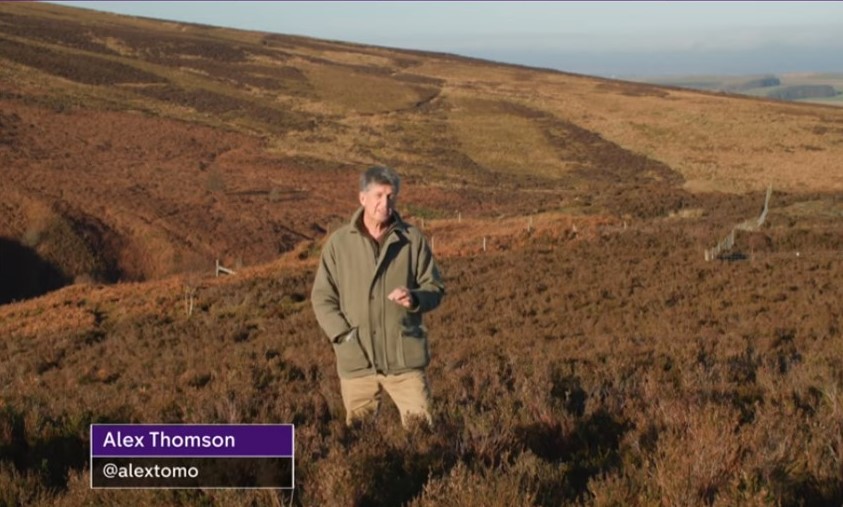
Channel 4 News aired an exclusive seven-minute report this evening about raptor persecution on gamebird shooting estates across the UK.

Fronted by Chief Correspondent Alex Thomson, this was a pre-cursor to the publication tomorrow of the RSPB’s latest Birdcrime report (2022) and the film featured two case studies that are included in that report – the illegal shooting of a hen harrier found dead on the Knarsdale Estate in Northumberland earlier this year, and the illegal poisoning of a red kite and a white-tailed eagle found on a pheasant shoot in West Sussex in October 2021. A beater’s gundog also died from the same poison, on the same estate, within a few days.

I’ll be writing in detail about both these cases and others, once Birdcrime has been published. There’s a lot to say.

In the meantime, I thoroughly recommend you watch the Channel 4 report here:

Obituary: John Love, Champion of Sea Eagles

I received an unexpected email on Friday evening announcing the sad passing of John Love, who died at his cottage on South Uist on Wednesday 18 October 2023.

John’s name will always be synonymous with the reintroduction of the white-tailed eagle in Scotland. John was the original Sea Eagle Reintroduction Project Officer between 1975 – 1985, living on the Isle of Rum in Western Scotland and releasing a total of 82 Norwegian sea eagles in what was at the time an ambitious and pioneering effort.

He later worked as an Area Officer for SNH (now NatureScot) for Uist, Barra and St Kilda and after ‘retirement’ he worked as an expert guest speaker for a cruise company, having written books on eagles, penguins, sea otters, St Kilda, Rum, and even the natural history of lighthouses, but sea eagles remained his passion to the very end.

Photo by Dave Sexton

I first learned of John Love in 1999, planning my first trip to Madagascar to study the island’s critically endangered fish eagles. On a university field trip to Mull I met the now sorely missed Richard Evans, who was the RSPB’s eagle warden on Mull at the time, and he invited me to his cottage to talk eagles. He was kind to me and several cups of tea later, realising that my knowledge of eagles was limited at best, he took a small blue book from his bookshelf and handed it to me with the words, “You’ll be needing this“.

It was a first edition of John Love’s highly acclaimed 1983 book, The Return of the Sea Eagle and I’ve treasured it ever since.

I was lucky enough to get to know John in later years after meeting him at a raptor conference where he took an interest in my research on the Madagascar fish eagle. He later agreed to write a chapter for a book I was co-editing on people who studied eagles. Here’s the biography he sent through back in 2006:

‘Born in Inverness, the capital of the Highlands of Scotland, John has been interested in animals as long as he can remember. Joining the local Bird Club as a schoolboy in 1958 broadened his horizons, especially two summer weekend trips to the island of Handa, Sutherland in 1963 and 1964. (Islands and seabirds, especially Leach’s petrel, have always remained a passion, so John’s work on sea eagles has fitted nicely!) In winter, evening lecturers at the bird club included Seton Gordon, George Waterston, Charlie Palmer and Lea MacNally – all illustrious golden eagle enthusiasts. John trained as a bird ringer and spent several school holidays as a volunteer helping to protect what were at the time Scotland’s only pair of nesting ospreys. He graduated Honours in Natural History at the University of Aberdeen and did three years post-graduate research on bird predators of bivalve mussels.

It was on holiday on Fair Isle in June 1968, that John first encountered white-tailed sea eagles, when George Waterston and Dr Johan Willgohs arrived with four eaglets for release. This project was following of from a pioneering effort by George’s cousin, Pat Sandeman, who had set free three Norwegian sea eagles in Argyll in 1959. None of these seven birds survived to adulthood but paved the way for a more concerted effort in 1975 on the Isle of Rum National Nature Reserve in the Inner Hebrides.

Dr Morton Boyd, Dr Derek Ratcliffe and Dr Ian Newton were all instrumental in encouraging this new reintroduction attempt. It was several years before the Royal Society for the Protection of Birds (RSPB), finally agreed to support the project. In 1975 John Love was invited by the Nature Conservancy Council (NCC) to help Dr Johan Willgohs collect the first four eaglets from northern Norway. Two weeks cruising with Johan in the heart of sea eagle country was both an inspiration and an education. The following year Harald Misund, a local eagle expert then in the Norwegian Air Force in BodØ, took over collecting eaglets for the Scottish project. John has since visited Norway many times and learnt so much from Harald, who remains a close friend.

From 1975 John lived on Rum where he released no fewer than 82 Norwegian sea eagles. His monograph on the reintroduction – ‘The Return of the Sea Eagle’ – was published in 1983. By 1985, when the first phase of the project ceased, the first Scottish-bred bird fledged in the wild. A further 59 eaglets were set free near Loch Maree on the west Scottish mainland between 1993 and 1998. As the population has grown, John has remained on the UK Project Team, though he now works in the Outer Hebrides as an Area Officer for Scottish Natural Heritage (formerly NCC), and where he helps monitor several breeding pairs of sea eagles. He has since written and illustrated several other books on eagles, penguins and sea otters, together with a detailed human history of the island of Rum. He is currently updating the sea eagle story’.

John was a huge supporter of this blog when I began writing it in 2010 and he became a confidante, writing long emails to rail against those whose continued blind prejudice against sea eagles infuriated him. After writing an opinion piece for the Press & Journal in 2021 in response to some ill-informed nonsense from a Director of the Scottish Gamekeepers Association (here), he told me:

“…so it looks like we are facing attacks from east coast keepers/landowners as well as crofter/farmers on the west!!“

I’ll miss John, as will so many others fortunate to have known him, but what a legacy he leaves behind – I’ll think of him whenever I see one of his beloved sea eagles. RIP.

24 more White-tailed eagles reintroduced in Ireland

Press release from the Irish Government:

WHITE-TAILED EAGLE CHICKS SPREAD THEIR WINGS FURTHER INTO IRISH SKIES

  • 24 white-tailed eagle chicks were released in August around the country, as part of an ongoing National Parks and Wildlife Service (NPWS) programme to reintroduce this once extinct species
  • A total of 171 white-tailed eagles have now been released through the programme to date
  • A small, established population of eagles is now fledging chicks around the country and has even produced triplets

Over the past week, twenty-four white-tailed eagle chicks have been released in locations around Lough Derg, the Shannon Estuary and the west of Ireland, as part of a long term reintroduction programme managed by the NPWS.

White-tailed eagles are predators who play an important role in nature and the ecosystem.

Once native to Ireland, they became extinct in the nineteenth century. Since 2007, the NPWS has been working with partners in Norway along with farmers and communities around the country to reintroduce the white-tailed eagle to Ireland.

Young White-tailed eagle. Photo: Valerie O’Sullivan

Minister of State for Heritage and Electoral Reform, Malcolm Noonan TD, who released four chicks at Killarney National Park as part of the release programme, said:

“The juvenile white-tailed eagles we have released this week are joining a growing population across our island. This incredible endeavour is the result of 16 years’ work and collaboration, not just on the reintroduction programme, but also on habitat restoration and engagement with landowners to secure their ongoing protection.

These apex predators perform a vital role in our ecosystems and the sight of them soaring in the thermals is a privilege that everyone who lives in or visits Ireland will now have the opportunity to enjoy. I would like to pay tribute to NPWS staff for their commitment and dedication to this initiative, our international partners from Norway, and the communities around the country who are embracing the return of the white-tailed eagle to our landscapes.”

A comprehensive satellite tagging system is now in place so that the birds can be monitored as they disperse around the country.

Minister for Housing, Local Government and Heritage, Darragh O’Brien who also participated in the release of chicks at in the vicinity of Lough Derg added:

“This reintroduction programme is the result of a combined effort by my Department’s National Parks and Wildlife Service, participating landowners and communities and endangered species experts. I commend each of them for the role they are playing in protecting these iconic birds of prey“.

Niall Ó Donnchú, Director General with the NPWS said:

“This programme is one of several initiatives underway in the NPWS to protect endangered species in Ireland and prevent their decline. This work takes time, and calls for a partnership approach if it is to be sustainable in the long term. Collaboration with the science community and international partners, along with the involvement of our expert staff and communities around the country has been key to the success we have seen so far“.

Eamonn Meskell, Divisional Manager NPWS, Killarney National Park who heads up the white-tailed eagle reintroduction Programme added:

“There is huge interest from the public in the white-tailed eagle programme. Locations where they are spotted attract many visitors and local interest and we love to hear about sightings of the birds around Ireland and further afield. There are great stories to tell about the project. For example, the first Irish bred female to breed in over a hundred years has fledged seven chicks in three years! In Lough Derg this year for the second time a nesting pair fledged triplets. This is incredibly unusual – even in the wilds of Norway, and it shows how well suited Ireland really is for the white-tailed eagle from both a habitat and a feeding perspective. We’ll be watching this year’s chicks with interest as they mature and hopefully go on to fledge more chicks“.

Bente Lyngstad, chargé d’affaires at the Norwegian Embassy in Ireland said:

“Watching the release of the white-tailed sea eagles is a truly extraordinary and mighty experience. Over the years more than 150 eagle chicks have been collected in Norway and released in Ireland. Today’s stock in Ireland is the result of a long-term collaboration between Norway and Ireland, which again stems from our deep friendship and our shared values. I would like to acknowledge all volunteers whose efforts have been imperative to make this happen“.

The retention of species is essential for maintaining the intricate web of life and the functioning of ecosystems. It contributes to the sustainable use of natural resources and the well-being of both present and future generations. Yet we now see a rapid loss of species world-wide. This development must be halted. The reintroduction of white-tailed sea eagles into their natural habitat is a great example of how we can work together against biodiversity loss.”

ENDS

These releases form part of phase two of the reintroduction project. Phase one involved releasing 100 White-tailed eagles into Killarney National Park in County Kerry, between 2007-2011. A scientific review of the project in 2019 suggested that the small population was still vulnerable to issues such as Avian Influenza, extreme weather events and illegal poisoning so phase two began in 2020, to reintroduce more young birds and release them in different parts of the country.

Unfortunately some of the eagles released in phase two have already been killed illegally after consuming poisoned bait (see here and here).

JOB OPPORTUNITY: Assistant ecologist, white-tailed eagle reintroduction project

FORESTRY ENGLAND : WHITE-TAILED EAGLE REINTRODUCTION PROJECT

SALARY: £26,534

SIX MONTH CONTRACT

CLOSING DATE: 3rd September 2023

JOB SUMMARY:

South England Forest District manages some 46,000 hectares of the public forest estate across West Sussex, Surrey, Berkshire, Hampshire, Isle of Wight, Dorset & South Wiltshire.  Much of the land is of high importance for nature conservation, supporting some 29,000 hectares (ha) deemed to be of national importance for wildlife of which approximately 28,000 ha are also designated as being of international importance for biodiversity as Special Areas of Conservation (SACs), Special Protection Areas (SPAs) and Ramsar sites. The majority of the land managed by the District is also within areas designated for their landscape value, including 4,000 ha within AONBs and 31,500 ha across two National Parks.

The White-tailed Eagle project is a partnership with the Roy Dennis Wildlife Foundation, to reintroduce this species back to the south coast of England. The project has a Natural England licence to release birds over a 5-year programme, which started in 2019.

The Assistant Ecologist will be assisting the Project Officer in all areas of their work, from engagement with groups and stakeholders about the project to management and care for the birds prior to release. They will also have a role to play in monitoring the birds that are already released. This is an exciting 6 month role to gain valuable experience in reintroductions.

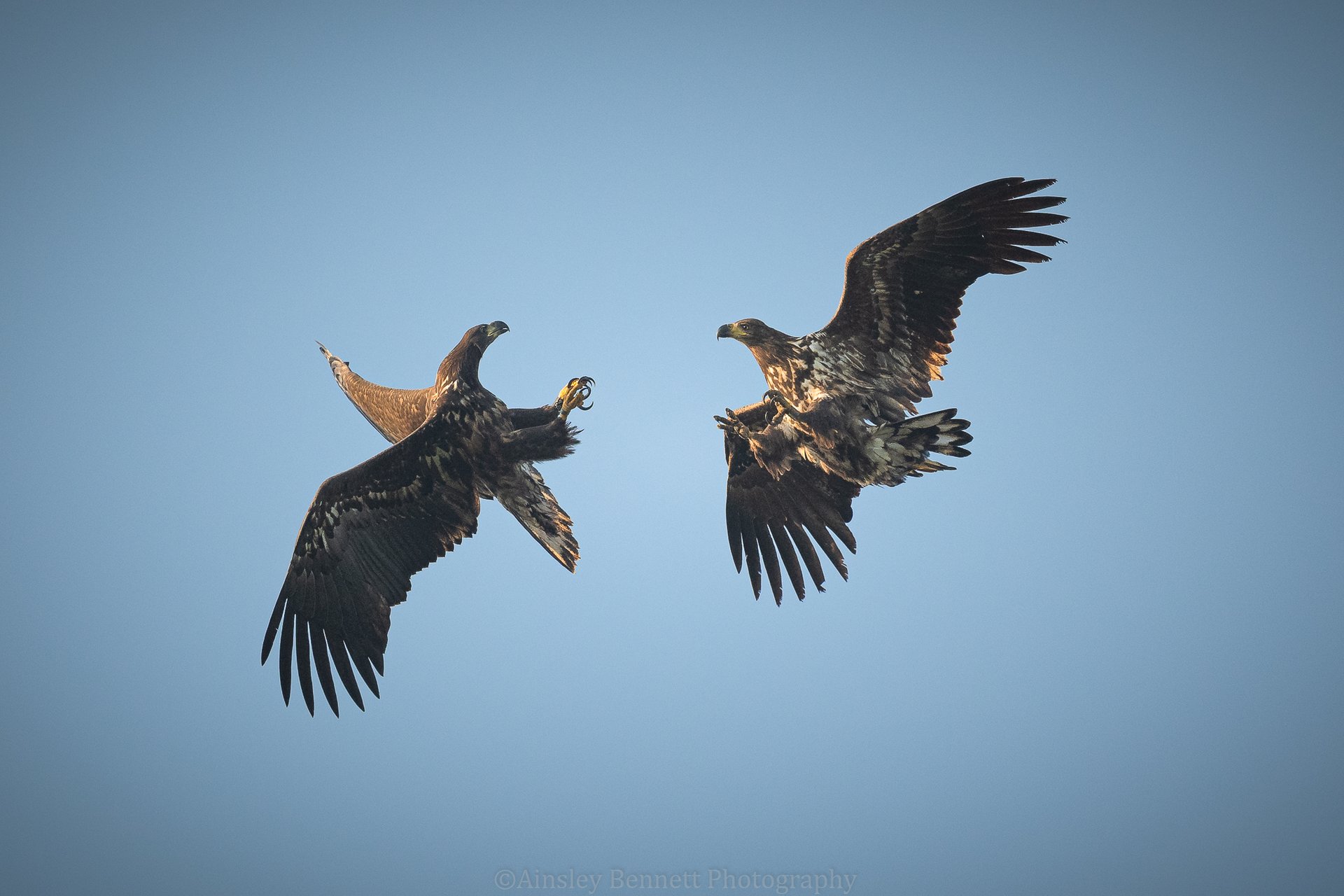
Two of the young reintroduced white-tailed eagles. Photo: Ainsley Bennett

JOB DESCRIPTION:

Key Work Areas

  • The post holder will help to deliver the reintroduction process, including feeding of the birds and monitoring pre and post release.
  • They will support the Project Officer with information dissemination via a project website, social media and a programme of guided walks and talks.
  • Liaise with stakeholders both on the Isle of Wight and on the mainland to ensure the success of the project.
  • The post holder will be local to the Isle of Wight so that they can be on hand during the period when the birds are in cages at the release location and during post-release feeding.

PERSON SPECIFICATION:

Essential

  • A good understanding of raptor ecology with on the ground practical experience.
  • Experience or knowledge of monitoring birds in the field.

Desirable

  • Preferably experience of working on a similar reintroduction project.
  • Experience of working with landowners.
  • Ability to demonstrate engagement with the public and local groups.

As part of the application process we will assess you on the following behaviours:

Making Effective Decisions

  • Speak with the relevant people in order to obtain the most accurate information and get advice when unsure of how to proceed.

Communicating and influencing

  • Actively listens, allowing others to fully express their opinion.
  • Be an effective representative of the team.

Working Together

  • Build, maintain and improve relationships with different stakeholders at the relevant level to understand differing views and issues.

Seeing the Big Picture

  • Focus on the overall goal and intent of what you are trying to achieve, not just the task.
  • Ability to communicate the wider context of the project to others.

For further details and information on how to apply, please click here.

Highly pathogenic avian influenza confirmed in red grouse in Scotland

A case of Highly Pathogenic Avian Influenza (HPAI), otherwise known as bird flu, has been confirmed in red grouse in Scotland, according to DEFRA.

Red grouse. Photo: RSPB Images

The confirmation has appeared in DEFRA’s running tally of confirmed bird flu cases in wild birds, which is a spreadsheet that’s updated weekly (see here).

The spreadsheet entry states that H5N1 was detected in a red grouse in week 30 (July 24 – July 30 2023) in the Scottish Borders:

There isn’t any more detail about the location, nor how many birds have been found infected/dead, just that a single bird has been tested and found to be positive.

If this infected red grouse was found on land managed for driven grouse shooting it’s of serious concern. Highly Pathogenic Avian Influenza causes severe disease and high mortality in birds and has already killed tens of thousands, if not hundreds of thousands, of wild birds in the UK, impacting on the populations of globally significant species.

Highly Pathogenic Avian Influenza is transmitted by the spreading between birds of nasal secretions and droppings, and it also spreads to birds of prey via the predation of infected birds. Some UK raptor species have already been badly affected, including golden eagles and white-tailed eagles (e.g. see here).

We know that many driven grouse moors are (mis)managed to produce an artificially-high density of red grouse for shooting. Another highly contagious disease, Cryptosporidiosis (Bulgy Eye) is rife on many intensively-managed driven grouse moors. It was first detected in wild red grouse in England in 2010 and then spread rapidly, via communal medicated grit trays, and by 2015 had affected high density red grouse on half of the 150 grouse moors in northern England. It has also been detected in Scotland, although the extent of the spread in Scotland is not known because the shooting industry is keeping quiet, and, for reasons unknown, NatureScot isn’t undertaking any surveillance of the disease (see here).

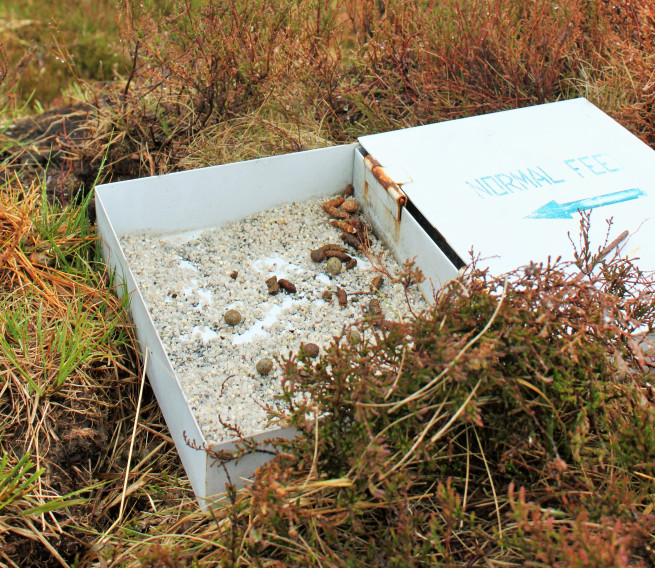
A grit tray on a grouse moor containing red grouse faecal droppings – a disease reservoir. Photo: Ruth Tingay

If the highly contagious Cryptosporidiosis disease can spread so rapidly via red grouse secretions and droppings found in grit trays on the moors, then so can Highly Pathogenic Avian Influenza.

Last year I argued that it would be ‘irresponsible’ for grouse-shooting to go ahead during the avian flu epidemic (see here). In response, the Scottish Government said: ‘…there have been no recorded cases of avian influenza in any grouse species, and there are no restrictions in place on grouse shooting’.

Given that Highly Pathogenic Avian Influenza has now been confirmed in red grouse in the Scottish Borders, and the grouse-shooting season opens on Saturday (the Inglorious 12th), how will the Scottish Government respond?

Shouldn’t they be restricting shooting as a precautionary measure, at least until the extent of the disease is evaluated?

White-tailed eagle fledges in England for first time in 240 years

Press release from Roy Dennis Wildlife Foundation (18th July 2023):

FIRST WHITE-TAILED EAGLE IN 240 YEARS FLEDGES IN ENGLAND

In a landmark moment for conservationists, the first white-tailed eagle for over 240 years has fledged from a nest in the wild in England. The chick is the first successful breeding attempt of the white-tailed eagles released by Forestry England and the Roy Dennis Wildlife Foundation’s project to return this lost species to England.

First WTE chick in England just prior to fledging. Photo: Roy Dennis Wildlife Foundation

White-tailed eagles are Britain’s largest birds of prey with a wingspan of up to 2.5 meters and were once widespread across England. Human persecution caused their extinction with the last pair breeding in southern England in 1780. In 2019, Forestry England and the Roy Dennis Wildlife Foundation began a reintroduction programme to restore these iconic birds to the English landscape.

Two of the birds released by the project in 2020 – female G405, originally translocated from the Outer Hebrides and male G471, from north-west Sutherland – reared the male chick earlier this summer. The location of the nest, on private land with no public access, is not being disclosed for the welfare of the birds and to prevent any disturbance to them or the landowner either this year or if the birds return to breed at the same location. 

The chick was ringed and fitted with a satellite tag by licensed ornithologists from the Roy Dennis Wildlife Foundation enabling the project team to track this historic bird’s daily progress through its life. 

The WTE chick being satellite-tagged. Photo by Forestry England

Roy Dennis MBE, Founder of the Roy Dennis Wildlife Foundation, said: 

“This is a very special moment for everyone who has worked on, supported and followed this ground-breaking project. Restoring a breeding population in southern England, where the species was once widespread, has been our ultimate goal. Many thought it was impossible but we knew food for eagles – fresh and salt water fish, cuttlefish, rabbits, hares and wild birds – was plentiful. I visited the Isle of Wight as a young birdwatcher in the 1950s, saw the last breeding location at Culver Cliff and knew they should be restored. It is early days, but this is a very significant milestone and we are heartened by the enthusiastic support shown by so many people and that the sight of these huge eagles in the sky inspires hope for restoring nature. We still have a long way to go, but the feeling of seeing the first pair reach this stage is truly incredible.” 

The birds are one of three territorial pairs that have now become established in southern England and the first to breed. 

Steve Egerton-Read, White-Tailed Eagle Project Officer for Forestry England, said: 

“We are thrilled that this moment has happened and at such an early stage in the project. At only three years old, it is remarkable that the pair have successfully bred, with most white-tailed eagles not attempting to do so until they are at least four or five. This pairs’ ability to breed and fledge their chick at this early age is extremely encouraging.”

“It is really hard to put into words just what an incredible moment this is for the return of these iconic birds to England. It is evidence of just how well the eagles are starting to fit back into this landscape and how, with a little help, nature can begin to return and thrive. Although it has not been possible to set up a public viewing site at this location, we are hopeful that one of the other pairs that has become established in southern England will choose to nest in a location that we can share with the public in future years.”  

To date, 25 white-tailed eagles have been released by the reintroduction project with 16 still surviving. A further release of young white-tailed eagles is planned for later this summer from the project team’s base on the Isle of Wight. 

The reintroduction of white-tailed eagles is conducted under licence from Natural England, the Government’s wildlife licensing authority. All of the young birds involved in the project are collected under a NatureScot licence from the wild in Scotland and brought to the Isle of Wight.

ENDS

Huge congratulations to everyone involved in this project – what fantastic news! Although it’s telling that the nest location is being kept secret, and quite rightly so in my view, for fear of disturbance.

It’s not been plain sailing for this project, with a number of the translocated eagles inevitably becoming the victims of illegal persecution, most notably the poisoned eagle found dead on a shooting estate in Dorset last year that resulted in one of the biggest police wildlife crime fiascos witnessed in recent years (e.g. see here and here).

The poisoned WTE found dead on a shooting estate in Dorset in January 2022. Photo: Dorset Police

And then there’s the poisoned white-tailed eagle found dead on a shooting estate in West Sussex in October 2021. Toxicology results confirmed it had been killed by ingesting the banned pesticide Bendiocarb (see here). Strangely, Sussex Police have remained coy about publicising this case and nobody seems willing to provide an update on the status of the investigation ever since May last year when the Chief Constable assured conservationists that the investigation was “very much ongoing” (see here).

I’d hope, as we approach the two-year anniversary of this illegal poisoning, that Sussex Police will manage to provide an update. A lot of people care passionately about these eagles and their reintroduction to southern England and rightly expect to see the police do everything in their power to bring the eagle-poisoner(s) to justice. Two years of stubborn silence isn’t a good look and if this young, historic fledgling suffers the same fate there’ll be uproar.

For those who don’t want to poison white-tailed eagles and would much rather enjoy the thrilling experience of seeing one in the wild, one of the best opportunities to see them in southern England is still from one of the regular ‘bird boats’ run by the charity ‘Birds of Poole Harbour‘ throughout the summer (the same charity that has worked with the Roy Dennis Wildlife Foundation to reintroduce ospreys to Poole Harbour). A number of eagles seem to spend a lot of time foraging and just hanging out in the harbour. You’ll need to book quickly though as these boat tours are incredibly popular (for obvious reasons!). Boat tour details here.

10 million blog views

10 million blog views feels like a significant milestone.

Many thanks to all the friends, colleagues, collaborators, supporters, followers, commentators and funders, who make this worthwhile.

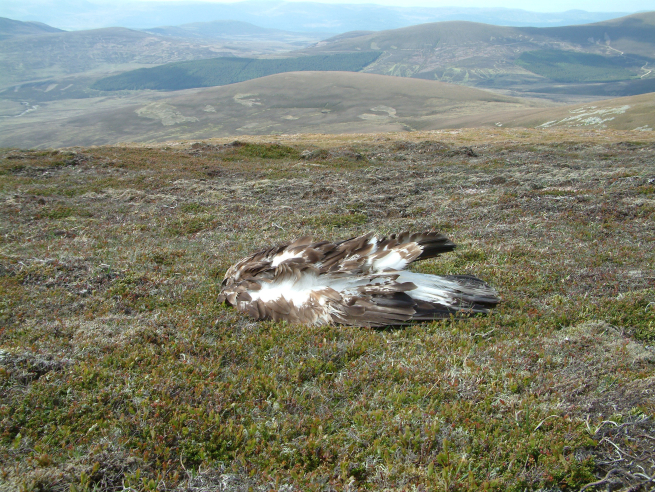
Here’s the photograph that I publish every time a new milestone is reached. This is a golden eagle that was found dead on a grouse moor in the Cairngorms National Park in 2006. It had been illegally poisoned. It epitomises everything in its pitiful, poignant, senselessness.

Photo: RSPB

Unfortunately there is still a lot more work to do, as evidenced by the recent discovery of two young white-tailed eagles found poisoned on a grouse moor in Northern Ireland in May 2023:

Photo: RSPB

The illegal killing of birds of prey in the UK continues and so must this blog. It can often feel like no progress is being made, but it is, albeit more slowly than any of us would like.

I read a report over the weekend where representatives of the game-shooting industry said they felt ‘under siege’ from campaigners. That’s good, some of them have been allowed to get away with far too much for far too long, often assisted and shielded by the very authorities who should be holding them to account.

Change will only come when enough of us demand it.

Onwards!

Poisoned eagles found on grouse moor in Northern Ireland: new petition calls for ban on possession of dangerous pesticides

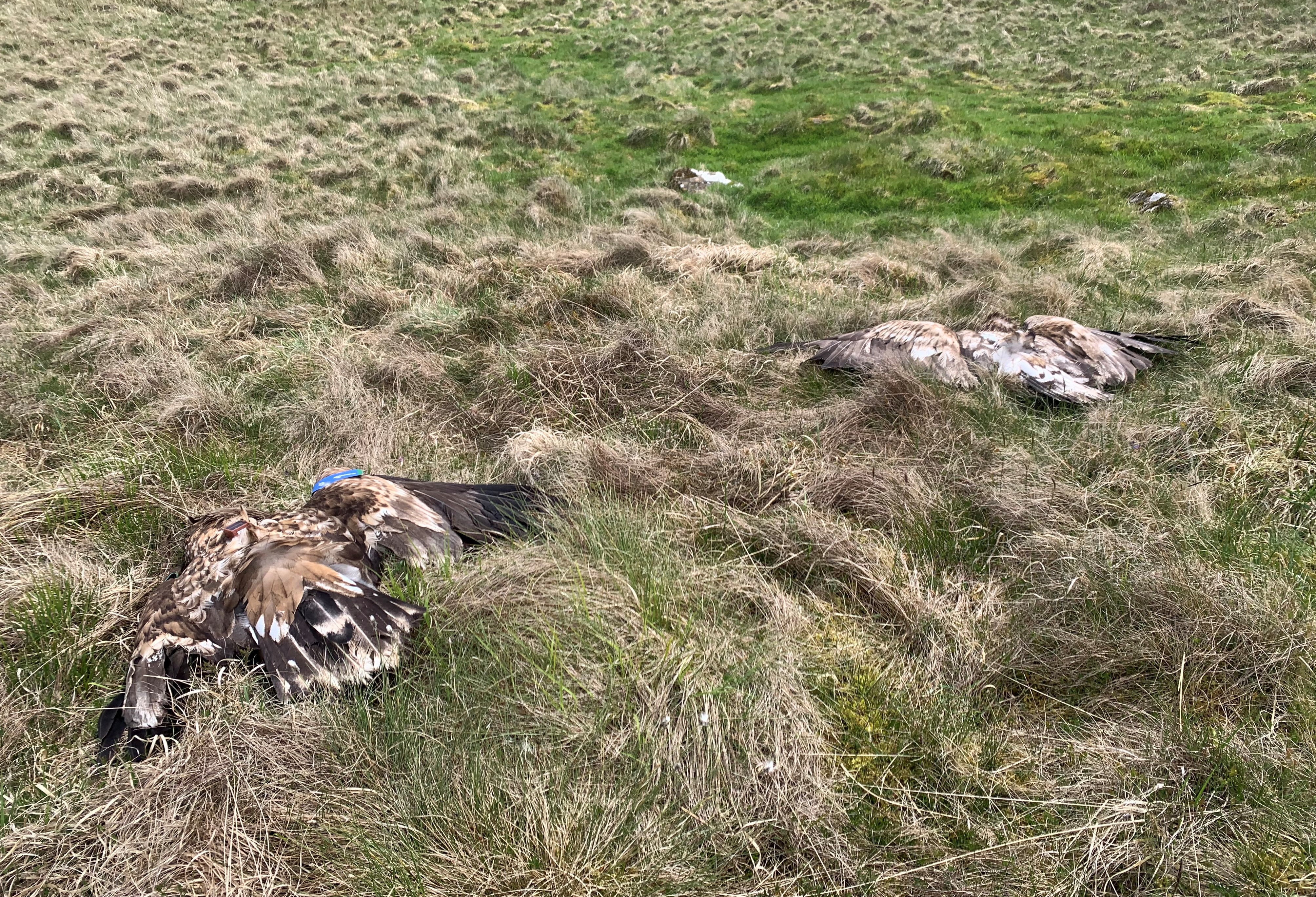
Further to the news on Friday that the two white-tailed eagles found dead on Northern Ireland’s only driven grouse moor at Glenwherry in the Antrim Hills had been illegally poisoned (see here), the Northern Ireland Raptor Study Group (NIRSG) has launched a new petition calling for a ban on the possession of dangerous pesticides.

The two poisoned white-tailed eagles. Photo: Northern Ireland Raptor Study Group

Here is the petition text:

Pesticides which have been deemed toxic to non-target plants and animals have been banned for use across many countries, including Northern Ireland. However, although ‘banned for use’, these dangerous substances are still being used, unlawfully, to target protected birds of prey.

There have been 64 confirmed incidents of abuse of banned or highly toxic chemicals to target birds of prey in Northern Ireland since 2009. However, prosecutions are notoriously difficult to attain because unless an individual is actually seen to be laying out a poisoned bait, it is virtually impossible to determine who laid the bait that subsequently kills a protected species. To date, we are not aware of any successful prosecutions for poisoning protected wildlife in Northern Ireland.

Scotland faced a similar problem with illegal wildlife poisoning so in 2005 it introduced new legislation making it an offence to be ‘in possession’ of certain banned substances (Possession of Pesticides (Scotland) Order 2005). The substances listed were those known to be used to illegally target birds of prey. This legislation has led to the successful prosecution of many individuals who were found to be in possession of the named banned substances, for example where it was discovered in their vehicles, at their work premises and even in their homes. Not only has the poison been confiscated and destroyed, these prosecutions have doubtless saved the lives of countless species and raptors that otherwise would have been targeted.

The banned pesticides are not just a threat to wildlife and the wider environment; many of them can have fatal consequences for any human (adult or child) who happens to inadvertently come into contact with them, for example by touching a poisonous bait laid out in the countryside.

In light of the most recent illegal poisoning of two young white-tailed eagles in County Antrim in May 2023, we are seeking an urgent review of the use of banned pesticides to kill wildlife in Northern Ireland, leading to the creation of a new law which prohibits the ‘possession’ of named, highly toxic poisons.

If a pesticide has already been banned for use on the basis of its toxicity and threat to humans, wildlife and the wider environment, there can be no justification for keeping it.

Please help our campaign by signing this petition (you don’t have to be a resident of Northern Ireland to sign). Thank you.

The poisons we would like to see prohibited for possession are:

·        Aldicarb

·        Alphachloralose

·        Aluminium phosphide

·        Bendiocarb

·        Carbofuran

·        Mevinphos

·        Sodium cyanide

·        Strychnine

·        Chlorpyriphos

·        Diazinon

ENDS

The outrage caused by the illegal poisoning of these young eagles has led to widespread media coverage, e.g. The Irish Post, Belfast Live, Belfast Telegraph, Irish Examiner, ITV news, BBC news, Irish Mirror

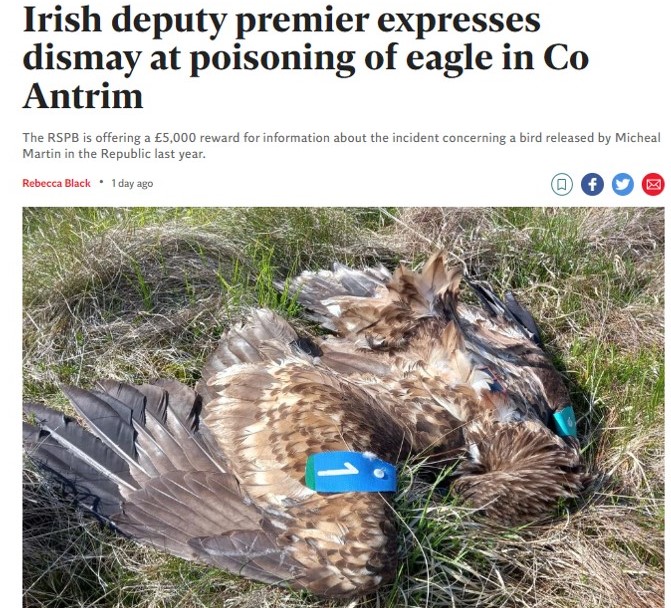
Indeed, condemnation has even come from Michael Martin, the Irish Deputy Premier (the second most senior officer in the Irish Government) who had released one of these eagles last year as part of the reintroduction project in the Irish Republic:

The RSPB is offering a £5,000 reward for information leading to a conviction (see here).

The Northern Ireland Raptor Study Group’s press release (here) describes the location where the two eagles were found poisoned as follows:

‘Glenwherry Hill Farm is owned by the Department of Agriculture, Environment and Rural Affairs (DAERA) and operated by College of Agriculture, Food and Rural Enterprise (CAFRE). This area has many young student farmers, conservationists and volunteers carrying out field work and studies on a daily basis. It also is the part of the Glenwherry Hill Regeneration Partnership (GHRP) and a site for driven grouse shooting and winter woodcock shooting and a site of the Curlews in Crisis restoration project‘.

I think it’s notable that the NIRSG resigned from the ‘partnership’ in 2020 over ‘incompatible management objectives’. The moorland management has recently shifted from walked-up grouse shooting to becoming managed for driven grouse shooting.

Dr Marc Ruddock of NIRSG is quoted:

“We know these parts of the Antrim Hills intimately having monitored birds of prey there for many years and seen various visiting golden eagles and white-tailed eagles there in the past. We are horrified and devastated at the death of these two young eagles. We sincerely hope that this is not a reflection of a renewed intolerance of birds of prey in county Antrim and within Northern Ireland. White-tailed eagles eat fish and seabirds but also other birds, rabbits and hares and more often scavenge dead animals in the countryside. They, along with other native birds of prey, are an essential component of a healthy ecosystem and for such indifference and intolerance to be displayed towards native eagles by somebody in this area is distressing“.

Dr Eimear Rooney of NIRSG said, “These majestic creatures are part of our ancient heritage and deserve to be revered, not poisoned and left to rot on a hillside. The suffering these birds must have felt in their final moments, and then dying side by side, it is just heart-breaking. Birds of prey are essential in balancing a healthy ecosystem and are already under pressure from loss of suitable nesting and foraging habitat. With the additional losses of birds through illegal poisoning, whether targeted at them or not, it is a massive blow to conservation efforts in Northern Ireland and on the island of Ireland.

“We have been contacted by many people outpouring their upset at the death of these eagles, and people are incensed that these pesticides, many of which are banned due to toxicity to human health, and which unbelievably remain in use illegally, causing the destruction of our native wildlife, and yet are not illegal to have in your possession”.

If you want to sign the NIRSG’s new petition calling for a ban on the possession of dangerous pesticides in Northern Ireland please click HERE.

UPDATE 3 March 2025: 50,000 people support the Northern Ireland Raptor Study Group’s petition to ban possession of dangerous, raptor-killing pesticides (here)

UPDATE 17 June 2025: 50,000-signature petition calling for ban on possession of poisons, handed in to Stormont, Northern Ireland (here)

Police confirm 2 x white-tailed eagles found dead on a grouse moor in Northern Ireland were illegally poisoned

In May this year, the Police Service of Northern Ireland (PSNI) appealed for information after the discovery of two dead white-tailed eagles found next to one another in suspicious circumstances on moorland in Ballymena, County Antrim (see here).

The corpses were sent for post mortem and toxicology results have now confirmed they were both poisoned by Bendiocarb.

The two poisoned white-tailed eagles. Photo: Northern Ireland Raptor Study Group

The PSNI has issued the following statement this afternoon:

POLICE INVESTIGATE POISONING OF TWO WHITE-TAILED EAGLES

Police are appealing for information from the public, after the confirmed poisoning of two white-tailed eagles.

Police investigating the circumstances following the discovery of two dead white-tailed eagles, in the Glenhead Road area of Ballymena on Monday, 15th May, can confirm the birds were subsequently poisoned.

Following a post-mortem examination, both birds tested positive for the insecticide bendiocarb.

How the birds came into contact with the insecticide remains part of an ongoing investigation, and the Police Service of Northern Ireland is committed to working with partners and members of the public to determine how the birds consumed the toxic insecticide.

Rural and Wildlife Crime Superintendent Johnston McDowell said: “Sadly, police can confirm the two majestic birds found on land in the Glenhead Road area were poisoned, following a post-mortem examination.

“The test results suggest that an individual not only has access to the insecticide bendiocarb but has placed this into the outside environment illegally, so that wild birds have been able to consume it.

“Bendiocarb is present in the trade product Ficam D, a powder which is only permitted for indoor use to control crawling insects such as wasps and ants, so using this active ingredient in fields would be a breach of Biocidal Products Regulation (BPR).

“The illegal killing of these beautiful birds in a popular rural area is disgraceful, and for any individual to think that they can ignore the law and lay poisonous bait which has led to the killing of these birds, is unacceptable and will not be tolerated.

“Officers with support from the National Wildlife Crime Unit, have been on the ground conducting house-to-house enquiries, engaging with local residents and landowners, in the areas of where the birds were gravitating towards, before they were found deceased.

“The Police Service of Northern Ireland will continue to work with our partners to tackle this criminal activity, investigate any reports made to us and prosecute offenders. In this case we have liaised with our partners in the Partnership for Action Against Wildlife Crime (PAWNI) Agri-Food and Biosciences, Royal Society for the Protection of Birds, NI Raptor Study Group, Health and Safety Executive for Northern Ireland, Northern Ireland Environment Agency and received additional support from the National Wildlife Crime Unit. Police have a strong multi-agency support group which we are very grateful for, but we need the help of the public too.

“There must be people in the community who are aware of individuals committing these offences, and who can come forward and assist police with any information they have.

“If you notice any suspicious activity in rural areas, notice a dead or injured bird of prey, please call police on 101, or alternatively you can make a report via Crimestoppers anonymously on 0800 555 111 or online at http://crimestoppers-uk.org. Alternatively, you can submit a report online using the non-emergency reporting form via http://www.psni.police.uk/makeareport/.

“We are also very grateful to our partners in the charity Royal Society for Protection of Birds (RSPB) who are offering a reward of £5000 for information leading to the prosecution of those involved in the poisoning of the two white-tailed eagles. The charity is completely independent from the police and can be contacted on their confidential Raptor Crime Hotline on 0300 999 0101 or online at crime@rspb.org.uk.”

ENDS

I’ll have more to say about this case, not least to discuss the location where the poisoned eagles were found – the only moor that’s managed for driven grouse shooting in Northern Ireland.

More soon…

UPDATES:

Press release from Northern Ireland Raptor Study Group (here)

Press release from RSPB (here)

Poisoned eagles found on grouse moor in Northern Ireland: New petition calls for ban on the possession of dangerous pesticides (here)

UPDATE 3 March 2025: 50,000 people support the Northern Ireland Raptor Study Group’s petition to ban possession of dangerous, raptor-killing pesticides (here)

UPDATE 17 June 2025: 50,000-signature petition calling for ban on possession of poisons, handed in to Stormont, Northern Ireland (here)