Barn owl with horrific injuries found in North Yorkshire

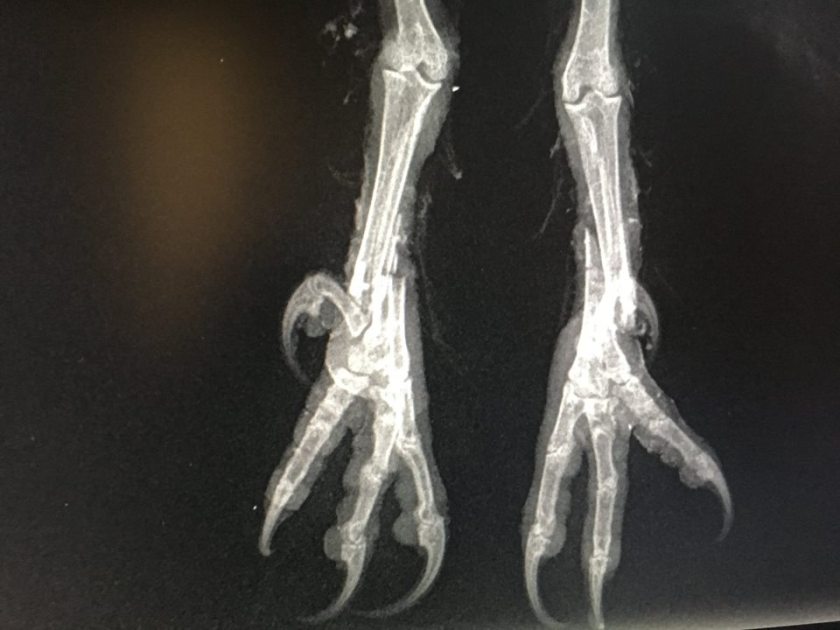
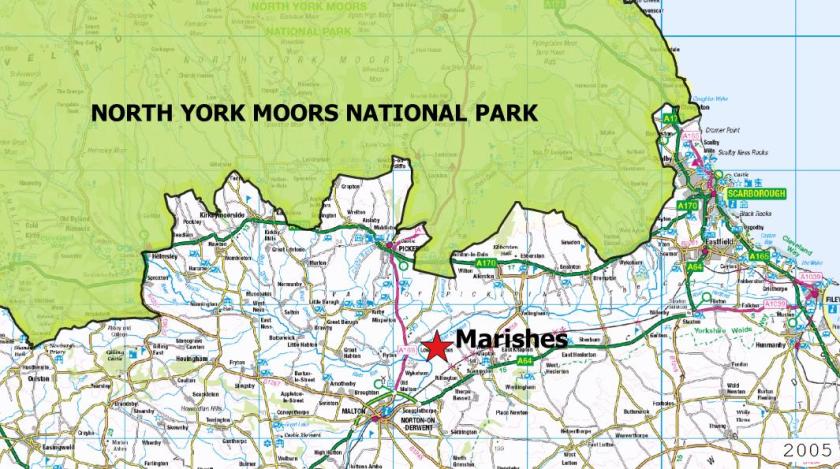
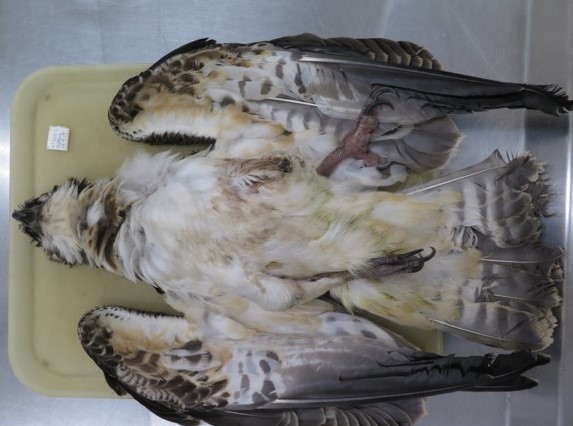
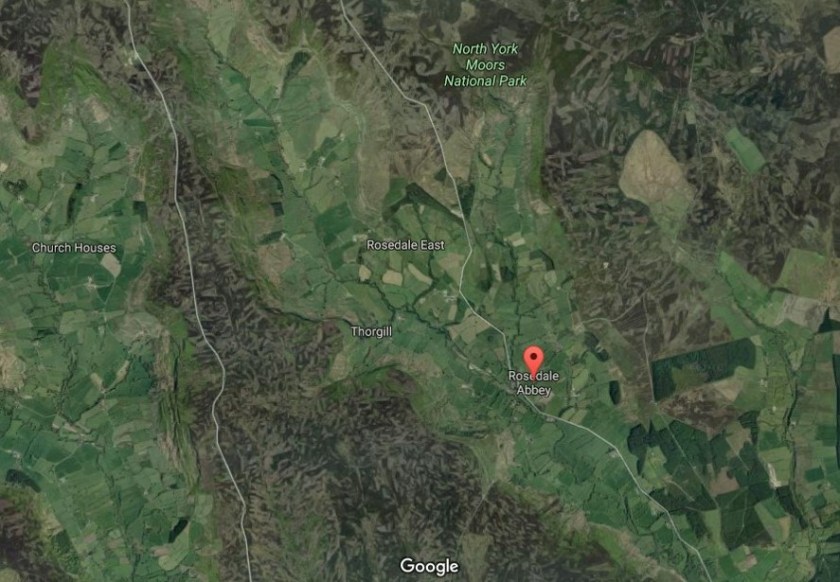
A barn owl with horrific injuries has been found near Marishes in the Ryedale district of North Yorkshire.

According to expert raptor rehabilitator Jean Thorpe, the barn owl was found close to death. It had suffered two broken legs and its injuries were consistent with having been caught in a spring trap. Jean believes the owl had been released from the trap and then left to die a lingering death, unable to hunt with badly infected wounds.

The owl was taken to Jean’s wildlife centre but died shortly after arrival.

This area is a notorious raptor persecution blackspot. Spring traps are only legal if they are set within either a natural or artifical tunnel to prevent non-target species getting caught in the trap’s jaws.

Anybody with any information about this horrific case please contact Wildlife Police Officer Jez Walmsley at Malton Police Station (Tel: 101).

Photos by Jean Thorpe. Map by RPUK.

Peak District National Park Authority responds to RSPB’s 2016 Birdcrime report

The Peak District National Park Authority has issued a statement in reponse to the publication of the RSPB’s 2016 Birdcrime report.

Sarah Fowler, chief executive of the Peak District National Park, said: “Killing birds of prey is illegal. I am appalled by the persecution of any protected species, no matter what the circumstances.

The RSPB’s latest Birdcrime report brings the plight of birds of prey to the fore. It shows what we are up against in trying to reverse the fortunes of birds of prey. I welcome the recent acknowledgement from shooting organisations that the killing of raptors to protect game birds is part of the problem. It is – and it is damaging to their interests. I welcome and wholeheartedly support their condemnation of such activity.

Being able to watch birds of prey in the Peak District National Park should be part of everyone’s experience.

We have been working with landowners, gamekeepers and partners since 2011 to remedy the situation locally but it is clear from the results that much more needs to be done.

This year peregrines have failed to breed in the Dark Peak for the first time since they recolonised in 1984 and persecution of these incredible birds has been a factor in this. This has to change.

It is incredibly difficult to catch someone in the act or to collect evidence and make a case for prosecution. I appeal to all users of the countryside to help us bring persecution to an end by reporting anything you feel is suspicious to the police. The best hope we have is for law-abiding people within the game bird industry calling out those who operate outside the law.

The Peak District Birds of Prey Initiative will shortly be publishing a report documenting the fortunes of key birds of prey alongside confirmed or suspected incidents of persecution in the moorland areas of the Peak District during 2016 and 2017. On the back of this report, I will look for a renewed commitment from moorland owners and managers in the Peak District to work with us to reverse the fortunes of birds of prey – and a strengthening of this commitment. We cannot achieve this on our own.”

Anyone with information to report about wildlife crime should contact Derbyshire Police on 101 or Crimestoppers on 0800 555111.

ENDS

Photo of an osprey found in the Peak District National Park in September 2015. It had two broken legs and succumbed to these injuries soon after being found. The post-mortem stated its injuries were consistent with being caught in a spring trap (Photo by RSPB)

It’s good to see strong condemnation of continued illegal raptor persecution from the Peak District National Park Authority, although, coming a week after the publication of the Birdcrime report it does have a whiff of ‘Oh God, everyone else has commented, we’d better say something too’. Nevertheless, better late than never.

We also appreciate Sarah Fowler’s acknowledgement that the 7-year-long Peak District Bird of Prey Initiative has been a complete and utter failure. She didn’t actually say that – she said, “It is clear from the results that much more needs to be done“, and, with the imminent publication of the Initiative’s 2016 and 2017 annual reports, she said “I will look for a renewed commitment from moorland owners and managers in the Peak District to work with us to reverse the fortunes of birds of prey – and a strengthening of this commitment“.

Hang on. Wasn’t ‘renewed commitment’ from project partners promised in 2015 when the Initiative’s five-year targets had all failed to be met? Ah yes, so it was. And yet, despite that ‘renewed commitment’ we’ve seen continued evidence of illegal raptor persecution within the National Park and now we learn that “This year peregrines have failed to breed in the Dark Peak for the first time since they recolonised in 1984 and persecution of these incredible birds has been a factor in this“.

We don’t want ‘renewed commitment’ from so-called project partners. It’s meaningless bollocks that nobody believes anymore. We’re sick of hearing it and sick of statutory agencies using it to pretend that everything’s going to be ok.

The Peak District National Park Authority needs to start calling out these grouse moor owners, managers and agents, by name, instead of shielding them and their criminal activities within this charade of partnership-working.

SNH refuses to disclose details of individual General Licence restriction

In September 2017 we learned that SNH had imposed a General Licence restriction on an individual for alleged criminal activity in relation to raptor persecution (see here).

This was a highly unusual restriction because it applied to an individual rather than to an estate.

At the time the restriction was announced, SNH provided virtually no information other than to say a General Licence restriction had been imposed and that it would apply for three years.

However, RSPB Scotland released a press statement in relation to this restriction order which included the following quote from RSPB Scotland’s Head of Investigations, Ian Thomson:

The restriction was imposed after RSPB investigations staff passed video footage to police of a gamekeeper allegedly setting illegal traps, baited with a dead woodpigeon, very close to a goshawk nest in NE Scotland”.

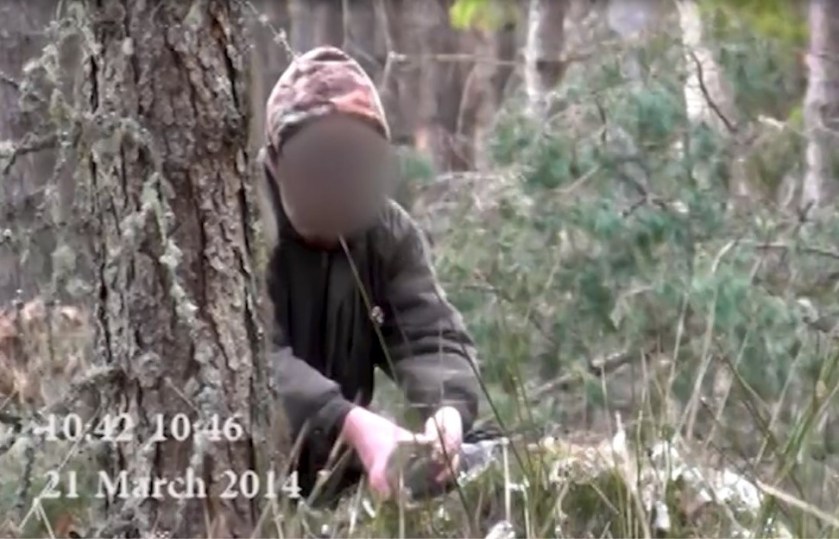
Here’s a clip from that video evidence:

From this, we were able to deduce that this alleged wildlife crime took place in March 2014 ‘nr Tarland, Aberdeenshire’, although the specific location was not given.

This alleged offence was reported by Police Scotland to the Crown Office in April 2014 (see here). It is clear, now, that the Crown Office did not prosecute the gamekeeper, probably on the grounds that the video evidence was deemed ‘inadmissible’. That’s the sixth alleged wildlife crime case, that we know about, that the Crown Office has dropped in recent months.

So at this stage we know that an alleged wildlife crime had taken place, we know that a criminal prosecution is not going to happen (because the case is now time-barred), and we know that SNH has imposed an individual General Licence restriction on a gamekeeper as a supposed sanction. The identity of the alleged offender remains a secret, as does the name of the estate where the alleged offence was committed. This lack of transparency is, frankly, appalling, especially when former Environment Minister Paul Wheelhouse had stated when he first introduced General Licence restrictions in 2014 that he expected them to function as “a reputational driver”. Not much chance of that happening when the details of a case are kept secret.

In early October 2017 we submitted an FoI to SNH to try and find out more details about this case. We asked for:

  1. The name of the person who had been given a General Licence restriction (we didn’t expect to be told but thought we’d ask anyway – you never know)
  2. The occupation of that person (we already knew from the RSPB press statement that he was a gamekeeper but we wanted SNH to confirm this)
  3. The name of the county in which this individual resides (we already knew from the RSPB press statement that the alleged offence had taken place in Aberdeenshire but we wanted SNH to confirm this)
  4. The name of the estate from where the Police evidence of alleged raptor persecution had been collected
  5. An explanation about why an individual and not an estate was the recipient of the General Licence restriction
  6. An explanation about how SNH intends to monitor the activities of the individual for potential breaches of his General Licence restriction.

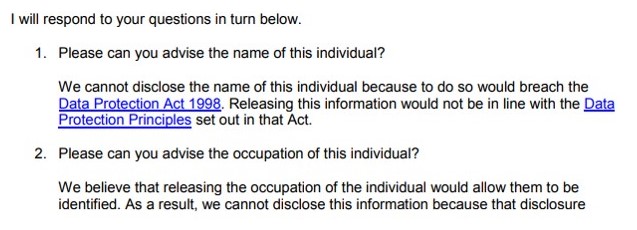
SNH has now responded and it’s astonishing:

It looks like SNH has been taking lessons from Natural England in the withholding of information that should be in the public domain. It’s understandable that SNH can’t disclose the alleged offender’s identity, but withholding details of his occupation and the county in which he resides because “this would allow them to be identified” is obviously nonsense, and we already know this information from the RSPB press release!

We would argue that it is in the public interest to know the name of the estate on which this alleged offence took place (and we do know from various local sources it was on a game-shooting estate and that this gamekeeper was employed by that estate). Why should that information be kept secret? Who is SNH shielding, and why?

And does anyone actually believe that Police Scotland, no matter how well-intentioned, has the resources to track this gamekeeper’s activities for the next three years to ensure he’s not breaching the terms of his General Licence restriction?!

Whilst this response doesn’t get us any further forward in knowing the specifics of this case, what it does demonstrate, quite clearly, is that the General Licence restriction, introduced as a way of publicly embarassing estates where there is evidence of wildlife crime but, due to perceieved evidential difficulties, the cases don’t ever reach the courts, is simply not working.

Tomorrow’s blog, on another General Licence restriction case, will emphasise this point again but on a whole bigger scale.

SNH says ‘no General Licence restrictions currently under consideration’ but what about these 9 cases?

The ability for Scottish Natural Heritage (SNH) to impose a General Licence (GL) restriction order on land where there is evidence of raptor persecution taking place came in to force on 1 January 2014. This measure, based on a civil burden of proof, was introduced by then Environment Minister Paul Wheelhouse in response to the continuing difficulties of meeting a criminal burden of proof to facilitate a criminal prosecution.

Whilst these GL restrictions are not without their limitations (because estates can simply apply for an individual licence instead –  see here, but also see here where SNH recently revoked an individual licence for alleged non compliance), Wheelhouse argued that as the restriction notices will be made public, they should act as a ‘reputational driver‘.

Since 1 January 2014, SNH has only imposed four GL restrictions. The first two were imposed in November 2015 (one for Raeshaw & Corsehope Estates in the Borders and one for Burnfoot & Wester Cringate Estates in Stirlingshire). Then there was a temporary halt for almost two years as Raeshaw & Corsehope Estates made a legal challenge which ended up with a judicial review in January 2017. The court’s decision was announced in March 2017 and SNH was found to have acted properly and lawfully. Since that decision was announced in March 2017, SNH has imposed two more GL restrictions: one for Edradynate Estate in Perthshire in September 2017 and one for an unnamed mystery gamekeeper in Aberdeenshire in September 2017.

Whilst we were pleased to see SNH impose these latest GL restrictions last month, we were also aware of a number of other raptor persecution incidents that have been recorded since 1 Jan 2014 that would potentially meet the criteria required for a GL restriction so we wanted to find out whether SNH was getting on with these.

Photo: an illegal pole trap filmed by RSPB Scotland on the Brewlands Estate in the Angus Glens, July 2015. These traps have been outlawed for over 100 years.

In early October we submitted an FoI to ask SNH how many cases were currently under consideration for a GL restriction. We are pretty shocked by the response received last week:

At the time of your request, no General Licence restrictions were under consideration“.

Really? Why the hell not? We know of at least nine cases that should be being considered, and these are just off the top of our heads – there will be others, as we know Police Scotland is still withholding information about a number of other raptor persecution incidents.

Here are the nine incidents we know about that have all occured since 1 January 2014 when SNH was given the power to impose a GL restriction:

Newlands Estate, Dumfriesshire. Gamekeeper William (Billy) Dick was convicted in 2015 for killing a buzzard on the estate in April 2014. He threw rocks at it and then stamped on it. The estate owner was prosecuted for alleged vicarious liability but then the Crown Office dropped the prosecution in April 2017, saying it wasn’t in the public interest to proceed (see here).

Brewlands Estate, Angus Glens. A gamekeeper was prosecuted for the alleged repeated setting of a pole trap on this estate between 9-17 July 2015. The Crown Office dropped the prosecution case in April 2017 because the video evidence was deemed inadmissible (see here). Another gamekeeper on this estate thought this result was hilarious.

Unnamed pheasant-shooting estate, Lanarkshire. In September 2015 a set pole trap was discovered on a bench directly outside a pheasant-rearing pen on an unnamed estate. Police Scotland apparently dropped the case, for unknown reasons.

Gamekeeper in Ayrshire. In May 2016 a named gamekeeper was charged after allegedly being caught using gin traps on a neighbouring farm of the estate on which he was employed. The Crown Office dropped the prosecution in March 2017 after reportedly ‘getting the dates wrong on its paperwork’ (see here).

Invercauld Estate, Aberdeenshire. In June 2016, walkers discovered a number of illegally-set spring traps staked out on a grouse moor. Two of the traps had caught a Common Gull by the legs. The bird had to be euthanised. There was no prosecution. ‘Some action’ was taken by the estate but whatever this action was it has remained a closely-guarded secret between the estate, the Cairngorms National Park Authority and the Scottish Government (see here).

Glendye Estate, Aberdeenshire. In January 2017 a number of illegally-set spring traps were discovered on a grouse moors on this estate. The Estate Factor and gamekeeper reportedly removed the traps and denied all knowledge of who had set them (see here). There was no prosecution.

Leadhills Estate, South Lanarkshire. On 4th May 2017, witnesses observed the shooting and killing of a hen harrier on this estate. Police Scotland appealed for information (see here & here). As far as we’re aware, there are no impending prosecutions.

Leadhills Estate, South Lanarkshire. On 31 May 2017, witnesses observed the shooting and killing of a short-eared owl on this estate. The corpse was retrieved and sent for a post-mortem. Police Scotland appealed for information. As far as we’re aware, there are no impending prosecutions.

Unnamed grouse shooting estate, Monadhliaths. On 7 June 2017, a member of the public found a buzzard caught in an illegally-set spring trap that had been staked out on an unnamed grouse moor in the Monadliaths. The buzzard was released. Police Scotland appealed for information. Inspector Mike Middlehurst of Police Scotland commented, “Unfortunately, there are some who continue to deliberately target birds of prey; there is nothing accidental in the setup of these traps“. As far as we’re aware, there are no impending prosecutions.

So why haven’t any of these cases been considered for a GL restriction? Is it because SNH is still waiting for Police Scotland to provide ‘formal information packages’ on these cases? (Remember, SNH can only consider potential GL restrictions based on evidence provided to them by Police Scotland). We know that Police Scotland has been slow in delivering this info to SNH in the past (e.g. see here) – are they still dragging their feet?

Or, is it the case that Police Scotland has already provided information to SNH about each of these nine cases and SNH has, for whatever reason, decided not to impose a GL restriction?

Isn’t it in the public interest to know, and importantly to understand, what is happening with these cases? We think so. And that’s why we’ve submitted an FoI to find out.

Scottish gamekeepers complain about alleged escalation of trap vandalism

The Scottish Gamekeepers’ Association is today complaining about an alleged escalation in the vandalism of animal traps on shooting estates.

This supposed increase has been attributed to ‘activists’ and the SGA wants the law tightened up so that the alleged perpertrators can be prosecuted.

There’s widespread media coverage about it today e.g. in The National (here), The Times (here) and on the SGA website (here).

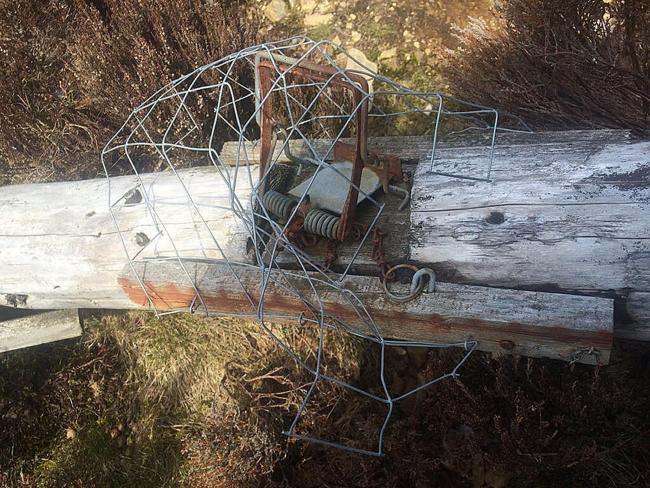
Photo of an allegedly vandalised trap (from The National)

This isn’t the first time we’ve heard such claims. Back in 2013 it was discussed during a Rural Affairs Parliamentary Committee meeting, when then Environment Minister Paul Wheelhouse acknowledged that trap tampering might be taking place but that there was no hard evidence to show how widespread the problem might be so at that time it was considered all conjecture.

In 2015 the issue was raised again by a Fife landowner and an article in the local press suggested that “Police Scotland is reporting a rise in the number of traps being tampered with“.

We challenged that claim by looking at the results of a year-long trap tampering study carried out across Scotland by BASC between April 2014 and March 2015. The results showed that the issue was not widespread at all, but seemed to centre on a handful of local areas.

Whether the problem has increased since then is hard to tell without independently collected data. The problem might have increased. It’s not hard to understand the motivation that might lead to someone damaging a trap. It might be on animal welfare grounds (someone might see a non-target species dead in a trap). It might be because someone can’t tell whether a trap is legally or illegally-set – it’s not always easy to judge. It might be because someone objects to predator control just to maximise a landowner’s profits. Or the motivation might simply be because so many cases of illegally-set traps rarely result in a prosecution, even when a known gamekeeper has been filmed setting an illegal trap. That doesn’t make trap vandalism ‘right’, we’re just saying it’s easy to understand why it might be happening.

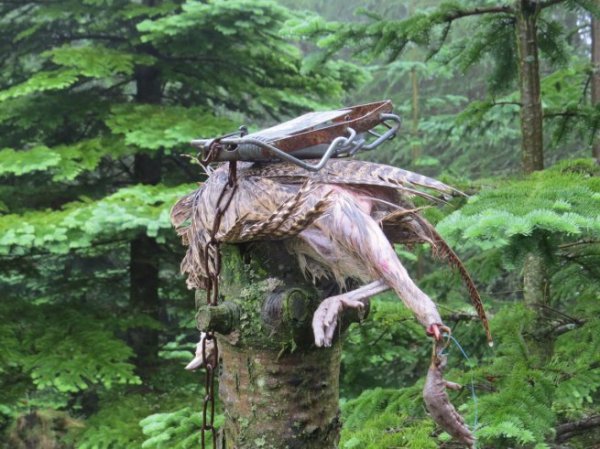
Photo of a young red grouse killed by a lawfully-set trap (photo by RPUK)

It’s equally plausible to suggest that some gamekeepers may be deliberately vandalising one or two of their own traps and then reporting it to the police as the work of ‘activists’ in an attempt to smear those whose campaign to put game-shooting under political scrutiny is gaining such traction.

Whatever might be happening, it’s ironic that the SGA doesn’t make this much noise when cases of illegally-set traps on game-shooting estates are reported in the media.

It’s very hard (virtually impossible) for us to sympathise with the SGA when it remains silent (or concocts outlandish alternative explanations) about the on-going abuse and use of illegal traps, by gamekeepers, to target birds of prey on game-shooting estates.

Speaking of which, we’re still waiting for the findings of the SGA’s inquiries in to who set the illegal traps that were discovered on a grouse moor on Invercauld Estate last year.

Bleasdale Estate gamekeeper denies killing two peregrines in Bowland

A 34-year old gamekeeper, James Hartley, appeared at Preston Magistrates Court today to face a series of charges relating to the alleged killing of two peregrines on the Bleasdale Estate, Bowland, in April 2016.

The charges read out in court were as follows:

  1. Killing a Schedule 1 wild bird. On 13 April 2016 at Bleasdale in the county of Lancashire, intentionally killed a wild bird included in Schedule 1 to the Wildlife & Countryside Act 1981, namely a peregrine falcon, contrary to sections 1(1)(a), 1(4) and 21(1) of the Wildlife & Countryside Act 1981.
  2. Disturb the nesting site of a Schedule 1 wild bird. On 13 April 2016 at Bleasdale in the county of Lancashire, intentionally or recklessly disturbed a wild bird included in Schedule 1 to the Wildlife & Countryside Act 1981, namely a peregrine falcon, while it was in, on or near a nest containing eggs or young, contrary to sections 1(5)(a) and 21(1) of the Wildlife & Countryside Act 1981.
  3. Killing a Schedule 1 wild bird. On 13 April 2016 at Bleasdale in the county of Lancashire, intentionally killed a wild bird included in Schedule 1 to the Wildlife & Countryside Act 1981, namely a peregrine falcon, contrary to sections 1(1)(a), 1(4) and 21(1) of the Wildlife & Countryside Act 1981.
  4. Set trap / gin / snare etc to cause injury to wild bird. On 13 April 2016 at Bleasdale in the county of Lancashire, set in position a trap which was of such a nature and so placed as to be calculated to cause bodily injury to any wild bird coming in to contact with it, contrary to sections 5(1)(a) and 21(1) of the Wildlife & Countryside Act.
  5. Take a Schedule 1 wild bird. On 13 April 2016 at Bleasdale in the county of Lancashire, intentionally took a wild bird included in Schedule 1 to the Wildlife & Countryside Act 1981, namely a peregrine falcon, contrary to sections 1(1)(a), 1(4) and 21(1) of the Wildlife & Countryside Act 1981.
  6. Possess live / dead Schedule 1 wild bird or its parts. On 13 April 2016 at Bleasdale in the county of Lancashire, had in your possession or control a dead wild bird included in Schedule 1 to the Wildlife & Countryside Act 1981, namely a peregrine falcon, contrary to sections 1(2)(a), 1(4) and 21(1) of the Wildlife & Countryside Act.
  7. Possess an article capable of being used to commit a summary offence under section 1 to 13 or 15-17. On 13 April 2016 at Bleasdale in the county of Lancashire, for the purpose of committing an offence, namely killing a Schedule 1 wild bird, namely a peregrine falcon, under section 1(1)(a), 1(4) and 21(1) of the Wildlife & Countryside Act 1981, had in your possession a firearm which was capable of being used for committing the offence, contrary to section 18(2) of the Wildlife & Countryside Act 1981.
  8. Possess an article capable of being used to commit a summary offence under section 1 to 13 or 15-17. On 12 April 2016 and 27 April 2016 at Bleasdale in the county of Lancashire, for the purpose of committing an offence, namely killing a Schedule 1 wild bird, namely a peregrine falcon, under section 1(1)(a), 1(4) and 21(1) of the Wildlife & Countryside Act 1981, had in your possession hammer, trap and knife which were capable of being used for committing the offence, contrary to section 18(2) of the Wildlife & Countryside Act 1981.
  9. Cause unnecessary suffering to a protected animal – Animal Welfare Act 2006. On 12 April 2016 and 15 April 2016 at Bleasdale in the county of Lancashire, caused unnecessary suffering to a protected animal, namely a peregrine falcon, by an act, namely trapping and leaving for a number of hours, and you knew or ought reasonably to have known that the act would have that effect or be likely to do so.

Mr Hartley denied all charges.

The following commentary has been compiled from notes we took during the hearing:

The lawyer from the Crown Prosecution Service then summarised the prosecution case. She said the Crown’s case is that the defendant is responsible for the destruction of two birds at their nest site. She said the matter came to light when the RSPB sited a camera within the boundary of Bleasdale Estate to monitor nesting peregrines. The Crown alleges that camera footage captures an individual in a camouflage suit attending the nest site. The individual remained there for a number of minutes setting what is believed to be a trap. The female peregrine is seen to leave the nest and four shotgun discharges are heard and the female does not return. The male peregrine remained at the site all day, believed to be trapped in the device set earlier. Later in the evening a person is seen to attend the nest site and remove something.

She went on to explain that the defendant is the gamekeeper for this particular ‘beat’ on the Bleasdale Estate and during a police search of his property a bag was seized containing a number of tools. A forensic analysis showed that a wooden-handled hammer and an orange-handled knife both contained peregrine DNA. The defendant gave a ‘no comment’ interview.

The defence lawyer, Tim Ryan, told the court that his client did not carry out the offences and is not the person shown in the video footage. He said part of his defence case would be to question the admissibility of video evidence under section 78 of the Police & Criminal Evidence Act.

The next hearing will take place on 11 January 2018 which is expected to deal with legal arguments about the admissibility of video evidence. Depending on the outcome of that hearing, a preliminary trial date was set to begin on 12 February 2018 and is expected to last for five days.

PLEASE NOTE: Comments are welcome but contributors are reminded that the offences are only alleged at this stage and it is up to the court to determine innocence or guilt. Please consider your words carefully as libellous commentary could interfere with the progression of this case! Thanks.

UPDATE 10 January 2018: Case against Bleasdale Estate gamekeeper James Hartley: part 2 (here)

More on the mystery gamekeeper with the General Licence restriction

Further to this morning’s blog about the mystery gamekeeper from north east Scotland who was filmed allegedly setting an illegal trap near a goshawk nest and who has subsequently been slapped with a General Licence restriction order by SNH, but whose name and employment details have been withheld.

Who could he possibly be and where, exactly, did this take place? There are some clues….

Have another look again at the short video clip of this gamekeeper in action, released by RSPB Scotland:

The video is date stamped: 21 March 2014.

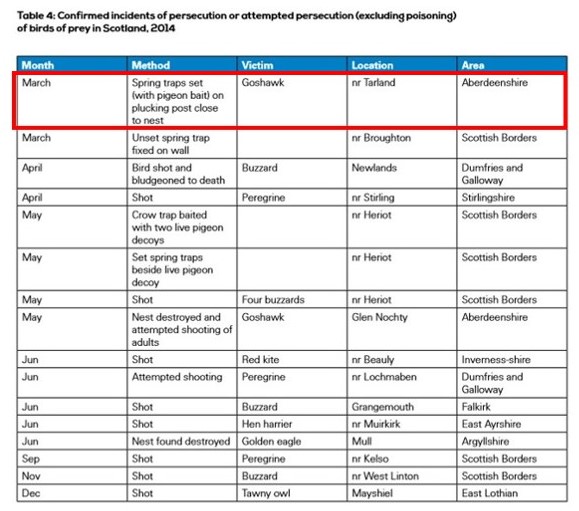
Now have a look at RSPB Scotland’s 2014 persecution report, and note the confirmed incident of raptor persecution recorded in March 2014 relating to the setting of spring traps (with pigeon bait) on a plucking post close to a goshawk nest:

The location is given as ‘nr Tarland, Aberdeenshire’.

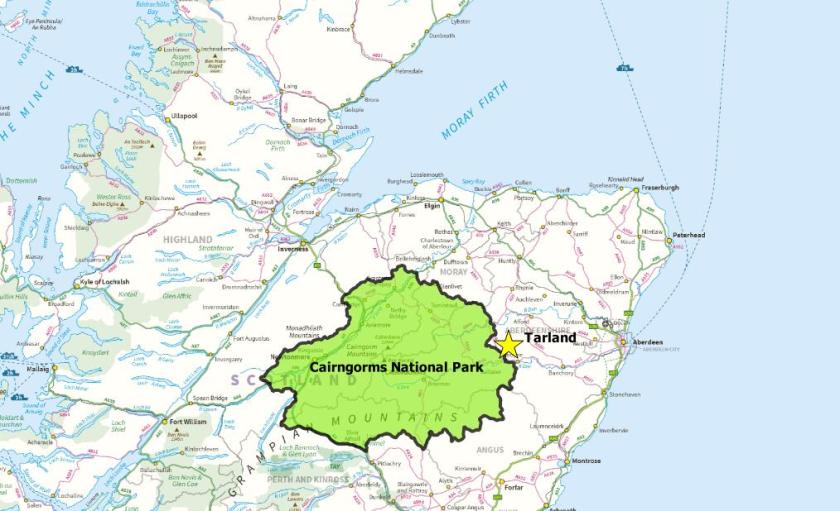
Where’s Tarland? Here it is, just to the east of the Cairngorms National Park boundary:

If we accept that the gamekeeper caught on video was allegedly trying to target a goshawk with an illegal trap, the motive for doing so would most likely be to protect game birds from predation. This is illegal, of course – goshawks have been legally protected since 1954, but as we know only too well, this doesn’t stop some gamekeepers from trying to kill them.

So we thought we’d look at how many game shooting estates are located ‘nr Tarland’. It’s a pretty vague location but consulting Andy Wightman’s brilliant Who Owns Scotland website, it turns out there are three big game-shooting estates in the area that could, reasonably, be defined as being ‘nr Tarland’: the MacRobert Trust Estate, the Tillypronie, Deskrie and Towie Estate, and the Dinnet Estate. There is also an area of ‘dead ground’ whose ownership is not included on Andy’s website, although we do know that GWCT’s new demonstration farm, Auchnerran, sits in this ‘dead ground’.

This map is useful, but it doesn’t really help draw many conclusions. What we can say is that all three estate owners would be both horrified, and embarrassingly compromised, if it turns out that this gamekeeper was employed by, or associated with, any of the estates.

The MacRobert Trust Estate is, as the name suggests, administered by a well-respected charity and the estate website suggests ‘an exemplary approach to estate management‘. There is a pheasant shoot here, which was advertised as a three-year ‘prestigious sporting lease’ in 2010.

The Tillypronie Estate was owned, at the time of the video recording, by Philip Astor. The estate, described as ‘One of Scotland’s most famous sporting estates’, went on the market last year valued at a cool £10.5 million and is now believed to have been sold to a ‘mystery buyer’. Gosh, there’s a lot of mystery in this part of the world, isn’t there? There is pheasant and grouse shooting here. Phil is a Vice Chairman of the GWCT.

The Dinnet Estate has long been owned by the Humphrey family and there is a designated National Nature Reserve on the estate, managed by SNH. A Dinnet Estate gamekeeper was convicted in 2006 of trespassing on a neighbouring estate with a firearm back in 2002 but that was a long time ago. A Dinnet Estate grouse moor was mentioned on this blog last month as being a potential location of satellite-tagged hen harrier Calluna’s last tag transmission but there’s been no further news on that. Dinnet Estate is a direct neighbour of the GWCT’s demonstration farm, Auchnerran, and the Dinnet Estate grouse moor is summer-grazed by some of GWCT’s sheep.

Given the GWCT’s indirect links and direct interests in the area ‘nr Tarland’, they must be concerned about the General Licence restriction being applied to a local, unnamed gamekeeper. If we ran an upland farm in the area, and were setting out to demonstrate good conservation benefits for both agriculture and wildlife, we too would be concerned. What if we employed him without knowing any of his history?

Shall we ask the GWCT for a comment? Perhaps, given their local contacts, they know something we don’t? Emails to: info@gwct.org.uk

May be all will become clear when we submit an FoI to SNH asking for further details about this particular General Licence restriction, although we’re not holding our breath!

Another avenue for information-seeking might be Police Scotland. We know from the RSPB’s press release that the police were investigating this alleged crime, so presumably the police know the name of the gamekeeper and where, exactly, this allegedly illegal trap had been filmed. Given that the case is now time-barred, meaning that the Crown Office couldn’t prosecute even if they wanted to (highly doubtful), there is no reason why Police Scotland can’t release relevant details as there’s no chance of it interfering with a live case. Let’s ask them. Emails to National Wildlife Crime Coordinator for Police Scotland, Andy Mavin: andrew.mavin@scotland.pnn.police.uk

SNH imposes General Licence restriction on ‘mystery’ gamekeeper

So, SNH has today announced it has imposed two General Licence restriction orders, based on evidence provided by Police Scotland of alleged raptor persecution crimes.

We know that one of those restriction orders has been placed on Edradynate Estate, Perthshire, because SNH has been quite upfront about it and has named the estate (see here).

But what about the other General Licence restriction? Well, according to the SNH press release, this has been imposed on “an individual” rather than on an estate.

This in itself is interesting. We know from the SNH framework for imposing these restrictions that this action can be taken against an individual, as well as on certain areas of land, but the framework document suggests that imposing it on land would be preferable to imposing it on an individual:

While the wording provides for the exclusion of individuals, it is the intention that where SNH has robust evidence that wild birds have been killed or taken or where there is intention to do so other than in accordance with a licence, SNH will exclude the area of land on which such evidence is found from General Licences 1, 2 and/or 3“.

Hmm. So who is this individual and why did SNH impose the restriction on him/her, rather than on an estate?

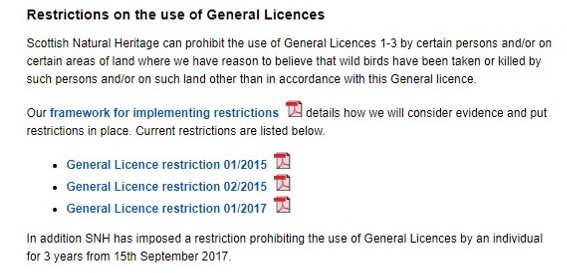
The SNH press release points the reader to the SNH webpage on General Licences for “full licence restriction details“. However, when you look at the SNH webpage, all you find is this:

Is SNH having a laugh? The “full licence restriction details” of this particular GL restriction order amounts to one sentence:

In addition [to the restriction imposed on Edradynate Estate] SNH has imposed a restriction prohibiting the use of General Licences by an individual for 3 years from 15th September 2017“.

That’s it? No name? No information on the area, let alone the name of the land where the evidence of raptor persecution took place? Not even the region?

What’s with the secrecy? Who is SNH shielding, and why?

This could be absolutely anyone! Is it Nicola Sturgeon? Is it Alex Salmond? Is it JK Rowling? Highly unlikely, it has to be said, but you get the point we’re trying to make.

And what happened to the transparency that was promised when former Environment Minister Paul Wheelhouse first announced this new measure to tackle ongoing raptor persecution? He said he expected details of General Licence restrictions to be published on the SNH website to act as “a reputational driver“. That’s not going to happen if SNH withholds the details, is it?

This is a very dangerous precedent to set. SNH has previously withheld details of estates that were being considered for a GL restriction but in that case, the justificiation for being all secret squirrel was reasonable: the GL restrictions hadn’t yet been imposed, but rather the estates had been notified of an intent to impose, and SNH argued that the estates needed time to respond/appeal (see here). That was fair enough.

But in this case, SNH has already imposed the GL restriction, and we’re struggling to understand the justification SNH might have for keeping the details secret.

What is it with statutory agencies and their reluctance to release information that’s clearly in the public interest?

We’ll be submitting an FoI to SNH to ask for further details, and, based on the response, we’ll consider appealing the decision to the Scottish information Commissioner.

In the meantime, have a look at today’s press statement from RSPB Scotland about these latest GL restrictions. This gives us more of a clue about the recipient of the restriction order. The statement includes the following quote from Head of Investigations, Ian Thomson:

The other restriction was imposed after RSPB investigations staff passed video footage to police of a gamekeeper allegedly setting illegal traps, baited with a dead woodpigeon, very close to a goshawk nest in NE Scotland.”

Ok, now we’re getting somewhere. The recipient of the GL restriction is a gamekeeper, working in NE Scotland, who was filmed allegedly setting illegal traps close to a goshawk nest. And the RSPB has even provided a video clip of the alleged offence, with the individual’s face pixellated (presumably done on legal advice).

Well, quelle surprise! Another gamekeeper trying, allegedly, to persecute a goshawk in north east Scotland. This is becoming quite a habit in this part of the country. First we had gamekeeper George Mutch, caught on video trapping and battering to death a goshawk on the Kildrummy Estate in 2012, crimes for which he went to prison (see here), then we had a gang of masked armed men caught on video shooting at a goshawk nest on Forestry Commission land at Glen Nochty in 2014 (see here), and now this latest case.

But who is this latest gamekeeper and on whose land was he working when he allegedly set this trap?

More on this in the next blog…..

UPDATES:

More on the mystery gamekeeper with the general licence restriction (here).

Raptor shot in North York Moors National Park

North Yorkshire Police have tweeted about the shooting of a raptor two days ago in the North York Moors National Park:

At the moment there is no further information about the circumstances of this reported incident, the species, the extent of its injuries, and whether it’s alive or dead.

Hopefully the police will issue a detailed appeal for information.

[UPDATE 18.20hrs: Further tweets from the police – the shooting was witnessed by a walker, the bird was thought to be a marsh harrier or a buzzard, the body was not found].

The North York Moors National Park is a well known raptor persecution hotspot, which is no surprise given the extent of driven grouse moors within the Park’s boundary. Earlier this year a buzzard was found in the Park with shotgun injuries (here) and last year another buzzard was found in the Park with horrific injuries caused from being shot and caught in a leg trap (see here).

Satellite-tagged hen harrier disappears on grouse moor in Cairngorms National Park

Well that didn’t take long, did it? Just a few weeks after fledging, one of the 2017 cohort of satellite-tagged hen harriers has already ‘disappeared’, with its final signal emitted from a grouse moor on the 12th August, the opening day of the grouse-shooting season.

Hen harrier ‘Calluna‘ (photo RSPB Scotland)

RSPB Scotland press release:

SATELLITE-TAGGED HEN HARRIER DISAPPEARS ON DEESIDE GROUSE MOOR

RSPB Scotland has issued an appeal for information after a young hen harrier, fitted with a satellite tag as part of the charity’s EU-funded Hen Harrier LIFE project, disappeared on an Aberdeenshire grouse moor.

Calluna‘, a female harrier, was tagged this summer at a nest on the National Trust for Scotland’s Mar Lodge estate, near Braemar. Her transmitter’s data was being monitored by RSPB Scotland and showed that the bird fledged from the nest in July. She left the area in early August, with the data showing her gradually heading east over the Deeside moors. However, while the tag data showed it to be working perfectly, transmissions abruptly ended on 12th August, with no further data transmitted. Calluna’s last recorded position was on a grouse moor a few miles north of Ballater, in the Cairngorms National Park.

Hen harriers are one of the UK’s rarest raptors and the 2016 national survey results released earlier this year showed that even in Scotland, the species’ stronghold, these birds are struggling. The number of breeding pairs in Scotland now stands at 460, a fall of 27 per cent since 2004, with illegal killing in areas managed for driven grouse shooting identified as one of the main drivers of this decline.

David Frew, Operations Manager for the National Trust for Scotland at Mar Lodge Estate, said: “It is deeply saddening to learn that Calluna appears to have been lost, so soon after fledging from Mar Lodge Estate. Hen harriers were persecuted on Deeside for a great many years, and we had hoped that the first successful breeding attempt on Mar Lodge Estate in 2016 would signal the start of a recovery for these magnificent birds in the area.

Only one month after fledging, and having travelled only a relatively short distance, it appears that we will no longer be able to follow the progress of our 2017 chick. We hope however that the data her tag has provided will help to inform a wider understanding of the lives and threats faced by hen harriers.”

Ian Thomson, Head of Investigations at RSPB Scotland said: “This bird joins the lengthening list of satellite-tagged birds of prey that have disappeared, in highly suspicious circumstances, almost exclusively in areas in areas intensively managed for grouse shooting. We are pleased that the Cabinet Secretary for the Environment has commissioned an independent group to look at how grouse moors can be managed sustainably and within the law. We look forward to a further announcement shortly on the membership of this group, and we are committed to assist the work of this enquiry in any way that we can.

The LIFE project team has fitted a significant number of tags to young hen harriers this year, with the very welcome help from landowners, including the National Trust for Scotland, who value these magnificent birds breeding on their property. The transmitters used in this project are incredibly reliable and the sudden halt in data being received from it, with no hint of a malfunction, is very concerning. We ask that if anyone has any information about the disappearance of this bird we urge them to contact Police Scotland as quickly as possible”.

ENDS

Here’s a map we’ve created showing the location of the National Trust for Scotland’s Mar Lodge Estate in the Cairngorms National Park, where Calluna hatched, and the town of Ballater, close to where she disappeared.

The RSPB Scotland press release doesn’t name the estate from where Calluna’s last position was recorded, it just says it was “on a grouse moor a few miles north of Ballater, in the Cairngorms National Park“.

Hmm, let’s have a closer look at that. Here’s a map showing the grouse moor area a few miles north of Ballater. According to estate boundary details that we sourced from Andy Wightman’s Who Owns Scotland website, Calluna’s last position could have been recorded on either an Invercauld Estate grouse moor or a Dinnet Estate grouse moor.

If you’re thinking that this part of the Cairngorms National Park looks familiar, you’d be right, we’ve blogged about it a few times before. There was the discovery of an illegally shot peregrine at the Pass of Ballater in 2011, the reported coordinated hunt and subsequent shooting of an adult hen harrier at Glen Gairn on the border of Invercauld and Dinnet Estates in 2013, and then there were the illegally-set traps that were found nr Geallaig Hill on Invercauld Estate in 2016. This area of Royal Deeside is quite the little raptor persecution hotspot, isn’t it?

The evidence just keeps mounting. Is anyone still wondering why the game-shooting industry is so keen to try and discredit the use of satellite tags on raptors?

We wonder what explanations, to avoid the bleedin’ obvious, they’ll come up with this time? Perhaps they’ll suggest Calluna was sucked in to a vortex created by Hurricane Harvey? Or maybe they’ll say she was hit by a North Korean test missile? They might tell us that Vladimir Putin must have hacked the satellite signals? All just as plausible as the usual tosh they trot out, such as how a fieldworker eating a sandwich at a tagging session causes eagles to die (here), or how non-existent wind farms are responsible for the disappearance of eight sat-tagged golden eagles (here), or how ‘activists’ have been killing sat-tagged raptors as part of a smear campaign against the grouse-shooting industry (here), or how a faulty saltwater switch on tags attached to Olive Ridley turtles on the Indian subcontinent means that all satellite tags are unreliable (here).

We’ll be updating this page throughout the day if and when statements are made by the following:

Response of Environment Secretary Roseanna Cunningham –

Response of Alexander Burnett MSP (Conservative, Aberdeen West) –

Response of Cairngorms National Park Authority – Grant Moir, Chief Exec of CNPA said: “A hen harrier has once again disappeared in the Cairngorms National Park, with a satellite tracker ceasing to transmit. The Park Authority is determined to stop these recurring disappearances. Earlier this week the CNPA met with Police Scotland to discuss how increased use of special constables can help to tackle wildlife crime in the Cairngorms National Park. We also continue to work on other solutions to these issues. The CNPA look forward to the establishment by Scottish Government of the independently-led group to look at the environmental impact of grouse moor management and will feed in to that review“.

Response of Scottish Land & Estates – David Johnstone, chairman of Scottish Land and Estates, said: “Estates in the area have welcomed a number of hen harriers to the area during August and only today one moor reported three harriers. Local land managers reject the inference that the loss of signal from this tag is connected to grouse moor management and are now offering every assistance in searching the area where the last transmission was recorded. They are dismayed that they were not informed earlier that the tag had stopped transmitting nearly three weeks ago, as this would have assisted the search“.

Response of Scottish Wildlife Trust – Susan Davies, director of conservation at the Scottish Wildlife Trust (SWT) said: “It’s extremely disappointing to learn that yet another hen harrier has disappeared over a grouse moor. The most recent surveys show that hen harrier numbers are declining in most parts of Scotland and that illegal persecution is a factor in this decline. Anyone who has information on this bird’s disappearance should contact Police Scotland immediately. 

The Trust has repeatedly called on the Scottish Government to be tougher on wildlife crime and introduce a system of licensing for grouse moor management to encourage sustainable practices. We welcome the recent announcement that a working group will be formed to look at the environmental impact of grouse moors and options for better regulation, and we stand ready to assist this group in any way possible“.

Response of Scottish Gamekeepers’ Association – A spokesman for The Scottish Gamekeepers Association said: “The SGA would urge anyone who saw the bird or knows anything about it to contact Police Scotland. This is the first we have heard of this. Obviously any news like this is very disappointing. The SGA condemns raptor persecution and if any of our members are convicted of a wildlife crime they are removed from our organisation. We have learned from those monitoring tags that birds can move some distance away from where they were last recorded so it is important that, if people know anything, they alert the Police immediately.”

Response of Scottish Moorland Group –

Response of Grampian Moorland Group –

Response of GWCT – Nothing, nada, zilch. But on Twitter they announced the availability of the new GWCT Xmas Cards. That’s nice.

Response of BASC –

Response of Countryside Alliance –

Response of Scottish Association for Country Sports – (from The Times) – Julia Stoddart, head of policy for the SACS, lamented the practice of killing hen harriers to protect grouse. “However, we would remind the RSPB that tag technology can fail for a number of reasons, and that raptors are susceptible to natural causes of death as well as to illegal persecution“, she said.

Other media coverage:

BBC news here

Scotsman here

Press & Journal here

UPDATE 2 September 2017: On cue, Scottish landowners’ rep throws false allegations at RSPB (see here).

UPDATE 4 September 2017: Political silence in response to missing hen harrier Calluna (see here).

UPDATE 5 September 2017: Scottish Land & Estates and their indefensible distortion of the truth (see here).