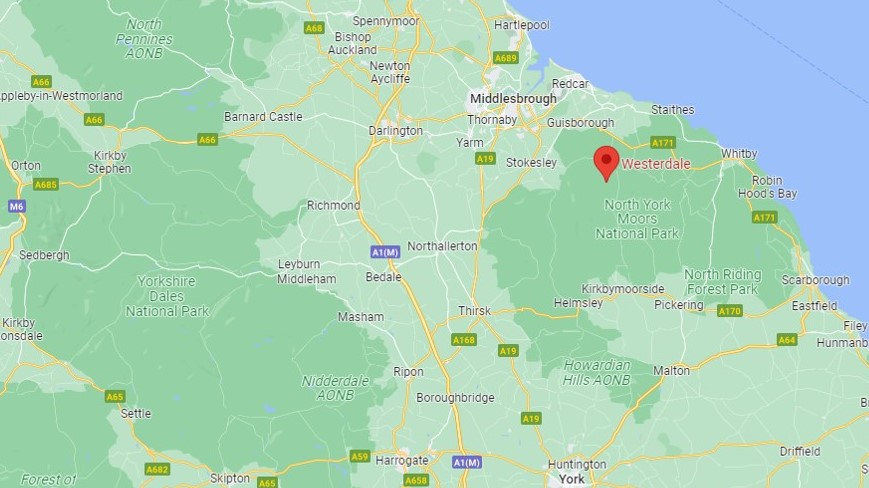
Following the recent confirmed shooting of at least two red kites (with a third one suspected) near Westerdale in the North York Moors National Park (see here), the North York Moors Park Authority has issued the following statement:
Following the most recent report from North Yorkshire Police regarding a Red Kite found with gunshot wounds, the North York Moors National Park is issuing the statement below.
Tom Hind, Chief Executive Officer of the North York Moors National Authority, said:
“We are appalled to hear of recent shootings of Red Kite in the North York Moors. Wildlife crime and raptor persecution are illegal, immoral and have no place in this National Park.
“Those behind these callous acts should recognise the disservice they have done to the entire North York Moors community. Ultimately those responsible may find they have shot not only a wonderful bird of prey, but also themselves in the foot.
“It is vital that anyone with information about these incidents, or any other wildlife crime in our region, call North Yorkshire Police on 101. We cannot let this crime go unpunished.”
A couple of weeks ago, North Yorkshire Police appealed for information after a red kite was found with shotgun injuries near Westerdale in the North York Moors National Park on 13th June 2023. It didn’t survive (see here).
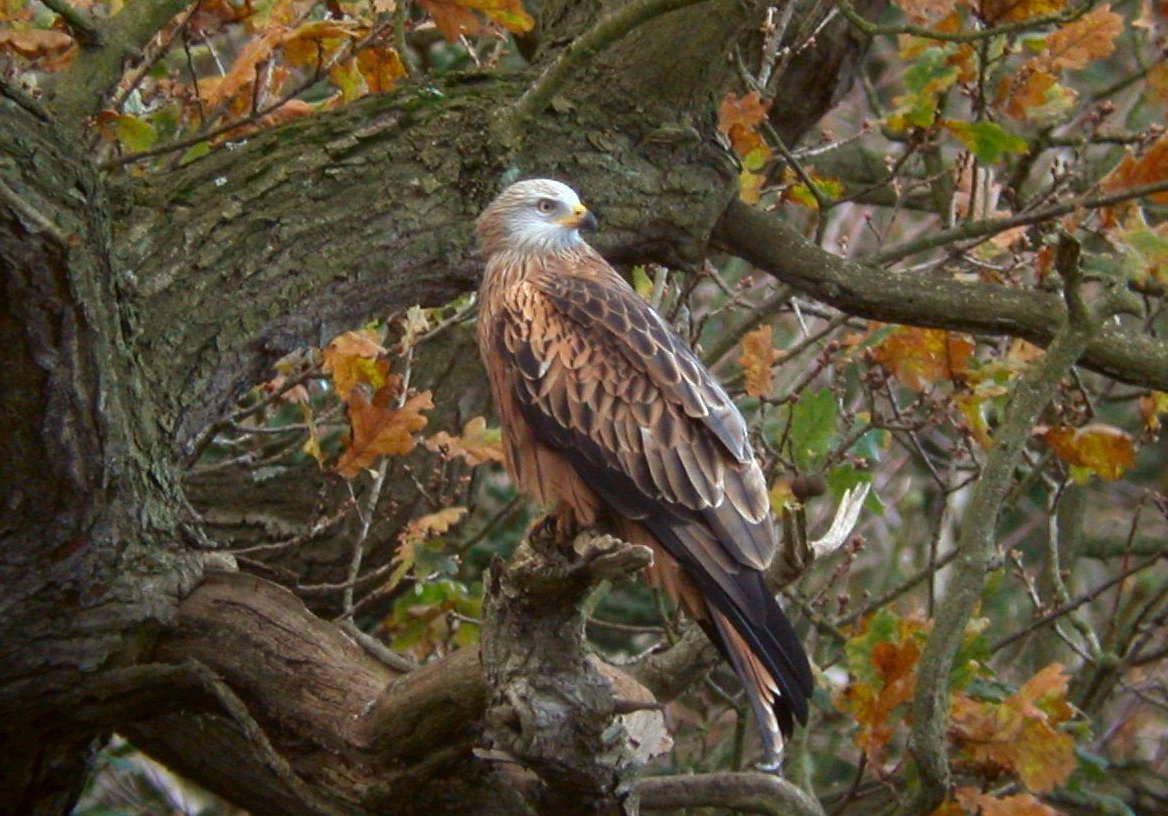
Red kite. Photo by Ben Hall (RSPB Images)
Today, North Yorkshire Police has issued another appeal for information after the discovery on 26th June 2023 of a second shot kite in the same area (which also didn’t survive its injuries) and suspicions that a third kite has also been shot, based on photographs taken on 23rd June 2023 provided to the police by walkers.
The appeal for information by North Yorkshire Police’s Rural Task Force is a bit bizarre, to say the least. Here it is:
NORTH YORK MOORS: APPEAL FOR INFORMATION ABOUT THE SHOOTING OF A RED KITE
North Yorkshire Police’s Rural Task Force is appealing for witnesses and information about the shooting of a Red Kite on the North York Moors near Westerdale.
The Red Kite, suffering with gunshot wounds, was found by a local farmer at 9.30pm on Monday 26 June in Westerdale. Sadly, despite being taken to a vet it did not survive its injuries.
This incident follows another recent shooting of a Red Kite in the area on Tuesday 13 June. North Yorkshire Police have also received information that there may be a third injured Red Kite, photographed by walkers on Friday 23 June, on the opposite side of the valley.
We believe that these incidents are linked. This disturbing criminal behaviour and persecution of innocent birds of prey will not be tolerated and must cease immediately.
Police are renewing their appeal for any information in relation to raptor persecution. Anyone with information that could assist our investigation should email Jack.donaldson@northyorkshire.police.uk
If you spot a dead or injured bird, poisoned bait or a pole trap, please note the location, take a photo and call North Yorkshire Police on 101 to report it.
If you wish to remain anonymous, you can pass information to Crimestoppers on 0800 555 111.
Please quote police reference 12230107850 when passing on information.
Red kites were saved from national extinction by one of the world’s longest-running protection programmes and have been successfully reintroduced to England and Scotland. Red kites are listed under Schedule 1 of The Wildlife and Countryside Act.
North Yorkshire Police in collaboration with the British Association of Shooting and Conservation (BASC), Countryside Alliance, Moorland Association and the National Gamekeepers Association take a zero-tolerance approach to raptor persecution. All agencies agree that ‘there is no excuse for illegally killing of any bird of prey and unreservedly condemn all such acts. Any individual convicted of a crime against a bird of prey will be expelled from the organisation’.
Police are aware that local gamekeepers will come under suspicion, however we will investigate with an open mind, gathering information from a variety of sources, and not be led by assumptions.
In response to the ongoing persecution against birds of prey in the North Yorkshire Moors, North Yorkshire Police Rural Taskforce Officers have increased marked and unmarked patrols in target areas to protect wildlife and deter offenders.
ENDS
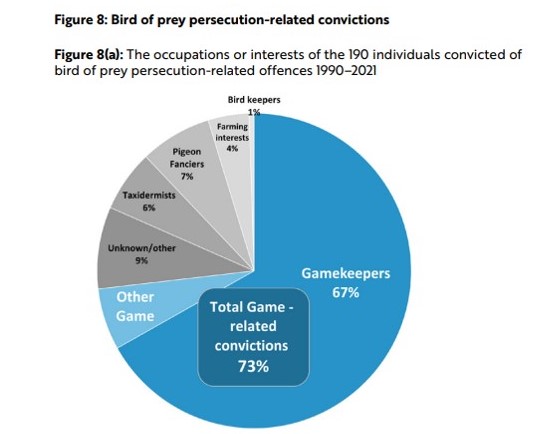
This looks very much like North Yorkshire Police has been ‘got at’ by the shooting lobby. How else do you explain the police including what is blatant propaganda in their own press release, from an industry responsible for the vast majority of raptor persecution crimes?!
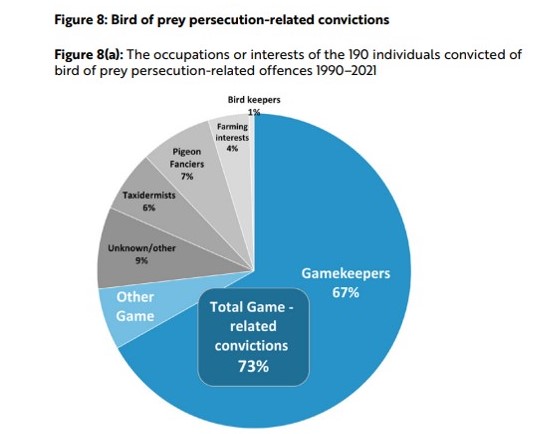
Data from the RSPB’s latest Birdcrime Report
How many members of the public are wandering around this grouse-moor dominated landscape with shotguns, taking pot shots at birds of prey?
How many members of North Yorkshire Police’s Rural Taskforce have links to the game-shooting industry?
Meanwhile, supposedly protected birds of prey continue to be targeted and killed in what is supposed to be a National Park.
UPDATE 7th July 2023: Red kite shootings: statement from North York Moors National Park (here)
UPDATE 9th October 2023: Buzzard shot & critically injured in North York Moors National Park (here)
Last month, Police Scotland and the Scottish SPCA issued an appeal for information in relation to the discovery of a critically-injured red kite near Closeburn in Dumfries & Galloway on 5th June 2023 (see here).
The kite’s injuries were so severe it had to be euthanised, and the Police/SSPCA were keen to trace the man who had handed in the kite.
Red kite. Photo by Doug Simpson
In an update published on the BBC News website (here) it is reported that this kite had suffered gunshot injuries.
It’s also reported that the person who handed in the injured kite has now been traced and inquiries are ongoing.
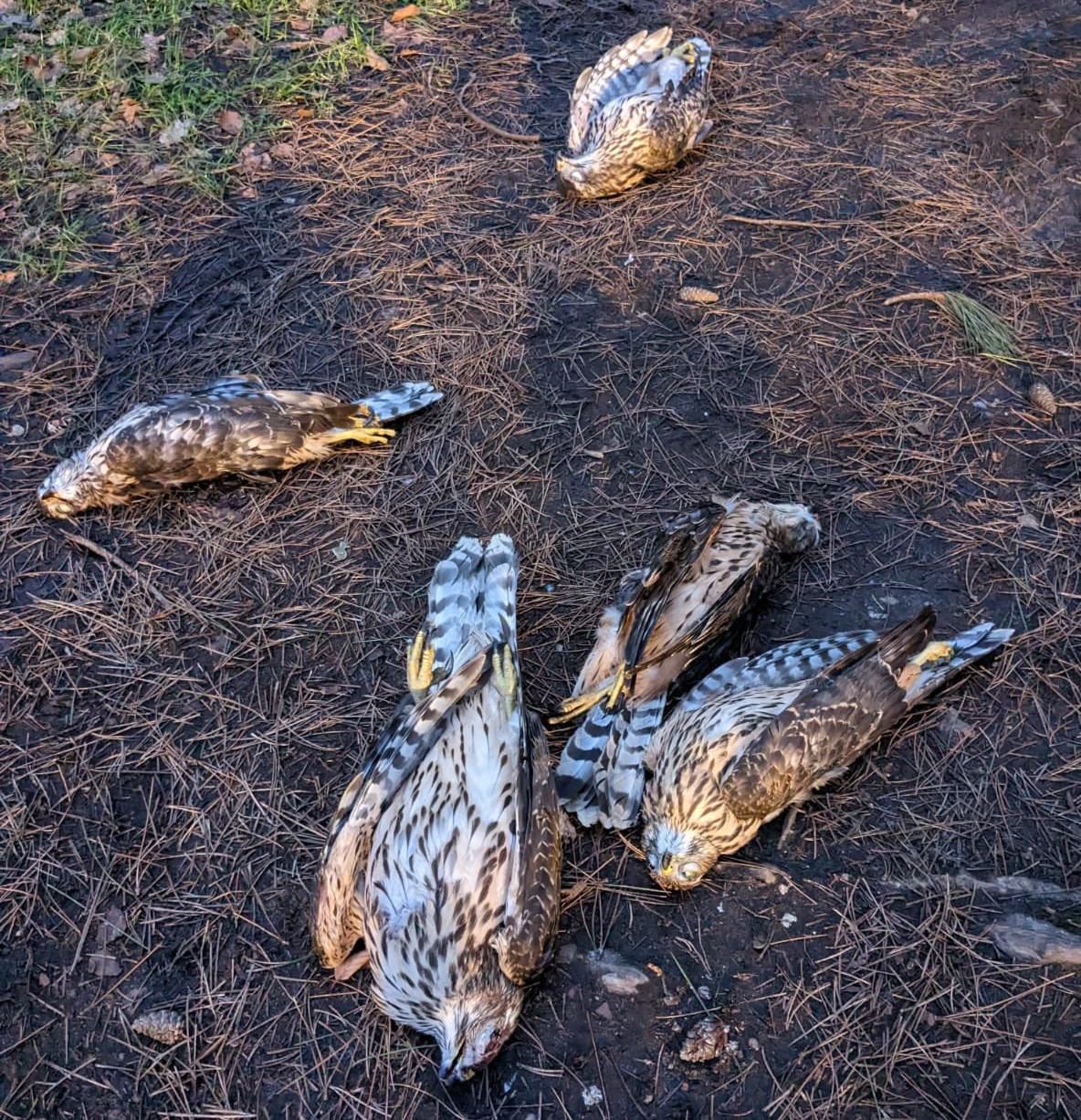
Yesterday, gamekeeper Francis Addison was convicted for multiple offences linked to the discovery of five shot goshawks that were found in a public carpark next to King’s Forest near Thetford in January this year (see here).
The five shot goshawks. Photo: Suffolk Police
Addison lives in the village of Weeting in Norfolk.
Weeting also just happens to be where another gamekeeper, Matthew Stroud, was convicted in October 2022 for multiple wildlife crimes on land he managed for pheasant shooting at Fengate Farm, including the killing of six buzzards and a goshawk and the laying of poisoned baits (see here and here).
Weeting is a small village. There are a few farms there, according to Google maps, some or all of which could be hosting pheasant shooting, but I was curious about whether Addison and Stroud were associated with the same pheasant shoot at Fengate Farm.
So I asked Suffolk Police this morning:
Interesting.
Fengate Farm is owned by Richard Norman Parrott, who also happens to be a director of Weeting Steam Engine Rally Ltd, according to Companies House (here).
The Weeting Steam Rally and Country Show is scheduled to take place at Fengate Farm on 14-16th July 2023 – see the rally website here – where overnight camping is offered (here) and the rally is described on the website as follows:
‘A fun family day out filled with nostalgia of steam. We have plenty for all the family to enjoy, from the large range of steam engines to the fairground, gundogs to chainsaw carving, there’s something for everyone, whatever your age – across our 170 acre site! Our large trade area has a vast array of stalls, we also have a craft tent and a food hall, along with many other things to see and do‘.
Now, I’m not suggesting for one minute that Mr Parrott had any involvement with, or knowledge of, the criminality associated with the Fengate Farm pheasant shoot. For all I know, he leases out the land used for the shoot and has nothing to do with it (it’s worth noting that criminal gamekeeper Stroud was described as ‘self-employed’ and criminal gamekeeper Addison has been described as being ‘part-time’ and ‘retired’ – there is no indication that either were employed by Mr Parrott).
But given the discovery of poisoned baits and poisoned birds of prey, shot birds of prey, unsecured poisons, the illegal use of animal traps, and the unlawful use and storage of shotguns associated with this pheasant shoot, I’d suggest that visitors to the steam rally and country show might want to consider the risks to their health and safety and that of their children and dogs.
Further to the criminal conviction yesterday of gamekeeper Francis Addison from Weeting, near Thetford in relation to the discovery of five shot goshawks in January this year (see here), there was excellent coverage on BBC’s Look East yesterday evening.
It’s available on iPlayer (here, starts 05.53 mins) but only until this evening, so here is a transcript of the two-minute piece:
A part-time gamekeeper who admitted dumping dead birds of prey in a parking area in Suffolk has been given a suspended prison sentence.
The five goshawk carcasses were found in January. Francis Addison who’s 72 and from Weeting, near Thetford, denied shooting them. Our Environment reporter Richard Daniels sent this report from Norwich Magistrates Court.
It was a shocking discovery. Five goshawks dumped in a public area near Wordwell in Suffolk. All had been shot. When police swabbed them for DNA it led them to the home of Francis Addison, an ex-military weapons instructor and part-time gamekeeper.
Today, Addison arrived at court facing 19 charges, including possession of the goshawks and various firearms offences.
Francis Addison arriving at court. Screen grab from BBC Look East
Addison’s defence told magistrates he found the five goshawk carcasses while out walking his dog. He put them in a bag and took them home. [Ed: according to this BBC article, Addison claimed he was intending to give them to the BTO]. But when a friend told him that it was illegal to have them, he took fright and returned them to the spot where he found them.
Once driven to extinction through persecution, goshawks are some of our most protected birds. The court was told there were believed to be as few as 33 living in Suffolk.
[Tom Grose, RSPB Investigations Officer]: “It’s illegal to possess these birds. However, we still don’t know who killed these goshawk and there is a reward available, still, for anybody that comes forward with information leading to the conviction of somebody for that offence”.
When the police searched Addison’s home they found his gun cabinet unlocked with ammunition stored in cupboards and in his car.
Screen grab from BBC Look East
[Sgt Brian Calver, Suffolk Police]: “If the house got burgled then they had access to a rifle, four shotguns, all the ammunition in the world. Gun ownership is a privilege, not a right, that’s one of the conditions on everyone’s licence to make sure that you keep those guns as secure as possible at all times”.
Addison was given a 12-week suspended prison sentence. He was told he’d shown a total disregard and disdain towards his licensing requirements. His firearm and shotgun certificates have been revoked.
Richard Daniel, BBC Look East, Norwich Magistrates Court.
ENDS
I’m so pleased to learn that Addison ‘found’ the five shot goshawks on his dog walk and that their deaths had nothing whatsoever to do with his cage traps, dead woodpigeon and guns. Phew! Seems he’s just an unlucky chap, not a raptor-killing bastard.
UPDATE 30th June 2023: Criminal gamekeepers Addison & Stroud both linked to Fengate Farm in Weeting, Norfolk (here)
At Norwich Magistrates’ court today, Frances Addison (72) a part-time gamekeeper of South Park, Weeting, pleaded guilty to 19 charges in connection with a multi-agency raptor persecution investigation led by Suffolk Police, including possession of five shot Goshawks.
The five birds were found dead together in Kings Forest, near Wordwell, Suffolk on 16 January 2023.
The five shot juvenile goshawks found dumped in car park. Photo: Suffolk Police
The incident was reported to Suffolk Police, who swabbed the birds at the scene for human DNA and then x-rayed them as part of their investigation. All five birds were found to contain multiple pieces of shot and remarkably a human DNA hit was registered from a swab of one of the bird’s legs.
The DNA findings led Suffolk and Norfolk Constabularies, assisted by RSPB Investigations and the National Wildlife Crime Unit, to search the suspect’s home in nearby Weeting, where a number of offences in relation to firearms and traps were uncovered. In interview, Addison claimed that he had found the Goshawks and then put them back and that all gamekeepers were killing birds of prey.
The court dealt with all the offences together and sentenced Addison to 12 weeks imprisonment – suspended for 12 months and ordered him to pay £1080 in compensation and £105 costs.
All birds of prey are protected by law, and to kill or injure one could result in jail and/or an unlimited fine. Yet the illegal killing of birds of prey remains a widespread national problem.
The RSPB’s annual Birdcrime report for 2021 revealed 108 confirmed incidents of birds of prey being shot, trapped or poisoned. However, the true number is likely to be far higher.
The report also found that Norfolk had the highest number of confirmed raptor persecution incidents than any other county in 2021.
It remains unknown who shot the Goshawks despite extensive rewards on offer from RSPB, Wild Justice, and Rare Bird Alert.
Mark Thomas, UK Head of Investigations at RSPB said:
“Goshawks are an exhilarating apex predator, so it was both shocking and appalling to see images of the five shot birds discarded in the Breckland Forest car park, we applaud the efforts and professionalism of Suffolk Police in deploying key forensic techniques that have led to court charges in this case. In 2021, two-thirds of all confirmed UK raptor persecution incidents happened in connection with land used for gamebird shooting, faced with huge public displeasure there is increasingly no place to hide for those who commit these crimes“.
Sergeant Brian Calver, of Suffolk Constabulary’s Rural and Wildlife Crime team, said:
“This is a particularly disturbing case. Bird of prey crime is a national wildlife crime priority, which is taken very seriously by police. We will leave no stone unturned in pursuing criminals that cause deliberate harm to wildlife. This incident has had a significant impact on the Goshawk population in the Brecks and in particular their ability to expand their territory. As well as possessing dead schedule 1 birds, Addison has shown a complete disregard for the security of his guns, which is equally concerning.”
He went on to say “We welcome today’s outcome and I hope the sentence imposed sends a strong message to others that are involved in this type of criminality. We’ll continue to work closely with partners to ensure such crimes become a thing of the past.”
The charges were:
· Five counts of possession of a dead schedule 1 wild bird (Goshawk)
· One count of killing a non-schedule 1 wild bird (Wood Pigeon)
· One count of use of an animal trap in circumstance for which it is not approved
· Two counts of possession of an article capable of being used to commit a summary offence, namely two air rifles and six animal traps
· Six counts of failing to comply with the conditions of a firearm certificate
· Four counts of failing to comply with the condition of a shotgun certificate.
ENDS
Brilliant multi-agency partnership work – very well done to everyone involved.
The sentence is, as usual, insignificant and no deterrent to others.
The Norfolk village of Weeting seems to be somewhat of a hotspot for raptor persecution – last year another gamekeeper, Matthew Stroud, was convicted of multiple wildlife crime offences in the area including the placing of poisonous baits and the killing of buzzards and a goshawk (see here).
I look forward to reading BASC’s condemnation of Addison and his crimes – given their faux outrage when Suffolk Police initially asking the shooting community to help progress the police investigation (see here).
UPDATE 30th June 2023: More on convicted Norfolk gamekeeper Francis Addison (here)
RED KITE SHOT AND POISONED IN DURHAM RAPTOR CRIME SPOT
The protected bird of prey was found dead, hanging in a tree near Stanhope Burn, in the North Pennines Area of Outstanding Natural Beauty
The Weardale area has become a hotspot for raptor persecution
Police and partners want members of the public to report dead birds of prey and generate more information on raptor persecution in the area
A Red Kite found dead in Stanhope has been confirmed as having been both shot and poisoned, once again highlighting the area’s serious problem with bird of prey persecution.
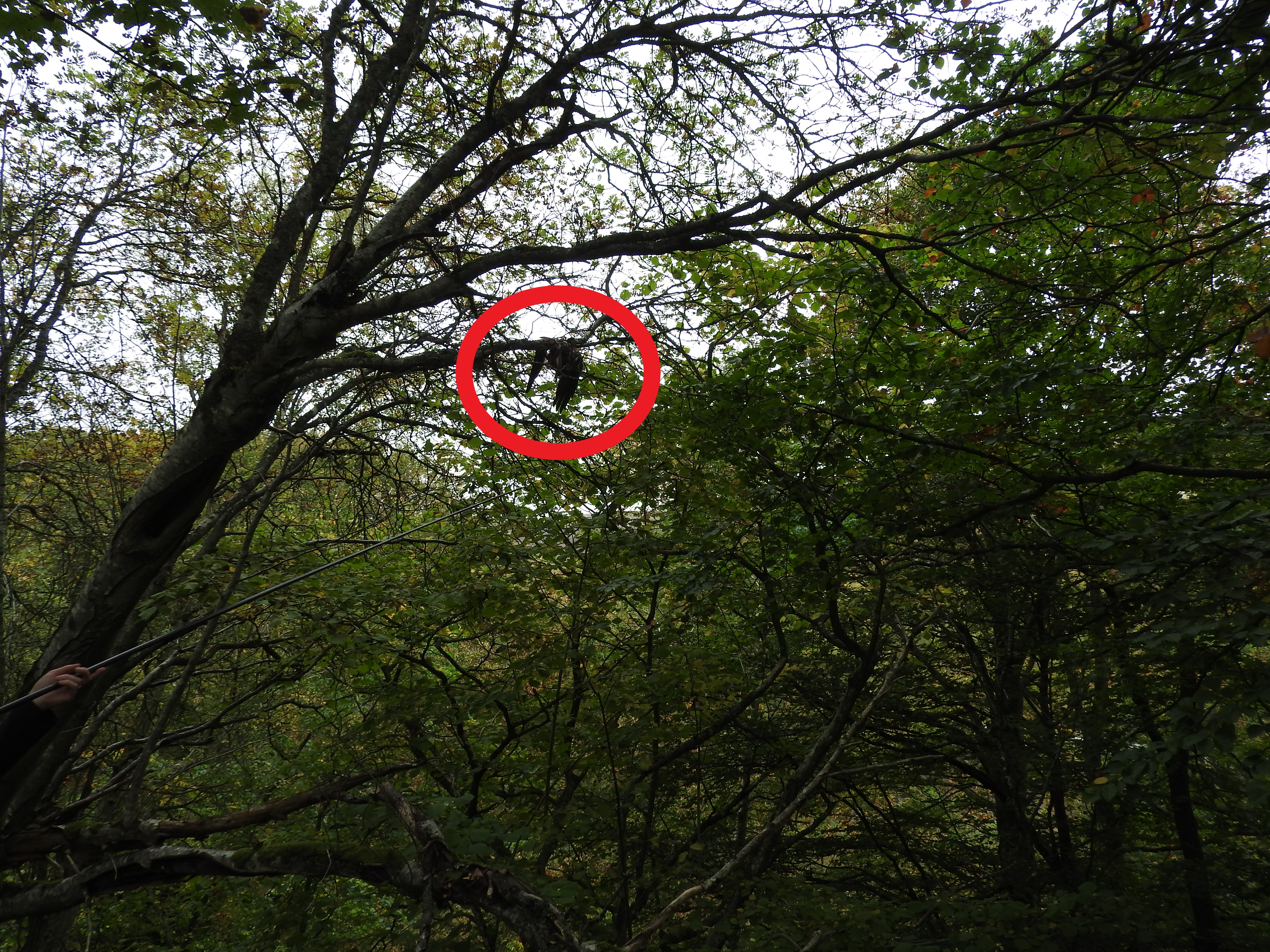
The protected bird of prey was discovered hanging in a tree by a member of the public in October 2022. The bird’s body was x-rayed and found to contain pieces of shot revealing that the bird had been shot at some point in its life. But when the bird was sent for official toxicology examination, the body was found to contain the highly toxic pesticides carbofuran and bendiocarb – which were confirmed by testing to be the cause of death. Both these substances are frequently seen in bird of prey poisoning cases despite being banned for legal use in the UK for many years.
Illegally shot & poisoned red kite hanging in a tree near Stanhope in the North Pennines AONB, October 2022. Photo: RSPB
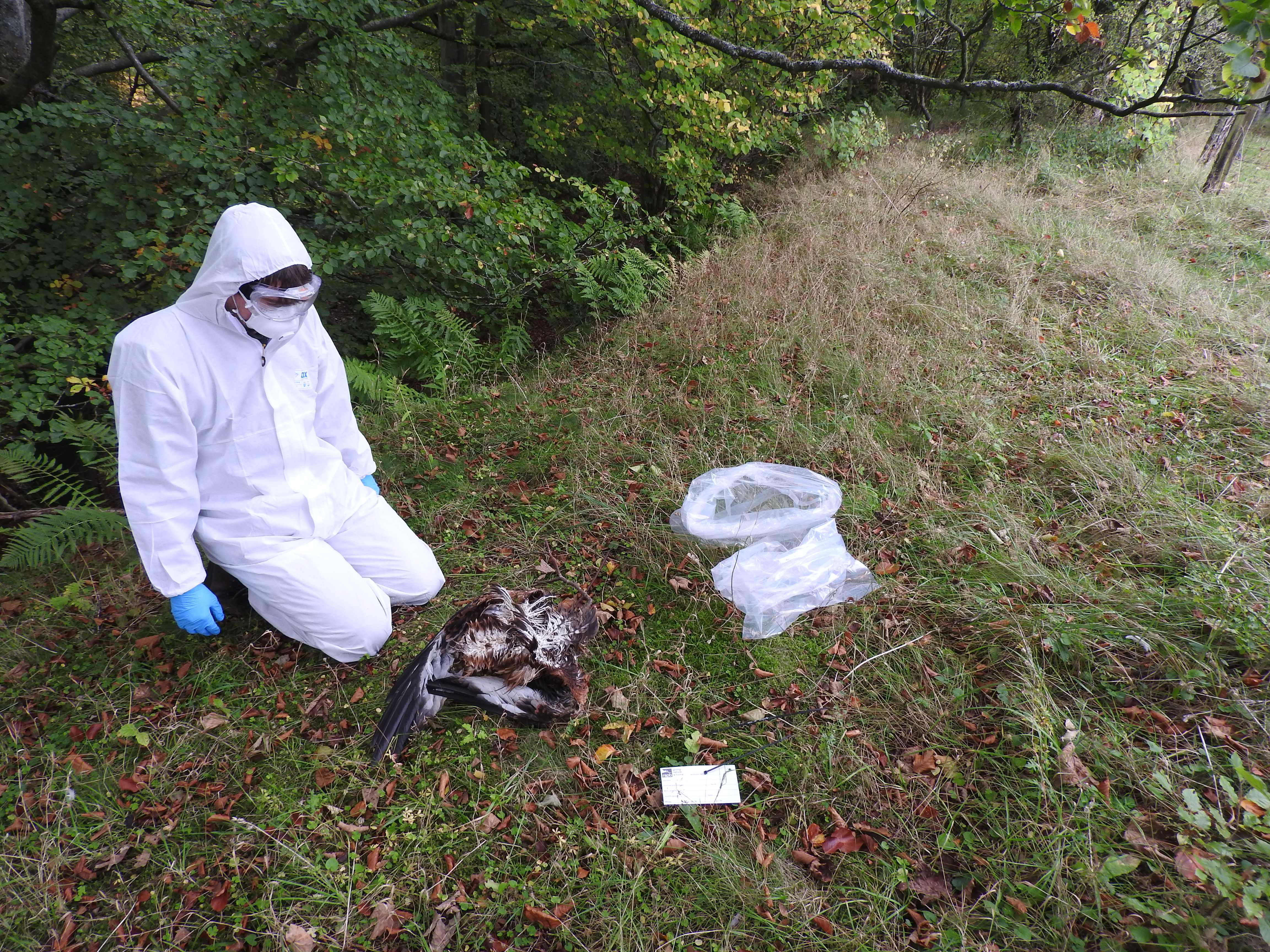
Investigator collecting the shot & poisoned red kite near Stanhope, Oct 2022. Photo: RSPB
Red Kites are graceful birds with long wings and a distinctive forked tail. Forty years ago their numbers were limited to a small population in Wales due to illegal persecution, until successful reintroduction programmes in the 1980s and 90s brought them back from the brink. However persecution remains a threat, even today. Like all birds of prey, they are legally protected in the UK, punishable by jail and/or an unlimited fine.
Last month (May 23), police and partners carried out searches of land and buildings the area, in connection with the incident.
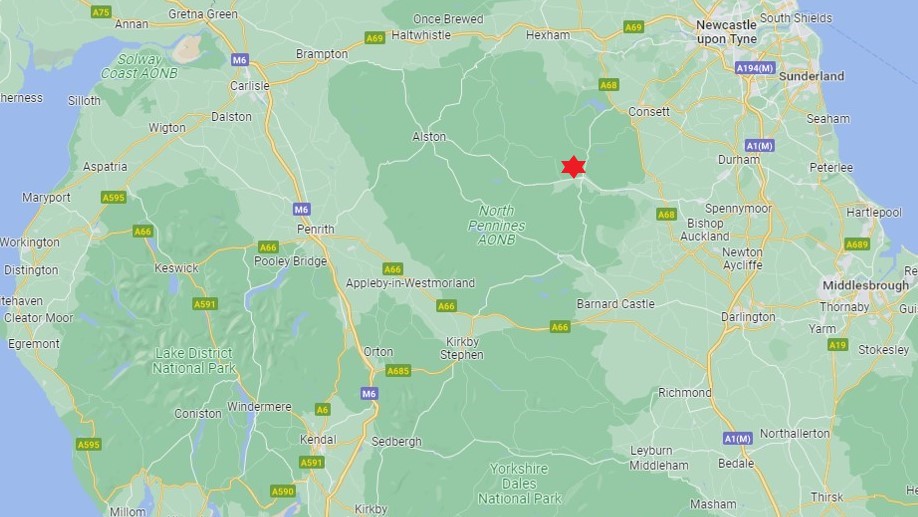
Red star indicates approximate location of latest crime in the North Pennines AONB
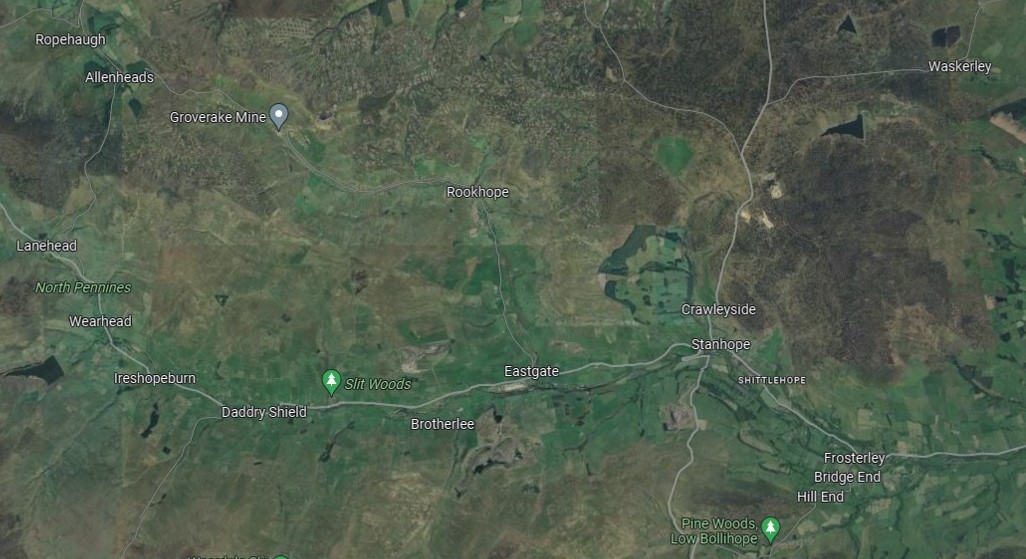
Stanhope Burn, to the NW of Stanhope, is next to moorland managed for driven grouse shooting
This is the latest of a series of crimes involving birds of prey being illegally killed in this part of the North Pennines Area of Outstanding Natural Beauty (AONB).
In 2020, two GPS satellite-tagged Red Kites disappeared in the Edmundbyers area in suspicious circumstances [Ed: see here]. Both tags – fitted as part of a species monitoring scheme by Friends of Red Kites, who monitor the red kite population in North-east England – had been transmitting as expected until they suddenly stopped. Neither bird, nor their usually very reliable tags, have been seen since.
In 2021, a Red Kite was found poisoned by carbofuran and bendiocarb, also in the Edmundbyers area.
The following year, police together with partner agencies conducted a raid on nearby grouse moor estates in Durham and Northumberland, following previous incidents and intelligence related to bird of prey killing in the area [Ed: see here].
And in March 2023, a Red Kite was found shot, but still alive, on a grouse moor in Edmundbyers [Ed: see here]. Luckily, after care by local vets and a specialist rehabilitator, the bird recovered and was released back into the wild [Ed: see here].
The RSPB’s Birdcrime report, published last autumn, revealed that over two-thirds (71%) of all confirmed raptor persecution incidents in 2021 related to land managed for gamebird shooting. And since 1990, 67% of those convicted of these crimes have been gamekeepers.
Data from RSPB’s Birdcrime Report (2021)
Mark Thomas, RSPB Head of Investigations, said: “We are concerned about a spate of concentrated raptor crimes which is rendering the Weardale grouse moors a hotspot for the illegal killing of birds of prey. As such, we are concentrating our efforts of detection on this area, in the hope of catching anyone targeting protected birds such as Red Kites, which should be breeding successfully in this area. But we critically need the public to be our eyes and ears and report potential crimes to ourselves and the police.
“The fact that bird of prey persecution continues against the public interest makes it clear that additional regulation for grouse moors is necessary. We believe all grouse moors and their owners or sporting tenants must be licensed, as is happening in Scotland, to provide a meaningful deterrent to the illegal killing birds of prey. Ultimately this could mean the loss the licence to shoot grouse, if the Police are satisfied that wildlife crimes against raptors are occurring on a particular landholding. Law-abiding estates should have nothing to fear from this approach”.
PC David Williamson of Durham Constabulary said: “The illegal killing of birds of prey unfortunately is continuing in our rural areas. It is unacceptable that anyone should think they can ignore the law and kill these birds by poisoning, shooting, trapping or nest destruction and disturbance. I am sure that people in our community will know who is committing these offences and I would urge anyone with any information to report this. Durham Constabulary will continue to work with our partners to tackle this criminal activity, investigate any reports and prosecute offenders”.
If you notice a dead or injured bird of prey in suspicious circumstances, call the police on 101 and fill in the RSPB’s online reporting form HERE.
If you have information about anyone killing birds of prey which you wish to report anonymously, call the RSPB’s confidential Raptor Crime Hotline on 0300 999 0101.
The Scottish Government has finally published its response to the recommendations made in its commissioned review of increasing investigatory powers for the Scottish SPCA to help tackle wildlife crime, including raptor persecution. It’s good news!
Here’s the Government statement:
Scottish Government Response to Taskforce Report on SSPCA Powers
In response to the independent Scottish Society for the Prevention of Cruelty to Animals (SSPCA) Taskforce report, the Scottish Government is proposing to bring forward provisions to allow for a limited extension of the Scottish SPCA’s current powers to investigate wildlife crime.
We are grateful to the SSPCA Taskforce for conducting the review and producing their final report and we agree with the recommendation that further partnership working between the SSPCA and Police Scotland should be taken forward. Having considered the report in detail, we also propose that further limited powers for SSPCA inspectors should be provided.
Our proposal is to provide SSPCA inspectors with additional powers to search, examine and seize evidence in connection with specified wildlife crime offences under Part 1 of the Wildlife and Countryside Act 1981 and certain offences in the Wildlife Management and Muirburn (Scotland) Bill 2023. These powers would only be given to an inspector appointed under section 49(2)(a) of the Animal Health and Welfare (Scotland) Act 2006 and each inspector would be separately and individually authorised by the Scottish Government in connection with the new powers. All inspectors would be required to undertake specified training prior to being given authorisation to exercise the new powers. Authorisations could be withdrawn at the discretion of the Scottish Government.
In addition to the additional training requirements, protocols will be established between the SSPCA and Police Scotland to ensure effective partnership working and that Police Scotland have primacy over cases and offences under the Wildlife and Countryside Act 1981 and the Wildlife Management and Muirburn (Scotland) Bill 2023.
It is intended that an important limitation would be placed on the exercise of these powers, namely that the additional powers could only be exercised when an inspector is already responding to a case using their existing powers under the 2006 Act.
This has been a long-running issue and we believe that the approach we are proposing represents a balanced compromise. It will allow SSPCA inspectors who are already on the spot, investigating potential animal welfare offences under their existing powers, to seize and secure evidence of related wildlife crimes without delay and potential loss of that evidence. The proposal would not however lead to SSPCA becoming an alternative wildlife crime enforcement agency. Police Scotland would retain primacy as the enforcement body for all wildlife crime and the public should continue to report those crimes to Police Scotland.
Following further consultation with stakeholders the proposed changes will be brought forward as an amendment at Stage 2 of the Wildlife Management and Muirburn (Scotland) Bill 2023. The Bill is currently before the Parliament and we welcome more evidence on this being provided at Stage 1.
ENDS
This is a surprisingly good outcome, given where we were the last time the Government made a decision on the issue back in May 2017, when increased investigatory powers were ‘ruled out’, apparently ‘on legal advice’ (see here).
I don’t know what that ‘legal advice’ was in 2017 – my own view is that this was just a convenient excuse at the time, because the law hasn’t changed since then but now increased powers are suddenly possible? Hmm.
The proposed new powers are limited, yes, but they’re a good starting point.
Had these powers been in place previously then I dare say we might have seen a better outcome in a number of wildlife crime cases where the SSPCA were already on scene investigating alleged animal welfare offences but were not permitted to collect evidence of further wildlife crimes that were staring them in the face – e.g. the illegally-set spring traps on a grouse moor on the Invercauld Estate in the Cairngorms National Park (see here) and the carcasses of nine shot raptors found in bags in and around the grouse moors of Millden Estate in the Angus Glens (see here).
I’m not sure whether the Scottish Government is proposing yet another consultation on this issue (‘Following further consultation with stakeholders the proposed changes will be brought forward as an amendment at Stage 2 of the Wildlife Management and Muirburn (Scotland) Bill 2023‘) – surely to God we don’t need another bloody consultation – I’ve lost track of the number of consultations on this issue – we know where every organisation stands and none of them have changed their minds, or are likely to do so now. The general position is that the game shooting lobby don’t want the SSPCA to have increased investigatory powers (gosh, can’t think why) and the conservation organisations do want them to have increased powers.
Let’s see what happens between now and Stage 2 of the Wildlife and Muirburn (Scotland) Bill when the Government’s proposals will be debated. Stage 2 is expected to begin in the autumn.
For now, well done and thanks to everyone who has campaigned on this issue for the last 13 years, and thanks especially to Mark Ruskell MSP (Scottish Greens) who has championed the cause for many years.
This is not everything we wanted but nevertheless it’s a big win.
UPDATE 21.30hrs: Reaction to proposed new investigatory powers for Scottish SPCA to help tackle wildlife crime (here)
The RSPB has this evening released video footage of an eyewitness’s account of a short-eared owl being shot on the well-known Broomhead Estate in the Peak District National Park last summer.
Screen grab from the RSPB video showing the shot corpse of the short-eared owl.
The eyewitness, who understandably doesn’t want to be identified (probably due to the harassment and intimidation suffered by other eyewitnesses in this region – e.g. see here), watched the owl being shot by an armed man who had arrived on the grouse moor on an all-terrain vehicle, carrying a shotgun and a bag. He shot the owl and shoved its lifeless corpse inside a rabbit hole in an effort to conceal the crime.
Fortunately, this eyewitness was savvy enough to have filmed the event and was able to return to the grouse moor the next day and pinpoint the spot for investigators from the RSPB and South Yorkshire Police.
They retrieved the owl’s corpse and a post-mortem confirmed it had been shot.
A local gamekeeper became the immediate suspect but, as happens so often, there was insufficient evidence to link him conclusively to the crime and so no prosecution could take place. You can read the RSPB’s blog about this case here, including a link to the video.
RPUK map showing location of Broomhead Estate in Peak District National Park
Grouse moors in this part of the Peak District National Park have been at the centre of other police investigations into alleged raptor persecution in recent years, including the suspicious disappearance of a satellite-tagged hen harrier (‘Octavia’) in 2018 (here).
Last year, another satellite-tagged hen harrier (‘Anu’) roosted overnight on a local grouse moor before ‘disappearing’. His tag was found several km away, no longer attached to the harrier and a forensic examination revealed the tag’s harness had been deliberately cut from the bird (here).
Two other hen harriers ‘disappeared’ from their breeding attempts on National Trust-owned grouse moors in the Peak District National Park last year (see here).
I’ve blogged previously about the Broomhead Estate in relation to the apparent mis-use of medicated grit (see here) and the use of gas gun bird scarers (here, here, here and here).
Grouse-shooting butt on Broomhead Estate. Photo: Ruth Tingay
The Scottish Government has finally published its commissioned review on increasing the Scottish SPCA’s investigatory powers to enable the organisation to help tackle wildlife crime, and particularly raptor persecution.
Buzzard killed after eating poisoned rabbit bait. Photo: NIRSG
As a quick recap for new blog readers, the SSPCA’s current powers (under animal welfare legislation) limits their investigations to cases that involve a live animal in distress (including some wildlife crimes). The proposed new powers would allow them to also investigate wildlife crimes under the Wildlife & Countryside Act legislation, e.g. where the victim is already dead, and also incidents where a victim may not be present (e.g. if an illegally-set pole trap or a poisoned bait was discovered). See here for further detail.
The review taskforce, launched in July 2022 and chaired by Susan Davies FRSB, was established after 11 long years of political can-kicking on this issue by the SNP, only because the Scottish Greens insisted on its inclusion in the historic Bute House Agreement, the power-sharing policy document published by the two parties in 2021.
The 13-page published review, which was submitted to the Scottish Government in October last year, can be read/downloaded here:
I haven’t read the review in detail yet but the main recommendation is that the Scottish SPCA NOT be given increased powers due to the lack of support for this provision from Police Scotland, the Crown Office and the National Wildlife Crime Unit (NWCU).
I’ll comment on that when the Scottish Government has published its own response to the review, which it previously said (here) would be published at the same time as the review was published, but I haven’t seen the Government’s response yet.
I think it’s prudent to wait to see the Government’s response before making any comment, although I’ve previously been critical of the apparent bias in favour of game-shooting industry organisations being invited to contribute to the review (all of whom are opposed to increased powers for the SSPCA), whereas opportunities for conservation organisations were apparently limited (see here and here).
Increased powers for the SSPCA is due to be debated at Stage 2 of the Wildlife & Muirburn (Scotland) Bill in the autumn, so this is far from over.
This issue has now been running for the last 12 years – here is the timeline of this sorry saga:
February 2011: Increased powers for the SSPCA was first suggested by MSP Peter Peacock as an amendment during the Wildlife & Natural Environment (Scotland) Bill debates. The then Environment Minister Roseanna Cunningham rejected it as an amendment but suggested a public consultation was in order.
September 2011: Seven months later Elaine Murray MSP (Scottish Labour) lodged a parliamentary motion that further powers for the SSPCA should be considered.
November 2011: Elaine Murray MSP (Scottish Labour) formalised the question in a P&Q session and the next Environment Minister, Stewart Stevenson MSP, then promised that the consultation would happen ‘in the first half of 2012’.
September 2012: Nine months later and nothing had happened so I asked Paul Wheelhouse MSP, as the new Environment Minister, when the consultation would take place. The response, in October 2012, was:
“The consultation has been delayed by resource pressures but will be brought forward in the near future”.
July 2013: Ten months later and still no sign so I asked the Environment Minister (still Paul Wheelhouse) again. In August 2013, this was the response:
“We regret that resource pressures did further delay the public consultation on the extension of SSPCA powers. However, I can confirm that the consultation document will be published later this year”.
September 2013: At a meeting of the PAW Executive Group, Minister Wheelhouse said this:
“The consultation on new powers for the SSPCA will be published in October 2013“.
January 2014: In response to one of this blog’s readers who wrote to the Minister (still Paul Wheelhouse) to ask why the consultation had not yet been published:
“We very much regret that resource pressures have caused further delays to the consultation to gain views on the extension of SSPCA powers. It will be published in the near future“.
31 March 2014: Public consultation launched.
1 September 2014: Consultation closed.
26 October 2014: I published my analysis of the consultation responses here.
22 January 2015: Analysis of consultation responses published by Scottish Government. 233 responses (although 7,256 responses if online petition included – see here).
I was told a decision would come from the new Environment Minister, Dr Aileen McLeod MSP, “in due course”.
1 September 2015: One year after the consultation closed and still nothing.
25 February 2016: In response to a question posed by the Rural Affairs, Climate Change & Environment Committee, Environment Minister Dr Aileen McLeod said: “I have some further matters to clarify with the SSPCA, however I do hope to be able to report on the Scottish Government’s position on this issue shortly“.
May 2016: Dr Aileen McLeod fails to get re-elected and loses her position as Environment Minister. Roseanna Cunningham is promoted to a newly-created position of Cabinet Secretary for the Environment.
12 May 2016: Mark Ruskell MSP (Scottish Greens) submits the following Parliamentary question:
Question S5W-00030 – To ask the Scottish Government when it will announce its decision regarding extending the powers of the Scottish SPCA to tackle wildlife crime.
26 May 2016: Cabinet Secretary Roseanna Cunningham responds with this:
A decision on whether to extend the investigatory powers of the Scottish SPCA will be announced in due course.
1 September 2016: Two years after the consultation closed and still nothing.
9 January 2017: Mark Ruskell MSP (Scottish Greens) submits the following Parliamentary question:
Question S5W-05982 – To ask the Scottish Government by what date it will publish its response to the consultation on the extension of wildlife crime investigative powers for inspectors in the Scottish SPCA.
17 January 2017: Cabinet Secretary Roseanna Cunningham responds:
A decision on whether to extend the investigatory powers of the Scottish Society for the Prevention of Cruelty to Animals will be announced in the first half of 2017.
31 May 2017: Cabinet Secretary Roseanna Cunningham rejects an extension of powers for the SSPCA ‘based on legal advice’ and instead announces, as an alternative, a pilot scheme of Special Constables for the Cairngorms National Park (here). It later emerged in 2018 that this pilot scheme was also an alternative to the Government’s 2016 manifesto pledge to establish a Wildlife Crime Investigation Unit as part of Police Scotland – a pledge on which it had now reneged (see here).
November 2019: The pilot scheme of Special Constables in the Cairngorms National Park was an absolute failure as a grand total of zero wildlife crimes were recorded by the Special Constables but plenty were reported by others (see here).
June 2020: Mark Ruskell (Scottish Greens) proposed further powers for the SSPCA at Stage 2 of the Animals and Wildlife Bill. The latest Environment Minister, Mairi Gougeon persuaded him to withdraw the proposed amendment on the basis that she’d consider establishing a taskforce to convene ‘this summer’ to consider increased powers (see here).
December 2020: Mark Ruskell (Scottish Greens) submits two Parliamentary questions asking about the status of the taskforce and who is serving on it (see here).
January 2021: New Environment Minister Ben Macpherson says the taskforce has not yet been appointed but that it is “expected to be established later this year“ (see here).
September 2021: In the 2021 to 2022 Programme for Government it was announced that the ‘independent taskforce [Ed: still to be appointed] will report before the end of 2022’ (see here).
May 3 2022: In an interview with Max Wiszniewski of the REVIVE coalition for grouse moor reform, new Environment Minister Mairi McAllan said: “It’s imminent and I wish I could tell you today but we are just finalising the last few points for the membership but I’m hoping to be able to make an announcement about that in the next few weeks“ (see here).
1 July 2022: Scottish Government announces Susan Davies has been appointed to lead the taskforce review and will ‘publish a report later this year’ (see here).
27December 2022: A Scottish Government spokesperson tells Scotsman journalist the taskforce has completed its review and its findings will be published ‘within weeks’ (see here).
31 January 2023: An FoI response from the Scottish Government to this blog’s author reveals the Taskforce’s review was submitted to the Scottish Government on 22nd October 2022 and will be published ‘prior to summer 2023’.
1 February 2023: Wildlife crime: key conservation organisations ‘excluded’ from Scottish Government’s review on increasing SSPCA powers (here).
7 February 2023: Scottish Government tells journalist from The Scotsman that it will provide a response at the same time the Taskforce review on SSPCA powers is published (here).
7 March 2023: More detail provided on why key conservation organisations were excluded from Scottish Government’s review on increasing SSPCA powers (here).
21 June 2023: Scottish Government publishes its commissioned review on SSPCA powers.
UPDATE 27th June 2023: New investigatory powers for SSPCA proposed by Scottish Government (here)