Keith Tordoff, candidate for North Yorkshire Police & Crime Commissioner is raptor champion

Last week I blogged about how a coalition of organisations under the umbrella group Wildlife & Countryside LINK was asking Police and Crime Commissioner candidates to prioritise wildlife crime should they be elected on 6th May 2021 (see here).

The role of a Police and Crime Commissioner (PCC) has the potential to be hugely influential as to how local policing operates. The PCC has a number of statutory responsibilities including:

  • to secure an efficient and effective police for their area;
  • to appoint the Chief Constable, hold them to account for running the force, and if necessary dismiss them;
  • to set the police and crime objectives for their area through a police and crime plan;
  • to set the force budget and determine the precept;
  • to contribute to the national and international policing capabilities set out by the Home Secretary; and
  • to bring together community safety and criminal justice partners, to make sure local priorities are joined up.

In North Yorkshire, the UK’s undisputed raptor persecution capital, there’s a candidate that should appeal to blog readers in that county – Keith Tordoff (visit Keith’s website here).

Keith has a varied background, including serving for 20 years with West Yorkshire Police, and now runs the sweet shop in Pateley Bridge.

Blog readers may recognise him from the Channel 4 piece last year (6 min video here) about the rampant crimes against birds of prey that continue to be reported across North Yorkshire, including in Pateley Bridge in the Nidderdale Area of Outstanding Natural Beauty, with its proximity to several notorious driven grouse moors.

Keith was interviewed as one of a number of local businessmen who had put up a reward to find the criminals responsible for laying poisoned baits that killed a buzzard and a local family’s pet dog (see here). It wasn’t the first time he’d stepped up with a reward, either.

As a long-standing and outspoken critic of the raptor killers, Keith has suffered abuse such as eggs being thrown at his shop windows and death threat letters being pushed through his letterbox, but he continues to defy the local grouse moor criminals and has considerable support from other Pateley Bridge residents who are tired of having the town’s reputation tarnished as a raptor persecution hotspot. I have no doubt that if elected, he’d continue that effort right across North Yorkshire.

If you’re a North Yorkshire resident and you want to see police resources continue to be prioritised to help fight wildlife crime, and especially raptor persecution, Keith may be just the candidate you’re looking for on 6th May.

Gun, banned poisons & dead birds of prey seized in third multi-agency raid in England

Press release from Dorset Police (1st April 2021)

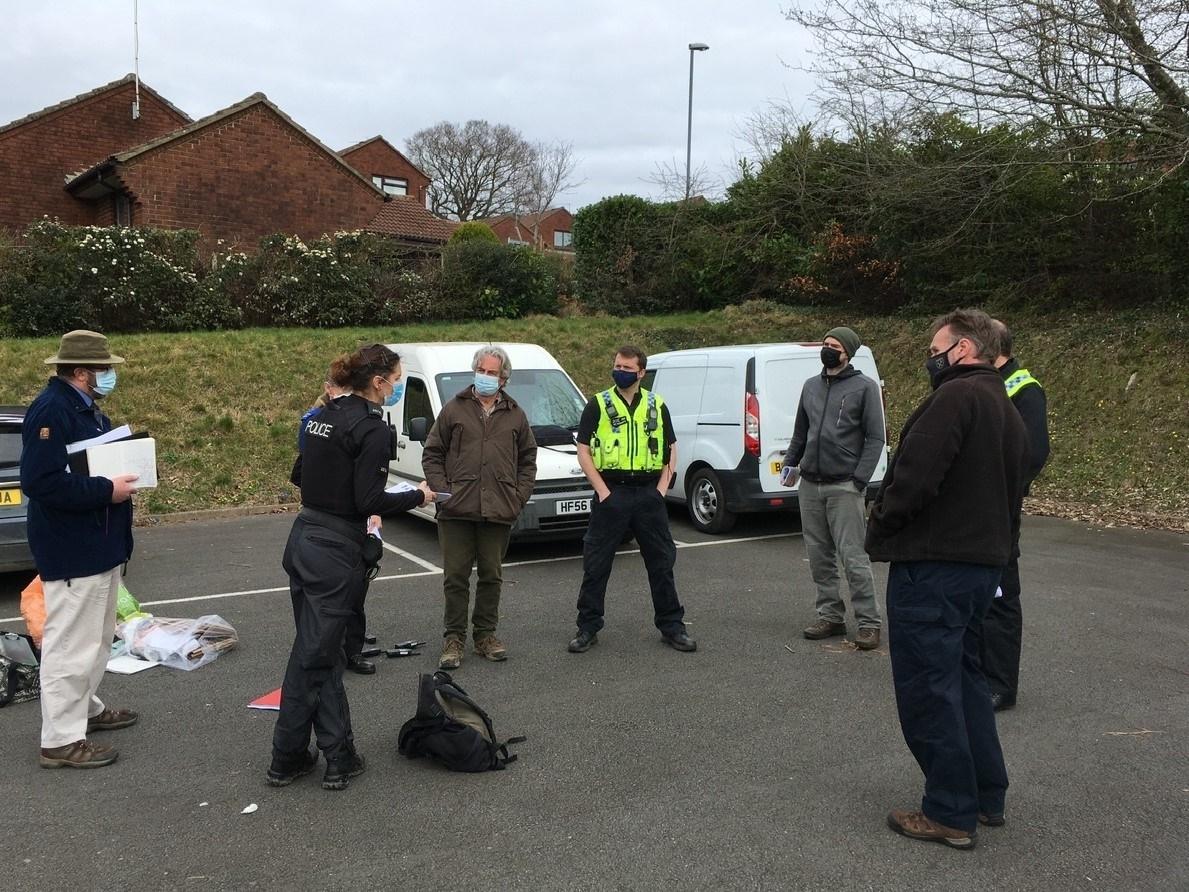
Officers and partners who executed a warrant at a rural property in East Dorset have seized pesticides, dead birds of prey and a firearm.

Dorset Police Wildlife Crime Officers have been working with the Police National Wildlife Crime Unit (NWCU), Natural England and the RSPB to investigate the alleged poisoning of a Red Kite, which was found dead in a field in north east Dorset in November 2020.

The bird of prey was recovered by police following the discovery by a member of the public and sent for forensic analysis at a specialist laboratory. The results of a post mortem examination subsequently indicated that it had been poisoned. 

On Thursday 18 March 2021 officers, accompanied by NWCU, Natural England and RSPB, attended an address in rural north east Dorset, having obtained a warrant and also exercised further powers under the Wildlife and Countryside Act 1981. 

A number of dead birds of prey and several pesticides, including banned substances, were located at the premises. A firearm was also recovered. 

[Photo by Guy Shorrock]

Police Constable Claire Dinsdale, Lead Wildlife Crime Officer for Dorset Police said: “This investigation is ongoing and no further information or comment can be made at this time regards this specific case

The national picture is that the persecution of birds of prey sadly continues in the UK. This is one of our six national priorities for wildlife crime, highlighted on the National Wildlife Crime Unit’s website https://www.nwcu.police.uk/. 

A great deal of work has already been done by police and partner organisations but still there are those who think they are above the law.  The deliberate killing of birds of prey will not be tolerated. We have had previous cases in Dorset of illegal shooting and trapping as well as poisoning. 

I would urge the public to be vigilant and report dead birds of prey to police. Clear evidence of a wildlife crime, such as an illegal trap, shooting or suspected poison bait should be reported immediately to police without delay. A ‘What Three Words’ location or grid reference is really useful.

If a dead bird of prey is located and you are not sure whether it is suspicious or not, still report it to police immediately. We can access assistance from vets to examine and x-ray birds and submit them for forensic testing, therefore ruling out natural causes. Police can access forensic funding for such wildlife crime cases. 

A wildlife crime in progress is a 999 call, an urgent suspicious finding needs to be called in on 101 immediately and for all other non-urgent reports you can email 101@dorset.pnn.police.uk or visit Dorset Police online https://www.dorset.police.uk/do-it-online/. 

If you have any information on the illegal killing of birds of prey or other types of wildlife crime, you can speak to police in confidence by emailing 101@dorset.pnn.police.uk. We do not act in a way that would identify the source of the information to the police.” 

ENDS

This is the third multi-agency raid that’s taken place in England in the space of a couple of weeks, in relation to the suspected persecution of birds of prey.

On 15th March 2021 there was a raid in Lincolnshire (see here), on 18th March this raid in Dorset, and on 26th March a raid in Devon (see here).

It’s alarming that all three raids were triggered by the use of poisons to kill birds of prey.

Well done to all the partners involved – let’s hope their efforts are rewarded with successful prosecutions and convictions.

UPDATE 1st January 2023: Gamekeeper due in court facing multiple charges of raptor persecution, poisons and firearms offences (here)

Another multi-agency raid following illegal poisoning of a buzzard

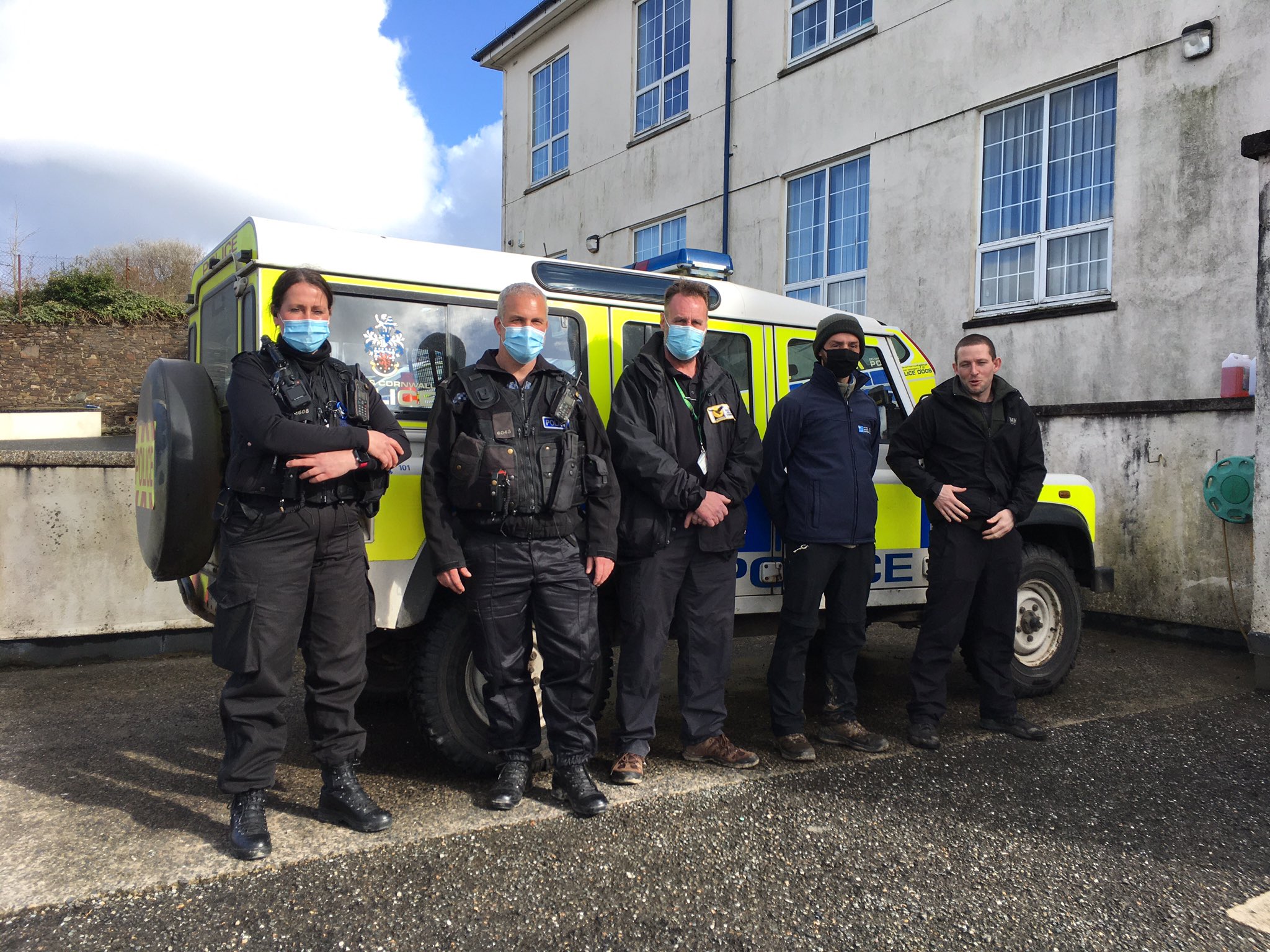
News of another multi-agency raid yesterday, involving Devon & Cornwall Police, Natural England, National Wildlife Crime Unit and RSPB Investigations, as a follow on from the discovery of a poisoned buzzard in 2020.

Brilliant partnership working again, after news of a similar raid in Lincolnshire a couple of weeks ago following the illegal poisoning of a red kite (here).

[Photo by RSPB Investigations]

UPDATE 30 January 2024: Prominent Devon gamebird breeder due in court to face multiple charges after discovery of poisoned baits & poisoned buzzard (here).

UPDATE 9 February 2024: Prosecution continues against Ashley Game Farm Director Christopher Hodgson after discovery of poisoned buzzard, baits & other pesticide offences (here).

UPDATE 28 May 2024: Devon gamebird breeder guilty of using banned pesticide Carbofuran (here).

UPDATE 20 July 2024: Poisoned buzzard leads to discovery of multiple pesticide offences – Ashley Game Farm & Director Christopher Hodgson fined £40,000+ (here)

Natural England’s shady approach to IUCN guidelines on hen harrier reintroduction

Earlier this week I blogged about how Natural England had been planning, in secret, to start a captive breeding programme for hen harriers, with the intention of releasing the progeny in to southern England as a way of boosting the UK hen harrier population, which has been in decline for years thanks to the ongoing illegal killing of this species (see here).

The proposed reintroduction isn’t news – this has been on the cards since 2016 when DEFRA published its ludicrous Hen Harrier Action Plan (and when Natural England was caught out claiming spurious justifications for the reintroduction – see here) – but the captive breeding element is new, and is a direct result of potential donor countries in Europe refusing to donate harriers to a country that clearly can’t look after the ones its already got.

And although the captive breeding element is highly questionable from an ethical standpoint, it’s still not the main issue here. The main issue has always been, and remains to be, the concept of releasing hen harriers in one part of the country as a massive distraction from dealing with the scandalous level of persecution still inflicted on this species in other parts of the country (namely on driven grouse moors).

[An illegally killed hen harrier. Photo by Ruth Tingay]

Reintroduction projects need to meet all sorts of criteria before they can go ahead and DEFRA advises project managers consult the International Union for the Conservation of Nature (IUCN) Guidelines for Reintroductions and other Conservation Translocations as part of their preparation.

These IUCN guidelines are built on decades of conservation knowledge and experience and provide a ‘route map’ for achieving a successful reintroduction. One of the fundamental principles of these guidelines is deciding when a translocation/reintroduction is an acceptable option. Key to this is:

There should generally be strong evidence that the threat(s) that caused any previous extinction have been correctly identified and removed or sufficiently reduced‘.

Now, in the case of the UK hen harrier population, which is in long-term decline according to the most recent national survey conducted in 2016 (see here), it is widely accepted that illegal persecution continues to be the main threat to survival, limiting the species’ distribution and abundance in Scotland, Northern Ireland, Wales and England.

So the threat has been ‘correctly identified’, as per the IUCN guidelines. It’s indisputable (unless you’re a spokesperson from the very industry that’s responsible for this organised criminality). There are more scientific papers identifying and confirming the threat as there are breeding pairs of hen harriers in England – including the most recent research, co-authored by Natural England staff, which demonstrated the ongoing, widespread illegal killing of hen harriers on British grouse moors (here).

But has the ‘correctly identified’ threat been ‘removed or sufficiently reduced’ for Natural England to proceed with its reintroduction plans? Well, that’s where it all gets a bit shady, in my opinion.

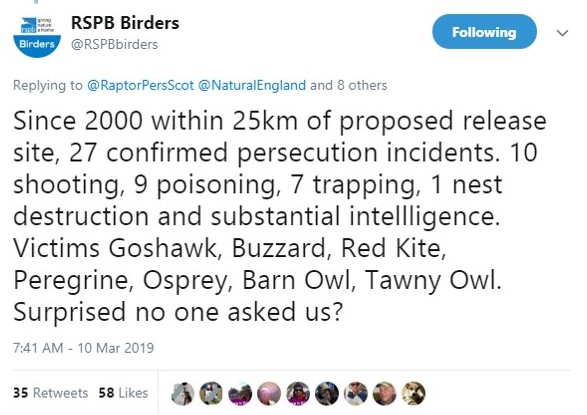
Natural England has been downplaying the persecution issue for a couple of years, particularly when its staff members have been trying to persuade potential donor countries that persecution really isn’t an issue in southern England (e.g. see here and here), although the RSPB has vigorously disputed this claim:

And of course there’s also been the suspicious disappearance of a satellite-tagged hen harrier called Vulcan (here) (which according to an employee of the National Gamekeepers Organisation was likely a ‘set up’ by the RSPB (here!), and then there’s the recent and on-going police investigation into alleged bird of prey persecution nearby (see here).

So it was interesting to see a copy of Natural England’s Hen Harrier Southern Reintroduction IUCN Assessment, dated January 2020, and released to me last week as part of a bundle of documents released under a Freedom of Information request, to understand just how Natural England is attempting to explain away the real and present threat of persecution.

Here is the document:

First of all, Natural England is pointing to two datasets of confirmed raptor persecution incidents to show that persecution is an issue in counties far away from the proposed release site in Wiltshire.

The first dataset cited (published by DEFRA on behalf of the Raptor Persecution Priority Delivery Group, RPPDG) has been widely criticised as being inaccurate and out of date (see here) and is unsupported by two members of the RPPDG: the Northern England Raptor Forum (here) and by the RSPB (here).

The second dataset is much more reliable, as it’s compiled using rigorous scientific quantification by the RSPB, but even then, it only includes confirmed raptor persecution incidents, i.e. where there is a corpse and supportive evidence to identify the cause of death (e.g. x-ray, toxicology report). The database cited by Natural England does NOT include ‘probable’ or ‘possible’ raptor persecution incidents. So, for example, the vast majority of the 52 hen harriers known to have been killed or have disappeared in suspicious circumstances since 2018 (here) would NOT be included in this database of confirmed incidents because many of them, without a corpse or satellite tag, would have to be classified as being ‘probable’ persecution incidents. It’s ironic that these incidents would be excluded, given it was Natural England’s own commissioned research findings that identified missing satellite-tagged hen harriers as most likely to have been illegally killed on or near grouse moors (here).

So not only is Natural England being highly selective in the datasets it has chosen to support this claim that persecution isn’t an issue in southern England, the other main claim made in its IUCN assessment is that hen harriers released in the south of England won’t travel north to the deadly grouse moors of northern England, Wales and Scotland. Here is the claim:

This is an astonishing claim to make. Obviously, I was interested in the reference that Natural England cited to support such a claim: (NE 2019a). However, when I looked up the reference I found it refers to Natural England’s intermittently-updated summary table of the fates of tagged hen harriers (here).

This table doesn’t support Natural England’s claims at all! If anything, it shows that young hen harriers wander widely during dispersal, throughout the UK, so there is no supportive evidence whatsoever to suggest the incidence levels of hen harriers released in southern England roaming into northern upland areas (persecution hotspots) ‘will be low’. What complete nonsense this is!

The fact is, nobody knows what those released hen harriers will do, but if they follow the behaviour of other young dispersing hen harriers they will wander widely and will be at significant risk of being killed if they go anywhere near a driven grouse moor. I wouldn’t fancy their chances if they turned up at some commercial pheasant and partridge drives either, given the persecution suffered on some shooting estates by Montagu’s and Marsh harriers.

It’s no wonder Natural England has wanted to keep its plans under wraps – this is shady stuff indeed.

Natural England ignores ongoing raptor persecution & now plans to captive breed hen harriers for release!

Do you remember DEFRA’s ludicrous Hen Harrier Action Plan, published in 2016 and responsible for hen harrier brood meddling – the conservation sham sanctioned by DEFRA and carried out by Natural England, in cahoots with the very industry responsible for the species’ catastrophic decline in England? (For more background see here).

Well the conservation sham has just been extended, this time to the proposed ‘reintroduction’ of hen harriers to southern England, also part of the ridiculous Hen Harrier Action Plan.

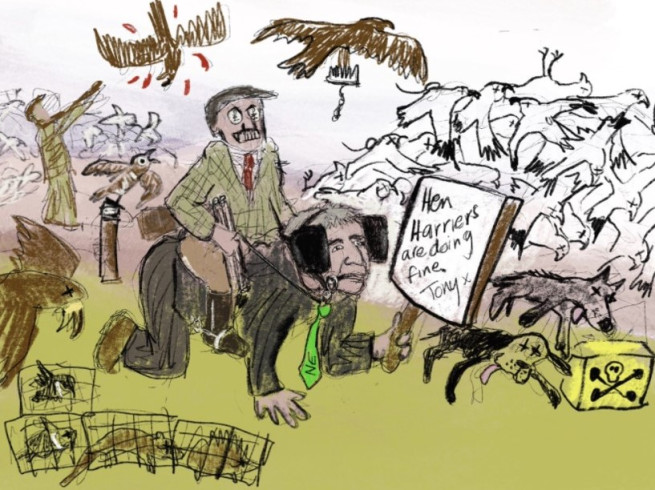
[A brilliantly apt cartoon by Gerard Hobley]

The so-called southern reintroduction has been on the cards since 2016 when the ‘Action Plan’ was first published, to be used as a massive distraction from the ongoing illegal killing of hen harriers on British grouse moors. But Natural England has had terrible trouble trying to persuade conservationists in Spain and France to donate hen harriers, especially given the UK’s appalling raptor persecution record – even though Natural England staff have been caught out trying to play this down on a number of occasions (e.g. see here).

Hmm. What to do? What to do? Ah, how about, we ask some other countries for some donor stock (countries that we haven’t tried yet, like Finland, Sweden, Norway) so we can release their birds in to southern England (and we won’t mention the suspicious disappearance of a hen harrier in the proposed release area), and how about we also take some chicks from nests in England and keep them in captivity forever and use their chicks to release in to the wild, and call it a ‘conservation breeding programme’ (cos we did it with peregrines last year, remember?), and then why don’t we also take some un-releasable hen harriers from rehab centres in France and Spain and use them as breeding stock as well so we’ll have more young hen harriers to chuck out in to the countryside whilst we all sit with our fingers and toes crossed that they don’t venture anywhere near a grouse moor? (And we’ll keep quiet about the ongoing raptor persecution crimes being uncovered near the proposed release site, including this one).

Yeah! And we can pay our old mate Jemima Parry Jones and the International Centre for Birds of Prey (ICBP) at Newent, Glos to do all this ‘conservation breeding’ – they’re not gonna turn down a big pay out, just as they’re getting paid for doing the hen harrier brood meddling. Yeah! £350K should do it….it’s tax payers money but there’s no need to tell anyone about it, we’ll just keep it quiet in case those pesky conservationists find out, see through our propaganda and try to take a legal challenge against us.

Think this is all a bit far-fetched? Well have a look at the following documents, released last week as part of a larger bundle under Freedom of Information requests that Natural England has sat on since January. It’s worth paying particular attention to Natural England’s options appraisal (the 2nd document), undertaken last year during lockdown. Abandoning the whole ridiculous idea of releasing hen harriers in to a country where they are systematically and illegally killed by a large part of the driven grouse shooting industry (52 hen harriers known to have gone since 2018) was apparently not an option due to the ‘reputational risk’ to DEFRA and Natural England if they pulled out.

That should be the least of their worries. Make no mistake, if there is an opportunity for a legal challenge against this insane plan, it will be taken.

More soon.

Here are some of the documents to look at:

UPDATE 25th March 2021: This news article led to a story being published in the environmental journal the Ends Report (here).

UPDATE 26th March 2021: Natural England’s shady approach to IUCN guidelines on hen harrier reintroduction (here)

Online protest tomorrow about ongoing raptor persecution on Scottish grouse moors

Tomorrow (Friday 19 March 2021) is the online protest organised by the Scottish Gamekeepers Association (SGA) and seven regional moorland groups, who represent grouse shooting estates and their gamekeepers across Scotland.

This is the protest that the SGA has been threatening since November when the Scottish Government had finally had enough with the decades of criminality in the grouse-shooting industry and promised to bring in a grouse moor licensing scheme as soon as possible (see here).

The protest has been named the Rural Workers Protest in an attempt to garner more support from other industries and will be using the hashtag #RWP21 on social media.

It’s still not clear what the SGA et al are protesting about, other than progress and modernisation, although I keep reading that they’re not being listened to, which is an interesting concept given the tv coverage and media column inches they’ve had this last week, as well as the vocal support of a number of MSPs and their ‘friend in Parliament‘, Cabinet Secretary Fergus Ewing.

We do know that Alex isn’t happy about the drink driving laws being applied in rural areas because it ‘affected social cohesion in the countryside’, according to the speech he read out at the SGA AGM a couple of weeks ago. That’s an interesting position given the display of empties lining the walls in the bothy from which Alex was speaking.

What, you don’t remember seeing them? Well that’s maybe because someone might have angled the camera to make sure they were carefully obscured. Compare and contrast these two photos….. the first one was a screengrab from the actual AGM. The second photo, from the SGA’s facebook page, shows a slightly different camera angle from the day before when Alex and his team were preparing the scene.

It’s also interesting that Scotland’s seven regional moorland groups are co-hosting the event, especially when grouse moors in five of those seven regions have been in the last three years, or currently are, under police investigation for alleged raptor persecution crimes (grouse moors in the regions covered by the Angus Glens Moorland Group, Grampian Moorland Group, Tomatin Moorland Group, Tayside & Central Moorland Group and the Southern Uplands Moorland Group). Do you think tomorrow’s protesters will be shouting about the illegal killing of birds of prey, on their grouse moors, right under their noses but apparently without any of them seeing anything suspicious? Or will they be arguing for getting licences to kill birds of prey, as we know that’s what the SGA has been campaigning for for years.

Not to worry. A number of us will be joining the online protest tomorrow, not to complain about modernisation or progress, nor to call for licences to be issued to kill raptors so more gamebirds can be produced for the guns. No, we’ll be there to protest about the ongoing illegal killing of birds of prey, on grouse moors, in Scotland. We’ll also be using the #RWP21 hashtag and we’ll be sharing information and photos with the general public who may not previously have been aware of what is going on. Join us if you can.

[This young white-tailed eagle was found dead on a grouse moor inside the Cairngorms National Park in April last year. It had been poisoned to death with a banned substance. Nobody has been prosecuted for this crime. Photo by Police Scotland]

52 hen harriers confirmed illegally killed or ‘missing’ since 2018

For anyone who still wants to pretend that the grouse shooting industry isn’t responsible for the systematic extermination of hen harriers on grouse moors across the UK, here’s the latest catalogue of crime that suggests otherwise.

[This male hen harrier died in 2019 after his leg was almost severed in an illegally set trap that had been placed next to his nest on a Scottish grouse moor (see here). Photo by Ruth Tingay]

In January 2021, this list totalled 51 hen harriers, all either confirmed to have been illegally killed or to have ‘disappeared’, most of them on or next to driven grouse moors.

They disappear in the same way political dissidents in authoritarian dictatorships have disappeared” (Stephen Barlow, 22 January 2021).

Today the list has been updated to include the latest victim, Tarras, hatched in 2020, gone by 24th February 2021 (see here).

This disgraceful catalogue will continue to grow – I know of at least one more on-going police investigation which has yet to be publicised and I suspect there’s one other, although I’m still waiting for clarification on that one.

I’ve been compiling this list only since 2018 because that is the year that the grouse shooting industry ‘leaders’ would have us believe that the criminal persecution of hen harriers had stopped and that these birds were being welcomed back on to the UK’s grouse moors (see here).

This assertion was made shortly before the publication of a devastating new scientific paper that demonstrated that 72% of satellite-tagged hen harriers were confirmed or considered likely to have been illegally killed, and this was ten times more likely to occur over areas of land managed for grouse shooting relative to other land uses (see here).

2018 was also the year that Natural England issued itself with a licence to begin a hen harrier brood meddling trial on grouse moors in northern England. For new blog readers, hen harrier brood meddling is a conservation sham sanctioned by DEFRA as part of its ludicrous ‘Hen Harrier Action Plan‘ and carried out by Natural England (NE), in cahoots with the very industry responsible for the species’ catastrophic decline in England. For more background see here.

Brood meddling has been described as a sort of ‘gentleman’s agreement’ by commentator Stephen Welch:

I don’t get it, I thought the idea of that scheme was some kind of trade off – a gentleman’s agreement that the birds would be left in peace if they were moved from grouse moors at a certain density. It seems that one party is not keeping their side of the bargain“.

With 52 hen harriers gone since 2018, I think it’s fair to say that the grouse shooting industry is simply taking the piss. Meanwhile, Natural England pretends that ‘partnership working’ is the way to go.

‘Partnership working’ appears to include authorising the removal of hen harrier chicks from a grouse moor already under investigation by the police for suspected raptor persecution (here) and accepting a £10K bung from representatives of the grouse shooting industry that prevents Natural England from criticising them (see here).

[Cartoon by Gill Lewis]

So here’s the latest gruesome list:

February 2018: Hen harrier Saorsa ‘disappeared’ in the Angus Glens in Scotland (here). The Scottish Gamekeepers Association later published wholly inaccurate information claiming the bird had been re-sighted. The RSPB dismissed this as “completely false” (here).

5 February 2018: Hen harrier Marc ‘disappeared’ on a grouse moor in Durham (here)

9 February 2018: Hen harrier Aalin ‘disappeared’ on a grouse moor in Wales (here)

March 2018: Hen harrier Blue ‘disappeared’ in the Lake District National Park (here)

March 2018: Hen harrier Finn ‘disappeared’ near Moffat in Scotland (here)

18 April 2018: Hen harrier Lia ‘disappeared’ in Wales and her corpse was retrieved in a field in May 2018. Cause of death was unconfirmed but police treating death as suspicious (here)

8 August 2018: Hen harrier Hilma ‘disappeared’ on a grouse moor in Northumberland (here).

16 August 2018: Hen harrier Athena ‘disappeared’ on a grouse moor in Scotland (here)

26 August 2018: Hen Harrier Octavia ‘disappeared’ on a grouse moor in the Peak District National Park (here)

29 August 2018: Hen harrier Margot ‘disappeared’ on a grouse moor in Scotland (here)

29 August 2018: Hen Harrier Heulwen ‘disappeared’ on a grouse moor in Wales (here)

3 September 2018: Hen harrier Stelmaria ‘disappeared’ on a grouse moor in Scotland (here)

24 September 2018: Hen harrier Heather ‘disappeared’ on a grouse moor in Scotland (here)

2 October 2018: Hen harrier Mabel ‘disappeared’ on a grouse moor on the edge of the Yorkshire Dales National Park (here)

3 October 2018: Hen Harrier Thor ‘disappeared’ next to a grouse moor in Bowland, Lanacashire (here)

23 October 2018: Hen harrier Tom ‘disappeared’ in South Wales (here)

26 October 2018: Hen harrier Arthur ‘disappeared’ on a grouse moor in the North York Moors National Park (here)

1 November 2018: Hen harrier Barney ‘disappeared’ on Bodmin Moor (here)

10 November 2018: Hen harrier Rannoch ‘disappeared’ on a grouse moor in Scotland (here). Her corpse was found nearby in May 2019 – she’d been killed in an illegally-set spring trap (here).

14 November 2018: Hen harrier River ‘disappeared’ on a grouse moor in the Nidderdale AONB (here). Her corpse was found nearby in April 2019 – she’d been illegally shot (here).

16 January 2019: Hen harrier Vulcan ‘disappeared’ in Wiltshire close to Natural England’s proposed reintroduction site (here)

7 February 2019: Hen harrier Skylar ‘disappeared’ next to a grouse moor in South Lanarkshire (here)

22 April 2019: Hen harrier Marci ‘disappeared’ on a grouse moor in the Cairngorms National Park (here)

26 April 2019: Hen harrier Rain ‘disappeared’ on a grouse moor in Nairnshire (here)

11 May 2019: An untagged male hen harrier was caught in an illegally-set trap next to his nest on a grouse moor in South Lanarkshire. He didn’t survive (here)

7 June 2019: An untagged hen harrier was found dead on a grouse moor in Scotland. A post mortem stated the bird had died as a result of ‘penetrating trauma’ injuries and that this bird had previously been shot (here)

5 September 2019: Wildland Hen Harrier 1 ‘disappeared’ on a grouse moor nr Dalnaspidal on the edge of the Cairngorms National Park (here)

11 September 2019: Hen harrier Romario ‘disappeared’ on a grouse moor in the Cairngorms National Park (here)

14 September 2019: Hen harrier (Brood meddled in 2019, #183704) ‘disappeared’ in North Pennines (here)

23 September 2019: Hen harrier (Brood meddled in 2019, #55149) ‘disappeared’ in North Pennines (here)

24 September 2019: Wildland Hen Harrier 2 ‘disappeared’ on a grouse moor at Invercauld in the Cairngorms National Park (here)

24 September 2019: Hen harrier Bronwyn ‘disappeared’ near a grouse moor in North Wales (here)

10 October 2019: Hen harrier Ada ‘disappeared’ on a grouse moor in the North Pennines AONB (here)

12 October 2019: Hen harrier Thistle ‘disappeared’ on a grouse moor in Sutherland (here)

18 October 2019: Member of the public reports the witnessed shooting of an untagged male hen harrier on White Syke Hill in North Yorkshire (here)

November 2019: Hen harrier Mary found illegally poisoned on a pheasant shoot in Ireland (here)

January 2020: Members of the public report the witnessed shooting of a male hen harrier on Threshfield Moor in the Yorkshire Dales National Park (here)

23 March 2020: Hen harrier Rosie ‘disappeared’ at an undisclosed roost site in Northumberland (here)

1 April 2020: Hen harrier (Brood meddled in 2019, #183703) ‘disappeared’ in unnamed location, tag intermittent (here)

5 April 2020: Hen harrier Hoolie ‘disappeared’ on a grouse moor in the Cairngorms National Park (here)

8 April 2020: Hen harrier Marlin ‘disappeared’ on a grouse moor in the Cairngorms National Park (here)

19 May 2020: Hen harrier Fingal ‘disappeared’ on a grouse moor in the Lowther Hills, Scotland (here)

21 May 2020: Hen harrier (Brood meddled in 2019, #183701) ‘disappeared’ on a grouse moor in Cumbria shortly after returning from wintering in France (here)

27 May 2020: Hen harrier Silver ‘disappeared’ on a grouse moor on Leadhills Estate, Scotland (here)

9 July 2020: Unnamed female hen harrier (#201118) ‘disappeared’ from an undisclosed site in Northumberland (here).

25 July 2020: Hen harrier Harriet ‘disappeared’ on a grouse moor in the Yorkshire Dales National Park (here)

14 August 2020: Hen harrier Solo ‘disappeared’ in confidential nest area in Lancashire (here)

7 September 2020: Hen harrier Dryad ‘disappeared’ on a grouse moor in the Yorkshire Dales National Park (here)

16 September 2020: Hen harrier Fortune ‘disappeared’ from an undisclosed roost site in Northumberland (here)

19 September 2020: Hen harrier Harold ‘disappeared’ on a grouse moor in the Yorkshire Dales National Park (here)

20 September 2020: Hen harrier (Brood meddled in 2020, #55152) ‘disappeared’ next to a grouse moor in North Yorkshire (here)

24 February 2021: Hen harrier Tarras ‘disappeared’ next to a grouse moor in Northumberland (here)

To be continued……..

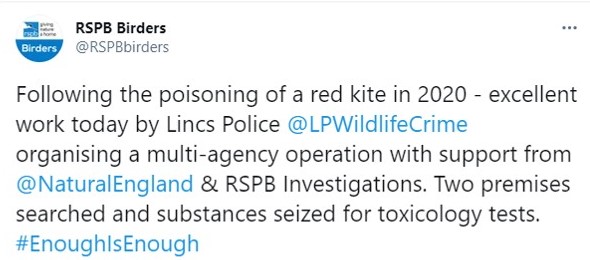
Suspected poisons seized during multi-agency raid following illegal poisoning of red kite

Breaking news from the RSPB’s Investigations Team…..

Looking forward to hearing more detail about this one.

UPDATE 20th April 2021: Lincolnshire Police provide update on investigation into poisoned red kite (here)

UPDATE 15th April 2023: Lincolnshire Police charge man after investigation into poisoned red kite (here)

UK wildlife crime legislation & enforcement to be assessed (again)

Press release from DEFRA (2nd March 2021)

Assessment launches to appraise UK wildlife and forest crime legislation and enforcement

New toolkit launched to assess the way we tackle wildlife crime in the UK

A UN backed assessment of UK wildlife and forest crime legislation and enforcement has launched today, using the United Nations Office on Drugs and Crime (UNODC) International Consortium on Combating Wildlife Crime (ICCWC) toolkit.

The toolkit will review wildlife crime policing structures, including the National Wildlife Crime Unit (NWCU) and UK Border Force and efficacy of prosecutions. The toolkit consists of five parts: legislation; enforcement; judiciary and prosecution; drivers and prevention. To date, the toolkit has been implemented in 15 countries. The UK will be the first G20 country to have invited this assessment.

This assessment will comprise a comprehensive analysis of the strengths and weaknesses of our preventive and criminal justice responses, which are crucial to curtailing wildlife and forest crime nationally and internationally.

[51 hen harriers have been confirmed illegally killed or have disappeared in suspicious circumstances, mostly on or close to driven grouse moors, since 2018. There hasn’t been a single prosecution for any of them]

Originally developed in 2012, the Wildlife and Forest Crime Analytic Toolkit was created by the UNODC, in partnership with the UK and other members of ICCWC. The assessments in the UK will run until August this year.

Speaking at the launch today, Environment Minister, Minister Pow, said:

We have made tremendous progress tackling wildlife crime in this country, but we know there is more to do.

We requested this assessment to help build on our progress and will look closely at the recommendations, working with key stakeholder groups to inform a cross-government response.

Together we can reduce these horrific crimes for the benefit of our biodiversity, our precious habitats and our rural communities for generations to come“.

Chief Inspector Kevin Kelly, Head of the UK National Wildlife Crime Unit, said:

I have been immersed in Policing wildlife crime for the entirety of my Police service and I am delighted to see the ICCWC Tool kit coming to Policing UK. This will shine a much needed spotlight on Wildlife Crime and raise the importance of it in the wider Policing picture, as Wildlife Crime often feeds into more serious and organised crime types.

It will be a pleasure for the NWCU to work with colleagues to ensure the success of the tool kit. It’s vitally important that we continue to celebrate our success and highlight the importance of fighting Wildlife Crime. But I welcome the opportunity to reflect on our practices and look to become better and more efficient“.

Since 2016, Defra and the Home Office have jointly committed £300,000 a year to funding the UK National Wildlife Crime Unit (NWCU). The unit plays a valuable role in detecting and preventing wildlife crime by monitoring and gathering intelligence on illegal activities, undertaking analysis and directly assisting law enforcers with their investigations.

The past few years have seen successful launches of police operations such as Operation Galileo, an anti-hare coursing campaign led by Lincolnshire police force and Operation Owl, led by North Yorkshire Police, which aims to raise awareness of raptor persecution amongst the wider public and police officers.

The NWCU is one part of the UK’s network fighting wildlife crime, Police customs officers and other enforcers carry also out vital work on the ground.

In addition, the UK Border Force continues to make successful seizures and work with international partners to ensure illegal wildlife trade products do not enter the market.

Last year, as part of operation Thunder 2020, UK Border Force worked with fellow enforcement agencies across 105 countries to tackle the global illegal wildlife trade. With other targeted operations also taking place throughout the year including checks on exports to South East Asia for movements of illegal ivory, Border Force made 490 seizures of illegally trafficked live specimens or derivative products at numerous UK Border control areas from Grangemouth in Scotland to Southampton port.

There are now over 770 wildlife crime officers in England and Wales and 133 covering Scotland. These officers are specially trained to conduct and support investigations into wildlife crimes.

The UK’s participation in this will help inform recommendations on improving the prevention and enforcement of domestic and international wildlife crime in the UK and will reaffirm our global leadership role in tackling wildlife crime.

ENDS

So Environment Minister Rebecca Pow thinks, ‘We have made tremendous progress tackling wildlife crime in this country….’? Not on tackling raptor persecution, we haven’t. It’s still rampant and the criminals are still escaping justice. What’s tremendous and progressive about that?

Some might argue that this is a good reason for a review of legislation and enforcement, and to some extent that’s fair comment. However, reviews on this topic have been undertaken before, conclusions are drawn, everyone agrees we must improve but then nothing happens and we end up having another review several years later to make everyone think the Government cares about tackling wildlife crime.

Perhaps this review will be different. It’s using a novel approach (a United Nations toolkit). But do we really need it? I’d argue no. We already know full well who is committing the majority of raptor persecution crimes, we know where they’re committing those crimes and we know why they’re committing those crimes.

We don’t need another review, we just need effective enforcement instead of the regulatory authority accepting money with gagging orders attached, from the very industry responsible for these crimes.

Mass poisoning of raptors in south Scotland – this case is still live

On Saturday I blogged about a press announcement from Police Scotland that had indicated there had been a successful conviction in a case involving the illegal mass poisoning of birds of prey in Dumfries & Galloway (see here).

This police statement didn’t ring true because surely, if there had been a successful prosecution in such a high profile case, the police and all the partner agencies who had also been involved in the investigation would have been shouting it from the rooftops.

The claim had been made in relation to the police officers winning Team of the Year at the Chief Constable’s Bravery and Excellence Awards on 19th February 2021 and the accompanying statement said, ‘This investigation led to an individual being convicted of wildlife crime offences‘ (see here).

I contacted Police Scotland to ask them for clarification about this case and they got in touch this morning to explain that the case is still live (i.e. there hasn’t been a conviction), the next court hearing is this month, and the inaccurate police statement was a result of a misunderstanding in the police comms team.

As this case is still live comments won’t be accepted until legal proceedings have finished, thanks.