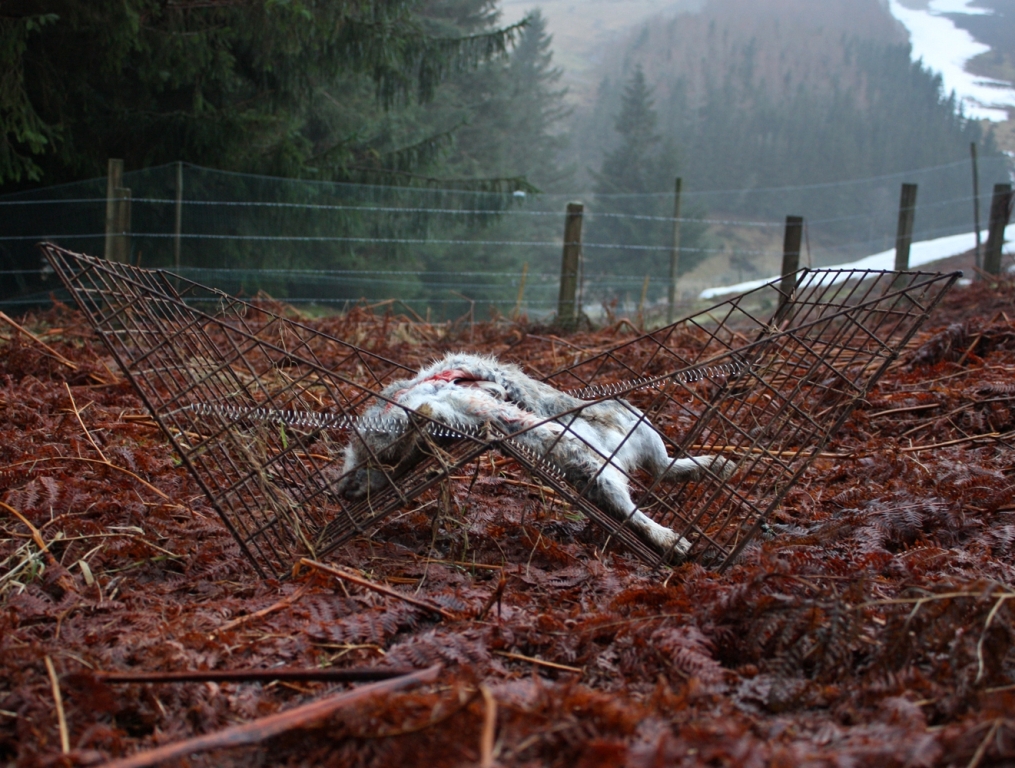
Here’s a rare opportunity to look into the world of the ‘modern’ gamekeeper. These are extracts taken from a Scottish gamekeeper’s diary. We were shown these diaries by someone from within the keepering world who wishes to remain anonymous, for obvious reasons. Worryingly, the diary-writer is still currently employed as a full-time gamekeeper. We’ve split the entries into different years – the following is from 2008. See how many wildlife crime offences you can spot:
Thurs 3rd January: set baits in Glen S & right hill
Sat 5th January: John P came for rabbits & Alpha
Weds 16th January: Gassed fox at Black Brae Lower
Fri 25th January: Eggs out on Top Moor + rabbit for crows by Big Wood
Fri 1st February: Lifted eggs Top M & set out at edge of Middle.
Tues 5th February: Shot dog Glen S.
Mon 11th February: Lifted eggs Top M. Shot kestrel.
Tues 19th February: Baits out at Harry’s, rabbits & hares
Thurs 21st February: Pick up gins from Glen side. Got female peregrine.
Fri 29th February: Done traps at S Corner and more eggs out. Saw pair peregrines at Millers.
Sat 1st March: baits out with Jim at Middle. Missed a cock harrier. Staked pigeon at Millers.
Sun 2nd March: Got peregrines at Millers. Eggs out on Broadfield.
Tues 4th March: Got 2 buzzards, 2 rooks + 9 crows. Rabbit out for others.
Fri 7th March: Got a vixen at T Moor. Put out birds by low fence.
Sun 9th March: Eggs at Glen side again.
Weds 12th March: Eggs up, tracks seen. Done baits at Gordon’s. Sheep shot for midden 3.
Thurs 13th March: Got buzzard at Becks. More rabbits out. Alpha.
Sat 15th March: Picked ups crows & eggs Langsmere. Saw 2 harriers.
Tues 18th March: Set eggs JB & baits southside.
Weds 19th March: Got a cat on Red moor.
Thurs 20th March: Got SE owl & set 59 eggs Lower bank.
Sat 22nd March: 1 harrier at Langsmere. Merlins at Merv’s.
Mon 24th March: Snares at Glen side. 26 foxes so far.
Tues 25th March: Missed harrier at Langsmere. Baited Broadfield again.
Thurs 27th March: Got a badger with John S. He heard gos behind Big Wood.
Fri 28th March: Lifted eggs Lower bank. More set at Harry’s.
Mon 31st March: Crow cages out Big Wood.
Wed 2nd April: Harrier trap empty.
Thurs 3rd April: Pair eagles seen southside.
Fri 4th April: Put eggs T Moor. Shot rabbits for baits.
Sun 6th April: Crow cages done. Eggs checked.
Weds 9th April: Baits out Glen side. Tom collected pigeons.
Fri 11th April: Got buzzards at JB.
Tues 15th April: Gos in crow cage. Gave it to PL.
Fri 18th April: Baited traps & re-did snares.
Tues 22nd April: Eggs & hares out in the Sloughs.
Sun 27th April: Eggs lifted Sloughs.
Fri 2nd May: Put out more baits.
Sat 3rd May: Pigeons staked upper side. Got tiercel.
Weds 7th May: Set eggs.
Thurs 15th May: Put baits out at Bothy.
Sat 17th May: 3 buzzards in crow cage. Re-set.
Thurs 22nd May: Two Peres at Glen side. Got one.
Weds 28th May: Eggs lifted more baits out. Rabbit gone at Bothy.
Mon 2nd June: Set pheasant eggs at Big Wood. Did crow traps.
Sun 8th June: Litter of foxes gassed behind GateBridge.
Fri 13th June: Partridges into pen.
Mon 23rd June: Put eggs out Broadfield.
Weds 2nd July: Gassed another litter with Paul at Stebb’s.
Fri 1st August: Got a short eared owl. Lifted eggs Broadfield.
Tues 5th August: Moved crow cages to RT.
Sun 10th August: Spar caught. Trap re-set.
Fri 12th Sept: 42 brace at Sam’s but harrier seen.
Fri 26th Sept: New snares out.
Thurs 2nd Oct: Two eagles seen Glen S. 1 buzzard in crow trap at T Moor.
Tues 7th Oct: Hare baits out Langsmere.
Thurs 16th Oct: Shot sheep for midden 3.
Mon 20th Oct: Pigeons 5pm
Weds 22nd Oct: Shot a kestrel at Sam’s.
Fri 31st Oct: Merlin pair done North Bothy.
Sat 8th Nov: 6 pigeons put out Big Wood.
Tues 25th Nov: Baits out with Paul.
Fri 19th Dec: Put grouse on T Moor.

 Following yesterday’s blog and the request to SNH to publish all the consultation responses relating to the 2013 General Licences (see
  In October we blogged about how SNH was preparing to make changes to the 2013 General Licences via a public consultation process (see
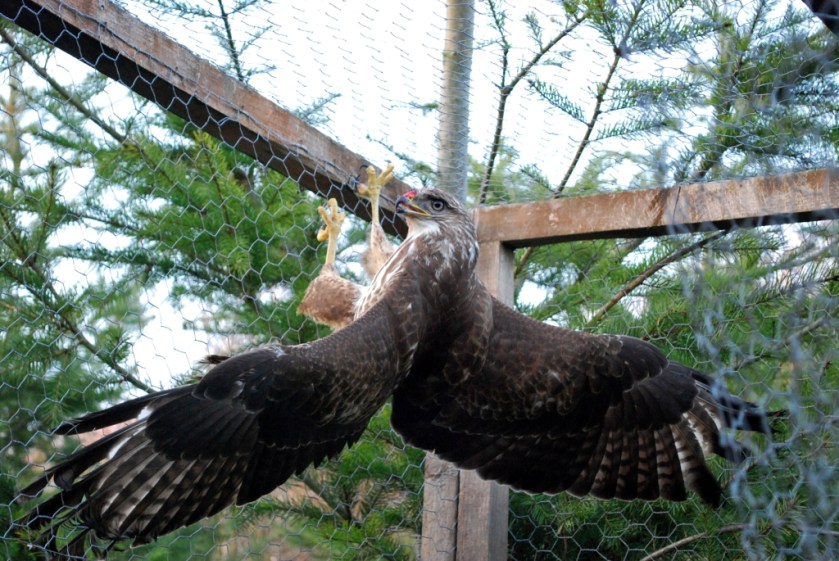
  However, the biggest concern is that SNH has officially authorised the use of ‘clam’-type traps (see above), even though they are fully aware of concerns that these traps are likely to cause injury to non-target species (e.g. see
  Thanks to the contributor who sent us a recent copy of the following article published in the Press & Journal (dated 28 Nov 2012) -:
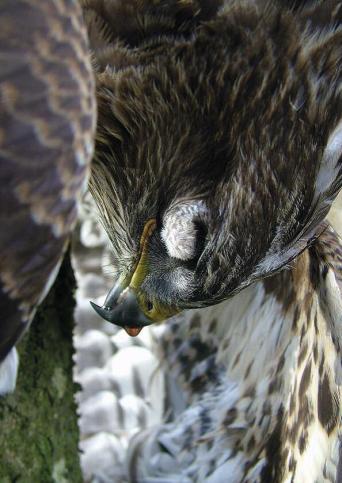 RSPB Scotland has just published its latest report, The Illegal Killing of Birds of Prey in Scotland in 2011. You probably won’t be surprised or shocked by the content, especially if you’ve read the previous 17 annual reviews. In fact, when you read this 18th review, you might get a strong sense of déjà vu.
 Once again the occupations and interests of those convicted for illegal raptor persecution crime have been analysed (data from 2003-2011 inclusive). 87% of them were gamekeepers (7% pigeon racers, 3% pest controllers, 3% farmers).
 Last month we blogged about how SNH was preparing to make changes to the 2013 General Licences via a consultation process (see
  The highly contentious issue of the ‘clam trap’ (also known as ‘Larsen mate trap’, ‘snapper trap’ and ‘butterfly trap’) has been raised in this consultation, although SNH’s plans for how to deal with it are astonishing. They recognise that welfare concerns remain about the use of these traps, but instead of banning them until independent research shows they are safe to use, they’ve decided to continue their use and commission research on their use “shortly”. They do suggest that they’ll require clam trap users to notify them of intended use, but really, what’s the point of that, other than being able to identify users as potential participants in their future ‘evidence gathering’ exercise?