
Young Gamekeeper of the Year winner is employed on estate with history of alleged criminal activities

The winner of this year’s Young Gamekeeper of the Year Award, as selected by the Scottish Gamekeeper’s Association, is 20-year old Graeme Dunlop, whose beat is the 14,000-acre North Drynachan Moor on Cawdor Estate near Nairn. Graeme stated in a post-award interview that he was, “Worried that the occasional discovery of poisoned birds is undermining all the political work being done by the SGA. We all know there’s no need for it in this day and age because there’s a place for everything. Nature will sort itself out.” If Graeme is serious in his condemnation of raptor persecution he is certainly in the right place to make a difference.

Cawdor Estate has been plagued with accusations about the persecution of birds of prey and cruelty to animals (none of which have been proven), and has been labeled as “an ecological desert”.

1992: A buzzard, magpie and sheep all laced with Strychnine are discovered on the Estate. 1993: A buzzard poisoned by the toxin Alphachloralose, found on Forestry Commission land 100 metres from the boundary of Cawdor Estate. 1994: Three buzzards and rabbit bait found poisoned by Alphachloralose on Cawdor. 1996: Three baits discovered containing poisons found on Cawdor: a hare laced with Alphachloralose, a goat with Aldicarb and a widgeon with Strychnine. 1996: A hidden pit containing suspected birds of prey poisoning kit uncovered by investigators three miles from Cawdor Castle. 1999: A report sent to the procurator fiscal alleging that mountain hares were illegally persecuted in snares on Cawdor Estate. 2000: A second report submitted to the fiscal claiming mistreatment of hares on Cawdor Estate. 2001: A dead golden eagle found on Cawdor Estate confirmed to contain the lethal poison Carbofuran. Naturally, no prosecutions ever resulted for any of these alleged offences.

In 1992, Cawdor Estate’s Sporting Manager was charged with wildlife offences. These related to the improper use of snares and allegations of cruelty involving hares. Charges were later dropped by the procurator fiscal due to “evidential difficulties”.

The award is presented by the Scottish Gamekeeper’s Association whose chairman, Alex Hogg, is no stranger to readers of this blog. On one hand Alex is a proud member of PAW (Partnership for Action Against Wildlife Crime) and publicly states that he and the SGA abhor the illegal persecution of raptors. On the other hand Alex has been making applications for licences to kill raptors to the Scottish Government for years now, all of which have been rejected. Alex’s simplistic view is, Scotland has a problem with illegal raptor persecution so legalise it and the problem disappears. Genius!

The award was presented at the Highland Field Sports Fair held at Moy Estate last weekend. Moy Estate is where two men have recently been charged with wildlife and firearms offences following the discovery of several dead raptors in suspicious circumstances.

Also attending the fair at Moy last weekend was The Scottish Rural Property and Business Association (SRPBA). This is the group that organised the letter signed by numerous Scottish estates to Environment Minister Roseanna Cunningham, condemning the illegal poisoning of wildlife in Scotland. This letter turned out to be rather embarrassing when we revealed that several of the estates had past convictions for wildlife crimes, or indeed were being currently investigated for them –  Moy Estate falling into the latter category.

Yet still we hear the repeated claims from SGA and SRPBA that they are doing all they can to stop raptor persecution by eliminating the ‘rogue’ members who continue this disgusting tradition. How does attending this fair on Moy Estate translate as ‘doing all they can’?  I trust their bed-fellows involved with the PAW Scotland group will be asking the very same question.

We wish Graeme the very best of luck and hope that he can use his award to influence and educate others in the industry about the illegality of raptor persecution.

For the SGA press release about the award: http://www.scottishgamekeepers.co.uk/content/young-gamekeeper-year-announced
The illegal poisoning of Scottish raptors continues

The government-funded organisation Science and Advice for Scottish Agriculture (SASA) has just published its latest report on the illegal poisoning of wildlife, including raptors, in Scotland during 2009.

Of 166 reported incidents of suspected poisoning, 36 were categorised as ‘abuse’ of pesticide use. As in previous years, a high proportion (61%) of abuse incidents involved birds of prey. Carbofuran was once again the most common pesticide detected, even though the UK approval for use of products containing this chemical expired in 2001 and it is a criminal offence to own it.

22 abuse incidents involving 30 raptors were confirmed:

Buzzard = 22; Golden eagle = 2; White-tailed eagle = 1; Tawny owl = 1; Red kite = 4.

The regional breakdown of abuse incidents demonstrates once more the widespread nature of these crimes:

Borders = 5 incidents; Dumfries & Galloway = 1; Grampian = 1; Highland = 2; Strathclyde = 3; Tayside = 10.

The report does not include other incidents of illegal raptor persecution such as shooting, trapping and nest destruction.

In an article published in the Press & Journal, Chairman of the North-East Raptor Study Group, Rab Rae, stated the obvious: “Pesticides are used regularly by the farming community but they are now being used by the shooting fraternity. It is not an accident, it is deliberate to enhance grouse moors“.

In a rebuttal, Chairman of the Scottish Gamekeepers Association, Alex Hogg, said: “The RSG and all their members are well aware that we condemn any poisoning of wildlife. Our organisations are working towards finding solutions to the problem so it’s hardly helpful or constructive to point accusatory fingers while that process continues“.

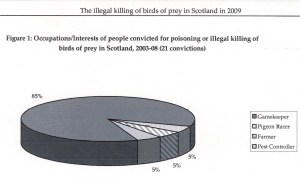
So tell us Alex, what exactly has the SGA done in its efforts to “work towards finding solutions” to the continuing illegal killing of Scottish raptors? It could legitimately be argued that sitting on the largely ineffective Partnership for Action Against Wildlife Crime (PAW) committee is a good cover for paying lip-service to raptor conservation. Talk is cheap – what ACTIONS has the SGA taken to stop criminal activities? And no, trying to legalize the killing of protected species by asking the Scottish government to provide licences to kill raptors doesnt count! According to the latest figures from the RSPB (in their report The Illegal Killing of Birds of Prey in Scotland in 2009), 85% of people convicted for illegally killing birds of prey between 2003-2008 were gamekeepers! Like I said, talk is cheap.

Download the SASA report here: SASA poisoning report 2009

Read the Press & Journal article here: http://www.pressandjournal.co.uk/Article.aspx/1856188?UserKey&UserKey=

Download the RSPB report here: Persecution Scotland 2009

During 2009, SASA reports that 19 cats and 19 dogs were also killed by poisoning. To report an incident of suspected illegal poisoning, call the SASA confidential hotline on Freephone 0800-321600.

landowners’ condemnation of raptor persecution exposed as a sham?

On 21 May 2010, this blog reported on the news that over 200 landowners (members of the Scottish Rural Property & Business Association – SRPBA)  had written a letter to Environment Minister Roseanna Cunningham MSP, condemning the continued practice of illegal raptor persecution on Scottish sporting estates.

This letter has now become available for public viewing: SRPBA LETTER MAY 2010

On close scrutiny of the signatories to this letter, it is now apparent that on 23 of the estates listed, wildlife crime incidents have been recorded, and on seven of them, estate employees have criminal convictions. Here they all are in their full glory:

Careston Estate, Brechin: Buzzard found poisoned by Chloralose 1992.

Dochfour Estate, Inverness: Buzzard found poisoned by Chloralose 1992.

Invercauld Estates, Braemar: Buzzard found poisoned by Chloralose 1992; Three Buzzards and a raven found poisoned by Carbofuran 2005; Gamekeeper convicted for illegal use of spring trap 1997.

Balmanno Estate, Bridge of Earn: Buzzard found poisoned by Carbofuran, illegal gin traps and egg collection – Gamekeeper convicted 2003.

Haystoun Estate, Peebles: Gamekeeper filmed allegedly removing Peregrine chick from nest – evidence ruled inadmissable in court (a legal technicality) – but keeper convicted of firearms offences 2003.

Haddo Estate, Aberdeenshire: Gamekeeper convicted for  laying poisoned baits and illegal traps and fined £2,600 in 1989.

Dunachton Estate, Kincraig: Buzzard found shot 1990; Buzzard found shot 1992.

Dougarie Estate, Isle of Arran: Eagle found poisoned by Chloralose 1991.

Rosehaugh Estate, Black Isle: Buzzards found poisoned by Mevinphos 1991.

Dinnet & Kinord Estates, Aboyne: Gamekeeper convicted for firearms offences and trespassing on neighbouring estate while carrying a firearm 2006; Golden eagle found poisoned 2006.

Straloch Farm, Blairgowrie: Buzzard found poisoned by Chloralose 1992.

Lothian Estates, Jedburgh: Osprey found shot 1993.

Glenfeshie Estate, Kincraig: Golden eagle found poisoned by Carbofuran 2006.

Islay Estates, Islay: Raven found poisoned by Mevinphos 1989; Buzzard found poisoned by Mevinphos 1989.

Dunecht Estates, Aberdeenshire: Buzzard found shot 2007.

Coignafearn Estate, Tomatin: Poisoned bait found 1983; Golden eagle found poisoned 1988.

Roxburghe Estate, Kelso: Buzzard found poisoned by Mevinphos 1989.

Seafield Estate, Strathsprey: Buzzard found poisoned by Chloralose 1991.

Innes Estate, Elgin: Dead Buzzards and crows found dying after poisoned by Carbofuran – Michael Royan (head gamekeeper) convicted of firearms offences and possession of illegal poisons 2007.

Carbeth Estate, Stirlingshire: Buzzard found poisoned by Chloralose 1989.

Wemyss & March Estates, Longniddry: Managers of the Barns Estate in Peebleshire, where gamekeeper was convicted of poisoning 20 raptors, described at the time as “Britain’s worst wildlife crime” 2004.

Alvie Estate, Kincraig: Golden eagle found poisoned 1980.

Aberarder Estate, Strathnairn: Eagle found poisoned 1993.

One has to ask, why are these estates still allowed a membership of SRPBA? Doesn’t their continued membership ruin any credibility of the SRPBA’s public pronouncements against illegal raptor persecution? Indeed, it seems to go against the SRPBA’s very own Code of Practice: http://srpba.com/view_item.aspx?item_id=136&open2=false

Although of course, we should point out that some of these Estates may have changed ownership/staff since some of these incidents occured – we should probably give them all the benefit of the doubt because after all, the SRPBA has ‘repeatedly condemned the illegal poisoning of wildlife’ and of course we should all accept that their members are all above board and not engaged in criminal activities.

The SRPBA is also a fully-fledged partner in the Partnership Against Wildlife Crime (PAW Scotland) – as a commited partner, I’m sure that the SRPBA has expelled any members that are associated with wildlife crime. Otherwise, what is the point of SRPBA being a partner in PAW Scotland? No point, other than paying lip-service to raptor conservation in a feeble attempt to protect their public image. But we are giving them the benefit of the doubt, aren’t we.

At the latest PAW Scotland meeting  that was held on 25 May 2010, Environment Minister Roseanna Cunningham MSP apparently congratulated the SRPBA on their letter. Let’s give her the benefit of the doubt too and assume she hadn’t read it yet.

3 golden eagles & other raptors found dead on Skibo Estate, Sutherland

THREE golden eagles, a buzzard and a sparrowhawk have been found dead on Skibo Estate, Sutherland, in the last week. The bodies have been sent for toxicology analysis at the government laboratory in Edinburgh, on suspicion that they had been poisoned. Now, unless those THREE golden eagles all died of old age at the same time on the same estate, and the buzzard and sparrowhawk died of a heart attack at seeing the dead eagles, I think it’s fair to assume that the toxicology results will prove to be positive and that some of these birds have been illegally killed by someone with access to poison. Even PC Plod should be able to work out the connection here.

The police investigation is continuing and no arrests have been made. A statement from Skibo Castle said: “The owners and management of Skibo Castle are committed conservationists and do everything they can to support the welfare of wildlife and birds. We will cooperate fully with the authorities in their investigation”.

BBC news story: http://news.bbc.co.uk/1/hi/scotland/highlands_and_islands/8676871.stm

Skibo is a prestigious highland estate and was the location for Madonna’s marriage to Guy Ritchie in 2000. The estate includes a 3,000 hectare grouse moor and a members-only hotel. Skibo was bought for £23 million in 2003 by Ellis Short, an American multi-millionaire investment banker who also owns Sunderland football club. In 2007, his wife, Eve Short, is alleged to have threatened two pensioners who were walking their dogs on the estate, telling them she would have her gamekeeper shoot the dogs if they were seen again. According to the report, the estate later apologised to the pensioners after realising that the pensioners had every right to walk their dogs there, under the rules of the Scottish Access Code. http://dogblog.dogster.com/2007/01/07/obnoxious-owner-of-skibo-castle-threatens-to-shoot-pensioners-and-their-small-dogs-for-walking-on-property/

PAW gets into bed with an estate with a track record of wildlife crime

Oh dear. It looks like those fools who run PAW have made a serious error of judgement (again). The news section on the PAW website contains information about a recent deer training course for Police Wildlife Crime Officers and a Procurator Fiscal, helping them to understand the process from slaughter to table. All well and good….that is until you read where the training course was held…
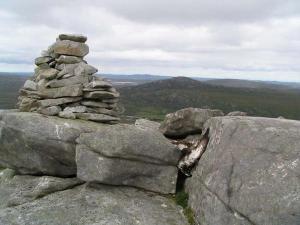
Balmanno Farm.

For the eagle-eyed amongst you, you will recognise the name ‘Balmanno’ from the Named Estates section of this blog, and also from the blog entry on 5th March 2010. These entries refer to a conviction for wildlife crime of a gamekeeper on the Balmanno Estate.  A poisoned buzzard (killed by Carbofuran), gin traps and an egg collection were found on this estate in 2001-2002, and a gamekeeper was convicted of wildlife crimes at Perth Sheriff Court on 12th November 2003. A quick google search identifies Balmanno Farm as being part of the Balmanno Estate in Perthshire.

Click here for the PAW press release: http://www.scotland.gov.uk/Topics/Environment/Wildlife-Habitats/paw-scotland/news/TrainingEvenReport190310

Well done PAW! Your credibility is plummeting to new depths.

spate of recent poisonings kills eagles, kites, buzzards & peregrine

One of the dead white-tailed sea eagles undergoing post mortem

A disgraceful spate of recent poisonings in Ireland has resulted in the death of 2 white-tailed sea eagles, 1 golden eagle, 3 red kites, 3 buzzards and a peregrine.

The sea eagles were poisoned by the illegal pesticide carbofuran. The golden eagle, kites, buzzards and peregrine were killed by alphachloralose, a pesticide still manufactured and legally available in Ireland.

Police investigations are underway.

For the full sorry story: http://www.goldeneagle.ie/news_viewnews.php?x=6&z=132&news_id=11&article=267

Gamekeeper sentenced for wildlife crimes on Redmyre Estate, Abernyte, Perthshire

Further to the blog entry of 3 March 2010……

Gamekeeper Graham Barclay Kerr (53) of Mary Findlay Drive, Dundee, who had earlier pleaded guilty to shooting a buzzard and being in possession of illegal and deadly poisons on the Redmyre Estate, Abernyte, Perthshire on 9 September 2009, has now been sentenced.

His punishment? A pathetic £400 fine for shooting the buzzard with a .243 rifle, and an even more pathetic ‘admonishment’ (which means a telling off) for being in possession of Carbofuran and Alphacloralose. Sentencing him at Perth Sheriff Court on 24 March 2010, Sheriff Robert McCreadie told Kerr, “You may not have appreciated how serious the courts take the illegal destruction of wildlife. I think you will be aware of that now”.

Really? A £400 fine for deliberately shooting a protected species is not what I would call a deterrent for other gamekeepers or their employers. And an admonishment for the possession of illegal and highly toxic poisons is nothing but lamentable. When oh when will the public see the full force of the law being handed down to convicted wildlife criminals? The Scottish judiciary has been given the powers to impose large fines or custodial sentences for convicted wildlife criminals, because that is the punishment that society deems fitting for these crimes. The Scottish government claims to be ‘stamping out’ wildlife crime. Perhaps the government and the judiciary need to get together and make sure they are reading from the same book, let alone the same page, because so far their actions speak louder than their words. This case speaks volumes.

Full story: http://www.perthshireadvertiser.co.uk/perthshire-news/local-news-perthshire/perthshire/2010/03/26/buzzard-killed-my-former-perthshire-gamekeeper-73103-26110898/

Inside case details from Tayside Police: http://www.scotland.gov.uk/Topics/Environment/Wildlife-Habitats/paw-scotland/Resources/Newsletters/Issue2/Inthecourts/GrahamKerr2010

Poisoner on Isle of Lewis given pathetic £50 fine

The poisoned golden eagle found on Lewis in July 2005, killed by Carbofuran

An Isle of Lewis crofter was convicted of possessing Carbofuran at his home on 25 November 2005. At Stornoway Sheriff Court on 26 July 2006, John Mackenzie pleaded guilty to possession of a proscribed pesticide under Section 15(A) of the Wildlife & Countryside Act 1981. He was fined just £50.

A staggeringly pathetic fine, hot on the heels of the discovery of a dead golden eagle found on Lewis in July 2005 that had been poisoned with Carbofuran.

Two gamekeepers guilty of poisoning offences on Oxnam Estate, Jedburgh

Two Scottish Borders gamekeepers were convicted of possessing proscribed pesticides at Oxnam Estate, Jedburgh, on 22 June 2005.

At Jedburgh Sheriff Court on 14 May 2006, Gamekeeper A (name removed under the Rehabilitation of Offenders Act 1974) pleaded guilty to possession of Cymag and Carbofuran, for he which he was respectively fined £100 and admonished.

Gamekeeper B (name removed under the Rehabilitation of Offenders Act 1974) pleaded guilty to possession of Carbofuran and was fined £100.

These were all offences under Section 15(A) of the Wildlife & Countryside Act 1981. A fitting punishment and a strong deterrent? The scales of justice seem a wee bit unbalanced.

Gamekeeper convicted of crimes on Innes House Estate, Moray

Police raided Innes House Estate near Elgin, Moray in November 2006 after dying buzzards and crows were seen in a nearby field. Later laboratory testing confirmed the birds carried traces of Carbofuran.

At Elgin Sheriff Court on 30 April 2007, head gamekeeper Michael Royan was found guilty of possessing proscribed pesticides (Carbofuran, Cymag & Alphachloralose) and he was also convicted of a firearms offence. He was fined £1,000.

According to the 2010 Innes House Estate website, Michael Royan is still employed as Head Gamekeeper.