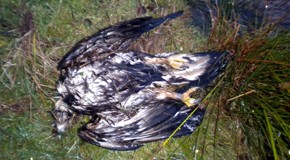
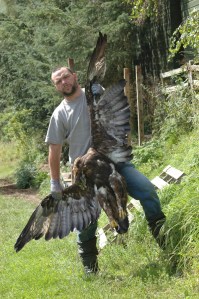
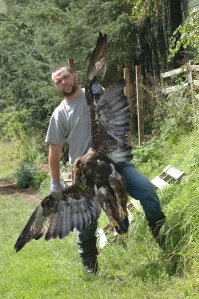
two more buzzards poisoned in Scotland

Two dead buzzards found next to a poisoned rabbit bait were poisoned by carbofuran. The buzzards and the bait were discovered in a farm field near Boat of Garten on October 15 this year, by staff from the Strathspey Estate. They called the police and the birds were sent off for toxicology tests. A spokesman from Strathspey Estate said they were shocked by the poisoning. He added, “Considering the efforts made to enhance the wildlife conservation and biodiversity on the estate, it is inconceivable that any of our staff had any part whatsoever in the laying of poisoned bait“.

Northern Constabulary and Strathspey Estate are “working closely” to find those responsible. I’m not sure how delaying the news of these deaths for 7 weeks will have helped the investigation but still, at least Northern Constabulary appear to be involved this time. Shame we can’t report the same for the two poisoned eagles found dead on Northern Constabulary’s patch back in June. Six months have now elapsed and still no news…

BBC news for the buzzard poisoning: http://www.bbc.co.uk/news/uk-scotland-highlands-islands-11958330

Strathspey Estate is owned by the Earl of Seafield, who also owns the Seafield Estate. A buzzard was found poisoned by chloralose on Seafield Estate back in 1991, but no further public records of alleged raptor persecution have appeared since then. Strathspey Estate is actively involved in projects on capercaillie and Scottish wildcat, and is also helping with the satellite-tracking of two golden eagles born on the Estate in summer 2010. The Earl of Seafield signed the SRBPA/SEBG letter to Roseanna Cunningham in May 2010, on behalf of the Seafield & Strathspey Estates, condemning the illegal poisoning of raptors in Scotland. Sandy Lewis, the Chief Executive of Seafield Estate was previously the Chair of the SEBG (Scottish Estates Business Groups), and is, according to the SEBG website, currently their regional rep for North and West Scotland. He was involved in a fascinating legal case earlier this year, involving a grouse-shooting lease in Strathspey. The case also involved land agents Mark Osborne and Nick Baikie, familiar names to readers of this blog. Here are two links to that story:

http://findarticles.com/p/news-articles/mail-on-sunday-london-england-the/mi_8003/is_2010_August_8/pocket-sportsman-grouse-court-told/ai_n54730059/

http://www.scotcourts.gov.uk/opinions/2010CSOH62.html

Scottish golden eagle poisoned in Ireland

A young golden eagle, just a few months old, has been poisoned and killed by the illegal pesticide Carbofuran in Ireland. The young bird was born in the Outer Hebrides earlier this summer, and was donated to the Irish golden eagle reintroduction project, where it was released in August 2010. It was found dead on 1st November 2010, aged 5 months old. Tests revealed it was killed by Carbofuran. Police are investigating.

This brings the total known eagle deaths resulting from illegal poisoning in the British Isles this year to TEN (4 golden eagles & 1 sea eagle in Scotland, and 3 sea eagles & 2 golden eagle in Ireland). Take note, John Scott MSP – is this what you call imaginary?

WHEN IS THIS GOING TO STOP?

Full news story here: http://www.bbc.co.uk/news/uk-northern-ireland-11937623

Law to stop raptor poisoning likely to be strengthened

As many of you will know, for the past few months the Rural Affairs & Environment Committee of the Scottish Parliament has been hearing evidence on the proposed WaNE bill (Wildlife and Natural Environment (Scotland) Bill. Certain measures included in this Bill will, if accepted, help to address the on-going issue of illegal raptor persecution across Scotland.

The RAE Committee has today published its Stage 1 Report of this Bill, and they should be congratulated for their interest in, and support of, many of the suggestions made by several wildlife conservation groups to tackle raptor persecution crimes.

In a press release, Committee Convenor Maureen Watt MSP said, “We utterly condemn wildlife crime and the poisoning of iconic birds of prey such as the golden eagle and the hen harrier. The law clearly needs to be strengthened and introducing vicarious liability appears to most of us to be a step in the right direction.”

Stage 2 of the WaNE Bill is expected to take place in December.

Here is a summary of the relevant parts of the report that deal with raptor persecution:

The Committee condemns as wholly unacceptable the illegal killing of raptors which continues across Scotland. The Committee recommends that the Scottish Government instructs police forces to investigate rigorously suspected cases of raptor persecution. The Committee also recommends that the Scottish Government likewise instructs the Crown Office and Procurator Fiscals office to prosecute wildlife crime vigorously.

The Committee concludes, from all evidence taken on this issue, that detection, investigation and prosecution of this crime is not resulting in a significant reduction in cases of raptor persecution, and that this should be addressed.

The Committee welcomes the Scottish Government’s intention to bring forward an amendment at Stage 2 to introduce a vicarious liability offence in the Bill, which it considers to be a helpful step in the right direction. The Committee awaits further detail on this, which was not available before the conclusion of evidence-taking at Stage 1. The Committee recognises there could be significant challenges in securing convictions under such new provisions, but believes the strengthening of the law in this regard is a helpful addition to the range of provisions available for potential prosecution.

The Committee notes that the majority of private landowners are appalled by raptor persecution. The Committee considers that such landowners should have nothing to fear from a vicarious liability provision.

The Committee welcomes the principle of the estates initiative, a voluntary good governance scheme for private land managers currently being prepared by the SRPBA, and agrees with the Minister that the scheme should be supported and given an appropriate amount of time to become established. However, the Committee also notes that the scheme will be voluntary and will therefore lack the power to compel estates that do not wish to take part. The Committee would welcome clarification from the Minister on how she plans to support the initiative.

The Committee accepts that it would represent a challenge and a significant development of policy to introduce a fully worked up system for licensing sporting estates in the Bill at this stage. The Committee also notes that the issue would not have been subject to consultation and as a result introducing such a system would be inappropriate at this time. However, the Scottish Government may wish to consider the appropriateness of introducing an enabling power in to the Bill which would permit them to introduce a licensing scheme, only after full consultation with stakeholders and parliamentary scrutiny under the super-affirmative procedure. Should it take the power, the Scottish Government could consider formally adopting the estates initiative with appropriate modifications as a code of conduct applicable to all estates. However, any such power should only be used if the Scottish Ministers are not satisfied that the voluntary approach to good governance and any vicarious liability offence are working.

The Committee notes Sheriff Drummond’s proposal to establish a presumption of guilty intent for anyone found in possession of a regulated substance. The Committee also notes his comments on whether an employer could be proven to have knowingly caused or permitted the possession of such a substance. The Committee considers that Sheriff Drummond’s proposals, and the introduction of a vicarious liability offence, are not mutually exclusive, and invites the Scottish Government to consider the proposal.

The Committee also notes the view that there is a further gap in the armoury of potential offences, that which seeks to catch those “concerned in” the use of illegal poisons for the purpose of raptor persecution or in other activity “concerned in” the offence of bird persecution. The Committee urges the Scottish Government to consider developing further offences which cover these points to further strengthen the grounds for potential prosecution.

The Committee invites the Scottish Government to consider the merits of announcing an amnesty on illegal substances such as carbofuran.

The Committee recommends that the Scottish Government reports to Parliament annually on the number of illegal raptor killings, detailing the number of cases brought and those which were successfully prosecuted.

The full report can be read here: http://www.scottish.parliament.uk/s3/committees/rae/reports-10/rur10-08-00.htm

gamekeeper convicted for poisoning offences on Leadhills Estate

A 20 yr old gamekeeper formerly employed on the Leadhills Estate in Lanarkshire was today convicted for laying poisoned baits, contrary to the Wildlife & Countryside Act. In April 2009, underkeeper Lewis H. Whitham was observed by a research officer from the charity OneKind (formerly called Advocates for Animals) staking out a dead rabbit, whose stomach had been split open and sprinkled with the deadly pesticide Carbofuran.

Whitham pleaded guilty at Lanark Sheriff Court and he was fined £800. This had been reduced from £1000 because of his guilty plea. The maximum penalty that can be imposed for this wildlife offence is a fine of up to £5000 and/or six months imprisonment. It is understood that Whitham is no longer employed at Leadhills and has since moved to North Yorkshire.

The Leadhills Estate has a shocking record of alleged wildlife crime incidents in recent years. See blog posts on 4 March, 6 March, 11 March and 14 March for a taster. In addition, OneKind claims that over a period of several months, numerous apparently illegal snares have been discovered on Leadhills, 3 badgers were caught in snares and 2 of these had to be put down due to their injuries, and also dead buzzards have been found in shallow graves.

If this most recent conviction isn’t justification for Roseanna Cunningham’s proposed vicarious liability ammendment to the WANE bill to be accepted, then I don’t know what is. Persistent wildlife crime exposed, yet again, on a so-called sporting estate. It’s disgusting.

Congratulations to OneKind for their dedicated research, and to the SSPCA who took the lead in securing this conviction.

For more details on the Leadhills conviction, see OneKind link here: http://www.onekind.org/onekind/blog_article/leadhills_conviction_strengthens_case_for_liability

Case details from PAW Scotland: http://www.scotland.gov.uk/Topics/Environment/Wildlife-Habitats/paw-scotland/Resources/Newsletters/Issue2/Inthecourts/LewisWhitham2010

SSPCA press release here: http://www.scottishspca.org/news/511_man-convicted-for-poisonings

Crown Office and National Wildlife Crime Unit press releases here: http://www.scotland.gov.uk/Topics/Environment/Wildlife-Habitats/paw-scotland/news/Gamekeeperfined171110

We wait with bated breath (not baited rabbit) for the SGA and SRPBA press releases.

Eagle killers getting away with it? Part 3

In our blog post on 13 October, we revealed that one golden eagle and one white-tailed eagle were found dead in the Highland region in June 2010. Laboratory testing by the government agency SASA (Science and Advice for Scottish Agriculture) revealed that both eagles had been poisoned by the illegal pesticide Carbofuran. We also noted that, four months after the dead eagles were discovered, there hadn’t been any news reports of this incident even though the SASA report stated that “The incident is part of an ongoing police investigation”. So either the police (in this case, Northern Constabulary) have decided that they don’t need to make a public appeal for information because they already know who dunnit (although now five months on, no public statements about arrests or charges have been made), or, Northern Constabulary are failing in their statutory duty to investigate wildlife crime.

On 18 October, The Guardian published an article about hen harrier persecution (see blog post 18 October). Within that article were a few lines about the poisoned golden eagle (no mention was made about the sea eagle), said to have been found on a grouse moor near Inverness in the Eastern Highlands, an area notorious as one of the worst areas for golden eagle persecution in the country.

In a press release on 3 November (see blog post 3 November), the Scottish government acknowledged the two eagle deaths and included them in their official roll-call of the 16 poisoned raptors found dead in Scotland during the first half of 2010. Of these 16 poisoned raptors, five were eagles (4 golden eagles and 1 sea eagle), making 2010 the worst year in two decades for eagle poisoning – and these figures only relate to the first six months of 2010.

Also on 3 November, Scottish Environment Minister Roseanna Cunningham, was giving evidence to the Rural Affairs and Environment Committee as they continue to deliberate over Stage 1 of the WaNE bill. Video footage from this meeting is available on Holyrood TV at: http://www.holyrood.tv/library.asp?iPid=3&section=102&title=Rural+Affairs+and+Environment+Committee

During this meeting (20.17 minutes into the video), Ms Cunningham is asked by MSP Peter Peacock (Highlands & Islands, Labour) to give her opinion on whether sufficient is being done by the police in general to investigate wildlife crime. Her response, including, “It’s a challenge……..I won’t pretend that I think the situation is perfect, it is not” is quite refreshing, given the usual sound bites that are trotted out by the various government officials that are charged with addressing the continual and widespread problem of illegal raptor persecution.

Maybe the Minister will make a quick call to Northern Constabulary’s Wildlife Crime Co-ordinator, Chief Inspector Paul Eddington, to see how he’s getting on with investigating the deaths of these two poisoned eagles?

persecution wiping out hen harriers on UK grouse moors

A new study suggests that the hen harrier is being almost entirely eradicated from UK grouse moors by systematic persecution.

The report, soon-to-be-published by Scottish Natural Heritage and authored by the UK’s leading harrier scientist, Professor Stephen Redpath, estimated that between 2003-07 there should have been 499 breeding hen harrier pairs on the 3,696km2 of grouse moors across Britain which were being “driven”, or actively used for shooting, in those years. A UK-wide survey in 2008 then found only five breeding pairs had survived – a 1% success rate.

Click here for news article: http://www.guardian.co.uk/environment/2010/oct/18/hen-harriers-grouse-moors

In the same news article, and following on from our last blog entry, confirmation is given that a fourth golden eagle has been found poisoned in the Scottish Highlands this year, making 2010 the worst year for golden eagle poisoning in the last two decades.

Roseanna Cunningham, the Scottish Environment Minister, said the cluster of persecution cases added further weight to calls for tougher legal powers on bird of prey persecution in Scotland.

We live in hope, Roseanna.

eagle killers getting away with it: two more dead eagles in Scotland

The sharp-eyed amongst you will have noticed that within the latest SASA poisoning report (see below) there is a case listed that refers to a white-tailed sea eagle and a golden eagle.

Scroll down to the bottom of page 8 of the report. Incident Ref # 10123. Dated June 2010. In the Highland region, Carbofuran is reported as the cause of death for one sea eagle and one golden eagle. The incident is reported as an ongoing police investigation. Click here for details: SASA poisoning positive results 2010

Hmm, interesting. Were the deaths of these two eagles in June 2010 reported in the press? I didn’t see anything. Why wasn’t it reported? If asked, the authorities will probably say that they wanted to collect evidence without first alerting the eagle killers that the dead eagles had been discovered. That’s fair enough. But what about now, several months on? Why should these types of incident go unreported in the press? What’s so different about wildlife crime to any other type of crime that DOES get reported?  It wouldn’t be so bad if the figures for the successful prosecution of wildlife crime offenders were good. But have we seen any successful prosecutions for eagle persecution in Scotland in recent years (infact, ever)? No, we haven’t.

So, do we have yet another incident of eagle poisoning in Scotland this year, and if so, where was it and what is being done to bring the killers to justice? What’s being hidden here?

If we want to give the eagle killers a reason to continue what they’re doing, we are handing them the perfect opportunity on a plate. By having news black outs, they know they can carry on poisoning to their heart’s content because no-one will be drawing it to the public’s attention. Genius.

eagle killers getting away with it: Skibo update

Given the deafening silence on the progress of the Skibo case (see blog report 12 May 2010, where it was reported that three golden eagles, one sparrowhawk and one buzzard had been found on the Skibo Estate in north Scotland), we’ve done some digging around.

Last month (see blog post 20 September 2010), we noted that the results from the toxicology investigation on the dead birds had not been made public. We also noted that the results of the police investigation had not been made public. Infact, since the police raid in early May, the only press coverage was that on 21 June 2010, where Skibo gamekeeper Dean Barr had accused the RSPB of planting the dead birds: http://www.dailyrecord.co.uk/news/scottish-news/2010/06/21/gamekeeper-at-skibo-estate-probed-after-three-golden-eagles-are-found-dead-86908-22348349/

We have discovered that the three golden eagles and one sparrowhawk  had all been killed by eating poisoned baits, according to scientific analysis undertaken by government scientists. Their results conclude that two of the golden eagles, plus one sparrowhawk were killed by the banned pesticide Carbofuran. They state the third golden eagle was killed by the banned pesticide Aldicarb. Click here for the SASA report detailing these incidents: SASA poisoning positive results 2010

Given the confirmation that these  raptors that were found dead on Skibo Estate in May 2010 had been killed by illegal poisons, it is worrying that there has been no formal notification of any charges brought against anybody for these crimes.

Does this mean that, along with every other single case of eagle persecution in this country, the eagle killer(s) in the Skibo case will be getting away with it?

It is perhaps timely that the WaNE bill is currently being reviewed by the Scottish parliament. Measures proposed in that bill will, if implemented, help to stop these criminals getting away with murdering our iconic birds of prey. For example, if the concept of vicarious liability is accepted, then the Estate Owner/Manager will take full legal responsibility for the actions of their staff.

Right now, nobody takes responsibility and we’re all sick of reading these news stories about yet another eagle/kite/buzzard/peregrine/goshawk/osprey/sparrowhawk/tawny owl/hen harrier/kestrel being persecuted.

eagle killers getting away with it

The aim of this blog is to monitor the occurrence of illegal raptor persecution incidents across Scotland, and to report on the outcome of each case. As you will already know from reading the blog entries, persecution incidents have been occurring for many years and involve most of our raptor species, including golden eagles, white-tailed eagles, red kites, hen harriers, buzzards, goshawks, sparrowhawks, ospreys, kestrels and owls. Let’s see what progress, if any, has been made by our law enforcement bodies,  starting with our most iconic species, the golden eagle and white-tailed eagle.

When the news hits that another eagle has been illegally poisoned or shot, there is, quite rightly, public outrage. Each event is usually followed by a statement from those responsible for upholding the law that they are determined to stamp out these crimes and bring the guilty party to justice. Let’s see how well they’ve been doing. The following is a review of cases involving 13 dead eagles since 2006:
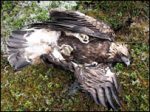
MAY 2006: A dead adult golden eagle is found on the Dinnet & Kinord Estate, near Ballater, Aberdeenshire. A post-mortem reveals it has been poisoned by the illegal pesticide, Carbofuran. Grampian Police launch an investigation. As of September 2010, nearly 4.5 years later, no arrests have been made.
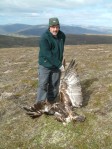
 

 JUNE 2006: A dead golden eagle is found on Glen Feshie Estate in the Cairngorms. A post-mortem reveals it has been poisoned by the illegal pesticide, Carbofuran. Northern Constabulary launch an investigation. As of September 2010, nearly 4.5 years later, no arrests have been made.
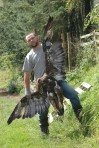


AUGUST 2007: A dead adult female golden eagle is found on a Peebleshire estate. A post-mortem reveals she has been poisoned by the illegal pesticide, Carbofuran. This female was part of the only breeding pair of golden eagles remaining in the Scottish Borders. She had a young dependent chick still in the nest. Lothian & Borders Police launch an investigation. As of September 2010, over 3 years later, no arrests have been made. 
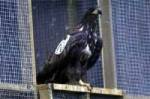


AUTUMN 2007: Tayside Police receive a detailed tip-off that a young male white-tailed eagle (known as ‘Bird N’) has allegedly been shot on an estate in Angus. The tip-off included the name of the alleged shooter and that the body had been burned to hide the evidence. ‘Bird N’ was part of the cohort of reintroduced sea eagles that were donated by Norway and released in Scotland in August 2007. The timing and location included in the tip-off coincided with the timing and location of the last-known radio signal of this bird. As of September 2010, 3 years later, no arrests have been made.
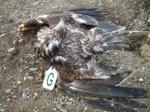
MAY 2008: A one year old male white-tailed eagle who hatched on Mull in 2007 and was known as ‘White G’ is found dead on the Glenquoich Estate, Angus. A post-mortem reveals he has been poisoned by an unusual concoction of pesticides that includes Carbofuran, Bendiocarb and Isofenphos. A police search in the area also reveals a poisoned buzzard, a baited mountain hare and 32 pieces of poisoned venison baits placed on top of fenceposts on the neighbouring Glenogil Estate. Laboratory tests reveal the baited mountain hare and the 32 poisoned venison baits contain the same unusual concoction of highly toxic chemicals that had killed the white-tailed eagle, ‘White G’. As of September 2010, nearly 2.5 years later, no arrests have been made.
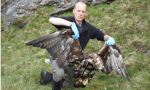
JUNE 2009: An adult golden eagle is found dead at Glen Orchy, Argyll. A post-mortem reveals it has been poisoned by the illegal pesticide, Carbofuran. Strathclyde Police launch an investigation and state they are “following a positive line of inquiry“. As of September 2010, 15 months later, the outcome of this “positive line of inquiry” has not been made public.
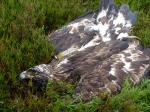
 

JULY 2009: A two year old female golden eagle, known as ‘Alma’, is found dead on the Millden Estate, Angus. A post-mortem reveals she has been poisoned by the illegal pesticide, Carbofuran. Alma is a well-known eagle  – born on the Glen Feshie Estate in 2007, she was being satellite-tracked and her movements were followed by thousands on the internet. Tayside Police launch an investigation. As of September 2010, over a year later, no arrests have been made.

AUGUST 2009: A young white-tailed eagle is found dead on Glenogil Estate, Angus. A post-mortem reveals it has been poisoned by the illegal pesticide, Carbofuran. Reports circulate that this bird actually died in March 2009, but RSPB fieldworkers could not locate the transmitter signal. The decomposed body was eventually found in August 2009, after an expert fieldworker was brought in. Tayside Police did not release a press statement about this alleged persecution incident until January 2010, 6 months after the dead body was discovered, and probably 9 months after it was killed. As of September 2010, over a year later, no arrests have been made.

MAY 2010: Three dead golden eagles are found on Skibo Estate, Sutherland. They are found with a dead buzzard and a dead sparrowhawk. All are suspected victims of illegal poisoning and the bodies are sent for forensic post-mortem in Edinburgh. Northern Constabulary launch an investigation. As of September 2010, 4 months later, the post-mortem results have not been made publicly available. The result of the police investigation has also not been made publicly available. UPDATE Nov 2010: SASA report indicates the golden eagles were poisoned.

JUNE 2010: Two dead eagles are discovered on a grouse moor nr Inverness. The golden eagle and the white-tailed eagle were collected by the RSPB and sent to the SASA lab for inspection. They are later confirmed to have been poisoned by Carbofuran. Northern Constabulary does not make any public appeal for information – nor does the RSPB. You have to ask why not?

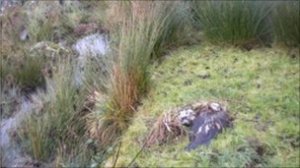
Is Edradynate Estate the place where the red kite was found poisoned?

The location where the dead red kite was found in July (now confirmed to have been poisoned – see earlier blog below) was given by Tayside Police as “Strathtay, near Aberfeldy”, Perthshire. I mentioned a number of sporting estates in my earlier post that have their addresses in this area. I’ve since investigated further and look what I’ve found –

According to Tayside Police’s press release about the latest dead red kite, over the last 15 years the following have been found poisoned in the same area where the recent red kite was found dead – 9 buzzards, 2 sparrowhawks, 2 crows, 1 common gull, 1 tawny owl, 1 pole cat and 1 domestic cat. In addition, they say 12 poisoned baits have also been found.

Compare the above list of dead animals & poisoned baits with the following list of dead animals & poisoned baits, which was reported in the RSPB’s Legal Eagle newsletter (January 2005, #43, page 3) – “In 14 separate incidents since 1998, 16 poisoned victims (9 buzzards, a cat, a tawny owl, 2 sparrowhawks, a common gull, a pole cat and a crow and 12 poisoned baits [rabbits, woodpigeons and a pheasant]) have been found, with traces of the pesticides mevinphos, carbofuran and alphachloralose“.

The 2005 RSPB report relates to the Edradynate Estate, which is situated in Strathtay, near Aberfeldy. Coincidence? You decide.

Nobody was convicted for the earlier alleged offences at Edradynate Estate  thanks to the apparent chronic mishandling of the prosecution case. The Edradynate Estate head gamekeeper (aged 55) and underkeeper (22), both of Aberfeldy, were arrested in 2002 and charged with nine offences relating to the use of poisoned baits and also bird cruelty, including the use of spring traps. On 22 July 2004, two years after the original arrests and 13 court hearings later, the Fiscal dropped the case against them at Perth Sheriff Court. A spokeswoman for the Crown Office admitted the time taken to prepare the case for a trial had been a major factor in the decision to scrap it.

Link to RSPB Legal Eagle #43 here: legal_eagle_43_Jan2005

News report about the failed 2004 court case here: http://www.thefreelibrary.com/Fury+after+’bird+killers’+walk+free.-a0119726014

and here: http://scotlandonsunday.scotsman.com/nature/RSPB-Fury-as-gamekeepers-escape.2548762.jp