RSPB publishes Birdcrime 2016 report

Press release from RSPB:

REPORT REVEALS CONTINUED PERSECUTION OF BIRDS OF PREY IN UK

  • RSPB’s Birdcrime report reveals a minimum of 81 confirmed incidents of bird of prey persecution in the UK during 2016, but many illegal killings are going undetected or unreported.
  • There were no prosecutions for these persecution offences, the first time this has happened in 30 years.
  • Illegal killing is not only robbing people of the chance to see birds of prey in the UK but has serious consequences for their populations.
  • The RSPB is calling for police and other enforcing authorities to make full use of all existing powers to protect birds of prey as well as the introduction of a licensing system for driven grouse shooting to ensure shoots are operating legally and sustainably.

Without urgent action some of UK’s birds of prey face a bleak future after the latest Birdcrime report revealed a minimum of 81 confirmed incidents of illegal raptor persecution in 2016, without a single person prosecuted.

Birdcrime 2016 – the only report summarising offences against birds of prey in the UK – revealed 40 shooting, 22 poisoning, 15 trapping and four other incidents of illegal persecution against raptors. Among the victims were hen harriers, peregrine falcons, red kites and buzzards. However, evidence suggests these figures are just the tip of the iceberg with many illegal killings going undetected or unreported.

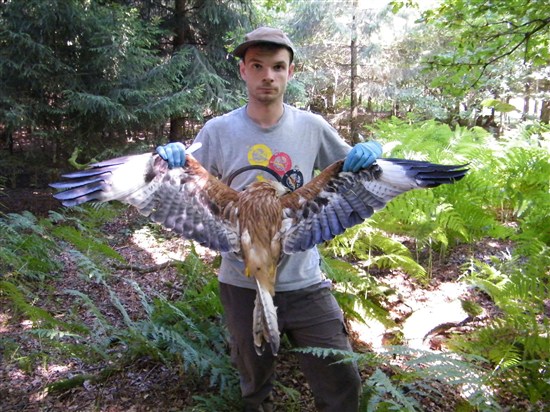
[Photo: this Marsh harrier was found shot next to a partridge release pen on a shooting estate in Yorkshire. Image via Jean Thorpe]
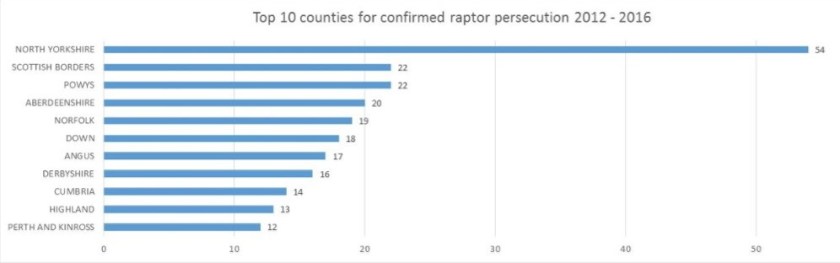
The report also revealed close to two-thirds (53) of the confirmed incidents took place in England, with particular concern for raptors in North Yorkshire. Over the last five years the county recorded the highest number of confirmed bird of prey persecution incidents in the UK, with 54 incidents since 2012 and 19 last year alone.

The problem wasn’t confined to England, with the report highlighting confirmed cases in Wales, Northern Ireland and Scotland, where there is growing concern over the repeated suspicious disappearance of satellite tagged birds of prey. This year, a study by Scottish Government examined the fate of 131 golden eagles fitted with satellite tags between 2004-16 concluding that ‘as many as 41 (one third) disappeared, presumably died, under suspicious circumstances connected with records of illegal persecution.’

Increasingly, people in the UK are being robbed of the chance to see these spectacular birds because of these illegal incidents, yet in 2016, there wasn’t a single prosecution arising from a confirmed incident, the first time this has happened in 30 years.

Martin Harper, RSPB Conservation Director, said: “Birds of prey bring our skies to life. There is nothing like seeing a diving peregrine or a skydancing hen harrier. The sights of these spectacular birds are something we should all be able to enjoy, unfortunately illegal activity is stopping this and preventing the birds from flourishing. There are laws in place to protect these birds but they are clearly not being put into action. We need governments across the UK to do more to tackle illegal killing to protect our raptors for future generations to enjoy.”

Previous research has shown that illegal killing of birds of prey is associated with land managed for intensive driven grouse shooting, leaving vast areas of our uplands without raptors. A Natural England study revealed ‘compelling evidence’ that persecution of hen harriers – associated with driven grouse moors – was the main factor limiting their recovery in England.

The RSPB believes the introduction of a licensing system for driven grouse shooting would help tackle the ongoing illegal persecution that occurs on these grouse moors. This would also help tackle the wider problems of intensive management of ‘big bag’ driven grouse shooting, like the draining of and burning on fragile peat bogs. A fair set of rules in the form of a licensing system could help ensure shoots are operating legally and sustainably and introduce the option of restricting or removing a licence in response to the most serious offences, for example where staff on an estate have been convicted of illegally killing birds of prey.

The RSPB welcomes a recent announcement by Scottish Government that will see an independent panel established to review options for regulation of grouse shooting and to look at the economic and environmental costs and benefits of the industry.

Bob Elliot, RSPB Head of Investigations, said: “This latest Birdcrime report continues to highlight that in the UK we have a major issue with birds of prey being deliberately and illegally killed, despite having full legal protection. This type of crime has serious consequences for the populations of species, such as the hen harrier, and we must see a change in attitude and more effective law enforcement to protect these birds for years to come.”

ENDS

Read the online Birdcrime 2016 report here

Birdcrime 2016 data appendices here

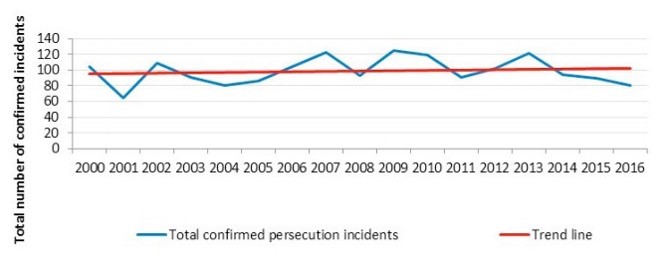
Well done to the RSPB Investigations Team for once again compiling and publishing these annual data, which help to dispel the oft-cited myth from the game-shooting industry that raptor persecution ‘is a thing of the past’. Have a look at this useful graph and draw your own conclusions – the data don’t lie, unlike the game-shooting industry:
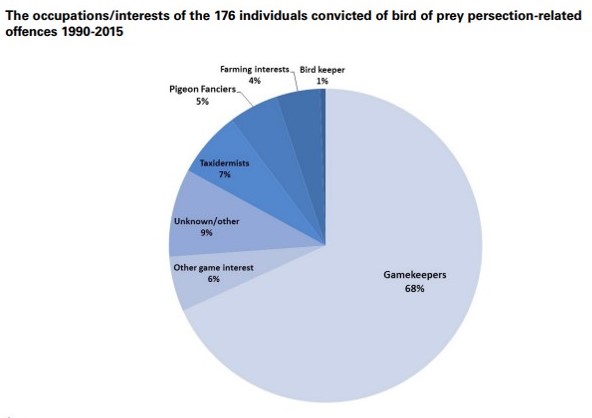
Of course, it comes as no surprise that those within the bird shooting industry would want to mislead the public – as this pie chart reveals, gamekeepers are responsible for the vast majority of UK raptor persecution crimes:
The county of North Yorkshire once again comes top of the raptor-killing leader board, way ahead of every other county. Many of these crimes have taken place on driven grouse moors:
Tune in around this time next year, to read more of the same. Nothing has changed and nor will it change until the filthy and unregulated driven grouse shooting industry has been closed down. You can help hasten its demise by signing this e-petition calling for a ban: please join over 10,000 others and sign here.

MEDIA COVERAGE

BBC Breakfast news: Great interview with Guy Shorrock (RSPB Investigations). Available on iPlayer but only for 24 hrs (starts at 1:50) here

BBC news: here

New Scientist: here

Guest blog by Bob Elliot, Head of RSPB Investigations: here

Daily Telegraph: here (including a quote from Amanda Anderson, Moorland Association)

The Times: here (behind paywall)

The York Press: here

Statement from Yorkshire Dales National Park Authority: here

Yorkshire Post: here

UPDATE 1.30hrs: Reaction to RSPB’s 2016 Birdcrime report, compare & contrast (here)
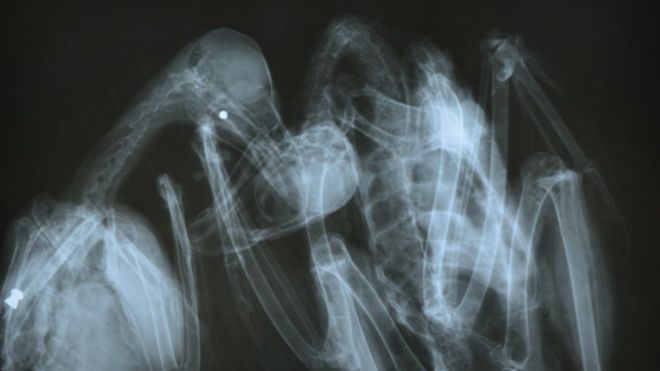
Buzzard, raven & crow shot in Brecon Beacons National Park

The RSPCA is appealing for information after the shooting of three birds in the Brecon Beacons National Park.

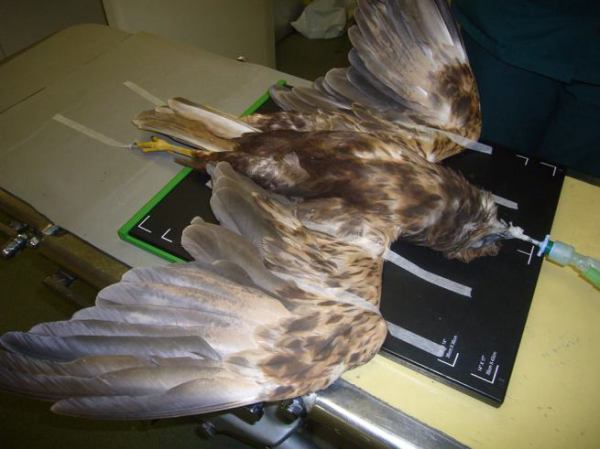
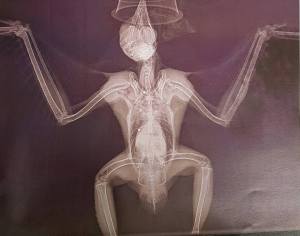
A member of the public discovered a dead raven and a dead buzzard near Pen-y-Cae on 5 April 2017. They were taken to the RSPCA’s Merthyr Tydfil clinic where x-rays revealed they had been shot with a pellet gun (x-ray image by RSPCA).

An injured crow was rescued but later euthanised due to its injuries.

Local residents have reported seeing an unusual white van parked in the area around 5 April.

Anyone with information is urged to contact the RSPCA Appeals Line, in confidence, Tel 0300-123-8018.

BBC news article here

ITV news article here

Notorious egg thief on the run

jeffrey-lendrumJeffrey Lendrum, a notorious international falcon egg thief, has gone on the run in Brazil and there are fears he may well turn up back in the UK this year to go after peregrine eggs.
In January 2016 Lendrum, 55, was sentenced to four and a half years in jail after being convicted of being in possession of rare falcon eggs at Sao Paulo airport, enroute from Chile to Dubai (see here). However, he had recently appealed his sentence and the Brazilian authorities released him on bail pending his appeal.

He has since disappeared.

Lendrum has a string of previous convictions for falcon egg smuggling, dating back as far as 1984 in Zimbabwe. In 2002 he was arrested in Canada for stealing peregrine and gyrfalcon eggs. In 2010 he was sentenced to 30 months imprisonment in the UK (reduced to 18 months on appeal) after being caught with 14 peregrine eggs at Birmingham Airport. He’d stolen them from nests in south Wales and was enroute to Dubai (see here).

If you’re involved with monitoring peregrine sites in the UK, keep an eye out for this face.

Update on the 3 shot buzzards in Somerset

Following on from today’s earlier blog about the three shot buzzards in Somerset (here), we’ve now been informed that one was shot in Somerset (Chedzoy) on New Year’s Day and died of its injuries and the other two were shot in separate incidents in Wales (locations unknown) and were transported to the RSPCA wildlife hospital in Somerset where they are undergoing treatment.

Thanks to the two blog readers who contacted us with updated info.

No subsidy withdrawal for mass poisoning of raptors on Glanusk Estate

Further to the news about the mass poisoning of raptors uncovered on the Glanusk Estate in the Brecon Beacons National Park, Wales (see here), we wanted to find out whether the Estate had incurred a financial penalty for what appears to be a clear breach of cross compliance rules.

In order to qualify for Common Agricultural Policy (CAP) subsidy payments, claimants are required to keep their land in ‘Good Agricultural and Environmental Condition’ and comply with a set of Statutory Management Requirements (SMRs). This is known as cross compliance. [NB: the rules have now changed slightly but as this mass poisoning took place in 2012/2013, the old rules apply].

In our opinion, the illegal poisoning of raptors with Bendiocarb is a breach of SMR1 (relating to the protection of wild birds) and SMR9 (relating to restrictions on the use of plant protection products).

DSCN0334.JPG-550x0

In April, an FoI was submitted to Rural Payments Wales (RPW), the Government agency responsible for implementing CAP subsidy payments and for imposing penalties if cross compliance regulations have been breached. Here are the questions that were asked, along with the answers received from RPW:

Question 1. Which of these incidents were on land in receipt of subsidies under the Single Payment Scheme (SPS) during the years 2012 and 2013?

Answer: I can confirm that 10 of these incidents were on land in receipt of SPS in 2012 and 2013.

[RPUK comment: Although there were 24 incidents in total, it seems that RPW has excluded 14 of them, presumably because the illegally-poisoned birds and/or illegally-placed poisoned baits were on land that is not subject to SPS, for example, in woodland].

Question 2. What were the amounts of payments made under SPS in 2012 and 2013 and to how many beneficiaries?

Answer: A total of £98,802.01 was paid to 2 beneficiaries under SPS 2012. A total of £97,145.70 was paid to 2 beneficiaries under SPS 2013.

[RPUK comment: We’ve scrutinised the CAP payments website to find out who these beneficiaries were and we’ve worked out that they are two tenant farmers on the Glanusk Estate, presumably on whose landholdings the poisoned birds/baits were discovered].

Question 3. Can Rural Payments Wales confirm whether these offences would have breached SMR1 and SMR9 of the SPS?

Answer: These offences would be a breach of SMR1 and SMR9 if they were found to be attributable to a benficiary of Common Agricultural Policy (CAP) funds.

Question 4. What investigation or enforcement action has Rural Payments Wales undertaken in relation to these offences?

Answer: RPW considered the offences in question and concluded there was insufficient evidence to apply a cross compliance breach to a beneficiary.

[RPUK comment: We’re fascinated by this. The standard of proof for a cross compliance breach is lower than the standard of proof required for a criminal prosecution. A criminal conviction is NOT required for a cross compliance penalty to be imposed].

Question 5. What subsidy withdrawals have been made from anyone in receipt of money under the SPS in 2012 and 2013 as a result of these incidents?

Answer: No withdrawal of subsidy has been made from anyone under SPS 2012 and SPS 2013 as a result of these incidents.

END

A further FoI was submitted to RPW in May 2016, to try and understand why RPW thought there was ‘insufficient evidence’ to apply a penalty. Here are the questions that were asked, along with the answers received from RPW:

Question 6. Please can you tell me the date (day/month/year) that RPW first became aware of these poisoning incidents?

Answer: RPW first became aware of the poisoning incidents on 5 December 2013.

Question 7. Please could you provide information about the extent and type of enquiries RPW conducted when “considering the offences in question and concluding there was insufficient evidence to proceed with a cross compliance action”?

Answer: A formal police investigation was underway in this case and RPW undertook a review of the documentary evidence.

Question 8. Have the two claimaints been informed by RPW of the SMR1 and SMR9 breaches on their land?

Answer: No, RPW has not established any breaches to SMR1 and SMR9 on their land.

Question 9. Have the two claimants been interviewed by RPW about the incidents on their land?

Answer: No.

Question 10. Can copies of any correspondence between RPW and the claimants about these incidents be supplied (with personal details redacted)?

Answer: RPW has had no contact with the claimants over these incidents.

Question 11. What steps has RPW taken to prevent a reoccurence of these breaches?

Answer: RPW undertakes a programme of annual on site visits to farm businesses to ensure cross compliance requirements are respected.

END

To be honest, we’re completed baffled by RPW’s answers to questions 8-11. They’re either displaying overwhelming apathy, or they’re confused, or we’re confused. Confusion and apathy shouldn’t be unexpected – we saw a similar approach from the Rural Payments Agency (operating in England) when we challenged them about a subsidy withdrawal for the Stody Estate (Norfolk) after the discovery of mass raptor poisoning on their land. The confusion and apathy continued for a year, but, to their credit, the RPA did eventually get it right and imposed a large financial penalty on Stody Estate (see previous blogs here).

Are we going to have to go through the same process with Rural Payments Wales?

Was there a cross compliance breach or wasn’t there? If there was, why hasn’t a penalty been imposed? Why hasn’t RPW bothered to discuss these poisonings with the subsidy recipients? How can RPW claim, with straight faces, that their on site visits “ensure cross compliance requirements are respected”? If that’s the case, where was RPW in 2012 and 2013?

Emails to: RPWOnline@wales.gsi.gov.uk

There’s something decidedly rotten about this whole affair. The most significant wildlife poisoning incident ever uncovered in Wales, and the second largest in the UK in 40 years, on a prominent estate with strong royal connections, inside a National Park. Abject secrecy about these crimes from Dyfed Powys Police (until we started asking questions 3 years later), no criminal prosecution, and no subsidy penalty.

Further statement from Glanusk Estate re: mass raptor poisoning

Following on from yesterday’s blog about the Glanusk Estate statement on the illegal mass poisoning of raptors on their land (here), the Glanusk Estate trustees have issued a further statement:

Further Glanusk statement

A couple of things jumped out at us:

The incident involves a third party to Glanusk Estate and is nothing to do with the Management Team or the owners of the Estate“.

Clearly, the owners and Management Team were not directly responsible for setting out poisoned baits, or for picking up poisoned raptors and hiding them inside feed sacks next to a pheasant pen. That was the criminal action of a ‘third party’. But it’s irresponsible for the Management Team and owners of the Estate to claim ‘it is nothing to do with us’. It’s their responsibility, and theirs alone, to, er, ‘manage’ what happens on their Estate.

The question is, do the owners and Management Team know who that ‘third party’ was and if so, what action have they taken against that ‘third party’? Is the ‘third party’ still involved at Glanusk Estate? What measures, if any, have Glanusk Estate put in place to ensure the poisoning is not repeated? They say they have asked their visitors, tenants and friends to be vigilant, but is that enough? This mass poisoning took place over the period of a whole year and apparently nobody saw anything suspicious (!) so asking people to be vigilant is a start but hopefully it isn’t the Management Team’s only course of action!

The Welsh Government and the Dyfed Powys Police confirmed at the time that there was no risk to public health“.

Really? If that’s true, it would be an extraordinary statement for the Welsh Government & Dyfed Powys Police to make. According to the World Health Organisation, Bendiocarb (the poison that was used for these mass raptor killings) is listed as Class II for acute toxicity, indicating that it is moderately hazardous to humans if ingested or absorbed through the skin. Symptoms of Bendiocarb poisoning in humans are weakness, blurred vision, headache, nausea, abdominal cramps, low blood pressure, muscle tremours, uncoordination and heart irregularities. Death can result from discontinued breathing, paralysis of muscles of the respiratory system and/or intense constriction of the openings of the lungs. But don’t worry, the Welsh Government and Dyfed Powys Police said there was “no risk to public health”.

We’ll be blogging more about the Welsh Government’s role in this case shortly…..

Mass raptor poisoning in Wales: location revealed

In March 2016, we blogged (see here) about the mass poisoning of raptors in 2012/2013 at an unnamed location in the Brecon Beacons National Park, Powys, Wales.

Our suspicions had been aroused when looking at raptor poisoning data published in two RSPB reports (Birdcrime 2012; Birdcrime 2013). We were very interested in a cluster of incidents (24, to be precise) during this period, all listed as ‘Powys’ and all involving the poison Bendiocarb. Those 24 incidents included nine poisoned baits and 15 poisoning victims, as follows:

9 x poisoned pheasant baits

2 x poisoned ravens

5 x poisoned red kites

8 x poisoned buzzards

Poisoned RK Powys

An FoI was submitted to Dyfed-Powys Police to determine whether all these poisoning crimes had occurred at the same location (answer: yes) and whether any prosecution had been forthcoming (answer: no).

We were curious about why there had been no media coverage of this case, it being “the most significant wildlife poisoning incident in Wales and the second highest recovery of poisoned raptors in the UK in the last 40 years”, according to the RSPB (see here). We’d suggested that there had been a police ‘cover-up’, an accusation that Dyfed-Powys Police denied (see here). We still think there was some level of cover-up, not so much with the police investigation per se, but rather with the lack of any subsequent publicity about this case.

Naturally, we were interested in finding out the actual location of this mass raptor poisoning and we firmly believe it’s in the public interest that the location is named, but we didn’t have much to go on, other than it happened on a pheasant-shooting estate within the Brecon Beacons National Park. A number of blog readers from Powys did contact us privately and each named the same estate, but if we were to publish the estate name we needed much more conclusive evidence than that.

It’s taken us a while to get there, and we’re not going to reveal exactly how we got there because we know, from past experience, that as soon as we reveal information sources the authorities do their utmost to make access more difficult (e.g. by deliberately withholding data from official reports, see here) but after a series of FoIs and scrutiny of several indirect Government databases, we’re now in a position to name the location of the mass poisoning of raptors in 2012/2013 as the Glanusk Estate, Powys.

Glanusk logo

Glanusk Estate

Glanusk Estate is privately owned and run by Dame Elizabeth Shan Josephine Legge-Bourke, her son Harry Legge-Bourke and his wife Iona Legge-Bourke (see here).

Shan Legge-Bourke was appointed lady-in-waiting to Princess Anne in 1987, was High Sheriff of Powys in 1991, has been the Lord Lieutenant of Powys (the Queen’s personal representative) since 1998 and became Dame Commander of the Royal Victorian Order in the 2015 New Year Honours.

Shan Legge-Bourke’s daughter, Tiggy Legge-Bourke, was nanny to Princes William & Harry and worked as a personal assistant to Prince Charles between 1993-1999.

Shan Legge-Bourke’s son, Harry Legge-Bourke, is a partner in the management of Glanusk Estate and served on the Board of Natural Resources Wales (the Welsh statutory conservation agency) between 2012-2015 (the same time the mass poisoning of raptors was taking place on Glanusk Estate).

The Queen visited Glanusk Estate in 2012 as part of her Diamond Jubilee celebrations (see here).

Could these strong royal connections explain why Dyfed-Powys Police were so reluctant to publicise the criminal activities taking place on Glanusk Estate? Who knows? Interesting though, isn’t it?

Now, we’re not suggesting for one minute that the Legge-Bourke family was in any way involved with the mass poisoning of raptors on Glanusk Estate, although it’s more than likely that the family would have become aware of what was going on when the police raided the estate in 2013 armed with search warrants and arrested two people (see police statement here).

As far as we can tell, Glanusk Estate offers walked-up grouse shooting (only 3-4 brace at a time – see here) but, like many large, privately-owned estates, the more commercial pheasant shooting is not run by the estate but is managed by an independent company, in this case, Mark Coleman Sporting & Game.

Mark Coleman Sporting & Game

According to the Mark Coleman Sporting & Game website (here), which, incidentally, features the logos of GWCT, Countryside Alliance and the National Gamekeepers Organisation, Mark Coleman operates two pheasant shoots: one at Glanusk Estate and the other at Stoke Edith Estate in nearby Herefordshire.

Mark Coleman Sporting

Stoke Edith is a close neighbour of the Sufton Estate. Some of you may recognise that name. In 2010, an under-gamekeeper from the Sufton Estate was convicted of 17 wildlife crime offences, including the use of Bendiocarb to poison raptors (see here). In the same year, the Sufton Estate Head gamekeeper was convicted of running a cannabis factory on the estate and was sentenced to two years’ imprisonment (see here).

Amazingly, according to this article published in Fieldsports magazine: glanusk_fieldsport_article-1the Head gamekeeper now at Glanusk Estate, employed by Mark Coleman, is someone with the same name as that convicted Head gamekeeper from Sufton Estate. Imagine that! It surely can’t be the same person, because, as we’re so often told, criminal gamekeepers are not tolerated by the shooting industry, right?

But Mark Coleman employs another gamekeeper who also has a familiar name. According to this Fieldsports magazine article: stoke_edith_fieldsport_article-1a gamekeeper employed by Mark Coleman on the Stoke Edith Estate shares the same name as a gamekeeper convicted of killing raptors and badgers on a shooting estate in Herefordshire in 2008. Imagine that! It surely can’t be the same person, because, as we’re so often told, criminal gamekeepers are not tolerated by the shooting industry, right?

We are, of course, in no way suggesting that Mark Coleman or any of his employees had any involvement or knowledge of the mass poisoning of raptors at Glanusk Estate, although, just like the Legge-Bourke family, it’s probably fair to assume that Mr Coleman was made aware of these crimes when the police raided Glanusk Estate in 2013 and found the 15 poisoning victims very close to some pheasant pens.

We’d love to know whether the Glanusk Estate and/or Mark Coleman Sporting & Game and/or Dyfed-Powys Police made any effort to warn the 20k guests who visit the annual Green Man Festival at Glanusk Estate about the discovery of poisoned baits and birds found strewn around the grounds.

According to the statement issued by Dyfed-Powys Police (here), the Crown Prosecution Service decided against charging anybody for the mass poisoning of raptors at Glanusk Estate in 2012/2013 because there was insufficient evidence to identify an individual culprit. Whoever did it has got away with it, like so many of these raptor killers do.

But this wasn’t just any old raptor poisoning. This was a mass raptor poisoning, the most significant ever uncovered in Wales, and the second biggest discovery of poisoned raptors in the UK in the last 40 years. And it happened on a prominent estate, within the Brecon Beacons National Park, over the period of a year. How can someone get away with that? And how can the authorities get away with keeping quiet about it?

And what about a subsidy penalty for the estate? These poisoning crimes were obviously in breach of cross-compliance regulations, in the same way that the mass poisoning of raptors at Stody Estate (Norfolk) was also a breach, which resulted in a huge financial penalty for the estate, imposed by the Rural Payments Agency (see here).

We’ve done some digging about a potential subsidy withdrawal at Glanusk and we’ll be blogging about that shortly.

Photo of one of the poisoned red kites found on Glanusk Estate, by Guy Shorrock (RSPB)

UPDATE 2 July 2016: Statement from Glanusk Estate here

UPDATE 3 July 2016: Further statement from Glanusk Estate here

UPDATE 4 July 2016: No subsidy withdrawal for mass poisoning of raptors on Glanusk Estate here

Mass raptor poisoning in Wales: police respond but questions remain

Following on from yesterday’s blog (see here) about the illegal mass poisoning of raptors in the Powys region of Wales and our question about whether Dyfed-Powys Police had covered up this atrocity…..

Poisoned RK Powys

Chief Constable Simon Prince (head of Dyfed-Powys Police, Chair of the PAW UK Steering Group and ACPO lead on wildlife crime) sent us a tweet yesterday saying he would investigate our report and provide an update. He was as good as his word as this evening he sent us another tweet directing us to a statement that has just been added to the police website. In case it disappears, we’ve reproduced it here:

In response to blog by Raptor Persecution Scotland

Dyfed Powys Police take allegations of wildlife crime very seriously and investigates all incidents reported to us. Following information received in 2012 and 2013, relating to the deaths of raptors in Powys, a full investigation was carried out in partnership with the RSPB, the National Wildlife Crime Unit and the Wildlife Management Team in the Welsh Government.   During the investigation a number of search warrants under the Wildlife and Countryside Act were executed and two people were arrested in connection with the incidents. A file of evidence was subsequently submitted to the Crown Prosecution Service who advised that there was insufficient evidence to proceed with a prosecution.

END

We’re grateful to Chief Constable Prince for replying so promptly but this police statement leaves a lot to be desired and a lot of questions still unanswered.

The statement tells us that an investigation was undertaken, and this is further verified by a detailed blog written by one of the RSPB investigations team that has just appeared on the RSPB website (here). Good, we shouldn’t expect anything less. But, as is common in so many of these raptor persecution cases, the evidence was insufficient to proceed to a prosecution. That doesn’t mean that the mass poisoning didn’t occur – it clearly did – but it was not possible to identify a named suspect to face charges. We’re not going to criticise the police for that, especially after reading how pleased the RSPB investigator was with the police’s efforts during the investigation.

However, the focus of yesterday’s blog was whether Dyfed-Powys Police had embarked on a ‘cover-up’ of this mass raptor poisoning and that question still remains open. This crime has been described by the RSPB investigator as “the most significant wildlife poisoning case ever recorded from Wales, and the second highest recovery of poisoned birds of prey in any UK investigation during the last 40 years“. So why has Dyfed-Powys Police not made any public statement about it until we started asking questions yesterday? Surely it’s in the public interest to know about this?

In the recent past it has been standard practice for this police force, and other Welsh police forces, to make public statements about other (much smaller and thus less significant) poisoning/persecution incidents – e.g. see here, here, here, here and here. These statements can include an appeal for information and/or a warning to members of the public to be aware of dangerous toxic poisons in the local vicinity.

So just what is it about this mass poisoning crime that Dyfed-Powys Police has kept quiet about it for so long, even after the investigation had concluded?

You’ll note in the above police statement that the location has not been revealed. You’ll also note in the RSPB investigations blog that the location is given as a sporting (pheasant shooting) estate in the Brecon Beacons National Park, although the estate is still not named.

We think we’ve got a pretty good idea why this mass poisoning crime has not previously been made public (we’d call that covering it up). Since we published yesterday’s blog, several people have contacted us privately and each has named the same estate as being at the centre of the investigation. We’re not yet in a position to publish that estate name because we need to verify a few things first. But OH MY GOD. If it does turn out to be this estate, you’ll not struggle to put two and two together.

Photo of one of the poisoned red kites found on a pheasant shooting estate in the Brecon Beacons National Park, by Guy Shorrock (RSPB).

Mass raptor poisoning in Wales: police cover-up?

DyfedPowys Police logoEvidence is emerging of what looks to be a pretty comprehensive police cover-up of the mass poisoning of birds of prey in the Powys region of Wales.

According to the RSPB’s annual Birdcrime report (2012), the following incidents are listed:

Oct 2012: 1 x pheasant bait (Bendiocarb), location: Powys.

Oct 2012: 1 x pheasant bait (Bendiocarb), location: Powys.

Oct 2012: 2 x pheasant bait (Bendiocarb), location: Powys.

Oct 2012: 1 x poisoned red kite (Bendiocarb), location: Powys.

This little cluster is of interest, but becomes of even greater interest when you look at the RSPB’s annual Birdcrime report (2013), where the following incidents are listed:

Aug 2013: 1 x pheasant bait (Bendiocarb), location: Powys.

Aug 2013: 1 x pheasant bait (Bendiocarb), location: Powys.

Aug 2013: 1 x pheasant bait (Bendiocarb), location: Powys.

Aug 2013: 1 x pheasant bait (Bendiocarb), location: Powys.

Aug 2013: 1 x poisoned red kite (Bendiocarb), location: Powys.

Oct 2013: 7 x poisoned buzzards (Bendiocarb), location: Powys.

Oct 2013: 3 x poisoned red kites (Bendiocarb), location: Powys.

Oct 2013: 1 x poisoned red kite (Bendiocarb), location: Powys.

Oct 2013: 1 x poisoned raven (Bendiocarb), location: Powys.

Oct 2013: 1 x poisoned pheasant bait (Bendiocarb), location: Powys.

Oct 2013: 1 x poisoned red kite (Bendiocarb), location: Powys.

In total then, over a period of 12 months, seven poisoned red kites, seven poisoned buzzards, one poisoned raven, and nine poisoned pheasant baits were found in Powys.

Dyfed Powys Police force area mapNow, Powys is a pretty big county and unfortunately the RSPB Birdcrime reports do not specify a more precise location so you can’t tell from these reports whether these poisoning incidents are related, although the use of Bendiocarb each time is striking. We don’t recall reading anything about these crimes in the media.

To find out a bit more, an FoI was submitted to Dyfed-Powys Police. The FoI asked three questions:

  1. Were all these poisoned baits and poisoned birds all found in the same area? Or
  2. Are they from multiple locations in different parts of Powys?
  3. What is the status of any police investigation(s) into these crimes?

Here is the Dyfed-Powys Police response to the FoI:

I can confirm that Dyfed-Powys Police does hold the information requested, the details of which are as follows:

  1. Yes they were.
  2. No they do not.
  3. They have been concluded.

One thing’s for sure – you can’t accuse the FoI officer at Dyfed-Powys Police of being verbose! No matter, the information provided is still useful.

What we’re now interested in is finding out where, exactly, these poisoning offences took place, why there hasn’t been a prosecution, and why there hasn’t been any media statement from the police?

Raptor persecution is one of the UK’s six wildlife crime priorities so you might expect that the mass poisoning of 14 raptors + one raven + the discovery of nine poisoned baits in one area might have warranted some kind of public statement, right? That seems a pretty reasonable expectation, and especially when you consider that the head of the Dyfed-Powys Police force is one Chief Constable Simon Prince. Who he? Why, he’s only the Chair of the Partnership for Action Against Wildlife Crime (PAW) UK Steering Group, and he also happens to be the Association of Chief Police Officers (ACPO) lead on wildlife crime! This mass poisoning is right up there as one of the worst ever recorded in the UK – think Barns Estate, think Ross-shire Massacre, think Stody Estate – all involved the illegal mass poisoning of birds of prey and all received high profile media attention. What is it about this mass poisoning in Powys that the police decided it should be kept quiet?

We thought we’d look to the England and Wales PAW raptor subgroup (Raptor Persecution Priority Delivery Group) to see if they’d commented on it. After all, this is the group that DEFRA has identified as being integral to their highly controversial Hen Harrier Recovery Plan. Part of the RPPDG’s role is to provide publicity about raptor persecution, in order ‘to build trust and transparency’. Unsurprisingly, we couldn’t find any statement from the RPPDG about the mass poisoning of raptors in Powys. Why is it unsurprising? Well just look at the membership of the RPPDG – along with some very good organisations, it also includes DEFRA, Moorland Association, National Gamekeepers’ Organisation and the Countryside Alliance, none of whom are known for being keen to publicise illegal raptor persecution! Although membership of this group also includes the Police and the Welsh Government – both of whom should have commented on the mass raptor poisoning in Powys.

What we did find on our search was a protocol the RPPDG is using for publicity of annual raptor poisoning maps (see here). Strangely, the RPPDG has only once published a raptor poisoning map (covering the period 2007-2011). This map was published in 2013 – see here. The group hasn’t published any maps since then, although according to DEFRA’s Hen Harrier Recovery Plan, “the RPPDG have been publishing information on raptor poisoning since Feb 2013 and this is updated annually“. Really? Where is this published information?

So in summary, we know that the illegal mass poisoning of raptors took place somewhere in Powys between Oct 2012 and Oct 2013. We know it represents one of the worst raptor poisoning incidents discovered in the UK. We know that Dyfed-Powys Police have not issued a media statement about this atrocity. We know that the Raptor Persecution Priority Delivery Group has not issued a media statement. We don’t yet know where the mass poisoning took place but work is underway to find out. Watch this space.

UPDATE 11.50hrs: Please note, we have been asked to clarify that this blog post refers to the POWYS region of Wales and does not relate to the fine work of the North Wales Police Rural Crime Team.

UPDATE 13.07hrs: We’ve received a tweet from Chief Constable Simon Prince: “No cover up. I will look into reports & update on Twitter”.

That speedy and positive response sounds promising. We’ll update here in due course.

UPDATE 10 March 2016: Dyfed-Powys Police respond – see here.

UPDATE 1 July 2016: Mass poisoning of raptors in Wales: location revealed here

UPDATE 2 July 2016: Statement from Glanusk Estate here

Shameful catalogue of raptor persecution revealed in RSPB’s Birdcrime 2014 report

Birdcrime 2014 cover - CopyThe RSPB has today published its latest annual Birdcrime report (2014), documenting the confirmed, probable and unconfirmed incidents of crimes against wild birds in the UK, including crimes against birds of prey.

In 2014, the RSPB received 179 reports of the shooting and destruction of raptors, including the shooting of 23 buzzards, nine peregrines, three red kites and a hen harrier. Confirmed victims of poisonings included 23 red kites, nine buzzards and four peregrines. These victims represent the tip of the iceberg – many more will have gone undetected.

The National Wildlife Crime Unit says, ‘Intelligence continues to indicate a strong association between raptor persecution and grouse moor management‘.

Sign the petition to ban driven grouse shooting HERE

Looking at the breakdown of incidents against birds of prey in 2014, the top five worst regions were:

North Yorkshire (36 incidents)

Highland Scotland (25 incidents)

Norfolk (19 incidents)

Derbyshire (16 incidents)

Northumberland (16 incidents)

The RSPB Investigations team deserves a huge amount of credit for their continued efforts to document these crimes and publish these annual reports. Without their meticulous work many of these cases would remain hidden from public view, which is what the raptor-killing criminals would prefer.

RSPB press release here

Download Birdcrime 2014 here: Birdcrime 2014