Hen harrier Ada ‘disappears’ on grouse moor in North Pennines AONB

Joint press release from Northumbria Police and RSPB (27 November 2019)

Hen Harrier Ada Disappears

Today, Northumbria Police and the RSPB have issued an appeal for information following the sudden disappearance of yet another satellite tagged hen harrier, a female bird known as Ada.

[Hen Harrier Ada being satellite tagged in the summer. Photo from RSPB]
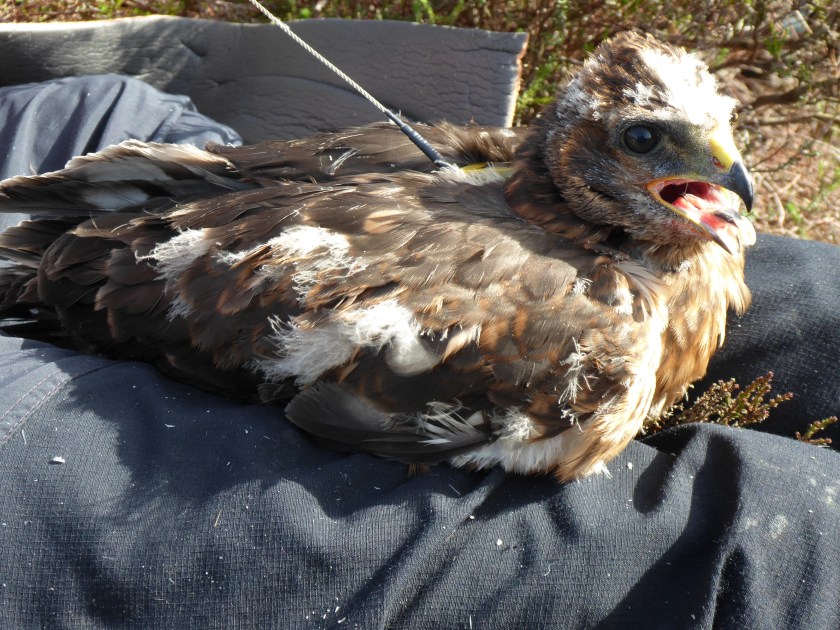
Ada hatched on a nest on the Scottish borders this summer (2019). She was fitted with a lightweight satellite tag as part of the RSPB’s Hen Harrier LIFE project, to learn more about the journeys made by these rare birds of prey and the survival challenges they face.

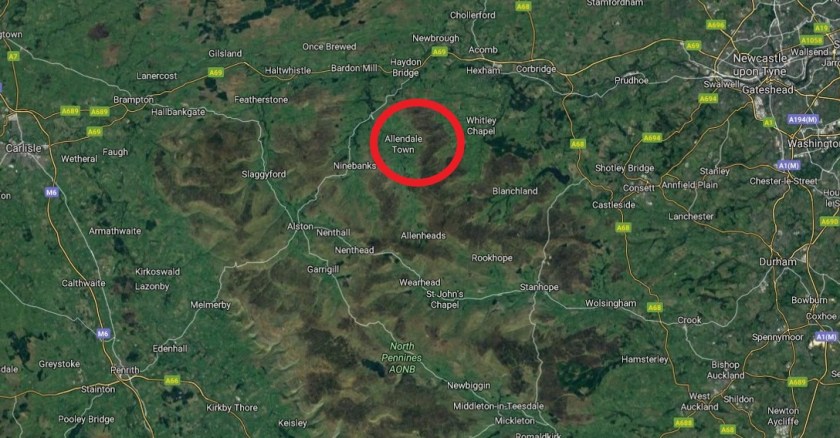
Ada was the first of the chicks tagged this summer to leave her nest and proved to be naturally adventurous. After fledging she flew north, spending some time on a disused golf course near Dunbar, then she headed south to the North Pennines. On the morning of 10 October 2019 she sent her last transmission from an area of grouse moor east of Allendale, Northumberland. Her tag showed no signs of malfunction and there were several satellites passing over, so it was expected to continue to provide data. RSPB staff were in the area at the time the tag would have transmitted, but neither the bird nor her tag could be found nor have been heard from since.

Her disappearance is being treated as suspicious and was reported to the police.

All birds of prey are protected by the Wildlife and Countryside Act 1981. To kill or injure one is a criminal offence and could result in an unlimited fine or up to six months in jail. Yet the evidence shows hen harriers continue to be killed, or disappear in suspicious circumstances, particularly on or near land managed for driven grouse shooting.

Scientific research published in March 2019 showed that 72% of the satellite tagged hen harriers in their study were killed or very likely to have been killed on British grouse moors, and that hen harriers were 10 times more likely to die or disappear over areas of grouse moor relative to other land uses.

Dr Cathleen Thomas, Senior Project Manager for the Hen Harrier LIFE project, said:

“Over 30 chicks were tagged this summer and we’ve watched with interest as they’ve grown up and flown around the country. We’re absolutely gutted that Ada has disappeared in suspicious circumstances at just a few months’ old.”

Emma Marsh, Director for RSPB England, said:

“Hen harriers have become a rare breeding bird across the UK mainly due to illegal persecution by humans. In England, the last population survey recorded only four territorial pairs, despite scientific studies showing enough food and habitat to support over 320 pairs. Our own tagging work has shown that survival of young birds post-fledging is very low. This won’t change until something is done about illegal persecution. The Government’s own data has highlighted a loss of 72% of their tagged birds in suspicious circumstances, and we are calling on them to take vital measures to address this appalling situation.”

The RSPB is calling for the Government to introduce of a system of licensing for driven grouse moors, whereby this license to operate could be taken away should illegal activity be uncovered. We believe that this approach will act as a far greater deterrent than current legislation.

If you have any information relating to this incident, call Northumbria police on 101.

If you find a wild bird of prey which you suspect has been illegally killed, contact RSPB investigations on 01767 680551 or fill in the online form.

ENDS

It looks like Ada has vanished in the North Pennines Area of Outstanding Natural Beauty (AONB):
The tag Ada was carrying is believed to be the same make and model as the other tags deployed by the RSPB on hen harriers (the tag with a known reliability rate of 94%). Technical failures are possible (of course) but are rare (6%), and according to this research “tag failures have always been preceded by irregular transmission periods and, most importantly, a drop in battery voltage (another parameter monitored by the transmitter). This makes it relatively straightforward to distinguish between a likely mortality event and a likely transmitter failure”.

The hen harrier tags deployed by the RSPB are completely different to the new and untested tags that were deployed by Natural England on some of this year’s brood meddled hen harriers; tags that are known to have a high failure rate.

Public talk: southern reintroduction hen harrier project

Somerset Wildlife Trust is hosting a public talk on Natural England’s proposed southern reintroduction of hen harriers.

This controversial plan is part of DEFRA’s ludicrous Hen Harrier InAction Plan and is due to begin in 2020 with birds donated from Spain being reintroduced to Wiltshire (more on these details in due course – we’re currently reviewing some FoI docs).

The talk is on Tues 11th February 2020 (7.30-9.30pm) at the Parish Rooms in Somerton, where Flemming Ulf-Hansen from Natural England will ‘explain what has been involved’.

£3 on the door for members, £4 for non-members, under 16s free.

We’ve blogged extensively about the southern reintroduction project for the last three years. Here are the links for those who’d like to do some background reading:

28 Nov 2016 – Hen Harrier reintroduction to southern England: an update (here)

3 Jan 2017 – Hen harrier reintroduction to southern England: the feasibility/scoping report (here)

8 Jan 2017 – Hen harrier reintroduction to southern England: the project group and their timeline (here)

9 Jan 2017 – Hen harrier reintroduction to southern England: who’s funding it? (here)

9 Jan 2017 – Hen harrier reintroduction to southern England: a bonkers proposal for Exmoor National Park (here)

12 Jan 2017 – Hen harrier reintroduction to southern England: Wiltshire (here)

14 Feb 2017: Leaked email reveals Natural England’s views on Hen Harrier Action Plan (here)

23 Feb 2017: Hen harrier reintroduction to southern England: donor countries (here)

19 July 2017: Hen harrier reintroduction to southern England: new project manager appointed (here)

20 July 2017: Hen harrier reintroduction to southern England: Dartmoor as potential new release site (here)

20 July 2017: Hen harrier reintroduction to southern England: revised costs (here)

21 July 2017: Hen harrier reintroduction to southern England: project team vists France (here)

27 July 2017: RSPB statement on hen harrier reintroduction to southern England (here)

15 Aug 2017: Natural England Board making up justification for hen harrier southern reintroduction (here)

24 October 2017: Hen harrier reintroduction to southern England: Natural England delays release of information (here)

11 December 2017: Hen harrier reintroduction to southern England: report of fieldtrip to France (potential donor country) (here)

12 December 2017: 2018 start date for reintroduction of hen harrier to southern England? (here)

14 January 2018: Stop illegal persecution then no need for reintroduction of hen harrier to southern England, says DEFRA Minister (here)

13 March 2018: Hen harrier reintroduction to southern England: has France said “Non”? (here)

28 Feb 2019: Satellite-tagged hen harrier ‘Vulcan’ disappears nr proposed reintroduction site in southern England (here)

10 March 2019: Hen harrier reintroduction to southern England: Natural England suggests persecution not an issue (here)


Live firing range chosen as release site for brood meddled hen harriers

Earlier this week we blogged about Natural England’s decision to fit the brood meddled hen harrier chicks with ‘untested’ satellite tags and how some of those tags were not functioning reliably in the weeks following the birds’ release (see here). As three of those hen harriers have since been reported as ‘missing’ it is impossible to assess whether they’ve been killed by criminal gamekeepers on grouse moors, as so many have previously, or whether the birds are actually fine, they’re just carrying faulty tags.

The brood meddling fiasco doesn’t end there.

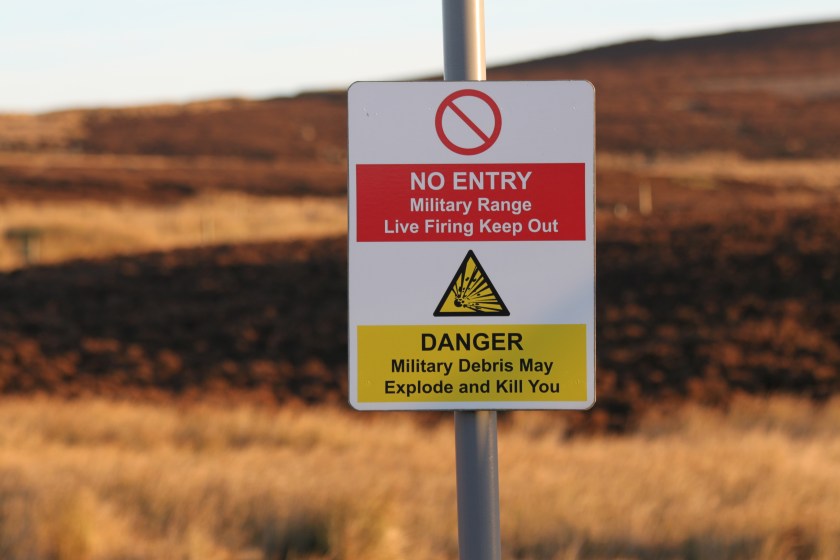
It turns out that as late as June this year, Natural England and its panel of ‘experts’ on the brood meddling project management team had decided that a live firing range on Ministry of Defence land would be a great place to release the brood meddled hen harriers.

Yep, genius. What could possibly go wrong?

[Live firing range on MOD land in Yorkshire. Photo by Ruth Tingay]

Perhaps the team thought it would provide acclimatisation for the young harriers – get them used to the sound of gunshot….

Actually, we know that this live firing range was only chosen because no private grouse moor owner had stepped forward to host the five brood meddled chicks (er, even though we’ve been repeatedly told that by removing hen harriers as part of a brood meddling scheme grouse moor owners’ attitudes towards hen harriers would soften and instead of killing them they’d welcome them with open arms).

How desperate do you have to be to think releasing young hen harriers on a live firing range would be a good idea, just to save face that no grouse moor owners wanted the birds?

Mark Avery blogged about this live firing range in September as he published an email from the scientific committee chair (Prof Ken Norris) who was expressing his concerns about the site.

We now know that the live firing range wasn’t actually used as the release site – at the last minute an enlightened estate (Castle Bolton Estate) stepped in and offered to host the five young harriers – but it’s worth viewing the process and conversations of the brood meddling project management team to understand what a joke this trial is.

The live firing range was agreed as a release site during a project team phone call on 3rd June:

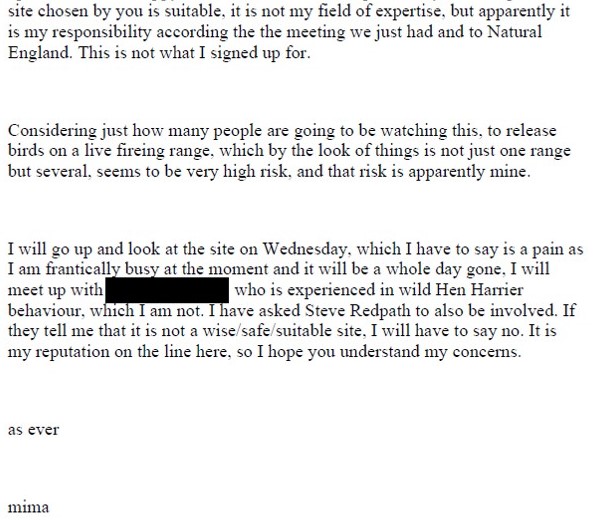
Jemima Parry Jones, a member of the project team and the person responsible for the captive rearing stage of the brood meddling trial, was the first (and only?) member of the team to raise concerns about releasing the birds on to a live firing range as she was worried about her reputation if it all went wrong:

Amanda Anderson’s response to these concerns:

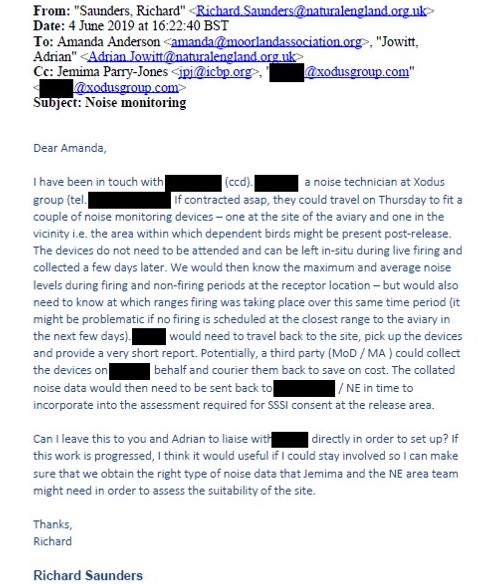
On the same day, Richard Saunders (NE’s Principal Advisor) sent around this email discussing the possibility of conducting noise monitoring at the live firing range in an attempt to appease Parry Jones’s concerns:

At some point between 4th and 24th June, the idea of releasing the brood meddled hen harriers on to a live firing range had been abandoned (the FoI response we got from Natural England omitted any detail about the decision-making) and Castle Bolton Estate had stepped forward to play host:

The rest, as they say, is history. The five brood meddled hen harriers were successfully released and then three of them vanished in September and the other two have left the country.

Decision on next Hen Harrier brood meddling licence to ‘take into account the results to date’

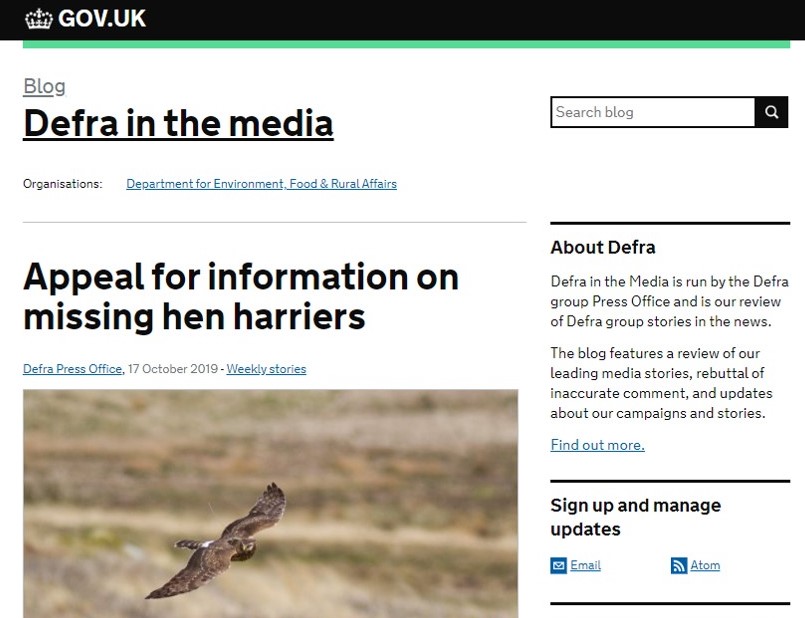
Yesterday, before the news that a fourth satellite-tagged hen harrier had vanished in suspicious circumstances this autumn (see here), DEFRA published the following blog:

We’re still waiting to learn from Natural England what, exactly, is the exit strategy for the hen harrier brood meddling trial and specifically, what are the criteria for making that decision?

Well what a relief to learn that the decision on whether to renew the hen harrier brood meddling licence ‘will take into account the results to date‘.

Those ‘results’ will be the suspicious disappearance of three of this year’s five brood meddled hen harriers (we understand the two surviving brood meddled birds have flown off to France) plus the suspicious disappearance of at least one other satellite-tagged hen harrier (Rosie) in recent weeks and there’s absolutely no doubt there’ll be more before this year is out.

The decision whether to renew or not should be easy and it should already have been made. Nobody in their right mind can think that brood meddling has (a) been successful and (b) is in any way helping hen harrier conservation.

But then look at that last paragraph in the DEFRA blog, above. It claims that the ‘ultimate aim’ of the DEFRA Hen Harrier (In)Action Plan, of which brood meddling is a part, is to ‘reduce hen harrier predation of grouse chicks on driven grouse moors……’

Eh?

Why is a Government department (DEFRA) and the statutory conservation agency (Natural England) focusing on protecting excessive numbers of red grouse (that are going to be shot for fun) at the expense of a protected red-listed bird of prey in population free-fall due to illegal killing on aforementioned grouse moors?

3rd brood meddled hen harrier ‘disappears’ in suspicious circumstances

Following the news that two of this year’s five brood meddled hen harriers had ‘vanished’ on grouse moors in the north of England in September 2019 (one in County Durham here and one in the Yorkshire Dales National Park here), we now learn that a third harrier has disappeared, also in the Yorkshire Dales National Park.

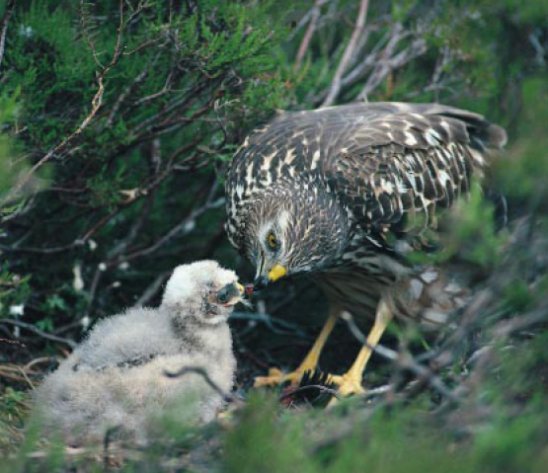
[Hen harrier photo by Laurie Campbell]

Here’s the press release from North Yorkshire Police, published today:

Second satellite-tagged hen harrier goes missing in North Yorkshire

Police appealing for information about whereabouts of hen harrier

North Yorkshire Police is appealing for information after another satellite-tagged hen harrier has gone missing in the region just weeks after another one also stopped transmitting a signal.

The hen harrier is a young female bird tagged at the release site in the Yorkshire Dales on 30 July 2019 as part of the hen harrier brood management scheme. The bird has not been named and is known to the Natural England monitoring team as 183703.

It is known from satellite tag data that the bird had the bird stayed in the Hawes area since her release, with one excursion to the Sedbergh area on 16 September, then south to the West Pennine Moors near Horwich 17-19 September before returning to land near Semerwater where she had remained for at least a fortnight.

The last transmission from the bird’s satellite tag was received on the 29 September on Thornton Rust moor, 3.37km east of Semerwater, but the bird could have flown on for some distance since the last transmission.

Since then no further transmissions have been received from the tag. Natural England field staff have carried out checks with a hand-held scanner and monitored the area with no findings and North Yorkshire Police have also searched the area with colleagues from the Yorkshire Dales National Park Ranger team, as well as making extensive local enquiries.

The bird is a juvenile female, brown in colour and ringed with the BTO ring number FJ48404.

This appeal for information sadly follows the disappearance of another satellite-tagged hen harrier in the area, this one a juvenile male known as 183704 who was last known to be in the area of Askrigg Common on 19 September.

At this time North Yorkshire Police are keen to locate both birds safe and well, but if found deceased the birds can be subject to post mortem to establish if the cause of death was from natural causes or if criminal activity was involved.

If you find the bird or have any information please contact North Yorkshire Police on 101 and quote reference number 12190186540.

ENDS

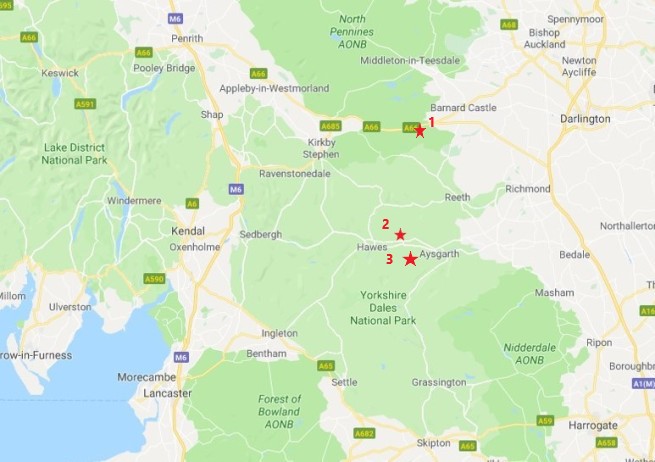
Here is an RPUK map showing the approximate last known locations of the three brood meddled satellite-tagged hen harriers that have ‘disappeared’ this year: 1 = the HH that vanished on 9th September; 2 = the HH that vanished on 19th September; 3 = the HH that vanished on 29th September:

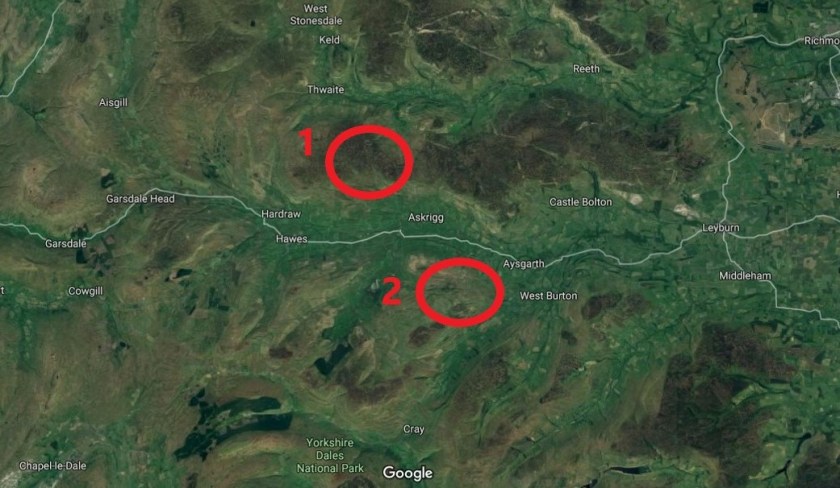
Here is an RPUK map showing the approximate last known locations of the two brood meddled hen harriers that have disappeared on moors in the Yorkshire Dales National Park:

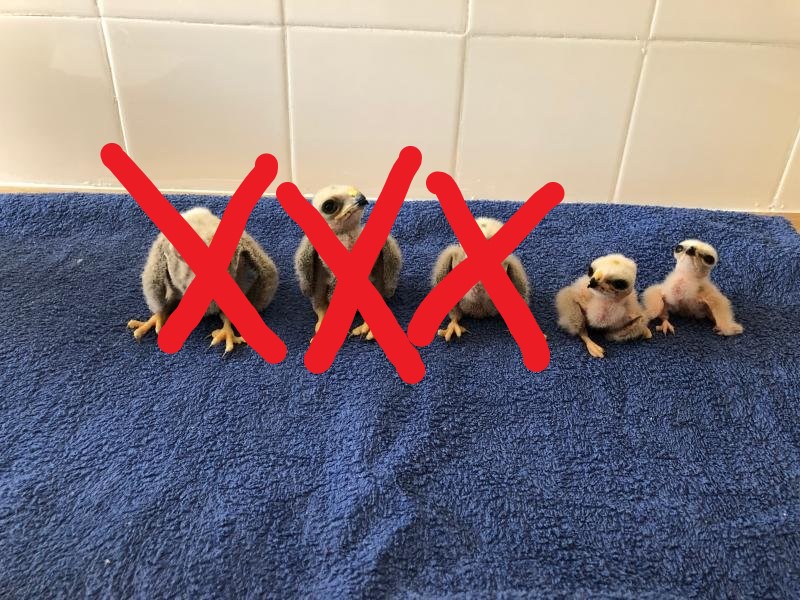
So within weeks of those five brood meddled hen harriers being released back in to the uplands of northern England, three of them (60%) have disappeared without a trace.

This isn’t unusual nor is it unexpected – we know from authoritative research published earlier this year that 72% of young satellite-tagged hen harriers will disappear in suspicious circumstances on grouse moors in northern England, probably having been killed illegally.

What this is, though, is a bloody joke. This brood meddling ‘trial’, sanctioned by DEFRA and carried out by Natural England, in cahoots with the very industry responsible for the species’ catastrophic decline in England, is supposed to test whether those people responsible for killing hen harriers illegally would stop if the chicks were brood meddled (removed from the grouse moor in June at the critical grouse-rearing stage and then returned to the wild in August). We all knew this wouldn’t work because we know that young hen harriers are killed routinely during the grouse shooting season, and especially in September and October and yet still DEFRA, Natural England and their grouse shooting mates pressed ahead.

No doubt we’ll now have to endure more bollocks from Natural England, DEFRA, the Moorland Association and all the rest of the persecution deniers, pretending that nothing’s going on, everything’s fine and isn’t the grouse shooting industry doing great things for conservation.

What we will be doing is asking Natural England, again, what its exit strategy is for the hen harrier brood meddling trial and when will it implement it? We’ve asked several times, including at direct face to face meetings with senior staff, most recently last week. We were promised an answer – we haven’t had it yet.

Well done and thank you, North Yorkshire Police, for publishing a relatively swift appeal for information and for including enough detail to make it useful. And also for not including any grouse shooting propaganda in the appeal this time, in contrast to a previous appeal for info.

Buzzard shot dead in North Yorkshire

Appeal for information from North Yorkshire Police (11 October 2019):

APPEAL FOR INFORMATION AFTER BUZZARD FOUND SHOT NEAR SHERBURN IN ELMET

North Yorkshire Police is appealing for information after a dead buzzard was found by a member of the public at 11.45am on 3 October on a footpath close to Hagg lane near Sherburn in Elmet.

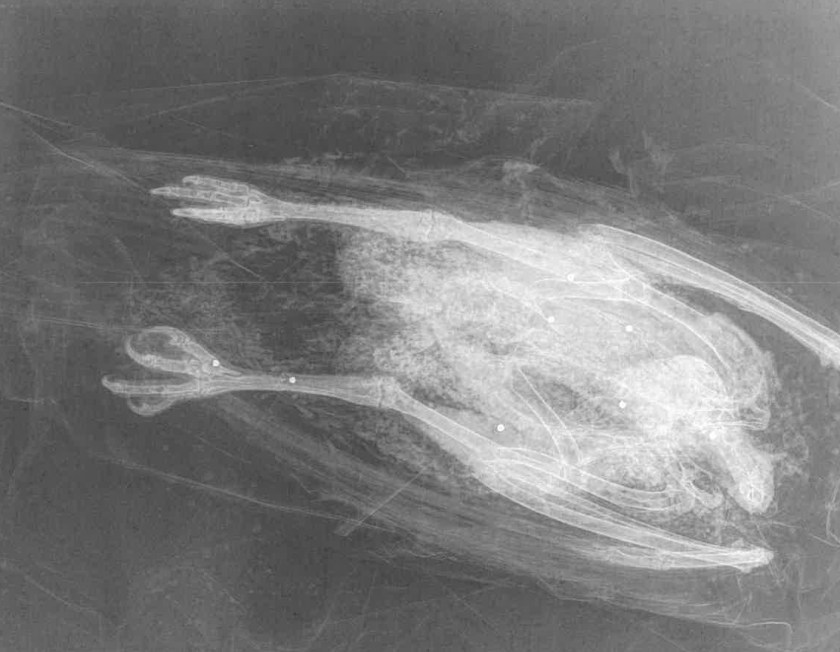
The bird was recovered and taken to a local vets to be x-rayed which revealed it contained what appeared to be eight pieces of shot.

A spokesperson for North Yorkshire Police said: “This is sadly yet another example of the unacceptable bird of prey persecution which blights our region. Killing wild birds is an offence under the Wildlife and Countryside Act and we are committed to putting a stop to this deplorable crime.”

North Yorkshire Police have carried out extensive enquiries in the local area. Officers are appealing for anyone with any information, or who may have witnessed anything taking place in relation to this bird to call 101 quoting ref: 12190183166

ENDS


North Yorkshire Police appeal for info after Marsh Harrier found shot nr Scarborough

North Yorkshire Police have issued the following appeal for information:

Police appeal after an injured marsh harrier was found near Scarborough

8 October 2019

Police are appealing for information after an injured marsh harrier was found near Scarborough.

The bird was found at 4pm on Sunday 18 August 2019 by a member of the public in a stubble field close to the village of Hutton Buscel near Scarborough.

It was taken to local wildlife rehabilitator Jean Thorpe for care, and was subsequently taken to a veterinary practice for examination. The marsh harrier was found to have a broken left wing with a shotgun pellet lodged next to the fracture, which shows the bird had been subjected to persecution.

[Photo from Lower Derwent Valley National Nature Reserve, where it was subsequently released after being helped by Jean Thorpe and veterinary specialists at Battle Flatts Veterinary Clinic]

A spokesperson for North Yorkshire Police said: “Sadly, North Yorkshire is the UK’s worst hotspot for confirmed cases of bird of prey persecution. This magnificent bird has been very fortunate to survive, largely thanks to the dedication and care given by Jean Thorpe, but is yet another example of a wildlife crime having taken place against our birds of prey.”

North Yorkshire Police have carried out extensive enquiries in the Hutton Buscel area. Officers are appealing for anyone with any information, or who may have witnessed anything taking place in relation to this bird, to contact PC Mark Atkinson at Malton Police Station by dialling 101, quoting reference number 12190155625.

ENDS

We believe this Marsh harrier is the one we blogged about on 18 September 2019 (here), having been found injured on a game-shooting estate near Scarborough in August, rescued, rehabbed and then released.

It’s not the first time a Marsh harrier has been found targeted on a game-shooting estate in Yorkshire. This one was found with shotgun injuries next to a partridge release pen on an East Yorkshire sporting estate in 2016 and this breeding pair was shot at and had their eggs removed by men dressed as gamekeepers on a grouse moor in North Yorkshire in 2017.

In 2017/2018 Amanda Anderson (Moorland Association) denied that her members were interested in obtaining licences permitting them to kill Marsh harriers but several witnesses said otherwise.

Legal challenge against hen harrier brood meddling goes back to court

Fantastic news!

Mark Avery is going back to the Royal Courts of Justice in London after being given permission by the Appeal Court to challenge an earlier court decision that hen harrier brood meddling is legal.

[Back to the High Court for Mark and his brilliant legal team. Photo by Ruth Tingay]

The RSPB has also been given permission to appeal.

As Mark explains on his blog today (here), details of the exact grounds for an appeal have not yet been given, nor has a court date, although according to this public notice record it should be before 6th July 2020!

I wonder how many more brood meddled hen harrier chicks will have vanished in suspicious circumstances by then? Two of them disappeared within weeks of being released from captivity back in to the uplands this year: one on a grouse moor in County Durham on 9th Sept (here) and one ten days later on a grouse moor in the Yorkshire Dales National Park on 19 Sept (here).

We don’t know what’s happened to either of them, although an informed and educated guess would suggest they’ve both been illegally killed, exposing the sheer stupidity and futility of the brood meddling scheme.

Well done Mark and the RSPB for continuing the fight.

2nd brood meddled hen harrier chick vanished from grouse moor in Yorkshire Dales National Park

Following earlier blogs about the two ‘missing’ brood meddled hen harriers (here), one of which vanished on a grouse moor in County Durham on 9th September 2019 (here), further detail has now emerged about the loss of the second harrier.

Here’s a press statement published this afternoon by North Yorkshire Police:

Appeal for information about a missing satellite-tagged hen harrier

Police are appealing for information about a missing satellite-tagged hen harrier.

The young male bird was tagged at its release site in the Yorkshire Dales on 30 July 2019, as part of the hen harrier brood management scheme. The bird had not been named, but is known to the Natural England monitoring team as 183704.

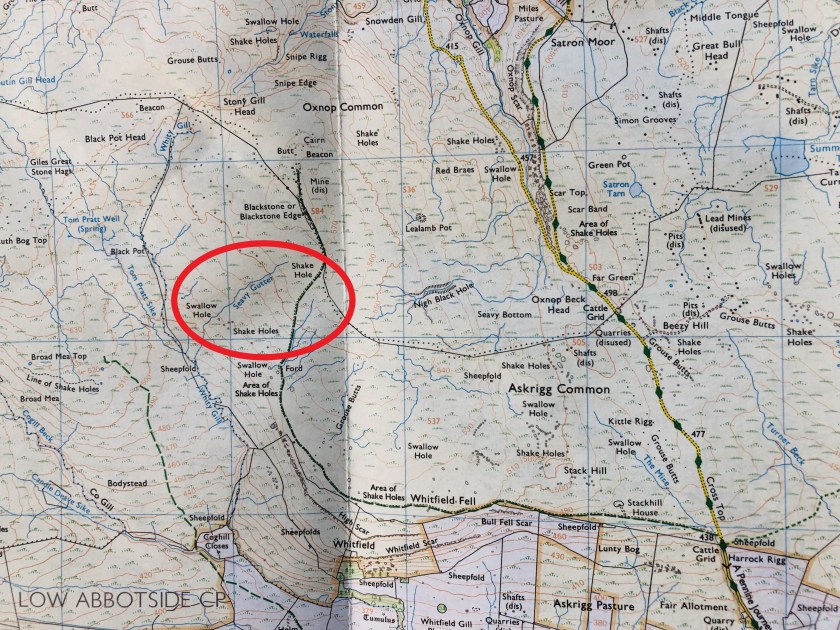
It is known from satellite tag data that the bird had recently spent a few days in the Forest of Bowland in Lancashire. On the morning of 19 September it had spent time near Thirlmere in the Lake District, before passing through the Mallerstang Common area in the afternoon. At 6.03pm that same evening the last transmission from the tag was received in the Seavy Gutter area of Askrigg Common, but the bird could have flown on for some distance since the last transmission.

Since then no further transmissions have been received from the tag. Natural England field staff have carried out checks with a hand-held scanner and monitored known roost sites, but the bird has not been found.

North Yorkshire Police have carried out two searches, the first being an initial search in the area of the last known transmission, and the second being a more extensive search covering several square kilometres, along with local enquiries. There have been no further sightings of the harrier or transmissions from the tag. Farmers, land owners and gamekeepers in the area have given both Natural England and North Yorkshire Police full cooperation with the search.

The bird is a juvenile male and will still be brown in colour. The bird was ringed and will bear the BTO ring number EA54306.

At this time North Yorkshire Police are keen to locate the bird safe and well, but if found deceased the bird can be subject to post mortem to establish if the cause of death was from natural causes or predation, or if criminal activity was involved.

If you find the bird or have any information please contact North Yorkshire Police on 101 and quote reference number 12190177425.

ENDS

At least this police press release doesn’t include a ridiculously glowing estate testimonial (unlike this one) but what’s all this about ‘Farmers, land owners and gamekeepers in the area have given both Natural England and North Yorkshire Police full cooperation with the search‘? So what? Why is that information included? When do you ever see this type of information in any other police appeal for information?

‘Police are investigating a burglary at 123 Letsbe Avenue and the homeowner has given full cooperation with the investigation’.

‘Police are investigating an assault on a dog walker in Dodge Country Park and the park rangers have given full cooperation with the investigation’.

The police (and Natural England and DEFRA for that matter) need to stop pandering to the game shooting industry, which is well known to harbour a criminal element, and just report on the facts of the case.

That gripe aside, this is a decent press statement from North Yorkshire Police and provides useful detail about the date of the tag’s last known transmission and the location. That another satellite-tagged hen harrier has vanished in suspicious circumstances on a grouse moor in the Yorkshire Dales National Park will come as no surprise to anybody. This National Park is a dark pit of persecution for most birds of prey that dare to fly there.

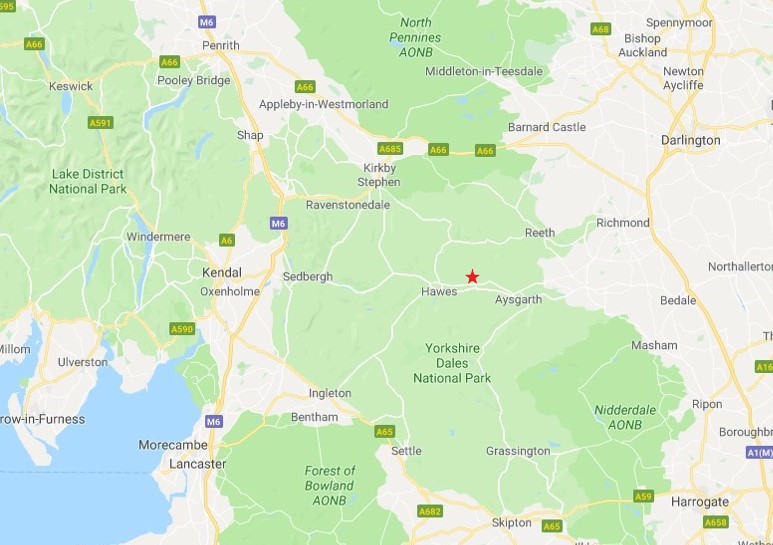
Askrigg Common is marked with a red star on this map:

The Seavy Gutter area of Askrigg Common is circled:

At least part of Askrigg Common is used for driven grouse shooting and the shooting rights appear to be owned by the neighbouring Gunnerside Estate, who in 2015 applied for planning permission for a beaters lunch hut, claiming amongst other things that this building would be in the ‘public interest through the economic and social benefits associated with the shooting activities run by the Estate‘! See: Planning consent Gunnerside lunch hut 2016

As ever, with no hen harrier corpse and no tag, it is impossible for this bird’s disappearance to even be recorded formally as a crime, even though the Government’s very own commissioned research has shown that the 72% of young satellite tagged hen harriers that have vanished in suspicious circumstances are most likely to have been illegally killed on grouse moors.

This is the pitiful state of hen harrier conservation in the UK in 2019.

Another police training event for tackling illegal raptor persecution

This seems timely given the news that one of the brood meddled hen harriers vanished in suspicious circumstances on a grouse moor in County Durham earlier in September.

From the Teesdale Mercury, 7 Oct 2019:

Fighting raptor crime soars to new heights

A CONSERVATION organisation and the police have joined forces to protect birds of prey.

The North Pennines Area of Outstanding Natural Beauty (AONB) Partnership worked with Durham Constabulary to co-host a training event aimed at raising awareness of crimes against the birds.

More than 20 officers from Durham, Northumbria, Cumbria and North Yorkshire forces attended the event.

They heard presentations from the AONB Partnership, the Northern England Raptor Forum, the RSPB investigations team and North Yorkshire Police’s Rural Task Force.

Officers learned how to recognise raptor crime, including illegal trapping, nest disturbance, poisoning or shooting wild birds.

Chris Woodley-Stewart, director of the North Pennines AONB Partnership, said: “It is important to give police officers the knowledge and confidence to deal with raptor crimes.

“Some parts of the North Pennines AONB have become something of a hotspot for this type of crime in the last ten years.

“Raising awareness among police officers and the public is an important step in stamping this out.”

Insp Ed Turner, from Teesdale Police, said: “This was a great opportunity to share experiences and knowledge across the policing teams and partners that cover the northern Pennines.”

The event was supported by staff from Raby Estate who led a field visit to train officers on recognising illegal and legal traps.

John Wallis, Durham estates manager for Raby Estates, said: “We were only too pleased to support this initiative. Partnership working and closer collaboration will be vital if we are to overcome wildlife crime and other challenges in the northern uplands.”

This training was part of Operation Owl, the national police operation against raptor crime.

Supt Nick Lyall, the chairwoman [?!] of the England and Wales Raptor Persecution Priority Delivery Group, a body set up by Defra to tackle the illegal persecution of birds of prey, said: “The ongoing persecution of our birds of prey is an issue that I am delighted partners are supporting me to address it.”

ENDS