Buzzard shot & injured: Humberside Police appeal for info

Humberside Police press release (12 September 2019)

WILDLIFE CRIME: BUZZARD SHOT AND INJURED – APPEAL FOR INFORMATION

East Riding of Yorkshire

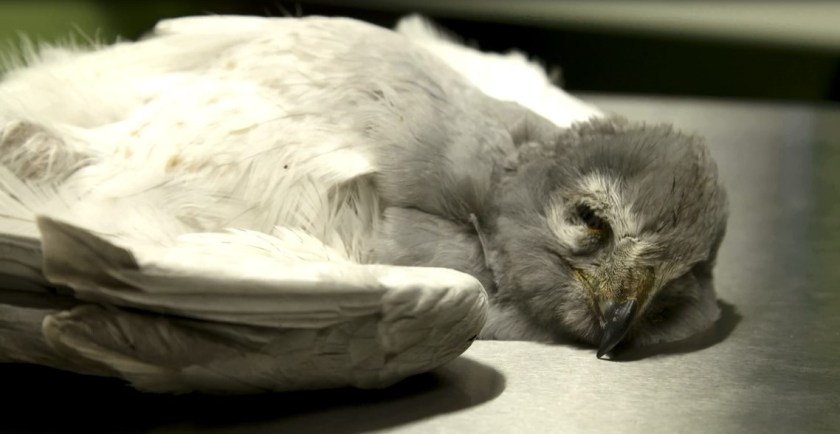
We are appealing for information in relation to the shooting of a female buzzard.

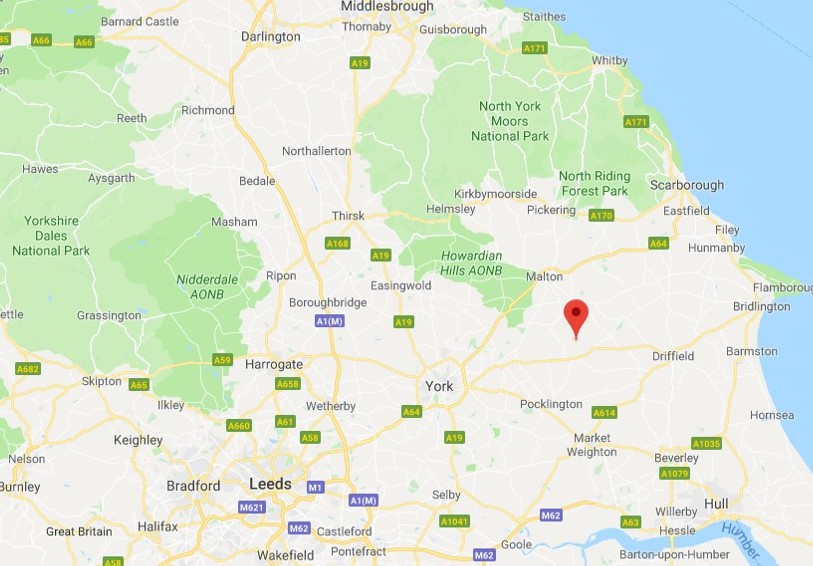
On the 16 August the bird was found injured on the B1246 between Kilnwick Percy Hill top and Warter village near Pocklington in the East Riding of Yorkshire.

The bird was still alive and when x-rayed was found to have two shotgun pellets within its body. The injuries were fresh indicating that the bird had been recently shot.

Fortunately the injuries were such that the bird has been nursed back to good health and has now been released. The exact location of where the shooting of this bird took place is not confirmed. What is known is that the bird had been shot on or close to the date it was found (16 August).

Buzzards and other birds of prey are protected from persecution by Section One of the Wildlife & Countryside Act 1981 which makes it an offence to intentionally kill, injure such a bird. The penalty for these offences are a term of six months imprisonment and or an unlimited fine.

Chief Inspector Paul Butler the wildlife & rural crime lead for Humberside Police said, “This type of criminal behaviour towards our birds of prey sadly continues. This is now the sixth confirmed persecution incident involving seven birds of prey in the last two years across our force area.

The persecution of birds of prey is a national wildlife crime priority and Humberside Police takes this issue very seriously.

We have now adopted Operation Owl which is a national initiative to raise awareness of the problem and to tackle and prevent this type of criminality.

A large number of our wildlife crime officers have also received specific training in identifying and dealing with these offences.

I would encourage anyone with information about anyone involved in this type of offence in our area to come forward with this information which will be treated in confidence

If you have any information which could assist the investigation of the above incident please contact PC 1708 Ward on 101 quoting investigation number 16/100243/19.

ENDS

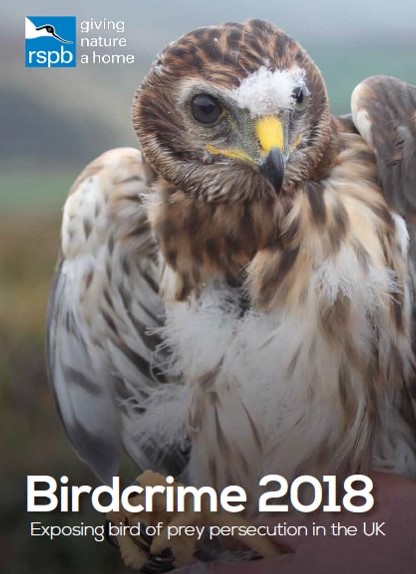
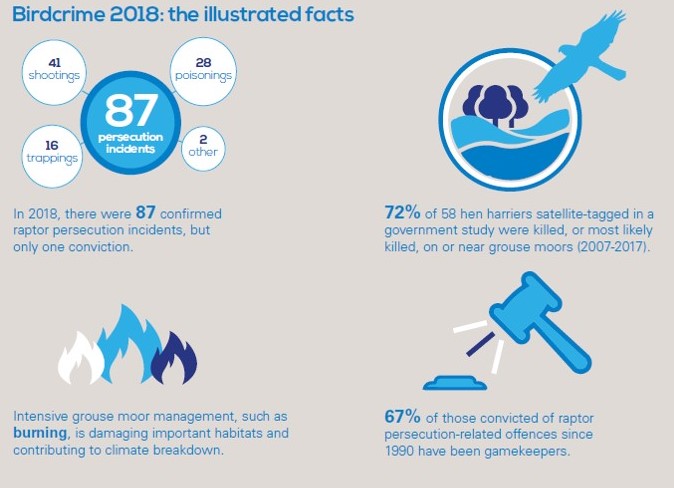
RSPB’s 2018 Birdcrime report documents relentless raptor persecution on grouse moors

The RSPB has published its latest annual report Birdcrime, documenting known cases of illegal raptor persecution in the UK in 2018. [Follow this link to find the report and additional information]

As ever, it’s grim reading and also as ever, the figures represent an unknown percentage of the actual number of birds that have been illegally killed. We know there are many, many more as these figures don’t include all the satellite-tagged raptors that have been killed and their corpses and tags destroyed to remove any trace evidence.

On the back of the report, the RSPB is calling for three things, quoted as follows:

  • The licensing of driven grouse moors.
    The RSPB believes that the right to shoot should be dependent on legal, sustainable management. Grouse shooting licenses could then be removed if illegal activity is identified, which would act as a deterrent. Law-abiding estates should have nothing to fear from this.
  • A review of grouse shooting.
    An industry that relies on criminal, unsustainable and environmentally damaging practices should not be allowed to continue operating as it currently is. In Scotland, the government has launched a review of grouse moor management and the RSPB would like to see a similar review in the rest of the UK.
  • Transparency, not secrecy: the public have a right to know.
    It is a concern that, particularly in Scotland, some raptor persecution incidents are not made public for many months, or even years, despite the release of such information posing no threat to the integrity of an investigation. The public has a right to know if criminal activity is taking place on their doorstep, especially when, as with poisoning incidents, this poses a risk to public health.

To be perfectly honest, the call for the licensing of driven grouse moors is too little, too late. For many of us the tipping point has now been reached following the recent reports of some truly sadistic and brazen persecution crimes, for example this hen harrier that was caught in an illegally-set spring trap next to his nest on a grouse moor at Leadhills. His leg was almost severed and despite the best efforts of a world-class veterinary specialist, this poor bird didn’t make it.

A licensing system isn’t going to stop the disgusting filthy criminals responsible for this – it’ll be impossible to enforce, just as wildlife protection laws are notoriously difficult to enforce right now. An outright ban on driven grouse shooting will remove the incentive for these crimes, and that’s what we’re calling for. 80,000 people agree (they’ve signed since the petition was launched two weeks ago) but we need 100,000 signatures before Parliament is suspended, as looks likely to happen in a couple of weeks. Please help reach the target and sign the petition here.

The RSPB’s call for a review of grouse shooting is also too little, too late. What do we need another review for? We’ve got decades worth of scientific evidence and hundreds of raptor corpses to know just how damaging driven grouse moor management is, for wildlife, for the environment and for people. Calling for a Werritty-style review will just add further delay to actually dealing with the issue, as we’re currently seeing in Scotland. Just ban it and be done with it (sign the petition if you agree!).

Calling for transparency, not secrecy, over the publication of raptor crimes is something we do support and we’ve been calling for it for years, particularly in Scotland. It’s very noticeable that yet again, in the 2018 poisoning data, the only police force to withhold the name of the poison that’s been used to illegally kill raptors is Police Scotland. All the other forces involved with poisoning investigations have named the poison used.

Having said that, this year (2019) Police Scotland has been a bit more forthcoming about publicising illegal poisoning crimes (e.g. see here and here) although there is still a reluctance to name the poison. But to be fair, Police Scotland has been doing a better job than other public authorities about alerting the public to the dangers (e.g. see here).

Speaking of Scotland, the Birdcrime report shows that 12 confirmed cases were recorded, more than double that recorded in 2017 (take note, Scottish Land & Estates, before you start falsely claiming otherwise). These cases included a peregrine poisoned in the Pentland Hills, near Edinburgh; a buzzard found to have been shot twice, in South Lanarkshire; a buzzard caught in an illegal trap, in Inverness-shire; and a hen harrier caught in a spring trap in Perthshire. All of these incidents occurred on, or close to, land being managed intensively for driven grouse shooting.

And guess what? Not a single one of them has led to a prosecution. Nor has SNH issued a single General Licence restriction order in response to these clear crimes. Even more evidence, as if it were needed, that the Scottish Government, just like the Westminster Government, has no control whatsoever over the rampant raptor-killing savages on many driven grouse moors.

Had enough? SIGN THE PETITION PLEASE.


Police warning as red kite confirmed poisoned in Nidderdale AONB

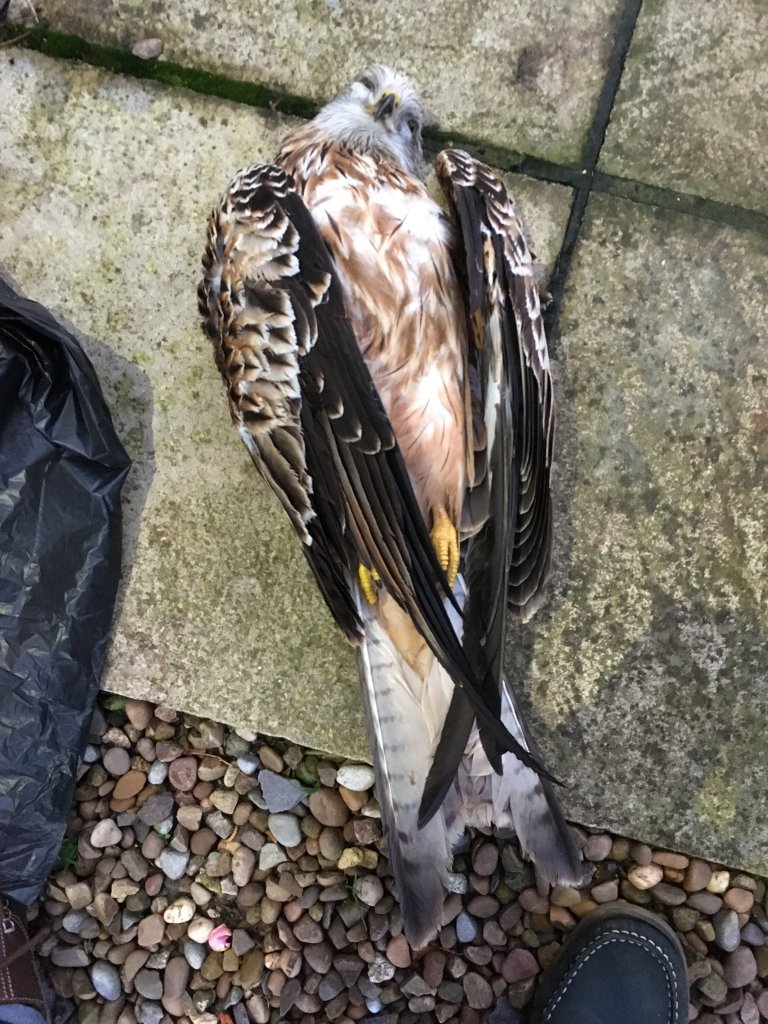
Last October (2018) a dead red kite had been found near Wath, in the Nidderdale Area of Outstanding Natural Beauty (AONB), a notorious raptor persecution black spot.

An x-ray confirmed the kite had been shot and North Yorkshire Police launched an investigation. We blogged about the case here.
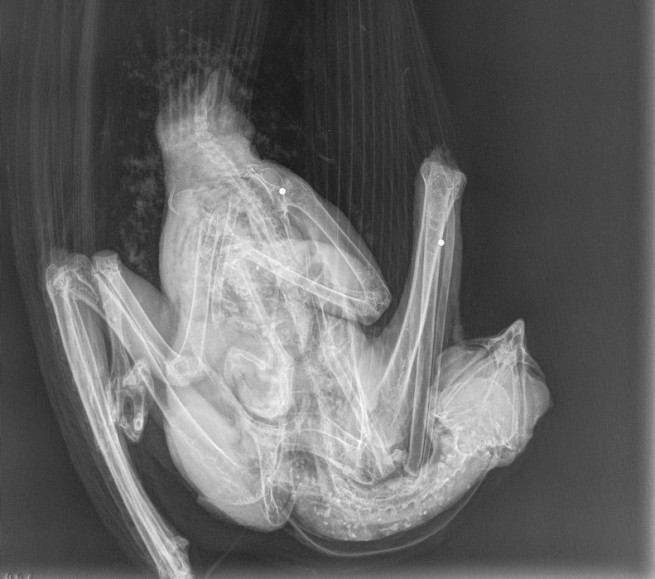
It seems that wasn’t the end of the story. Although the x-ray revealed two pieces of shot, these were not considered to have caused the kite’s death so it was sent off for post-mortem and toxicology examination.

The results are now back (10 months on!!) and nobody will be surprised to learn that, like so many other red kites in Nidderdale, this one had not only been shot on two separate occasions, but it had also been poisoned with a concoction of banned pesticides.

North Yorkshire Police has now issued a warning and an appeal for information as follows:

POLICE PESTICIDE WARNING AFTER DEATH OF RED KITE (8 August 2019)

Police have issued a warning about illegal pesticides, after a post-mortem concluded a red kite died as a result of pesticide abuse.

At the end of October 2018 a red kite was found dead in Nidderdale. The finder in this case was the landowner, who was concerned that criminal activity may have taken place on his land.

North Yorkshire Police arranged for the bird to be x-rayed, and this showed there were two pieces of shot in the bird. However, it was not possible to say whether these had caused fatal injuries. Police released details of the incident, and appealed for information from the public.

Officers have now completed their enquiries. The dead bird was subjected to a post mortem, which concluded that the injury caused by one piece of shot was old and had healed. The damage caused by the second piece was recent but was not a fatal injury.

The bird was then submitted to the Wildlife Incident Investigation Scheme, which is administered by Natural England. It was subjected to toxicological tests which found several poisons in the bird. The largest quantity of poison was a substance called bendiocarb, a pesticide which is licenced [sic] for use in the UK. Smaller amounts of two other pesticides, isofenphos and carbofuran, which are both illegal in the UK, were also present. The report concluded that the kite had died as a result of the abuse of several pesticides.

At this time, officers have not received any information to help them identify any suspects. Although the investigation has now concluded, anyone with any information about this incident is asked to contact North Yorkshire Police, quoting reference 12180199938.

A spokesperson for North Yorkshire Police said: “The test results suggest that someone not only has access to two illegal poisons, but is also placing them, along with a legal pesticide, into the environment so that a wild bird has been able to consume them. In addition to being poisoned, the bird had also been shot at least twice during its life.”

Red kites have been successfully re-introduced to Yorkshire, having been extinct as a breeding bird in England, and they are now a familiar sight to people in Nidderdale. All birds are protected by law and it is a crime to intentionally kill, injure, or take any wild bird. If anybody has information about persecution of birds of prey, whether by poisoning or shooting, please call North Yorkshire Police on 101.

Anyone misusing pesticides may also be committing a variety of offences. If you come across an object which you believe may be contaminated with a pesticide or other poisons, please do not handle it. Report the situation immediately to the police giving accurate details of location and why you suspect involvement of a poison.

ENDS

There’s an RSPB blog about this case here.

Interesting to note the suggestion that Bendiocarb is a pesticide that is licensed for use in the UK. Not in Scotland it isn’t – it’s one of eight pesticides that are considered so highly toxic that it’s an offence to even have them in your possession, let alone use them (the others are Aldicarb, Alphachloralose, Aluminium phosphide, Carbofuran, Mevinphos, Sodium cyanide and Strychnine).

When an opportunity arose to have these substances banned in England, the then Wildlife Minister Richard Benyon (owner of grouse moor & pheasant shoot) refused to support such a move (see here).

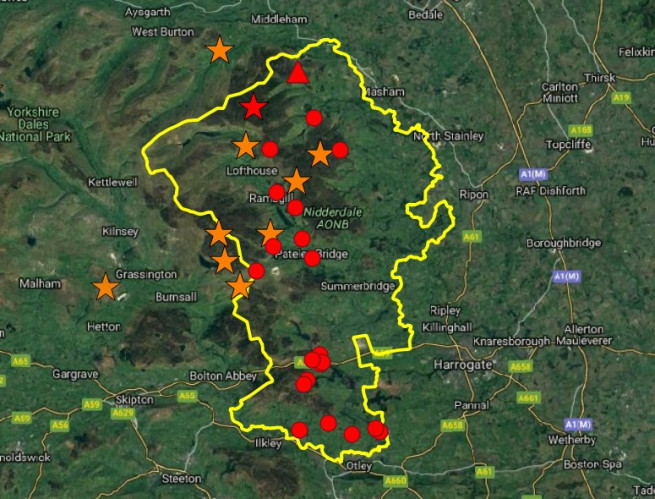
So, here’s yet another red kite victim to add to all the other red kite victims that have been found either poisoned or shot on or close to grouse moors in the Nidderdale AONB, along with all those missing satellite-tagged hen harriers and two shot hen harriers.

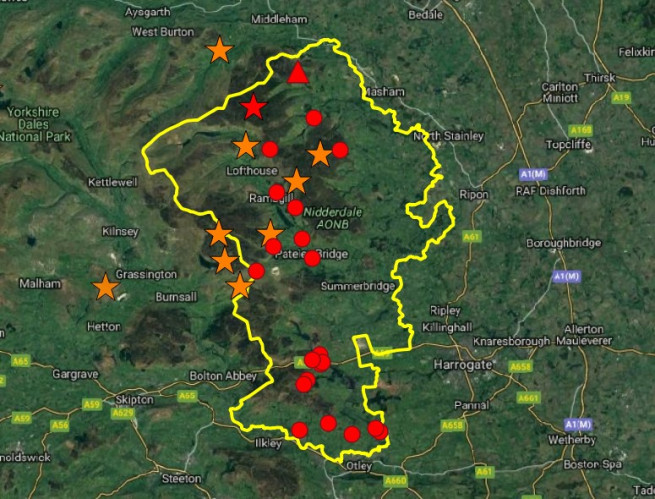
RPUK map showing the boundary of the Nidderdale AONB (yellow line), illegally killed red kites (red dots), missing satellite-tagged hen harriers (orange stars), shot hen harrier Bowland Betty (red star), shot hen harrier River (red triangle).

 

Two ravens shot – police issue CCTV image of man of interest

Statement from Staffordshire Police:

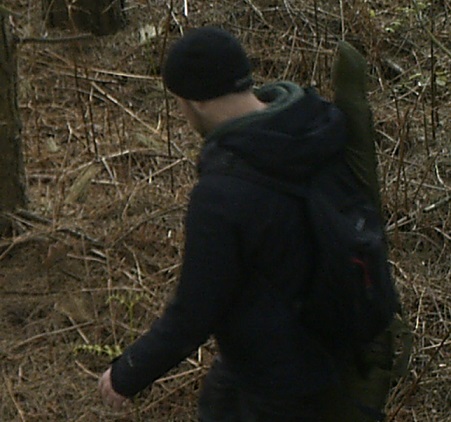
CCTV APPEAL: DO YOU KNOW THIS MAN?

Staffordshire Police’s Rural and Wildlife Crime officers have released a CCTV image of a man they would like to talk to following the discovery of the bodies of two protected birds on Cannock Chase.

The two adult ravens were found at around 11.30am on Sunday 6 May by a passer by. The birds were still warm at the time they were discovered and further examination showed they had been shot.

Anyone who recognises the man in the images or who has any other information is asked to ring 101 quoting incident 298 of 6 May.

Alternatively, for guaranteed anonymity, please call Crimestoppers on 0800 555 111.

ENDS

How to discuss an illegally shot hen harrier, without mentioning that it’s been illegally shot

Yesterday we blogged that a young satellite-tagged hen harrier called ‘River’ had been found dead on a grouse moor on the Swinton Estate in Yorkshire with two pieces of shot in her body (see here).

Surprisingly, the grouse moor owner’s lobby group the Moorland Association has made a statement (more often than not any raptor persecution crimes are simply ignored by this group). Perhaps, with the newly reformed Raptor Persecution Priority Delivery Group (RPPDG), the Moorland Association is feeling under pressure to respond?

However, reading the Moorland Association’s statement is akin to watching a contortionist and wondering how the hell they got themselves in to such a twisted position.

The first we saw of the Moorland Association’s contortion was this, on Twitter, posted by the Moorland Association’s Director, Amanda Anderson, talking about the ‘recent incident in Yorkshire’:

‘The recent incident in Yorkshire’? Good grief. Do you mean ‘the recent illegal shooting of a hen harrier found dead on a Yorkshire grouse moor’, Amanda?

Then we read the actual statement:

Read this statement closely. You will not find the words ‘illegally shot hen harrier’ anywhere. Even the two pieces of lead shot in the bird’s body (as revealed by an x-ray) have been transformed in to “two metallic objects”!

How on earth do you expect an appeal for information about an illegally shot hen harrier to be seen as credible without actually saying it’s been illegally shot?!

There’s also a fascinating claim, attributed to North Yorkshire Police, that the estate has been informed by the police ‘that they are taking the matter no further due to lack of evidence and stressed that there was no suspicion of any wrongdoing by the Swinton Estate or its staff’.

Eh?

Is that an actual statement from North Yorkshire Police, or is it an interpretation by Swinton Estate and/or the Moorland Association? Of course there’s going to be suspicion – how can there possibly not be when an illegally shot hen harrier has been found on the estate?! That doesn’t necessarily mean that anyone at Swinton Estate was responsible for this crime, of course – there is simply no evidence to identify ANYONE as the culprit, especially when we don’t even know where or when the bird was shot – but to say ‘there was no suspicion of any wrongdoing’ seems to be stretching credulity a little bit too far.

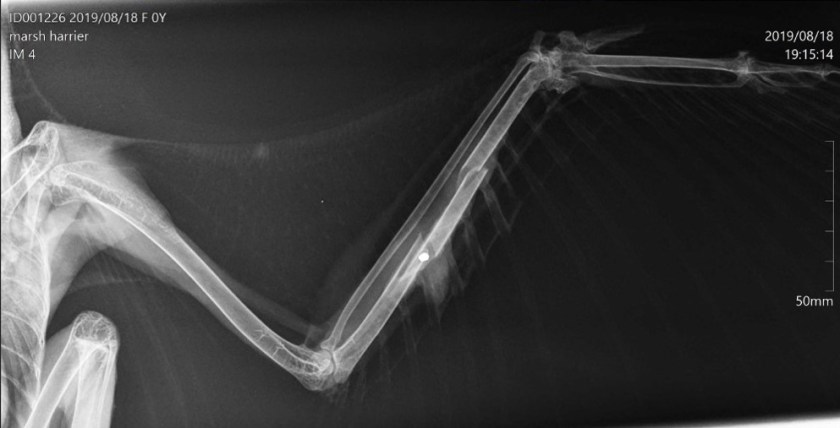
It would be useful to see the x-ray of the dead hen harrier. We’ve been told it showed up two pieces of lead shot but no further detail than that. Had the lead shot smashed the harrier’s wing bones, rendering it unable to fly, then it might suggest the bird was indeed shot close to where its corpse was found. However, had the lead shot simply nicked, say, a leg bone, without breaking or fracturing it, then it would be supportive evidence to a theory that the harrier may have been shot elsewhere and was able to fly several miles before collapsing on this moor. North Yorkshire Police has not published the x-ray as far as we’re aware.

We’re also interested in the claim that the hen harrier’s body was “too decomposed to perform a post mortem“. Really? And who made that decision? Was it a pathologist? If you look at the photograph of the harrier’s body being collected from the moor by North Yorkshire Police, it looks to be in a condition that would permit a post mortem.

And if a post mortem wasn’t carried out, under what circumstances did North Yorkshire Police ‘later retrieve’ one of the two pieces of shot, as mentioned in yesterday’s blog?

There’s a lot about this crime and the subsequent investigation that just doesn’t add up. The situation isn’t helped by the PR contortions of the Moorland Association, whose appalling track record in tackling illegal raptor persecution on grouse moors renders them an organisation with zero integrity or credibility, in our opinion.

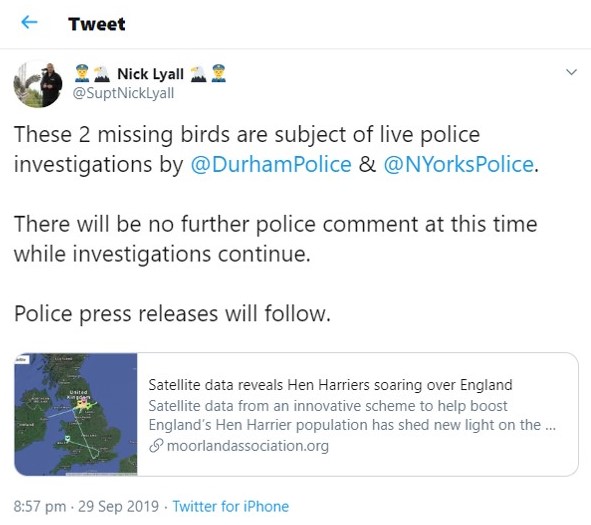
Let’s hope Police Superintendent Nick Lyall can use his position as Chair of the RPPDG to investigate the details of this case and report, as much as he is able, to what is fast becoming a disenchanted and angry public.

Shot hen harrier’s corpse found on Swinton Estate, a grouse moor in North Yorkshire

In January this year, the RSPB reported that a satellite-tagged hen harrier called ‘River’ had disappeared in suspicious circumstances in November 2018 on an unnamed grouse moor in the Nidderdale Area of Outstanding Natural Beauty (AONB) (see here).

This was an area where the day before River ‘disappeared’, the RSPB had filmed an unidentified gunman with two dogs at a known hen harrier roost (see here).

Nothing more was heard from River’s tag until the end of March 2019. What happened next is recounted in an RSPB blog published this afternoon:

SHOT HEN HARRIER FOUND ON NORTH YORKSHIRE GROUSE MOOR

By Mark Thomas, Head of Investigations, RSPB

Another satellite-tagged hen harrier, found dead on a grouse moor in North Yorkshire, has been confirmed as shot.

You may remember River, the young female hen harrier who suddenly disappeared in November 2018 in suspicious circumstances. We wrote about it here. Now, further information has emerged – and it’s not good news.

River was satellite tagged in Lancashire in 2018 as part of the RSPB EU Hen Harrier LIFE project. In November 2018 she sent out her last transmission from a roost location on a driven grouse moor in North Yorkshire, within the Nidderdale Area of Outstanding Natural Beauty. My staff and North Yorkshire Police searched the area but found no trace of the bird or the tag.

Then surprisingly at the end of March 2019, River’s tag gave off another signal confirming that she was dead and giving a precise location. These satellite tags are solar powered, and it’s possible that the bird’s body was disturbed, allowing the tag to ‘wake up’ and get back in touch with us. The longer, brighter days might have had their effect too.

This latest ‘ping’ gave us an exact location of River’s body, and again my staff and the police officers set out to recover her. They found her dead on Ilton Moor on the Swinton Estate on 5 April 2019. She was just 3.7km away from where her last transmission in November had come from, both on the same estate.

[Hen harrier River’s corpse being retrieved from a grouse moor on Swinton Estate. Photo by RSPB]

River’s decomposed body was recovered and taken to be X-rayed by the Police. Yesterday I received confirmation from North Yorkshire Police that her body contained two pieces of shot, one of which had later been retrieved and confirmed as such by the Police.

We don’t know precisely when or where River was shot, or who did it, but clearly she has been the subject of illegal persecution.

All birds of prey are protected by the Wildlife and Countryside Act 1981. To kill or injure one is a criminal offence and could result in an unlimited fine or up to six months in jail. However, hen harriers like River continue to suffer at the hands of people clearly breaking these laws, and clearly undeterred by the consequences.

River is the latest hen harrier to be shot, adding to the evidence that these birds are being routinely illegally killed, often on land being used for driven grouse shooting.

The RSPB is calling for the licensing of driven grouse moors. With just a handful of breeding hen harrier pairs left in England, this is a species with everything to lose if the status quo continues.

If you have any information which might help identify who shot River, or if you know anything about birds of prey being killed in your area, you can contact my team in confidence on our hotline: 0300 999 0101.

ENDS

This news has a certain amount of inevitability about it. A hen harrier has been shot and her corpse has been found on a grouse moor in North Yorkshire.

According to Mark’s blog, River’s corpse was retrieved from the Swinton Estate. Mark quite rightly states that it’s not possible to identify when, exactly, she was shot, or where or by whom. However, River’s demise mirrors that of so many other young satellite-tracked hen harriers – in fact 72% of them according to this recent scientific research.

The Swinton Estate may be a familiar name to some blog readers – it’s where the shot corpse of hen harrier Bowland Betty was discovered in 2012 (see here). Again, it was not possible to identify who had shot her, or where (she may have been shot elsewhere and managed to fly some distance before collapsing and dying on Swinton) and so nobody was charged or prosecuted for killing her.

The Swinton Estate may be a familiar name to other blog readers because we’ve previously reported on an estate gamekeeper who was convicted in 2014 for illegally setting a pole trap, twice, in 2013 (see here). He told the court the pole trap was nothing to do with targeting protected raptor species, but had been set with the intention of catching squirrels. No matter, he was still convicted because, quite rightly, barbaric pole traps have been illegal for decades.

The Swinton Estate name has cropped up in recent weeks as it’s rumoured to be hosting at least two hen harrier breeding attempts, and we believe one of those nests has since been ‘brood meddled’ by Natural England with either the hen harrier eggs or chicks removed and taken in to captivity (see here).

Please note: the location of this brood meddled nest is as yet unconfirmed because Natural England is refusing to publish further details, laughably ‘in the interest of the welfare of the harriers’.

We expect to learn these details later in the year so we’ll certainly be returning to this story. If the brood meddling has taken place on Swinton, we’ll be wanting to know whether Natural England knew about the discovery of River’s shot corpse before the decision to brood meddle was taken.

There’s something else that stood out in Mark’s blog. This statement:

River’s decomposed body was recovered and taken to be X-rayed by the Police. Yesterday I received confirmation from North Yorkshire Police that her body contained two pieces of shot, one of which had later been retrieved and confirmed as such by the Police‘.

Question 1:

Why did it take North Yorkshire Police over three months to notify the RSPB of the x-ray results?

Question 2:

Under what circumstances did North Yorkshire Police ‘later retrieve’ one of the two pieces of shot found in River’s body? WTF?!

There’s something very, very odd going on here.

UPDATE 12 July 2019: How to discuss an illegally shot hen harrier, without mentioning that it’s been illegally shot (here)

Young peregrine found with shotgun injuries in Cheshire

RSPB press release (4 July 2019):

Young peregrine falcon illegally shot

A young peregrine had to be euthanised after it was found with a broken wing and a shotgun pellet in its chest.

The bird was found in the road at Aldford, part of the Grosvenor Estate in Cheshire, on 17 April 2019 and taken to Lower Moss Wood Wildlife Hospital. An X-ray by Northwich Vets confirmed it had a broken wing and piece of shot in its chest.

Knowing it would not recover from its injuries, the vets took the sad decision to put the bird to sleep.

[Photo of the injured peregrine by Ian Daniels]

Peregrine falcons are the world’s fastest birds, able to reach speeds of 200mph when diving for prey. They nest on moorland, on cliffs and increasingly in towns and cities, usually producing two-four chicks each spring. There are thought to be around 1,500 pairs in the UK.

Like all birds of prey, peregrines are protected by the Wildlife and Countryside Act 1981. To kill or injure one is a criminal offence and could result in an unlimited fine or up to six months in jail.

Cheshire police are now appealing to the public for information.

Only a month before, in March 2019, a raven was found shot dead near Delamere Forest, Cheshire. Police investigated the incident but no leads were identified.

Jenny Shelton from the RSPB’s Investigations Unit said: “Most major cities will have their own ‘peregrine pair’, probably nesting on a cathedral spire or another tall building. Our lives and theirs are becoming increasingly entwined, which is a wonderful and very special thing. However there are still some who want to kill these magnificent birds. This young bird, which would have hatched last year so was just shy of its first birthday, was found in considerable distress with a piece of shot in its chest. Naturally, we want to find out who did this.

There is an unseen culture of raptor persecution in the UK, whereby birds like peregrines, ravens and owls are being illegally killed due to a perceived threat to some people’s interests. If you have any information please contact the police on 101, or speak to us in confidence on our raptor crime hotline: 0300 999 0101.”

PC Ged Gigg, Wildlife officer for Cheshire Police said: “Wildlife crime is a priority for us – my colleagues and I are dedicated to investigating crimes that affect our rural communities. I have been making extensive enquiries in the area and would urge anyone who has any information that may help with this investigation to contact police so that we can find those responsible.”

If you have any information relating to this incident, call Cheshire Police on 101 or go to www.cheshire.police.uk/contact/general-enquiries making sure you quote IML 376696.

If you find a wild bird of prey which you suspect has been illegally killed, contact RSPB investigations on 01767 680551 or fill in the online form.

ENDS

No strong evidence to support claim Norfolk Marsh harrier was ‘shot’

Two days ago the Hawk and Owl Trust announced the discovery of what was claimed to be a “shot” Marsh harrier close to the boundary of the Sculthorpe Moor nature reserve near Fakenham, Norfolk.

This story has since been reported in the local press and national media including the BBC website.

However, to be completely honest, the evidence to support this claim is not strong.

The bird was seen and photographed by a member of the public, but they were unable to reach the bird to rescue it. The photograph shows a clear injury to the harrier’s wing.

[Photo of the injured Marsh harrier, from Hawk and Owl Trust]

The member of the public then reported the discovery to reserve staff who went to try and locate the bird but it had gone. The report on the Hawk & Owl Trust website says ‘the vegetation was all broken down with only a few feathers left’.

The incident was then reported to the police.

Sorry, but unless there’s part of this story that is being kept under wraps for investigative purposes, it’s not possible to tell from the photograph whether this Marsh harrier had been shot or whether it was injured from, say, a collision with a fence. An x-ray would have confirmed it, of course, but under the circumstances an x-ray wasn’t an option.

Of course, it’s perfectly feasible that this Marsh harrier had been shot – we know this species is routinely targeted whether it be in the lowlands (e.g. see here and here) or on upland grouse moors (e.g. here), hated so much that the Moorland Association has been asking questions about whether licences to kill Marsh harriers might be available (see here). But on this particular occasion, with this particular harrier, more evidence would be required before this should be recorded as a confirmed shooting.

It’s ironic really. Remember, this is the same Hawk & Owl Trust that refused to acknowledge that its satellite-tagged hen harrier Rowan had been shot, despite a conclusive x-ray showing the bird’s shattered leg and, er, fragments of shot:

More innocent victims caught in traps set on grouse moors

This morning we received the following images from a blog reader showing a young Dipper that had been crushed to death inside a spring trap set across a stream on the Leadhills (Hopetoun) Estate, a grouse shooting estate in South Lanarkshire.

This particular trap looks to be legally-set to catch species such as stoats and weasels. Although there are strong ethical and welfare concerns about the use of these traps to kill these species (and especially the complete lack of monitoring and reporting) what has happened here is perfectly legal. As per the regulations, the trap is covered by an artificial tunnel and the entry holes at both ends have been restricted to reduce the opportunity for non-target species to enter the tunnel and be caught in the trap.

Clearly, the entrances were insufficiently restricted to prevent this bird entering and being killed, but that is in no way a reflection of bad practice by the estate – the trap operator has followed the rules.

There is no legal requirement for grouse shooting estates to monitor, record or report these deaths. The Scottish Government and its statutory conservation advisory agency (SNH) has no clue about how many of these deaths take place on grouse moors each day/week/month/year.

We’ve blogged about this issue many times before. Sometimes it’s obvious that a trap has been set illegally (i.e. when it hasn’t been placed inside a tunnel) and sometimes it’s less obvious but still illegal, for example when little or no effort has been made to restrict the tunnel entrances.

The RSPB has also had concerns about this issue and today has written a blog (here) and released a video (see below) about a number of cases of what appear to be illegally-set traps on various grouse moors in North Yorkshire, South Yorkshire and Bowland, all found this year. The RSPB blog highlights what it says are ongoing inconsistencies in how different police forces respond to such crimes and their subsequent decisions about enforcement action/inaction.

Buzzard found shot dead in North York Moors National Park

Yet another buzzard has been found shot dead in the North York Moors National Park according to a tweet by the brilliant Jean Thorpe, wildlife rehabber extraordinaire, on 5 June 2019:

“Shotgun shot buzzard Bransdale Moor, North Yorkshire. National Trust land. Any info please to PC Jez Walmsley, Wildlife crime officer Malton. Yet ANOTHER”.

The x-ray is a bit hard to comprehend, although the spine is clear as is at least one shotgun pellet.

We haven’t been able to find out any further information about this crime.

It’s not the first time raptors have been found illegally killed here. In 2010 a shot goshawk was found at Bransdale (see here) and a post mortem reportedly revealed it had also been poisoned (see here).

In 2012 a walker crossing the moorland in Bransdale found a dead sparrowhawk, also reported to have been shot (see here).

The National Trust owns the land in the valley in Bransdale, ‘surrounded by dramatic open moorland’ which has been described elsewhere as ‘the premier grouse shooting estate in the North York Moors area‘ and ‘one of the country’s most prolific grouse moors‘. Obviously it’s not known whether the buzzard was shot on National Trust property, or on the surrounding grouse moors, or even further further afield and then collapsed at Bransdale.

What is known is that this is yet another raptor persecution crime in North Yorkshire, inside the North York Moors National Park.

Why hasn’t this crime been publicised?