Natural England denies cocking up police investigation at Whernside hen harrier site

Earlier this month the RSPB published a blog (here) detailing an incident that was witnessed by a Natural England fieldworker at a hen harrier nest site in Whernside, Cumbria during this year’s breeding season and Natural England’s subsequent refusal to publicise the details.

The alleged incident involved an armed man sitting near a tethered eagle owl that had been placed within the territory of a pair of breeding hen harriers in an area where controversial brood meddling was taking place.

Here’s what the RSPB wrote about the incident:

‘…..a Natural England fieldworker was monitoring a hen harrier nest on moorland near Whernside, Cumbria, when he saw a man wearing camouflage carrying a firearm and a live bird of prey, believed to be an eagle owl about 300m from the hen harrier nesting area. He tethered the bird and sat a short distance away with his gun. In the circumstances there seems little doubt the intention was to draw in raptors, presumably the hen harriers, to shoot them. The use of a tethered live bird as a decoy to kill or take a wild bird is in itself illegal, but a method that seems to be increasingly used for targeting raptors. This was no doubt a highly stressful situation, we understand the fieldworker took some video footage and made himself visible. This eventually had the desired effect, and the suspect, realising he was under observation, left. It was reported to the police but due to evidential issues around establishing the identity of the suspect, it was not possible to take the matter forward to court. The RSPB would like to place on record our thanks to Cumbria Constabulary and the CPS for their determined efforts to progress this investigation. We firmly consider that this incident and the video should now be put in the public domain’.

A few days later we published a blog about an allegation we’d heard from a number of sources, that the police investigation couldn’t progress because a Natural England staff member had contravened the Police & Criminal Evidence Act by phoning up the alleged gunman and asking whether he’d been present at the alleged crime scene (see here).

Two days later, Natural England published a blog (here), written by Dave Slater, Natural England’s Director for Wildlife Licensing and Enforcement Cases, in which he claimed to want to ‘clarify Natural England’s position on raptor persecution and recent media coverage’.

The Natural England blog (here) is well worth a read and when you’ve done that, have a look at Mark Avery’s dissection of it (here) in which Natural England’s contortions are laid bare.

The one part of the NE blog that Mark didn’t address was this bit, which looks like a response to the allegations made on RPUK that Natural England had cocked up the police investigation at that hen harrier site at Whernside:

The statement of interest here is the middle paragraph. Natural England reckons the failed police investigation ‘was not related to anything our field worker had done‘ but NE carefully avoided mentioning the allegation that an NE staff member had phoned up the suspect and had thus compromised the police investigation by breaching the requirements of the Police and Criminal Evidence Act.

Is Natural England denying that a staff member phoned up the suspect? If so, it would be useful for Natural England to put that in writing.

It would also be useful if the Crown Prosecution Service (CPS) and/or Cumbria Police released the legal advice that was given by the CPS to Cumbria Police on this particular case.

It would also be helpful if Natural England would publish the video evidence of an armed man, sitting with a tethered eagle owl, in the territory of a pair of breeding hen harriers at one of this year’s brood meddling locations. It’s not like there’s anything to hide, is there?

In related news, if you want further evidence of Natural England’s absolute ineptitude when it comes to the conservation of birds, have a read of this (here), published today by Mark Avery. It’s shocking.

UPDATE 20 January 2021: Confirmation that hen harrier brood meddling estate was under police investigation (here)

Satellite-tagged hen harrier Dryad ‘disappears’ on grouse moor in Yorkshire Dales National Park

RSPB press release (15 Sept 2020)

Another hen harrier disappears, last reported on Yorkshire grouse moor

The RSPB is once again urging the Government to step in and support licensing of grouse shooting to address the illegal persecution of birds of prey following the suspicious disappearance of yet another satellite-tagged hen harrier.

Dryad, a female hen harrier, hatched at a nest in the Forest of Bowland this summer. She was fitted with a lightweight satellite tag so that scientists could trace her movements once she fledged. But Dryad barely had time to spread her wings before her tag, which had been transmitting normally, stopped suddenly and unexpectedly on 7 September 2020.

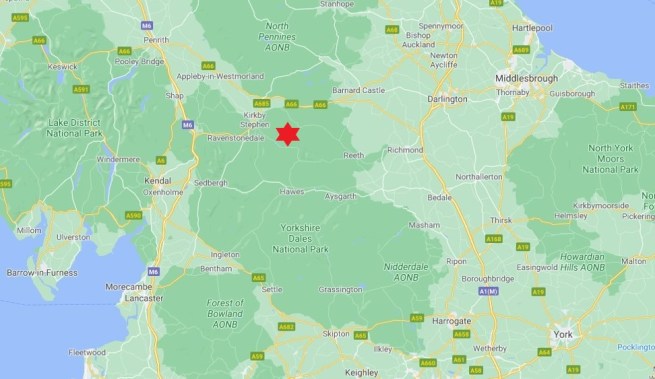
The tag’s last transmission showed the bird had been roosting on a grouse moor between Kirkby Stephen and Ravenseat in the Yorkshire Dales National Park. RSPB staff searched the area but found no trace of Dryad or her tag. Dryad has not been heard from since.

[RPUK map showing approximate location of Dryad’s last known transmission]

Hen harriers, a red-listed species, are legally protected in the UK under the Wildlife and Countryside Act 1981. Yet they remain one of the most persecuted birds of prey in the UK and continue to be illegally killed, or disappear in suspicious circumstances, particularly on or near land managed for shooting. Scientific research published in 2019, based on the UK Government’s own data, showed that 72% of satellite-tagged hen harriers in their study were killed or likely killed on British grouse moors, and that hen harriers were 10 times more likely to die or disappear over grouse moor.

The most significant threat to the English hen harrier population – which is now perilously low – is persecution by humans. 24 hen harrier nests were recorded this summer, of which 19 successfully produced chicks, yet there is enough habitat and prey to support 12 times that number.

Dryad is the 44th hen harrier known to have been illegally killed or gone missing in suspicious circumstances since 2018.

This wider area, which is dominated by driven grouse moors, has become a ‘hotspot’ for suspicious hen harrier disappearances, as revealed by satellite tagging.

In July this year a hen harrier named Harriet, tagged by Natural England, sent her last transmission near Outhgill, just over the border in Cumbria. A further two disappeared, last transmitting near Bowes, County Durham and Askrigg, North Yorkshire respectively in September 2019. And in 2016, the hen harrier Rowan was found shot in Ravenstonedale, Cumbria.

Elsewhere in North Yorkshire, in 2019 the body of another satellite tagged hen harrier known as River was found shot on the Swinton Estate, North Yorkshire.

Mark Thomas, RSPB Head of Investigations UK, said:

Illegal killing is the number one factor stalling hen harrier conservation in the UK. Despite all the positive news around 60 juveniles fledging in England this clearly shows the fate of many of these birds once they disperse. Sadly we expect further suspicious disappearances in the next few months following the well-established pattern of previous years. If Dryad had died naturally, we would expect her tag to continue transmitting, allowing us to find and recover both body and tag. The sudden stop of satellite tags, particularly considering the history of persecution in this area, strongly points to human interference.

Mark continues: “It is blatantly clear that current legislation is failing to protect our birds of prey and that criminality continues unchecked on grouse moors. The Government must act urgently and commit to licensing of grouse shooting with sanctions to withdraw licenses to shoot where criminal behaviours are proven to the satisfaction of the public authorities. Law-abiding estates would have nothing to fear from this approach.”

During August, over 120,000 emails were sent to local MPs by concerned members of the public urging them to take action to end bird of prey persecution, prompted by an e-action by Wild Justice, the RSPB and Hen Harrier Action.

ENDS

More on that gunman filmed with a decoy owl near hen harrier nest site on Whernside

Late on Friday afternoon the RSPB published a blog detailing an incident that was witnessed by a Natural England fieldworker at a hen harrier nest site in Cumbria during this year’s breeding season.

According to that blog (here), ‘…..a Natural England fieldworker was monitoring a hen harrier nest on moorland near Whernside, Cumbria, when he saw a man wearing camouflage carrying a firearm and a live bird of prey, believed to be an eagle owl about 300m from the hen harrier nesting area. He tethered the bird and sat a short distance away with his gun. In the circumstances there seems little doubt the intention was to draw in raptors, presumably the hen harriers, to shoot them. The use of a tethered live bird as a decoy to kill or take a wild bird is in itself illegal, but a method that seems to be increasingly used for targeting raptors. This was no doubt a highly stressful situation, we understand the fieldworker took some video footage and made himself visible. This eventually had the desired effect, and the suspect, realising he was under observation, left. It was reported to the police but due to evidential issues around establishing the identity of the suspect, it was not possible to take the matter forward to court. The RSPB would like to place on record our thanks to Cumbria Constabulary and the CPS for their determined efforts to progress this investigation. We firmly consider that this incident and the video should now be put in the public domain’.

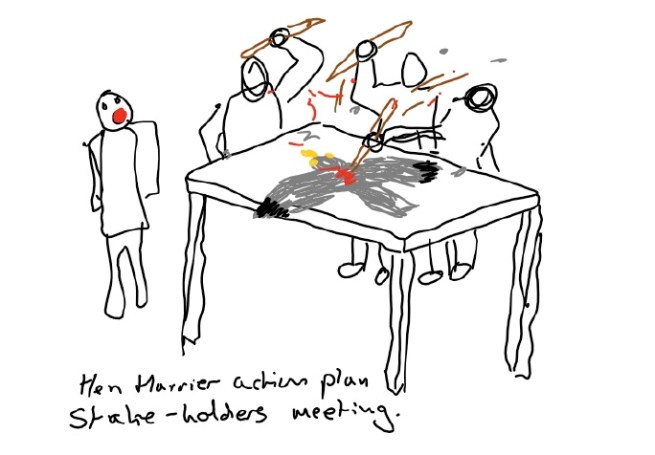
One of the main points being made in the wider RSPB blog was that Natural England had declined to publicise this incident, even though it is understood to have taken place in an area where hen harriers were being brood meddled as part of a Government-sanctioned conservation sham, optimistically called the Hen Harrier Action Plan by those involved.

[A much more realistic portrayal of the so-called Hen Harrier Action Plan. Cartoon by Gerard Hobley]

Natural England’s refusal to voluntarily disclose detailed information about its sham hen harrier conservation project or this latest allegation of attempted persecution at a hen harrier nest site shouldn’t come as any surprise to anyone who’s been following this blog for any length of time. Natural England has developed something of a reputation for its lack of transparency and accountability, especially when it comes to meddling with hen harriers, and much of this goes back further than Tony Juniper’s reign (e.g. see here, here, here, here, here, here, here, here, here, here, here etc etc).

Since the RSPB’s blog was published on Friday afternoon, not one of the shooting organisations involved in the hen harrier brood meddling sham have published a statement on their respective websites. Remember, these are the organisations who claim to hold a ‘zero tolerance’ approach to illegal raptor persecution. You’d think they might have something to say about it, wouldn’t you? Especially given the history of raptor-killing in this area (see here).

We’ve heard, from a number of sources, an allegation that, if true, might explain Natural England’s reluctance to discuss this particular incident.

Have another look at this statement from the RSPB blog:

‘It was reported to the police but due to evidential issues around establishing the identity of the suspect, it was not possible to take the matter forward to court’

We’ve been told that the day after the Natural England fieldworker filmed the gunman with his tethered live eagle owl near the hen harrier nest, a Natural England staff member phoned the gunman and asked whether it was him who had been seen at the hen harrier site the day before.

Because Natural England is a statutory authority, its staff have to abide by the requirements of the Police & Criminal Evidence Act (PACE). This Act is primarily concerned with the behaviour of the police (or other relevant authority), the suspect’s rights and the admissibility of evidence. According to our sources, phoning a suspect and asking whether he had been present at a potential crime scene would be a breach of PACE and, even though it’s ‘just’ a technicality, this would be sufficient for a defence agent to have any potential prosecution thrown out at an early stage.

Is this what happened in this case? Did Natural England cock up a potential prosecution, albeit unintentionally? We’re unlikely to ever get a full account out of Natural England but it does raise an important issue – does Natural England have a protocol/procedure in place for how its staff should behave in these situations? And if not, it needs to get one sorted pronto because as we’re all too aware, the illegal killing of hen harriers on grouse moors is an ongoing crime wave.

UPDATE 21 September 2020: Natural England denies cocking up police investigation at Whernside hen harrier site (here)

UPDATE 20 January 2021: Confirmation that hen harrier brood meddling estate was under police investigation for suspected raptor persecution (here)

Gunman filmed at hen harrier nest site with decoy eagle owl

The RSPB Investigations Team has published a blog this afternoon detailing an incident that was witnessed by a Natural England fieldworker at a hen harrier nest site in Cumbria during the breeding season.

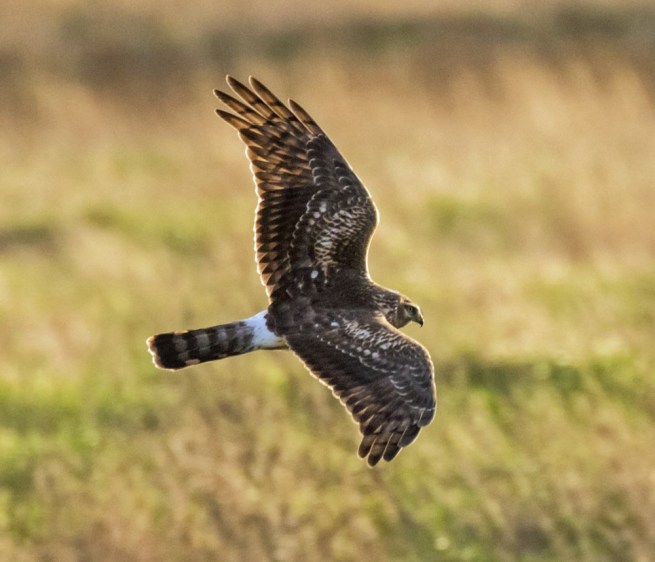
[Hen harrier, photo by Frank Burns]

The full blog can be read here but the pertinent part is reproduced as follows:

‘We understand that a Natural England fieldworker was monitoring a hen harrier nest on moorland near Whernside, Cumbria, when he saw a man wearing camouflage carrying a firearm and a live bird of prey, believed to be an eagle owl about 300m from the hen harrier nesting area. He tethered the bird and sat a short distance away with his gun. In the circumstances there seems little doubt the intention was to draw in raptors, presumably the hen harriers, to shoot them. The use of a tethered live bird as a decoy to kill or take a wild bird is in itself illegal, but a method that seems to be increasingly used for targeting raptors. This was no doubt a highly stressful situation, we understand the fieldworker took some video footage and made himself visible. This eventually had the desired effect, and the suspect, realising he was under observation, left. It was reported to the police but due to evidential issues around establishing the identity of the suspect, it was not possible to take the matter forward to court. The RSPB would like to place on record our thanks to Cumbria Constabulary and the CPS for their determined efforts to progress this investigation. We firmly consider that this incident and the video should now be put in the public domain’.

Now, putting this news out late on a Friday afternoon isn’t helpful to anyone (apart from Natural England and the criminals within the grouse shooting industry who may hope that it’ll all blow over by Monday).

It won’t.

There is a lot to say about this incident as well as about Natural England’s continuing pisspoor conduct on all things hen harrier.

We’ll be coming back to it on Monday morning.

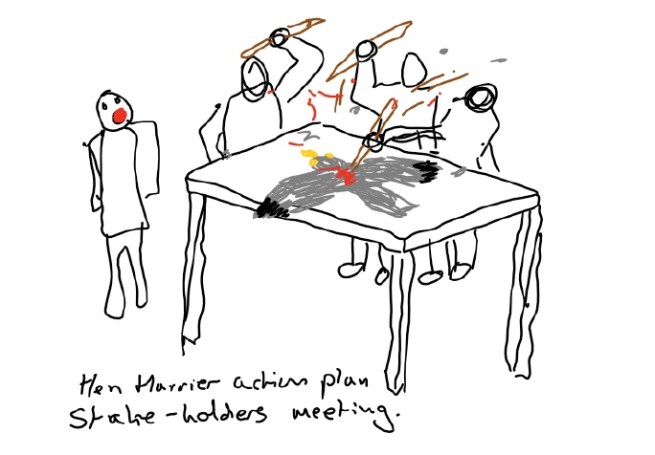
[Cartoon by Gerard Hobley]

UPDATE 15 September 2020: More on that gunman filmed with a decoy owl near hen harrier nest site on Whernside (here)

UPDATE 20 January 2021: Confirmation that hen harrier brood meddling estate was under police investigation (here)

Shot buzzard in Essex: an update

Last week we learned that Essex Police were investigating the shooting of a buzzard found on 4th September 2020 at Davy Down Riverside Park, South Ockendon (see here).

We’ve now been sent photos of the dead bird and an incident number has been issued: 42/141700/20

[Shot buzzard, photos via Essex Police]

There still isn’t any information about the type of weapon used to shoot this buzzard but we do know, judging by the maggots in the second photo, that it was shot well before the discovery of the corpse on the 4th September.

Anyone with information please contact PC Jed Raven from Essex Police Wildlife Crime Unit on 101 and quote reference: 42/141700/20

This is the third bird of prey shooting in Essex in recent months, following a shot buzzard found near Weeley on 2nd June (here) and a shot hobby found at North Fambridge in August (here).

Police investigate shot buzzard remains found on Wirral pheasant shooting estate

The discovery of the remains of a buzzard have led to a joint investigation into alleged raptor persecution and other wildlife offences on a game-shooting estate on the Wirral.

The decomposed corpse was discovered next to a hunting tower on the estate in July 2020, according to a social media posting by a group called ‘Cheshire Against Blood Sports’. The buzzard’s decapitated head and legs were found close by. An x-ray at the RSPCA’s Stapeley Grange Wildlife Centre reportedly found the body was ‘peppered with shot’. It’s not known how old the corpse was but it’s clear from the photographs that decomposition was quite advanced.

[All photos from Cheshire Against Blood Sports]

Other allegations made by the group include ‘unchecked Larsen traps & decoy birds found dead in the trap’. The group has also posted photographs of what looks to be a clam trap with the decomposed remains of something in it, an uncovered Fenn trap (although the circumstances of its use are unclear) and a large stink pit containing the rotting corpses of wildlife.

The group reports that the joint Merseyside Police/RSPCA investigation concluded with a visit to the estate in late August where words of advice have apparently been given. There are not thought to be any impending prosecutions.

It’s believed the pheasant, partridge and duck shooting on the estate is leased to a third party.

[All photos from Cheshire Against Blood Sports]

This article was re-published on the Birdguides website on 13th September 2020.

Another buzzard shot in Essex

Essex Police are investigating the shooting of a buzzard on 4th September 2020 at Davy Down Riverside Park, South Ockendon.

[Buzzard. Photo by Ruth Tingay]

PC Jed Raven from Essex Police’s Wildlife Crime Unit has confirmed the buzzard was shot, however its condition is unknown and the type of weapon used is yet to be reported.

[UPDATE 7 Sept 2020: Police have confirmed the buzzard died]

Anyone with information please contact PC Jed Raven on 101.

UPDATE 11 Sept 2020: Shot buzzard in Essex: an update (here)

This is the third bird of prey shooting in Essex in recent months, following a shot buzzard found near Weeley on 2nd June (here) and a shot hobby found at North Fambridge in August (here).


Lamb euthanised after stepping on illegally-set spring trap in North York Moors National Park

A lamb has been euthanised after being found in the North York Moors National Park with an illegally-set spring-trap attached to its leg.

The lamb was discovered on 8th August 2020 and was seen by a vet, who reported a nasty bone infection tracking up the lamb’s leg from the trap injury. A decision was taken to euthanise the stricken animal.

The use of this type of spring trap (a Fenn trap) became subject to new regulations in April this year as it is no longer considered humane for killing stoats. Gamekeepers have been urged to stop using them altogether in most situations and switch to a trap with a different design (e.g. see here and here).

Nevertheless, even if the operator of this particular trap had a defence for its lawful use, it would appear that it had still been set illegally if this lamb had managed to get its leg caught in it. Spring traps have to be placed inside a tunnel (artificial or natural) with excluders at each end to prevent non-target species entering the tunnel and getting caught.

Of course, even though the police are investigating this incident the chance of anyone being prosecuted is absolutely zero because it would be virtually impossible to determine who had set the trap. Even if there was a lawful requirement for the trap operator to have an identifying tag on the trap (which there isn’t), the police would still have enormous difficulty finding sufficient evidence to demonstrate it had been set by the operator and not by a third party.

What the police can do, though, is to visit the landowners in this area and ‘give them advice’ about the lawful use of traps.

Interestingly, this lamb was found on land close to Hutton-le-Hole, which is remarkably close to where the suspected poisoned sparrowhawk was reported a few days ago (here) and where a satellite-tagged hen harrier ‘disappeared’ in 2018 (see here).

Anyone with information about any of these cases, please contact PC Jez Walmsley at Malton Police Station on 101.


Sparrowhawk dies in suspected poisoning incident in North York Moors National Park

North Yorkshire Police press statement (24 August 2020)

Police urge vigilance after sparrowhawk shows symptoms of poisoning

Police are warning residents near Kirkbymoorside after a bird of prey died in circumstances that could suggest poisoning

A very unwell sparrowhawk was found by members of the public in woodland, just off Gillamoor Bank, close to Gillamoor village near Kirkbymoorside in Ryedale.

The bird appeared to be experiencing seizures and clenching its talons, and was taken locally for care, but died shortly after.

The symptoms shown by the bird suggest that poisons could have been involved in its death.

Officers from North Yorkshire Police are investigating the incident, and the dead bird has been accepted onto the Wildlife Incident Investigation Scheme (WIIS) for testing to establish the cause of death.

The WIIS investigates the deaths of wildlife and pet animals and beneficial invertebrates in the UK if there is evidence to suggest that they may have been poisoned or put at risk by pesticides.

The sparrowhawk was found earlier this month in a location very close to the village of Gillamoor, in woodland which includes a public footpath.

A spokesperson for North Yorkshire Police said: “At this time, we are keeping an open mind as to the cause of death. However, toxicology results may not be known for a number of weeks, so we want to make the community aware so they can take precautions to keep pets, children and themselves safe.

Once the results of the tests are known we will update the community, but for the time being dog owners should take care to keep their dogs on leads when in this area, and remain vigilant.”

If you have any information about this incident, contact North Yorkshire Police on 101 quoting reference 12200142198.

If you find a dead animal you believe may be contaminated, do not touch it – poisons can transfer through contact with skin – and keep children and pets well away. Instead, take photographs, obtain an exact location (for example, a grid reference or a What3words location) and contact the police.

ENDS

Here’s the location of Gillamoor village and the surrounding woodland, right next door to an area that appears to be managed for driven grouse shooting on the edge of the North York Moors National Park:

Obviously, the results of the toxicology tests are awaited before this incident can be confirmed as an illegal poisoning but let’s be honest, given North Yorkshire’s appalling reputation for the illegal killing of birds of prey, including inside its two National Parks, either by shooting, trapping or poisoning (e.g. see here, here, here and here), yet another victim would come as no surprise whatsoever.

TAKE ACTION

If you’re concerned about the level of illegal raptor persecution in the UK, especially the high incidence of killing that takes place on or close to driven grouse moors, you can sign this e-action which urges your politician to take note and actually do something about it.

Launched two weeks ago by three organisations: Wild Justice, the RSPB and Hen Harrier Action, so far over 84,000 people have signed up. All you need to do is enter your postcode and a polite, pre-written email will automatically be sent to your parliamentary representative asking them to stop ignoring this issue.

If you want to add your voice and give your elected politician a polite nudge, please sign up HERE and pass this link on to others.

Thank you

Kestrel attacked with baseball bat: West Yorkshire Police seek witnesses

West Yorkshire Police’s Wildlife & Rural Team (Leeds) attended an incident in Bradley Park, Huddersfield where someone had attacked a kestrel with a baseball bat.

The date and time of the incident is not given in this police tweet posted yesterday but police are appealing for witnesses who haven’t already come forward to please do so now.

If you saw this incident or have information relating to it please call the police on 101 and quote ref # 13200421413.