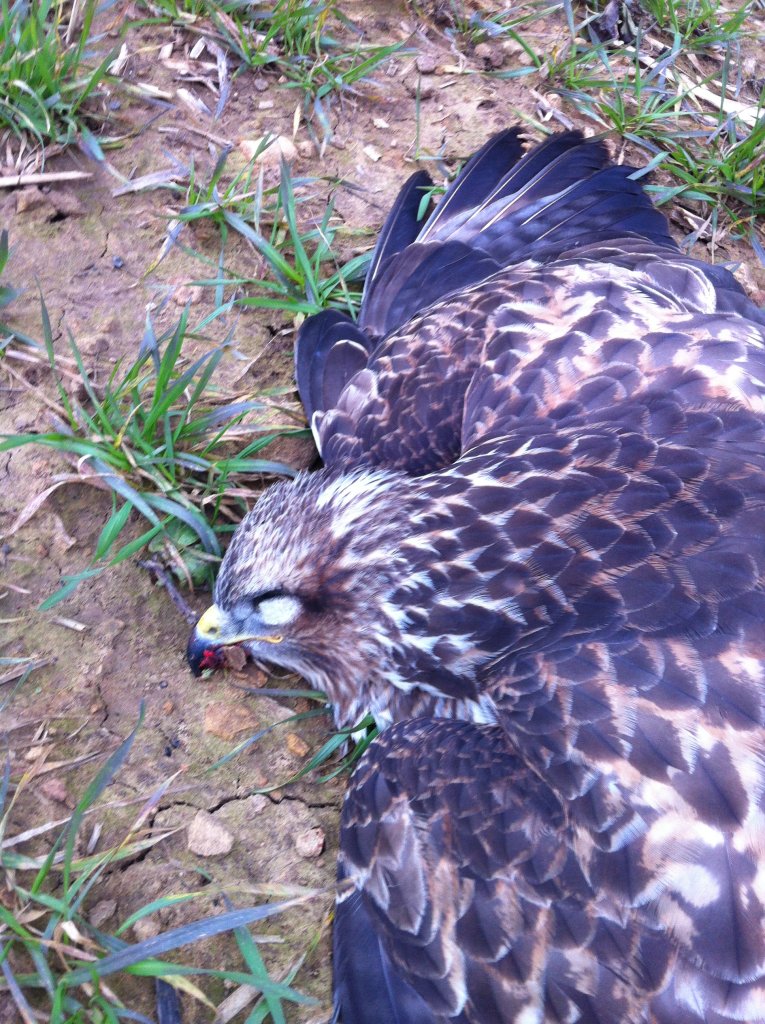
Dog poisoning confirmed in Nidderdale raptor persecution hotspot

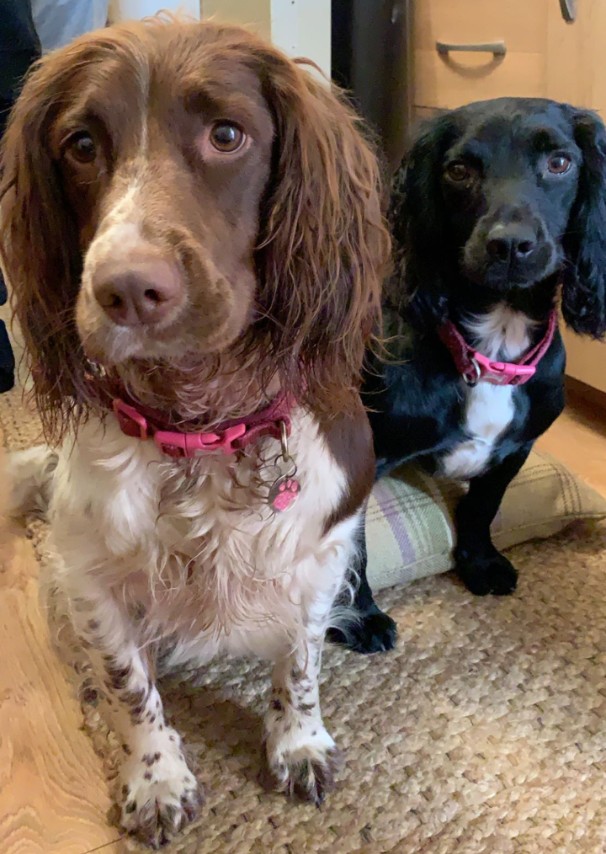
In April during lockdown, two pet dogs became ill during a walk in Pateley Bridge in Nidderdale. One of them (Molly) subsequently died and the vet suspected poisoning.

[Molly (left) and Poppy, photo via North Yorkshire Police]
Samples were submitted for toxicology, although analysis was delayed due to Covid19. Meanwhile, North Yorkshire Police issued a warning notice (here) for local residents to take extra care, especially as illegal poisoned baits had been used in the area many times before, killing birds of prey, especially red kites (here).

Just a couple of weeks ago North Yorkshire Police, along with poisons experts from Natural England and persecution experts from RSPB, conducted high profile raids at several Nidderdale addresses as they continue to investigate ongoing poisoning crimes (see here).

The toxicology results confirmed that Molly had died after ingesting what has widely become known as the ‘Nidderdale Cocktail’ – a lethal combination of four pesticides (Bendiocarb, Chloralose, Isophenphos and Carbofuran) that has been identified in a number of raptor persecution poisoning crimes.

It’s interesting to note that this particular ‘cocktail’ isn’t restricted to use in Nidderdale; it has also been used on several estates elsewhere in England and Scotland. Wouldn’t it be fascinating to see whether there was a common link between these various estates, you know, something like a shared agent or perhaps a gamekeeper who’s worked on all the estates?

On Wednesday, North Yorkshire Police issued the following press release seeking more information about the poisoning of Molly:

Police appeal for information after dog dies from suspected pesticide abuse

Properties searched as investigation into poisoning continues

North Yorkshire Police is appealing for information as part of an ongoing investigation into the poisoning of two pet dogs, believed to be as a result of pesticide abuse.

On 23 April 2020, two spaniel dogs fell seriously ill immediately after a walk, with their owner, in the countryside near Pateley Bridge. The dogs were rushed to the vets and whilst one of the two recovered, the second was so severely ill that she did not survive.

The incident was reported to the police and local area searches conducted, as a well as a warning put out to other dog owners. Samples taken from the dog which died were submitted to the Wildlife Incident Investigation Scheme (WIIS) administered by Natural England and the results showed the presence of four pesticides. The dog had a significant quantity of Bendiocarb in its system, along with smaller quantities of Chloralose, Isofenphos and Carbofuran. The tests concluded that exposure to these pesticides most likely caused this dog’s death and the severe symptoms suffered by the second dog.

The same combination of four poisons have been found to cause the deaths of two red kites and a buzzard in Nidderdale since 2016, with other cases of poisoned birds of prey in the area also involving one or more of the chemicals involved.

North Yorkshire Police Inspector, Matt Hagen, explains:

The fact we have seen this same combination of chemicals, the ‘Nidderdale cocktail’ as it is sometimes known, also cause the death of birds of prey in this same location would indicate that the poisons have been deliberately left in a place where they could be found by wildlife and unfortunately in this case, domestic pets.

Pesticide abuse of any kind will not be tolerated and we are doing everything we can to try and find those responsible.”

Following receipt of the test results and acting on local intelligence North Yorkshire Police conducted searches at a number of properties in the area with assistance from Natural England and the RSPB.  Unfortunately none of these searches resulted in any further evidence as to how these poisons reached the two dogs or who may have been responsible for this suspected pesticide abuse so officers are now appealing for information from the public.

Mark Thomas, Head of Investigations at the RSPB, said:

Nidderdale is surrounded by grouse moors and sadly we know from experience, and from the government’s own data, that there is a strong correlation between raptor persecution and driven grouse shooting. Carbofuran is one of the most commonly-abused substances in the poisoning of birds of prey. It is a highly toxic, banned substance, putting wildlife, pets and people at risk. This is not the first time harmful substances have been found left out in the open and sadly it unlikely to be the last. This reckless and irresponsible behaviour, which had led to the death of a beloved family pet, cannot be allowed to continue.”

Whilst Chloralose is licenced for use in England in a low concentration as a rodenticide, Bendiocarb, Isofenphos and Carbofuran are all banned from use in the UK. None of these chemicals should ever be used in an environment where domestic animals and/or wildlife should come into contact with them.

Anyone misusing or abusing pesticides may be committing a variety of offences. If you come across an object, often an animal carcass, which you believe may be contaminated with a pesticide or other poisons, do not touch it. Take as many photos and details as you can and report this to the police as soon as possible.

Dog owners worried by this incident should take care to keep their dogs on a lead or within sight and under control at all times when taking them for a walk. Dogs should only be walked on public rights of way or other land where the owner has permission to be.

Anyone with any information which could help the police in this investigation should call 101, quoting reference: 12200068444 or if you wish to remain anonymous call Crimestoppers on 0800 555 111.

ENDS

The RSPB also published a blog about this case, which includes comments from Molly’s owners (see here).

There’s also good coverage in the Yorkshire Post (here).

More birds of prey illegally killed in & around Peak District National Park

As conservationists continue to express concern for the safety of the visiting Bearded Vulture in the Peak District National Park (e.g. see here), the RSPB has published a blog detailing more cases of confirmed and suspected illegal raptor persecution that have been recorded in the area since the beginning of lockdown.

[This shot buzzard had to be euthanized due to the extent of its injuries. Photo by Peak District Raptor Monitoring Group]

The RSPB’s updated list includes the following, some of which have already featured on this blog and some which haven’t previously been publicised:

NEW: In the north of the National Park, the remains of a short-eared owl, an amber-listed species, were found on a grouse moor near Glossop on 7 May. A post-mortem recently concluded that shooting had been the cause of death. No leads were forthcoming from police enquiries.

NEW: Near Agden Reservoir, an area dominated by driven grouse moors, four raven chicks were found dead in a nest also on 11 May. The parent birds had been seen bringing food to the young, then vanished without explanation. The chicks were almost at the point of fledging, and the RSPB say the adults were exceptionally unlikely abandon the nest at that stage. The incident is being investigated by South Yorkshire Police.

NEW: Test results are awaited in connection with an adult peregrine found dead in the Upper Derwent Valley.

NEW: In the south, just outside the National Park an eyewitness reported seeing two buzzards being shot near Ashbourne on 1 April 2020. A member of the public was watching the two birds circling a wood, on land managed for pheasant shooting, when he heard a shot and saw the birds fall. There’s no comment about a police investigation.

PREVIOUSLY REPORTED: On 11 May, a buzzard was found mortally wounded on land managed for gamebird shooting near Diggle. It was found alive but with terrible injuries and sadly had to be euthanized. An x-ray revealed six pieces of shot lodged in the bird’s body. [This crime has previously been blogged about here]

PREVIOUSLY REPORTED: In the south of the Park, a buzzard and two peregrines are being tested for poison after being found dead in Staffordshire. [These incidents have previously been blogged about here] [Confirmed illegally poisoned. See UPDATE at foot of this blog]

PREVIOUSLY REPORTED: In mid-June, Derbyshire Police issued an appeal for information after three peregrine nests were robbed of their eggs, all within the National Park. The RSPB alerted the police about one of the incidents. [These incidents have previously been blogged about here]

PREVIOUSLY REPORTED: A dead kestrel and a buzzard have also gone for poison testing: they were found near Glapwell, where several buzzards were found poisoned in 2016. [These incidents have previously been blogged about here] [Confirmed illegally poisoned. see UPDATE at foot of blog].

To read the RSPB blog in full please click here

The RSPB’s Head of Investigations, Mark Thomas, was also on BBC Radio Derby a few days ago talking about the ongoing killing of birds of prey in the Peak District National Park. Available here (starts 3hrs 16) for 24 days.

UPDATE 3rd August 2020: Buzzard and kestrel confirmed illegally poisoned in Derbyshire (here)

UPDATE 2nd October 2020: Birds of prey illegally poisoned in Staffordshire / Peak District National Park (see here)

Yet another poisoned buzzard found dead on a grouse moor in North York Moors National Park

Joint press release from North Yorkshire Police and RSPB (24 July 2020)

APPEAL FOR INFORMATION AFTER ANALYSIS REVEALS BUZZARD POISONED

Buzzard found dead on moorland near Swainby, North Yorkshire

North Yorkshire Police and the RSPB are appealing for information after a dead buzzard was found on Live Moor close to the village of Swainby.

The bird was discovered by a member of the public on 20 March 2020 and reported to the RSPB before being removed. North Yorkshire Police submitted the buzzard for a post mortem examination which revealed an extremely high concentration of  toxic chemical, Chloralose in the bird’s system. Given the buzzard was in good bodily condition and had no injuries, the analysis shows poisoning to be the cause of death.

[The poisoned buzzard. Photo by RSPB]

North Yorkshire Police Inspector, Matt Hagen, explains:

A low percentage of chloralose was commonly used in rodenticides to kill mice but is only currently permitted for use indoors and at a small dose. As such, there is no way this buzzard could have come into contact with such a high concentration of this poison by accident and we believe someone deliberately set out to kill this bird by poisoning.

Unfortunately, this is the latest in a number of similar cases where birds of prey have been subjected to cruel and illegal persecution here in North Yorkshire. We are doing everything we can to try and find those responsible but we really need the public’s help as they are acting as our eyes and ears around the county. Anyone with information about this or any other incident of bird of prey persecution should contact the police on 101, we all have a part to play in putting an end to these unacceptable crimes.

Howard Jones, RSPB Investigations Officer, said:

Buzzards are a protected species yet continue to be relentlessly shot, trapped and poisoned in North Yorkshire. RSPB data shows that North Yorkshire is consistently the county with the highest number of crimes against birds of prey.

Alphachloralose is a commonly abused product in the illegal killing of birds of prey. The amount of it found in this bird was enough to kill a human child. People, pets and other wildlife are at risk from this kind of illegal behaviour, which is why we urge anyone who may have information about this incident to do the right thing and come forward.”

Anyone who has information which could assist with this investigation should contact North Yorkshire Police on 101 or if you wish to remain anonymous, you can call Crimestoppers on 0800 555 111. Quote reference: 12200116641.

ENDS

What this press release doesn’t say is that this illegally poisoned buzzard was found dead on a grouse moor inside the North York Moors National Park.

Nor does the press release explain the delay in publishing an appeal for information (corpse found 20 March, press release issued 24 July).

There are some individuals from the grouse shooting industry who are claiming on social media that this delayed reporting is a deliberate ploy to coincide with the run-up to the start of the grouse-shooting season on 12 August, and thus create bad publicity for the industry to ruin the ‘celebrations’. It’s a commonly-heard complaint and simply allows the persecution apologists to focus on anything other than the news that yet another bird of prey has been found illegally killed on yet another grouse moor.

Had they bothered to ask the police why there was such a long delay they might have understood that the toxicology labs were closed during lockdown and are now having to work through a significant backlog of cases, so confirmation of poisoning will take longer than usual.

It’s no surprise the grouse shooting industry wants to divert attention from this latest crime to be uncovered on a grouse moor inside this national park. It’s the third raptor persecution crime to be reported in the North York Moors National Park in recent months, following the discovery in April of five dead buzzards shoved in a hole on a grouse moor in Bransdale, four of which were later confirmed to have been shot (see here), and then last week’s news that three gamekeepers on the Queen’s grouse moor at Goathland had been suspended following a police investigation in to the trapping and alleged killing of a goshawk in May (see here).

The grouse shooting industry’s professed ‘zero tolerance for raptor persecution’ (see here) is as unconvincing now as it was when it was claimed last year, and the year before that, and the year before that, and the year before that, and the year before that, and the year before that, and the year before that, and the year before that, and the year before that, and the year before that, and the year before that, and the year before that……etc.

Insane hen harrier brood meddling trial continues in 2020

Natural England has today published a short, poorly-detailed update on this year’s hen harrier brood meddling trial.

For new blog readers, hen harrier brood meddling is a conservation sham sanctioned by DEFRA and carried out by Natural England (NE), in cahoots with the very industry responsible for the species’ catastrophic decline in England. For more background see here.

[Cartoon by Dr Gerard Hobley]

In today’s update, here’s what NE has to say:

So it looks like at least two hen harrier nests have been meddled with in this year’s trial – but of course NE hasn’t provided any further detail of the number nor locations of those nests, nor of the release site(s). We wouldn’t expect them to say exactly where these locations are – that would be counterproductive for a species that is so heavily persecuted, but a county-level disclosure would have been useful.

The death of one of the brood meddled hen harrier chicks prior to release is concerning and it’ll be interesting to hear more about the cause of death.

Although getting info out of Natural England is a painful exercise. Here’s an example of some recent correspondence on the fates of last year’s five brood meddled hen harrier chicks:

Of course we now know that all five of last year’s brood meddled hen harriers are ‘missing’ presumed dead, four of them in suspicious circumstances (see here). They form part of the list of 42 hen harriers that we know are either missing in suspicious circumstances or have been found illegally killed, since 2018, the majority on or near driven grouse moors (see here).

How many of this year’s brood meddled chicks do you think will survive to Christmas?

What’s that famous quote?

The definition of insanity is doing the same thing over and over again and expecting different results‘.

Three gamekeepers suspended from Queen’s grouse moor after wildlife crime investigation

Following the news that a goshawk was recently trapped and apparently killed by a masked individual on the Queen’s grouse moor in North Yorkshire (see here and here), the Yorkshire Post is claiming that three gamekeepers were suspended.

According to the article, the Head gamekeeper and two underkeepers were suspended after being interviewed by North Yorkshire Police in relation to the alleged killing of the goshawk. Two have since been reinstated while the third one has been allowed to resign, and apparently allowed to work his notice period before he went!

The police investigation continues as officers await forensic results from items seized during a search of the estate.

Full article in the Yorkshire Post available here

Queen’s North Yorkshire grouse moor named at centre of police investigation

Further to last week’s news that North Yorkshire Police were appealing for information after the alleged killing of a goshawk that was caught inside a trap on a grouse moor in the North York Moors National Park (see here), the location has now been revealed to be one of the Queen’s grouse moors, part of the Duchy of Lancaster, according to an article in The Times today.

It’s reported that ‘the Duchy of Lancaster is the private estate of the British sovereign, under the title the Duke of Lancaster. It covers more than 44,000 acres of rural and urban holdings, including several thousand acres of moorland‘.

The video footage of the goshawk caught in the trap is described:

A man approaches a large cage trap set up by a brook on the moors. He fills the trap with live jackdaws, apparently as bait, and leaves. When a man is filmed opening the trap a day later, a goshawk has entered the trap.

He uses a pole or hook to hold the goshawk as he enters the trap. For a moment it struggles and flaps but after a few seconds falls still, apparently dead. The man puts the goshawk into a bag and leaves, throwing a carcass of one of the jackdaws into the brook as he goes. The goshawk killed five of the birds, Inspector Matt Hagen, head of North Yorkshire Police Rural Task Force told The Times.’

North Yorkshire Police have searched part of the estate under warrant and interviewed three individuals under caution. The investigation is ongoing.

We understand there is a sporting agent on this estate and it’s a name we’ve heard many times before.

This isn’t the first time that a royal estate has been at the centre of a police investigation about goshawks – see here for a very mysterious story from the Queen’s Sandringham Estate in Norfolk a couple of years ago.

North Yorkshire Police search for illegal poisons in Nidderdale

North Yorkshire Police made quite a statement on Friday morning when at least 10 marked police vehicles descended upon Pateley Bridge in Nidderdale, along with forensic-suited poisons experts from Natural England. When asked by local residents what they were doing, the police replied they were conducting searches in relation to the illegal killing of birds of prey in the area.

North Yorkshire Police’s Rural Task Force tweeted about it yesterday:

This is a very good example of proactive policing. The Nidderdale AONB is one of the UK’s most notorious hotspots for illegal raptor persecution, particularly on many of its driven grouse moors e.g. see here for a recent damning report published by the local AONB authority and for just a small sample of reported persecution crimes in recent years see hereherehereherehereherehere here, here, here, here, here and here.

During lockdown, the police were appealing for information about two separate illegal poisoning incidents in the area, involving two dogs (here) and a buzzard (here) and it’s believed Friday’s search may have been in relation to these most recent incidents.

Illegal poisoning happens with such frequency in this area that the specific concoction used has even been named the ‘Nidderdale Cocktail’ (Bendiocarb, Carbofuran, Isofenphos, and Chloralose). Bendiocarb is licenced for use in England as an ingredient in a number of insect control products but should not be released into an environment where wildlife could come into contact with them. Carbofuran, Isofenphos and Chloralose are all banned substances which should not be used under any circumstances.

In the police’s tweet, they mention searches ‘under S19 of the Wildlife & Countryside Act 1981’. This refers to Section 19 of the Act, entitled ‘Enforcement’ and allows officers to enter private land, without a warrant, to conduct searches where there is reasonable suspicion that an individual is committing or has committed an offence:

North Yorkshire Police haven’t revealed whether anything was found, and nor would we expect them to at this early stage, but the fact they turned up in force, accompanied by Natural England staff who have expertise in poison storage, labelling and identification, and that they weren’t shy about telling local shoppers why they were there, sends a very clear message to the Nidderdale raptor killers.

Well done, North Yorkshire Police & Natural England. More of this, please.

Police appeal after goshawk killed on grouse-shooting estate in North York Moors National Park

Press release from North Yorkshire Police (15 July 2020)

Police appeal for information after goshawk killed near Goathland

North Yorkshire Police is appealing for information about an incident in which a goshawk appeared to be killed after becoming caught in a cage trap.

Video footage, which was passed on to North Yorkshire Police, shows the bird becoming caught in the trap in the early hours of 2 May 2020. Shortly afterwards, an individual with their face obscured is seen entering the trap and appears to deliberately kill the bird before removing the body in a bag.

The trap was located on Howl Dale Moor near Goathland in the North York Moors National Park.

[The goshawk trapped inside the cage trap prior to being killed, photo via North Yorkshire Police]

North Yorkshire Police Wildlife Crime Officer, Jeremy Walmsley, is urging anyone with information to come forward:

The goshawk is one of the most protected species of bird in the UK and it is extremely distressing that an individual would choose to kill any bird of prey. I appeal to anyone with information about this horrific crime to get in touch with the police and help us to find the person responsible for the death of this magnificent bird.

We see far too many incidents of birds of prey killed or injured in North Yorkshire and as a police force we are doing all we can to put a stop to this inhumane and callous crime.”

Andy Wilson, Chief Executive of the North York Moors National Park Authority said:

We are deeply saddened to hear about this incident. Goshawks were persecuted to extinction in the UK in the late 19th century and, despite an improvement in numbers, persecution and habitat loss remain a constant threat to their survival.

Killing or injuring a bird of prey is illegal, cruel and must be prosecuted wherever possible. We are working alongside the police to support them in their investigations and we would strongly urge any witnesses or anyone who has any information to come forward. With your help the offender(s) can be brought to justice.”

A cage trap can be used to catch certain species of birds and is designed to trap birds alive and unharmed, in case of any non-target species becoming caught. Any non-target birds, such as birds of prey, should be released as soon as possible after being caught. Killing a bird of prey is an offence under the Wildlife and Countryside Act 1981.

If you have any information which could help this investigation, please call 101 quoting reference: 12200073462 or if you wish to remain anonymous contact Crimestoppers on 0800 555 111.

ENDS

UPDATE 20 July 2020: Queen’s grouse moor named at centre of wildlife crime investigation in North Yorkshire (here)

Conservationists fear for safety of Bearded Vulture on notorious Peak District grouse moors

The young Bearded Vulture that has been roosting in the Peak District National Park is causing concern for conservationists who fear for its safety on the notorious grouse moors.

[The young Bearded Vulture, photo by William Bowell]

It just happens to have chosen to hang out in ‘one of the worst 10km squares for raptor persecution in the UK’ according to Mark Thomas of RSPB Investigations (e.g. see here) and there are fears that it could be targeted by ruthless gamekeepers in the run up to the start of the grouse shooting season on 12 August.

Only last month police appealed for information after the discovery of a dying buzzard found inside the National Park (see here). It had suffered horrific gunshot injuries and a post-mortem revealed it had previously been shot but had survived those earlier injuries.

[The vulture has been roosting at an old raven nest site, photo by Tim Birch]

Tim Birch from the Derbyshire Wildlife Trust has been quoted in a number of media articles (e.g. here and here):

It “couldn’t have come to a worse spot in terms of bird of prey persecution” amid fears the vulture could be poisoned or shot. “I don’t think people realise it’s happening in the national park. The bearded vulture is of international importance, so if anything happened to that bird it would bring into sharp focus what is happening here.”

It’s a pretty shocking indictment when a rare bird of prey shows up inside one the country’s most famous national parks and the big story is whether it’ll be left alone or killed.

Fortunately, so far it’s been left alone, presumably because so many birdwatchers have been flocking to see it.

[Birdwatchers viewing the Bearded Vulture, photo by Indy Kiemel Greene]

UPDATE 16th October 2020: Bearded vulture flies out of UK (here)

40 hen harriers ‘missing’ or confirmed killed since 2018

It’s getting to that time of year when the grouse shooting industry pumps out its patently misleading propaganda relating to hen harrier conservation in the UK. The aim is to hoodwink the public in to believing that the industry loves hen harriers and is doing all it can to protect and nurture the tiny remnant breeding population (but conveniently forgetting to mention that the breeding population is only in such dire straits because the grouse shooting industry has been ruthless in its maniacal intolerance of this supposedly protected species).

And the industry’s pursuit of the hen harrier is not simply ‘historical’ or indicative of past behaviour, as some would have us believe. It is on-going, it is current, and it is relentless.

To illustrate this fact, we intend to keep a running tally of all the hen harriers that we know (because most of these victims had been fitted with a satellite tag) to have either ‘disappeared’ in suspicious circumstances or have been confirmed as being illegally killed since 2018.

Why only since 2018 when we know that hen harriers have been a persecution target for years and years and years? Well, 2018 is the year that the grouse shooting industry ‘leaders’ would have us believe that the criminal persecution of hen harriers had stopped and that these birds were being welcomed back on to the UK’s grouse moors (see here).

This assertion was made shortly before the publication of a devastating new scientific paper that demonstrated that 72% of satellite-tagged Hen Harriers were confirmed or considered likely to have been illegally killed, and this was ten times more likely to occur over areas of land managed for grouse shooting relative to other land uses (see here).

We only started compiling this list of dead / missing hen harriers in June when we learned that all five of last year’s brood meddled hen harrier chicks were ‘missing’, presumed dead (see here). It was then further updated when we learned that two more satellite-tagged hen harriers had ‘disappeared’ in suspicious circumstances on grouse moors in the Cairngorms National Park during the Coronvirus lockdown (see here).

It’s now time to update the death list again, as we’ve learned that satellite-tagged hen harrier Rain ‘disappeared’ in suspicious circumstances over a grouse moor in Nairnshire on 26 April 2019 (see here). (Thanks to blog reader Alex Milne for pointing us to this info).

That brings the gruesome tally to 40 hen harriers.

Four Zero.

Forty.

In the space of two years.

Nobody has been prosecuted for any of these cases. We have every expectation that this list will be updated again in the near future.

For now, here are the 40:

February 2018: Hen harrier Saorsa ‘disappeared’ in the Angus Glens in Scotland (here). The Scottish Gamekeepers Association later published wholly inaccurate information claiming the bird had been re-sighted. The RSPB dismissed this as “completely false” (here).

5 February 2018: Hen harrier Marc ‘disappeared’ on a grouse moor in Durham (here)

9 February 2018: Hen harrier Aalin ‘disappeared’ on a grouse moor in Wales (here)

March 2018: Hen harrier Blue ‘disappeared’ in the Lake District National Park (here)

March 2018: Hen harrier Finn ‘disappeared’ near Moffat in Scotland (here)

18 April 2018: Hen harrier Lia ‘disappeared’ in Wales and her corpse was retrieved in a field in May 2018. Cause of death was unconfirmed but police treating death as suspicious (here)

8 August 2018: Hen harrier Hilma ‘disappeared’ on a grouse moor in Northumberland (here).

16 August 2018: Hen harrier Athena ‘disappeared’ on a grouse moor in Scotland (here)

26 August 2018: Hen Harrier Octavia ‘disappeared’ on a grouse moor in the Peak District National Park (here)

29 August 2018: Hen harrier Margot ‘disappeared’ on a grouse moor in Scotland (here)

29 August 2018: Hen Harrier Heulwen ‘disappeared’ on a grouse moor in Wales (here)

3 September 2018: Hen harrier Stelmaria ‘disappeared’ on a grouse moor in Scotland (here)

24 September 2018: Hen harrier Heather ‘disappeared’ on a grouse moor in Scotland (here)

2 October 2018: Hen harrier Mabel ‘disappeared’ on a grouse moor on the edge of the Yorkshire Dales National Park (here)

3 October 2018: Hen Harrier Thor ‘disappeared’ next to a grouse moor in Bowland, Lanacashire (here)

26 October 2018: Hen harrier Arthur ‘disappeared’ on a grouse moor in the North York Moors National Park (here)

10 November 2018: Hen harrier Rannoch ‘disappeared’ on a grouse moor in Scotland (here). Her corpse was found nearby in May 2019 – she’d been killed in an illegally-set spring trap (here).

14 November 2018: Hen harrier River ‘disappeared’ on a grouse moor in the Nidderdale AONB (here). Her corpse was found nearby in April 2019 – she’d been illegally shot (here).

16 January 2019: Hen harrier Vulcan ‘disappeared’ in Wiltshire close to Natural England’s proposed reintroduction site (here)

7 February 2019: Hen harrier Skylar ‘disappeared’ next to a grouse moor in South Lanarkshire (here)

22 April 2019: Hen harrier Marci ‘disappeared’ on a grouse moor in the Cairngorms National Park (here)

26 April 2019: Hen harrier Rain ‘disappeared’ on a grouse moor in Nairnshire (here)

11 May 2019: An untagged male hen harrier was caught in an illegally-set trap next to his nest on a grouse moor in South Lanarkshire. He didn’t survive (here)

7 June 2019: An untagged hen harrier was found dead on a grouse moor in Scotland. A post mortem stated the bird had died as a result of ‘penetrating trauma’ injuries and that this bird had previously been shot (here)

5 September 2019: Wildland Hen Harrier 1 ‘disappeared’ on a grouse moor nr Dalnaspidal on the edge of the Cairngorms National Park (here)

11 September 2019: Hen harrier Romario ‘disappeared’ on a grouse moor in the Cairngorms National Park (here)

14 September 2019: Hen harrier (Brood meddled in 2019, #183704) ‘disappeared’ in North Pennines (here)

23 September 2019: Hen harrier (Brood meddled in 2019, #55149) ‘disappeared’ in North Pennines (here)

24 September 2019: Wildland Hen Harrier 2 ‘disappeared’ on a grouse moor at Invercauld in the Cairngorms National Park (here)

10 October 2019: Hen harrier Ada ‘disappeared’ on a grouse moor in the North Pennines AONB (here)

12 October 2019: Hen harrier Thistle ‘disappeared’ on a grouse moor in Sutherland (here)

18 October 2019: Member of the public reports the witnessed shooting of an untagged male hen harrier on White Syke Hill in North Yorkshire (here)

November 2019: Hen harrier Mary found illegally poisoned on a pheasant shoot in Ireland (here)

January 2020: Members of the public report the witnessed shooting of a male hen harrier on Threshfield Moor in the Yorkshire Dales National Park (here)

1 April 2020: Hen harrier (Brood meddled in 2019, #183703) ‘disappeared’ in unnamed location, tag intermittent (here)

5 April 2020: Hen harrier Hoolie ‘disappeared’ on a grouse moor in the Cairngorms National Park (here)

8 April 2020: Hen harrier Marlin ‘disappeared’ on a grouse moor in the Cairngorms National Park (here)

21 May 2020: Hen harrier (Brood meddled in 2019, #183701) ‘disappeared’ on a grouse moor in Cumbria shortly after returning from wintering in France (here)

To be continued……..

Anybody still wondering why the grouse shooting industry wants us to stop fitting satellite tags?