Hen harrier found mutilated & 20 others go ‘missing’ on or near grouse moors

A couple of weeks ago I blogged about the ‘disappearance’ of five more satellite-tagged hen harriers that had all vanished, in suspicious circumstances, on moorland in northern England between August and December 2022 (see here).

A week later I blogged about how Natural England and the Moorland Association had remained silent about those latest disappearances (see here).

Hen harrier. Photo: Ian Poxton

This morning, the RSPB has issued a press statement about a further 21 hen harriers, as follows:

RARE BIRD OF PREY FOUND MUTLILATED AS 20 OTHER INDIVIDUALS GO MISSING

One of the UK’s rarest birds of prey, a Hen Harrier, has been found dead and its body mutilated. Twenty other harriers, including 15 birds that were part of satellite-tagged tracking projects, have also disappeared across Northern England in the past year.

Hen Harriers are on the red list of birds of conservation concern in the UK, with the last national survey in 2016 recording 545 pairs in the UK – a decline of 13% since 2010. In England there were 34 successful nests in 2022, despite enough habitat and food to support over 300 pairs. In 2019, the Government’s own study found illegal killing to be the main factor limiting the recovery of the UK Hen Harrier population.

The story began in April 2022 when an RSPB satellite-tagged Hen Harrier named Pegasus vanished whilst on Birkdale – an area of driven grouse moor in the Yorkshire Dales National Park on the North Yorkshire/Cumbria border. This was followed shortly after by the discovery of a dead Hen Harrier in the same area – a Natural England tagged bird called Free. The bird was missing its head and leg, which had held a metal ring for identification. Expert veterinary assessment concluded the bird has been killed through traumatic removal of its head and leg, whilst alive – consistent with persecution. A month later, another hen harrier, NE tagged bird Harvey, vanished in this area. The police carried out a search warrant in connection with the incidents, but the ensuing investigation has failed to lead to charges.

However, since the investigation ended a further four satellite-tagged Hen Harriers (one from a RSPB project and three from a Natural England one) have disappeared in this same area, managed for driven grouse shooting.

During autumn 2022, two additional RSPB tagged birds vanished in Cumbria and Durham, both also on grouse moors.

These nine birds are separate to another seven Natural England satellite-tagged Hen Harriers recorded as missing, fate unknown, over the past year.

Finally, also in the past year, five (un-tagged) breeding male Hen Harriers have vanished, including two in the Peak District National Park in 2022 and, in April this year, one in Durham and two from the RSPB’s Geltsdale Nature Reserve in Cumbria: both these birds had active nests which have now been abandoned, one containing three cold eggs. Male harriers are known to hunt away from their nest sites, and this is not the first time that adult male harriers with active nests have vanished from Geltsdale in recent years.

All 21 birds were reported at the time by the RSPB and Natural England to the Police and the National Wildlife Crime Unit.

Commenting on the situation, the RSPB’s conservation director Katie-Jo Luxton said, “These 21 birds represent a significant proportion of the existing English Hen Harrier population. The Government’s own study found illegal killing to be the main reason preventing the recovery of this species, and these recent events indicate that the situation has yet to improve for this rare and beautiful bird.”

Natural England Strategy Director John Holmes said:  “We are sickened by this evidence of persecution, which remains a serious issue and needs more focus and action from the police, businesses, landowners, and game management interests. Natural England will continue to work with partners on Hen Harrier recovery, and direct our resources towards science, monitoring, enforcement, and conservation management. We will continue all efforts to track down tags that stop transmitting, as our dedicated staff did in the case of Free, and to support the police in their role of bringing the perpetrators of these crimes to justice“

ENDS

There’s quite a lot to digest in this press release and I’m short on time today, but what is immediately obvious is the clear escalation in persecution incidents, and that they are all linked to driven grouse moors. North Yorkshire, and particularly the Yorkshire Dales National Park, is once again at the centre of the criminality.

The unspeakable barbarity inflicted on Hen Harrier ‘Free’, whose head and leg was ripped off while the bird was still alive, is shocking, but not at all surprising, especially given what we know happened to hen harrier ‘Asta’ (see here). I’ll write more about ‘Free’ shortly.

The RSPB has helpfully provided the following table showing the hen harriers confirmed as persecuted or missing between April 2022-April 2023:

I will need to go through this table and work out which of these harriers are already included in the 82 that we know have been confirmed as illegally killed or missing in suspicious circumstances since 2018 – see here. There will definitely be more to add to that shameful running total.

With this blatant, ongoing, and widespread criminal persecution, Natural England’s recent decision to extend its ‘partnership’ with the grouse shooting industry as part of the ludicrous hen harrier brood meddling scheme, warrants further scrutiny. I’ll come back to that.

UPDATE 6th May 2023: Post mortem reveals hen harrier’s cause of death was ‘head being twisted and pulled off while the body was held tightly’ (here)
Five more young satellite-tagged hen harriers ‘go missing’ on moorland in Northern England

Five more young hen harriers have ‘disappeared’ in suspicious circumstances, according to data published quietly and without fanfare by Natural England in February 2023.

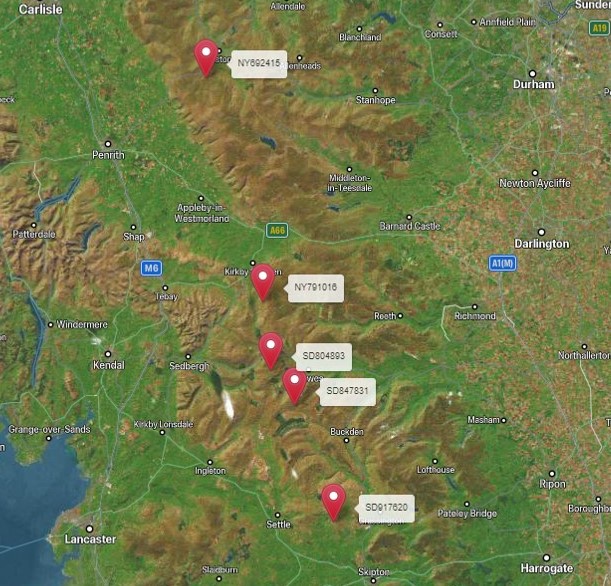
All five hen harriers were ‘brood meddled’ birds and all five of them ‘disappeared’ on moorland in what are supposedly protected landscapes: four in the Yorkshire Dales National Park and one in the North Pennines Area of Outstanding Natural Beauty (AONB).

Last known locations of the five ‘missing’ hen harriers

The ‘missing’ hen harriers are as follows:

Brood-meddled Male, tagged July 2022, Tag ID 232637 (R1-M1-22), date of last contact 17th August 2022, grid ref: SD804893 (Yorkshire Dales National Park).

Brood-meddled Male, tagged August 2022, Tag ID 213920a (R3-M2-22), date of last contact 5th October 2022, grid ref: NY791016 (Yorkshire Dales National Park).

Brood-meddled Male, tagged July 2021, Tag ID 55145 (R1-M1-21), date of last contact 1st December 2022, grid ref: SD917620 (Yorkshire Dales National Park).

Brood-meddled Female, tagged August 2022, Tag ID 213921a (R3-F1-22), date of last contact 14th December 2022, grid ref: NY692415 (North Pennines AONB).

Brood-meddled Female, tagged July 2022, Tag ID 213931 (R2-F1-22), date of last contact 15th December 2022, grid ref: SD847831 (Yorkshire Dales National Park).

The data emerged from Natural England’s routine six-monthly update of its hen harrier satellite tag database, dated February 2023 (see here).

It’s interesting, isn’t it, that Natural England didn’t publish an accompanying blog with its data update, to draw attention to these latest ‘missing’ birds?

Why do you think that might be?

My view is that it’s because these latest data are damning of the ludicrous, ongoing hen harrier brood meddling trial on the grouse moors of northern England. For new blog readers, hen harrier brood meddling is a conservation sham sanctioned by DEFRA as part of its ludicrous ‘Hen Harrier Action Plan‘ and carried out by Natural England (NE), in cahoots with the very industry responsible for the species’ catastrophic decline in England. For more background see here.

In August last year, Natural England published a blog where it was claimed the results of the brood meddling scheme were ‘encouraging’ (here). As I and many others have said, repeatedly, nesting productivity is not the issue for hen harriers, survival is. Natural England and its so-called ‘partners’ can brood meddle as many chicks as it likes, it still doesn’t address the illegal killing that takes place once the chicks have fledged/been released.

The fact that all five of the latest ‘missing’ hen harriers are from brood meddled nests (four of them brood meddled in 2022, one in 2021) illustrates this point perfectly.

The latest five harriers ‘disappeared’ between 17th August – 15th December 2022. Four months on and I’m aware of a number of other ‘missing’ harriers whose stories are yet to be told. Watch this space.

Meanwhile, I’ll need to update the running total of hen harriers that have been illegally killed or have gone missing in suspicious circumstances, on or close to grouse moors, since 2018, when the brood meddling scheme began…

UPDATE 14.00hrs: 82 hen harriers confirmed ‘missing’ or illegally killed in UK since 2018, most of them on or close to grouse moors (here)

UPDATE 29th April 2023: Natural England & Moorland Association remain silent on latest ‘disappearance’ of five young hen harriers (here)

Peak District Bird of Prey Initiative finally folds as persecution continues

The Peak District National Park Authority has issued the following statement today:

PEAK DISTRICT BIRD OF PREY INITIATIVE TO CLOSE AS PERSECUTION CASES CONTINUE

The Peak District Bird of Prey Initiative is to close, with differing views among the group’s stakeholders and continued cases of persecution within the region leading to the initiative ‘no longer being able to deliver meaningful change’ – according to the National Park Authority, convenors of the initiative.

A buzzard and a peregrine found poisoned in the Peak District National Park. Photo: Staffordshire Police

Set up in 2011 by the National Park Authority, the initiative’s goal was for populations of the region’s key birds of prey or ‘raptors’ to be returned to levels last seen during the 1990s, and the re-establishment of hen harrier as a regularly breeding species.

The Peak District has historically been home to populations of iconic species such as the peregrine, goshawk, merlin – the UK’s smallest raptor – and the hen harrier, one of the most persecuted birds of prey in the country. A supporting cast of other raptors includes the short-eared owl, with increasing sightings of red kites and ospreys.

Despite more than a decade of the initiative, which included representatives from the landowning and gamekeeping community, experienced raptor surveyors, conservation groups, the police and other bodies, populations of many of the key species have not increased at the rates initially hoped for with some seeing no improvement at all. Whilst hen harriers have returned to the area, successful breeding currently remains limited.

Those involved in the annual surveying of raptors within the study area – largely comprising the National Park’s ‘Dark Peak’ uplands, have recently stated they no longer felt they could continue supporting the group. The RSPB stepped down as a member of the initiative in 2018.

Although progress has been seen with some species including the goshawk, and with the Initiative acknowledging that other species’ population changes appear to be mirroring those of wider UK trends, direct persecution has remained a factor alongside the initiative’s decade-long existence.

Incidents of shooting, poisoning, trapping, nest destruction or the disappearance of satellite-tracked birds active within the Peak District have featured in every year of the initiative’s monitoring.

The National Park Authority believes that until these illegal activities are tackled, meaningful progress towards population increases in key species will not be possible.

Phil Mulligan, chief executive of the Peak District National Park Authority said: “It is with regret that we are closing the initiative after more than a decade of endeavours to safeguard our charismatic birds of prey that have a rightful place here in the National Park.

“Featuring at the very top of local ecosystems, these species like the hen harrier, peregrine and goshawk should be a flagship for landscapes and habitats at the heart of nature’s recovery.

“The fact that the work of the initiative has failed to reflect those target populations of some 30 years ago remains a cause for real concern, and it is without question that illegal persecution targeted towards some of these species is one factor behind this stuttering progress.

“I would like to extend my thanks to those who have put their time, energies and passion into the painstaking study, sharing of information and analysis of our raptor populations during the initiative’s existence, but we must now look at alternative ways to ensure our birds of prey have a future in the Peak District – free from the risk of illegal actions.”

The Authority has confirmed that it will continue working with a range of local stakeholders on priority actions for the future of birds of prey in the Peak District and potential activities will be outlined as part of the Authority’s ‘Nature Recovery Plan’ due to be released this summer.

ENDS

Hats off to the new Park Authority Chief Executive Phil Mulligan for having the guts to pull the plug on this long-running fiasco and especially for writing such an unequivocal and damning press release about the ongoing raptor persecution in this National Park.

The Peak District Bird of Prey Initiative has been an abject failure, consistently failing to meet its targets year after year. Calls by conservationists for it to be disbanded were routinely ignored by the previous Chief Executive over many years, providing an opportunity for the grouse-shooting organisations to pretend that they were working productively and cooperatively to bring an end to raptor persecution in the Park. Behind the scenes, the reality was somewhat different (e.g. see here and here).

The disbanding of this fake partnership signals a renewed hope for the area’s raptors, removing the persecution deniers from a position of influence. It’s now time for the Park Authority to form a genuine partnership that isn’t constrained by grandstanding propagandists whose sole intent seems to be to shield the criminals, not just from view, but from justice.

Previous blogs on the Peak District Bird of Prey Initiative can be read here, here, here, here, here, here, here.

Lincolnshire Police charge man after investigation into poisoned red kite

A poisoned red kite found in Lincolnshire in 2020 led to a multi-agency raid of two properties in March 2021 where suspected poisons were seized and sent for analysis (see here and here).

Last month, Lincolnshire Police issued the following statement in relation to this investigation:

‘A man has been charged with possession of an item for the purpose of killing a wild bird.

Jamie Harrison, aged 53, of Paulette Court, Spalding, has received a postal charge for possession of a poisonous substance for the purpose of killing a wild bird.

Harrison was interviewed after a warrant was executed in Spalding, in March 2021.

He is due to appear at Boston Magistrates’ Court, later this month.

Our Rural Crime Action Team was formed as part of Chief Constable Chris Haward’s pledge to provide a focus on targeting offences that affect our rural communities’.

No further details are available but I understand the next court hearing will be in June.

Well done to Lincolnshire Police’s Rural Crime Action Team and all the agencies involved in this investigation (NWCU, Natural England, RSPB).

As criminal proceedings are now underway, comments won’t be posted until the case concludes. Thanks for your understanding.

Buzzard found shot in head in Cambridgeshire garden

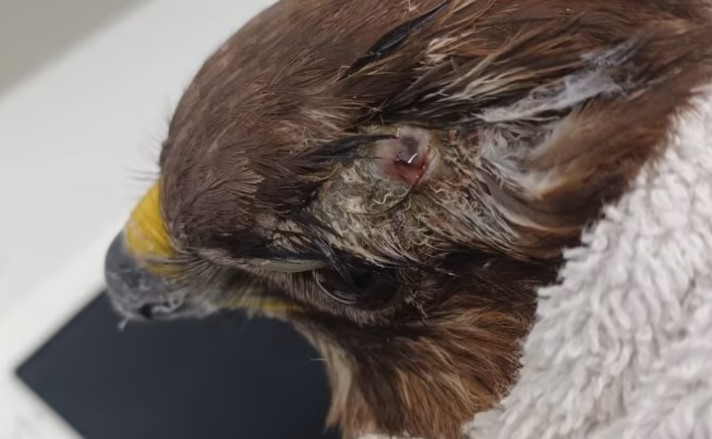
The RSPCA is investigating after a female buzzard was found having being shot in the head with an airgun pellet.

The buzzard was found in the front garden of a house in Walpole St Peter near Wisbech in Cambridgeshire. Unfortunately there are no details about when this discovery was made.

Buzzard with head wound. Photo: RSPCA

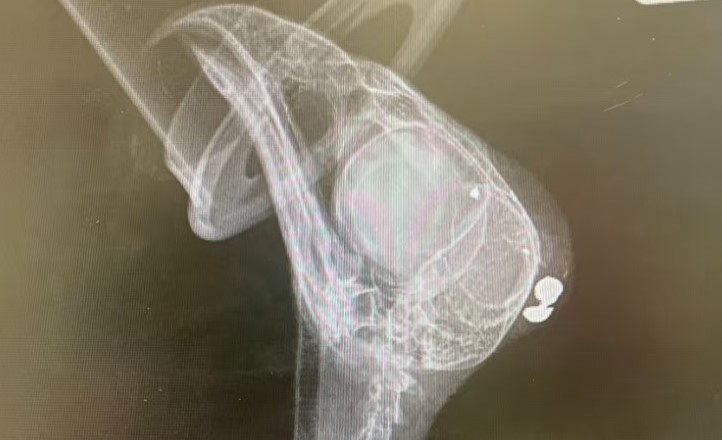
The RSPCA said the bird was thin and weak and was taken to a vet in Ely where an x-ray revealed the buzzard had an airgun pellet lodged in her head. It was considered ‘a miracle’ that it had missed both the skull and the eye.

The charity said the wound was infected and as the bird was emaciated it was likely she had been shot some time ago.

The buzzard has been put on antibiotics and pain relief and may need an operation to remove the pellet.

Vets think the pellet may be interfering with her eyesight, but hope she will be strong enough to be released into the wild eventually.

Buzzard x-ray showing the airgun pellet. Photo: RSPCA

RSPCA inspector David Podmore said: “It is upsetting to think that this beautiful bird was deliberately targeted and shot. While we do not know where the shooting would have happened, this is an offence under the Wildlife and Countryside Act 1981.

“We would urge anyone with any information about how this bird came to be harmed to call the RSPCA Inspector appeal line on 0300 123 8018 or the police.”

This news article was originally reported on the ITV website here.

Shot red kite found on a Durham grouse moor is successfully re-habilitated & released back to wild

At the end of March the RSPB issued a press statement about a shot red kite that had been found on a Durham grouse moor (see here).

An x-ray revealed multiple shotgun pellets in the kite’s body, resulting in a fractured wing. The kite was described as ‘fighting for its life’.

After several weeks of expert care and attention by the brilliant Jean Thorpe (Ryedale Wildlife Rescue) and her equally as brilliant colleagues at Battle Flatts Veterinary Clinic, today the red kite was successfully released back to the wild.

The RSPB has released this short video on Twitter:

Durham Constabulary is still appealing for information about the shooting of this kite.

If you have any information, contact Durham Constabulary’s Wildlife Crime Officer, PC Dave Williamson, by emailing david.williamson@durham.police.uk or calling in to Barnard Castle Police Station.

Alternatively, to share sensitive information in confidence, call the RSPB’s Raptor Crime Hotline on 0300 999 0101.

Red kite found shot on a Durham grouse moor is ‘fighting for its life’

The RSPB has just issued the following press release:

RED KITE FOUND SHOT ON GROUSE MOOR IS ‘FIGHTING FOR ITS LIFE’

  • The protected bird of prey was found grounded on a grouse moor in County Durham, in March 2023
  • An X-ray revealed multiple pieces of shot within the bird’s body
  • Durham Police and the RSPB are appealing for information

A Red Kite – a species protected by UK law – was found in Edmundbyers, County Durham in a stricken condition, peppered with shot and is currently fighting for its life in a bird hospital.

A member of the public noticed the bird at the side of a public footpath along Burnhope Burn on 17 March 2023 and reported it to the RSPB. Arriving on the scene, RSPB Investigations Officers found the Red Kite hiding in bracken, alive but unable to fly.

It was taken to a wildlife rehabilitator and looked over by a vet. An X-ray revealed the bird’s entire body was peppered with shot including pieces that had broken its wing.

All birds of prey are legally protected, making it a criminal offence to intentionally kill or injure one, punishable by an unlimited fine or jail.

Red Kites were historically persecuted in the UK but are making a comeback thanks to official reintroduction programmes in recent decades supported by Government. However these birds take a long time to spread out, and illegal killing is preventing the species expanding and gaining a foothold in areas where they were formerly found before they were driven to extinction in England around the late nineteenth century.

This incident comes in the same week when news of another Red Kite was found shot in Grantown-on-Spey, [Ed: see here] in the Scottish Highlands, also in March 2023. Sadly, it had to be euthanised due to the extent of its injuries.

This area of County Durham inside the North Pennines AONB has a history of raptor persecution. In 2021, another red kite was found dead near Edmundbyers, Co Durham having been illegally poisoned. Police-led searches in the area followed last year, however no one was prosecuted.

And in 2020, two Red Kites fitted with satellite tags unexpectedly and inexplicably vanished in the same area: one tag sent its last fix from the Derwent Gorge, the other from a grouse moor near Derwent Reservoir. Neither the birds or their tags were found, and it is believed they were illegally killed.

The link between driven grouse shooting and the illegal killing of birds of prey has been well documented. The RSPB’s latest Birdcrime report showed that 71% of all confirmed incidents of raptor persecution were in connection to gamebird shooting.

Jack Ashton-Booth, RSPB Investigations Officer, said:

“The kite is currently receiving the best care, and we understand it has been hopping up onto a perch and feeding itself. However it’s still not out of the woods. We are incredibly grateful to the diligent member of the community who noticed and reported the bird, and urge anyone else who finds a dead or injured bird of prey in suspicious circumstances to do the same. It could save a bird’s life and help us identify a raptor killer at large. We are also hugely grateful to Jean Thorpe, who is caring for the bird, as she has done so many others.

“It’s unlikely this Red Kite will have flown far from where it was shot. If you have any information about who might have done this, or know of anyone shooting birds of prey in this area, please get in touch.”

Friends of Red Kites (FoRK), a voluntary monitoring and community engagement organisation based in the North East, commented:

“We are sickened to hear that yet another Red Kite has been found on the moorlands of the North Pennines suffering from illegal persecution. Since the re-introduction of Red Kites to the North East of England in 2004, a number of birds have been found dead on or adjacent to these moorlands which are managed for grouse shooting. After nearly 20 years the population of breeding kites has barely advanced above 20 pairs. By comparison, populations of kites in other areas where they have been released, like the Chilterns, are booming. It is a sad indictment on parts of society that the people of the North East are denied seeing these beautiful birds gracing our skies more widely.” 

If you have any information, contact Durham Constabulary’s Wildlife Crime Officer, PC Dave Williamson, by emailing david.williamson@durham.police.uk or calling in to Barnard Castle Police Station.

Alternatively, to share sensitive information in confidence, call the RSPB’s Raptor Crime Hotline on 0300 999 0101.

ENDS

UPDATE 12th April 2023: Shot red kite found on a Durham grouse moor is successfully re-habilitated and released back to wild (here)

Suffolk Police arrest a man in connection with five shot goshawks found in Kings Forest in January

Suffolk Police have arrested a man in connection with their ongoing investigation into the illegal shooting of five juvenile goshawks that were found dumped in a car park next to Kings Forest near Thetford in January.

The 70-year-old man from the Brandon area was arrested yesterday on suspicion of killing/taking a schedule 1 wild bird, possession of a schedule one wild bird and breach of firearms licence conditions.

He was taken to Bury St Edmunds Police Investigation Centre for questioning and subsequently released under investigation, pending further enquiries.

Let’s hope the police investigation leads to someone being charged and convicted. There’s currently a £16K+ reward available to anyone who provides information leading to a successful prosecution. The reward fund comprises £5K from the RSPB (here), £5K from Wild Justice (here), and £6K+ from a crowd funder set up by Rare Bird Alert (here).

Here’s a press statement from Suffolk Police, published yesterday afternoon:

Man released in connection with bird shooting – Wordwell

A man arrested in connection with the shooting of five birds in Wordwell near to Bury St Edmunds has been released under investigation.

The male in his 70s and from the Brandon area was arrested yesterday (Monday 27 March) on suspicion of killing/taking a schedule 1 wild bird, possession of a schedule one wild bird and breach of firearms licence conditions.

The five birds of prey were found on Monday 16 January, having been left in a parking area just off from the B1106 in Kings Forest, near Wordwell. X-rays were undertaken which showed all five birds had suffered injuries from multiple pieces of shot.

Officers from Suffolk’s Rural and Wildlife Policing Team were assisted by Norfolk police colleagues, as well as officers from the RSPB Investigations team and the National Wildlife Crime Unit.  

The man was taken to Bury St Edmunds Police Investigation Centre for questioning and subsequently released under investigation, pending further enquiries.

All birds of prey are protected by law, and to kill or injure one could result in jail and/or an unlimited fine.

ENDS

UPDATE 7th June 2023: Man charged in relation to 5 shot goshawks found dumped in a forest carpark in January (here)

Hen harrier goes ‘missing’ from a Peak District grouse moor – police confirm his satellite tag had been deliberately cut off

Press release from RSPB (16th March 2023)

MISSING HEN HARRIER HAD SATELLITE TAG CUT OFF

*Anu, a satellite tagged Hen Harrier, vanished after roosting near Upper Midhope in the Peak District National Park – on land managed for driven grouse shooting.

*RSPB Investigations Officers located the bird’s tag three days later and police forensics found it had been deliberately cut off the bird. Investigators fear the bird was illegally killed and his tag removed to hide the evidence.

*Anu joins a long list of birds of prey which have suspiciously disappeared or been killed in relation to land managed for driven grouse shooting. Licensing of grouse shooting as a meaningful deterrent to wildlife crime is needed in England, replicating current proposals in Scotland.

Anu being satellite-tagged before fledging in Bowland in 2021. Photo: RSPB

Yet another mysterious disappearance involving a rare Hen Harrier has been identified by the RSPB and South Yorkshire Police.

Anu, a young male, tagged in Bowland in 2021, was one of several young Hen Harriers fitted with a satellite tag by the RSPB: a small, unobtrusive device which enables scientists to monitor the movements of individual birds and gain greater understanding of this rare and criminally persecuted species.

Anu’s tag indicated that he was roosting on a grouse moor near Upper Midhope on 10 February 2022. However, the tag data showed unusual movement from the bird after 10.25pm that night, when Anu would normally have been stationary.

The tag’s next signal on 11 February was more surprising still, indicating the bird was dead. After an intensive search, the tag was found, some 9km away to the east, on 14 February at Wharncliffe Chase. But suspiciously there was no sign of the body.

This was reported to South Yorkshire Police and forensic analysis confirmed the tag harness had been cut by a human rather than bitten or pulled off. The RSPB suspects that Anu was killed, and the body and tag separated to remove evidence from the crime scene, with the tag then dumped. Anu’s body remains missing, and further enquiries have been unsuccessful.

Tom Grose, RSPB Investigations Officer, said: “To find Anu’s tag detached from his body, having been deliberately cut off, categorically shows human involvement. It is highly suspicious that he roosted on a grouse moor the night before, was unexpectedly active in the hours of darkness and hasn’t been seen since.

“We suspect that Anu was killed that night, his tag cut off and then the body dumped away from the grouse moor by someone trying to cover their tracks. The deliberate killing of a wild bird is illegal, yet sadly criminal persecution has been identified is the main reason driving Hen Harrier declines.”

A 2019 study of satellite-tagged Hen Harriers by Natural England revealed that 72% of 58 satellite-tagged Hen Harriers were either confirmed or considered very likely to have been illegally killed. Furthermore, it found that Hen Harriers were ten times more likely to vanish mysteriously or die on a grouse moor than anywhere else.

Tom added: “When only a small percentage of Hen Harriers in the UK are tagged, you can’t help wonder what is happening to the other non-tagged birds. This is a species in trouble, and the UK population remains far below what it should be. As the nature crisis tightens its grip, illegal persecution of raptors must be stopped and that will only happen through the licensing of driven grouse moors – as is happening in Scotland – to bring accountability to this form of land management.”

The RSPB would like to thank South Yorkshire Police and the National Wildlife Crime Unit (NWCU) for their work on this case.

If you have any information about this incident, or know of anyone killing birds of prey, please call South Yorkshire Police on 101. The RSPB also has a dedicated confidential Raptor Hotline: 0300 999 0101. This is for information relating to crimes involving birds of prey only.

ENDS

The news of this latest ‘missing’ hen harrier coincides with the publication of some (more) propaganda from Natural England yesterday about how they’re planning to extend their dodgy hen harrier brood meddling trial. I’ll comment on that over the weekend, because that coincides with a recent FoI response I received about NE’s plans for brood meddling, but I won’t have time to write it before the weekend.

Meanwhile, I’ll just update the VERY long list of hen harriers that have been confirmed illegally killed or that have ‘disappeared’ in suspicious circumstances, mostly on or close to grouse moors, since the start of NE’s hen harrier brood meddling trial in 2018. We’re up to 77 and counting… I don’t see Natural England promoting those awkward but damning data.

Anu was already on the list of 77 – his suspicious disappearance was reported in February 2022 (here).

Fascinating new details emerge about investigation into raptor persecution on Shaftesbury Estate in Dorset

Earlier this year, criminal gamekeeper Paul Allen was sentenced for multiple wildlife, poisons and firearms offences committed on the Shaftesbury Estate in Dorset in 2021 (see here).

He first came to the attention of the police after a member of the public discovered a dead red kite on the estate in November 2020. Tests revealed it contained the poison Bendiocarb and this triggered a multi-agency raid in March 2021 led by Dorset Police’s (now former) wildlife crime officer Claire Dinsdale.

The poisoned red kite found on the Shaftesbury Estate by Dorset resident Johanna Dollerson

Officers found the corpses of six dead buzzards by a pen behind the gamekeeper’s house (tests later showed they had all been shot, including one that was was estimated to have been shot in the last 24hrs). Officers also found the remains (bones) of at least three more buzzards on a bonfire.

A loaded shotgun was found propped up behind a kitchen door (!) and 55 rounds of ammunition were found in a shed. Both the gun and the ammunition should have been inside a locked, specifically-designed gun cabinet, by law. The gun and the ammunition were not covered by Allen’s firearms certificate.

Officers also found a number of dangerous, and banned, chemicals, including two bottles of Strychnine, two containers of Cymag and a packet of Ficam W (Bendiocarb) in various locations, including in a vehicle used by Allen.

Some of you may also recall that Allen was initially charged with killing the red kite, but court records showed that this charge, along with two others, was subsequently dropped minutes before the hearing (see here), probably as some kind of bargaining agreement between the lawyers.

Allen was sentenced in February 2023 and escaped a custodial sentence due to his personal circumstances (see here).

If you recall, the Shaftesbury Estate was also where a young satellite-tagged poisoned white-tailed eagle was found dead, a year later, in January 2022. Tests revealed the eagle’s liver contained seven times the lethal dose of the rodenticide Brodifacoum but Dorset Police refused to conduct a search of the estate, despite already running an investigation into gamekeeper Paul Allen’s crimes on the same estate(!), and they still haven’t provided a credible explanation for that appalling decision (see here).

Now new details have emerged about what was found during the investigation into gamekeeper Allen, thanks to Guy Shorrock, a member of the PAW Forensics Working Group and a former Senior Investigator at RSPB. Guy has written a guest blog for Wild Justice to demonstrate how the Raptor Forensics Fund, initiated by Wild Justice in 2020, has been used to help bring a number of criminal gamekeepers to court.

In that guest blog, Guy discusses the forensic testing undertaken on a ‘cut open’ dead rat that had been found next to the red kite’s corpse. Tests revealed it, too, contained the poison Bendiocarb – in other words, it had been placed as a poisoned bait. Forensic testing also confirmed that the kite had consumed part of a brown rat. You don’t have to be Poirot to piece it all together but even though Allen’s vehicle contained multiple pots of Bendiocarb, this still isn’t sufficient evidence to demonstrate without reasonable doubt that he was responsible for placing the poisoned bait that killed that red kite. This is a very good example of just how high the criminal burden of proof is and why so many prosecutions against gamekeepers have failed.

What has also been revealed is that in addition to being poisoned by Bendiocarb, that red kite also contained NINE times the lethal level of the rodenticide Brodifacoum in its system!! Sound familiar? The dead white-tailed eagle, found on the same estate a year later, contained seven times the lethal dose. To me, this makes Dorset Police’s decision not to search the Shaftesbury Estate even more non-sensical than previously thought.

Wild Justice has asked its legal team to examine Dorset Police’s botched handling of the poisoned white-tailed eagle case and expects to have more news on that in due course.

Meanwhile, I’d really encourage you to read Guy’s guest blog on Wild Justice’s website (here), published this morning, for a fascinating insight into the pain-staking forensic work that goes in to prosecuting those who continue to kill raptors.

The Raptor Forensics Fund, initiated by Wild Justice and supported by donations from the Northern England Raptor Forum, Tayside & Fife Raptor Study Group, Devon Birds, and a number of generous individuals who wish to remain anonymous, is now running low (because it’s been used so often!). Wild Justice intends to top up the fund shortly. If you’d like to donate to Wild Justice’s work, please click here. Thank you.