Hen harrier shot in Ireland

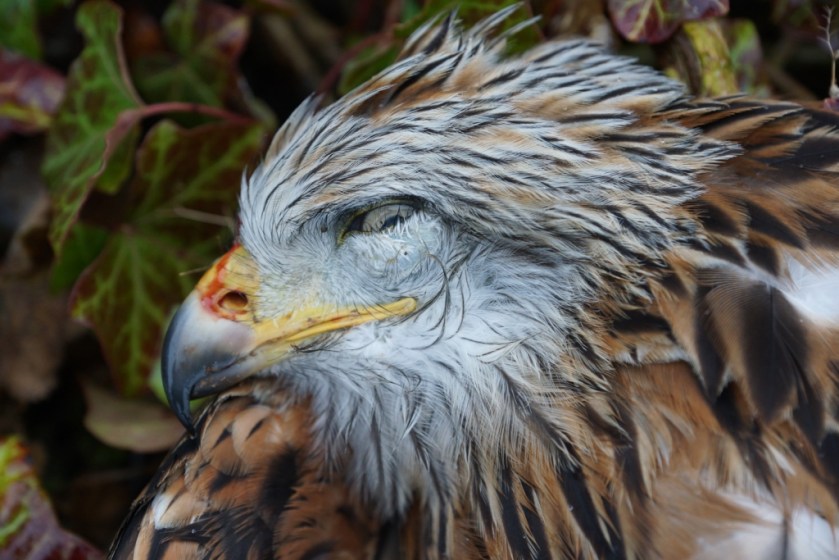
The Kerry Birding blog in Ireland (see here) is reporting that a hen harrier has been shot at a winter roost site. There’s no further information about whether the bird survived.

The author emphasises the importance of confidentiality in relation to known raptor sites and especially hen harrier winter roosts. It’s not just at their nest sites where this species is vulnerable; winter roosts are known to be targeted by armed criminals  intent on wiping out hen harriers, and this happens in England and Scotland too, not just in Ireland.

Press release from BirdWatch Ireland here

RSPB Scotland: 2011 persecution report published

RSPB Scotland has just published its latest report, The Illegal Killing of Birds of Prey in Scotland in 2011. You probably won’t be surprised or shocked by the content, especially if you’ve read the previous 17 annual reviews. In fact, when you read this 18th review, you might get a strong sense of déjà vu.

It opens with a Foreword by Stuart Housden, Director of RSPB Scotland. Apart from the new photo, this foreword looks like a cut and paste job from the 2010 report, with a few words or sentences added or adjusted. To be fair, not much has changed since the 2010 report was published so perhaps he felt justified in repeating what he’d written the previous year.

Then there are RSPB Scotland’s strategic recommendations for addressing raptor persecution. Again, these show a remarkable similarity to the recommendations made in the 2010 report, and also in the 2009 report. The recommendations were / are still good and to see them repeated again is a useful indicator of how little progress has been made by those with the power to push them forward.

Next come the tables showing the confirmed and probable persecution incidents recorded by the RSPB during 2011. It’s these tables that the game-shooting lobby usually object too – they’re especially reluctant to accept the ‘probable’ incidents although to date, they’ve failed to provide a convincing argument to account for any of them.

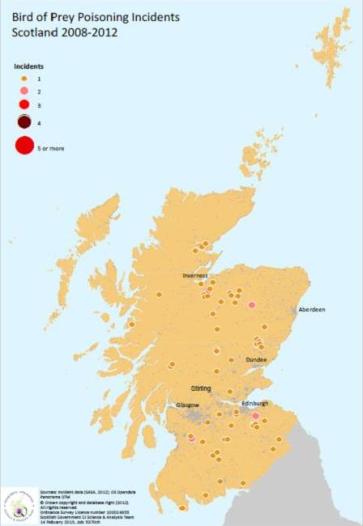
The data in the 2011 tables demonstrate once again that illegal raptor persecution is widespread, with incidents reported in Perthshire, Angus, South Lanarkshire, Aberdeenshire, Dumfries-shire, East Ayrshire, Borders and Inverness-shire. We counted 15 very familiar-sounding locations within these regions, although there are a few notable absentees this time. Have they stopped their criminal activities or have they just got better at covering up? Time will tell.

Just focusing on the confirmed incidents, in total 17 incidents of deliberate poison abuse were confirmed during 2011, involving 20 victims: 7 buzzards, 4 red kites, 1 golden eagle, 2 peregrines, 2 ravens and 4 other bird species. Sixteen other illegal incidents relating to shooting, nest destruction, and the use of uncovered spring traps or cage traps were confirmed. The victims included 8 buzzards, 2 peregrines, 1 goshawk, 1 sparrowhawk, 2 kestrels and 1 short-eared owl. As in previous years, not all of these incidents were publicised at the time they occurred. It’s a continual disappointment that several years have to pass before the public learns of these appalling crimes.

Once again the occupations and interests of those convicted for illegal raptor persecution crime have been analysed (data from 2003-2011 inclusive). 87% of them were gamekeepers (7% pigeon racers, 3% pest controllers, 3% farmers).

The report includes an interesting case study of poisoned raptors that have been found in recent years on the Glen Kyllachy and Farr Estate near Inverness. Very little of this information has been previously published and certainly this is the first time these photographs have been published. It’s a shame it’s taken several years for the info and images to reach the public domain but nevertheless it’s very encouraging to see RSPB Scotland highlight these cases, especially as Northern Constabulary hasn’t bothered.

All in all the report makes for grim reading, but nobody should be surprised by that. We all owe a large debt of gratitude to the RSPB’s Investigations Team for meticulously collecting these data and especially for making them publically available.

TO DOWNLOAD A COPY OF THE REPORT CLICK HERE

Here’s some media coverage:

RSPB Scotland press release here

BBC news article here

STV news article here

Herald Scotland article here

Scottish Gamekeepers Association: statement here

Scottish Land and Estates: nothing yet

@SNHMedia: “SNH report finds vast majority of gamekeepers highly qualified”. Link to this.

PAW Scotland: nothing yet

Hen harrier found shot dead on Aberdeenshire estate

According to the Scotsman, Grampian Police are appealing for information after a protected hen harrier was found shot dead on the Fettercairn Estate, Aberdeenshire, last month.

The owner of Fettercairn Estate is quoted as saying this:

Since its inception in 2006 Fettercairn Estate has been a long term participant in the North East Scotland Raptor Watch project. As such it was particularly distressing to hear that a dead hen harrier was found on the edge of the hill land  and I join in the appeal for witnesses to come forward“.

A Grampian Police spokesman is quoted as saying this:

Investigations have established that the bird had been shot and officers are appealing to members of the public who may have been in the area and may have seen something suspicious. Gamekeeping staff at Fettercairn Estate have already provided significant assistance to police in their enquiries and continue to work closely in the hope that the offender can be identified and brought to justice“.

It must have been another one of those armed hill-walkers.

At least Grampian Police have made a public appeal in a (relatively) timely manner – that’s definitely progress so well done to them.

After hearing the news, Scottish Environment Minister Paul Wheelhouse issued another warning about his intention to crack down on the continuing illegal persecution of raptors:

We will not tolerate the illegal persecution of protected species such as the hen harrier and, as I have said recently in relation to another shooting [the golden eagle that was found shot on a grouse moor on Buccleuch Estate, see here], I am prepared to look at further measures to strengthen and assist enforcement if we continue to see this flouting of the law in respect of protected species“.

That’s great Paul, but how many more incidents are required before you consider this a ‘continuing’ problem? One? Ten? Twenty? A hundred?

Article in the Scotsman here

Langholm hen harrier ‘Blae’: starvation was likely cause of death

Regular blog readers will know we’ve been following the story of the two Langholm hen harrier chicks since the summer: the female chick, ‘Blae’ was reported dead in early September and her sibling, ‘Barry’ was reported ‘missing’ just a couple of weeks later. Since then we’ve been critical of the lack of information that’s been made available to the public (previous blog entries here, here, here, here, here, here, here, here, here, here).

Blae’s probable cause of death has now finally been reported on the Making the Most of Moorlands Project website (see here: a blog written by Cat Barlow, the education project officer at MMMP). Before we discuss the probable cause of death, it’s worth recognising that Cat Barlow deserves a good deal of credit for reporting anything at all to do with these two tagged hen harriers. We understand that some of the Langholm Moor Demonstration Project partners were not, how shall we say, enthusiastic about the prospect of tagging more harrier chicks this year. Why not? Well probably because they know very well what happens to the majority of the dispersing birds and this doesn’t exactly cover the grouse shooting industry in glory.  We believe that Cat Barlow, representing MMMP and so not directly answerable to the Langholm Moor Demonstration Project, has stuck her neck out by reporting on this year’s birds. It’s noticeable that the official Langholm Moor Demonstration Project website has made no mention of them.

So, here’s Cat’s explanation for what happened to Blae:

Back in September we posted the news that the young female Hen Harrier from this year’s nest at Langholm had died. The satellite tag data allowed the carcass to be located and recovered. A post-mortem showed no evidence of shot and no visible injuries. The bird was very thin, suggesting starvation as the most likely cause of death. As a precautionary measure the carcass was sent for further tests. We have heard today that the toxicology results were negative for the commonly-abused pesticides. The body was not found on grouse moor and there was no evidence of human persecution. It is very rare to recover a Hen Harrier carcass, the last post regarding Barry’s demise October 10th 2012, describes a more common scenario, no carcass, no tag, no evidence of his cause of death“.

This result is not at all surprising. The fact that the carcass had been recovered was an early indication that persecution was not a factor; usually, as the above statement indicates, illegally persecuted hen harriers simply ‘disappear’ (e.g. they are buried or burned in order to hide any evidence of the crime). And they don’t just ‘disappear’ on any old random bit of land – they ‘disappear’ on land that’s managed for grouse-shooting. Without direct evidence though (e.g. a carcass), it’s all too easy for the harrier-killers to deny that systematic persecution is taking place, even though endless scientific studies have shown that persecution is so widespread that it’s having population-level impacts.

The persecution-deniers will probably make a big song and dance about Blae’s post-mortem and toxicology results. They’ll probably claim that they are vindicated and the reports of widespread hen harrier persecution are simply propaganda aimed at discrediting the grouse shooting industry. However, if Blae’s premature demise is representative of the majority of young hen harrier deaths, then where are all the other corpses? If they’ve been sat-tagged, surely their carcasses would be retrievable? Sure, young hen harriers, like the young of many species, suffer high natural mortality rates in their first year. That’s what makes the illegal persecution of these birds so damaging – the population loses extra birds in addition to the natural high losses and the population cannot be sustained with these additional losses (read the Hen Harrier Conservation Framework [here] for a more detailed explanation). 

We understand that Barry’s last satellite signal came from a grouse moor in the north of England. Predictably, his body has not been recovered and the grouse moor has not been named.

Well done Cat Barlow for making Blae’s results available. Perhaps the Langholm Project partners will feel inspired and reveal information about all the other lost hen harriers, and not just the ones who’ve died of natural causes.

SNH held their Species Framework conference in Edinburgh last week and this included a presentation on the Langholm hen harriers. During the conference, @SNHMedia put out the following tweet:

Hen harriers faring alot better in Scotland than in England – 550 pairs in the latest national survey“.

What an astonishing piece of spin! Of course hen harriers are faring better in Scotland than in England – with only one breeding pair of hen harriers in England this year, it’s not that difficult! What @SNHMedia failed to mention was that the Scottish hen harrier population is also in continuing decline and the reason for that, according to the Hen Harrier Conservation Framework report that they commissioned, is illegal persecution!

In other satellite tag news….did anyone see the news yesterday where an appeal went out to the public to help find a lost basking shark tag? Guess who put out the appeal? Northern Constabulary! Not only did the appeal feature on the BBC news website (here), but also on Northern Constabulary’s own website (here). This seems a bit strange, given that the loss of the basking shark tag was not related to a criminal offence, whereas all those ‘missing’ satellite-tagged golden eagles, whose disappearance is more than likely related to a criminal offence, don’t get so much as a mention…..

Update on the curious incident of the eagle in the night-time

Following on from yesterday’s blog entry, The curious incident of the eagle in the night-time (see here), we have an update…

First of all, a big thank vote of thanks to all of you who tweeted and shared the story on Facebook to help raise awareness about this situation. Special thanks to five Twitter users in particular: @TripleSter; @RareBirdAlertUK; @benjaminbittern; @Cekaelta; @ChrisGPackham.

Secondly, another big vote of thanks to everyone who made an effort and sent an email to Tayside Police’s Chief Constable to ask whether the death of this golden eagle was the subject of a criminal investigation. Your efforts have had an impact – a Tayside Police spokesman has responded by writing a comment on the blog. We’re reproducing it here so it doesn’t get buried:

We are concerned regarding this matter and, along with our partners in Grampian Police and the RSPB Investigations Unit, as well as our own Wildlife and Environment Officer, are continuing to undertake enquiries. Please be assured that Tayside Police will continue to investigate all circumstances surrounding this incident with a view to identifying those responsible and holding them to account for what is a terrible deed. Anyone who has information that can assist us should call 0300 111 2222, or speak to any officer“.

Before we discuss their comment, we’d like to acknowledge Tayside Police for engaging in the discussion. Although they have a duty to respond to emails sent to them by members of the public, they aren’t obliged to post comments on blogs or a similar forum and they deserve some credit for doing so in this instance.

Now, let’s get down to what they said:

They are concerned. That’s good.

They are continuing to make enquiries. That’s very good, but can we clarify that “this matter” / “incident” / “terrible deed” is in fact a CRIME? There seems to be a reluctance to use this term. This is an important distinction to make as it will affect the official wildlife crime stats that the police now have to provide to the Scottish Government each year (this requirement was brought in with the WANE Act) and also the ‘stats’ that the persecution-deniers trot out each year to ‘prove’ that illegal raptor persecution is ‘in decline’.

They are conducting their enquiries in partnership with Grampian Police and the RSPB Investigations Unit. That’s also very good.

They will “continue to investigate all circumstances surrounding this incident with a view to identifying those responsible and holding them to account for what is a terrible deed”. That sounds very good but is it anything more than just a media sound bite designed to placate an increasingly frustrated general public? It’s been six months, nearly seven months, since that eagle was found dead in early May 2012. What chances of finding any evidence now or in the future, so long after the event?

In the interests of transparency, we’d like to ask some further questions about the investigation to date. Obviously we don’t wish to jeopardise an on-going criminal investigation and so Tayside Police may not wish to answer these questions, although it is common practice for police forces to release some information during criminal inquiries so let’s see if they’re able to help this time. The questions that we’re asking should not have any negative effect on their continuing enquiries because it’s probably fair to say this investigation is now dead in the water; nobody is going to be brought to justice for the death of this eagle. We also know that the Scottish Gamekeepers Association is conducting its own ‘inquiry’ and that information about this investigation may have been passed to them by Tayside Police. If so, we hope the police will not treat us any differently.

We’d be interested to learn whether, during the early stages of the investigation, attempts were made to recover evidence from a wider search area of the land where the eagle was motionless for 15 hours before it was moved north to the lay-by where it was left to die? Also, were attempts made to recover evidence (e.g. eagle feathers or blood) from any vehicles or buildings that may have been used in this crime?

We’d also be interested to learn why Tayside Police haven’t publicised this incident, either at the time the dead eagle was discovered, or in the following months (e.g. with an appeal for information)? Tayside Police regularly post news items, appeals for information and investigation updates in the news section of their website; we wonder why this case was treated differently?

We also understand that there might have been some sort of approach by a defence agent wishing to access the dead eagle and/or the post-mortem results and we suspect this might have been an attempt to discredit the findings of the official post-mortem. i.e. to challenge the conclusions drawn by experts at the Scottish Agricultural College lab that the eagle’s severe leg injuries could have been caused by a spring-type trap. Did Tayside Police provide the findings of the official post-mortem to any defence agent? 

And finally, we go back to the Environment Minister’s statement about this incident. In whose interest was it to suggest that this was not a criminal offence? Who advised the Minister that the eagle’s injuries could have been the result of anything other than a criminal offence? It probably wasn’t the RSPB Investigations Unit given they put out a press release stating that they believed the eagle had been caught in an illegally-set trap (see press release here). That only leaves the police, unless of course the Minister’s office is taking advice from a defence agent, and that would certainly seem absurd. If it was Tayside Police, and we’re not saying it was, doing so would appear to undermine a criminal investigation before it even got off the ground (no pun intended).

Surely a government minister would not release a statement unless he was sure the advice he had being given was accurate? So, did Tayside Police advise the Minister’s office that the eagle’s injuries could have been caused by something other than a spring-type trap? If they did, it’d be interesting to know what the Minister’s office was told could have caused the eagle’s injuries other than a spring-type trap.

We’re calling on our blog readers to help find answers to these questions by asking Tayside Police, en-masse, to provide clarification on the above points. Just writing about the issues on a blog can help raise awareness but it’s unlikely to produce tangible results – the police aren’t obliged to respond (although, as mentioned above, Tayside Police, to their credit, did so yesterday and for that we applaud them). However, they are obliged to respond to individual emails from the general public.

This is an opportunity to shine a light on the investigation of raptor persecution crimes in the Tayside region. Regular blog readers will be well aware that the death of this golden eagle is not an isolated incident;  this region has seen more than its fair share of illegal raptor persecution in recent years, including the discovery of poisoned golden eagles, white-tailed eagles, buzzards, red kites, sparrowhawks, tawny owls, crows, as well as a series of poisoned baits. Very few of these crimes have resulted in prosecutions.

Here’s a summary of the questions to be asked:

  • Is the death of this golden eagle being treated as a CRIME?
  • Were attempts made to recover evidence from a wide search area?
  • Were attempts made to recover evidence from vehicles and buildings?
  • Why hasn’t Tayside Police publicised the death of this eagle?
  • Did Tayside Police provide details of the post-mortem to any defence agent?
  • Did Tayside Police advise the Minister’s office that the eagle’s injuries could have been caused by anything other than a spring-type trap? If so, what did they say could have been the cause of the injuries?

Please send questions to Tayside Police Chief Constable Justine Curran: justine.curran@tayside.pnn.police.uk

The curious incident of the eagle in the night-time

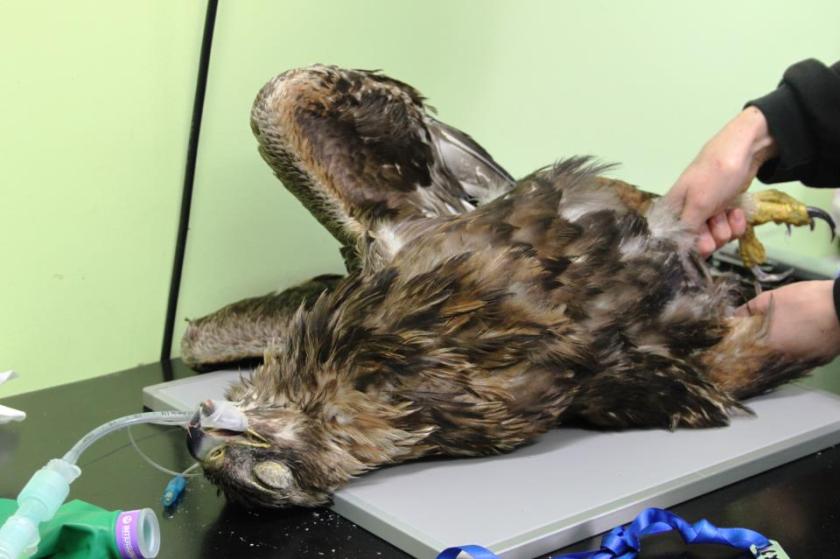
Six months ago, a dead golden eagle was found close to a lay-by on a quiet road in Aberdeenshire. The bird’s satellite-tracking data showed it had remained motionless on an Angus grouse moor for 15 hours, before inexplicably moving 15km north to the lay-by, in the dead of night, where it was found dead several days later. A post-mortem conducted by the Scottish Agricultural College laboratory in Aberdeenshire concluded that the eagle had suffered two broken legs due to trauma “that could be consistent with an injury caused by a spring type trap“. The SAC said the severity of the eagle’s injuries “would prevent the bird from being able to take off“.

This incident was not reported in the press until September 2012, four months after the eagle’s carcass had been discovered (see earlier blog on this here). Notably, the news was not released by Tayside Police, or Grampian Police; it was the RSPB that went public on this.

Since then there has been much confusion and muddying of the waters surrounding this case. As soon as the RSPB’s press release hit the national media, Environment Minister Paul Wheelhouse tweeted this:

26th September 2012 @PaulWheelhouse: This is a terrible story of an eagle suffering a lingering death – anyone with info please contact the police. He linked his tweet to this BBC news story.

It seems that like the majority of us, the Environment Minister considered this eagle’s death to be linked to a criminal offence. Why else would he have urged people to contact the police with information?

The public’s response to the media stories resulted in many people writing to the Environment Minister to express their outrage at the illegal killing of yet another golden eagle. The Minister’s response in early October was baffling; despite all the evidence to the contrary (sat tag data, corpse found, post-mortem results, and a long, long history of illegal raptor persecution linked to game management practices on grouse moors), as well as the inference from his earlier tweet that he believed this eagle’s death to be the result of a criminal act, the Minister’s aide said this:

The reports may suggest that the circumstances of this incident were suggestive of an offence however there is no hard evidence and it remains possible that there is an alternative explanation” (see here for earlier blog on this).

This statement led to further angry letters to the Minister, and on 24th October his aide wrote the following response to one of our blog readers:

You have commented on the Minister’s letter regarding the incident involving a young golden eagle in Aberdeenshire. Please allow me to clarify. The reports may suggest that the circumstances of this incident were highly suggestive of an offence involving illegal persecution. However, whilst that may be the most likely explanation, there is unfortunately no hard evidence to that effect. In the circumstances therefore it is not appropriate to comment on this case as an example of illegal activity. However, clearly the RSPB have offered a reward for information and it remains possible that this may yet be treated as a criminal matter” (click here to read the full letter in the comments section of an earlier blog on this).

So here we are in November and it is still not clear whether this case is being treated as a criminal investigation:

  • The Environment Minister thinks that it’s inappropriate to class this incident as a criminal matter.
  • Tayside Police haven’t put out any media statements whatsoever about this eagle.
  • Grampian Police haven’t put out any media statements whatsoever about this eagle.
  • PAW Scotland haven’t put out any media statements whatsoever about this eagle.

Wildlife crime, and specifically the illegal persecution of raptors, has been identified as a priority issue by the Scottish Government and the Scottish Police. We’re repeatedly told that raptor persecution incidents will be robustly investigated and the perpetrators brought to justice. Given the above bullet points, are we reassured that this is the case? Where’s the transparency? Some might argue that this is a deliberate attempt to suppress the figures concerning the number of illegally-killed golden eagles in Scotland. The question to be asked is very clear and very simple:

Is the death of this golden eagle the subject of a criminal investigation?

Let’s ask Tayside Police Chief Constable Justine Curran. Email: justine.curran@tayside.pnn.police.uk

Hare snare trial drags on

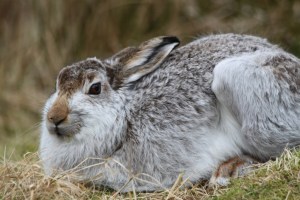
The hare snare trial, which is trying to establish whether a snare is a ‘trap’ (in legal terms) and if so, whether that trap is selective or non-selective, continued at Inverness Sheriff Court last Friday. The trial is centred on the allegation that a gamekeeper used illegal snares to take or kill mountain hares on Lochindorb Estate. He denies the charge. See here for background info on this landmark case.

The case was continued and is now set to conclude at the end of this month.

Here’s an earlier report by the SSPCA which shows that snares are, amongst other things, indiscriminate. Here’s an earlier scientific report, commissioned by DEFRA and undertaken by the Central Science Lab and GWCT, which shows that snares are, amongst other things, indiscriminate.

Here’s a link to the SSPCA website where they report on today’s conviction of a Scottish farmer (Iain Hugh McFadzean) for causing a badger unneccessary suffering in an illegally set snare. Well done once again to the SSPCA – another successful wildlife crime conviction to their credit. Can’t understand why the Scottish Government is dragging its heels in bringing forward the consultation to increase SSPCA’s powers. Unless of course they’re under pressure from certain groups who want to remain free to commit wildlife crime without being caught…

Hare snare trial continues today

The long-running (since 2009!!) hare snare case continues today at Inverness Sheriff Court.

Two gamekeepers from the Lochindorb Estate were alleged to have set illegal snares to catch mountain hares. Both men had denied the charges and part-way through the trial the charges against one of the gamekeepers were dropped.

This is seen as an important test case to determine whether it is legal to use an “indiscriminate trap” (in this case, does a snare constitute an indiscriminate trap?) to kill mountain hares unless the operator has a specific SNH licence to do so. The outcome of this trial could have far-reaching implications for the way our uplands are managed.

Previous blog entries on this case here, here, here, here, here.

2013 general licence consultation: OneKind’s response

Last month we blogged about how SNH was preparing to make changes to the 2013 General Licences via a consultation process (see here).

General Licences are not exactly what they say on the tin – they’re general but there’s no approval process for anyone to have one. If you want to kill certain bird species using certain methods, you don’t need to demonstrate any qualification or competence or even have proven experience: you simply download a copy of a General Licence and as long as you’ve read it (or say you’ve read it) and understood the terms, you’re good to go. It’s strange that it’s even called a ‘licence’ given that the user doesn’t have to do anything special in order to get one.

There are very obvious concerns with this form of ‘licensing’, as well as the ‘licences’ themselves, and we’ve blogged about some of these concerns before (e.g. see here, here, here, here and here).

The consultation has now closed and we expect to see the ammended new ‘licences’ on the SNH website in early December. It would also be interesting to see copies of all the comments that had been made during the consultation process. Whether SNH will publish those remains to be seen.

One group that participated in the consultation process was the animal charity, OneKind. They’ve published their responses which can be read here. Well done indeed.

Scottish Birdfair 2013: disappointing venue choice

RSPB Scotland have just announced their choice of venue for the 2013 Scottish Birdfair. Astonishingly, they’ve chosen Hopetoun House again (see announcement here).

The Scottish Birdfair is not to be confused with the excellent British Birdfair which is held at the Rutland Water Nature Reserve, where raptor conservation is actively practiced and promoted, e.g. see here.

The inaugural Scottish Birdfair took place in 2012 and was held at Hopetoun House. This choice of venue did more than raise a few eyebrows because of the link between Hopetoun and the Leadhills Estate. For background:

https://raptorpersecutionscotland.wordpress.com/2012/03/13/rspb-criticised-over-link-to-hopetoun-estate-for-scottish-bird-fair/

https://raptorpersecutionscotland.wordpress.com/2012/03/19/unravelling-the-relationship-between-hopetoun-and-leadhills-estates/

https://raptorpersecutionscotland.wordpress.com/2012/08/17/leadhills-hopetoun-getting-closer-to-the-truth-part-1/

https://raptorpersecutionscotland.wordpress.com/2012/08/20/leadhills-hopetoun-getting-closer-to-the-truth-part-2/

https://raptorpersecutionscotland.wordpress.com/2012/07/13/scottish-birdfair-unaware-or-just-dinnae-care/

https://raptorpersecutionscotland.wordpress.com/2012/11/07/sign-of-the-times/

The concept of the Scottish Birdfair is great; who would argue that holding an event to promote Scottish birds and their conservation among the general public is a bad thing? But we’re at a complete loss to understand the venue choice; it seems to be a massive kick in the teeth for all those people, including the RSPB’s own Investigations Team, who have spent years and years uncovering allegations of illegal raptor persecution at Leadhills and fought hard battles to get some of those allegations proven in a court of law.

RSPB Scotland has previously defended its venue choice by saying they accept the Earl of Hopetoun’s condemnation of illegal raptor persecution. There’s no doubt that the Earl has repeatedly condemned such activities, but then so did over 200 Scottish landowners in a 2010 letter (see here) to the then Environment Minister, Roseanna Cunningham and yet still the persecution continues…

We expected better of the RSPB, especially as one of the leading groups fighting against illegal raptor persecution. What’s their strapline these days? It used to be ‘Standing up for Nature’, now they use ‘Nature’s Voice’. Hmmm, really?