Aftermath

Thur 7 May - Copy

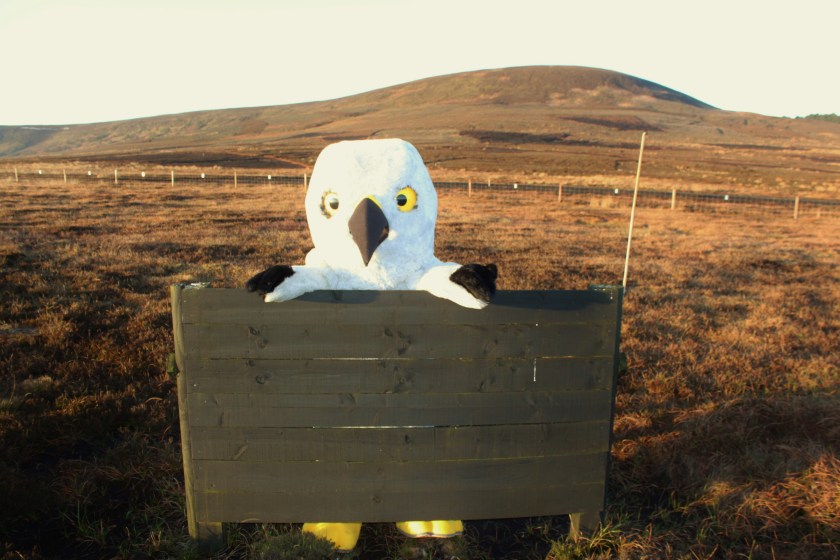
This photograph of Mark Avery occupying a grouse butt in the North York Moors was supposed to illustrate a post entitled ‘Henry’s Tour: Day 25’, which was going to be all about voting for the environment in today’s general election. Circumstances have dictated a change of plan.

In the aftermath of yesterday’s appalling news that three adult male hen harriers have ‘disappeared’ from three active nests in the Forest of Bowland, emotions have been running high.

Many of us were engulfed by a thick red mist and we reacted angrily on social media last night – and quite right too. No apologies from us on that score. It felt personal and that’s exactly how it needs to feel if we’re to maintain this fight because it’s going to be a long-running and bloody battle.

This morning the red mist has subsided but has been replaced with a deep burning anger that won’t be shrugged off, nor appeased by superficial expressions of sadness from those within the grouse-shooting industry.

In the midst of last night’s fury it was tempting (and indeed some of us were tempted) to suggest some radical, unlawful action. That’s hardly surprising given the almost entirely absent political will and enforcement measures that could stop this travesty. But calmer heads must prevail; unlawful activity is what we’re protesting against so we have to stick within the law ourselves.

That doesn’t mean that our resolve has been tempered. Far from it. If anything, yesterday’s news has only served to inflame that resolve. It just means we have to be smarter, more creative and even more visible than before. Make no mistake, this is a war and we’re not going to run for cover now.

There were a lot of phone calls made last night and there will be many more meetings of minds as we work out our next moves. For now, there are several ways you can channel your anger:

1. Occupy the butts.

Go to a grouse moor, find a grouse butt, take a photograph of yourself occupying the butt. In the very near future there will be a webpage where these images can be posted. Finding one of these butts is easy – you don’t have to walk for miles across the moors – a lot of them are right there by the roadside. Grouse butts are normally marked on OS maps at 1:25000 scale. Try www.streetmap.co.uk and zoom in on your favourite moor.

It’s not illegal to stand in a grouse butt and take a photograph, as long as you are not damaging it nor interfering with ‘lawful activity’ (i.e. disrupting a driven grouse shoot). Some people have suggested doing this on the Inglorious 12th – that’s not a good idea. We’d encourage you to visit a grouse butt at any time between now and Hen Harrier Day (Sun 9th August) – just 3 months away – before the shooting starts on 12th August.

2. Vote Hen Harrier as the National Bird.

This is a campaign organised by David Lindo (The Urban Birder) to try and find the nation’s favourite bird. To be honest, we haven’t paid much attention to it before now, partly because we are supporting RSPB Scotland’s petition to name the golden eagle as Scotland’s national bird (although it has since become mired in ludicrous bureaucracy as Ministers argue whether there’s a ‘need’ for a national bird – see here), and partly in respect of nationalist sensitivities. However, what is clear is that the hen harrier’s plight needs far greater public awareness than it currently has and an easy way to raise that awareness is to get this species noticed in a ‘national’ (UK) albeit unofficial poll. Incredibly, it has already made the final ‘top ten’ so in many ways this is already a success, but the closer it gets to being voted as number one, the more publicity it will receive. Voting closes at midnight tonight. You can vote here.

Finally, this isn’t over. The only thing necessary for the triumph of evil is that good people do nothing.

3 male hen harriers ‘disappear’ from active nests in Bowland

Bastards.

http://www.rspb.org.uk/community/ourwork/b/martinharper/archive/2015/05/06/bad-news-from-bowland.aspx

Pesticide disposal scheme reveals massive stash of banned poisons

In February this year the Scottish Government launched the latest ‘pesticide disposal scheme’ – a free service allowing those who are still in possession of certain banned poisons an opportunity to get rid of them without fear of consequence.

We had mixed feelings about this scheme (see here), not least a sense of frustration that ten years after many of these poisons were banned, the criminals still in possession would have yet another opportunity to escape justice. However, this feeling was outweighed by the importance of removing these substances so they could no longer be (illegally) held / used.

Two and a half months in to the scheme, the Scottish Government has today announced that the scheme will end on 29th May 2015 – press release here.

According to this press release, so far the scheme has received requests for 99 poisons to be collected. These are as follows:

Sodium Cyanide (44)

Strychnine (30)

Aluminium Phosphide (8)

Mevinphos (5)

Carbofuran (5)

(Alpha)Chloralose (4)

Unknown (2)

Aldicarb (1)

We were particularly interested in the amount of Carbofuran that had been handed in – apparently more than 80kg from just five sites.

80kg of the gamekeepers’ ‘poison of choice’! That’s an incredibly large stash. To put it in context, the largest stash found to date was 10.5kg – recovered during a raid on Skibo Estate in 2010 after the discovery of three poisoned golden eagles. The RSPB calculated that that was enough to kill every single raptor in Scotland six times over (see here). Bear in mind that Carbofuran is so highly toxic that it only takes a couple of grains to kill; imagine how much damage 80kg of the stuff could do – imagine the equivalent of 80 bags of 1kg sugar and the hundreds of thousands of granules inside each of those bags!

It’s frightening to think how much more Carbofuran has been stockpiled on estates and farms across Scotland. If 80kg has been recovered from land users who have no intention of using it, imagine how much is being kept hidden by those who have no intention of handing it in but every intention of continuing to use it.

It’ll be interesting to see just how much more is handed in before the end of the disposal scheme, and even more interesting to see what sort of sentence the next inevitable poisoning case will bring.

The release of today’s information is interesting to us for another reason, too. On 27th March, one of our blog readers submitted an FoI to the Scottish Government to ask for the following information relating to the pesticide disposal scheme:

1. The type and number of poisons handed in since the scheme began on 23 February 2015 to date.

2. The cost of the scheme to date.

3. The first three letters of postcodes from where the poisons had been collected.

Our blog reader knew that all this information was being collated by the Scottish Government and he also knew that the scheme was on-going, so he qualified his questions by adding ‘to date’ at the end.

Here’s the reply he received last week:

Dear XXXXX

REQUEST UNDER THE ENVIRONMENTAL INFORMATION (SCOTLAND) REGULATIONS 2004 (EIRs)

Thank you for your request dated 27 March 2015 under the Environmental Information (Scotland) Regulations 2004 (EIRs).

Your request

You asked to be provided with the following information:

  1. The type and number of poisons handed in since the scheme began on 23 Feb 2015 to date.
  2. The cost of the scheme to date.
  3. The first three letters of postcodes from where the poisons have been collected.

As the information you have requested is ‘environmental information’ for the purposes of the Environmental Information (Scotland) Regulations 2004 (EIRs), we are required to deal with your request under those Regulations.  We are applying the exemption at section 39(2) of the Freedom of Information (Scotland) Act 2002 (FOISA), so that we do not also have to deal with your request under FOISA.

This exemption is subject to the ‘public interest test’.  Therefore, taking account of all the circumstances of this case, we have considered if the public interest in disclosing the information outweighs the public interest in applying the exemption.  We have found that, on balance, the public interest lies in favour of upholding the exemption, because there is no public interest in dealing with the same request under two different regimes.  This is essentially a technical point and has no material effect on the outcome of your request.

Response to your request

While our aim is to provide information whenever possible, in this instance an exception under regulation 10(4)(d) (unfinished or incomplete information) of the EIRs applies to all of the information you have requested. This exemption applies because that information is still in the course of completion.  We are unable to provide the information you have requested because the scheme has not been concluded. As the scheme has not yet closed the data you have requested is still being collated, some of this work is being undertaken by an external administrator. We intend to publish some details in respect of your points 1 and 3 in a press release ahead of the closure of the scheme; this is likely to be issued before the end of May 2015.  When the scheme is formally closed and a final report is given to the Minister for Environment, Climate Change and Land Reform, further information, including costs related to the scheme will be published.

This exception is subject to the ‘public interest test’. Therefore, taking account of all the circumstances of this case, we have considered if the public interest in disclosing the information outweighs the public interest in applying the exception. We have found that, on balance, the public interest lies in favour of upholding the exception. We recognise that there is some public interest in release as part of open, transparent and accountable government, and this will be met by our planned publication. However, this is outweighed by the public interest in ensuring that unfinished or incomplete information which is still in being worked on is not disclosed when it might misinform the public.

END

That’s a fascinating response. They refused to release ‘unfinished or incomplete information’ to an individual member of the public, and yet a week later they publish, er, ‘unfinished or incomplete information’ in an official government press release!

It’s also interesting to note that Scottish Land & Estates published a news article on their website, dated 9th April 2015, stating that more than 80 calls had been taken by the scheme (see here). The question is, how did SLE get that privileged information and did they get it from the Scottish Government?

One rule for one and one rule for another? Surely not.

Henry’s Tour: Day 24

Wed 6 May - Copy

Henry is visiting the premises of Yorkshire Game in North Yorkshire.

According to its website, Yorkshire Game supplies fresh and frozen oven ready game and wild venison to supermarkets, wholesalers, butchers and food service. Their most popular products are grouse, pheasant, partridge, hare, rabbit, wild venison, wild duck and woodpigeon.

You might remember we blogged about Yorkshire Game quite a lot last year. Yorkshire Game was the sole supplier of grouse to Marks and Spencer: See this information sheet –  Marks and Spencer Game

However, when we, Mark Avery, Ethical Consumer, RSPB, and many others asked Marks and Spencer to reassure their customers that they were sourcing their grouse from estates that weren’t involved in the illegal persecution of hen harriers and other protected species (see here, here, here, here), they couldn’t. They couldn’t even tell us the name of the individual estates because that was considered “commercially sensitive information“, which was slightly odd for a company that is big on traceability and is more than happy to tell you the name of the actual farmer who has supplied their beef and lamb!

Anyway, as we all know, increasing public pressure forced Marks and Spencer to eventually make the bold move to stop selling grouse for the forseeable future, stating, “We have not been able to guarantee a responsible source of red grouse in the numbers we need” (see here).

That was a big result. We’ll be watching with interest to see what happens this year.

Meanwhile, Mark Avery has today published a long list of London restaurants who are believed to sell red grouse and he’s encouraging people to contact those restaurants to ask them about the provenance of their grouse. Hopefully many of you will join in.

We’ll also be keeping an eye on Yorkshire Game’s website, which prominently features the word ‘Traceable’ on its home page. It also has a sub-category named ‘Suppliers’ which should make for interesting reading, if Yorkshire Game ever get around to finishing the site’s construction. Which of those suppliers are grouse moors in North Yorkshire and which of those moors has supported the successful breeding of hen harriers in recent years? According to our information (which comes from an impeccable source) hen harriers haven’t bred successfully in North Yorkshire since 2007!

We’re also interested in Yorkshire Game’s sister company, The Blackface Meat Company in Scotland. According to their website, they ‘insist on traceability’, they source their gamebirds from ‘selected Scottish estates’ which are ‘well managed’ and grouse is their ‘speciality’. Sounds like a wonderful company who’d be happy to share information about the provenance of their game birds. Let’s see, shall we?

Interesting bedfellows 3

GWCT Scottish Auction 2015 cover - CopyThe Game and Wildlife Conservation Trust (GWCT) would probably like to be thought of as an organisation with strong leadership within the game-shooting industry and a zero tolerance of illegal raptor persecution. Noble aims indeed.
Like most charities, they undertake a lot of fundraising activities to help them achieve their aims. One such activity is their annual Scottish auction – the next one due to take place on 14th May 2015.

They’ve very thoughtfully published this year’s auction catalogue (see here) which allows us to see exactly who is providing financial support to this ‘independent charity‘.

They have several big-name sponsors, and not for the first time, one of them includes the investment bank and hedge fund Artemis. Artemis was reportedly co-founded by John Dodd, the former owner of Glenogil Estate in the Angus Glens (he reportedly sold up in 2013 – see here).

A quick scan of John Dodd’s directorships shows his current links to various Artemis companies and his resignation from Glenogil Estates Limited in 2013.

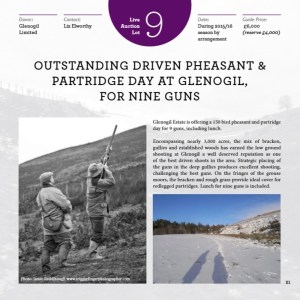
GWCT Scottish Auction 2015 Glenogil lot - CopyOf further interest is one of the live auction lots listed in the catalogue. Live auction lot #9 to be specific. This lot is for a day’s driven pheasant and partridge shooting for nine guns at Glenogil Estate. The donor is listed as Glenogil Limited. We wondered who was behind Glenogil Limited and whether this was a different company to Glenogil Estates Limited.

It turns out that Glenogil Limited is a relatively new company (two years old) whose business activity is listed as ‘Hunting, trapping and related service activities’. The registered office address and the trading office address are listed as ‘The Estate Office Glenogil, by Forfar, Angus’. Hmm. We were also interested to note that their most recently-appointed Director is someone by the name of Mr R.C. Turcan. Would that be the same Robert Turcan from the esteemed law firm Turcan Connell? Apparently so.

Fascinating stuff.

Previous blogs on interesting bedfellows here and here.

Henry’s Tour: Day 23

Tues 5 May  - Copy

Henry is visiting Lartington, a small village in Teesdale in the northern Pennines.

To understand the significance of this location, please see Mark Avery’s blog here.

Mark has written to several London restaurants, all believed to sell grouse, to ask them about the provenance of the red grouse they serve and also what measures they’ve taken to ensure ‘their’ red grouse are from a sustainable source.

We’ve written to ten Scottish restaurants, three of which are Michelin-starred, all believed to sell grouse, to ask them the same questions.

We’ll publish their responses (or lack of) here in due course.

Buzzard shot and killed in North York Moors National Park

A breeding female buzzard has died from shotgun injuries in the North York Moors National Park. She was discovered near Old Byland.

Police Wildlife Crime Officer Jez Walmsley is investigating.

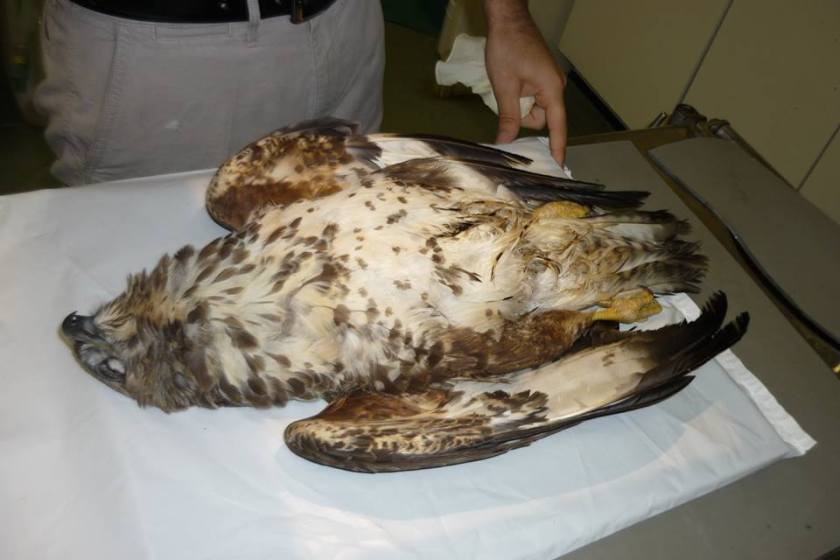
Photo via Jean Thorpe, Ryedale Wildlife Rehabilitation Centre, North Yorkshire.

BZ shot Malton April 2015

Henry’s Tour: Day 22 – occupy the butts

Wednesday 29 April  Copy

Henry made it up on to the Snilesworth Estate – miles and miles of open moorland ‘managed’ for driven grouse shooting.

Amazingly, he didn’t find any female hen harriers.

In fact he didn’t see a single raptor during his visit.

He did see a lot of grouse shooting butts though so he went over for a closer look:

Thursday 30 April  Copy

He staged a mini ‘occupy the butts’ protest and wondered if this idea might take off – lots of people visiting grouse butts to have their photo taken. Perhaps a webpage will appear in the run up to this year’s Hen Harrier Day (Sunday 9th August) where all the photos could be displayed.

Before he left the moor, Henry and his minder left a present on top of the grouse butt for the local gamekeepers:

Friday 1 May Copy

Wonder where he’ll be next week.

#HaveYouSeenHenry

‘Wildlife crime cannot be tolerated in modern day Scotland’, says Environment Minister

Environment Minister Dr Aileen McLeod has written an article on wildlife crime that has been published in the Holyrood magazine:

WILDLIFE CRIME CANNOT BE TOLERATED IN MODERN DAY SCOTLAND

In the past year, between April 2014 and February 2015, almost 250 wildlife crimes were recorded by Police Scotland.

That’s 250 too many.

The crimes included persecuting badgers, poisoning birds of prey and trading in some of the world’s most endangered species.

There is no room for complacency – last year saw one of the worst ever bird of prey poisoning cases, with the discovery of 12 dead red kites and four buzzards in Ross-shire, which were confirmed by SASA as having been poisoned.

I want to make it abundantly clear that the illegal poisoning of wildlife cannot – and will not – be tolerated in a modern Scotland.

This is one of our priorities which the Scottish Government is continuing to tackle head-on. I recently launched a scheme, with the support of PAW Scotland partners, to get rid of illegal pesticides which could be used to poison wildlife.

The scheme allows those who know, or suspect, they are in possession of certain pesticides which are illegal, to dispose of them safely and confidentially. Arrangements are also in place for SNH to restrict the use of general licences where there is evidence of wildlife crime.

Here in Scotland we have the strongest wildlife legislation in the UK, and in the last few months we have seen the first ever custodial sentence for the killing of birds of prey and the first conviction of a land owner under the vicarious liability provisions, for crimes committed in 2012.

I believe this sends out a clear message to those who continue to illegally target Scotland’s wildlife that their actions will not be tolerated.

Recently I helped Police Scotland launch its new awareness campaign to tackle wildlife crime in Scottish cities, towns and rural areas.

Figures reported by Police Scotland indicated that the detection rate for wildlife crime has increased from the previous year by almost 13 per cent to a 77 per cent detection rate and I’m pleased to see that more is being done to catch those offenders.

As the Chair of the Partnership for Action Against Wildlife Crime in Scotland I am delighted to support this campaign. In Scotland we have long recognised the value of our wildlife and the importance of protecting it.

Police Scotland’s campaign will play a key role in raising awareness about wildlife crime and what people should do if they encounter it.

Investigations into wildlife crime can be difficult so it is essential that we work closely with our partners to get the message out there and raise public awareness to help us prevent it from happening in the first place.

Last year, the Scottish Government’s second annual wildlife crime report was published in a bid to develop the bigger picture of what offences are occurring in Scotland. Figures in the report showed that the largest volume of wildlife crime in Scotland is poaching related – fish, deer and coursing offences.

While poaching is the most commonly recorded offence, crimes against our rare birds of prey and vulnerable freshwater pearl mussel populations are of most serious concern in terms of damage to Scotland’s ecosystems and our reputation.

We must continue to work with stakeholders to raise awareness and therefore ensure prevention, so that these crimes decrease and stop. We are not there yet but with the help of the PAW Scotland partners and the actions of the public I am confident that we are moving in the right direction.

Dr Aileen McLeod, Minister for the Environment, Climate Change and Land Reform

END

It’s good to hear from the Environment Minister on this issue. Five months in to her tenure as Environment Minister, she’s been relatively quiet. Perhaps that’s a bit unfair, as we’re comparing her perceived (public) involvement on this issue with that of her predecessor, Paul Wheelhouse, who clearly was very engaged with the subject. She also has a wider portfolio of responsibilities than Wheelhouse had, so of course her time is going to be squeezed. Nevertheless, we haven’t yet seen much evidence that Dr McLeod is coming in with all guns blazing.

Whilst the above article, and sentiment, is to be welcomed, what does it actually amount to? Not very much, to be honest. It’s the same old rhetoric that we’ve been fed for years: ‘it’s a priority’; ‘it won’t be tolerated’; ‘there’s no room for complacency’, yada yada.

Meanwhile, raptor persecution continues and Police Scotland are doing their level best to keep the details from the public domain. We’re aware of several crimes against raptors that have taken place within the last 12 months that still have not been publicised – and we probably don’t know the half of it. It’s interesting to compare this policy of secrecy with the policy of openness being displayed by North Wales Police. One of their wildlife crime officers, Sgt. Rob Taylor, is frequently telling his Twitter followers what wildlife crimes he’s currently investigating. More power to him. His openness doesn’t seem to be affecting the investigation of those offences so what’s the real reason for Police Scotland hiding the facts about the crimes they’re supposedly investigating?

There have been a couple of big success stories in Scotland – the first vicarious liability conviction of a landowner and the first custodial sentence for a raptor-killing gamekeeper. These were both excellent results, there’s no doubt about that, but they were both a long, long time coming and, so far, have proved the exception rather than the rule.

How about the Environment Minister telling us whether the SSPCA will be granted increased investigatory powers? The public consultation closed almost 8 months ago! What’s the decision?

How about the Environment Minister giving us an update on the Govt-commissioned report from Professor Poustie on his review of wildlife crime penalties? That was due ‘early in the New Year’. Where is it?

How about the Environment Minister telling us why SNH haven’t yet publicised any General Licence Restriction Orders for estates where raptor persecution is believed to be taking place? They’ve had the power to enforce such restriction orders since September 2014, for incidents that have taken place since 1st January 2014. What have they been doing for the last seven months? Have they imposed any restriction orders or not? If not, why not?

And please, Minister, will you stop implying that the Ross-shire Massacre only claimed 16 victims. Twenty two raptors were found dead in that one incident. Sure, only 16 have been confirmed as victims of poisoning but the remaining six birds did not all just die of natural causes at the same time, in the same fields where the confirmed poisoned corpses were found. And by the way, can you tell us why Police Scotland has not yet released the name of the poison(s) used to kill those protected species?

Henry’s Tour: Day 21

Tuesday 28 April Copy

Hmm, Snilesworth, that rings a bell.

A long time ago, there was some trouble at Snilesworth.

It’s been described as a ‘fantastic moor‘ and if Mr Osborne is still involved it should be amazing for hen harriers because apparently he wants to see more of them ‘on or near grouse moors’.

Henry headed up to the moor expecting a warm welcome from the gamekeepers and a bevy of potential mates who might be impressed with his skydancing moves….