Hen harrier: ’cause of death withheld’

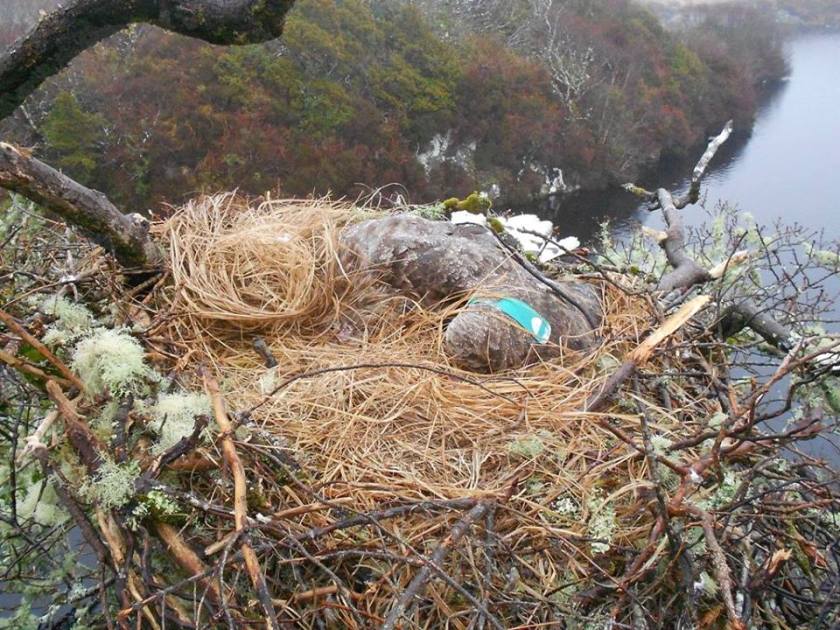
hh LAURIE CAMPBELLLast June we blogged about an illegally-killed hen harrier that had been found dead on moorland near Muirkirk in south west Scotland. The adult female’s corpse was discovered close to a nest containing two live chicks (see here).

At the time, Police Scotland refused to reveal the cause of death. Det. Inspector Graham Duncan of Kilmarnock CID was quoted as follows:

Whilst at this time we cannot divulge how the bird was killed, we do believe it was the result of a criminal act and we need to establish why this has happened“.

Pretty much everyone  in the country will know exactly ‘why this has happened’ – well, everyone it seems except Kilmarnock CID.

We suggested the harrier had probably been shot, although one of our readers commented that it could also have been clubbed to death – as has happened previously to hen harriers at Muirkirk.

Eight months on and the cause of death is still being withheld. Here’s what the latest SASA report says about this case:

Cause of death withheld due to specialist knowledge‘.

Marvellous.

It’s also interesting to note that SNH has not enforced a General Licence restriction on the land where this bird was found. Just as we discussed yesterday with the case of the poisoned red kite (see here), the illegal killing of this harrier seems to meet all the criteria needed for immediate enforcement action:

This hen harrier is not the first to be illegally-killed in the Muirkirk area – it’s one of many in a long, long line – read this article from 2008(!) detailing what was going on in this so-called Hen Harrier Special Protection Area; the conservation impact of killing a hen harrier is obvious; and the evidence [her carcass] was fresh.

So why the delay in enforcement?

Why is it so difficult to get the police (and in this case, SNH) to do their jobs properly?

SNH slow to enforce general licence restriction for poisoned red kite

It’s been four months since SNH set in place its procedures for restricting the use of General Licences on land where evidence of raptor crime is apparent.

Rolled out on 6th October 2014 (see here), this new measure was to be back-dated to incidents that have occurred since 1st January 2014. And there are plenty of those, some of which have reached the public domain and some of which have been deliberately kept quiet.

One of those which has been kept quiet is the illegal poisoning of a red kite which was found dead in central Scotland last July (seven months ago). It had died after ingesting the banned poison Carbofuran.

A couple of weeks ago we blogged about this particular case (see here) and we encouraged blog readers to email Andrew Bachell, SNH’s Director of Operations, to ask whether a General Licence restriction had been enforced. Here’s his response:

Dear XXXXX

Thank you for your e-mail. No restrictions have yet been implemented on a General Licence, including for this case.

We all find crimes such as these abhorrent and we, along with Scottish Ministers are fully committed to tackling wildlife crime. The restrictions on the use of General Licences are one tool we can use to help. In order to do so, we have been meeting regularly with the Police to review and discuss all evidence of bird-crimes that occurred in 2014 in line with our decision-making framework (see http://www.snh.gov.uk/docs/A1417398.pdf).

This document highlights that the decision to restrict the use of a General Licence will be based on evidence provided by Police Scotland and will be made on a case-by-case basis. In making a decision each piece of evidence will be assessed against criteria including:

– The strength of evidence that those activities had been carried out by owners or managers of that land

– The number or frequency of such instances

– The actual or potential conservation impact of those activities;

– The age of the evidence.

– Any history of previous, similar instances.

Whilst no restriction has yet been published, as soon as we were informed by Police Scotland about this case it has been under consideration by SNH against these criteria and we have been in close contact with the Police as the investigations continue. We will publish any restrictions on the website as and when they are implemented. In the meantime, I trust you can understand we cannot discuss individual cases, and particularly ones which are subject to ongoing police investigations such as this one.  

Yours sincerely

Andrew Bachell

Director of Operations

Scottish Natural Heritage

It’s a predictable response in that it doesn’t tell us very much other than the case is under consideration. What it doesn’t explain is the delayed enforcement action. When you consider that the decision whether or not to restrict the General Licence is based on a civil burden of proof rather than a criminal burden of proof (i.e. a conviction), it’s not clear why SNH is waiting to hear about the on-going police investigation. When you look at the other criteria that SNH is using to assess these cases, we believe the criteria for enforcement action have been met: This poisoned red kite is not the first case of raptor persecution in this area (although no known prior convictions but that shouldn’t matter because criminal burden of proof isn’t required); the conservation impact of poisoning a red kite is obvious; and the poisoned carcass (i.e. the evidence) was fresh enough for SASA to determine that the bird had been poisoned by Carbofuran.

So why the delay?

Perhaps we’re being unfair and SNH has already issued a restriction notice and it has been challenged/appealed by the landowner (as is his/her right under the terms of SNH’s restriction framework). Indeed, we’d be extremely surprised if any landowner didn’t challenge/appeal a restriction of this type, given the problems of using a civil burden of proof for enforcement measures.

This case will be an interesting one to watch. Let’s hope that whatever the outcome, SNH will demonstrate some transparency and explain the reasons for either the failed or successful enforcement.

Red kite photo by David Tomlinson

Chris Packham resigns from Hawk & Owl Trust

chris packham hh day - CopyChris Packham has announced on Twitter that he has resigned his presidency of the Hawk & Owl Trust:

I this week resigned as President of the Hawk & Owl Trust. Very sad, I’d been a member since 1975“.

When asked why, he wrote this:

Personal differences over ideas of policy“.

Whilst not explicitly stating it, it’s more than likely that this relates to the Hawk & Owl Trust’s recent controversial move to push forward with hen harrier brood management. We blogged about our views on this ludicrous policy here.

Chris’s resignation reflects the strength of feeling of many within the conservation community. It seems fair to assume that the Hawk & Owl Trust has no plans to re-think its position (otherwise Chris wouldn’t have resigned) and that is both sad and incredulous.

Case against Michael Johnston: part 2

Criminal proceedings against Michael Johnston have continued at Dumfries Sheriff Court.

Johnston, 45, of Eastriggs in Dumfriesshire has been accused of being in possession of the banned poison Strychnine in April 2014, as well as a number of other alleged offences. He has pleaded not guilty.

This case will continue on 24th February 2015.

Previous blog on this case here.

Help support raptor rehabber in persecution blackspot

kestrel shot Ryedale 2015 2 - CopyNorth Yorkshire has the dubious distinction of being the UK’s worst known raptor persecution blackspot – a title it has held for several years (see here). With driven grouse moors the dominant land-use in this region, this rating shouldn’t come as any surprise.

At the heart of this blackspot is a remarkable lady called Jean Thorpe, who runs Ryedale Wildlife Rehabilitation, a facility that is wholly dependent on donations to keep going.

Jean works closely with the RSPB and the local Police Wildlife Crime Officers and last year was awarded an MBE for her tireless (voluntary) work.

When she’s not caring for injured raptors, mammals and any other creature that needs some expert help, Jean writes a blog (see here). Her latest entry is a review of the raptors she rehabilitated during 2014: a total of 99 injured birds, including 43 tawny owls, 19 barn owls, 11 buzzards, 9 sparrowhawks, 8 little owls, 7 kestrels, 1 peregrine and 1 red kite. She managed to release 53 back to the wild – an incredible achievement.

Not all were victims of persecution – many were road traffic casualties – but some had most definitely been targeted by the raptor-killing criminals. There’s a photo of a kestrel that she’s currently caring for – someone had blasted it with a shotgun.

Jean is fund-raising to buy/build a new aviary – her target is a modest £500. Let’s try and help her: donations can be made HERE.

Another hen harrier shot dead

Heather_dead_(Barry_ODonoghue_NPWS)With depressing familiarity, news has emerged of the illegal killing of yet another hen harrier.

The corpse of the latest victim was found in January at an established roost site in Co. Kerry. The young female, named Heather by local schoolchildren, had been satellite-tracked since 2013 and her progress followed by hundreds of thousands who regularly logged on to the Hen Harrier Ireland blog where movement maps had been posted.

A post mortem has revealed that Heather had been shot.

There’s been plenty of news coverage about this latest crime:

Irish Times here

BBC news here

BirdWatch Ireland here

Irish Independent here

Heather’s fate is really no surprise. Had she been allowed to reach an age to begin her first breeding attempt without being gunned down would have been the real surprise.

For context, it’s worth reading about a disturbing incident from 2003, where a shot hen harrier was mailed to a local newspaper in Co. Kerry as a sinister message for those considering designating Special Protection Areas for hen harriers – see here.

Hen harriers, as you all know, are in serious trouble throughout these isles, whether it be in England, Scotland or the RoI. Those vilifying this species may have different agendas (i.e. in England & Scotland the threat is from the grouse-shooting industry; in the RoI it’s more complex and is based on afforestation and farming issues, not helped by the mysterious disappearance of millions of Euros that should have been given to support farmers working in designated conservation areas e.g. read our recent guest blog here) but the outcome for this species (and certain other raptor species) is always the same – certain death at the hands of those who think they’re above the law. Or, more to the point, at the hands of those who know very well that the chances of them being brought to justice are slim to non-existent.

Heather was an Irish bird. She hatched there, she lived her short life there, and she was killed there. But it’s important to recognise that she was part of a wider population whose range includes England, Wales, Isle of Man, Northern Ireland & Scotland. Some Scottish hen harriers travel to England, Ireland, Northern Ireland etc, just as some Irish harriers travel to England, Scotland, Northern Ireland, just as some English harriers travel to Scotland, RoI, Wales etc etc. If there are persecution issues in any part of the range, the impact will eventually affect the population in every other part of the range. Heather’s pitiful death should be felt just as keenly by those of us in Scotland, England, Northern Ireland etc as it is by those in the Irish Republic who today are mourning her loss. Political boundary lines on a map mean nothing to these hen harriers and they should mean nothing to those of us fighting to protect them.

You might think the campaign to end illegal raptor persecution is futile. You might think it’s too big of an issue and too geographically widespread for any of us to tackle it effectively. You’d be wrong. Over the last few years, thanks to the efforts of many organisations, large and small, as well as the efforts of ‘ordinary’ members of the public using social media, illegal raptor persecution has never had such a high media and political profile. There’s still a long long way to go, and the image of Heather’s wretched corpse is a miserable, poignant reminder of the work ahead of us, but we’ve only just got started.

Hen Harrier Day 2015 (Sunday 9th August) is an opportunity for us all, no matter in which part of the harrier’s range we live, to show our unity and intent. More news on that later this spring.

Heather HH shot Kerry Jan 2015

Red kite poisoned in Central Scotland – police decide not to publicise

Police Scotland has failed to publicise the illegal poisoning of a red kite which was found dead in central Scotland last July. That’s July 2014 – six months ago!

The only reason this crime has come to our attention is because it is included in the recently-updated quarterly reports by SASA – the Government agency whose job is to analyse carcasses for poisons.

This kite was killed by ingesting the banned pesticide Carbofuran. There are no other details, other than the carcass was recovered in central Scotland and the case is subject to an on-going police investigation.

Why didn’t Police Scotland issue a press statement? Sure, they might have chosen to delay it for a few weeks for operational purposes, e.g. if they were planning a raid on the premises then they wouldn’t want to alert the potential suspects in advance. But six months on and still silent? That’s pathetic.

It’s this kind of cover-up that plays directly into the hands of those who seek to diminish the extent of raptor persecution. If the public is unaware that these crimes are continuing, they’ll be more likely to believe the lies of certain organisations who keep saying that raptor persecution crimes are occurring with less frequency, and that landowners and gamekeepers have cleaned up their acts. If the public believes that, they are less likely to join in calls for greater enforcement/tougher penalties etc. If MSPs don’t hear about this issue from their constituents, they’ll be less likely to push forward any legislative changes. The end result? The raptor-killing will continue with impunity and the raptor-killing criminals will continue to escape justice.

Police Scotland’s silence does absolutely nothing to inspire public confidence in their ability and willingness to tackle wildlife crime. Perhaps they did investigate and perhaps they’ve charged someone who is now awaiting prosecution. Perhaps they did investigate but didn’t find any evidence to link the crime to an individual. Perhaps they did nothing and the file is gathering dust on someone’s desk. Whatever response they did or didn’t make, given the high level of public interest in these crimes and, in this case especially, the dangerously-high toxicity of the poison (fatal to humans), they should have publicised this incident months ago.

We are also interested in whether any General Licence restrictions have been imposed on the land where the kite was found poisoned. We don’t know whether this land is used for game-shooting but we’d make an educated guess that it is, especially given the type of poison involved – Carbofuran is still the gamekeepers’ ‘poison of choice’.

If you remember, SNH now has the power to restrict the use of General Licences, based on a civil burden of proof (i.e. so not reliant on a criminal conviction) ‘where there is evidence to suggest that a wild bird or birds have been either killed, injured or taken or where there has been an attempt to do so other than in accordance with a licence, or where General Licences are being misused‘ [this is a direct quote from the SNH 2015 General Licences].

This new measure was rolled out in October 2014 (see here) and can be back-dated to any offences that have occurred since 1st January 2014.

During the Scottish Parliament’s RACCE committee hearing on 29th October 2014 (see here), Detective Chief Superintendent Robbie Allan of Police Scotland talked about the implementation of this new measure:

We have set up a structure whereby we will meet SNH on a monthly basis. At that meeting, Police Scotland will inform and notify SNH of any crimes that fit the proposed criteria. SNH will take that information and make an assessment based on it. The first meeting will take place in the first week of November [2014], and it will apply retrospectively to all offences since 1st January [2014].”

So, the first monthly meeting between Police Scotland & SNH was due to take place in early Nov 2014. That’s almost three months ago. This red kite was poisoned in July 2014. It is reasonable to expect, then, that this case has been assessed by SNH and they’ve made a decision whether or not to impose a General Licence restriction.

We just had a look on the SNH website, where it says: ‘Any decision to implement a restriction will be posted on this webpage‘ (see here). Surprise surprise, there isn’t any information about any General Licence restrictions that have been imposed. Does that mean they are not going to impose a restriction for the poisoning of this red kite? Or does it mean they haven’t yet got around to looking at it? Or something else?

Trying to get information from these enforcement bodies is like pulling teeth. Why is it so bloody difficult? Where’s all the ‘accountability’ that they’re so keen on telling us they have but the SSPCA doesn’t have?

Let’s go directly to the Director of Operations at SNH (who makes the ultimate decision on whether a restriction is imposed) and ask him what’s going on with this case and specifically, whether a General Licence restriction has been imposed and if not, why not? Emails to Andrew Bachell: Andrew.Bachell@snh.gov.uk

Red kite photograph by David Tomlinson

Jailing raptor-killing gamekeepers ‘not the answer’, says Robertson

Alastair Robertson Scotsman 24 Jan 2015The fall-out from the shock custodial sentence for raptor-killing gamekeeper George Mutch continues….

The following appeared in yesterday’s Scotsman weekend magazine (24th January 2015). It’s the regular country sports column written by Alastair Robertson, the pro-game shooting journalist who also contributes to Daily Mail, Mail on Sunday, Telegraph, The Sun, Country Life & The Field.

“I only met George Mutch a few times. We were both in the beating line on a local shoot early in the season. Later, when I was shooting myself as a guest of a friend on Donside, I spotted him with his dogs picking up behind the guns. “Changed days from beating”, we laughed. Like most keepers he was helping out on the next door shoot for a few quid and a dram. At the time Mutch’s name didn’t mean anything until I spotted his face on Raptor Persecution Scotland, a website dedicated to the iniquities of gamekeepers and the game shooting world and a site which I highly recommend to anyone who likes shooting.

Which is why Mutch’s photo had appeared. He was captured on a hidden RSPB “research” camera killing goshawks caught in a vermin trap on Kildrummy where he ran the pheasant shoot.

His jailing for four months is being hailed as a breakthrough by the anti-shooting lobby which for years has complained that the government, police and courts have underrated the seriousness of wildlife crime. Perhaps, in their unofficial minds, police put the discomfort of birds rather further down their list of priorities than domestic violence, paedophilia, rape and drink-driving. But now the worm has turned. Mutch is the first keeper to be jailed for killing a raptor. The sad thing is that there is little understanding really on either side of the raptor argument.

The comments on Raptor Persecution following Mutch’s jailing were largely of the “Yippee, serves him right” sort. On the other side there are clipped official statements deploring wildlife crime, while among keepers and shooters a sullen silent resentment pervades that the RSPB, generally loathed for its interfering ways, has somehow “won”.

The only sensible comment I have seen, on the Raptor Persecution site as it happens, is that instead of jailing Mutch at great expense he should have been sent, possibly as a community service order, to work on an RSPB reserve. This may have been a joke and I missed it. But at least the reserve wouldn’t have any vermin problems.

The Mutch affair will inevitably increase demand to ban all legitimate live traps which keepers use to keep down vermin. It might, however, be better to turn the whole bird of prey argument on its head. Instead of trying to catch keepers at it, pay them a bounty for all raptors caught, logged and/or released. Poachers turned gamekeepers as it were. If, as the anti-shooting/raptor lobby insist, raptor persecution is widespread, then what is the point of conducting a war of low level attrition in the countryside which no-one is winning? Banging up Mutch pour encourager les autres isn’t the answer”.

END

So, no real surprises. Gamekeepers and shooters apparently ‘loathe’ the RSPB for ‘interfering’ (= catching raptor-killing gamekeepers and reporting them to the police). Oh, and killing raptors doesn’t really merit a custodial sentence because it doesn’t rank as a priority crime, even though the Government and Police Scotland have both stated that tackling wildlife crime IS a priority, and even though the penalty available for EACH offence could be a £5,000 fine and/or a six month custodial sentence. Some would say Mutch got off lightly with just a four-month jail sentence.

Instead of trying to catch gamekeepers at it, Robertson’s theory is that gamekeepers should be paid a bounty for each raptor they manage not to kill. A bit like giving a bank robber a bounty for each bank he manages to walk past without robbing it. ‘Ah, well done lad, you’ve managed to go a whole day without committing a crime – here, have some tax-payer’s money in recognition of your self-control’.

Talking of Mutch, we were interested to receive a photo taken on a grouse moor in September 2014.  This was on Edinglassie Estate in Aberdeenshire. Edinglassie is an award-winning estate, receiving the GWCT’s Golden Plover Award in 2013 for their progressive & sustainable moorland management, and becoming WES-accredited (SLE’s Wildlife Estates Scotland thing). Is that George Mutch, clearing the butts after a drive? Who would employ Mutch to help out on a game shoot? (There’s no more helping out for a few quid and a dram – new rules mean that, unless in exceptional circumstances, HMRC views beaters etc as ’employees’ for tax purposes). Interesting. Although to be fair, in September he was still denying his guilt and hadn’t yet been convicted (that came in Dec). Can’t imagine an esteemed estate like Edinglassie would employ him now he’s been convicted of raptor persecution…..

Subsidy penalty for Stody Estate?

stody buzzardsOn 1st October 2014, gamekeeper Allen Lambert from the Stody Estate in Norfolk was found guilty of poisoning 10 buzzards and one sparrowhawk, which had been found dead on the estate in April 2013. He was also convicted of storing banned pesticides & other items capable of preparing poisoned baits (a ‘poisoner’s kit’), and a firearms offence (see here and here).

On 6th November 2014, Lambert was sentenced. Even though the magistrate acknowledged that Lambert’s crimes passed the custody threshold, he only received a 10 week suspended sentence for poisoning 11 raptors (suspended for one year), a six week suspended sentence for possession of firearms and nine poisoned buzzards (suspended for one year), and was ordered to pay £930 prosecution costs and an £80 victim surcharge.

On 5th October 2014, we blogged about the millions of pounds worth of subsidies that had been awarded to Stody Estate in recent years (see here) and we encouraged blog readers to contact the Rural Payments Agency (RPA) to ask whether Stody Estate would receive a financial penalty in the form of subsidy withdrawal for being in breach of the terms & conditions of their subsidy-fest.

On 10th October 2014, the RPA responded by saying they would consider what action could be taken against Stody Estate (see here).

Then it all went quiet.

One of our blog readers decided to submit an FoI to the RPA in December 2014, to see what was going on. Here is his letter:

12 DECEMBER 2014

To whom it may concern

I am making this request for information under the Freedom of Information Act.

The information I request relates to the conviction in October 2014 of Mr Allen Lambert, a gamekeeper employed by the Stody Estate, Melton Constable, Norfolk, NR24 2ER for illegally poisoning ten buzzards and a sparrowhawk.

I would be grateful if you could provide me with all the information you hold relating to the following questions:

  1. Whether the RPA consider the illegal poisoning carried out by an employee of the Stody Estate as being in breach of Cross Compliance Statutory Management Requirement 1 – Wild Birds.
  2. Did the RPA investigate any breach of cross compliance at the Stody Estate relating to the illegal poisoning offence and what was the outcome of the investigation.
  3. Whether the RPA has imposed a fine on the Stody Estate’s Single Farm Payment, Environmental Stewardship Payment or any other public subsidy the estate receives and if so, how much.

I look forward to hearing from you.

Yours sincerely

XXXXX XXXXX

On 14th January 2015, the RPA responded with this:

14 JANUARY 2015

Dear XXXXX XXXXX

Re: Freedom of Information – Information Request

Thank you for your request for information dated 12 December 2014 which has been dealt with under Freedom of Information Act 2000 (FoIA).

You have asked:

‘1. Whether the RPA consider the illegal poisoning carried out by an employee of the Stody Estate as being in breach of Cross Compliance Statutory Management Requirement 1 – Wild Birds.’

‘2. Did the RPA investigate any breach of cross compliance at the Stody Estate relating to the illegal poisoning offence and what was the outcome of the investigation.’

‘3. Whether the RPA has imposed a fine on the Stody Estate’s Single Farm Payment, Environmental Stewardship Payment or any other public subsidy the estate receives and if so, how much.’

Having considered your request we regret that we are unable to provide you with any meaningful response as we do not hold any information that answers your questions. However, RPA would like to make clear that it is required to assess cross compliance reductions to CAP subsidy claims based on intent, extent, severity, permanence and repetition of the non-compliance. We can assure you that RPA will take action, including cross compliance reductions to CAP subsidy payments applicable, if this is found to be appropriate.

In order to qualify for most CAP subsidy payments, claimants are required to keep their land in Good Agricultural and Environmental Condition and comply with a set of Statutory Management Requirements (SMRs). This is known as cross compliance. One of the SMRs covers wild birds (SMR 1) and this includes a rule about killing, injuring or taking wild birds.

Further information is published on the GOV.UK website (Page 43 – deals with wild birds).

https://www.gov.uk/government/uploads/system/uploads/attachment_data/file/320833/The_Guide_to_Cross_Compliance_in_England_2014_complete_edition.pdf

If you are not happy with the way we have handled your request, you can ask for an internal review. These requests should be submitted within two months of the date of receipt of the response to your original letter and should be addressed to: Access to Information, Rural Payments Agency, North Gate House, 21-23 Valpy Street, Reading, RG1 1AF.

Yours sincerely

Rural Payments Agency

Not very helpful, is it?

Thanks to the blog reader who followed up with the FoI and shared the response with us. We understand the RPA can expect further FoIs until a satisfactory response is received. Watch this space….

Meanwhile, you might be interested to compare Lambert’s pathetic sentence with that of an anti-badger cull protester. Lambert was given a 10 week suspended sentence and ordered to pay £930 costs for the mass poisoning of protected birds, the illegal storage of banned poisons and a firearms offence. The badger cull protester, who breached the terms of an injunction designed to stop him disrupting badger culls (he filmed someone involved with the cull and stood outside the NFU office wearing a t-shirt that said: ‘FCK NFU’), was given a six month suspended sentence and ordered to pay costs that could amount to £55,000 (see here). The first installment of £25,000 is due on 1st May. A crowd-funding page has been set up for those who want to help – see here.

Environment Minister visits Cairngorms National Park to discuss raptor persecution

You may remember last May, the Cairngorms National Park Authority (CNPA) wrote to the then Environment Minister, Paul Wheelhouse, to tell him that the continuing incidents of raptor persecution and ‘disappearing’ birds in the eastern part of the Cairngorms National Park “threatens to undermine the reputation of the National Park as a high quality wildlife tourism destination“. The Minister was invited to a meeting of ‘stakeholders’ to discuss ways to address the on-going problem (see here).

Eight months on, the current Environment Minister Dr Aileen McLeod attended that meeting earlier this week. Here’s what the CNPA press release said about it:

The Minister for the Environment, Climate Change and Land Reform, Dr Aileen McLeod, visited the Cairngorms National Park yesterday (19th January) to chair a meeting with landowners.

Meeting in Ballater, landowners, Scottish Natural Heritage and the Cairngorms National Park Authority (CNPA) discussed how best to collaborate to deliver landscape scale benefits for objectives including moorland management, raptor conservation, woodland expansion and peatland restoration.

Minister for Environment, Climate Change and Land Reform, Dr Aileen McLeod said “I was pleased to meet with land owners in the Cairngorms National Park yesterday. The Cairngorms National Park, one of Scotland’s best places for nature, should be at the forefront of demonstrating an integrated approach to management that tackles some of our longstanding challenges, including raptor persecution, habitat diversity and carbon management. I very much welcome the positive collaboration shown yesterday between the National Park Authority and land owners and look forward to seeing a real difference on the ground”.

Among the topics discussed was raptor persecution and conservation, with a recognition of the progress made in recent years and a shared determination to ensure no return of incidents connected to sporting management.

Grant Moir, Chief Executive of the CNPA said: “The Cairngorms is an outstanding place for nature and an internationally renowned tourism destination. We must all work to prevent the recurrence of raptor persecution, and focus on what we can do to enhance raptor conservation. This discussion helps take forward practical action on the ground, bringing together sporting management with wider priorities such as woodland expansion, peatland restoration and raptor conservation.”

Tim Baynes of Scottish Land and Estates said: “Moorland managed for sporting is the largest scale land use in the Park and we are pleased to be working with the Cairngorms National Park Authority to bring a number of estates together in a moorland management initiative. We see real opportunities through this very practical approach to show how management for sporting objectives is integrated with delivering diverse habitat and species benefits, and ways in which that can be taken further as science and national policies develop.  This builds on the Wildlife Estates Scotland accreditation scheme developed by Scottish Land & Estates which now covers 20% of the entire Park area”.

Moorland Management was one of the subjects at a recent CNPA board meeting, more information can be found at http://cairngorms.co.uk/media/news/taking-a-lead-on-moorland-collaboration-in-the-cairngorms

END

The press release doesn’t really tell us a great deal, other than these people met and talked. Unfortunately there’s scant detail about what they actually intend to do.

We did note the sentence: ‘Among the topics discussed was raptor persecution and conservation, with a recognition of the progress made in recent years and a shared determination to ensure no return of incidents connected to sporting management‘. What progress is that, then? Had there been any, presumably the CNPA wouldn’t have felt the need to ask the Minister for ‘action’ against raptor persecution within the Park.

The CNPA and its landowner ‘stakeholders’ are quite big on ‘action’. Who remembers the launch of ‘Cairngorms Nature’ in 2013? We blogged about it here. It’s an ambitious five-year ‘action plan’ which included the following ‘actions’:

ACTION: Restore the full community of raptor species.

KEY PARTNERS: SGA and SLE to trial innovative techniques to increase raptor populations.

Wonder how that’s going? What are the ‘innovative techniques’? Stop poisoning, shooting & trapping?

KEY SPECIES FOR FOCUSED ACTION: Golden eagle

KEY ACTIONS: SLE, SGA and SNH to work with moorland managers to manage mountain hare populations for the benefit of golden eagles.

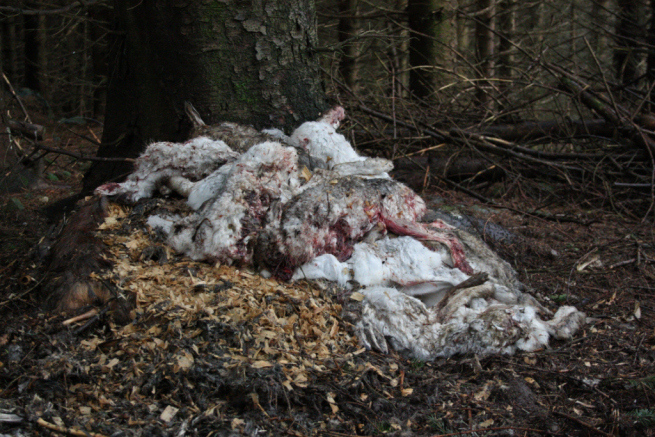
Wonder how that’s going? Not terribly well by the looks of these photographs, taken in February 2014 near Glenshee, in the southern part of the National Park. Is this what Tim (Kim) Baynes means when he says “management for sporting objectives is integrated with species benefits“? We counted at least 150 dead hares, presumably killed during one session….Aren’t our National Parks great?