
The illegal killing of Hen Harriers on British grouse moors has been known, for years, to be the main cause of the species’ desperately low population size in the UK.
The sheer weight of scientific and police evidence, collected over several decades, has led to this fact being undisputed by successive Governments, statutory conservation agencies, the police’s National Wildlife Crime Unit, scientists, raptor workers, conservationists….in fact everyone, except for those representing the grouse shooting industry.
That shouldn’t surprise anyone. These crimes are a public relations disaster for the grouse shooting industry, more so than any other environmentally and socially damaging aspects of grouse moor management, of which there are many.
As grouse shooting has fallen under closer scrutiny over the last decade or so, and the threat of regulation looms large in England (and has already been introduced in Scotland), the grouse shooting industry has been in overdrive in its attempts to portray itself as being benign at worst, and ‘a conservation success story‘ at best. It has also gone to great lengths to try and discredit and smear the reputations of any organisation, or individual, who has dared to challenge this view.
So today’s latest effort, a so-called ‘analysis’ of Hen Harrier tag data, published by the Moorland Association (grouse owners’ lobby group in England), that purports to show that ‘missing’ tagged Hen Harriers probably haven’t been killed by grouse moor gamekeepers, shouldn’t come as a shock to anyone.
The Moorland Association has produced what it calls a ‘Comprehensive Satellite Tagging Register’, supposedly documenting the fates of 269 Hen Harriers from 2002 to part way through 2025. The title itself is a complete misnomer because the spreadsheet includes 99 Hen Harriers that were fitted with radio tags, not satellite tags, way back in the early to mid 2000s before satellite tags came to the fore.
The Moorland Association writes on its website,
“We are not asking anyone to take our word for any of it; we are asking them to check it“.
So I did.
It wasn’t a comprehensive check – it didn’t need to be. I simply looked at the data for several well known Hen Harriers and could immediately see that at least seven of them had incorrect information assigned to them. If that’s the level of incompetence, found with just a quick glance at the data, how on earth is anyone supposed to trust any subsequent ‘analysis’ of the data?!
The seven incorrect entries that were found very quickly are:
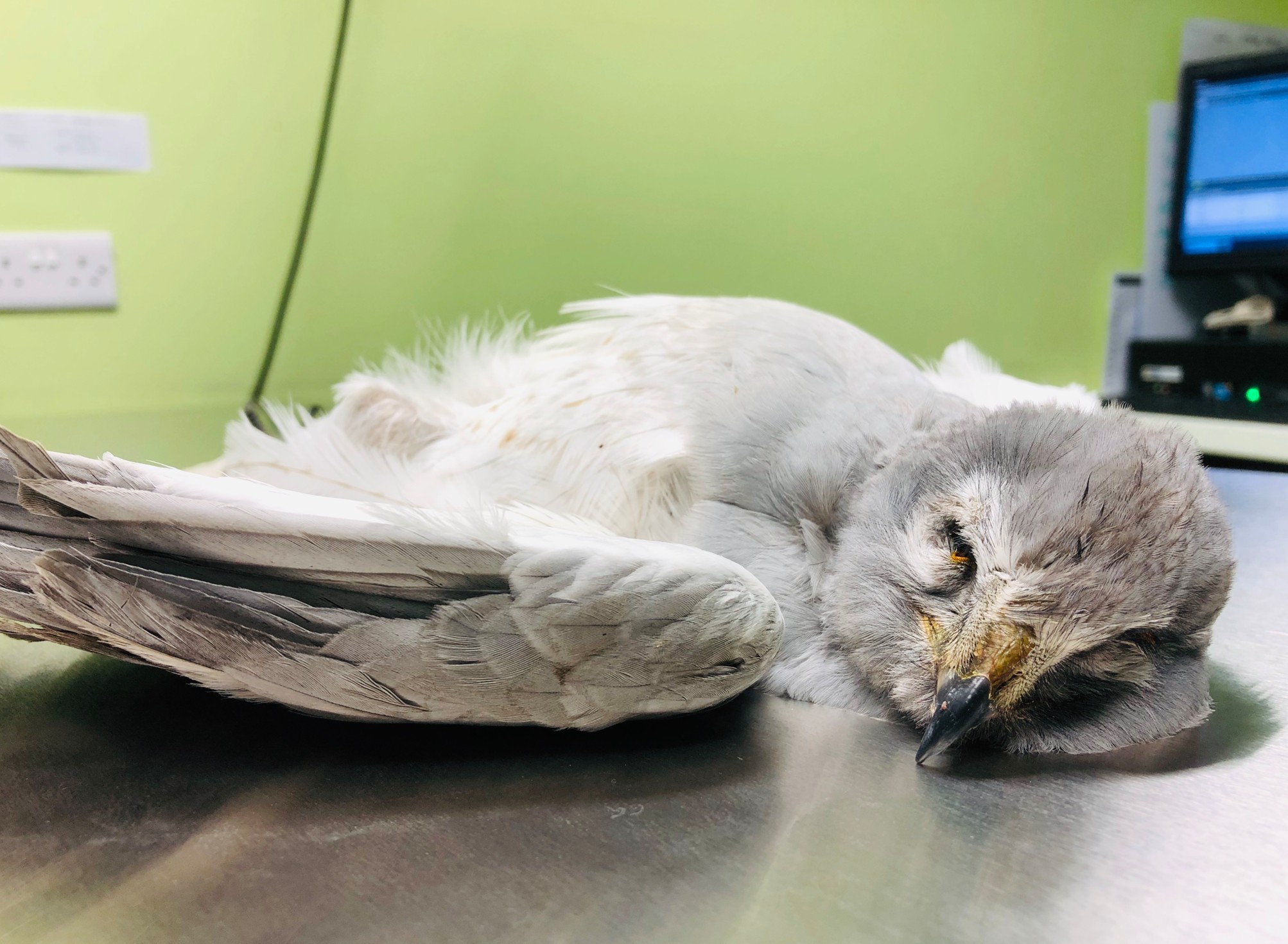
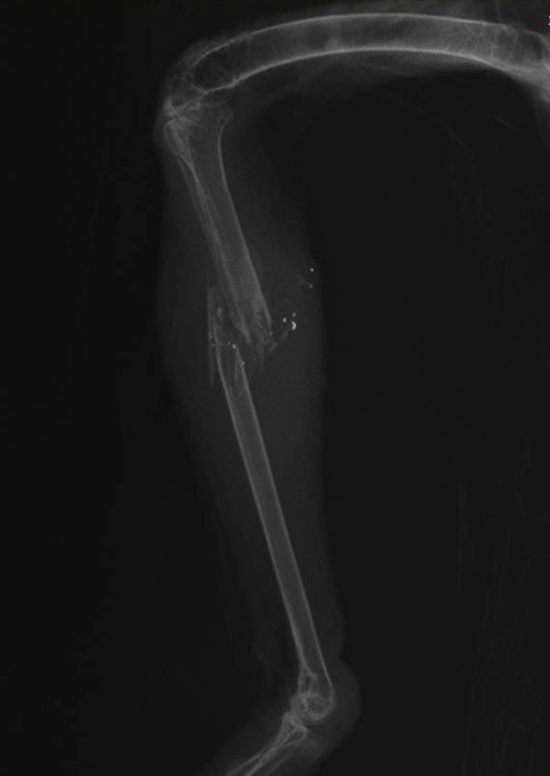
- Hen Harrier Bowland Beth (also known as Bowland Betty). The Moorland Association’s Register states her body wasn’t recovered, and neither was it submitted for post mortem. Actually, her body was recovered, on the Swinton Estate, North Yorkshire, and a post mortem was undertaken, revealing she had a fractured left leg which led to her death. A pioneering forensic examination followed, undertaken by scientists at the University College London Institute of Orthopaedics and Musculoskeletal Science, who found a tiny fragment of lead at the site of the fracture, confirming that she had been shot. According to the Countryside Alliance, this expert scientific evidence was just ‘supposition’ (see here).
- Hen Harrier Rowan (Hawk & Owl Trust tag). The Moorland Association’s Register states that Rowan’s body was recovered, but it wasn’t submitted for a post mortem. Actually, his body was submitted for a post mortem at the Zoological Society of London, whose expert vets concluded, “ … the bird’s injuries were entirely consistent with it having been shot“, despite the Hawk & Owl Trust (in bed with the grouse shooters at that time) claiming the findings were “not wholly conclusive” (see here).
3. Hen Harrier Free. The Moorland Association’s Register states that Free’s body wasn’t recovered and nor was it submitted for a post mortem. Actually, Free’s mutilated corpse was discovered, on moorland in the Yorkshire Dales National Park and it was submitted for a post mortem, which revealed the cause of death was having his head twisted and pulled off. One (ringed) leg had also been torn off whilst he was still alive (here).
4. Hen Harrier Asta. The Moorland Association’s Register states that Asta’s body wasn’t recovered and nor was it submitted for a post mortem. This is technically accurate, but her satellite tag was later found crudely attached to a Crow, in a sick ploy to disguise the crime, and it was determined that Asta’s wings must have been ripped off for the harness to have been removed intact from her body (here).
5. Hen Harrier Susie. The Moorland Association’s Register states that Susie’s body was not recovered and it was not submitted for a post mortem. Actually, Susie’s body was recovered, from a grouse moor in the North Pennines, and it was submitted for a post mortem, which revealed she’d been shot, although it couldn’t be determined if that was the cause of death (here).
6. Hen Harrier Edna. The Moorland Association’s Register states that Edna’s body was not recovered and it was not submitted for a post mortem. Actually, Edna’s body was recovered, and it was submitted for a post mortem, but it was too decomposed for the pathologist to determine a cause of death. The police still suspected she’d been illegally killed, and there are suggestions that her tag data had shown she’d been killed elsewhere and then transported to a windfarm to make it look as though she’d collided with a wind turbine (here).
7. Hen Harrier Margaret. The Moorland Association’s Register states that Margaret’s body was recovered but that it wasn’t submitted for a post mortem. Actually, Margaret’s body was not recovered, but her satellite tag was, and an examination revealed it had been ‘removed’ (here).
I’m sure if I looked harder I could find other examples of inaccurate data but there’s no need to spend any more time looking, because these initial seven are enough to render the Moorland Association’s ‘analysis’ as flawed.
It’s not clear who produced this spreadsheet for the Moorland Association because there isn’t a name attributed to it, which seems odd when the Moorland Association’s main tenet is that it is being transparent whereas the RSPB is not. Perhaps the author was Mr G. Keeper.
There’s also a ‘report’, to accompany the (flawed) data set. This document is hilarious, and it’s no wonder the author didn’t want their name on it. For a start, they’ve grouped together two very different types of tracker (radio tags and satellite tags) with an unqualified assumption that the outcomes are comparable without taking into consideration the massive number of variables between the two operating systems.
Inevitably, the report attacks the RSPB because the RSPB declined to share their satellite tag data with the Moorland Association. The author contends that this is because the RSPB has something to hide. Yeah, giving up highly sensitive data to the very industry that’s responsible for this species’ perilous conservation status makes perfect sense, right?
The author goes on to argue that the RSPB’s interpretation of its own data is flawed because the RSPB’s mapping resolution is too broad. Good grief. Does the author not understand that the RSPB’s analysis is based on a very high mapping resolution but that it only publishes low resolution data to protect sensitive information?!
Critical thinking is entirely absent from this report.
The Moorland Association’s accompanying blog to this ‘report’ claims that its ‘analysis’ challenges the findings of the Murgatroyd et al (2019) paper. That’s the paper that demonstrated that at least 72% of Hen Harriers satellite-tagged by Natural England were presumed to have been illegally killed on or close to driven grouse moors (see here). The Murgatroyd paper was published in one of the world’s top-rated peer-reviewed scientific journals:
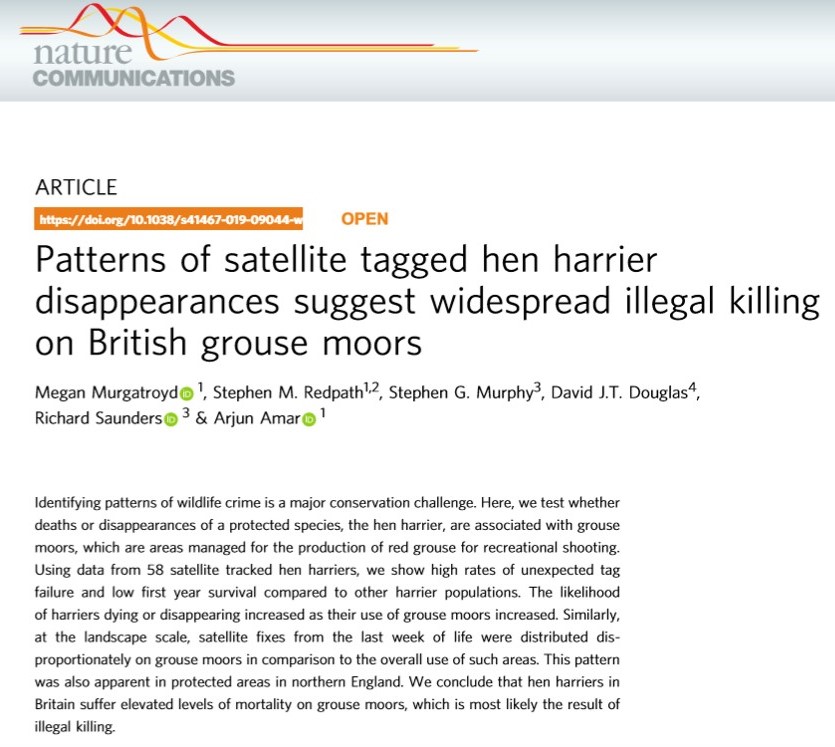
The Murgatroyd paper was based on a comprehensive and complex statistical analysis of Hen Harrier satellite tag data. Funny, I didn’t find any statistical analysis in the Moorland Association’s anonymous ‘report’, just a multi-coloured word salad based on inaccurate data.
If the Moorland Association is so certain of its ‘analysis’, perhaps it will submit its findings to a peer-reviewed scientific journal?


Good work. Keep it up.
Unfortunately, this sort of tit for tat arguing does neither side of the debate any good.
Taking the examples raised and looking at it from the perspective of the reporting on this blog of the same events, your comments on “Edna” being moved to the location she was found appears based on heresay at best. I would be surprised and concerned if a member of the investigating police force was discussing details of the case with an unconnected member of the public.
In respect of “Margaret”, the original blog post added the comment “presumably cut” in reference to the tag being removed. There’s nothing in the available information to make that a reasonable inference.
My intention isn’t to detract from the reality that HH persecution has been and remains a serious issue. Simply to point out that these things work both ways…
Hi Alauda, you say “I would be surprised and concerned if a member of the investigating police force was discussing details of the case with an unconnected member of the public.”
But this is starting to happen more and more and I personally think it is great. The more daylight and openness the better. It doesn’t compromise cases one iota. Keeping things hidden is just to not embarrass important people and their Estates, and only rarely has the slightest thing to do with investigative efficacy.
For example, on the presentation DI Harrison of NWCU recently gave to “Friends of the Dales” the phenomena of the suspicious movement of a tagged harrier or a harrier’s tag by ill intentioned human hands is discussed and shown in great detail with excellent case studies in the final third of the video on YT. It includes another case strikingly similar to Edna in Northumberland, with good explanations of the investigative process and maps, etc.
You might be “surprised and concerned” but I was more “surprised and delighted” or more accurately “relieved” that the Police (those in the NWCU at least) are these days not hiding these things away. I just wish that they would push on (as they must and inevitably will in time) and take the next step and disregard the MA’s member Estates (who are shy and like to remain officially unknown) declining to give permission to use surveillance cameras and find a legal way to do it anyway.
Suffice to say that I personally regard this and other similar reports by MA as rubbish produced purely to distract or confuse in order to muddy the waters.
“Unfortunately, this sort of tit for tat arguing does neither side of the debate any good.”
I think that is rather derogatory of Ruth’s world class expertise.
“Taking the examples raised and looking at it from the perspective of the reporting on this blog of the same events, your comments on “Edna” being moved to the location she was found appears based on heresay at best.”
Do you not know how satellite tags work and what data they transmit?
I cannot talk about specific details because I am not privy to this specific data, but such tags can detect body warmth – and hence death – when movement also ceases (or, movement ceases for suspiciously long periods, or transmissions cease within a de facto Faraday cage) but then a transmission mysteriously springs back to life in a different location without any intervening tracking. Or, a dead-cold body manages to magically track to a new location…
Why are you so convinced that none of those things happened?
“I would be surprised and concerned if a member of the investigating police force was discussing details of the case with an unconnected member of the public.”
And yet the Police do none of the satellite tracking themselves, but they will independently get third parties to analyse the raw data. However, the ornithological bodies which do track these birds and own the data can share their information within the profession to leading world experts.
“In respect of “Margaret”, the original blog post added the comment “presumably cut” in reference to the tag being removed. There’s nothing in the available information to make that a reasonable inference.”
Satellite tag harnesses are designed not to be removable from living birds without being cut.
Never underestimate what Ruth writes.
Hi Alauda,
I’d have to disagree with you. This isn’t tit-for-tat arguing, it’s challenging inaccurate data and a grossly distorted representation of those data. It matters that others can be offered a critical review of the Moorland Association’s ‘findings’ rather than just accepting the word of an organisation whose CEO was expelled from a police-led raptor crime working group for ‘spreading misinformation’. Besides, the Moorland Association’s accompanying blog explicitly states, “We are not asking anyone to take our word for any of it [its analysis of the HH tag data]; we are asking them to check it“, and that’s precisely what I did.
On your point about Hen Harrier Edna – I’m confident in my sources (note, plural). If I wasn’t, I wouldn’t have published the information. And no, the information was not provided to me by the police. If you read the blog, I was actually critical of the police and of Natural England for failing to publicise the details. It’s entirely up to you whether you accept the information on this blog about Edna as valid or not, but given that the police were treating her death as ‘suspicious’, and that her body was too decomposed for a conclusive post mortem so the police’s suspicion must originate with the sat tag data, and that we know that there are a number of incidents where satellite-tagged Hen Harriers have been killed at one location and then moved to another, to disguise the location of the crime (see Mark Harrison’s [NWCU] video on Friends of the Dales for examples), adds further support to my suggestion.
On your point about Hen Harrier Margaret – the authorities stated that her tag had been ‘removed’. That means that someone took it off her; the tag harness wasn’t on her long enough to disintegrate, as they’re designed to do over time. Given that the police knew the tag had been ‘removed’, that shows that there was evidence on the harness to indicate it had been ‘removed’. I said the tag was “presumably cut”. That’s an informed opinion, based on first hand experience as well as plenty of other examples where this has happened. If you consider that an “unreasonable inference” you’ll need to explain why you think it’s unreasonable and put forward an alternative theory.
Examining the data and pointing out errors or errors in analysis is the day to day business of science: this is not tit for tat point making.
Are we supposed to let such egregious, if not outright deliberate, errors as those published by the MA go uncorrected?
PS Framing this as a “debate” isn’t helpful: there is evidence or there isn’t; what is there to “debate”?
I’ve looked at the MA “analysis” and frankly it is laughable. Firstly they include both satellite tag and radio tracking data. Historically there was a switch from radio tracking to satellite tags because radio tags need hand tracking and this was shown to be difficult with birds often out of contact because of the physical environment. Also having been involved in radio tracking myself for many years for such widely dispersive birds the data can be subject to unavoidable biases. this was why we switched our study on pesticide risks to geese in agricultural land to Satellite tags, plus also with Sat tags you can quickly get an enormous body of data that would, if possible with radio tags take years to get the data. The other thing to note here is that a final contact on a radio tag is in no way the equivalent of the same on a radio tag. I just means that this was the last time bird and man with tracker came in contact and in no way does it imply that the bird or indeed tag ceased to function. Thus one cannot treat the two types of tracking the same, they are certainly not equivalents.
There are the errors in the MA “raw data” that make any conclusions based on them invalid as Ruth has pointed out, I have not searched for any other errors.
They make a great deal of the missing fate unknown, particularly harping on about the high first year mortality. We do not know what NATURAL first year mortality is in the UK because the bird is subject to so much illegal killing. Besides which tags on such birds will normally transmit for a while, from where the bird died and can be recovered. The same is true of natural predation. This of course is not true of birds illegally killed and recovered by the killer, the tag is immediately disabled. Thus such instancies are thus immediately suspicious. Of course more modern tags also transmit data about themselves such that an instant “catastrophic failure” or “stopped no malfunction” can only mean one thing.
No doubt this BS will be well quoted in social media by game lobby propagandists and apologists but it is easily countered quoting proper science given it is entirely not peer reviewed. Sadly there will be those elsewhere either disposed to the MA view or even entirely neutral that may be taken in by this nonsense.
Unfortunatly the MAGA world we are in now indulges MA’s endless BS on such things as worthy of attention
What puzzles me is how on earth they expected to get away with their travesty of a description in the case of Bowland Beth. Their audacity is breathtaking. This case was well publicised as having had in-depth examination of the carcass which established the presence of lead – an indication that the bird had been shot. To pretend that the carcass was never located smacks of outright dishonesty with the undoubted intention of misleading anyone who is not aware of the true story. For all that the CA raised doubts about the outcome of the tests, at least it did not question the fact that the bird had been located. Begs the question as to how much more of the MA’s ”analysis’ is similarly based on inaccuracies and innuendo.