‘In public relations, spin is a form of propaganda, achieved through providing a biased interpretation of an event or campaigning to persuade public opinion in favour or against some organisation of public figure. While traditional public relations may also rely on creative presentation of the facts, “spin” often implies the use of disingenuous, deceptive, and highly manipulative tactics” [Wikipedia].
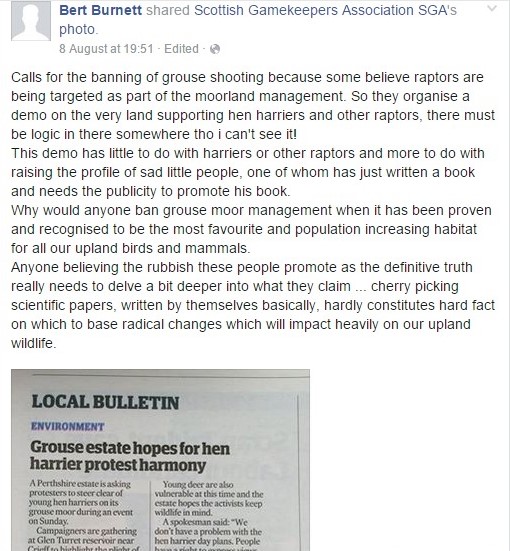
The Scottish Gamekeepers’ Association issued the following press release yesterday lunchtime. Here it is in full:
Estate hope Harriers on their moor are fine after Harrier Protest.
A Perthshire estate hopes a Hen Harrier protest staged next to their ground yesterday (sun) will not have bothered the Hen Harriers which have fledged on their grouse moor.
Campaign groups gathered at Glen Turret reservoir near Crieff to highlight the plight of the birds, three days before the start of the grouse shooting season.
The lobby groups believe some of the birds of prey are being killed on grouse moors because they feed on wild red grouse and their chicks.
However, the estate adjoining the site where the protest was staged has successfully fledged Hen Harrier chicks on its grouse moor this year and are hopeful the protest will not have disturbed the young birds which are just beginning to hunt independently.
An estate spokesperson said: “It was great to see people that share the same interest as ourselves in Hen Harrier conservation. The future definitely lies in co-operation between land managers who produce birds such as Hen Harriers and those who wish to see and enjoy them.
“We regularly have Harriers here on our grouse moor and we are lucky to have had successes this year, despite the weather. Naturally, our concern is for the birds because we have had nests of differing species abandoned, due to members of the public or photographers visiting the nests.
“We have restricted the activities of the estate around the nests so the birds get the best chance they can to grow and hunt in peace. Obviously, the gamekeepers will be checking the area to make sure the young birds are fine, but we are hopeful everything has gone off, well.”
The estate bordering the protest was audited recently, with RSPB counts in 2012 showing 9 raptor species on the grouse moor, 6 of which are known to have bred.
The estate is also a haven for other birds with two species of eagle recorded.
END
It’s fascinating that the SGA is attempting to infer that a group of peaceful protesters might ‘disturb’ some birds on an adjacent site by standing in the rain for a couple of hours, chatting, miles from any nests. No mention then of the start of the grouse shooting season in three days time where large groups of beaters will be marching across the moor waving flags, shouting and whistling as they scare (‘drive’) any bird in their path (but notably red grouse) towards a line of grouse butts where another load of people will be standing with guns to blast the birds to bits. Which activity do you think is likely to cause the most ‘disturbance’?
But what’s particularly interesting about this press release is the claim that there was a successful hen harrier breeding attempt on this driven grouse moor this year. Why is this interesting? Well, because the one known hen harrier breeding attempt on this site actually failed about a month ago [cause of failure unknown].
Now, of course, it’s possible that there was a second hen harrier breeding attempt on this estate, and that the raptor workers who closely monitor this site just missed it, and that the breeding attempt was successful and that there are indeed now young hen harriers “which are just beginning to hunt successfully”. If that is the case, then presumably the estate will have notified SNH’s ‘Heads up for Hen Harriers Project’ because, like all good Scottish sporting estates, this one will be keen to cooperate (we’ll be blogging more about the Heads up for Hen Harriers project in a separate ‘spin’ blog, to be posted later).
Up until a few years ago, this estate was part of the Operation Countrywatch Partnership – we blogged about it here and applauded their efforts. Funny thing is, this estate pulled out of the project shortly after it was suggested that nest cameras could be installed at hen harrier nests to better understand the causes of breeding failure regularly being recorded in this area. However, it was probably just a complete coincidence that the estate pulled out at that time and there will undoubtedly be an unrelated and perfectly reasonable explanation for their withdrawal.
Also interesting to note the final sentence of the press statement. Two species of eagle have indeed been ‘recorded’ on this estate (note the ambiguous choice of word – ‘recorded’ can mean a breeding attempt but it can also mean something was simply observed flying over/passing through). Just for the record, there aren’t any officially recorded white-tailed eagle breeding attempts on this estate, but golden eagles have certainly bred there in the past. Funny thing is, this year the golden eagle nest site was burnt out and the eagles moved to another estate for their breeding attempt. Those spontaneously combusting nests are a real problem on driven grouse moors, it seems.
The photograph shows some of the people who attended the Hen Harrier rally in Perthshire yesterday. Well done to those who organised it and also to those who turned out to support it.


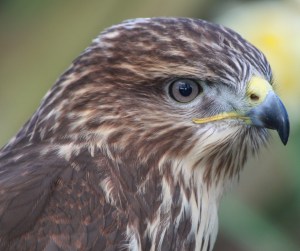 A buzzard that was found badly injured in the Borders in July had been hit by shotgun pellets in its head and wing. Its injuries were so severe the bird had to be euthanised.
 Police Scotland has announced that more than 100 police officers will receive specialist training to tackle wildlife crime (see
 There’s an article on the BBC News website today about a proposal to take golden eagle chicks from the Highlands and release them in southern Scotland in an attempt to boost the tiny, depleted population currently clinging on by its talons (BBC report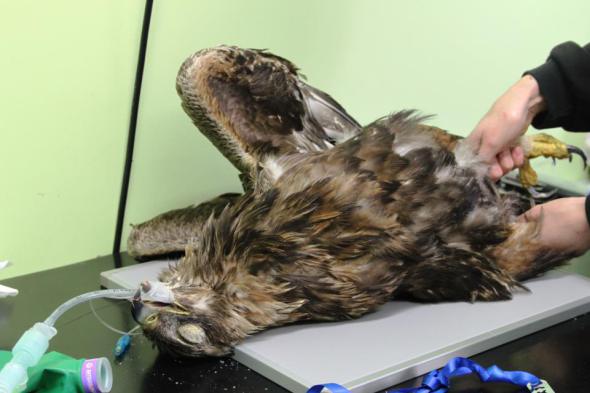
 Yesterday (
