Police investigate shooting of two goshawks in Scottish Borders

From Peeblesshire News, 26/4/19:

INVESTIGATION INTO SHOOTING OF RARE BIRDS

Police are appealing for information after the illegal shooting of rare birds of prey in the Borders.

On February 14, a member of the public discovered a dead goshawk on land near Abbey Saint Bathens, Duns, and reported the matter to the RSPB.

Forensic analysis of the bird was undertaken, and it was established that it had been shot.

Police were then contacted on Thursday, April 25.

The news comes after the shooting of another goshawk in the Peebles area on March 2.

Inquiries into both shootings are ongoing and anyone with information is asked to come forward.

Wildlife Crime Co-Ordinator, Constable Steven Irvine, said: “Inquiry was already underway into the shooting of the goshawk in March and we are now conducting inquiries into the earlier shooting of the bird in February. These birds are a protected species and unlawfully killing them is a very serious offence. Anyone who can assist with these investigations should contact police immediately.”

Ian Thomson, RSPB Scotland’s Head of Investigations said “Goshawks are one of Scotland’s rarest breeding raptors, with only about 150 breeding pairs. Despite the fact that most of their diet consists of crows, woodpigeons and rabbits, species that are perceived as pests by some farmers and gamekeepers, cases of illegal persecution against this species are not uncommon, depriving people of the opportunity to see this charismatic and spectacular bird of prey.

We join with the police in asking that if anyone has information about this crime, or other raptor persecution incidents, they contact Police Scotland.”

ENDS

Well, well, well. More illegal raptor persecution in the Scottish Borders.

You know the place – it’s where SNH have been “able to reassure ourselves persecution is not an issue” (see here).

UPDATE 17.15hrs: This story is now on the BBC news website and provides further information about the second shot goshawk, saying it was found dead by a dog walker near Eddleston Quarry on 2 March.

West Yorkshire Police appeal for info after buzzard found shot dead

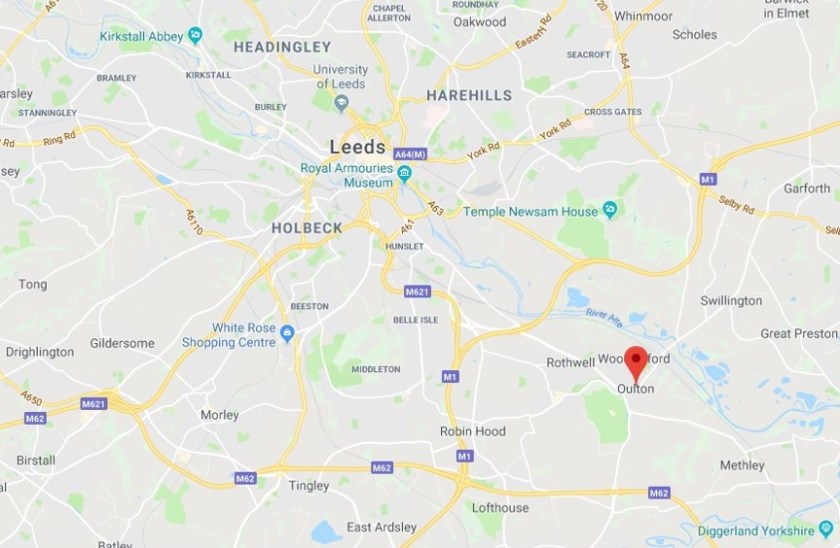
West Yorkshire Police are appealing for information after the discovery of a shot buzzard in the Oulton area of Leeds.

The buzzard was found dead.

No further details have been publicised.

If you have any information please contact the police on 101 (ref# 13190200712) or Crimestoppers on 0800 555 111 or the RSPB’s Raptor Crime Hotline on 0300 999 0101.

Northants police appeal for information after buzzard found shot

Police are appealing for information following the discovery of an illegally shot buzzard in east Northamptonshire.

The injured buzzard was found off Shelton Road, near Hargrave, on 25 March 2019.

The bird was caught and taken to a vet, where an x-ray confirmed it had been shot. The buzzard is now recovering in the care of a local wildlife charity.

It is a criminal offence to shoot birds of prey, including buzzards.

Witnesses to the shooting or anyone with information about the incident are asked to contact rural crime team officer PC Chloe Gillies by calling 101, or Crimestoppers in confidence on 0800 555111.

ENDS

Sparrowhawk found tied to plastic bottle in Angus

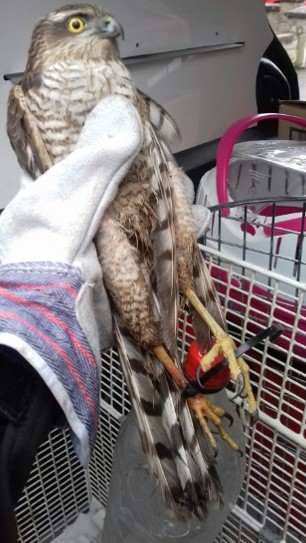
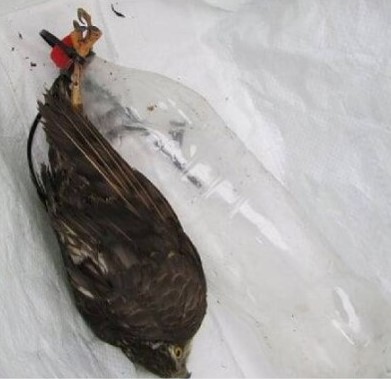
The SSPCA is appealing for information after a sparrowhawk was found cable-tied to a plastic bottle in Carnoustie, Angus.

A member of the public found the bird on Sunday 7 April in a field at the top end of Lochend Road. The SSPCA attended and released the bird after checking it for injuries.

[Photos by SSPCA]

SSPCA rescue officer Dionne Boyack said, “We were notified by a concerned member of the public who came across the sparrowhawk. It was found to be tethered in an unusual way, so we don’t suspect this to be a falconer.  The bird was restrained with cable ties and attached to a bottle which was hindering its ability to fly. It is possible the bird got caught up in this unfortunate way by accident. After assessing the sparrowhawk for injury and being satisfied that he had none, I freed him and he flew away.

If anyone in the area has any information about how the bird came to be trapped in this way, please contact our confidential animal helpline on 03000 999 999.”

Peregrine nest on Peak District grouse moor fails in suspicious circumstances

The Peak District Raptor Monitoring Group (PDRMG) has already reported the failure of a peregrine nest in the Peak District National Park, and the breeding season’s only just got underway!

You can read the group’s report here.

[Three abandoned peregrine eggs on the nest ledge, photo by Peak District Raptor Monitoring Group]

Of course, an abandoned nest is not a clear indicator that a wildlife crime has occurred and if viewed as an isolated incident, it could easily be argued that reporting this incident to the police is an over-reaction. Indeed, that’s exactly what we’d expect grouse shooting organisations to say. It’s what they do: play it down, make out that everything’s fine, that the persecution issue is “tiny and that there’s really nothing to worry about. And that’s a convincing argument, when viewing an incident like this in isolation.

However, incidents like this that happen on grouse moors in known wildlife crime hotspots (like the Peak District National Park) should never be viewed in isolation. Instead, they should be viewed as being part of a well-established pattern of failed peregrine breeding attempts in this region, and in every other region in northern England where grouse moors dominate the landscape.

We see it happen over and over and over again. In the Peak District, a so-called ‘partnership’ has consistently failed to address peregrine persecution (e.g. see here) and there have been several scientific papers making a direct link between grouse moor management and peregrine persecution here and across the UK, e.g. here, here, here, here.

It was only last month that we watched covert footage of a load of armed gamekeepers hiding close to a plastic peregrine decoy, on a grouse moor, er, in the Peak District (here).

[This peregrine was found shot next to a grouse moor in the Peak District National Park in 2016. It didn’t survive. Photo by RSPB]

And yet still it continues.

The police are investigating the latest suspicious loss of two breeding adults but to be honest there’s not much they can do unless they happen to stumble across a couple of shot peregrine corpses stashed under someone’s driving seat or chucked in the back of a Landrover, but even then it would be virtually impossible to prove who’d killed them and the charge would be for the lesser crime of ‘possession’.

In the meantime, this case will be hotly disputed at so-called ‘partnership’ meetings, the grouse shooting reps will come up with 101 reasons why the breeding attempt might have failed and not one of those reasons will be the probability that someone linked to the grouse moor has killed the breeding adults.

When you hear the inevitable denials and protestations, its worth remembering what happened to the poor Bleasdale peregrines and the grouse shooting industry’s response (here & here) when the RSPB’s video evidence was ruled inadmissible and the trial collapsed.

Hats off to the peregrine fieldworkers in the uplands who volunteer to monitor these breeding attempts, year after year, knowing full well what is likely to happen. Fortunately for us they’re willing to document these failures so everybody can see the pattern for themselves.

Shot buzzard found near Whashton, North Yorkshire: police appeal for info

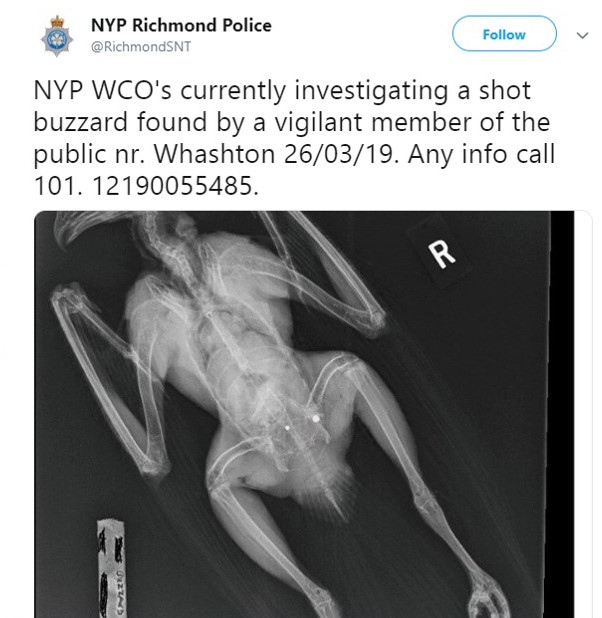
North Yorkshire Police are appealing on Twitter for information about a shot buzzard that was found by a member of the public on Tuesday 26 March 2019 near Whashton.

There doesn’t appear to be any further detail available.

Anyone with information please call 101 and cite ref number #12190055485.

Gamekeepers’ rep suggests disappearance of hen harrier Vulcan was “set up” by RSPB

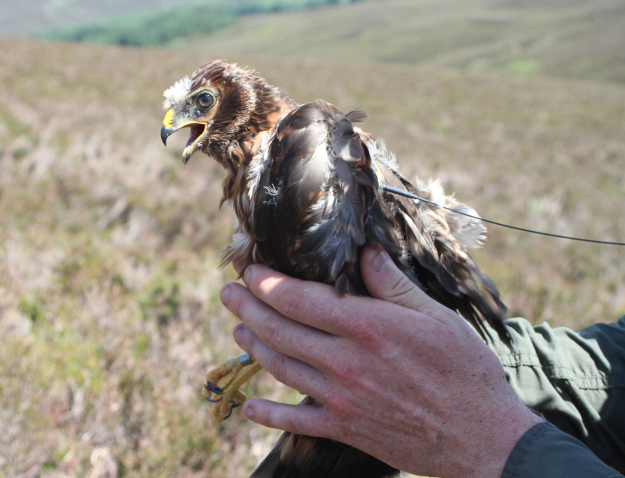
At the end of February 2019, the RSPB announced the suspicious disappearance of a satellite-tagged hen harrier called Vulcan who had vanished in January 2019 in an area heavily managed for gamebird shooting in Wiltshire (see here).

[Hen harrier Vulcan, photo by RSPB]

The suspicious disappearance of any satellite-tagged hen harrier in the UK is significant because the loss of any of these young birds is a reminder of just how precarious the hen harrier population is, and as many of them seem to disappear on grouse moors it’s also usually a repeated reminder of how the authorities have failed to address the rampant criminality associated with this type of land management.

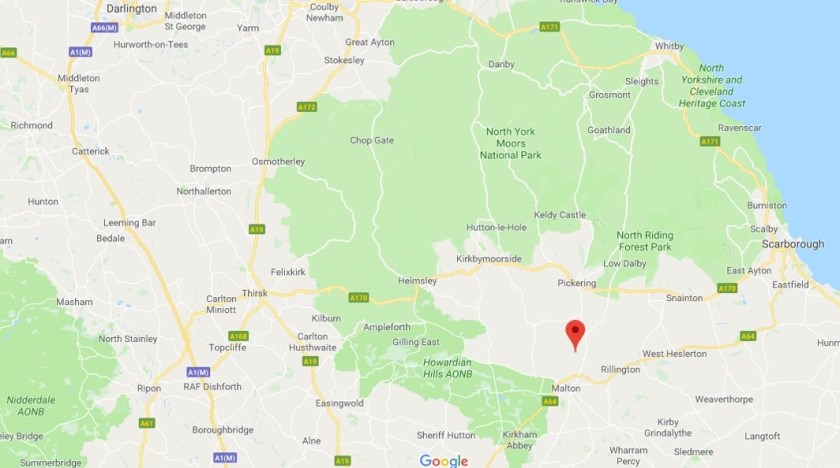
Whilst Vulcan’s disappearance was not on a grouse moor, it was in an area managed for pheasant and partridge shooting and his disappearance was still significant because this area from which he ‘disappeared’ was close to the proposed release site of Natural England’s highly controversial hen harrier reintroduction project, a supposedly raptor persecution free zone.

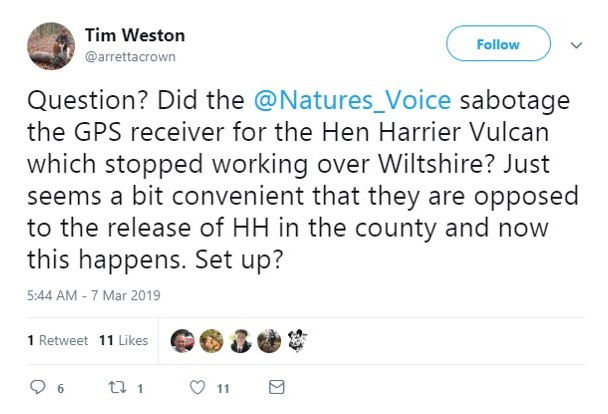
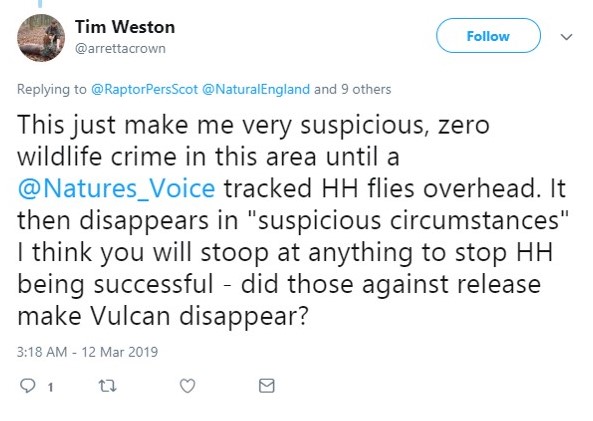
The inevitability of yet another lost hen harrier (the 12th to vanish in suspicious circumstances since last summer) and the significance of Vulcan’s last known location has led Tim Weston, Devlopment Officer for the National Gamekeepers’ Organisation, to accuse the RSPB of a “set up” (or, in more formal legal terms, of perverting the course of justice [by fabricating evidence]).

We’ve come to expect this sort of nonsense from a small number of pro-shooting, anti-RSPB trolls on social media but to see it from a representative of the National Gamekeepers’ Organisation (NGO) was more than a little surprising.

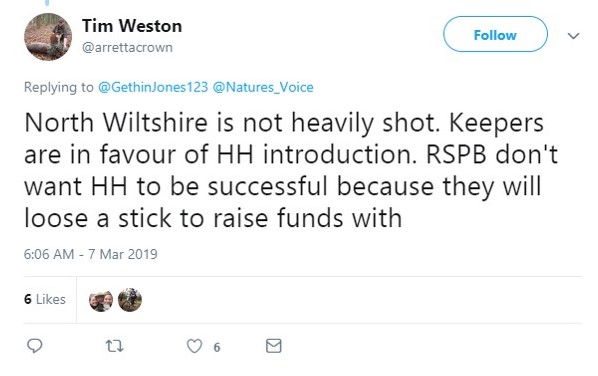
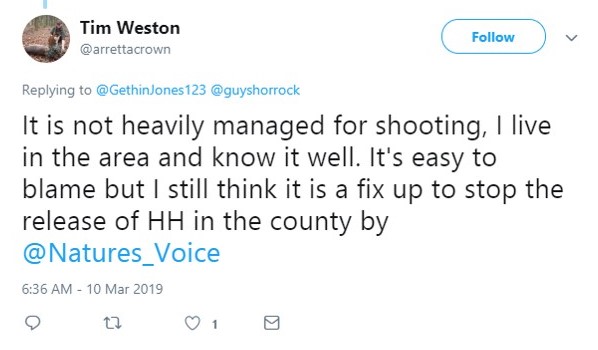
Here are a series of tweets from National Gamekeepers’ Org employee, Tim:

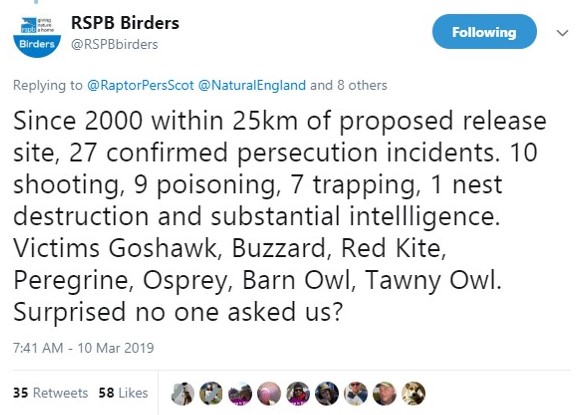
Zero wildlife crime in this area until [RSPB] tracked HH flies overhead“? Tim must have missed the tweet from the RSPB Investigations Team on Sunday night where they outlined some of the confirmed raptor persecution crimes in this area:

Does the National Gamekeepers’ Organisation endorse Tim Weston’s accusations? Not that it matters anymore, since the NGO walked out of the partnership group trying to tackle the illegal killing of birds of prey in England and Wales (the Raptor Persecution Priority Delivery Group, RPPDG). With the gamekeepers gone, hopefully the RPPDG can now focus on the issue at hand instead of being side-tracked and disrupted by distractions like this.

Meanwhile, an organisation which retains its membership of the RPPDG and has played a central role in tackling the illegal persecution of birds of prey in northern England is the Northern England Raptor Forum (NERF). NERF has today issued a statement about the suspicious disappearance of hen harrier Vulcan, because even though Vulcan vanished in southern England, he hatched from a nest in northern England where NERF members helped to protect the site. Read NERF’s statement here

Hen harrier reintroduction to southern England: Natural England suggests persecution not an issue

Natural England has been planning a so-called ‘reintroduction’ of hen harriers to southern England since 2016, as part of DEFRA’s ludicrous Hen Harrier Action Plan.

We’ve blogged about this ‘reintroduction’ for three years (see links at the foot of this blog) and its recently been in the news again as a young satellite-tagged hen harrier called ‘Vulcan’ disappeared in suspicious circumstances close to the proposed reintroduction release site in Wiltshire (see here), indicating that this is not a safe location to rear and release young hen harriers.

This morning on BBC Breakfast News the RSPB again voiced its concerns about the planned reintroduction, citing the loss of hen harrier Vulcan in Wiltshire and arguing that until the issue of illegal persecution has been addressed, any young hen harriers are likely to be killed. You can watch it here (starts at 1:21:08 and ends at 1:23:29; only available until 08.30hrs Monday morning). The RSPB interviewees included Nick Bruce-White (Regional Director RSPB South West) and Tony Whitehead (RSPB Press Officer) who couldn’t have been clearer: “The only limiting factor [for hen harriers], let’s make no mistake about this, is illegal persecution“.

Meanwhile, behind the scenes, Natural England has continued to court favour with potential donor countries and we’ve been sent an unbelievable powerpoint presentation, which we believe was delivered to European harrier experts at an international conference in October 2018 by Natural England’s Hen Harrier Reintroduction Project Manager, Simon Lee. It’s basically a plea for donor birds and an apparent reassurance that donor birds will be safe in England! Honestly, this has to be seen to be believed:

Download the PDF presentation here: Simon Lee presentation HH reintro to southern England

According to Simon, there’s been “a gradual recovery [of hen harriers] across Scotland and Wales in recent decades“. Er, except for the results of the 2016 national HH survey which showed population declines in each country, and a whopping 27% decline in Scotland since 2004. Losing over a quarter of the population in just 12 years isn’t what we’d call “a gradual recovery“.

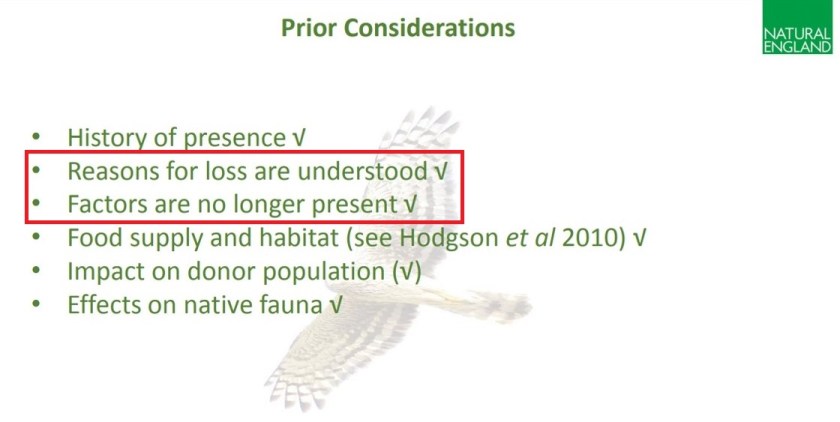
Also according to Simon, prior considerations [for the proposed reintroduction] included ‘understanding the reasons for loss’ and that those “factors are no longer present“:

So, having earlier noted in his presentation that ‘human persecution’ was a cause of the species’ historical decline, Simon is now suggesting to potential donor countries that illegal persecution is no longer an issue.

You couldn’t make this up. Although it looks like Simon did.

And if this presentation was given in Oct 2018, as we believe, Simon must also have been fully aware of the findings of Natural England’s hen harrier satellite tag analysis, which was completed last summer and is due to be published imminently under the title: ‘Patterns of satellite tagged hen harrier disappearances suggest widespread illegal killing on British grouse moors’.

And now with the suspicious disappearance of hen harrier Vulcan near to the proposed reintroduction location, will Simon / Natural England be updating the potential donor countries about the continuing threat to hen harriers in the UK and advising them that the planned reintroduction won’t be going ahead because its simply not safe to do so?

UPDATE 8pm: The RSPB has tweeted the following information about confirmed raptor persecution crimes within 25km of the proposed reintroduction site:

UPDATE 23rd September 2020: Large police operation investigating raptor persecution near proposed release site for hen harriers (here)

Buzzard found with shotgun injuries at Ryton, North Yorkshire

An injured buzzard was found on Ryton flood bank in North Yorkshire last week.

The bird was still alive but unable to fly – its broken humerus was sticking through the skin (see the x-ray below) and the wound site was infected.

Unfortunately the bird had to be euthanised.

If anyone has any information about this crime please contact Police Wildlife Crime Officer Jez Walmsley at Malton Police Station (Tel: 101) or the RSPB’s Raptor Crime Hotline (Tel: 0300 999 0101).

[Photos via Jean Thorpe]

Kestrel shot in North Yorkshire

A kestrel has been euthanised after being found shot in North Yorkshire.

It’s a kestrel, FFS. You’d have to be a gun-toting psychopath to shoot one of these. Unsurprisingly, it’s not the first kestrel to have been shot in North Yorkshire, England’s raptor-killing capital (see here here and here).

News of this latest shooting appeared on Twitter yesterday. We’ve been unable to find any more details: