Yorkshire police investigate suspicious death of buzzard found with head injuries

Press release from Humberside Police (2 Oct 2018):

BUZZARD FOUND DEAD WITH TRAP WOUNDS TO HEAD

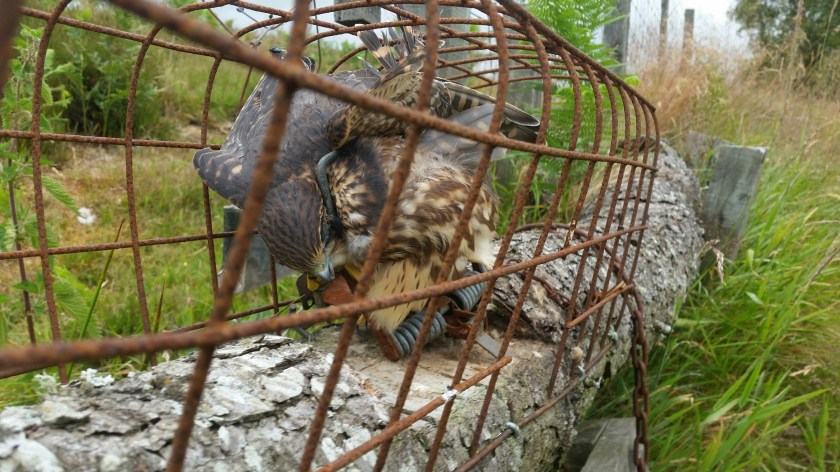
We are investigating the suspicious death of a common buzzard found at the end of August in the western area of the East Riding of Yorkshire.

X-rays of the bird show that it has previously suffered shotgun injuries as three shotgun pellets were found embedded in the bird.  The shotgun pellets are not thought to have caused its death and when the bird was found it had recent injuries to its head consistent with being confined in a cage trap.

[Photos by Humberside Police]

Wildlife Crime Officer PC 1708 Ward said,

However this bird met its end it has previously been shot. Raptor persecution is a National Wildlife Crime priority which we take very seriously. Whatever anyone’s feelings are towards birds of prey there is no excuse for this type of criminality.

It’s sad that such practices are still common place. Due to the nature of these crimes they are difficult to detect. If you have information about anyone persecuting birds of prey we want to know.

I can be contacted in confidence via 101 and your information will be treated with the utmost confidentiality“.

Anyone with information regarding the above incident should call us on the non-emergency number 101 quoting investigation number 16/99978/18 which is being dealt with by WCO PC 1529 Day.

The attached images may cause distress and are property of Humberside Police

Note to press: No one is available for interview regarding this news story.

END

There’s no detail about the location other than “the western area of the East Riding of Yorkshire“. Here’s a Google map showing East Riding:

UPDATE 20 February 2019: Buzzard shot and poisoned in East Yorkshire: police renew appeal for info (here)

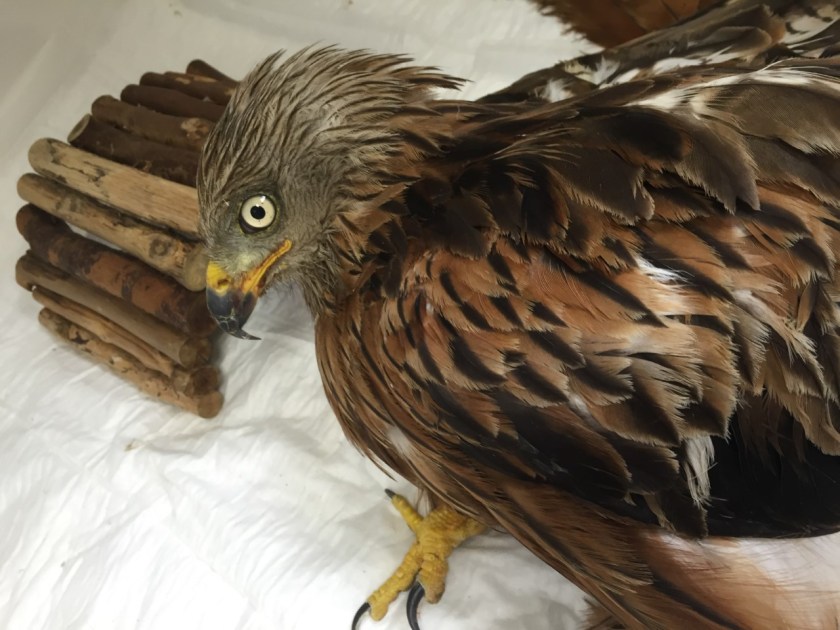
Despite best efforts, shot red kite didn’t make it

In July an injured red kite was found by a member of the public in woodland near Corby, Northants – she’d been shot and had three shotgun pellets lodged in her body. We blogged about her here.

She was cared for by Simon Dudhill and team at The Raptor Foundation in Cambridgeshire. Simon said at the time:

I have taken charge of a red kite that has been shot, with three shotgun pellets, in the leg, shoulder and ear. The leg and shoulder pellets are not really an issue governing the birds potential release as they are below joints. The pellet in the ear is lodged in the bony part of the skull and is causing the bird problems with balance. The vet and I both agree the bird could not be released back with the pellet still inside. We have been treating for infection and pain relief and the bird is making steady improvements. It was unable to stand on admission, but is now mobile along the floor to some degree. The vet is looking to operate later this week“.

[Photo by The Raptor Foundation]

Unfortunately, she didn’t make it.

Simon said:

Sadly, despite two months of hard work by ourselves and our vets, we had to make the extremely disappointing decision to put her to sleep. None of her balance had returned, she was only able to get about 15 inches off the ground onto a log, and the rest of the time she was dragging her wings and body along the ground. We all felt it was not in the bird’s best interest to keep her in this poor condition, as any further improvement was not expected“.

Climber witnesses shooting of red kite in Peak District National Park

Press release from RSPB (20/9/18):

SHOT RED KITE ‘LIKE BALLOON BURSTING’

A red kite seen falling from the sky accompanied by the sound of gunshots is the latest in a series of concerning incidents involving birds of prey in the Peak District National Park.

Climber Adam Long heard gunshots and saw the bird fall from the sky on 7 June near Saddleworth Moor, within the Peak District National Park. The shooter, however, remained out of sight. The police were called and spoke to the landowner, on whose land the incident is alleged to have occurred, but no leads were forthcoming.

Howard Jones, RSPB Investigations Officer, said: “Though red kites have enjoyed a remarkable comeback in many parts of the country, they are not commonly seen in this area, on the outskirts of Greater Manchester and are struggling to expand into the Peak District National Park despite plenty of suitable breeding habitat. Like all birds of prey, red kites are protected by law under the Wildlife and Countryside Act 1981. If someone is found to have shot this bird they face an unlimited fine and/or up to six months in jail.

The public play such an important role in reporting incidents like this. If you think you’ve witnessed a crime against a bird of prey while our walking, climbing, cycling or walking your dog, let the police know on 101 or contact the RSPB on 01767 680551.”

Adam, the climber who witnessed the event, said: “I saw the kite slowly soaring up the valley, then again when we’d started our climb. I heard two shots, and the kite fell out of the sky – it was like a balloon bursting, crumpling so suddenly then falling. I was completely shocked by the brazenness of it. You hear about this sort of thing happening, and that the chances of seeing or recording something are so slim, so to see this in broad daylight when anyone could have witnessed it was incredible. This is a popular valley for climbing and walking, plus there’s a busy A-road close by. I was literally tied to the crag when it happened so I couldn’t move to get a better view, but I rang the police as soon as I was able.”

The persecution of birds of prey in upland areas like the Peak District is a continuing issue with serious implications on raptor populations. Figures from the latest Birdcrime report showed that over 80 confirmed incidents of shooting, trapping, poisoning and destruction of birds of prey took place in 2016, but in the same year there were no convictions for crimes relating to raptor persecution.

In May this year a scientific paper in the journal British Birds identified significant associations between land managed for driven grouse shooting and the persecution of peregrines and goshawks in the northern Peak District. Populations of the birds were seen to have declined in the northern ‘Dark Peak’, but increased in the southern ‘White Peak’, which is virtually free from grouse shoots.

Chief Inspector Dave Henthorne of Greater Manchester Police (GMP), who is also the force’s lead for wildlife crime, said: “GMP officers spoke to a number of people regarding this incident. If there is evidence to link an individual with raptor persecution we will work with the RSPB to prosecute those responsible. In addition to prosecution, GMP would review any firearms license that the offenders possess.”

If you have any information relating to this incident, call Greater Manchester Police on 101.

If you find a wild bird which you suspect has been illegally killed or injured, contact RSPB investigations on 01767 680551 or fill in the online form.

ENDS

This shooting took place three and a half months ago. Why didn’t Greater Manchester Police issue an appeal for information at the time it happened?

Grouse shooting industry’s reaction to news of 3 x missing hen harriers

Following the RSPB’s announcement on Thursday that three of this year’s satellite-tagged hen harriers have already ‘disappeared’ in suspicious circumstances on three grouse moors (here), we predicted that the grouse shooting industry’s ‘leaders’ would respond with a wall of silence, just as they have previously (e.g. see here).

We weren’t wrong.

[One of the missing three: ‘Hilma’, photo by Steve Downing]

Two days on, after searching websites and twitter feeds, here’s how the ‘partners’ of the Raptor Persecution Priority Delivery Group (RPPDG, also known as the PAW Raptor Group) have responded:

Countryside Alliance – no public statement

BASC – no public statement

National Gamekeepers Organisation – no public statement

Moorland Association – no public statement

Country Land & Business Association – no public statement

Natural England – no public statement

DEFRA – no public statement

Northern England Raptor Forum – full public statement here

NERF’s statement is excellent, and as usual, it doesn’t pull any punches. It talks about the never-ending cycle of persecution on driven grouse moors and how the grouse shooting ‘partners’ of the RPPDG are not part of the solution, they are part of the problem.

Why is this charade of ‘partnership-working’ still allowed to continue? It’s been running for seven years and absolutely nothing has changed. Nothing. Not one thing.

And nor will it, when the grouse shooting industry’s so-called leaders refuse to even publicise the raptor persecution hotline to encourage their members to report suspected raptor crime!

The RPPDG has a new Chair – Police Supt. Nick Lyall of Bedfordshire Police. We’ve been impressed with his willingness to listen – he contacted us directly and asked to talk – that’s never happened before. It’s clear that he wants to make a difference and understands that the status quo is unacceptable, but we don’t yet know what changes he intends to bring.

Although, he tweeted this afternoon that he intends to bring more conservation groups to the RPPDG and cited the Hawk & Owl Trust as one of them!

That’ll be the Hawk & Owl Trust that’s in bed with the grouse shooting industry in pursuit of the ludicrous hen harrier brood meddling scheme (here) and which is now facing two legal challenges from conservationists in the High Court in December (here); that lost its former President, Chris Packham, over the decision to partner with the grouse shooting industry on brood meddling (here); is prepared to turn a blind eye to the criminal activities of the driven grouse shooting industry when it suits (see here); is unwilling to be transparent about the illegal shooting of one of its own satellite-tagged hen harrriers (see here); and has been accused by its own members of being apologists for raptor persecution on driven grouse moors (here).

We look forward to a lively discussion with Nick later in the week!

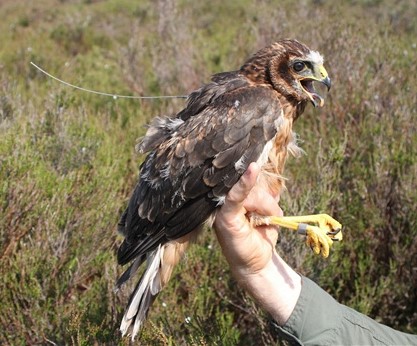
3 more satellite-tagged hen harriers ‘disappear’ – all on grouse moors

You could set your clock by the regularity of these reports. In news that will shock absolutely no-one, the RSPB has announced the sudden and inexplicable ‘disappearance’ of three young satellite-tagged hen harriers.

All three had hatched this year, all three had vanished before the end of August, and in all three cases the tag’s last known fix came from a driven grouse moor.

Photo of Hen Harrier Octavia, by Steve Downing:

Read the RSPB blog here

The three ‘missing’ harriers are Hilma (1), Octavia (2) and Heulwen (3).

[RPUK map]

According to the RSPB blog, Hilma’s last known tag fix was on 8 August 2018 ‘near Wooler, Northumberland over land managed for driven grouse shooting’.

From the map on the RSPB blog, we believe this to be on the Lilburn Estate. We’ve blogged about the Lilburn Estate recently (see here).

Here’s a close up map of the habitat at Hilma’s last known location. The rectangular strips of burnt heather give the game away a bit, eh?

According to the RSPB blog, Octavia’s last known tag fix was on 26 August 2018 on ‘privately owned grouse moors near Sheffield’.

From the map on the RSPB blog, we believe this to be the Broomhead Estate in the Peak District National Park. We’ve blogged about the Broomhead Estate quite recently (here, here and here).

Here’s a close up map of the habitat at Octavia’s last known location. The rectangular strips of burnt heather give the game away a bit, eh?

According to the RSPB blog, Heulwen’s last known tag fix was on 29 August 2018 ‘in the vicinity of Ruabon Mountain’.

From the map on the RSPB blog, we believe this to be the Ruabon grouse moor. We’ve blogged about this grouse moor recently (see here, here).

Here’s a close up map of the habitat at Heulwen’s last known location:

And cue obfuscation, denial and deflections from the grouse shooting industry’s social media trolls, deathly silence from the grouse shooting industry’s representative bodies, and wilful blindness (and continued silence) from DEFRA, Michael Gove MP, Therese Coffey MP, Natural England and anyone else who thinks we’re stupid enough to believe that the HH Action Plan is helping hen harrier population recovery.

Cartoon by Gerard Hobley


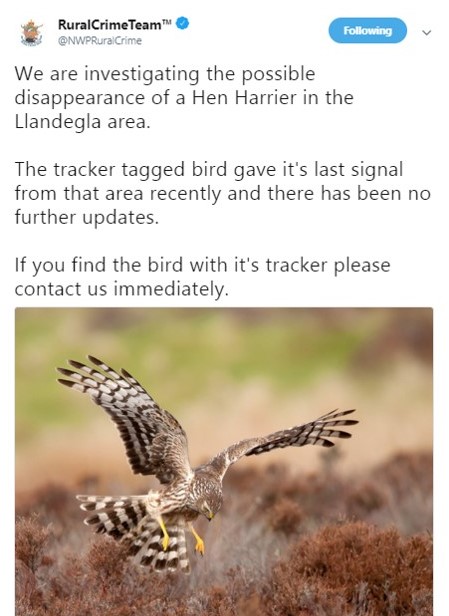
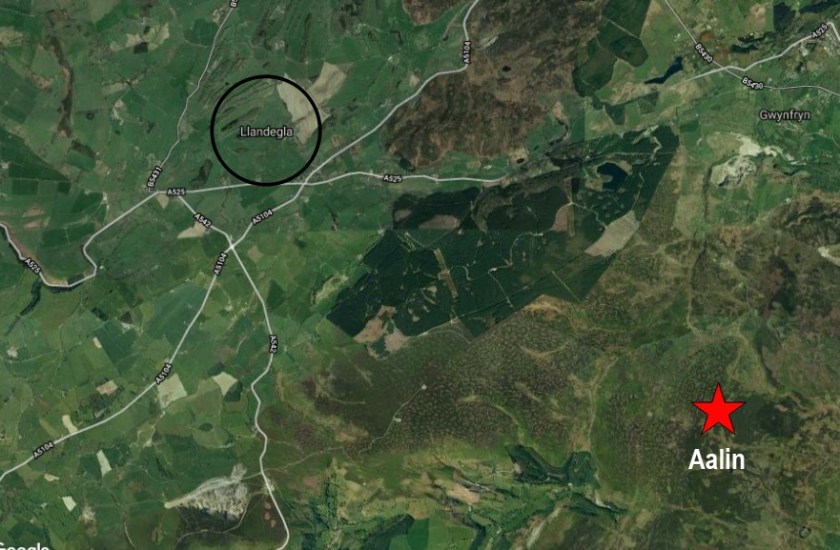
North Wales Police investigating “possible disappearance” of another satellite-tagged hen harrier

The North Wales Police Rural Crime Team has posted the following statement on Twitter this morning:

There isn’t much detail to go on but presumably this harrier’s tag has suddenly and inexplicably stopped in highly suspicious circumstances, just like the 79% of other tags fitted to hen harriers between 2007-2017 (and remember this is 79% of tags fitted by Natural England – it does not include any tags fitted by the RSPB – we’re expecting that analysis sometime next year).

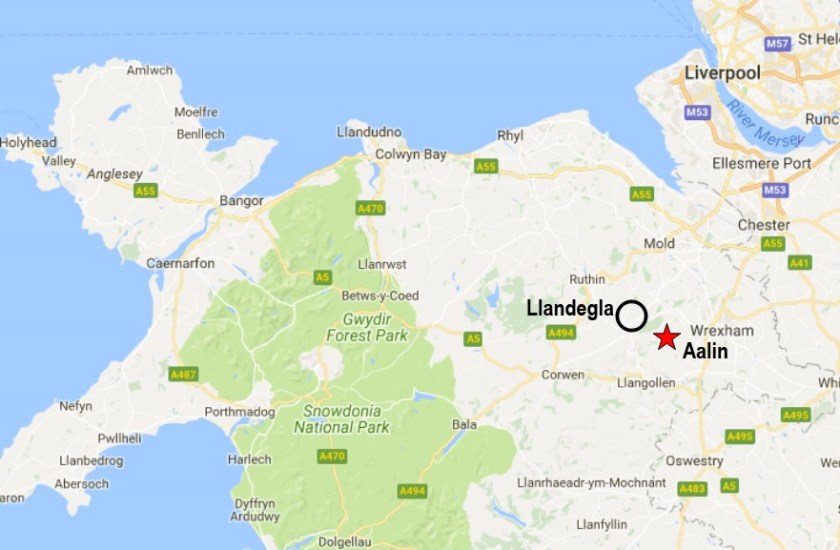
What’s interesting though, is the location from where this hen harrier’s satellite tag last tranmsitted: the “Llandegla area”. This is very close to the location where another satellite-tagged hen harrier (Aalin) ‘disappeared’ in suspicious circumstances in February this year near the Ruabon grouse moor (see earlier blog on Aalin’s disappearance here).

Hopefully more details about this latest hen harrier’s “possible disappearance” will be published soon.

UPDATE 13 September 2018: 3 more satellite-tagged hen harriers disappear – all on grouse moors (here)

SNH wilfully blind to threat of persecution of golden eagles in south Scotland

The project to translocate golden eagles from the Scottish Highlands to south Scotland has finally got underway this year, with news out today that three eagles have been successfully released this year.

There’s an article about it on BBC Scotland (here) including some video footage.

Unbelievably, Professor Des Thompson, Principal Advisor for Biodiversity and Science at SNH, is quoted in both in the video and in the article as follows:

This is the icon of wild Scotland. We are on the threshold of giving something very exciting back to the south of Scotland. Scotland has just over 500 pairs, just two to four breeding pairs in the south of Scotland where they are really struggling.

Young golden eagles are heavily persecuted. A third of them have been killed either through shooting or poisoning.

Down here in the south of Scotland we’ve been able to reassure ourselves persecution is not an issue. It’s just a small fragmented population that needs this helping hand from us. We have been overwhelmed by the support we are getting from landowners and we are reassured these birds are going to be welcome“.

Did he actually just say that? “We’ve been able to reassure ourselves persecution is not an issue“. What, you mean in the same way that SNH reassured itself that the scientific justification for the Strahbraan raven cull was sound?

You couldn’t make this up. Has he switched jobs and is now representing Scottish Land & Estates? He might as well be as this is exactly the line they were trying to spin several years ago (see here).

The south of Scotland is well known for the illegal persecution of raptors, including golden eagles. Only this year a young satellite-tagged golden eagle (Fred) ‘disappeared’ in the Pentland Hills in highly suspicious circumstances (here) in an area where previously a merlin nest had been shot out and breeding ravens had also ‘disappeared’.

[Golden eagle Fred, by Ruth Tingay]

Then there’s Raeshaw Estate, currently operating under a General Licence restriction and an Individual Licence restriction, due to evidence of alleged ongoing raptor persecution (here); there’s a forthcoming prosecution of a gamekeeper in the Borders for a long list of alleged wildlife crime (here); there’s the land managed for driven grouse shooting in South Lanarkshire (close to the golden eagle translocation area) where over 50 confirmed reported incidents of dead raptors and poisoned baits have been recorded since 2003, including a shot golden eagle in 2012 (it didn’t survive, here), the reported shooting of a short-eared owl in 2017 (here), the reported shooting of a hen harrier in 2017 (here), and the reported shooting of a buzzard in 2018 (here); and then there’s been at least four raptor poisonings in south Scotland this year alone (here).

But don’t worry, folks, despite all evidence to the contrary, Professor Thompson is “reassured” that raptor persecution won’t be an issue for these young golden eagles.

Here’s a map from the 2008 Golden Eagle Conservation Framework showing the conservation status of golden eagles in Scotland (red = unfavourable conservation status), overlaid with ten years of raptor persecution data (all species, 2005-2015) gleaned from ‘official’ persecution maps. It doesn’t include data from the last three years. Does it look to you like raptor persecution isn’t an issue in southern Scotland?

We’ve blogged about the South Scotland Golden Eagle Project several times over the years (e.g. here, here, here) and we still have mixed feelings about it. On the one hand the south Scotland golden eagle population is in dire straits, and has been for some time, and urgently needs a boost. Translocating eagles from other parts of the Scottish range seems a decent strategy.

However, fundamental to translocation and reintroduction projects is the need to identify and resolve the underlying cause(s) of the species’ decline in that area. The authorities have not come anywhere near to resolving this issue, either in south Scotland or beyond. The chances remain high that these young eagles will be killed. Having said that, they’re just as likely to be illegally killed further north in Scotland so in that sense, moving them a few hundred km south probably won’t make much difference to their chance of being illegally killed.

At least these three young eagles have been satellite-tagged so their movements can be followed. The question is, if/when each eagle goes off the radar in suspicious circumstances, who will decide whether this news is suppressed or publicised?

We’ll be taking a close interest.

Gamekeeper cautioned after merlin killed in illegally-set trap on grouse moor

This merlin was found dead in a trap on an un-named driven grouse moor in Northumberland in July this year. A fell runner discovered the bird and reported it to the RSPB.

The RSPB went to the site the next day and realised that this trap had been illegally-set as no attempts had been made to restrict access to the tunnel entrance, meaning non-target species (such as this merlin) could easily access the tunnel, with the inevitable result.

The incident was reported to Northumbria Police and a wildlife crime officer visited the site with an RSPB investigator.

An ‘experienced’ gamekeeper was formally interviewed and admitted setting the trap. Unbelievably, the police decided to issue him with a police caution instead of seeking a prosecution via the Crown Prosecution Service.

Haven’t we been here before? Ah yes, here and here.

Once again, another gamekeeper gets let off for committing a wildlife crime on a driven grouse moor. And before anyone says, ‘A caution isn’t a let off’, it absolutely is if this gamekeeper is permitted to keep his firearms and shotgun certificates, and his job, despite now having a criminal record.

Sure, he probably didn’t intend to trap and kill this merlin but that’s not the point. If he’s employed as a professional gamekeeper he has a responsibility to operate his traps within the terms of the law. With this trap, he chose not to do that, knowing full well that a non-target species could be killed, which it was. That’s an offence and he should have been charged and prosecuted.

Further details about this merlin case can be read on the RSPB Investigations Team blog here

Police investigate suspicious death of breeding peregrine pair

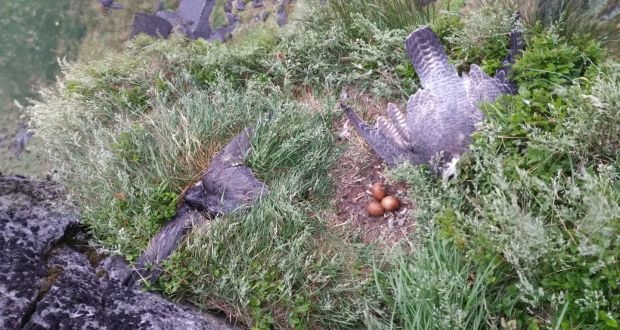
Irish police, in conjunction with the National Parks & Wildlife Service (NPWS) are appealing for information following the discovery of two dead adult peregrines found on their nest ledge in Co Louth in the Irish Republic.

Staff from the NPWS recovered the two dead peregrines, along with three eggs, from a remote nest site in the Cooley Mountains.

The Department of Culture, Heritage and the Gaeltacht said the adult falcons were killed while trying to incubate their eggs and that ‘forensic and other evidence was being gathered in the expectation that a successful prosecution will take place’.

In the expectation that a successful prosecution will take place‘? That’s a strange and optimistic claim but perhaps they already know more than they’re letting on – the cause of death, if it’s been established, has not been revealed in any media reports about this case.

Anyone with information can contact gardaí (police) in Dundalk on 042-9388400 or the local conservation ranger on 076-1002637.

The appeal for information appeared in the Irish Times on Wednesday 8 August 2018 (see here)

Red kite shot near Corby, Northants

The following article appeared in the Northamptonshire Telegraph on Tuesday 31 July 2018:

POLICE ARE APPEALING FOR WITNESSES AFTER A RED KITE WAS SHOT AND INJURED

The bird of prey is being seen to by a local vet after being shot and injured yesterday (Monday).

The shooting took place in the area of Deene park and Fineshade.

A neighbourhood alert posted by Northants Police about the incident said: “Please be aware it is an offence to injure or kill these birds.”

Anyone who witnessed the shooting, saw anyone that looked suspicious or saw any suspicious vehicles in the area at the time is asked to call Northamptonshire Police on 101.

ENDS

We’ve been unable to find any further detail about this case – there’s no official appeal for information on the Northamptonshire Police website.

UPDATE 13.50hrs: We’ve now been informed this kite was handed in to the Forestry Commission office at Fineshade Wood on THURSDAY 19th JULY (not Mon 30th July as previously thought). It was rescued by a member of the public.

Quote from the Raptor Foundation: “I have taken charge of a red kite that has been shot, with three shotgun pellets, in the leg, shoulder and ear. The leg and shoulder pellets are not really an issue governing the birds potential release as they are below joints. The pellet in the ear is lodged in the bony part of the skull and is causing the bird problems with balance. The vet and I both agree the bird could not be released back with the pellet still inside. We have been treating for infection and pain relief and the bird is making steady improvements. It was unable to stand on admission, but is now mobile along the floor to some degree. The vet is looking to operate later this week“.

[Photo of the shot red kite, by Raptor Foundation]