Blog

Facebook braggers get caught out

dead sparSome people are just very, very stupid.

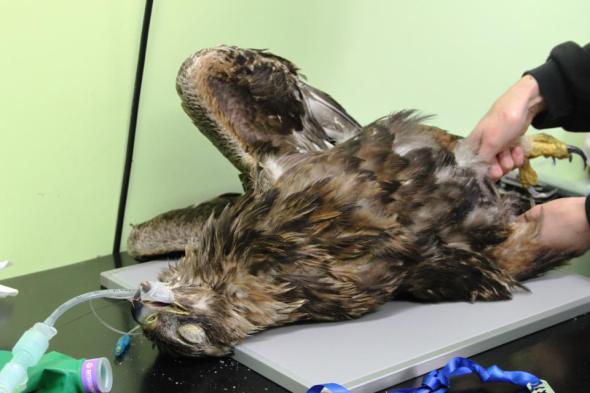
A couple of days ago someone called Steve R Godfrey posted a picture of a dead sparrowhawk on a private Facebook forum called Forester’s Hunting Community. This group is for those interested in air rifles and shooting. He included the following statement with his photograph:

This was stalking my friends racing pigeons. He asked for my services“.

In response, many, many group members wrote of their utter disgust and outrage at the inference that Godfrey had killed this bird. The group’s moderators banned Godfrey from the group and reported him to the police.

An update on the group’s Facebook page yesterday stated that Derbyshire police were actively investigating the incident following the high number of complaints that had been received from the shooting community.

Steve R Godfrey’s Facebook account appears to have vanished.

Kudos to the members of the Forester’s Hunting Community for reporting him and to Derbyshire Constabulary for following up.

neknominateAnother investigation has been launched after a video of a man slitting a deer’s throat and drinking its blood was posted on Facebook last month. The ‘stunt’ was allegedly part of the ‘neknominate’ craze where someone drinks alcohol, performs a stunt and then nominates someone else to take part. The video was posted by someone called Shaun Wilson from Newcastle. An article in the Newcastle Chronicle (see here) suggests that the person in the video is a gamekeeper and that he has been suspended from his position on a Northumberland estate.

The National Gamekeepers’ Organisation has confirmed that the gamekeeper is one of their members and they have apparently launched a disciplinary investigation. A committee hearing next month will decide whether the man’s actions are ‘relevant to gamekeeping and whether he has damaged the reputation or profession of gamekeeping’. Don’t hold your breath – this is the same organisation that thinks a conviction for possession of a banned poison is not enough to warrant expulsion from the organisation because ‘it’s not a wildlife crime’ (see here).

Environment Minister refuses to recommend golden eagle as national bird

Fearnan2We’ve been following the progress of the RSPB’s submission to the Scottish Parliament to have the golden eagle declared as Scotland’s national bird.

The process began in November 2013 when RSPB Scotland launched a public petition to have the golden eagle named as Scotland’s national bird (see here). 1836 signatures were gathered and the petition was duly submitted for consideration by the Scottish Parliament’s Public Petitions Committee on 7th December 2013.

On 28th January 2014 the Petitions Committee took evidence in support of the petition from RSPB Scotland’s Duncan Orr-Ewing and wildlife cameraman Gordon Buchanan (see here).

The hearing descended in to farce when one of the Committee members suggested the golden eagle was an unsuitable candidate as it was representative of Nazi symbolism (see here).

The official report of the hearing can be read here: Public Petitions Committee official report 28 Jan 2014

Nevertheless, the Committee agreed to progress the petition by seeking advice from SNH, the Scottish Raptor Study Group (SRSG) and the Scottish Government.

Later in February, written submissions were made by SNH and the SRSG. The SRSG was in full support of the petition, arguing that the designation of the golden eagle would go some way to reducing the current illegal persecution of this species. SNH, however, refused to support the designation, suggesting that other species were also worthy of consideration, including the red grouse!! (see blog here).

SRSG submission: SRSG response to petition 1500 Feb 23 2014

SNH submission: SNH response to petition 1500 Feb 19 2014

We argued that SNH was engaging in double standards given their response to an earlier petition to designate the Scots Pine as Scotland’s national tree. In that response, SNH supported the nomination of the Scots Pine and dismissed other potential contenders. We also argued that SNH had missed an important opportunity to promote the conservation of the golden eagle – a species known (in part from SNH-commissioned research) to be in trouble in large areas of the country (notably in areas managed for driven grouse shooting).

Last week, the written advice from Environment Minister Paul Wheelhouse was submitted to the Petitions Committee. You can read it here: Wheelhouse response to petition 1500 Mar 13 2014

In a nutshell, Wheelhouse recognises the continued persecution that this species faces and is “not opposed to the idea of the golden eagle as a national bird” but he will not recommend the golden eagle as Scotland’s national bird.

His reasoning is more than a little ironic given the current debates surrounding independence. The main thrust of his argument is this: “I am not yet convinced that there are compelling arguments in support of having a national bird“.

Eh? Isn’t he a member of the Scottish National Party? What’s the problem with having a national bird? Is it so unusual for a country to designate a national bird? What damage has designating a national bird ever caused to any other country? Would designating a national bird cause irreparable damage to Scotland?

Scots pine wheelhouseIt’s all very strange, especially when you consider Wheelhouse’s response to the recent designation of the Scots Pine as Scotland’s national tree. Following that designation, Wheelhouse revealed plans were in place to have a National Tree Week and to set up a special fund to help promote Scotland’s national tree! He was quoted as saying that having a national tree was a “clear symbol of our affinity with Scotland’s trees, woods and forests, and their importance to us all” (see here). That’s what we should expect from an Environment Minister. His response to the petition to designate the golden eagle as Scotland’s national bird is, frankly, absurd.

So where does this leave the petition? We’re not sure. We had expected that a public consultation would be called but it now seems even that is in doubt, as Wheelhouse is first urging a wider debate on the concept of having further national symbols.

Very, very disappointing.

Case against gamekeeper George Mutch: part 6

Criminal proceedings continued today with an intermediate diet in the case against gamekeeper George Mutch of Kildrummy Estate, Aberdeenshire.

This was the sixth hearing in this case.

Mutch is pleading not guilty to a suite of charges for offences alleged to have taken place in August 2012. The charges come under Section 5 subsection 1B of the Wildlife & Countryside Act (relating to the use of a trap for the purpose of taking or killing wild birds) and Section 1 subsection 1A of the WCA (relating to the killing, injuring or taking of wild birds).

The case is expected to go to trial in late May, although another intermediate diet is scheduled for 2nd April.

We’re particularly interested in this case and we’ll be closely following the proceedings.

Previous blogs here, here, here, here and here.

SGA donor owns estate ‘among the worst in Scotland for wildlife crime’

SGA donors 2014 EdradynateThe Scottish Gamekeepers’ Association publishes a quarterly magazine for its members. The latest edition (winter/spring 2014) includes a list of recent donors. We were intrigued to see the following entry:

MDCC Campbell Edradynate Estate (Donation: £1720)

Could this be Michael David Colin Craven Campbell, who resides in Hampshire but owns Edradynate Estate? So why would this entry be intriguing? Why wouldn’t they accept funding from Mr Campbell, who was awarded an MBE in 2008 for services to charity, was appointed by the Queen to become High Sheriff of Hampshire 2008-2009 and has an entry in Debretts? No reason whatsoever to reject a generous donation from such an upstanding and distinguished gentleman whose Debrett’s entry lists ‘shooting’ and ‘escaping to Scotland’ amongst his recreational activities. Right?

Edradynate Estate near Aberfeldy in Perthshire was described in 2004 by the then RSPB Investigations Officer Dave Dick as being “among the worst in Scotland for wildlife crime” (see here).

In January 2005, the then Police Wildlife Crime officer for Tayside Police, Alan Stewart, described Edradynate Estate as follows:

Edradynate Estate, which is owned by an absentee landlord from Hampshire, has probably the worst record in Scotland for poisoning incidents, going back more than a decade. In 14 separate incidents since 1998, 16 poisoned victims (9 buzzards, 1 cat, 1 tawny owl, 2 sparrowhawks, 1 common gull, 1 polecat and 1 carrion crow) and 12 poisoned baits (rabbits, wood pigeons and a pheasant) have been found, with traces of the pesticides Mevinphos, Carbofuran and Alphachloralose” (see here, page 3).

These two prominent wildlife crime investigators were commenting following the collapse of a case against two gamekeepers from Edradynate Estate. In 2002, the Head gamekeeper and an under keeper had been charged with nine offences relating to the alleged use of poisoned baits and bird cruelty, including the use of spring traps. These charges followed a police raid on Edradynate Estate where three rabbit baits, a dead buzzard and a dead crow had been found. Lab tests detected Carbofuran and Alphachloralose. A game bag and a knife seized during the search showed traces of these poisons when swabbed.

On 22 July 2004, two years after the original arrests and 13 court hearings later, the Fiscal dropped the case following a series of adjournments called by both the defence and the prosecution. A Crown Office spokeswoman admitted that the time taken to prepare the case for trial had been a major factor in the decision to drop the case.

The 2002 raid was the second police search on Edradynate Estate. In Alan Stewart’s book, Wildlife Detective, he writes the following:

This would be our second major search of the estate under warrant and we hoped this time to find sufficient evidence to bring to an end the catalogue of poisoned baits and victims that had turned up on the estate with the worst record by far not just in Tayside but in Scotland”.

The crimes didn’t end there.

a dead red kiteIn July 2010 a poisoned red kite was discovered in the area (see here). According to Tayside Police, ‘five buzzards and a tawny owl met with the same fate in the same area in the last year’.

In September 2010, an un-named gamekeeper from Edradynate Estate, a self-proclaimed member of the SGA, talked to the Courier about the discovery of the poisoned red kite:

As a member of the Scottish Gamekeepers’ Association, I am against anything illegal. Anybody who does this should be jailed because it’s not on and I have never done anything like this in my life. To find a poisoned bird on my ground is just wrong because I don’t use poison and wouldn’t know how to.

There is something funny about this and I think someone else has killed this bird and planted it on my estate. Why they have done that, I don’t know. We have never seen a red kite, living or dead, in the Strathtay valley so I don’t know where this has come from. The laird is so upset about it, as am I, because it besmirches our reputation and it’s reflecting badly on me.

I am a professional person and I have worked hard for all these years on the estate and never had anything against my name. This is causing me a lot of stress and strain because I don’t know what is going to happen next. I’ve never been involved in anything like this before.

It’s very reassuring to know that I have the full support of the laird because this job is something I love doing.” (see here).

In March 2011 two poisoned buzzards and two poisoned crows were discovered, along with two poisoned pheasant baits. Carbofuran was detected this time. Tayside Police conducted another search (their third on this estate?) and it was reported that a 62 year old man was taken in for questioning but was released pending further enquiries (see here). We’re not aware of any other media statements about this incident.

In September 2013, the Crown deserted a case against Edradynate Estate’s Head gamekeeper on alleged firearms and explosives charges. The reason for this desertion was not made public (see here).

Nobody has ever been convicted for any of the alleged offences on Edradynate Estate.

Alan Stewart wrote about a 1995 incident on Edradynate Estate in his Wildlife Detective book, concerning the discovery of a poisoned cat belonging to the occupier of a cottage on Edradynate Estate. A search in a nearby wood had recovered a poisoned pheasant bait and a poisoned tawny owl – later all found to contain traces of Mevinphos. A further search had recovered two wood pigeon baits and a poisoned sparrowhawk, all found inside a pheasant pen. They all contained traces of Mevinphos. Stewart wrote:

I visited a number of residents on the estate and was absolutely shocked at what I learned. According to the interviews I carried out, my suspect had, at various times, set up a gun with a string attached to the trigger to pepper with wheat any intruder who brushed against the string. He had allegedly driven into Perth to the workplace of a person who lived on the estate, to remonstrate with him after a pheasant had been knocked down and killed by the person’s car. He had allegedly poisoned a tenant farmer’s collie, and also shot dead the dog of a visitor to a neighbouring estate after the dog had run off and was being pursued by its owner. I was taken aback by the vitriol these people had for my suspect but their hatred was tempered with fear and all interviews were ‘strictly off the record’. All those I spoke to were in tied houses and none wanted to become involved in a prosecution. News of my investigation had travelled fast and out of the blue I received a telephone call from a former factor for the estate. He had anticipated the reluctance of those who could potentially help, wished me the best of luck, but doubted that my enquiry would ever result in court proceedings”.

A prosecution in this case was attempted but the case was deserted after it became time-barred due to a lack of available evidence to link the individual suspect to the alleged offences.

Alan Stewart wrote:

The following week [just after the case had been deserted] I learned that another employee had borrowed the suspect’s Land Rover but it had broken down. In his search for tools to repair it, he had lifted up the passenger seat to search the compartment underneath as the most likely place for tools to be stored. Instead of tools there were three dead sparrowhawks. I am sure this would have clinched the case but naturally the employee wanted to keep his job and his house and the information came to me via a third party”.

Stewart wrote about another incident in 2001 – the discovery of a poisoned buzzard on the estate that had been killed by Carbofuran:

The usual enquiries were made and the usual suspect interviewed, but his involvement could not be established……..In the investigations on Edradynate Estate, we could prove beyond reasonable doubt that baits and dead birds and animals were being found with monotonous regularity on the estate. We could prove beyond reasonable doubt that the baits were laced with particular pesticides and that the victims had been poisoned after having consumed part of these baits. What we were so far unable to prove was who set the baits”.

Shot peregrine found dead near pheasant pen in Yetminster

From Lauren Jean on Twitter (@lau1180) –

This peregrine was found shot dead near a pheasant pen close to Millennium Woods near Yetminster, Dorset. The discovery has been reported to the police and the RSPB.

perg shot Yetminster March 2014

Case against Lloyd Webber’s gamekeeper moves to trial

The case against a gamekeeper employed on Andrew Lloyd Webber’s estate in Hampshire has moved to trial.

Mark Stevens, 42, is accused of a series of trapping offences alleged to have taken place on the Sydmonton Court Estate, Hampshire, in August and September last year. He has denied the charges.

His trial will take place in July 2014.

See here for previous blog.

Case against Stody Estate gamekeeper Allen Lambert: part 4

The case against Allen Lambert, a gamekeeper on the award-winning Stody Estate, continued in February and is now set to go to trial.

Lambert, 64, of Old Lodge House, Stody, Melton Constable in Norfolk has already pleaded guilty to storing the pesticides Mevinphos and Aldicarb, but has denied a series of further charges concerning the alleged killing and possession of 14 buzzards, 1 sparrowhawk and 1 tawny owl.

His trial will take place in May.

For previous blogs on this case see here, here and here.

Vulture-killing drug goes on sale in Europe

European vultures are under severe threat from indirect poisoning caused by a veterinary drug called Diclofenac. This particular poisoning issue is not one we would normally cover but the severity of this poisoning threat is so great that it can’t be ignored.

Diclofenac is an anti-inflammatory veterinary drug used to treat domestic livestock. In south-east Asia, Diclofenac is known to have caused the catastrophic population collapse of at least three vulture species in the last few decades (Oriental white-backed vulture, Long-billed vulture and Slender-billed vulture). These three species have been pushed to the very edge of extinction after being poisoned by eating livestock carcasses contaminated with this drug. (Diclofenac causes acute renal failure in vultures & most are dead within 48 hours of consuming a contaminated carcass).

On-going conservation efforts include a captive-breeding programme with the intention of reintroducing the vultures when it is safe to do so. In 2006, three years after scientists identified Diclofenac as the toxin responsible, the governments of India and Pakistan banned the manufacture of veterinary Diclofenac, while manufacturers in Nepal voluntarily withdrew the drug from the market. A vulture-safe alternative, Meloxicam, is widely available.

For further information about the Asian Vulture Crisis see here and here.

Incredibly then, news has emerged that two countries in Europe (Italy and Spain) have recently licensed the use of veterinary Diclofenac for livestock farming! The use of this drug poses a significant threat to populations of at least three European vulture species, particularly in Spain which holds 90% of the European griffon vulture population, 97% of the Eurasian black vulture population, and 85% of the Egyptian vulture population. Diclofenac is known to be toxic to all three species. A fourth species, the Bearded vulture (of which Spain holds 67% of the European population) is also potentially at risk – there is no direct evidence that Diclofenac is toxic to this species but given the drug’s toxicity to other Old World vulture species it would be foolish to assume it would be safe for Bearded vultures.

The threat is not limited to just Italy and Spain. It is known that the drug has also been exported to other countries including Turkey and Serbia and is becoming widely available.

It is vital that this drug is taken off the market with immediate effect. Not just to safeguard European vulture populations but also to send a clear message to other regions, particularly Africa, that this drug is unsafe. There is absolutely no reason for this veterinary drug to be licensed in Europe when safer alternatives are available. To license it with the full knowledge of its catastrophic effect on vultures is sheer lunacy.

So what is being done? Well, several high profile conservation organisations (including BirdLife International, RSPB, IUCN Vulture Specialist Group, Vulture Conservation Foundation) have sent a formal request to the EU to start what’s known as a referral procedure for a withdrawal of this drug in Europe. For more information see here.

What can you do? You can sign this petition to add your voice calling for a complete ban: please sign here.

If you want a detailed information briefing about the use of Diclofenac in Europe, including an overview of the current situation, legal aspects, potential impacts and required actions, please read this.

Poisoned baits found on Leadhills Estate: ‘case closed’

One year ago, almost to the day, a significant haul of pre-prepared poisoned baits (36 in total) was discovered in two game bags that were hidden in woodland next to a grouse moor on Leadhills Estate. The 36 chopped up pieces of meat had been liberally sprinkled with the deadly banned poison, Carbofuran.

We blogged about this discovery in June 2013 (see here). We were highly critical of the police, who had failed to issue any press statement whatsoever, despite the proximity of the poisoned stash to a public caravan park (see photo, which we took in Feb this year). NB: This caravan park has no connection whatsoever to the Leadhills (Hopetoun) Estate.

Leadhills RPSWe were also critical of the police investigation, which included arriving on scene in marked police vehicles, thus notifying any poisoner(s) of their presence and allowing the poisoner(s) valuable time to hide any remaining evidence. We also criticised their failure to conduct a police search of the adjacent moor for any evidence of baits that had already been set out. Their failure to conduct an immediate search was particularly stupid given (a) the known history of poisoning incidents in this area and (b) the knowledge that one of the two game bags was only half full of baits.

In November 2013 we blogged about the high probability that a prosecution would not be forthcoming in this case (see here).

Today, we have just read a SASA report that confirms our suspicions. This incident is recorded as:

No suspect identified. Case now closed“.

The Untouchables get away with committing a serious wildlife crime, again….

First Irish-bred sea eagle shot & killed

One of two Irish-bred white-tailed sea eagles, hatched last year for the first time in over 100 years, has been shot and killed.

The nine-month old bird was found in a remote part of Tipperary with 40-50 shot gun pellets in its body.

A post mortem revealed that the pellets had broken one of the bird’s legs and wing but the bird had survived for several weeks before succumbing to its injuries.

What an absolutely tragic and shocking outcome, highlighting once again that the disgraceful illegal persecution of raptors continues unabated in these isles.

See here for the report in the Irish Times to read the response of the Minister and the Irish White-tailed Eagle Reintroduction team.

We’re absolutely gutted for them.

The photograph shows Project Manager Allan Mee with one of the first sea eagle chicks donated to the project by Norway in 2007.

Further coverage

Golden Eagle Trust press release here

Independent Ireland article here

BBC news article here

RTE News & audio here