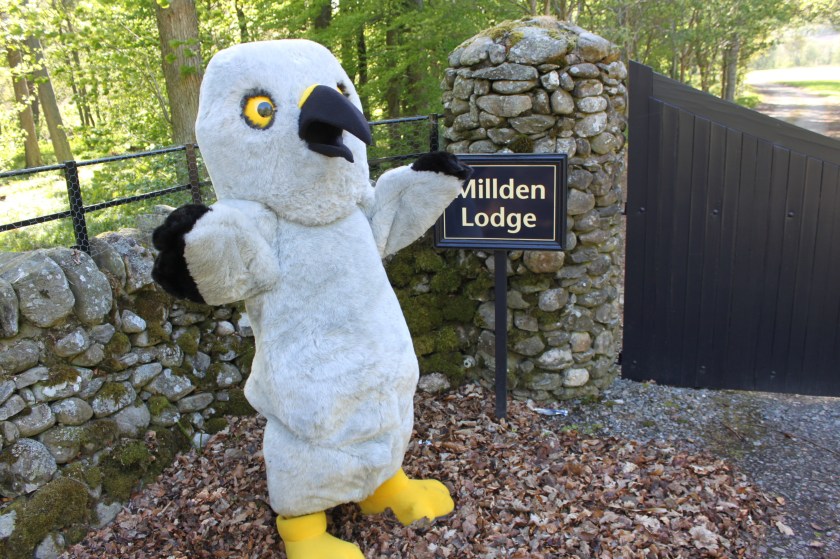
Millden is one of three big grouse-shooting estates in Glen Esk in the Angus Glens.
Here’s what’s been happening in and around the Angus Glens over the last decade:
2004 May, near Edzell: long-eared owl and two short-eared owls starved to death in crow cage trap. No prosecution.
2004 May, Invermark Estate: peregrine nest destroyed. No prosecution.
2006 March, Glenogil Estate: poisoned rabbit bait (Carbofuran). No prosecution.
2006 April, Easter Ogil: poisoned buzzard (Alphachloralose). No prosecution.
2006 April, Easter Ogil: poisoned tawny owl (Alphachloralose). No prosecution.
2006 May, Glenogil Estate: poisoned rabbit bait (Carbofuran). No prosecution.
2006 June, Glenogil Estate: poisoned woodpigeon bait (Carbofuran). No prosecution.
2006 June, Glenogil Estate: Traces of Carbofuran found in estate vehicles & on equipment during police search. No prosecution. Estate owner had £107k withdrawn from his farm subsidy payments. This was being appealed, but it is not known how this was resolved.
2006 July, Millden Estate; poisoned sheepdog (Lindane). No prosecution.
2007 November, Glenogil Estate: Disappearance of radio-tagged white-tailed eagle ‘Bird N’ coincides with tip off to police that bird allegedly been shot. No further transmissions or sightings of the bird.
2008 May, ‘Nr Noranside’: poisoned white-tailed eagle ‘White G’ (Carbofuran, Isophenfos, Bendiocarb). No prosecution.
2008 May, ‘Nr Noranside’: poisoned buzzard (Bendiocarb). No prosecution.
2008 May, ‘Nr Noranside’: poisoned mountain hare bait (Carbofuran, Isophenfos, Bendiocarb). No prosecution.
2008 May, Glenogil Estate: 32 x poisoned meat baits on fenceposts (Carbofuran, Isophenfos, Bendiocarb). No prosecution.
2008 October, ‘Glenogil Estate: poisoned meat bait on fencepost (Carbofuran). No prosecution.
2009 March, Glenogil Estate: poisoned buzzard (Carbofuran). No prosecution.
2009 March, Glenogil Estate: poisoned buzzard (Carbofuran). No prosecution.
2009 April, Millden Estate: poisoned buzzard (Alphachloralose). No prosecution.
2009 July, Millden Estate: poisoned golden eagle ‘Alma’ (Carbofuran). No prosecution.
2009 August, Glenogil Estate: poisoned white-tailed eagle “89” (Carbofuran). No prosecution.
2010 May, ‘Nr Noranside’: poisoned red kite (Carbofuran). No prosecution.
2010 September, Glenogil Estate: poisoned buzzard (Chloralose). No prosecution.
2010 October, Glenogil Estate: poisoned buzzard (Carbofuran). No prosecution.
2010 October, Glenogil Estate: poisoned pigeon bait (Carbofuran). No prosecution.
2010 October, Glenogil Estate: poisoned pigeon bait (Carbofuran). No prosecution.
2011 February, Airlie Estate: buzzard caught in illegal crow trap. (see below)
2011 March, Airlie Estate: 3 x buzzard caught in illegal crow trap. Prosecution (!) but dropped after statement from suspect given to SSPCA deemed inadmissible.
2011 April, Millden Estate: shot buzzard. No prosecution.
2012 April, ‘Nr Noranside’: Remains of buzzard found beside pheasant pen. Suspicious death.
2011 June, Rottal & Tarabuckle Estate: dead kestrel inside crow cage trap. No prosecution.
2012 February, ‘Nr Edzell’: spring-trapped buzzard. No prosecution.
2012 February, ‘Nr Bridgend’: remains of buzzard found under a rock. Suspicious death.
2012 May, Millden Estate: satellite-tagged golden eagle seemingly caught in spring trap, then apparently uplifted overnight and dumped on Deeside with two broken legs & left to die. No prosecution.
2012 May, Glen Esk: disappearance of sat-tagged red kite. No further transmissions or sightings of bird.
2013 January, Invermark Estate: white-tailed eagle nest tree felled. No prosecution.
2013 November, Glen Lethnot: poisoned golden eagle ‘Fearnan’. No prosecution.
2014 October, Nathro: shot buzzard. Prosecution? Unknown.





 On 1st October 2014, gamekeeper Allen Lambert from the Stody Estate in Norfolk was found guilty of poisoning 10 buzzards and one sparrowhawk, which had been found dead on the estate in April 2013. He was also convicted of storing banned pesticides & other items capable of preparing poisoned baits (a ‘poisoner’s kit’), and a firearms offence (see
