You may remember back in May this year we blogged about the deployment of propane gas gun bird scarers on the Leadhills (Hopetoun) Estate in South Lanarkshire (see here).
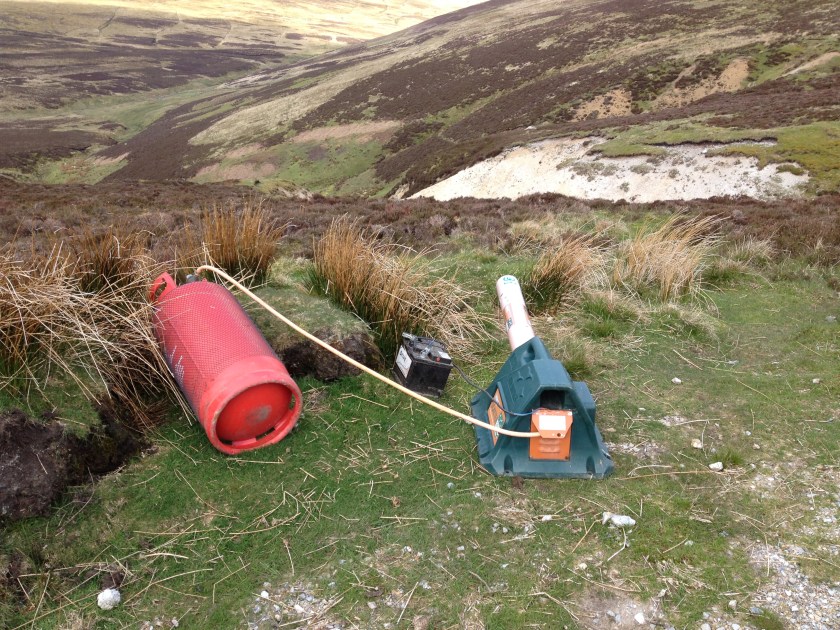
A month later, Mark Avery blogged about the deployment of propane gas guns on an unnamed grouse moor in the Scottish Borders and on another unnamed site in the Peak District National Park (see here).
It seemed they were being used with regularity across the uplands.
For those who don’t know, propane gas guns are routinely used for scaring birds (e.g. pigeons, geese) from agricultural crops – they are set up to deliver an intermittent booming noise and the audible bangs can apparently reach volumes in excess of 150 decibels. According to the Purdue University website, 150 decibels is the equivalent noise produced by a jet taking off from 25 metres away and can result in eardrum rupture. That’s quite loud!
We were interested in the deployment of these bird scarers in relation to (a) their proximity to Schedule 1 and 1A bird species [and thus any potential disturbance to these specially protected species] and (b) their use in designated Special Protection Areas [and thus any potential disturbance caused].
We assumed that the deployment of these gas guns would be subject to guidance and rigorous licensing controls by SNH (as they are the licensing authority for the Wildlife & Countryside Act (as amended)), particularly in relation to the hen harrier, which, as a Schedule 1A species, is “protected from harassment [including disturbance] at any time“, not just when it’s trying to breed (see here).
So an FoI was sent to SNH in June to ask for copies of all correspondence (during the last two years) between SNH and Scottish Land & Estates, and/or GWCT, and/or BASC, and/or Scottish Gamekeepers’ Association regarding the deployment of propane gas guns on grouse moors. As gas guns were clearly being deployed this year, we expected to receive a considerable amount of paperwork relating to SNH guidance on gas gun use.
How wrong were we!
In July, SNH responded by saying there had been “no direct correspondence” with any of the listed organisations in relation to the deployment of propane gas guns on grouse moors.
Hmm.
So it seems that SNH hasn’t issued any guidance on the deployment of these gas guns in sensitive areas where they may directly disturb breeding birds. Isn’t that a bit odd? Isn’t it obvious that the deployment of a gas gun bird scarer in proximity to specially protected birds is likely to, er, scare those specially protected birds? Surely this should be subject to a strict licensing regime?
To be fair to SNH, perhaps they had been unaware that these gas guns were being routinely deployed on grouse moors, and so they wouldn’t have thought that there was a necessity to provide guidance? However, that excuse can’t be used any longer because SNH are now well aware that these gas guns are being deployed. As part of their response to the FoI, they sent a copy of an email chain from members of the PAW Scotland Raptor Group (of which SNH is a member) discussing the deployment of these gas guns in Scotland. It really is worth a read – according to SLE CEO Doug McAdam, these guns ‘have been used for a number of years’ and are used to scare away juvenile ravens. Apparently (according to McAdam) this ‘isn’t a raptor issue’ and gas guns are ‘targeted and proportional’ and they ‘seem to have relatively little impact on other species’, although he fails to provide any shred of evidence to support these claims. He then goes on to say there should be an experimental removal of ravens – a suggestion ably slammed by Ian Thomson, Head of RSPB Scotland Investigations.
Read the correspondence here: FoI July 2015 SNH correspondence gas guns on grouse moors last two years
We would argue that SNH, as a matter of urgency, needs to provide official guidance on the deployment of propane gas guns in proximity to Schedule 1 and Schedule 1A birds, as well as their use in SPAs. Without official guidance, it would probably be difficult to secure a successful prosecution [for gas gun related disturbance offences]. This guidance should be relatively easy for SNH to produce – they recently published similar guidance on the use of helicopters and aircraft in relation to disturbance risks to Schedule 1 and Schedule 1A raptors and wider Schedule 1 species (see here). This guidance (which is very informative – well worth a read) indicates that a licence is required for any aerial work in the vicinity of a protected species. When you look at the noise comparison table produced by Purdue University (here), a Bell J-2A helicopter at 100ft is said to emit 100dB of noise; this is considerably less than the 150dB noise of a propane gas gun and so it follows that a licence would also be required for the deployment of a gas gun in the vicinity of a protected species and/or in a protected area.
We’d also argue that Natural England should also produce guidance on the deployment of gas guns, again as a matter of urgency. As evidenced in Mark Avery’s blog, these devices are also being used on the uplands of northern England.
Here are the contact details for SNH and NE, if anyone feels like writing to them to ask when we might expect the publication of such guidance:
Andrew Bachell, Director of Policy & Advice, SNH: Andrew.Bachell@snh.gov.uk
Alan Law, Chief Strategy & Reform Officer, Natural England: alan.law@naturalengland.org.uk
UPDATE 13th September 2015: SNH commits to investigating the deployment of gas guns on grouse moors (see here)
UPDATE 23rd September 2015: Natural England to issue guidance on deployment of gas guns on grouse moors (see here).
 Well, well, well.
 It’s also interesting that SLE don’t mention the Newlands Estate’s membership of the Wildlife Estates Scotland initiative in their press statement. Not a word. That news has been gleaned from ITV (see
  One year ago today saw the closure of the Scottish Government’s public consultation on increasing the SSPCA’s investigatory powers in relation to wildlife crime investigations, and particularly in relation to raptor persecution.
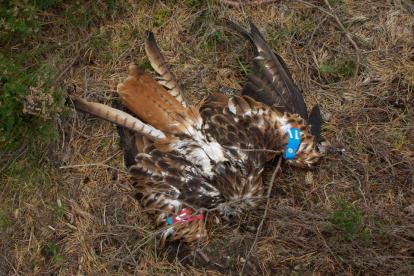 RSPB Scotland has issued a press release about the discovery of two illegally killed red kites in the Highlands. One was found shot on a railway line and the other one was found poisoned on Cawdor Estate (see photo).
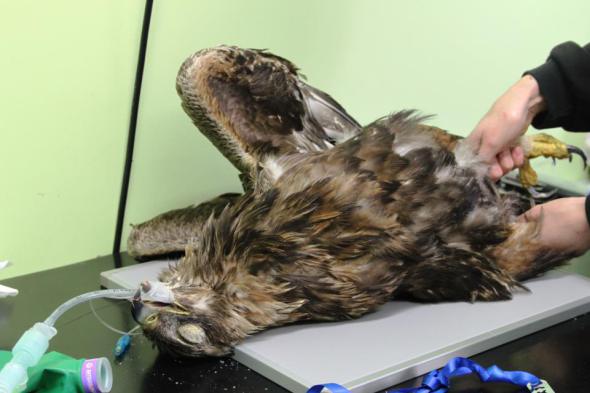
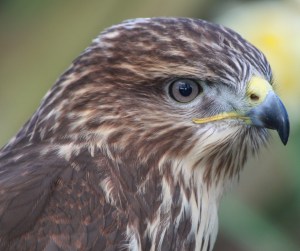 A buzzard that was found badly injured in the Borders in July had been hit by shotgun pellets in its head and wing. Its injuries were so severe the bird had to be euthanised.
 Police Scotland has announced that more than 100 police officers will receive specialist training to tackle wildlife crime (see
 There’s an article on the BBC News website today about a proposal to take golden eagle chicks from the Highlands and release them in southern Scotland in an attempt to boost the tiny, depleted population currently clinging on by its talons (BBC report