
Last week we blogged about the deployment of gas guns on grouse moors and how we were still waiting for guidance on their use from SNH and Natural England; guidance that had been promised before the start of the 2016 breeding season (see here). We were/are concerned that these devices were/are being used to deter hen harrier breeding attempts. If they were/are, this would constitute an offence of causing reckless or intentional disturbance.
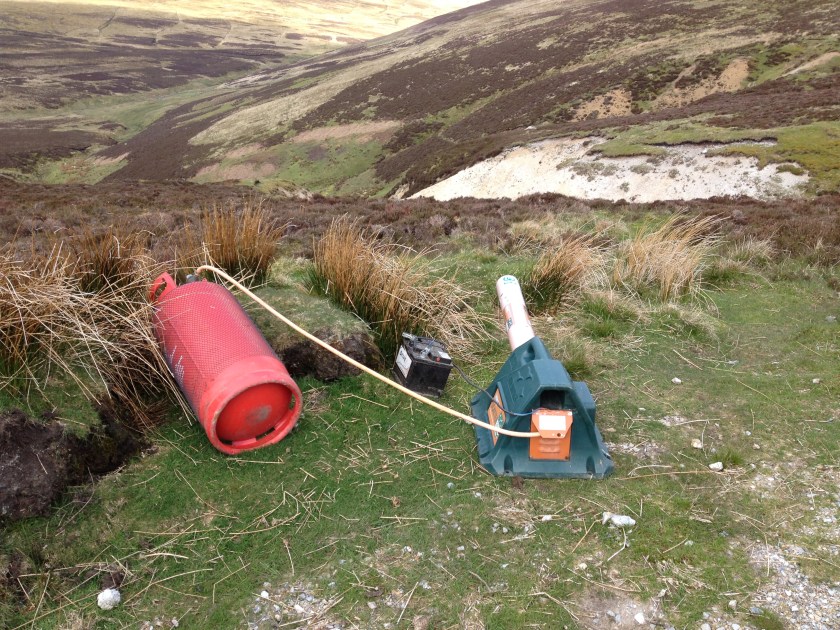
SNH has responded with the following statement:
Thank you for your email.
I note your concerns about the use of propane gas guns, which may have the potential for disturbance of protected bird species. We are not in receipt of specific evidence of an impact on breeding or nesting birds but we would welcome any information you may have regarding this or any related concerns of improper use of gas guns. This information should be forwarded to andy.turner@snh.gov.uk. Intentional or reckless disturbance of Schedule 1 nesting birds is an offence, and any suspected incidents of this through gas gun use should be reported directly to Police Scotland on 101.
Although we do not have specific information, we are working with Natural England to provide best practice guidance on the use of this equipment to minimise the likelihood or potential of disturbance in the vicinity of protected species. We currently expect to make this available later this month. The use of gas gun equipment is regulated by Local Authorities under the Environment Act and we are not currently considering separate licensing under the Wildlife & Countryside Act. We will, however, continue to assess on a case-by-case basis any licence application to disturb scheduled birds.
Thank you for your concern.
Andrew Bachell, Director of Policy & Advice, SNH
We found this statement to be contradictory and confusing. SNH says it doesn’t have any evidence of an impact on breeding or nesting birds. Has SNH investigated any of the previous reports it has received about these gas guns being used on grouse moors? If SNH hasn’t investigated, then of course no evidence will be available.
SNH says it wants to hear about any concerns but then says improper use could constitute an offence which should be reported to Police Scotland. Can anyone imagine Police Scotland investigating the use of a gas gun in the middle of a remote grouse moor? No, neither can we. And if the schedule 1 bird has already been ‘disturbed’ by the gas gun and has since cleared off, then if the police did miraculously attend, there’d be nothing to see anyway and therefore no evidence of an offence.
SNH says gas gun use is regulated by local authorities under the Environment Act. But this legislation relates to statutory nuisance, ‘noise emitted so as to be prejudicial to [human] health or a nuisance’. This legislation does not relate to the illegal disturbance of Schedule 1 birds.
SNH says it is working with Natural England to provide best practice guidance, but in a later response to one of our blog readers (see comment from blog reader Andrew here), SNH says ‘there is insufficient evidence to warrant the production of guidance’ and then admits that ‘SNH guidance is not enforceable by law should an individual decide not to adhere to it’.
SNH says it is not considering separate licensing under the Wildlife & Countryside Act ‘but will continue to assess on a case-by-case basis any licence application to disturb scheduled birds’. But if gas gun use is unlicensed, then nobody will be submitting a licence application for use because they don’t need to.
Confused? We are.
The best advice we can offer to anyone who finds a gas gun in use on a grouse moor in Scotland is to report it to RSPB Scotland. Email: _InvestigationsSHQ@rspb.org.uk [please note the underscore at beginning of email address] Tel: 0131-317-4100.
We’re still waiting for a response from Natural England about their gas gun ‘guidance’.
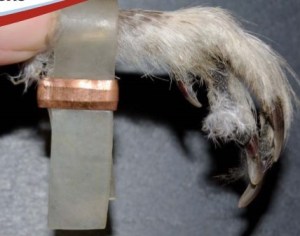 Following yesterday’s blog about pesticide legs bands being attached to female red grouse to deter ticks (see



 Grant Moir, Chief Executive of the Cairngorms National Park Authority, has today issued a
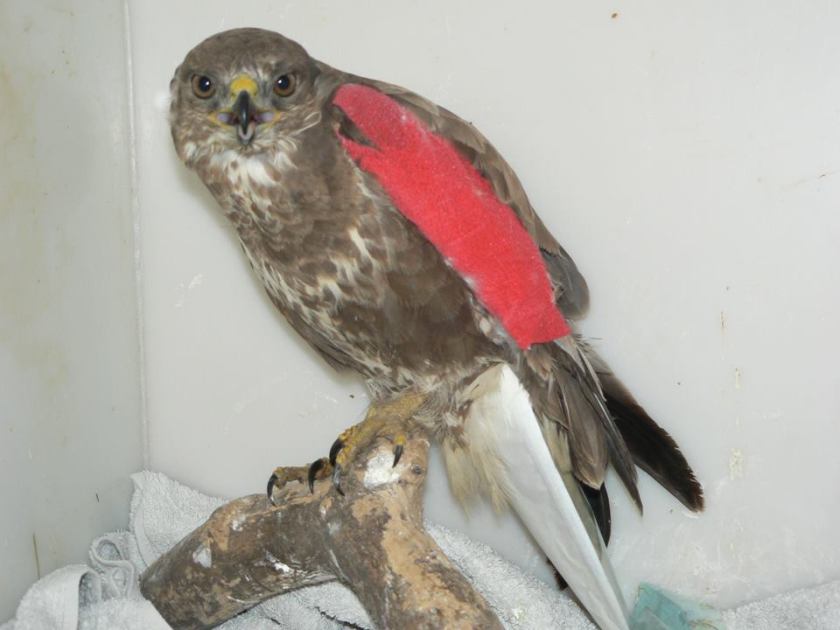
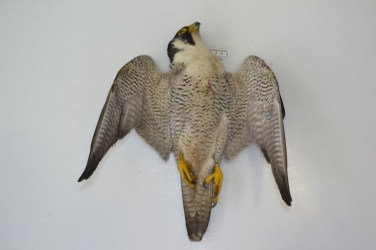 Last month we blogged about a dead peregrine that had been found at a well known persecution hotspot on 11th April 2016 (see
