Blog

Strong support for grouse moor reform at SNP spring conference

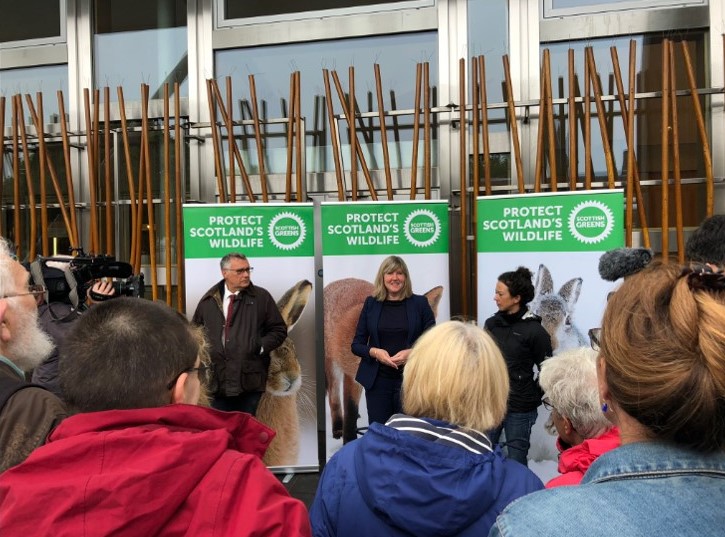
The Scottish National Party held its spring conference in Edinburgh over the weekend.

Revive, the coalition for grouse moor reform, took the opportunity to have a stand in the exhibitors’ hall on both days which attracted a large number of MSPs and delegates who signed up to support the campaign.

[Revive coalition members Ruth Tingay (RPUK), Max Wiszniewski (Revive Campaign Manager & mastermind of Revive’s involvement at conference) and Robbie Marsland (League Against Cruel Sports Scotland)]

Revive also hosted a Fringe event at the conference on Saturday afternoon, which took the form of a panel discussion hosted and chaired by Ruth Maguire MSP:

The number of delegates wanting to attend this event was overwhelming. The audience was above capacity and the doors had to be closed to stop others coming in.

And what an audience it was! Some were already very well informed about the need for grouse moor reform, and others were clearly new to the debate but their eyes were soon opened.

The audience heard from Max, who introduced the background to Revive’s campaign and showed Revive’s video outlining the case for grouse moor reform.

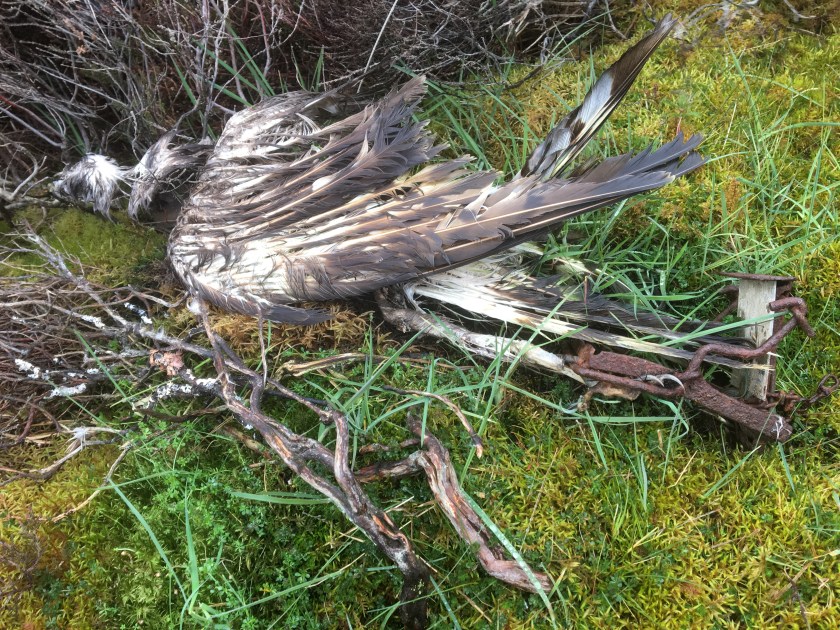
Then there was a presentation from RPUK on the illegal killing of golden eagles (and other raptors) on many Scottish grouse moors and how the criminals have been able to get away with it for so long.

Next up was Robin McAlpine from Common Weal who brilliantly asked the audience to play at Dragon’s Den and pretend they were listening to a pitch to set up driven grouse shooting as an ethical, environmentally-friendly and sustainable business proposition. Their laughter would have been heard in the main conference hall.

Questions and answers followed, ably chaired by Ruth Maguire MSP and by the end of this hour-long event the mood in the room was palpable. This was an audience agitating for change.

Let’s hope the message reaches the Government as we prepare to find out the recommendations of Prof Werritty’s grouse moor management review in the coming months.

Police investigate shooting of two goshawks in Scottish Borders

From Peeblesshire News, 26/4/19:

INVESTIGATION INTO SHOOTING OF RARE BIRDS

Police are appealing for information after the illegal shooting of rare birds of prey in the Borders.

On February 14, a member of the public discovered a dead goshawk on land near Abbey Saint Bathens, Duns, and reported the matter to the RSPB.

Forensic analysis of the bird was undertaken, and it was established that it had been shot.

Police were then contacted on Thursday, April 25.

The news comes after the shooting of another goshawk in the Peebles area on March 2.

Inquiries into both shootings are ongoing and anyone with information is asked to come forward.

Wildlife Crime Co-Ordinator, Constable Steven Irvine, said: “Inquiry was already underway into the shooting of the goshawk in March and we are now conducting inquiries into the earlier shooting of the bird in February. These birds are a protected species and unlawfully killing them is a very serious offence. Anyone who can assist with these investigations should contact police immediately.”

Ian Thomson, RSPB Scotland’s Head of Investigations said “Goshawks are one of Scotland’s rarest breeding raptors, with only about 150 breeding pairs. Despite the fact that most of their diet consists of crows, woodpigeons and rabbits, species that are perceived as pests by some farmers and gamekeepers, cases of illegal persecution against this species are not uncommon, depriving people of the opportunity to see this charismatic and spectacular bird of prey.

We join with the police in asking that if anyone has information about this crime, or other raptor persecution incidents, they contact Police Scotland.”

ENDS

Well, well, well. More illegal raptor persecution in the Scottish Borders.

You know the place – it’s where SNH have been “able to reassure ourselves persecution is not an issue” (see here).

UPDATE 17.15hrs: This story is now on the BBC news website and provides further information about the second shot goshawk, saying it was found dead by a dog walker near Eddleston Quarry on 2 March.

Alleged poison offence added to case against Scottish gamekeeper

A couple of weeks ago we blogged about the prosecution of Scottish gamekeeper Alan Wilson who is charged with allegedly committing 12 wildlife crimes at Longformacus in the Scottish Borders between March 2016 and May 2017 (see here).

Mr Wilson, 60, has pleaded not guilty and a trial is due to start at Jedburgh Sheriff Court in June 2019.

Further to the 12 alleged wildlife crimes, which are reported to include the shooting of two goshawks, four buzzards, a peregrine falcon, three badgers and an otter, we now understand that a further charge includes the alleged possession of the banned pesticide Carbofuran.

Please note: we will not be accepting comments on this news item until legal proceedings have concluded. Thanks.

Chris Packham targeted

A police investigation is underway.

Legal advice is also being taken for potential action against a number of individuals using social media to incite harassment, intimidation and violence.

Statement from Wild Justice (3/3): What happens now?

Natural England (NE) say they are going to consult on the General Licences.  In the meantime, NE has decided that anyone wanting to kill any of the species listed on the three General Licences which will be revoked on Thursday 25 April will need to apply for an individual licence giving grounds and evidence, as the law requires, for why lethal means are necessary because alternative options are not available.

This will not affect lethal control of mammals such as Foxes and Stoats.

It should not affect air safety as airports are perfectly familiar with applying for individual licences under such measures for control of other species of bird.

It will affect gamekeeping where killing of Crows etc will rarely be authorisable to protect livestock as free-flying gamebirds are not livestock and will rarely if ever be authorisable to protect songbirds as the science does not support any role of species such as Magpie or Carrion Crow (let alone Jay or Jackdaw) in songbird declines.  There is a big question mark over the legality of gamekeeping as currently practised and NE will be under the spotlight on this subject.

Some conservation organisations currently carry out predator control under the General Licences – they will need to apply for licences if they wish to continue.

In the longer term, by the end of 2019, NE says it will consult on options.  Wild Justice will be keen to play a positive part in that consultation.  We would have been content for that to take place with the 2019 licences still in place – it was NE which decided to terminate them early.

Wild Justice says

We are delighted to have won this legal case. What sort of world is it where the statutory body with responsibility for wildlife protection is operating a bird-killing licensing scheme that is unlawful? Millions of birds are killed each year under the terms of the General Licences and many of these deaths will not be justified. 

We are grateful to over 1100 individuals who funded this legal challenge and allowed us to take it with the means to progress it through the courts. 

NE could have, and in our view should have, conceded the correctness of our case many weeks ago.  This would have reduced the financial costs to the public and allowed farmers and land managers more time to adjust to the news that their bird-killing actions may have been illegal for several decades.

This is a mess of Natural England’s making – they have operated an unlawful licensing system and they have dillied and dallied over admitting it’.

Wild Justice – Mark Avery, Chris Packham and Ruth Tingay

Statement from Wild Justice (2/3): How the case progressed

Wild Justice’s legal success against Natural England had the following chronology:

Wild Justice’s legal success against Natural England had the following chronology:
13 February – “Pre Action Protocol” legal letter sent from Wild Justice’s lawyers to Natural England setting out why we considered the General Licences issued on 1 January, which ‘authorise’ killing of 16 bird species, to be unlawful.  In essence, these birds can only be killed under certain legal conditions and NE has to be satisfied that those conditions are met before issuing the licences.  NE had not satisfied itself of those things and so the licences are not lawful.
26 February – NE respond, a day ahead of the normal deadline for response, asking for two more weeks
27 February – Wild Justice says – no, NE can have one more week.
1 March – NE ask for a meeting with Wild Justice.
11 March – Chris Packham, Ruth Tingay, Mark Avery and some of their lawyers meet Natural England.
[Wild Justice and lawyers outside Defra Nobel House on 11 March ahead of meeting Natural England. L to R: Anita Davies (Matrix Chambers), Chris Packham and Ruth Tingay (Wild Justice), Carol Day (Leigh Day) and Mark Avery (Wild Justice)]
13 March – Wild Justice receives confused and ambiguous written legal response from NE which does not concede the legal argument, nor provide evidence for the legality of current system.
15 March – Wild Justice launches crowdfunder on Crowdjustice platform to raise funds for legal challenge – this was the first public mention of what the case was about – Wild Justice had given NE over a month of quiet contemplation to work out the implications of our challenge and its response.
21 March – legal claim forms were issued in the court on behalf of Wild Justice asking for judicial review.
25 March – crowdfunder reaches target of £36,000 in 10 days.
23 April – Out of the blue NE announces revocation of three General Licences on 25 April and that, at least for now, anyone wanting to kill any of the species formerly listed on those General Licences will need to apply for and receive an actual licence from NE.  A review of the General Licences is planned.
Wild Justice is perfectly happy for the full legal correspondence between NE and Wild Justice to be put in the public domain and we may well do this over the next few days.
There are several points to be made about this process:
  1. Wild Justice has not changed the law – we have shown that NE has issued authorisations for killing of wildlife that are unlawful and NE has had to accept that.  They ought to have known or suspected this before we brought it to their attention – surely?
  2. Wild Justice did not ask for the revocation of the 2019 General Licences – only that they would not be issued in the same unlawful form in 2020.  It was NE’s decision to revoke the 2019 General Licences and at such short notice. Wild Justice took such a measured line because we knew that such an action would be an unpopular shock to some interest groups and would cause administrative challenges for NE and we wanted to give NE space fully to consider the legal options.
  3. NE could have made their decision to concede the legal case at any time after 13 February – the fact that it took them nearly two and a half months is a matter for them to explain, not Wild Justice.
  4. NE did not tell Wild Justice what it was going to do in advance and issued its press notice more or less at the time it communicated its decision to us.
Wild Justice says
We are delighted to have won this legal case. What sort of world is it where the statutory body with responsibility for wildlife protection is operating a bird-killing licensing scheme that is unlawful? Millions of birds are killed each year under the terms of the General Licences and many of these deaths will not be justified. 
We are grateful to over 1100 individuals who funded this legal challenge and allowed us to take it with the means to progress it through the courts. 
NE could have, and in our view should have, conceded the correctness of our case many weeks ago.  This would have reduced the financial costs to the public and allowed farmers and land managers more time to adjust to the news that their bird-killing actions may have been illegal for several decades.
This is a mess of Natural England’s making – they have operated an unlawful licensing system and they have dillied and dallied over admitting it’.
Wild Justice – Mark Avery, Chris Packham and Ruth Tingay

Statement from Wild Justice (1/3): A successful legal challenge

Yesterday afternoon (23 April), nearly 10 weeks after Wild Justice launched a legal challenge of the General Licences (on 13 February), Natural England announced that it was revoking General Licences 04/05/06 on Thursday (25 April) after deciding to do so at its Board meeting of 15 April.

After nearly four decades of unlawful casual killing of millions, tens of millions, of birds, sanctioned by a succession of government statutory conservation agencies over the years, the current system has been shown to be unlawful by the tiny and fledgling wildlife organisation, Wild Justice.

We haven’t changed the law, we have merely shown that the current system of licensing of killing of certain species of birds, developed and administered by a statutory wildlife agency, is unlawful now and presumably has been for decades.

Our successful legal challenge may well have implications for what happens in Wales, Scotland and Northern Ireland and we will be bringing this to the attention of the other statutory agencies.

Wild Justice says

We are delighted to have won this legal case. What sort of world is it where the statutory body with responsibility for wildlife protection is operating a bird-killing licensing scheme that is unlawful? Millions of birds are killed each year under the terms of the General Licences and many of these deaths will not be justified. 

We are grateful to over 1100 individuals who funded this legal challenge and allowed us to take it with the means to progress it through the courts. 

NE could have, and in our view should have, conceded the correctness of our legal arguments many weeks ago.  This would have reduced the financial costs to the public and allowed farmers and land managers more time to adjust to the news that their bird-killing actions may have been illegal for several decades.

This is a mess of Natural England’s making – they have operated an unlawful licensing system and they have dillied and dallied over admitting it’.

Wild Justice (Mark Avery, Chris Packham, Ruth Tingay)

More on this subject later.

Wild Justice wins its first legal challenge

In February this year, not-for-profit company Wild Justice launched its first legal challenge which was a challenge against the casual killing of birds permitted under Natural England’s General Licences.

This legal challenge was supported by over 1,000 people who pledged £36,000 to cover the legal costs.

That legal challenge has been successful and late this afternoon Natural England posted the following statement on the gov.uk website:

GENERAL LICENCES FOR BIRD CONTROL: MAJOR CHALLENGES TO LICENSING REQUIREMENTS

Natural England announces changes to three general licences for controlling specific wild bird species.

Natural England is revoking three general licences for controlling certain wild birds as of Thursday 25 April 2019.

These licences (GL 04/05/06) cover 16 species of birds including several members of the crow family, Canada goose, some gulls and pigeons.

The change follows a legal challenge to the way the licences have been issued, which could mean users who rely on them are not acting lawfully.

Natural England is working at pace to put in place over the next few weeks alternative measures to allow lawful control of these bird species to continue where necessary. In the meantime, once the licences have been revoked and until new licences are issued, anyone needing to control one of these 16 bird species where there is no reasonable non-lethal alternative will need to apply for an individual licence.

The action is the first stage of a planned review of general and class licences, which will be completed this year.

Natural England’s interim chief executive Marian Spain said: “We recognise this change will cause disruption for some people, but we are working hard to ensure it is kept to a minimum. We will bring forward interim measures as quickly as possible as the first stage of our planned review of the licences. We want to make sure our licensing system is robust and proportionate, taking into account the needs of wildlife and people“.

What to do if you use a general licence

It is expected that, over time, many situations currently covered by the three general licences will be covered by new licences.

Natural England is undertaking new licensing assessments to support lethal control of certain birds in defined situations, such as to prevent serious damage to livestock from carrion crow and to preserve public health and safety from the impacts of feral pigeons. It intends to start issuing these licences on gov.uk from the week commencing 29 April when more details will be available.

If people need to take action in the meantime they will need to apply for an individual licence, using a simplified process which will be available on gov.uk from 25 April.

In limited circumstances, people may be allowed to undertake urgent action in accordance with the existing requirements of section 4 of the Wildlife and Countryside Act 1981.

Anyone exercising lethal control of birds after Thursday 25 April 2019 without taking the above steps will not be covered by a general licence and could be committing an offence.

If you are unsure what you should do on your land, visit the Natural England licensing webpage for more information and advice.

Background on the general licence

General licences were introduced in the 1990s to allow the legal control of bird species of low conservation concern to protect public health and safety, prevent serious damage and disease, and protect plants and wildlife.

Further details of the wider review into the operation and provision of general licences will be shared shortly. We will seek feedback from those using them and from wildlife protection and other groups. We expect to complete this review by the end of the year.

Part of Natural England’s role is to ensure relevant provisions of the Wildlife and Countryside Act 1981 are upheld to protect wildlife, as well as recognising the needs of people.

Background

Currently the three licences subject to the legal challenge cover 16 bird species, including several members of the crow family (crows, magpies, rooks, jackdaws and jays), feral and wood pigeon and number of invasive non-native species (such as Canada goose).

The specific licences:

  • General licence GL04: To kill or take certain species of wild birds to prevent serious damage or disease
  • General licence GL05: To kill or take certain species of wild birds to preserve public health or public safety
  • General licence GL06: To kill or take certain species of wild birds to conserve wild birds or flora or fauna

ENDS

Obviously there is a lot to discuss about this case and Wild Justice will be issuing a detailed statement tomorrow after taking further legal advice.

Wild Justice explores more projects with top wildlife cops

In February Wild Justice launched a legal challenge against the casual killing of birds permitted under Natural England’s General Licences (see here).

Natural England has yet to respond, although the deadline is looming (25 April 2019 to respond to the court and a further seven days to respond to Wild Justice, so by 2 May 2019 at the latest).

Meanwhile, Wild Justice Directors have been busy exploring other potential projects with a number of senior police officers who specialise in tackling wildlife crime. Earlier in April they met with Chief Inspector Lou Hubble (Head of National Wildlife Crime Unit, NWCU) and Deputy Chief Constable Craig Naylor (National Police Chiefs Council, NPCC). This was an extremely productive meeting and a number of themes have since developed as a direct result.

On Thursday Wild Justice Directors met with Superintendent Nick Lyall, Head of the Raptor Persecution Priority Delivery Group (RPPDG) to continue to build a strong working relationship and share some information. Given that Nick was supposed to be on annual leave but still chose to come along is a measure of his commitment to this issue. He has some excellent ideas for moving things forward on a few fronts and the determination to deliver. Watch this space.

Also on Thursday, Wild Justice Directors met with Chief Inspector Phil Vickers in what was an enlightening discussion about illegal hare coursing and how Wild Justice might contribute most effectively to Operation Galileo, the national police response to tackling this wildlife crime. Ideas are currently in development and discussions with other interested organisations have been arranged.

West Yorkshire Police appeal for info after buzzard found shot dead

West Yorkshire Police are appealing for information after the discovery of a shot buzzard in the Oulton area of Leeds.

The buzzard was found dead.

No further details have been publicised.

If you have any information please contact the police on 101 (ref# 13190200712) or Crimestoppers on 0800 555 111 or the RSPB’s Raptor Crime Hotline on 0300 999 0101.