Blog

40 hen harriers ‘missing’ or confirmed killed since 2018

It’s getting to that time of year when the grouse shooting industry pumps out its patently misleading propaganda relating to hen harrier conservation in the UK. The aim is to hoodwink the public in to believing that the industry loves hen harriers and is doing all it can to protect and nurture the tiny remnant breeding population (but conveniently forgetting to mention that the breeding population is only in such dire straits because the grouse shooting industry has been ruthless in its maniacal intolerance of this supposedly protected species).

And the industry’s pursuit of the hen harrier is not simply ‘historical’ or indicative of past behaviour, as some would have us believe. It is on-going, it is current, and it is relentless.

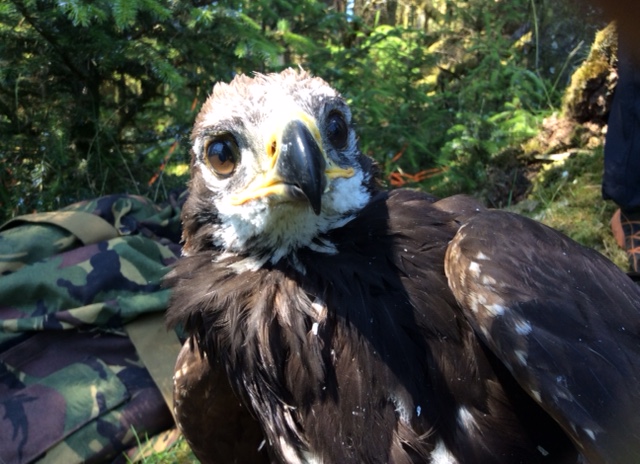
To illustrate this fact, we intend to keep a running tally of all the hen harriers that we know (because most of these victims had been fitted with a satellite tag) to have either ‘disappeared’ in suspicious circumstances or have been confirmed as being illegally killed since 2018.

Why only since 2018 when we know that hen harriers have been a persecution target for years and years and years? Well, 2018 is the year that the grouse shooting industry ‘leaders’ would have us believe that the criminal persecution of hen harriers had stopped and that these birds were being welcomed back on to the UK’s grouse moors (see here).

This assertion was made shortly before the publication of a devastating new scientific paper that demonstrated that 72% of satellite-tagged Hen Harriers were confirmed or considered likely to have been illegally killed, and this was ten times more likely to occur over areas of land managed for grouse shooting relative to other land uses (see here).

We only started compiling this list of dead / missing hen harriers in June when we learned that all five of last year’s brood meddled hen harrier chicks were ‘missing’, presumed dead (see here). It was then further updated when we learned that two more satellite-tagged hen harriers had ‘disappeared’ in suspicious circumstances on grouse moors in the Cairngorms National Park during the Coronvirus lockdown (see here).

It’s now time to update the death list again, as we’ve learned that satellite-tagged hen harrier Rain ‘disappeared’ in suspicious circumstances over a grouse moor in Nairnshire on 26 April 2019 (see here). (Thanks to blog reader Alex Milne for pointing us to this info).

That brings the gruesome tally to 40 hen harriers.

Four Zero.

Forty.

In the space of two years.

Nobody has been prosecuted for any of these cases. We have every expectation that this list will be updated again in the near future.

For now, here are the 40:

February 2018: Hen harrier Saorsa ‘disappeared’ in the Angus Glens in Scotland (here). The Scottish Gamekeepers Association later published wholly inaccurate information claiming the bird had been re-sighted. The RSPB dismissed this as “completely false” (here).

5 February 2018: Hen harrier Marc ‘disappeared’ on a grouse moor in Durham (here)

9 February 2018: Hen harrier Aalin ‘disappeared’ on a grouse moor in Wales (here)

March 2018: Hen harrier Blue ‘disappeared’ in the Lake District National Park (here)

March 2018: Hen harrier Finn ‘disappeared’ near Moffat in Scotland (here)

18 April 2018: Hen harrier Lia ‘disappeared’ in Wales and her corpse was retrieved in a field in May 2018. Cause of death was unconfirmed but police treating death as suspicious (here)

8 August 2018: Hen harrier Hilma ‘disappeared’ on a grouse moor in Northumberland (here).

16 August 2018: Hen harrier Athena ‘disappeared’ on a grouse moor in Scotland (here)

26 August 2018: Hen Harrier Octavia ‘disappeared’ on a grouse moor in the Peak District National Park (here)

29 August 2018: Hen harrier Margot ‘disappeared’ on a grouse moor in Scotland (here)

29 August 2018: Hen Harrier Heulwen ‘disappeared’ on a grouse moor in Wales (here)

3 September 2018: Hen harrier Stelmaria ‘disappeared’ on a grouse moor in Scotland (here)

24 September 2018: Hen harrier Heather ‘disappeared’ on a grouse moor in Scotland (here)

2 October 2018: Hen harrier Mabel ‘disappeared’ on a grouse moor on the edge of the Yorkshire Dales National Park (here)

3 October 2018: Hen Harrier Thor ‘disappeared’ next to a grouse moor in Bowland, Lanacashire (here)

26 October 2018: Hen harrier Arthur ‘disappeared’ on a grouse moor in the North York Moors National Park (here)

10 November 2018: Hen harrier Rannoch ‘disappeared’ on a grouse moor in Scotland (here). Her corpse was found nearby in May 2019 – she’d been killed in an illegally-set spring trap (here).

14 November 2018: Hen harrier River ‘disappeared’ on a grouse moor in the Nidderdale AONB (here). Her corpse was found nearby in April 2019 – she’d been illegally shot (here).

16 January 2019: Hen harrier Vulcan ‘disappeared’ in Wiltshire close to Natural England’s proposed reintroduction site (here)

7 February 2019: Hen harrier Skylar ‘disappeared’ next to a grouse moor in South Lanarkshire (here)

22 April 2019: Hen harrier Marci ‘disappeared’ on a grouse moor in the Cairngorms National Park (here)

26 April 2019: Hen harrier Rain ‘disappeared’ on a grouse moor in Nairnshire (here)

11 May 2019: An untagged male hen harrier was caught in an illegally-set trap next to his nest on a grouse moor in South Lanarkshire. He didn’t survive (here)

7 June 2019: An untagged hen harrier was found dead on a grouse moor in Scotland. A post mortem stated the bird had died as a result of ‘penetrating trauma’ injuries and that this bird had previously been shot (here)

5 September 2019: Wildland Hen Harrier 1 ‘disappeared’ on a grouse moor nr Dalnaspidal on the edge of the Cairngorms National Park (here)

11 September 2019: Hen harrier Romario ‘disappeared’ on a grouse moor in the Cairngorms National Park (here)

14 September 2019: Hen harrier (Brood meddled in 2019, #183704) ‘disappeared’ in North Pennines (here)

23 September 2019: Hen harrier (Brood meddled in 2019, #55149) ‘disappeared’ in North Pennines (here)

24 September 2019: Wildland Hen Harrier 2 ‘disappeared’ on a grouse moor at Invercauld in the Cairngorms National Park (here)

10 October 2019: Hen harrier Ada ‘disappeared’ on a grouse moor in the North Pennines AONB (here)

12 October 2019: Hen harrier Thistle ‘disappeared’ on a grouse moor in Sutherland (here)

18 October 2019: Member of the public reports the witnessed shooting of an untagged male hen harrier on White Syke Hill in North Yorkshire (here)

November 2019: Hen harrier Mary found illegally poisoned on a pheasant shoot in Ireland (here)

January 2020: Members of the public report the witnessed shooting of a male hen harrier on Threshfield Moor in the Yorkshire Dales National Park (here)

1 April 2020: Hen harrier (Brood meddled in 2019, #183703) ‘disappeared’ in unnamed location, tag intermittent (here)

5 April 2020: Hen harrier Hoolie ‘disappeared’ on a grouse moor in the Cairngorms National Park (here)

8 April 2020: Hen harrier Marlin ‘disappeared’ on a grouse moor in the Cairngorms National Park (here)

21 May 2020: Hen harrier (Brood meddled in 2019, #183701) ‘disappeared’ on a grouse moor in Cumbria shortly after returning from wintering in France (here)

To be continued……..

Anybody still wondering why the grouse shooting industry wants us to stop fitting satellite tags?

Leadhills Estate granted ‘individual licence’ to shoot crows

As many will recall, in November 2019 SNH imposed a three-year General Licence restriction on the Leadhills Estate in South Lanarkshire following ‘clear evidence from Police Scotland that wildlife crimes had been committed on this estate’ (see herehere, here, here, and here).

Those alleged offences included the ‘illegal killing of a short-eared owl, two buzzards and three hen harriers’ that were ‘shot or caught in traps’ on Leadhills Estate since 1 January 2014 (when SNH was first given powers to impose a General Licence restriction). SNH had also claimed that ‘wild birds’ nests had also been disturbed’, although there was no further detail on this. The estate has consistently denied responsibility, obviously.

[This male hen harrier was found with its leg almost severed, caught in an illegally-set trap next to its nest on Leadhills Estate in 2019. Despite valiant efforts by a top wildlife surgeon, the bird didn’t survive. Photo by Ruth Tingay]

As many of you will also know, a General Licence restriction is supposed to prevent an estate from killing so-called ‘pest’ species (e.g. crows) that would otherwise be permissible under the General Licences but that estates can still apply to SNH for an ‘individual licence’ to circumvent the General Licence restriction and continue killing birds, albeit with a bit more paperwork to complete.

This ridiculous situation is a legal quirk, outlined in a Judicial Review, and isn’t SNH’s fault (although SNH could be doing a lot more to point out the system failings to the Scottish Government). Basically if a penalised estate isn’t provided with an opportunity to apply for an individual licence the estate could argue the system was unfair and the legality of the General Licence restriction probably wouldn’t stand. If further wildlife crimes are discovered on the estate when an individual licence is in place, SNH can revoke the individual licence but the estate can simply reapply for another one. We’ve discussed how the General Licence restriction is a wholly ineffective deterrent plenty of times in the past, (e.g. see here, here, here, here) and last year we even gave evidence to this effect alongside RSPB Scotland and others to a Scottish parliamentary committee (here).

Since the General Licence restriction was imposed on Leadhills Estate in Nov 2019 we’ve been interested to find out whether the estate has applied for, and been granted, an individual licence.

An FoI request has revealed that yes, SNH issued an individual licence that was valid between 27 April – 1 June 2020 but this was far more restrictive than the individual licences (e.g. see licence details here) that were issued to Raeshaw Estate when a GL restriction was imposed on that estate in 2015.

The individual licence at Leadhills Estate only permits the shooting of two species – hooded crow and carrion crow, in a limited part of the estate and apparently to protect lambs.

According to condition #8 of this licence, the licensee has to submit a written report to SNH within one month of the licence expiring (so by 1 July 2020) detailing the scaring methods deployed and the number of birds shot. We have submitted an FoI request for this information.

We’ve also asked SNH for details of the compliance checks made for the duration of this licence. SNH has said in the past that compliance checks would form part of the ‘tighter scrutiny’ involved with an individual licence. Let’s see. Presumably this type of environmental monitoring/legal compliance check would have been one of the Government-sanctioned jobs during lockdown.

Wild Justice raises £48.5K within 3 days for badger cull challenge

Just three days ago Wild Justice launched a crowdfunder to raise £48.5K to support a legal challenge against the badger cull (see here).

Today, incredibly, thanks to an outpouring of public support the target has been reached and the crowdfunder has now been closed!

£38.5K was raised directly by generous supporters and then another £10K was pledged this afternoon from an organisation whose identity will be revealed in due course.

Thank you to everyone who has supported this appeal – the response has been phenomenal.

For more information on this case and other Wild Justice legal challenges, both current and forthcoming, check out the Wild Justice blog (here) and subscribe to the free Wild Justice newsletter (here).

Petition to ban driven grouse shooting: Chris Packham talks with Kerry McCarthy MP

Last summer campaign group Wild Justice (Chris Packham, Mark Avery, Ruth Tingay) lodged a petition calling for a ban on driven grouse shooting (here).

Within just a few hours of going public the petition had attracted 10,000 signatures, triggering the usual pathetic response from DEFRA (here).

Less than three weeks after the launch the petition had attracted 100,000 signatures (here), triggering what we hoped would be another Parliamentary debate, especially as many of the dishonourable members whose self-interested posturing had defiled the 2016 debate (here) had since left the building.

The 2019 General Election brought an abrupt end to the petition and to the prospect of a prompt debate but in early March 2020, Wild Justice was informed that a Parliamentary debate was due to be scheduled, probably within a month (see here).

Shortly afterwards the UK went in to Corona virus lockdown and obviously other priorities took hold. But several weeks ago the Parliamentary Petitions Committee got in touch and asked whether Wild Justice would like an opportunity to have an online discussion with a Committee member about the issues raised in the petition.

Many thanks to Petitions Committee member Kerry McCarthy MP who hosted a video conference call with Chris Packham, which was published yesterday (see links below).

It’s interesting to note that at the end of the discussion Kerry told Chris the Committee would be contacting the DEFRA Minister to try and extract another response and she also suggested that once Parliament is sitting again, there might be an opportunity to have what she called ‘a proper debate’. That’d be good. And as Chris said, this issue isn’t going away and campaigners will be continuing to raise awareness and mobilise more and more supporters to bring about a ban on driven grouse shooting.

Download the full transcript here: WildJustice petition videocall transcipt Kerry_Chris

Watch the video here:

Scottish Land & Estates appear to have some explaining to do re statement on ‘missing’ hen harriers

Last week the RSPB revealed that two more satellite-tagged hen harriers had ‘disappeared’ in suspicious circumstances on two grouse moors in the Cairngorms National Park (see here).

Scottish Land & Estates, the grouse moor owners’ lobby group, issued this statement in response. Pay close attention to the sentence underlined by RPUK:

For those who don’t know what the Heads Up for Hen Harriers Project is all about, a good place to start is by reading previous blogs see hereherehereherehereherehereherehere and here. Basically its a greenwashing exercise. The idea is that everybody pretends not to know why hen harrier nests are failing in certain areas (yes, really!) but by putting cameras on nests we might learn more about these ‘mystery issues’. The focus then becomes on natural predation events caught on camera and everybody can point to that as the main cause for hen harrier population decline instead of having to address the illegal persecution that continues far from any official nest camera scheme.

Scottish Land and Estates have been challenged before about publishing what looked to be inaccurate assertions about some of the estates involved in this sham (e.g. see here) but the organisation’s complete lack of transparency, coupled with SNH’s refusal to tell us which estates are involved in this project funded with taxpayers’ money, meant that SLE’s claims were allowed to stand.

Now it seems another of SLE’s claims about this project has been challenged. Have a look at this very interesting twitter exchange that was posted yesterday:

We’ll be following this with interest….

Watch this space.

Wild Justice launches legal challenge against badger cull

Wild Justice launched a crowdfunder yesterday (here) to support a legal challenge against the badger cull.

It’s already attracted a large sum of support but still has a long way to go to reach the target.

Here is the background information from Wild Justice’s crowdfunder page:

Wild Justice opposes DEFRA’s highly controversial Badger cull, licensed by Natural England. Amongst a plethora of reasons we regard it as an unwarranted assault on wildlife which will not eliminate bovine Tb from dairy herds and which operates at appallingly low standards of animal welfare.

We contend that DEFRA and Natural England have failed to define humane practices and that unacceptably high number of badgers, killed by free shooting, die slowly and painfully every year.

In 2014 an expert panel advising Government on animal welfare standards for Badger culls recommended that “in the context of controlled shooting of badgers by trained and licensed contractors, the percentage of animals surviving for more than 5 min after being shot, and the percentage being wounded but not retrieved, should not together exceed 5%”. 

Natural England’s own annual reports show that this standard is never met in practice and that the number of Badgers taking longer than 5 minutes to die or failing to be recovered is consistently about 10% – twice as high as recommended.

So DEFRA appears to us to be pursuing an inhumane Badger cull, NE is licensing it and Badgers are suffering cruelly. Why? Because a humane cull would be even more expensive and would draw even greater attention to the large sums of public money being spent on an unsuccessful control measure.

Wild Justice is raising money to challenge the legality of free shooting under current circumstances and we are seeking a judicial review of Natural England’s licensing decisions.

We want to initiate a debate on the inappropriate methods employed to facilitate the cull and challenge their legality.

This is a costly challenge – we have already spent a lot of time in correspondence with DEFRA and Natural England.  We need to raise £48,500 to pay our lawyers, court costs, costs of research, Crowdjustice fees and Natural England’s costs if we fail to win the legal argument.

Please help with a donation to enable us take this challenge on behalf of Badgers, those charismatic and ecologically essential members of our fauna.

Thank you for any help you can give.

Chris Packham, Ruth Tingay and Mark Avery (co-founders of Wild Justice)

If, for any unexpected reason, we raise more money than we need to fund this challenge then unspent funds will be retained by Crowdjustice and will be available for Wild Justice to use for other similar legal cases on behalf of UK wildlife.

ENDS

If you’re able to help please click here

Thank you

In conversation with Ian Thomson, Head of Investigations at RSPB Scotland

Jimmi Hill of charity Raptor Aid has recorded a series of fascinating interviews with various raptor experts during the lockdown period, all of them archived and available to watch for free (find Raptor Aid on Facebook and click on ‘videos’ in the left hand column).

One of the early ones was with Ian Thomson, Head of Investigations at RSPB Scotland. If you want a well-informed yet understated masterclass on the ins and outs of raptor persecution in Scotland, you should really watch this.

New SLE Chairman Mark Tennant continues anti-predator rhetoric

It’s all change at Scottish Land & Estates (SLE), the landowners’ lobby group, with Dumfriesshire Dave (otherwise known as Lord David Johnstone) leaving and Mark Tennant replacing him as Chairman.

We’ve blogged a little about this change of leadership before (see here) as we were particularly interested in Mr Tennant’s association with Innes Estate in Morayshire where a gamekeeper was convicted for poison and firearms offences back in 2007 (and he was still listed as an estate employee three years later). We were curious to find out what Mr Tennant’s attitude would be now, 13 years later, to bird of prey protection and whether he’d be able to steer SLE away from the constant denials and distortions about ongoing raptor persecution that had characterised his predecessor’s term in office, and the one before that (e.g. see here, here, here, here, here, here, here, here, here, here, here, here, here).

We didn’t have to wait too long.

Yesterday Mr Tennant had a letter published in the Scottish Farmer (here). It’s reproduced here as follows:

Dear Sir,

In the last few months, as the perpetual noise of traffic and of that long line of planes landing at nearby airports has dimmed, those of us living in the cities have heard, some for the first time, the wonderful noise of songbirds. It is a sound that country dwellers take for granted. But in the cities, it has lit up our spring.

Yet we would not be hearing these sounds were it not for the campaigning of organisations like SongBird Survival to ensure these lovely birds’ preservation. Colin Strang Steel, a trustee of SongBird Survival, has written specifically about lapwings on his own farm and the effect of predation on waders by crows, gulls and badgers, the latter species having proliferated from 50,000 in the UK in 1980 to over 500,000 today. If we do not keep predator numbers within sustainable levels, our songbirds will slowly die out.

Nature is the world’s greatest gift, but it also provides our wildlife’s food chain, at whose head sits the human race. In that role we have a duty to ensure that, at no level, predation becomes so excessive that it threatens the smaller species. That is not to condone in any way the persecution of protected birds. To do so is both unacceptable and a crime. After all, who, with any appreciation of beauty, whether gamekeeper or landowner, does not marvel at the sight of the great wings of a hen harrier or hawk or kite catching the thermals as it floats majestically over the moors?

‘Protected status’ was originally accorded to animals and birds which were considered at risk, yet many currently enjoying this status, are no longer at risk. As with other predators we must ensure that they do not proliferate in a way that threatens the lapwings, and curlew chicks on which they feed, as other species such as foxes and crows already do.

If we are to allow our song birds to continue to thrive, we have to do two things: first control the species which are growing at such a rate that they threaten the songbirds’ existence – restrictions on predator control to the extent that it becomes unviable, poses a serious threat to the very species that we all want to protect – and, secondly, continue to increase the amount of natural habitat, which can foster their growth. I hope that this could be one of the outcomes of a future farming support system which rewards biodiversity and the delivery of public goods.

Land managers and farmers are the key to bringing this about. Many are members of Scottish Land and Estates and I would urge them to do everything they can to support SongBird Survival and to ‘Save Our Songbirds’. I also hope the RSPB and other like-minded organisations will join us in this task.

Yours sincerely

Mark Tennant

Chairman, Scottish Land and Estates

ENDS

For those who don’t know who Songbird Survival is (you lucky, lucky people), without whose campaigning there’d be no songbirds, apparently, take a look at the various entries on Mark Avery’s blog (listed here) for a flavour. It’s not difficult to see from where Mr Tennant has ‘learned’ his (mis)’understanding’ about predator/prey relationships.

Still, waxing lyrical about ‘the sight of the great wings of a hen harrier or hawk or kite catching the thermals as it floats majestically over the moors’ was utterly convincing, right?

Perhaps it’d be more convincing if SLE explained why Leadhills Estate is still a member of SLE and why Lord Hopetoun (Leadhills Estate) is still Chair of SLE’s Moorland Group. These are questions we’ve been asking for some time, e.g. here, and particularly since SNH imposed a three year General Licence restriction on Leadhills Estate in November 2019 following what it described as ‘clear evidence from Police Scotland that wildlife crimes had been committed on this estate’ (see herehere, and here).

Oh, and we’re also still waiting to hear from SLE about whether the Longformacus Estate was a member of SLE last year when gamekeeper Alan Wilson was convicted for a string of utterly depraved wildlife crimes (here) and if so, has SLE since expelled this estate from its membership?

These seem perfectly legitimate questions to ask of an organisation that has a seat on the PAW Scotland Raptor Group and has enjoyed much publicity of its declared ‘zero tolerance of raptor persecution’ (claimed as recently as four days ago (here) in response to the news that two more satellite-tagged hen harriers had ‘disappeared’ in suspicious circumstances on grouse moors in the Cairngorms National Park, here).

To be honest, the other PAW Scotland Raptor Group members should also be pushing hard for answers to these questions. Perhaps they already are? If so, they need to start publishing the responses or reporting the silence.

In conversation with Chris Packham

For those who missed them, here are links to a couple of candid interviews with Chris Packham, talking raptors, TV work, campaigning, Wild Justice, OneKind, mountain hares, politics, banning driven grouse shooting, the obscenity of releasing ~50 million pheasants per annum etc.

These videos are both archived on Facebook and you don’t need a Facebook account to view them – simply click on the links.

This one was recorded on Friday 26 June. It’s an interview with Jimmi Hill of Raptor Aid:

This one was recorded on Saturday 27 June 2020 for OneKind:

BASC’s ‘expertise’ not very convincing

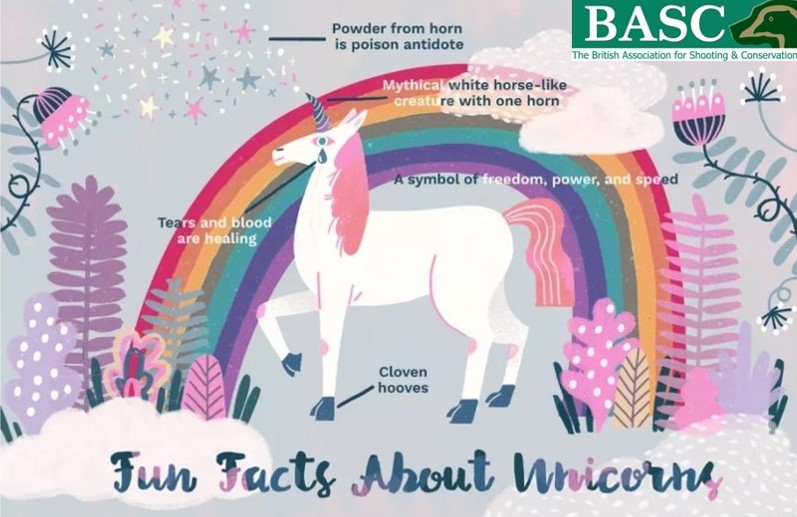
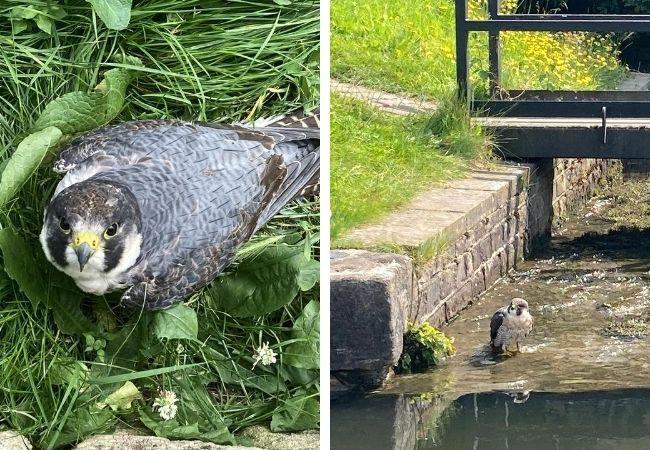
You know, if you’re going to profess to love a bird of prey, it helps your credibility if you’re first able to identify it. Otherwise it just looks like you’re pretending.

Who’s going to break the news to BASC?

It also helps, if you’re going to pretend to be interested in the conservation of a bird of prey, that you recognise the threat to that species includes the intensification of grouse moor management techniques, as evidenced by the 30 years’ worth of data analysed in these recent peer-reviewed scientific publications (here, here) as opposed to the non-scientific drivel about the lack of General Licences spouted by your gamekeeper mates (here), some of whom are believed to be currently under investigation for the alleged persecution of birds of prey on their grouse moors (see here).

It also helps if you understand that ‘the majority of nesting merlins in the UK’ are not reliant on ‘being looked after’ (ahem) by gamekeepers in Yorkshire & Derbyshire – merlins do particularly well in other areas and especially on the peatlands of the Western Isles, where, shock horror, there’s no intensively managed driven grouse moors and no intensive predator control. Imagine that!

Nice try, BASC, but you’re going to have to do much better than this if you want to be taken seriously.

Ps. Free tip – this isn’t a merlin.

UPDATE 4 September 2020: Does BASC know its arse from its elbow? (here)